You’ll Want To Plan A Day Trip To This Maryland Museum That Is Anything But Ordinary
Wait, a train museum sits on the actual spot where American railroading began? Okay, I need a moment to appreciate this.
The nation’s first commercial railroad got rolling right here in 1829. That’s wonderfully specific, and it gets better.
The star building is an 1884 roundhouse with 22 sides, and it was once the largest circular industrial building in the world.
Its central turntable still turns without electricity, which feels like showing off in the best way.
This Maryland treasure also holds the largest collection of 19th-century locomotives in the country.
How many old iron horses can one person admire in a single afternoon?
You Can Stand On The Ground Where American Railroading Started
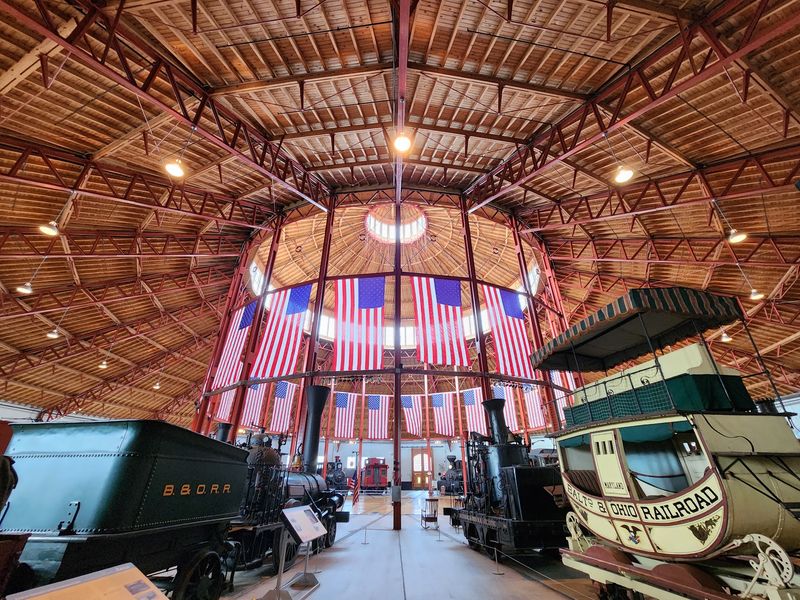
Some museums tell history from a distance, but this one sits right on top of it.
The National Museum of Railroad History & Innovation occupies the historic Mount Clare campus of the Baltimore & Ohio Railroad.
The B&O was chartered on February 28, 1827, becoming the nation’s first common-carrier railroad.
Construction began on July 4, 1828, and regular passenger service to Ellicott’s Mills followed in 1830. The ground beneath today’s exhibits was central to that ambitious beginning.
Many people still know the museum by its longtime B&O Railroad Museum name. In July 2026, it adopted its new identity ahead of the railroad’s bicentennial celebration in 2027.
The roughly 40-acre campus in Baltimore, Maryland, includes historic workshops, exhibition buildings, and tracks. The site is recognized as a National Historic Landmark, and the museum is a Smithsonian Affiliate.
Mt. Clare Station, dating to 1851, is among the surviving structures. Even before reaching the first engine, you can trace how one pioneering rail project grew into a transportation network.
Prepare To Look Up, Way Up, Inside The Cathedral Of Railroading
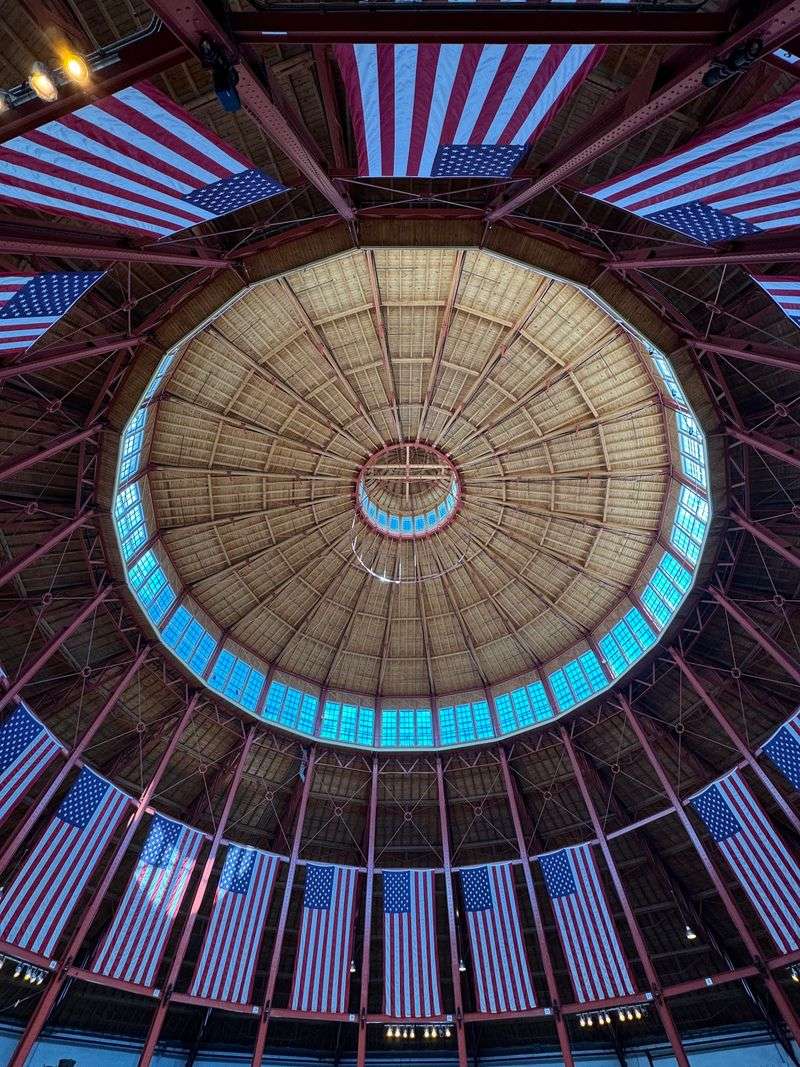
Nicknames don’t come much grander than the Cathedral of Railroading. The 1884 Mount Clare Roundhouse earns that title as soon as you look overhead.
Architect E. Francis Baldwin designed this 22-sided structure, a brick, iron, wood, and slate building that once ranked as the world’s largest circular industrial building. At 245 feet across and roughly 135 feet high, it covers almost an acre beneath its roof.
Twenty-two bays provided space for passenger-car maintenance, while three rows of windows let daylight flood the work area.
In the middle sits a 60-foot turntable. It uses central bearings rather than electricity, allowing even a heavy historic railway vehicle to rotate with a surprisingly small amount of human effort.
Public demonstrations take place on selected dates, rather than continuously throughout the day.
Historic locomotives now face inward around the turntable. Walk the perimeter and compare their proportions, colors, and engineering details.
There’s almost too much to take in at once: the arched windows, the soaring roof, and the old machines pointing toward the room’s center.
Hop Aboard For A Ride On America’s First Mile Of Track
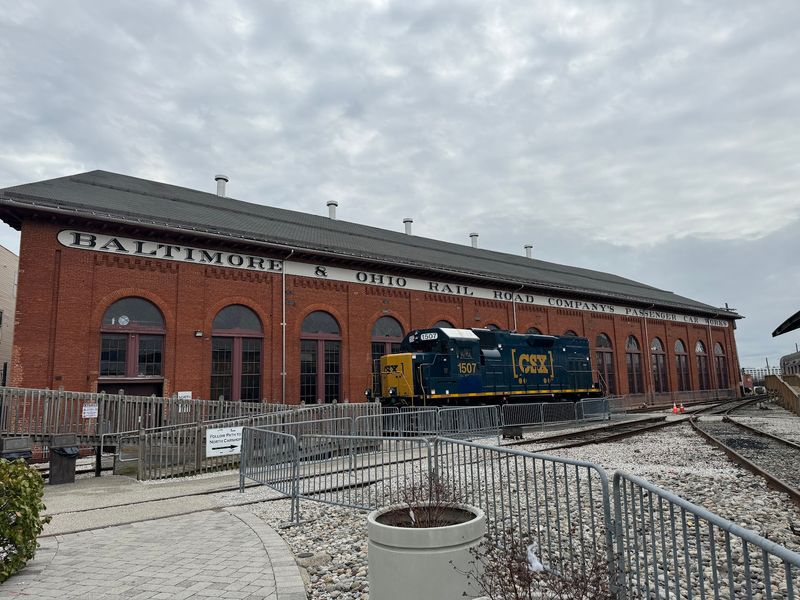
How often do you get to travel along the route that helped launch American commercial rail service? The Mile One Express gives you that chance.
Its round trip lasts approximately 20 minutes, following the historic first-mile corridor of the B&O.
The scenery is urban and industrial rather than mountainous, but the real attraction is knowing what this stretch of Baltimore meant to transportation history.
Younger riders can enjoy the journey without committing to a long excursion, while adults get a sense of how rail travel fits into the landscape.
In 2026, regularly scheduled rides run Thursday through Sunday at 11:30 a.m. during the April-to-early-November season, with a few additional dates.
The posted schedule currently runs through November 6, and special tours sometimes offer separate departures.
Seats are limited. Tickets are obtained at the museum, separate from general admission, and rides depend on equipment and operating conditions.
If you hope to make the journey part of your Maryland day trip, check the departure schedule before leaving home.
Twenty minutes on the rails makes a nice contrast with hours spent examining engines up close.
Bring Your Curiosity, Because The Collection Is Enormous
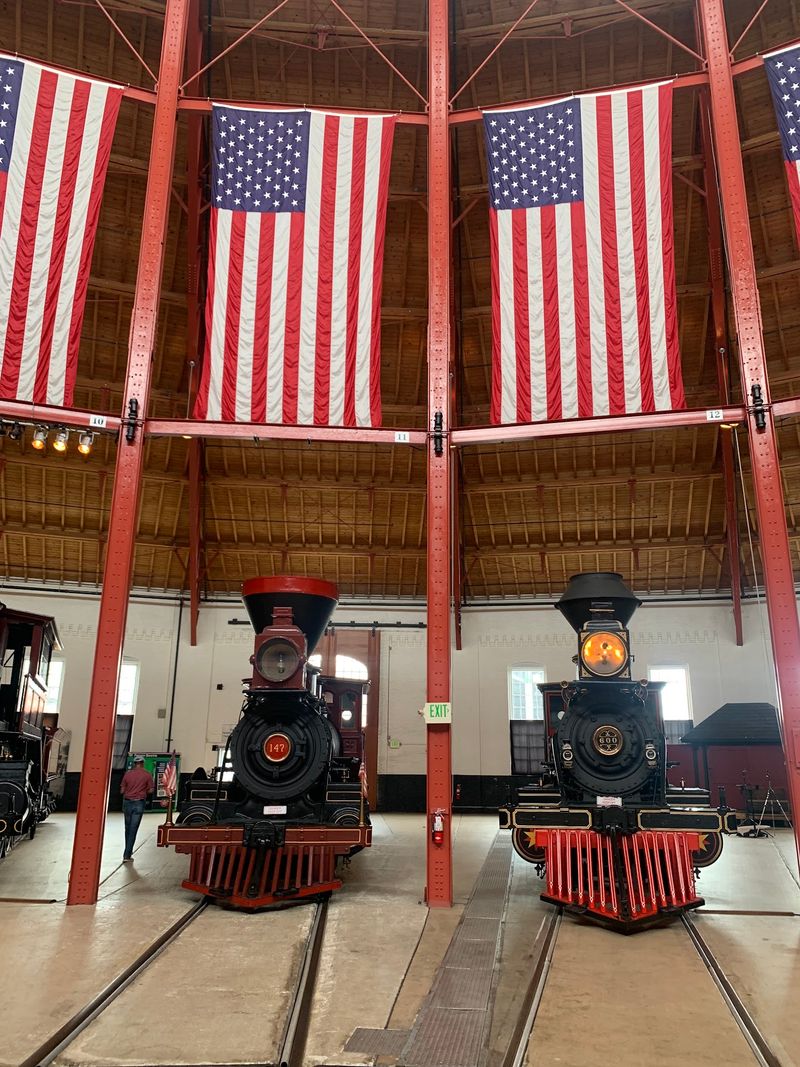
This isn’t a collection built around one famous train. The museum preserves historic locomotives and railcars spanning the earliest American railroads through modern passenger and freight service.
Inside the roundhouse, nineteenth-century steam engines show how transportation technology developed during its first century.
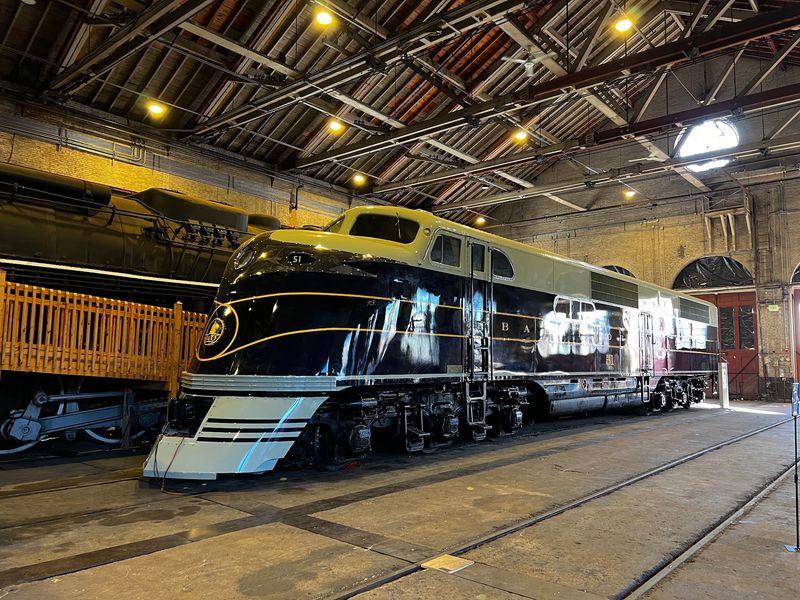
Elsewhere, the North Car Shop explores a later era, when streamlined designs and diesel-electric power transformed rail travel.
The shop itself dates to the years around 1869 to 1871 and originally supported passenger-car construction and maintenance. Now it provides a fitting setting for machines from the twentieth century.
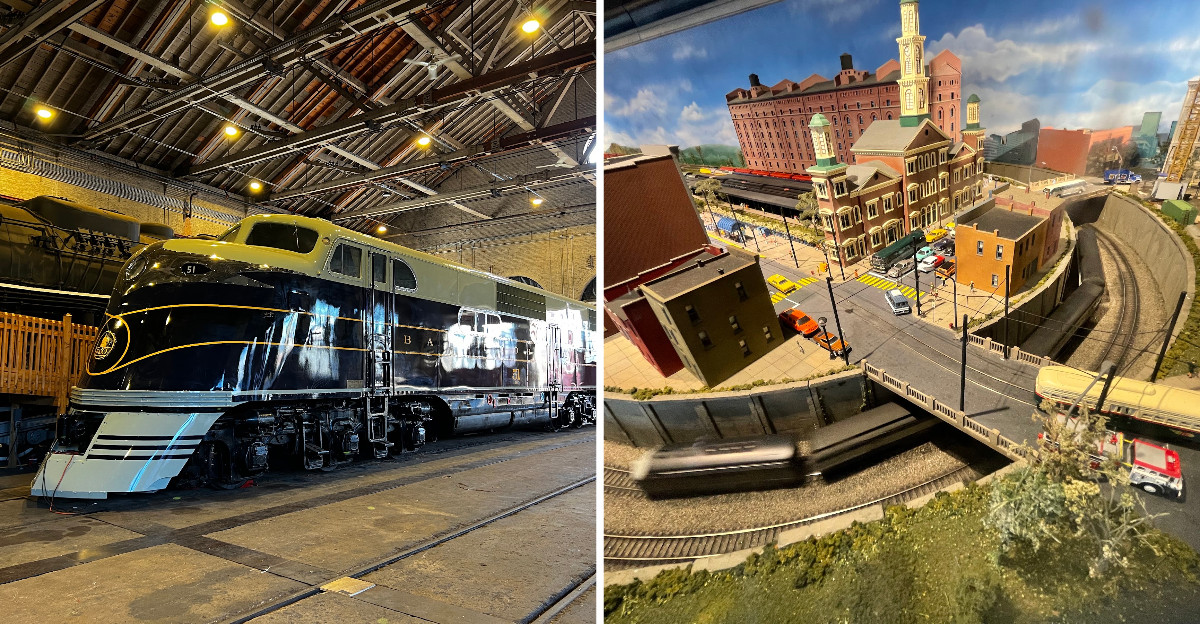
Look for the CNJ No. 1000, an early commercially successful diesel-electric locomotive, and the streamlined B&O No. 51.
Their shapes are strikingly different from the tall smokestacks and exposed mechanisms of the earliest engines.
Some displays allow interior access during designated programs, while others remain protected behind exhibit boundaries.
The museum’s collections draw on more than the B&O alone, connecting regional railways with a much bigger American story.
Old Iron Horses Rule The Room Here
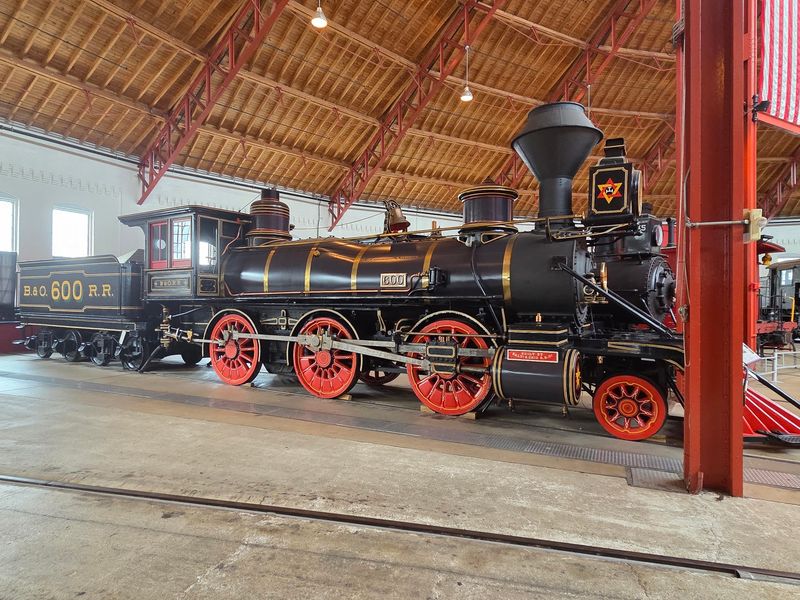
Steam lovers, this is your moment. The museum holds the country’s finest collection of nineteenth-century American steam locomotives, including some astonishing survivors.
One standout is the B&O No. 25 William Mason, built in 1856. Its polished appearance and graceful proportions help explain why historic locomotives often seem almost sculptural.
Then there’s the Tom Thumb replica. The original experimental engine demonstrated steam power on the B&O in 1830, when America’s commercial railway network was still in its infancy.
The compact reproduction makes those early experiments much easier to imagine.
Other engines show how quickly machinery grew more sophisticated. The B&O No. 600, built in 1875, was a giant for its time.
Its wheel arrangement, large boiler, and elaborate details make an interesting comparison with Tom Thumb. These machines show innovation through real shapes and sizes rather than diagrams alone.
Imagine standing beside the early locomotive, then turning to face one that could pull a far heavier train.
For families exploring Maryland railroad history, the roundhouse makes the nineteenth century feel unusually tangible. Every engine has its own personality, even when completely still.
The Story Changes When Steam Gives Way To New Ideas
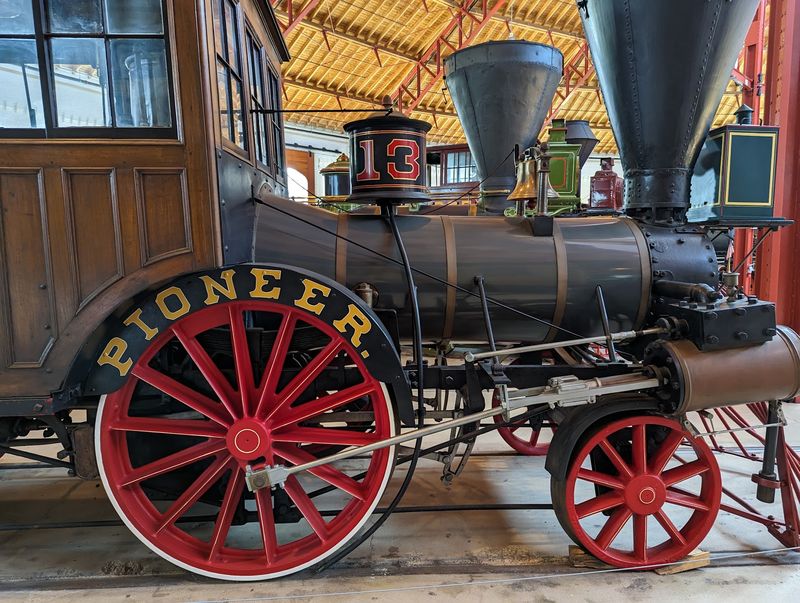
In the North Car Shop, streamlined locomotives introduce a period when railroads competed to offer faster, more comfortable passenger service.
The graceful C&O No. 490 Hudson and pioneering diesel equipment show very different approaches to design.
The museum’s restored B&O No. 3316 observation car offers another glimpse into passenger travel.
Its curved, streamlined design reflects the elegance of mid-twentieth-century rail journeys, when wide windows and comfortable lounge seating made the trip part of the experience.
Behind those polished interiors was an enormous amount of skilled work.
Railroad employees maintained equipment, managed schedules, cared for passengers, and kept a nationwide network moving. Displays about these roles broaden the story beyond engineers and engines.
For something hands-on, the About Time exhibition explores railway timekeeping, including 21 clocks and 12 pocket watches.
A manual activity lets you experiment with different time zones, revealing why accurate clocks mattered so much to rail travel.
It’s a surprisingly satisfying twist: after admiring massive locomotives, you discover that a small watch helped keep them running on schedule.
Small Treasures Tell Surprisingly Big Stories
Giant engines grab the spotlight, but the little stuff deserves your attention too.
The museum preserves more than 6,000 smaller objects documenting the everyday world of railroading.
Tools, signs, timepieces, uniforms, and other artifacts help explain how transportation affected ordinary routines.
A carefully kept watch says something about punctuality; a piece of passenger equipment suggests how much the experience of traveling changed over the decades. Then come the model trains.
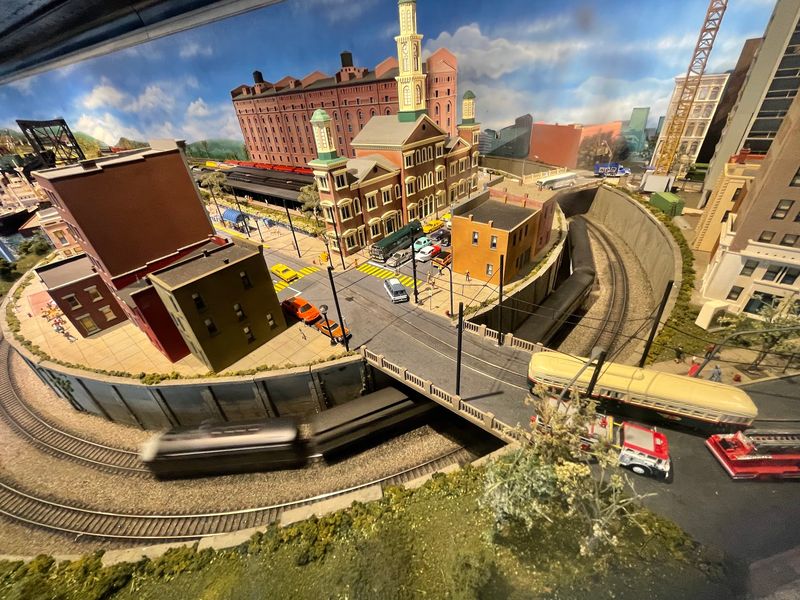
In the Annex, the HO-scale Baltimore City layout recreates the region as it appeared in 1997, taking miniature trains from the Inner Harbor through downtown and into the suburbs.
A second model display follows the early B&O main line westward, passing a tiny Point of Rocks station and scenery inspired by the Potomac corridor. Even people who aren’t dedicated model enthusiasts can appreciate the craftsmanship.
Younger children have a different place to explore: Junior Junction, a hands-on activity area inside the roundhouse, with train-themed learning and play.
The collection is enormous in both directions, from full-sized engines that fill a room to tiny railway scenes that fit inside one.
Planning Your Visit Is Easier Than Laying Track
Good news for road trippers: free off-street parking waits right on site.
The museum welcomes visitors daily from 10 a.m. to 4 p.m., aside from certain holidays and occasional weather-related changes.
Arriving early gives you time to explore the roundhouse, additional galleries, and outdoor railway displays without trying to squeeze everything into the final hour.
Plan for several hours if you want to read exhibits, linger over model trains, and take a seasonal train ride. The campus includes both indoor and outdoor walking, so comfortable shoes make sense.
A museum café serves lunch, snacks, and desserts, while the gift shop stocks train toys, books, apparel, and keepsakes.
Outside food isn’t permitted. Families can also use sensory-support resources, and accessible paths help visitors navigate the grounds.
One future attraction is worth knowing about: the museum plans to open its new Innovation Hall in 2027 as part of a major campus expansion.
Make this Maryland outing at 901 West Pratt Street, Baltimore, MD 21223. Full steam ahead!