This North Carolina Church Holds A Nearly 50 Year Old Crucifixion Fresco That Looks Almost Three Dimensional
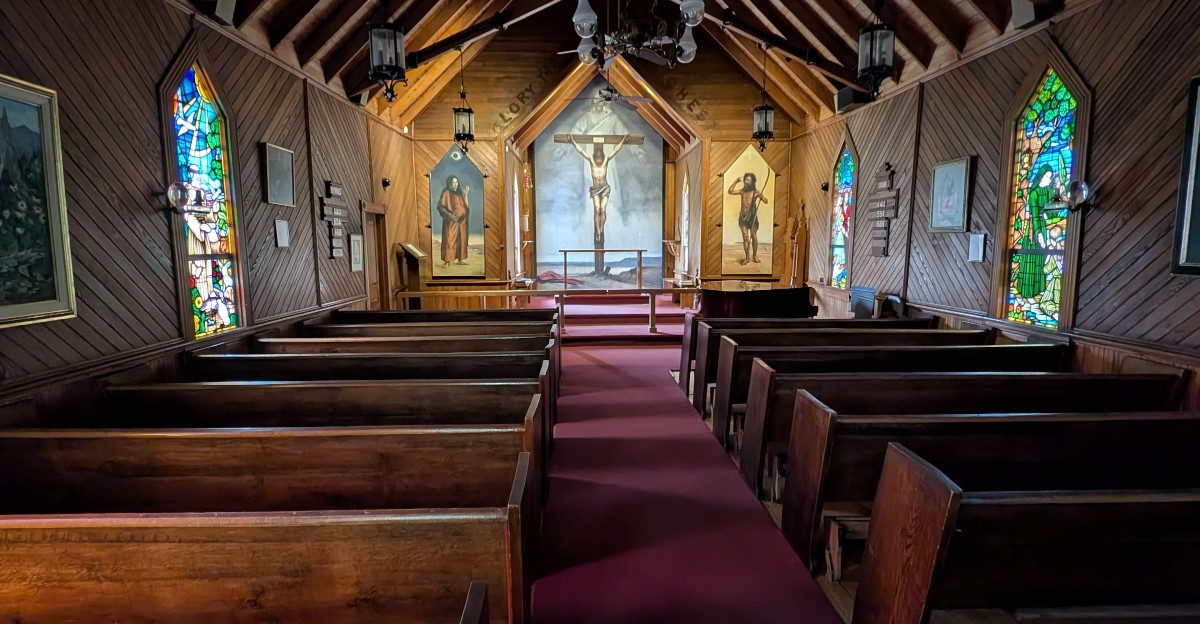
I expected a simple little mountain church.
Instead, I found a painted figure of Jesus that seems to lean right out of the wall behind the altar.
The effect is almost unsettling in its realism, especially once I learned the image was painted directly onto wet plaster in the 1970s using true fresco technique.
Suddenly, this modest 1905 chapel in North Carolina feels far bigger than its walls.
The room holds several works by the same artist, but the setting keeps everything intimate.
No museum ropes. No giant gallery.
Just wooden pews, stained glass, and a recorded guide quietly explaining what you are looking at.
For me, the surprise is the contrast.
Serious art ended up in one of the least expected places possible, and somehow that makes it even harder to forget.
The Crucifixion Scene Behind The Altar Will Stop You Cold
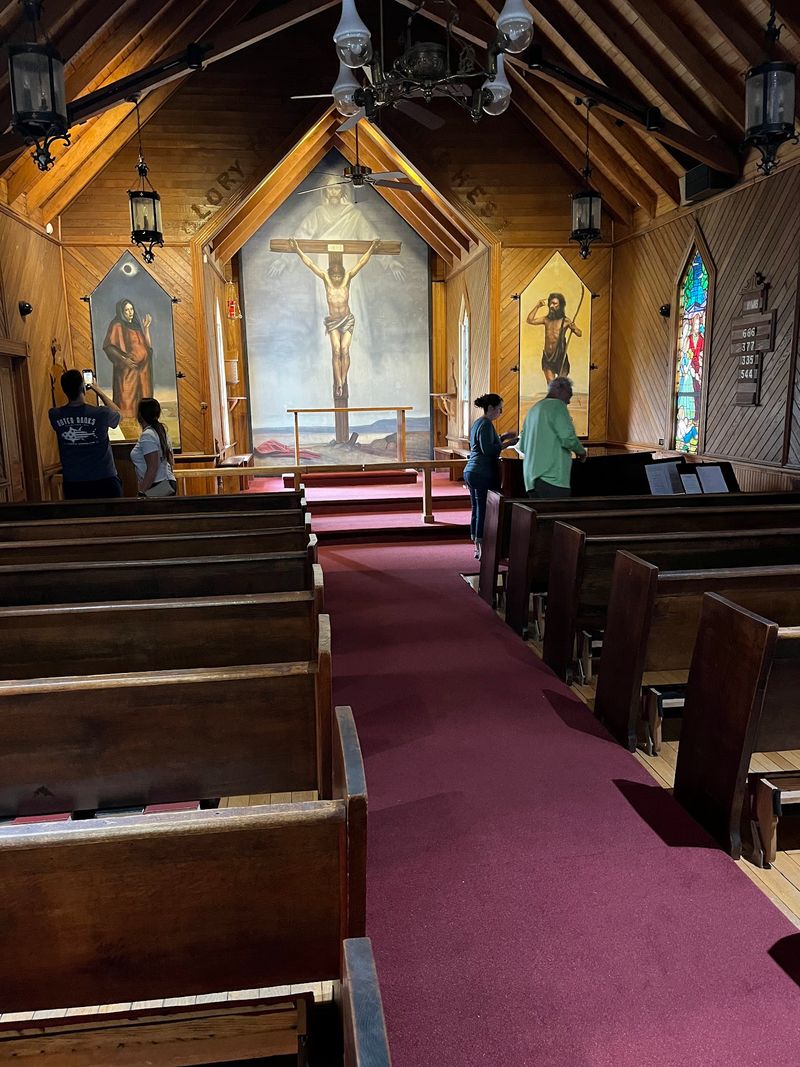
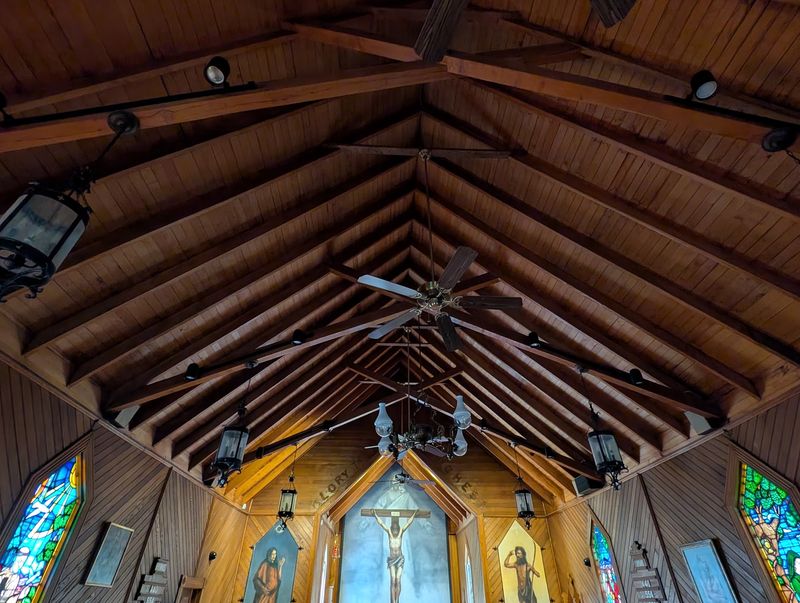
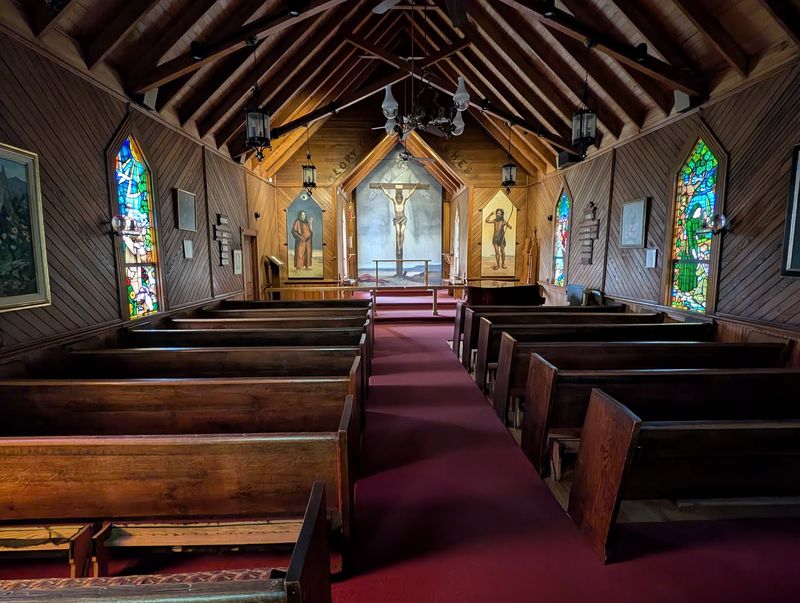
Front and center at Saint Mary’s Episcopal Church, one painting owns the whole room. It’s called The Mystery of Faith, and it fills the wall behind the altar.
Artist Ben Long and his students finished it in 1977. The scene shows Jesus on the cross with stark, almost three-dimensional realism.
That realism is what grabs people first. The figure looks less like paint and more like something you could reach out and touch.
The fresco blends the crucifixion with the hope of resurrection. Behind Jesus on the cross, a larger, almost ghostly image of the risen Christ appears, bringing the crucifixion and resurrection together in one powerful scene.
Take your time with this one. Sit in a pew and let your eyes travel slowly from the bottom of the wall to the top.
Small details tend to show up the longer you look. Shadows, folds of cloth, and expressions all reward a little patience.
One practical tip helps here. A barrier protects the altar area, and an alarm guards it, so admire from the pews.
Honestly, staying back works in your favor. The full composition actually reads best from a few rows away, where the whole story fits in view.
Mary Waits For A Very Special Arrival On One Wall
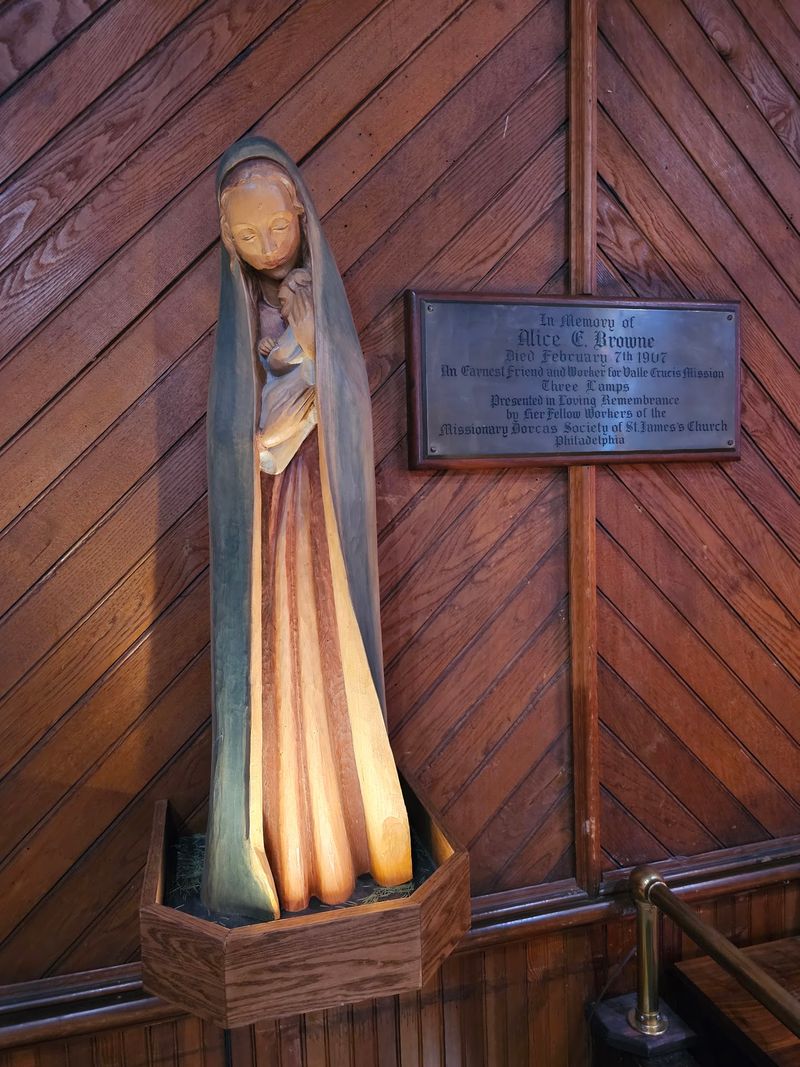
Most paintings of Mary show her holding baby Jesus. The first fresco here does something different and shows her expecting.
Mary Great with Child was completed in 1974. It was the first of the three frescoes to grace this little sanctuary.
I like how human this image feels. Anyone who has waited for a new baby in the family can relate to that quiet, hopeful moment.
The painting captures Mary before the famous story really begins. It’s a pause, not a celebration, and that makes it feel personal.
Families with kids can use this fresco as a gentle starting point. Ask younger visitors what they think Mary might be feeling.
That one question can turn a quick stop into a real conversation. Kids often notice things adults rush past.
Fun fact for art lovers: this was where the project kicked off in North Carolina. Its success helped lead to the two frescoes that followed over the next few years.
So in a way, this wall started everything. Without Mary, the famous altar scene might never have happened.
John The Baptist Brings Some Bold Energy To The Room
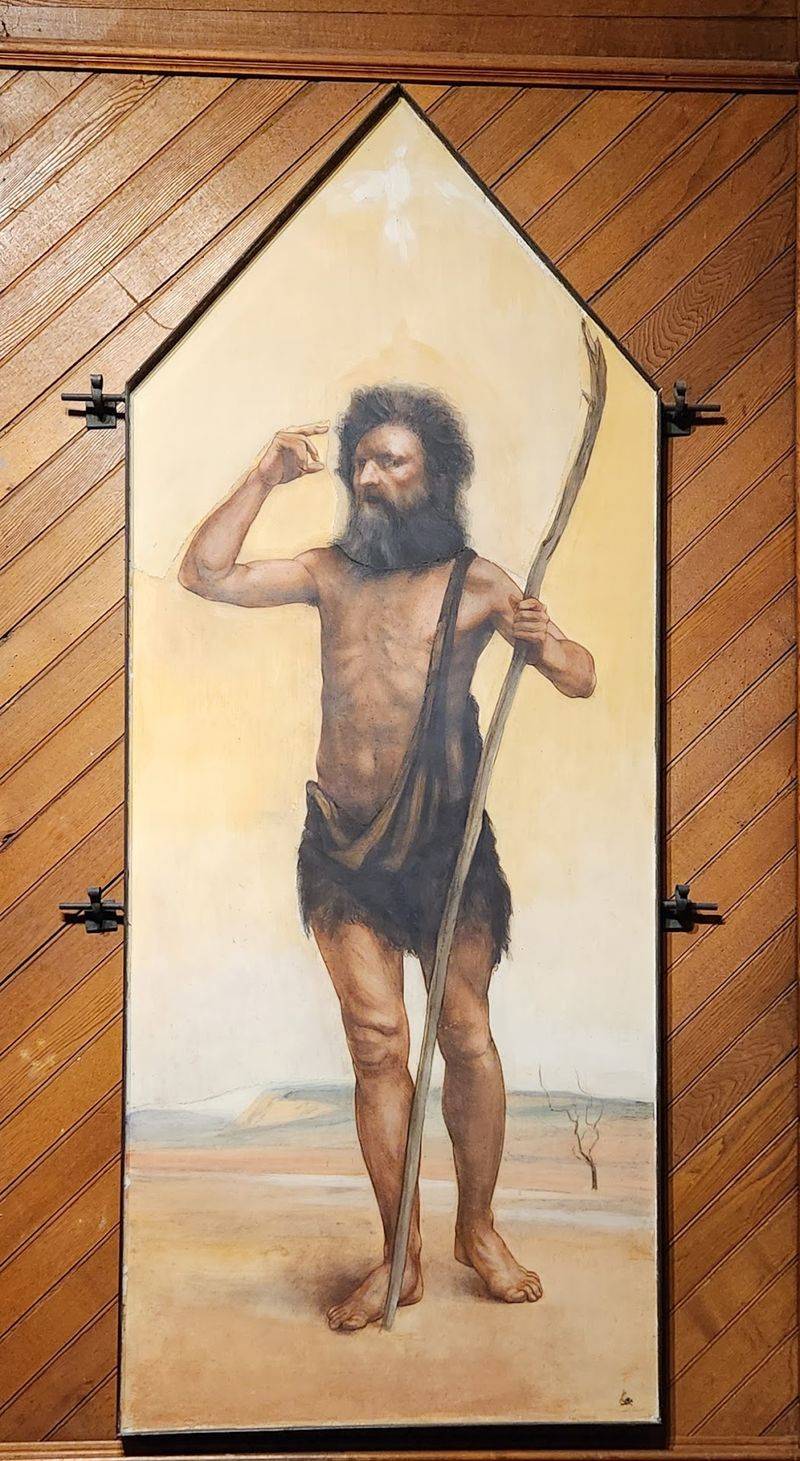
Every good story needs a messenger. In this sanctuary, that role belongs to John the Baptist.
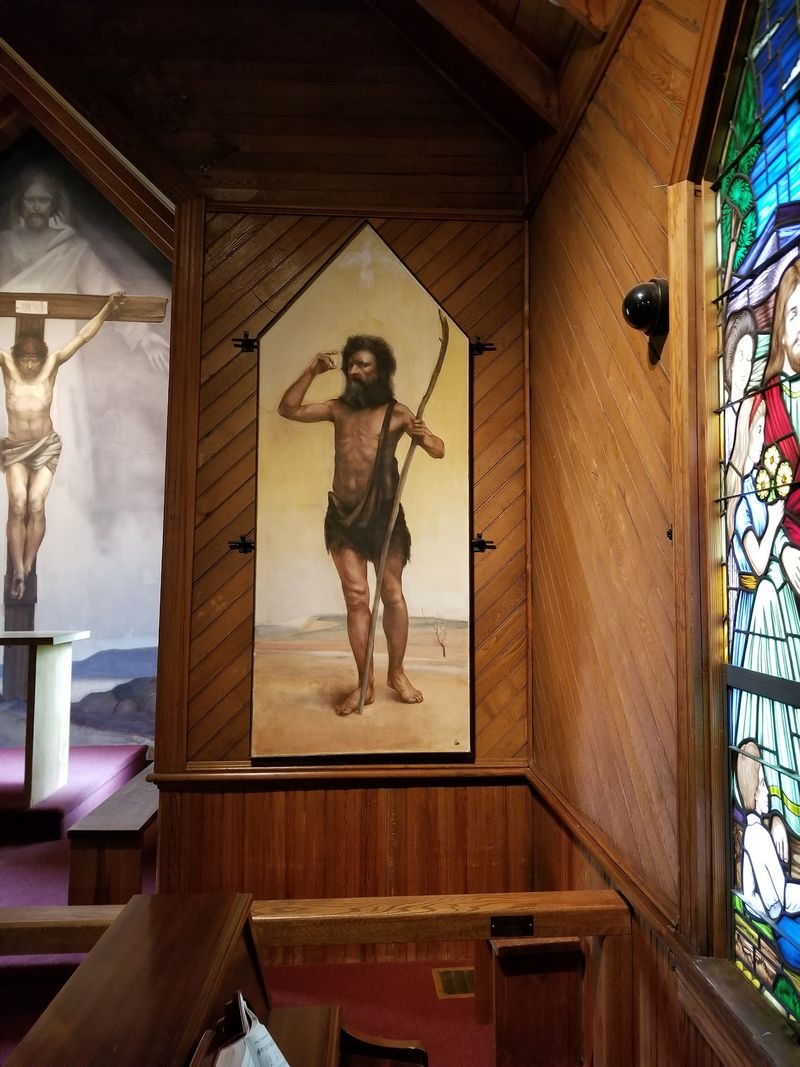
His fresco was completed in 1976. It arrived two years after Mary and one year before the big altar scene.
John fits neatly between those two paintings, both in timing and in meaning. In the Bible, he’s the one who announces that Jesus is coming.
Seeing all three together feels like reading chapters of a book. Mary waits, John announces, and the altar fresco shows the story’s center.
Here’s a smart way to view them. Start with Mary, move to John, and finish facing the altar.
That order follows the dates and the story at the same time. It’s a tidy little art lesson that takes only a few minutes.
John is often painted as a rugged, wild figure from the wilderness. He makes a strong contrast to the calm feeling of the Mary fresco nearby.
That contrast keeps the room from feeling sleepy. Even in a small chapel, the walls have plenty of personality.
Wet Plaster And Fast Hands Made All Of This Possible
Painting a fresco is a race against the clock. Artists brush pigment onto wet plaster, and they must finish before it dries.
Once the plaster sets, the color becomes part of the wall itself. That’s why true frescoes can last for centuries.
Benjamin F. Long IV led the work here in the 1970s.
He didn’t do it alone, since his students worked alongside him.
Ben Long went on to become one of the best-known fresco artists in America. Spotting his early work in a tiny mountain chapel feels a bit like finding a rock star’s first garage band recording.
The method is ancient, the same family of technique used in old European churches. Seeing it in North Carolina makes the craft feel close to home.
The recorded guide inside explains how the frescoes were made. It’s worth hearing before you look closely at the walls.
After that, you’ll notice the work differently. Every brushstroke suddenly looks like a tiny decision made under pressure.
No pressure on you, though. Your only job is to sit and enjoy.
A Red Door On A White Chapel Makes A Charming First Impression
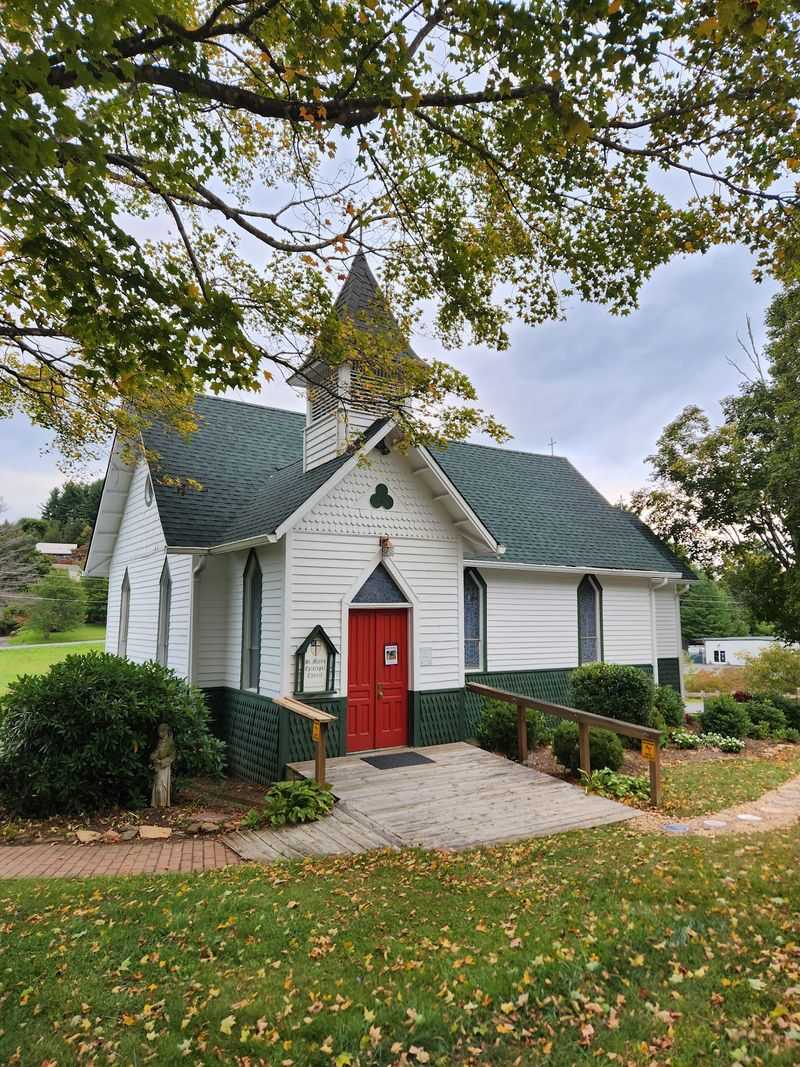
Bright red doors are hard to miss. On this chapel, the door pops against white clapboard siding and green trim.
The building dates back to 1905. Its style is Carpenter Gothic, a country take on grand Gothic churches built with wood instead of stone.
Think pointed details and a tall, tidy shape. It’s the kind of church that looks perfect on a postcard.
A stepping-stone path leads up toward the front. It sets a calm pace before you even reach the door.
Bring a camera and step back a few yards for photos. The whole chapel fits nicely in one frame against the rural setting.
Morning or late afternoon light can add warmth to the white siding. Midday works too, but softer light usually flatters a building like this.
The chapel is more than a century old, so treat it kindly. The front door can stick a little, so give it a firm but gentle push.
Consider it the building’s way of saying hello. After 1905, it’s earned a few quirks.
Colorful Glass And A Smiling Jesus Deserve Their Own Spotlight
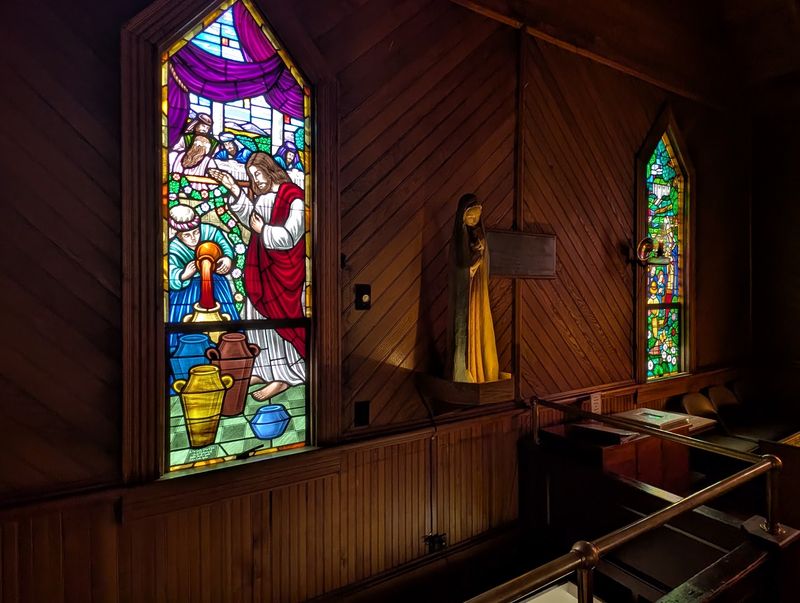
Frescoes get the headlines, yet the windows quietly steal plenty of attention. Stained glass lines the sanctuary, filling the space with color when sunlight hits.
Many of the windows date from the 1970s and 1980s. That timing matches the era when the frescoes were created.
Look closely and you’ll find playful details. One window shows children coming to Jesus, and one kid appears to be wearing tennis shoes.
That tiny modern touch is a delight. It makes the old story feel like it could happen in any neighborhood today.
Another piece adds even more joy to the room. It’s a painting called The Laughing Christ by artist Bo Bartlett.
Most art shows Jesus looking serious. Seeing Him laugh is refreshing and a little surprising.
It also balances the intense crucifixion scene behind the altar. One shows sacrifice, while the other shows warmth and happiness.
Give yourself time to scan every window. Turn it into a small game and see who can spot the tennis shoes first.
The Doors Stay Open And A Friendly Recording Does The Talking
No ticket booth, no tour schedule, and no rush. The church stays open daily for prayer, reflection, and viewing the art.
You’ll find it at 400 Beaver Creek School Road, West Jefferson, NC 28694. Saint Mary’s Episcopal Church sits in a peaceful rural spot just outside town.
Inside the vestibule, look for a button that starts an audio guide. The recording plays in the sanctuary and explains the history and the frescoes.
It runs roughly ten to fifteen minutes. Grab a pew first, because there may be a short delay after you press play.
Visiting is free, though donations help care for the building and art. A donation box sits inside for anyone who wants to give.
Plan on about twenty to thirty minutes total. That’s enough time for the recording plus a slow look around.
Parking can be a little confusing at first. A back lot offers a spot, then a short walk up to the church.
The lower level holds a community room. The art all lives upstairs in the sanctuary.
Make It A Two-Church Art Trip You Will Talk About For Weeks
One fresco church is great. Two make a full afternoon adventure.
Saint Mary’s is part of the Episcopal Parish of the Holy Communion. Its sister church is Holy Trinity in Glendale Springs, which also holds Ben Long frescoes.
Both churches are key stops on the Ben Long Frescoes Trail in Western North Carolina. Thousands of visitors follow the trail each year.
Doing both in one day is easy. Many people see Holy Trinity first and then finish at Saint Mary’s.
That order lets the altar fresco here become your grand finale. It’s a satisfying way to end a day of art.
Pack snacks and a full tank of gas before you go. Mountain roads are pretty, but they aren’t always quick.
The drive between the two adds its own reward. Ashe County scenery makes the miles feel shorter than they are.
Art fans can extend the trip even further. The wider trail includes Ben Long works in other parts of the region, so a long weekend could easily fill up.
Sunday Service Lets You See The Art Doing Its Real Job
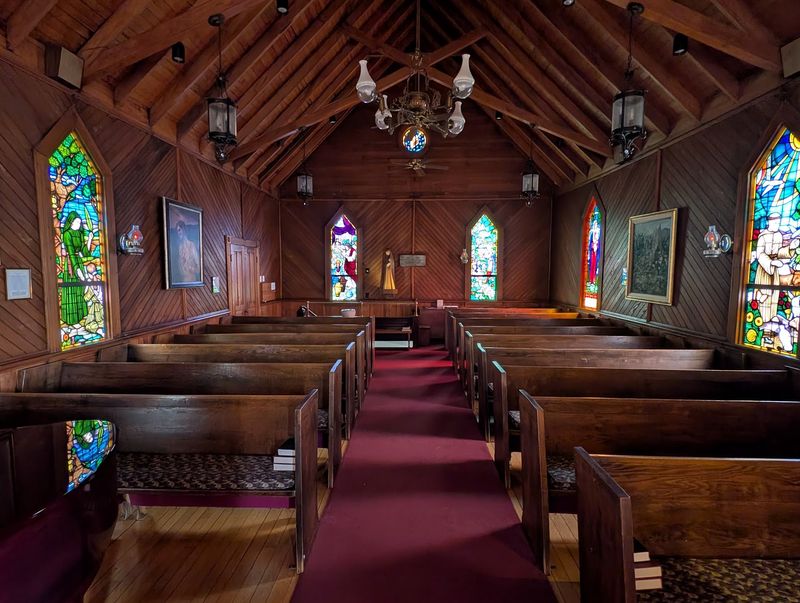
Long before tourists arrived, this was simply a place to worship. St. Mary’s has welcomed worshippers for more than a century.
In 1976, it joined Holy Trinity Church in Glendale Springs to form the Episcopal Parish of the Holy Communion.
More than a century later, it remains an active church. Sunday worship is generally held at St. Mary’s during even-numbered months and at Holy Trinity during odd-numbered months, with services beginning at 10 AM.
That changes how the art feels. These paintings weren’t made for a gallery, but for a congregation that prays in front of them.
Attending a service offers a different view of the room. The frescoes become part of the worship rather than just something to admire.
Visitors of all backgrounds are welcome to join in. You don’t need to be Episcopalian to sit in a pew and listen.
If you go, arrive a bit early. A few extra minutes lets you enjoy the art before the service begins.
Prayer books near the entrance invite quiet reflection any day of the week. Even a short stop can feel restful after a busy trip.
That’s the real charm here. Famous art and everyday faith share the same small, welcoming room.