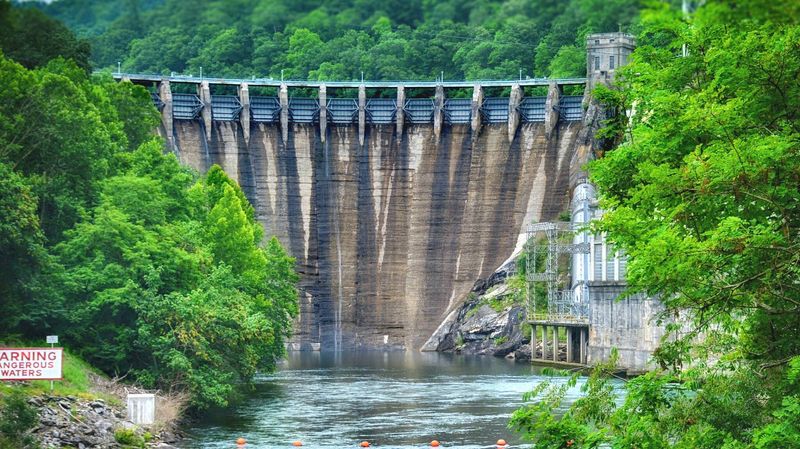
This North Carolina Dam Towers Over A Quiet Mountain Lake With Views That Feel Almost Unreal
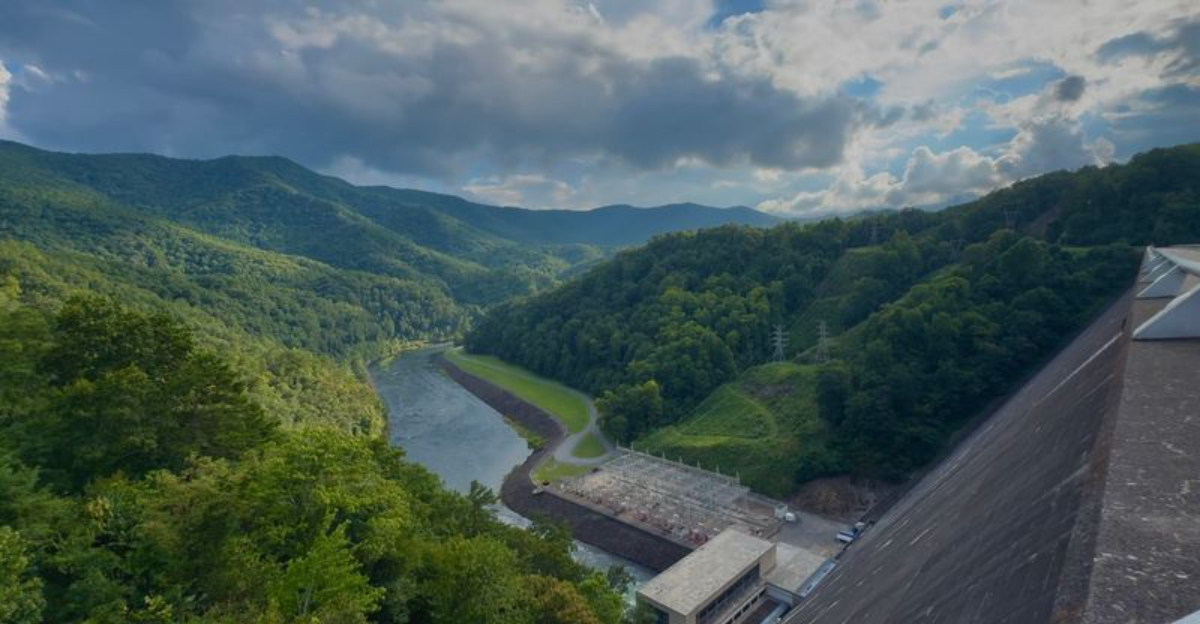
Standing at the base of this dam must feel like looking up at a mountain that learned engineering.
At 480 feet tall, the concrete wall rises with the kind of scale that makes people stop talking for a second and just stare. The view is almost unfair.
Water stretches out behind it, mountains crowd the horizon, and the whole scene feels too massive to fit into one quick glance.
Built during World War II in just two years, this North Carolina landmark carries history with the same force it holds back the lake. Nothing about it feels small.
Not the height, not the setting, not the strange mix of beauty and power waiting at the overlook.
Come for the view, then try acting normal after seeing it.
Let The First View Stop You Before You Reach The Top
First glimpses matter here because Fontana Dam does not ease into the scene politely.
It appears with a scale that makes the surrounding mountains look both powerful and strangely delicate, like the concrete wall and the green ridges are trying to outdo each other in completely different languages.
The approach through western North Carolina’s mountain roads builds the moment slowly, with curves, forest, steep slopes, and brief flashes of water all working like previews before the full view opens.
The address for the dam area near Fontana Dam Road and NC 28, Fontana Dam, NC 28733, but the experience begins before the GPS announces arrival.
TVA identifies Fontana as 480 feet high and 2,365 feet long, and those numbers become much easier to understand once the structure is actually in front of you. Morning can be especially rewarding, when mist still hangs near the hills and softer light makes the concrete face feel less severe.
Later in the day, the lake and ridgelines tend to pull more attention, but the dam itself never really becomes background. It is too big, too stark, and too deeply tied to the valley’s history for that.
Even visitors who do not usually care about engineering tend to pause, because Fontana Dam has a rare ability to turn a simple arrival into a full stop.
Walk Across A Dam That Feels Almost Too Big For The Mountains
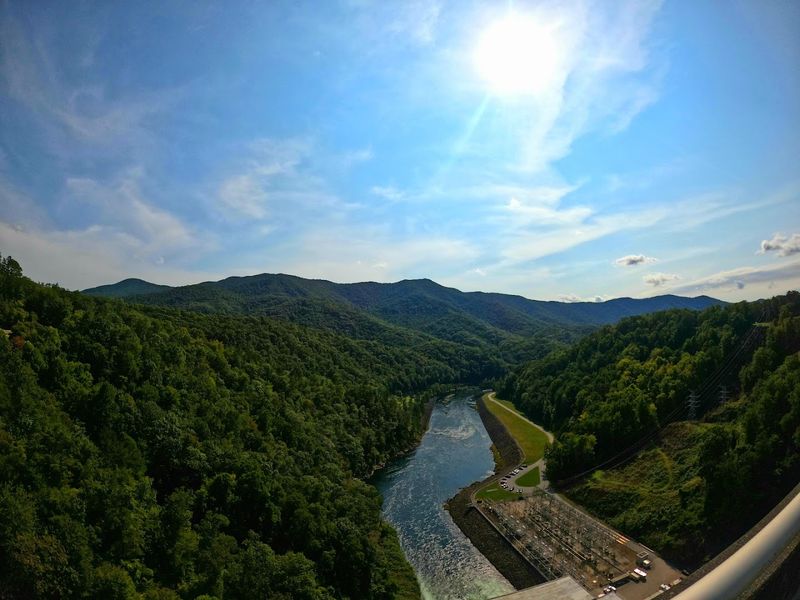
Crossing the top of Fontana Dam turns the numbers into a physical feeling. The structure stretches 2,365 feet across the Little Tennessee River, and walking that span gives visitors enough time to understand why this place has such a reputation among road trippers, hikers, and history lovers.
One side opens toward Fontana Lake, where mountain ridges press close to the water and make the reservoir feel deep, narrow, and secretive.
The other side drops toward the valley below, where the dam’s 480-foot height becomes impossible to ignore.
Wind, open sky, concrete, lake water, and forest all meet in one long crossing, and the effect can feel almost cinematic without trying. The walkway is not difficult in the hiking sense, but it can still be quietly overwhelming because the scale keeps announcing itself with every step.
People often stop near the middle, not because they are tired, but because the view demands a little time. The National Park Service notes that parking is available both on top of and below the dam, which makes it possible to experience the site from more than one angle.
Comfortable shoes help, but patience matters more. Rushing across would miss the odd thrill of standing on a wartime engineering giant while the Smokies and Nantahala country spread around it.
Look Down At The Lake And Understand The “Unreal” Part Fast
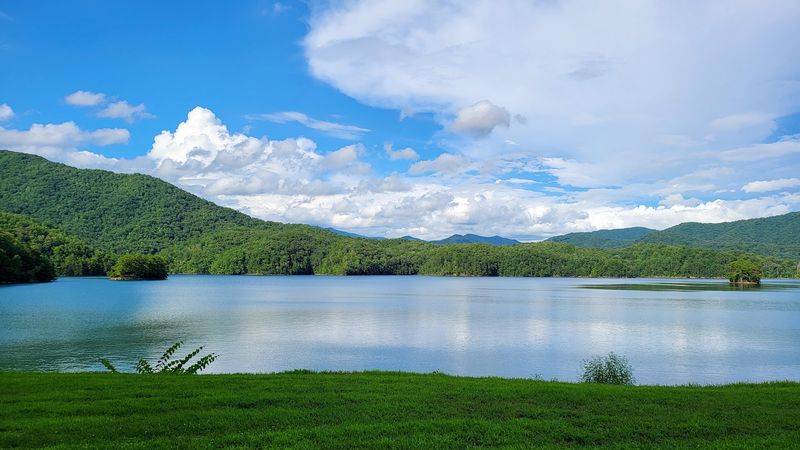
Blue-green water does a lot of the persuading once Fontana Lake comes into view. From the dam, the reservoir seems to slide between mountain ridges in long, quiet fingers, with forested shorelines that make the whole scene feel unusually protected from everyday clutter.
Fontana Lake is often described as covering about 10,230 acres with roughly 238 miles of shoreline, and that size becomes easier to feel from above than from a map. The lake’s scale is impressive, but the surrounding landscape is what makes the view feel unreal.
Development stays limited in many directions because Great Smoky Mountains National Park and Nantahala National Forest frame the area. The water feels less like a busy resort lake and more like a mountain reservoir that still belongs to the surrounding ridges.
Calm days are the best for lingering because reflections can soften the whole scene, doubling the sky and trees in a way that makes the lake feel even larger.
Midday light brightens the water, while early and late light adds more drama to the slopes.
Looking down from the dam shows both the beauty and power of the area at once, with a calm lake held back by a massive wall. The mountains around it make the scene feel natural, even though it comes from a major construction project.
Follow The Appalachian Trail Across A Piece Of Engineering History
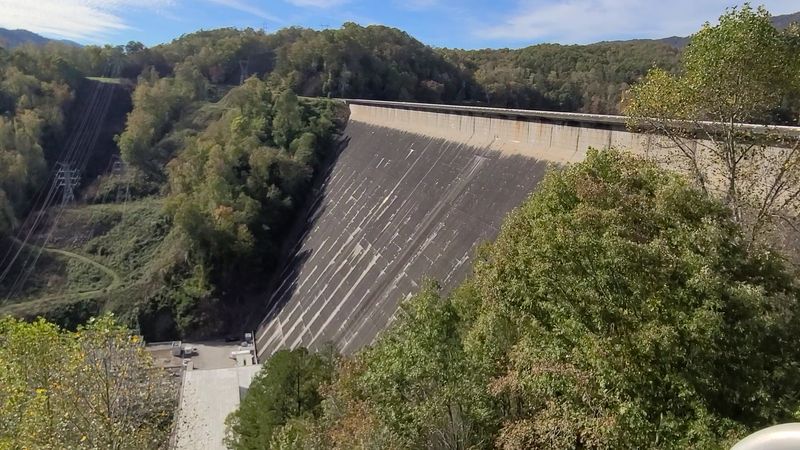
White blazes make Fontana Dam more than a scenic overlook. The Appalachian Trail crosses the top of the dam before entering Great Smoky Mountains National Park, which gives day visitors and long-distance hikers a rare shared moment on the same dramatic stretch of concrete.
For northbound thru-hikers, this crossing carries extra weight because the Smokies wait ahead, bringing one of the most famous and demanding sections of the entire trail.
For casual visitors, it offers an easy way to step onto a legendary footpath without committing to a mountain climb.
That contrast is part of the magic. One person may be a muddy backpacker thinking about the next shelter.
Another may be a road tripper who only meant to stop for photos. Both can stand on the same dam, look toward the same lake, and feel connected to a trail that runs for more than 2,000 miles.
The Appalachian Trail Conservancy describes Fontana Dam as the tallest dam in the eastern United States and notes that the trail crosses it, with views of Fontana Lake, the Little Tennessee River gorge, and surrounding mountains. Engineering history and trail culture rarely meet this neatly.
Fontana gives both stories room: the wartime TVA project that reshaped the valley and the footpath that keeps sending hikers across it decade after decade.
Bring A Camera Because The Water Does Most Of The Showing Off
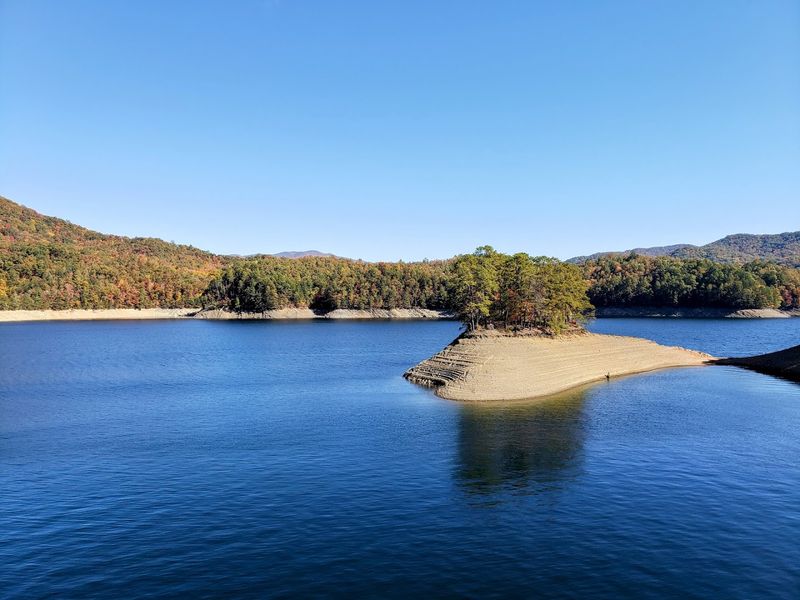
Photos come easily at Fontana Dam because the lake keeps changing its mind about color. Depending on cloud cover, season, water level, and sun angle, Fontana Lake can shift from deep blue to smoky green to bright mountain glass, and the ridges around it keep adding layers to every frame.
No elaborate setup is needed from the dam walkway. The lines are already there: concrete edge, long reservoir, folded mountains, sky, and sometimes a lone boat small enough to show just how large the scene really is.
Fontana Reservoir is associated with 10,230 acres of water and 238 miles of shoreline, so even a simple photo can capture only a small part of the full landscape. The best camera advice is to look in both directions.
The lake side gives the pretty postcard view, but the downstream side makes the dam’s height and structure feel more dramatic. Early light can bring mist and softer mountain tones, while sunset can turn the ridges warmer and deepen the water.
Drone use around federal lands, TVA sites, roads, and nearby park areas can involve restrictions, so checking current rules before flying is smarter than guessing. A phone camera is enough for most visitors anyway.
Fontana Dam does not need much help. The water, the scale, and the mountains do the showing off.
Pause At The Visitor Center Before The Scale Fully Sinks In
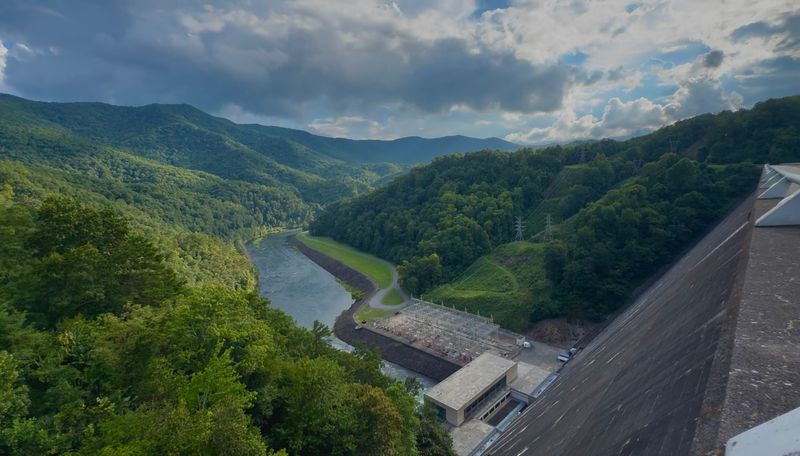
Context makes the concrete feel heavier in the best way.
TVA’s Fontana Dam Visitor Center, just off NC 28 near the Tennessee-North Carolina state line, is open daily from May through October. The National Park Service notes it helps visitors understand why this remote mountain site became so important during World War II.
TVA says wartime necessity spurred construction of Fontana Dam, which was built across the Little Tennessee River as part of the region’s hydroelectric system. The visitor center gives the view a backstory before or after the walk across the top.
Instead of seeing only a beautiful lake and a huge dam, visitors can think about the workers, urgency, logistics, power demands, and mountain communities tied to the project.
Construction began in the early 1940s and the dam was completed in 1944, an especially striking timeline considering the size and isolation of the site.
The exhibits and information also help explain the Tennessee Valley Authority’s role, the dam’s power purpose, and the way this project reshaped the surrounding valley. A stop here does not need to take long, but skipping it makes the site feel flatter.
The view is impressive by itself. The history makes it memorable.
Once you know even a little about what it took to build Fontana, stepping back outside and looking at that 480-foot wall feels completely different.
Watch The Smokies Turn A Concrete Wall Into A Scenic Moment
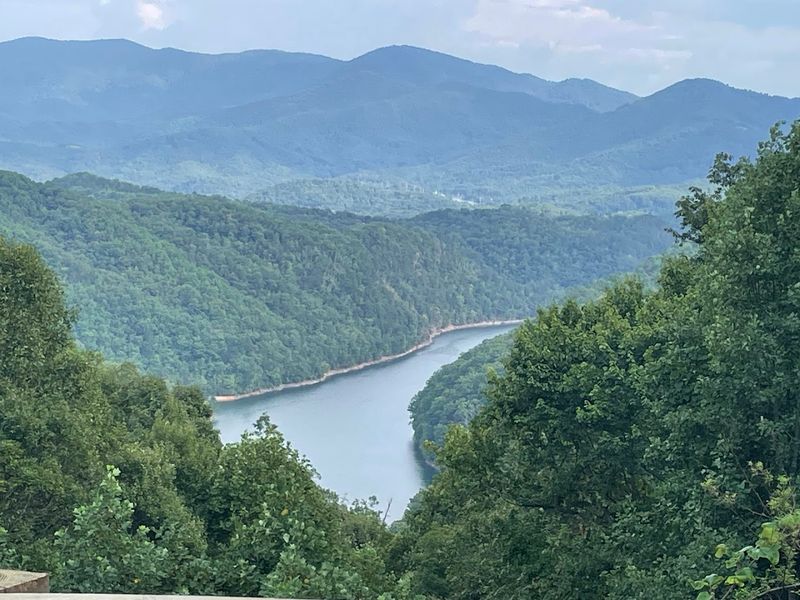
Concrete should not look this good, but the Smokies refuse to let Fontana Dam feel purely industrial. Great Smoky Mountains National Park describes the Fontana area as one of the park’s more remote sections, where the waters of Fontana and Cheoah lakes shape the park’s southwestern boundary west of Bryson City.
That setting matters because the dam does not stand alone in a blank landscape. Forested ridges climb around it, blue haze softens the distance, and Nantahala country adds another sweep of mountain texture nearby.
The result is a strange but beautiful balance: human-made scale against natural scale. In summer, the surrounding slopes are dense and green, making the concrete look even more massive.
In fall, color spreads across the hillsides and turns the dam into a quiet gray anchor beneath all that red, orange, and gold. After rain, mist can gather in the folds of the mountains and make the lake feel even more secluded.
The dam’s straight lines and hard surfaces contrast with everything around it, yet the scene somehow works. It feels less like the structure interrupts the landscape and more like the mountains have slowly absorbed it into their story.
That is why Fontana Dam stays interesting even for visitors who normally prefer waterfalls, overlooks, and trails. The Smokies turn the dam into a scenic moment, not just an engineering stop.
Leave Knowing This Quiet Lake Hides One Of North Carolina’s Biggest Views
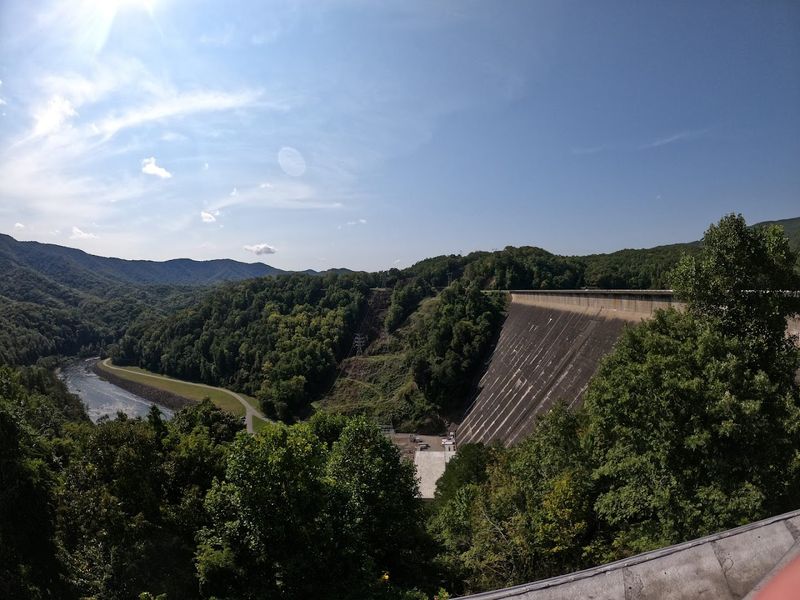
Silence gives Fontana Lake part of its power. There are no flashy boardwalks along the dam, no loud resort strip pressed against every shoreline, and no need for the place to oversell itself.
The view is enough. Fontana Dam impounds the Little Tennessee River to form Fontana Lake, and the Appalachian Trail crosses the dam before entering Great Smoky Mountains National Park, placing this quiet mountain site at the intersection of water, history, hiking, and engineering.
The lake was created when the dam was completed in 1944, and that history adds a deeper feeling to the calm surface. Valleys changed.
Communities and roads were affected. Power needs during the war shaped the project.
Today, most visitors arrive for beauty, but the landscape carries more than scenery. Standing at the dam and looking out over the water, it is easy to feel both the peace and the weight of what happened here.
That contrast makes Fontana different from a simple overlook. It is beautiful, but not empty.
Remote, but not forgotten. Enormous, but often surprisingly quiet.
Western North Carolina has plenty of famous views, yet this one still manages to feel underappreciated because the drive takes effort and the setting stays calm.
Leave once, and the image tends to linger: a massive dam, a still lake, and mountains making the whole thing feel almost unreal.