Still Standing Since The 1800s, This Nebraska House Museum Once Belonged To A Civil War Hero
Ulysses S. Grant and his wife were dinner guests here in November 1879.
Less than a year later, President Rutherford B. Hayes stayed overnight.
That is two presidents passing through one front door in about ten months.
The house was brand new back then, built in 1879 for a celebrated Civil War general. It still stands today in Nebraska, filled with Victorian furniture and stories.
The doorknobs even carry a rare Treasury seal.
I like how this place lets you wander at your own pace. Nobody hurries you from room to room.
You can linger over a ceiling, a carpet, or an old music box as long as you like.
I can’t imagine many homes holding this much history so quietly. So who exactly lived here, and what did those famous guests see?
An 1879 Home That Still Greets Visitors On An Omaha Campus
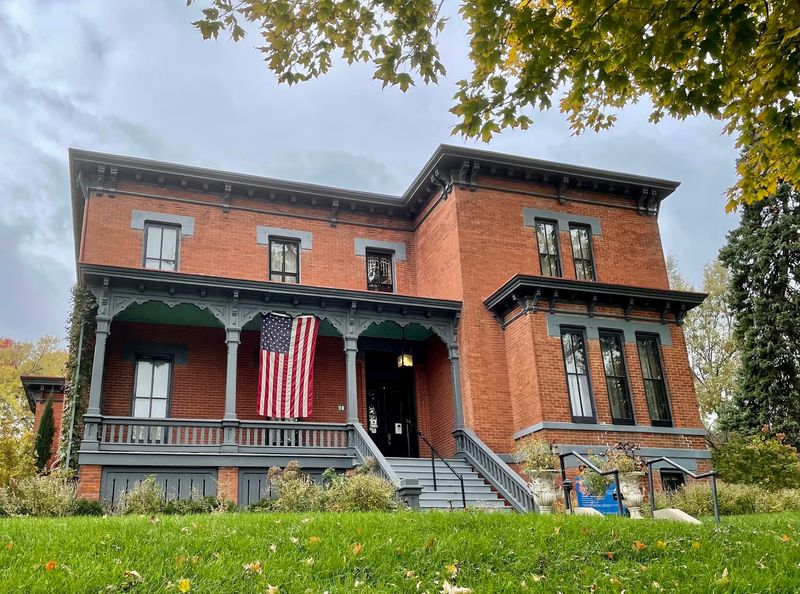
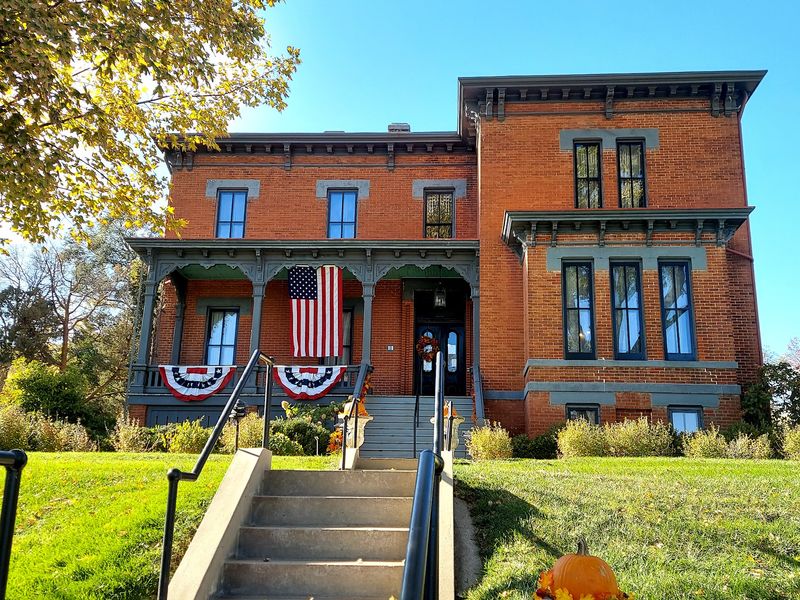
Some history hides in plain sight, and the General Crook House Museum sits right on a college campus. It’s an authentically restored 1879 Italianate home in Omaha, Nebraska.
The house now stands on the grounds of Metropolitan Community College’s Fort Omaha campus. Students pass by daily, and many probably have no idea who once lived inside.
The museum is run by the Douglas County Historical Society. That group restored the house in the 1980s and keeps its stories alive today.
Inside, rooms are filled with period furniture from around 1880. The goal is simple: show what everyday life looked like for an important household on the frontier.
It’s also recognized as the oldest structure built as a private residence in Omaha. That’s a big title for a city with so much history behind it.
The museum also includes exhibits, a gift shop, and a library and archives facility. So it works as both a step back in time and a research stop.
Plenty of lifelong Omaha residents admit they never knew it existed. Consider this your friendly nudge before you become one of them.
The General Whose Name Still Hangs Over The Door
George Crook earned his reputation as a Civil War general long before he arrived in Nebraska. He later became known for his service during the Indian Wars era too.
The house was built in 1879 as the residence for the commander of the Department of the Platte. Crook held that post, so he and his wife moved right in.
His Nebraska chapter includes a landmark moment in civil rights history. Crook played a supporting role in the 1879 trial of Standing Bear v.
Crook.
That case centered on Ponca leader Standing Bear. It became one of the most significant court cases in Nebraska history.
Walking through his former home adds a personal layer to that story. You’re seeing the rooms where the general lived during that very year.
One guest summed up the man as truly honorable. That sentiment fits the respect the museum gives his legacy throughout the house.
Even if you know little about Crook, you’ll leave with a fuller picture. That’s a pretty good return on an afternoon.
Two Presidents And A Very Busy Guest Book
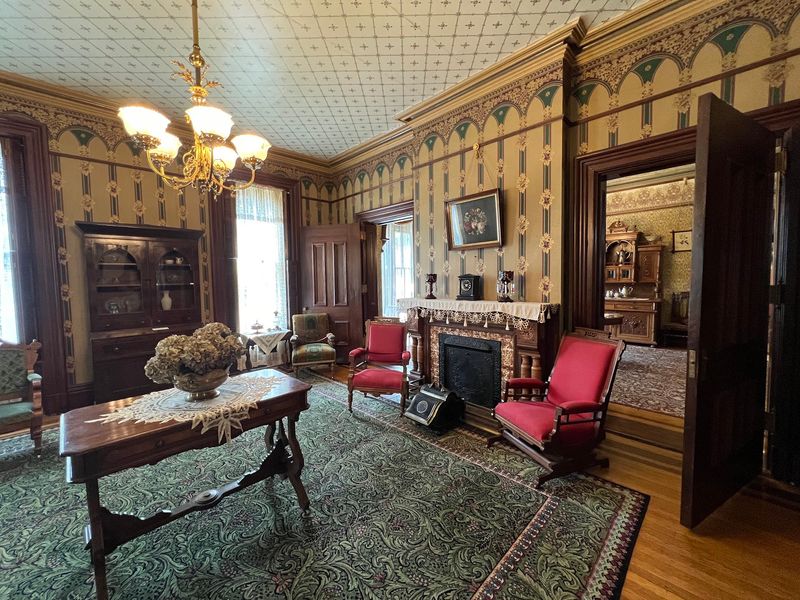
November 1879 brought quite the houseguest. General and Mrs. Crook hosted General and Mrs. Ulysses S.
Grant at the brand-new home.
Grant had already finished two terms as president by then. Still, having him at your dinner table counted as a serious social win.
Then September 1880 topped it. President Rutherford B.
Hayes stayed at the house while reviewing troops at the fort.
So within about ten months, two presidents crossed this threshold. Most houses never host one.
Honestly, that fact alone makes the visit feel different. You aren’t just admiring old furniture, you’re standing where national leaders paused on their travels.
The rooms have been restored to reflect that same era. That helps you picture the evenings when these guests arrived.
It’s fun to wonder what they talked about over dinner. The walls aren’t sharing, but the setting does a great job hinting.
Bring kids who think history only lives in textbooks. A real presidential stopover in Nebraska tends to change their minds quickly.
Nearly A Century Of Commanders, Club Nights, And Changes
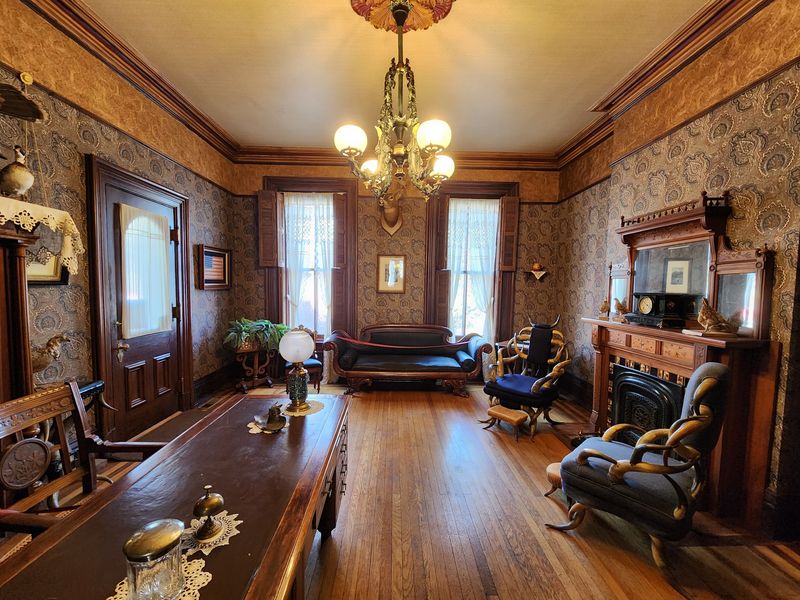
After Crook moved on, the house didn’t sit empty. It became home for the fort commanders who followed him.
In 1905, things took a social turn. The building became an officers’ club and mess hall.
Picture fewer family dinners and more uniformed gatherings. The house adapted to whatever the post needed at the time.
By 1930, it returned to its original role. It served again as the post commander’s residence.
That job lasted until the fort closed in 1973. So the house kept working for nearly a century.
Recognition arrived around then too. The home joined the National Register of Historic Places in 1969.
A year later, in 1970, it was named a Nebraska State Historical Site. Not bad for a building that once doubled as a mess hall.
Knowing this backstory makes the restoration even more impressive. Returning a working building to its 1880s look took real commitment from the Douglas County Historical Society.
Italianate Style You Can Spot From The Street
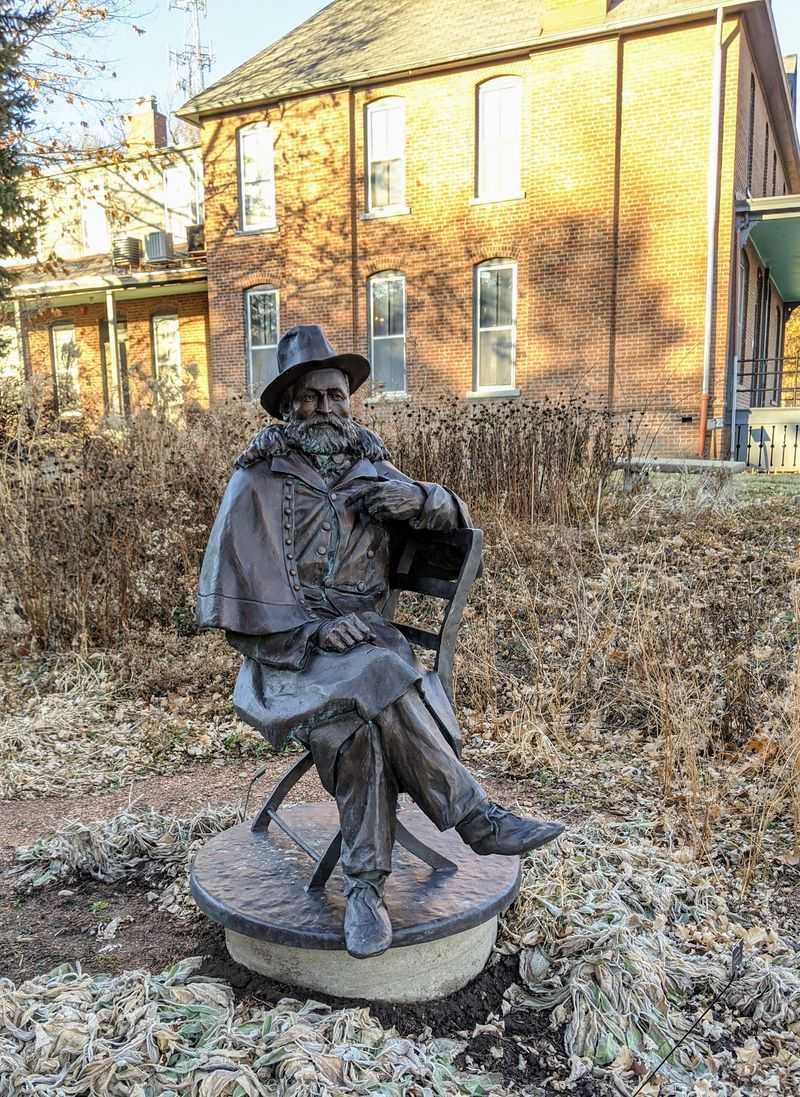
Italianate homes were a fashion statement in the 1870s. The General Crook House Museum shows off that style proudly.
The design fit a commander’s home, built to impress guests and handle formal entertaining. Two presidential visits suggest it did the job well.
Getting to the front door takes some effort. There are plenty of steps up from the street to the entrance.
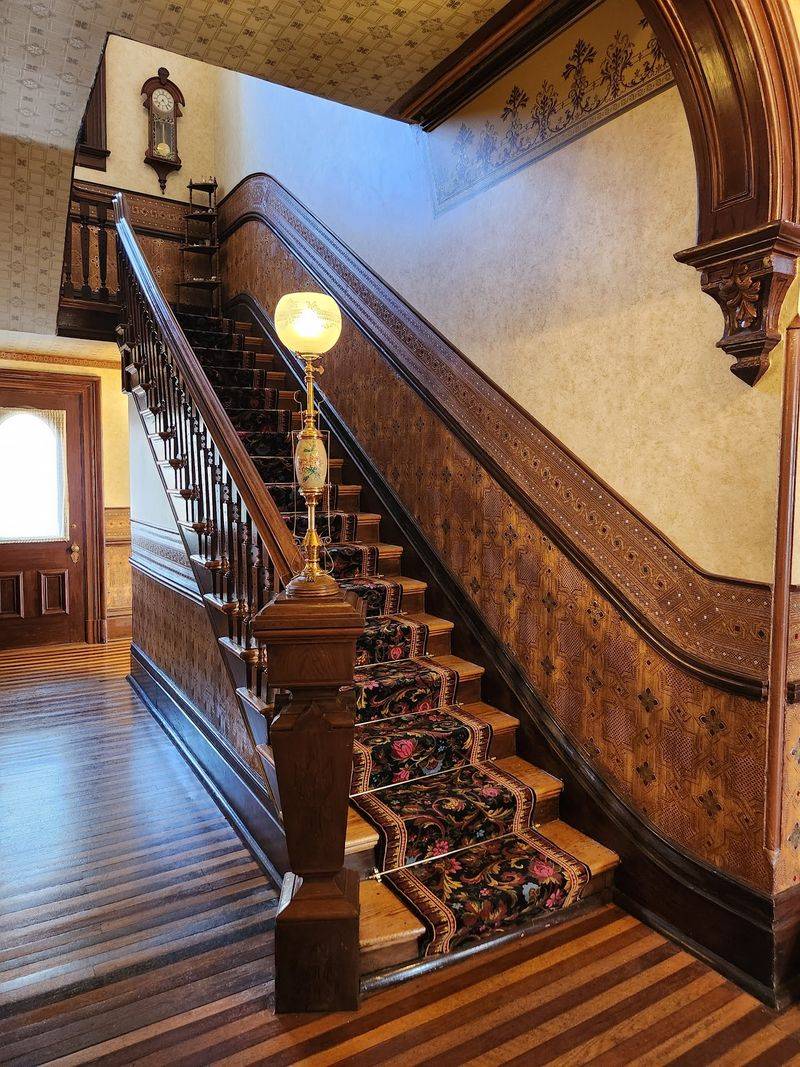
Think of them as a warm-up for the grand staircase inside. Your legs will notice, in a good way.
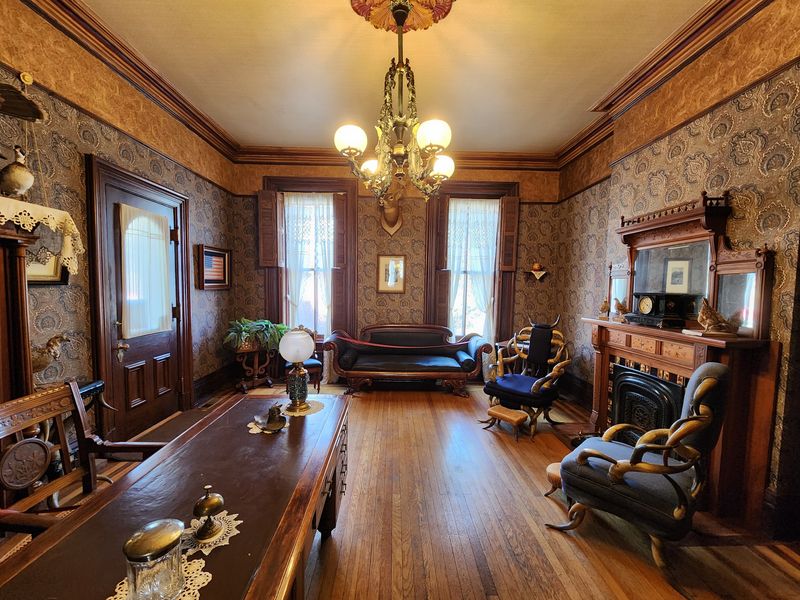
Inside, the restored ceilings, wallpapers, and carpets work together. Every room feels layered with period detail.
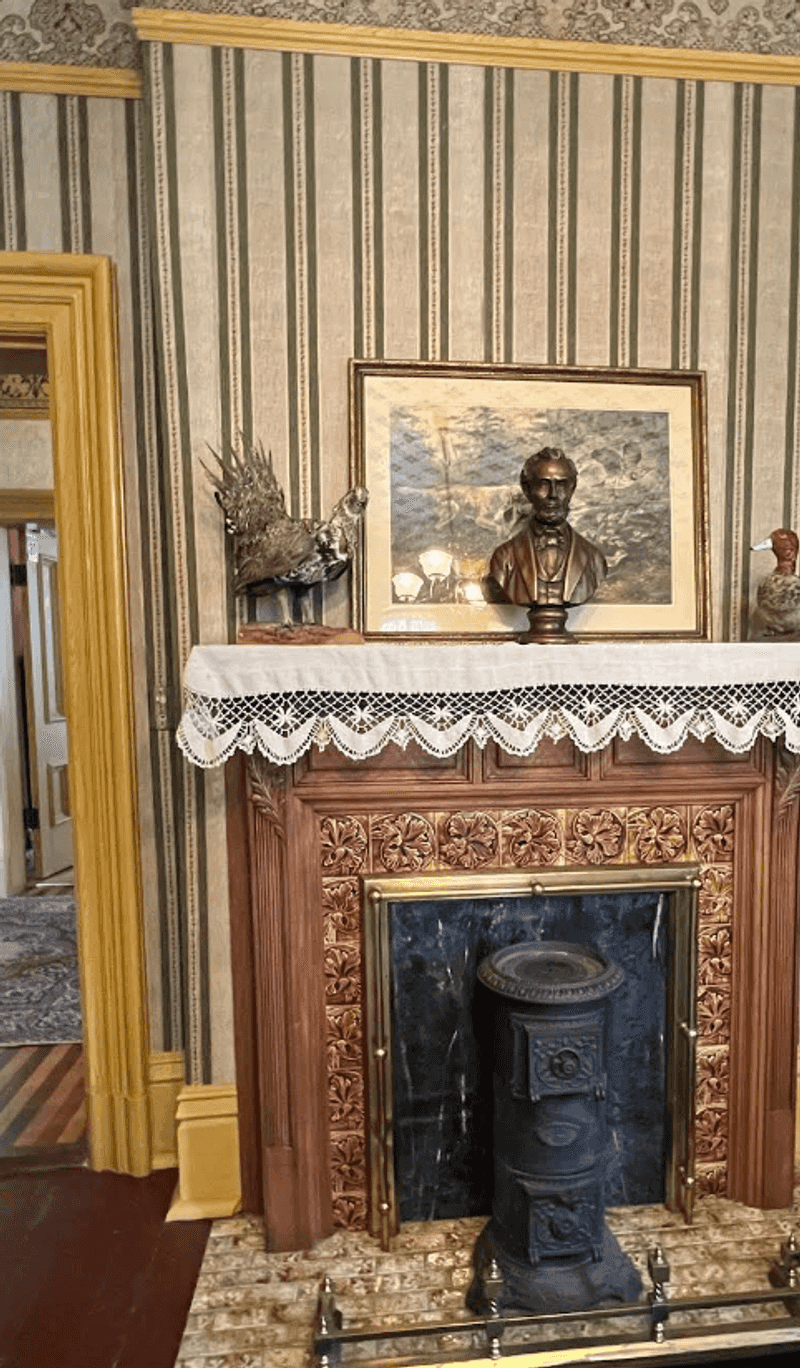
Some original-style touches reward careful eyes. Look for the rare Treasury seal on the doorknobs.
Then check the antique butt hinges. They let certain doors swing open a full 180 degrees.
Those little details are easy to miss on a quick pass. Slow down and they become some of the most satisfying finds in the house.
A Reception Room With A Musical Surprise
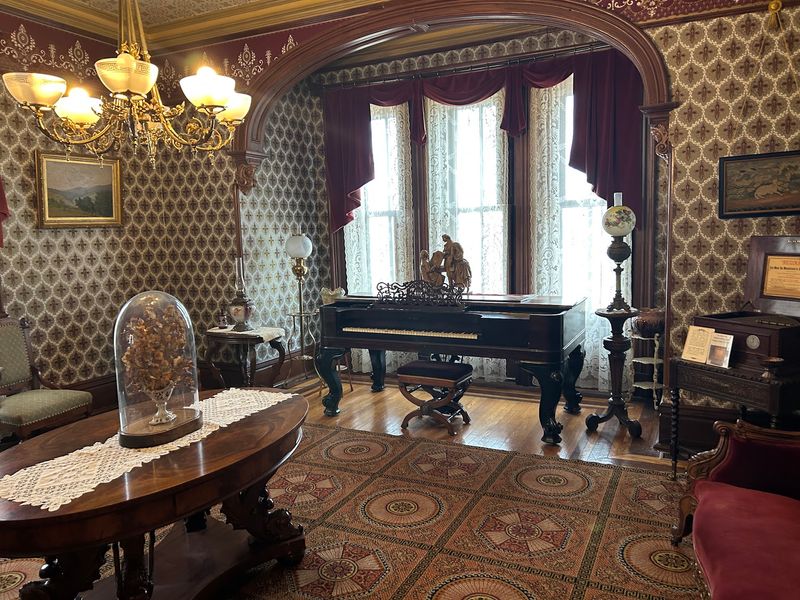
Most house museums ask you to look. The reception room here may also ask you to listen.
It holds a small Steinway piano. Right nearby sits a Regina music box that plays songs from large metal disks.
The sound from that music box has been called extraordinary. It’s the kind of thing that stops a conversation mid-sentence.
Before phones and speakers, a device like that was home entertainment. Families would gather to hear it fill a room.
The furnishings throughout date to the 1880 Victorian period. Together, they show how a well-connected household lived and hosted.
Some pieces can even be touched or sat on. That’s a rare treat in a historic home.
Sitting on a Victorian chair is a quick lesson in modern comfort. You may walk out more grateful for your recliner.
Every room offers its own stack of details. People mention spotting something new on each visit, so one trip may not be enough.
More Than 110 Flower Varieties Waiting Out Back
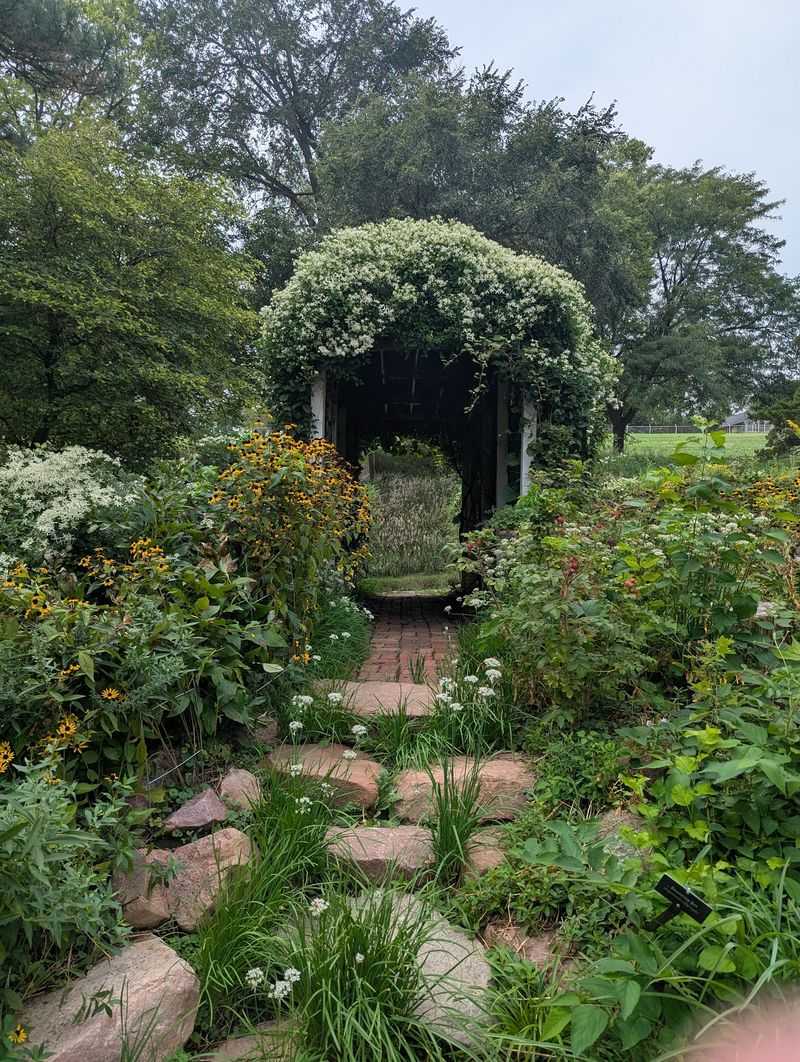
The house gets the headlines, but the garden deserves its own fan club. It’s a grand heirloom Victorian garden with more than 110 varieties of flowers and plants.
Heirloom means these are old-fashioned varieties. They fit right in with an 1879 home.
A charming gazebo sits in the perennial garden. It’s an easy spot to pause and take in the colors.
Summer is the obvious time to plan around. Several visitors who came in colder months vowed to return when everything blooms.
The outdoor space also adds breathing room to a visit. After the detailed rooms inside, fresh air feels well earned.
Gardeners will enjoy comparing notes on plants their grandparents may have grown. Everyone else can simply enjoy the view.
Bring a camera if you like flower photos. The house makes a lovely backdrop behind the beds.
Even a short stroll here rounds out the visit. Skipping the garden would be like leaving dessert on the table.
Christmas Decor And Themes That Shift Through The Year
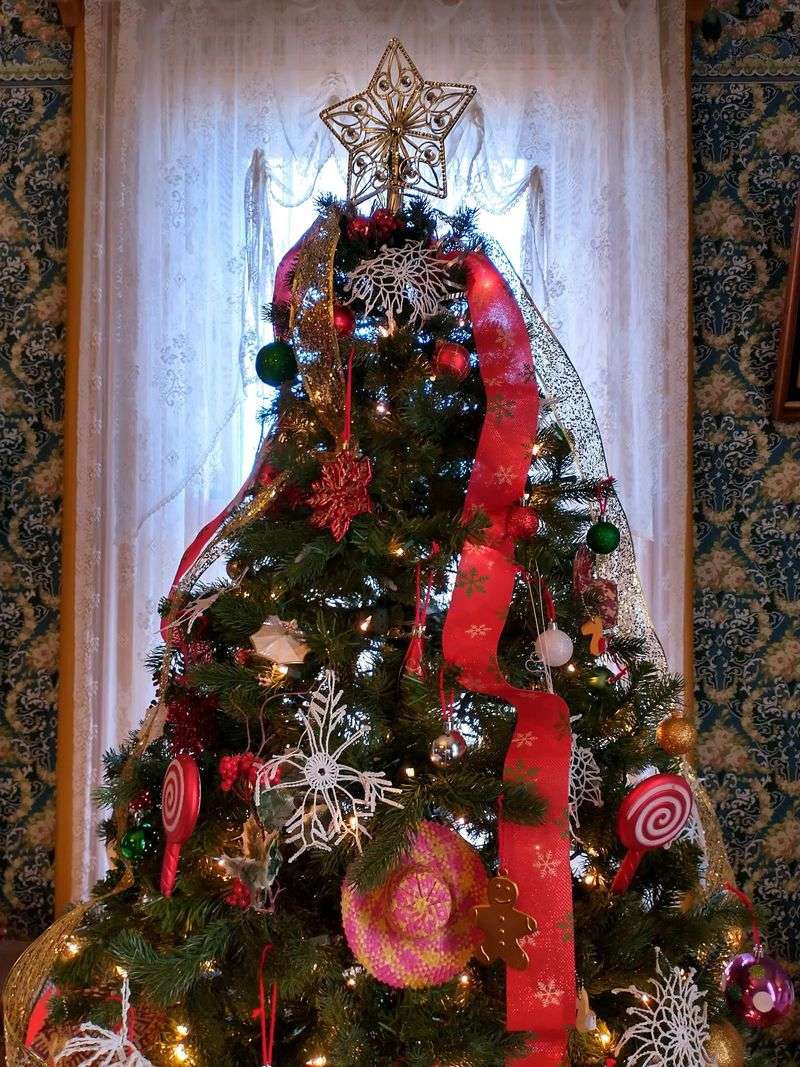
December might be the house’s showiest month. The museum is known for beautiful Christmas decorations throughout the rooms.
Victorian homes and holiday garland go together naturally. The festive look suits the furniture, wallpaper, and staircase.
The decorating doesn’t stop with Christmas, though. The museum rotates different themes throughout the year.
That means a spring visit may feel different from a winter one. Repeat trips stay interesting.
Special events also pop up on the calendar. Afternoon tea has been held here during the holiday season.
Groups can book a Frontier Dinner experience too. It’s a fun way to connect a meal with the era of the house.
Check the museum’s calendar before you go. Events change, and you’ll want to catch the one that fits your plans.
A holiday visit makes a sweet tradition for families. It’s festive, a little old-fashioned, and easy to fit into a busy season.
Your Own Pace, With Friendly Experts Nearby
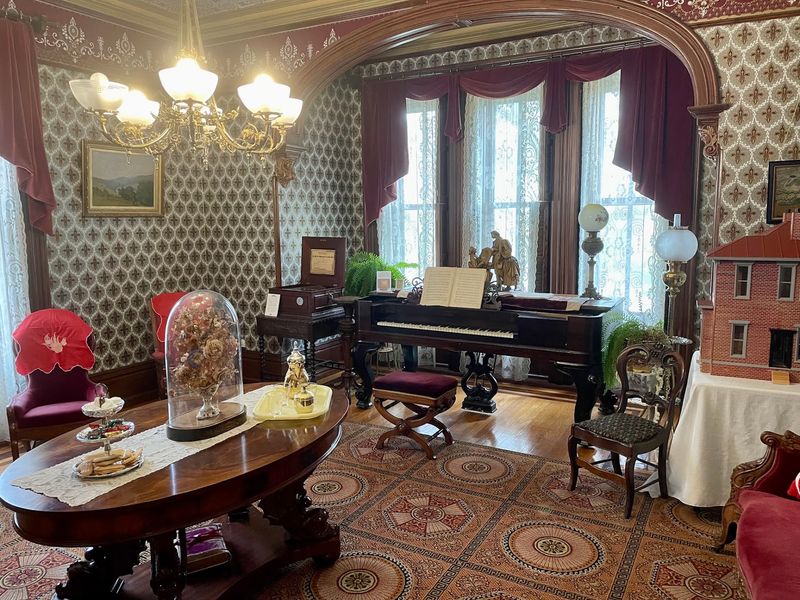
Nobody marches you through this house on a stopwatch. Tours are largely self-guided, so you set the rhythm.
That works beautifully for curious minds. You can study one room for ages and breeze through another.
Staff and volunteers are around when questions pop up. Their knowledge of the house and fort history comes up again and again.
They share stories about residents of the military post. Those tales bring the rooms to life far better than any plaque.
Exhibits focus on topics tied to Douglas County, Nebraska. Expect older artifacts and local history displays alongside the restored rooms.
A typical visit runs an hour or two. History lovers can easily stretch it further.
Grandparents bringing grandkids is a great fit here. Even lifelong Omaha residents walk away learning something new about their city.
One small tip helps on arrival. If the door is locked during open hours, ring the doorbell as the sign directs.
Small Weddings With A Presidential Pedigree
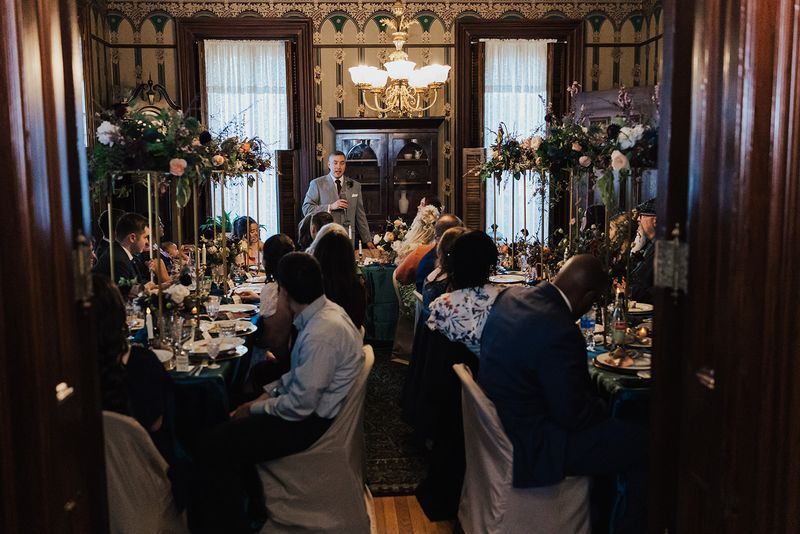
Few couples can say Ulysses S. Grant once dined at their wedding venue.
Here, that bragging right comes free with the booking.
The General Crook House Museum rents space for weddings, showers, and special occasions. Business meetings and workshops are welcome too.
Both indoor and outdoor spaces are available. The gazebo in the perennial garden makes a natural ceremony spot.
The house suits smaller gatherings best. Events for under about 50 guests fit comfortably inside.
Practical touches help a lot. There’s a kitchen, plus bathrooms upstairs and downstairs.
An elevator inside makes moving between floors easier. That’s handy for older relatives on the big day.
Photographers love the rooms around every corner. Restored wallpaper and period furniture make ready-made backdrops.
Museum staff have been described as kind and helpful during events. A calm team counts for plenty when nerves run high.
Planning something intimate in Nebraska? This historic home gives a party serious character.
Hours, Parking, And A Back Door Worth Knowing About
Planning ahead makes this visit smoother. The museum sits at 5730 N 30th St, Bldg 11B, Omaha, NE 68111.
That puts it on the Metropolitan Community College campus in north Omaha. Street parking and a parking lot are both available.
Weekdays offer the longest window, with doors open in the morning through mid-afternoon. Weekend hours run shorter, covering just the afternoon.
Arrive with at least an hour to spare. Two is better if you want the garden too.
Here’s a tip worth remembering. The front entrance has many steps, but a handicap-accessible entrance waits around back.
Inside, a small elevator connects floors. Nobody needs to tackle the grand staircase unless they want to.
Admission is charged, so check the Douglas County Historical Society for current rates. Donations help support the house too.
Lighting in a few rooms runs a bit dim, true to the era. Let your eyes adjust and the details come forward.
Why This Old Fort Home Deserves Your Next Free Afternoon
More than 145 years after Grant came to dinner, the house still opens its doors. That alone feels like a small Nebraska miracle.
The General Crook House Museum packs a lot into one stop. You get presidential history, a celebrated general, and a landmark civil rights connection.
Then come the fun extras. A singing music box, Treasury-sealed doorknobs, and over 110 garden varieties keep things lively.
It suits history buffs, families, and grandparents with curious grandkids. Couples planning small weddings should take a look too.
The scale feels manageable rather than overwhelming. You can see it well in an afternoon without sore feet.
Seasonal themes give returning visitors a reason to come back. Christmas makes an especially cheerful case.
Many Omaha natives only discovered it later in life. You can beat them to it.
So next time a quiet afternoon opens up, consider this home. Somewhere between the staircase and the gazebo, the 1880s start feeling surprisingly close.