Colorado’s Oldest Candy Factory Still Gives Tours That Feel Straight Out Of The 1950s
Some candy makers still pull hot sugar on metal hooks, by hand, like it’s a normal Tuesday.
I don’t need an excuse to find that interesting. I’m perfectly happy being impressed by grown adults twisting candy canes with their bare skill.
Many of the machines in this Colorado factory date back to the late 1800s and early 1900s.
The company also sells its goofs in a special room with a very honest name. Some facts are just enjoyable to know.
The tour is free, and it ends with candy in your hand. Hot sugar gets poured onto marble tables while you watch through the glass.
How long could anyone resist a peek?
Hand-Pulled Candy Is Still The Main Event Here
Real people are still stretching sugar by hand at Hammond’s Candies in Denver.
More than a century after opening, the factory continues producing traditional sweets with techniques that require considerable skill. That’s a big part of the attraction, and the tour lets you watch it happen.
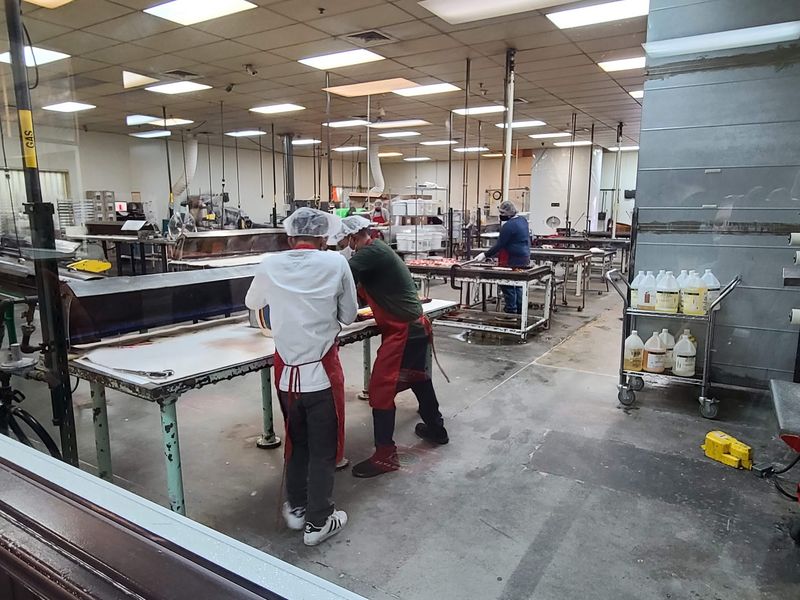
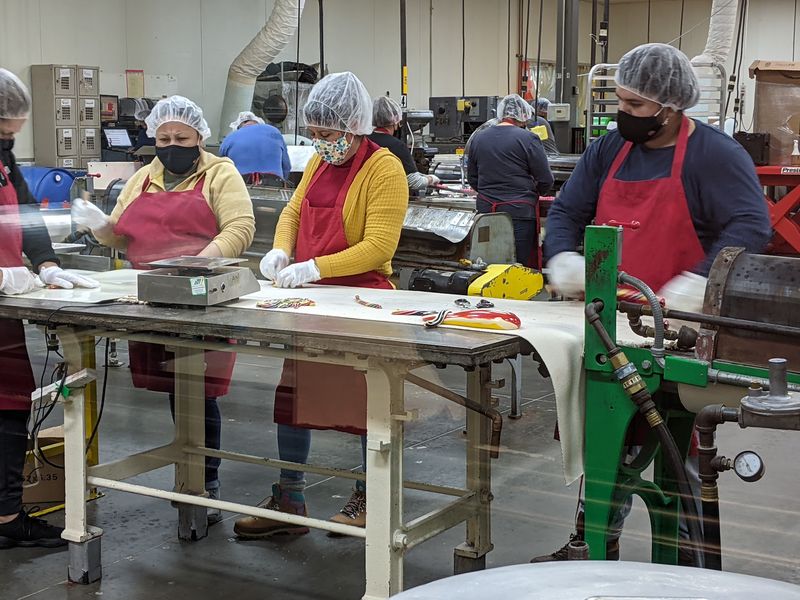
Behind viewing windows, candy makers pull, roll, shape, and twist candy canes and lollipops. The process combines traditional equipment with precise handwork, especially when creating delicate stripes and curved shapes.
The pulling process stretches warm candy repeatedly, incorporating air and changing its appearance before the final shaping begins.
Then come the twists. Stripes line up, candy canes curve, and lollipops take shape through carefully coordinated movements. Modern technology plays a supporting role, but the craftsmanship remains central to the factory’s identity.
Hammond’s produces more than 5,000 pounds of candy a day, making that combination of traditional methods and large-scale production particularly interesting.
Production varies depending on the day’s schedule. You might see candy canes taking shape, lollipops being formed, or finished sweets moving toward packaging.
A Century Of Sugar Started With One Determined Candy Maker
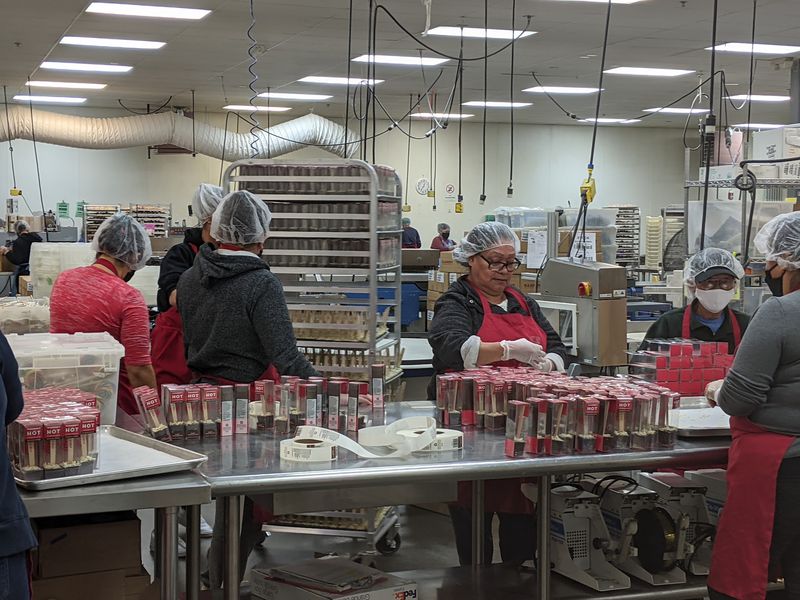
Back in 1920, Carl T. Hammond Sr. opened his candy company in Denver. He had already spent years learning the trade through apprenticeships, beginning in 1913.
His first shop operated on Platte River Street, where he developed recipes and handled much of the business himself.
One of his earliest original creations was Carl’s Piggy Backs, a chocolate confection topped with shredded coconut.
Over the following decades, the company expanded its range of handmade sweets, introducing products that became lasting parts of its collection.
Family members continued the business after the founder’s retirement from daily operations, helping preserve its traditional candy-making techniques.
A major expansion followed in 1999, when new ownership increased production and opened the factory to public tours.
In 2004, Hammond’s moved to its present 35,000-square-foot facility on Washington Street, north of downtown Denver. The larger building gave the company more room for production, packaging, and visitors.
Today, the sweets travel far beyond Colorado, reaching stores throughout the United States and international markets. Yet the factory still makes candy using recipes connected to its early years.
Some Of The Equipment Is More Than A Century Old
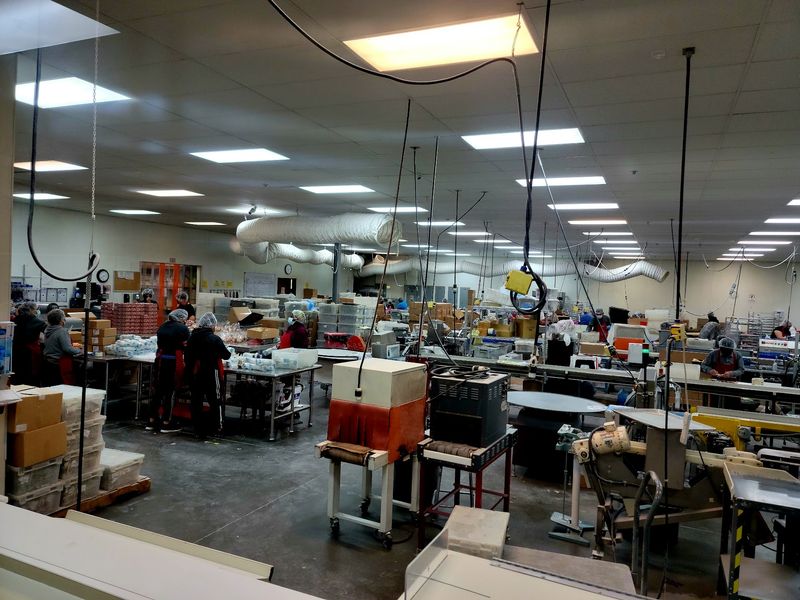
Plenty of factories are proud of their shiny new machinery. Hammond’s has another reason to be interesting.
Its candy-making tradition includes equipment dating from the late nineteenth and early twentieth centuries.
Historic copper kettles, candy pullers, batch rollers, and ribbon-candy equipment have all played a role in the company’s production process.
Some machines remain part of candy making, while older equipment also illustrates how the craft developed over time.
The process begins with ingredients being heated and combined into a workable sugar mixture. As the candy cools, workers introduce color and flavor before stretching, rolling, and shaping it.
Different equipment performs different jobs. A pulling machine helps work the candy, while specialized rollers and shaping tools assist with creating the finished designs.
For delicate ribbon candy, the mixture must remain flexible enough to form its characteristic folds. Large video screens throughout the facility make smaller production details easier to follow.
In this Colorado factory, craftsmanship and machinery still work together to produce familiar sweets.
Free Tours Make Planning Ridiculously Easy
Free Tours Make Planning Ridiculously Easy
Free is a lovely word, especially when candy is involved. Tours at Hammond’s Candies don’t cost a thing.
They run Monday through Saturday, with departures every 30 minutes between 9:15 AM and 2:15 PM.
Each experience lasts approximately 30 minutes, giving families enough time to learn about the factory and watch candy production.
Reservations are required, with bookings generally needing at least 24 hours of advance notice.
Same-day openings may be available through the factory’s reservation staff, although arranging your visit ahead is the more dependable approach. A single tour can accommodate up to 45 participants, and the route is wheelchair accessible.
The experience begins with an introduction to the company’s history before moving toward viewing areas overlooking the production floor.
Guides explain how different sweets are made, while large screens provide closer views of the process.
Visitors can also observe packaging operations, connecting the hand-shaped candy with the finished products sold in stores. The tour concludes with a complimentary candy sample, with the particular treat depending on availability.
Mitchell Sweets Have A Backstory Worth Chewing On
Friendship and a recipe purchase gave the world Mitchell Sweets. The story goes back to 1930, when Carl T. Hammond Sr. purchased a confection recipe from a friend.
He named the sweet after that friend, turning a personal connection into one of the company’s enduring specialties.
Mitchell Sweets combine soft marshmallow with a coating of handmade caramel. The contrast between the fluffy center and chewy exterior gives them a distinctive texture.
They’ve remained part of the Hammond’s collection for generations, connecting today’s candy counter to the company’s earlier recipes.
The original Carl’s Piggy Backs also deserve a mention in the factory’s history. These chocolate-and-coconut confections were among the founder’s first creations.
Chocolate bars, caramels, marshmallows, peanut brittle, hard candies, and flavored drops all belong to the broader lineup.
Cookies, popcorn, cocoa products, and snack mixes provide additional choices for anyone interested in something beyond traditional candy. There’s a distinctly nostalgic quality to many of these products.
For a taste of the company’s Colorado heritage, Mitchell Sweets are a particularly fitting place to begin.
Candy Canes And Ribbon Candy Steal The Spotlight
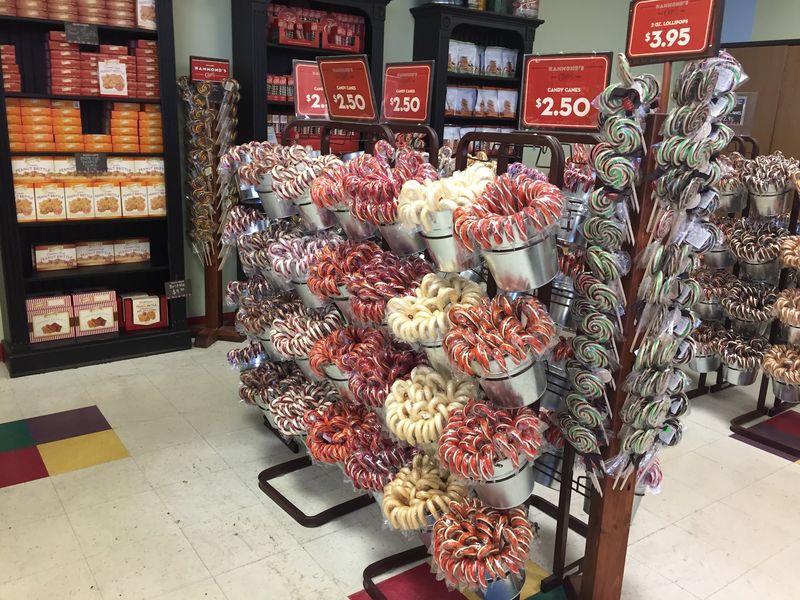
Oversized candy canes are the celebrity act at Hammond’s. Their bright colors, distinctive curves, and carefully arranged stripes make them instantly recognizable.
Watching them take shape by hand makes the process even more impressive.
Candy makers work the warm sugar into long sections, combine colored portions, and twist the mixture to form familiar patterns.
The candy is then divided and shaped into individual canes before cooling. Ribbon candy deserves attention too. Its folded, looping design requires careful handling while the sugar is still flexible.
Then there’s art candy, which features colorful designs inside individual pieces. Traditional holiday images, including Santa Claus, can appear within the candy itself.
Lollipops add another classic option, with seasonal shapes and flavors bringing variety throughout the year.
Hammond’s also produces peppermint pillows, fruit-flavored candies, and other traditional hard sweets. The classic peppermint candy cane remains its most popular hard candy.
For Colorado families, seeing the techniques behind these old-fashioned confections makes an ordinary candy cane feel considerably more interesting.
The Oops Room Turns Imperfect Candy Into Bargains
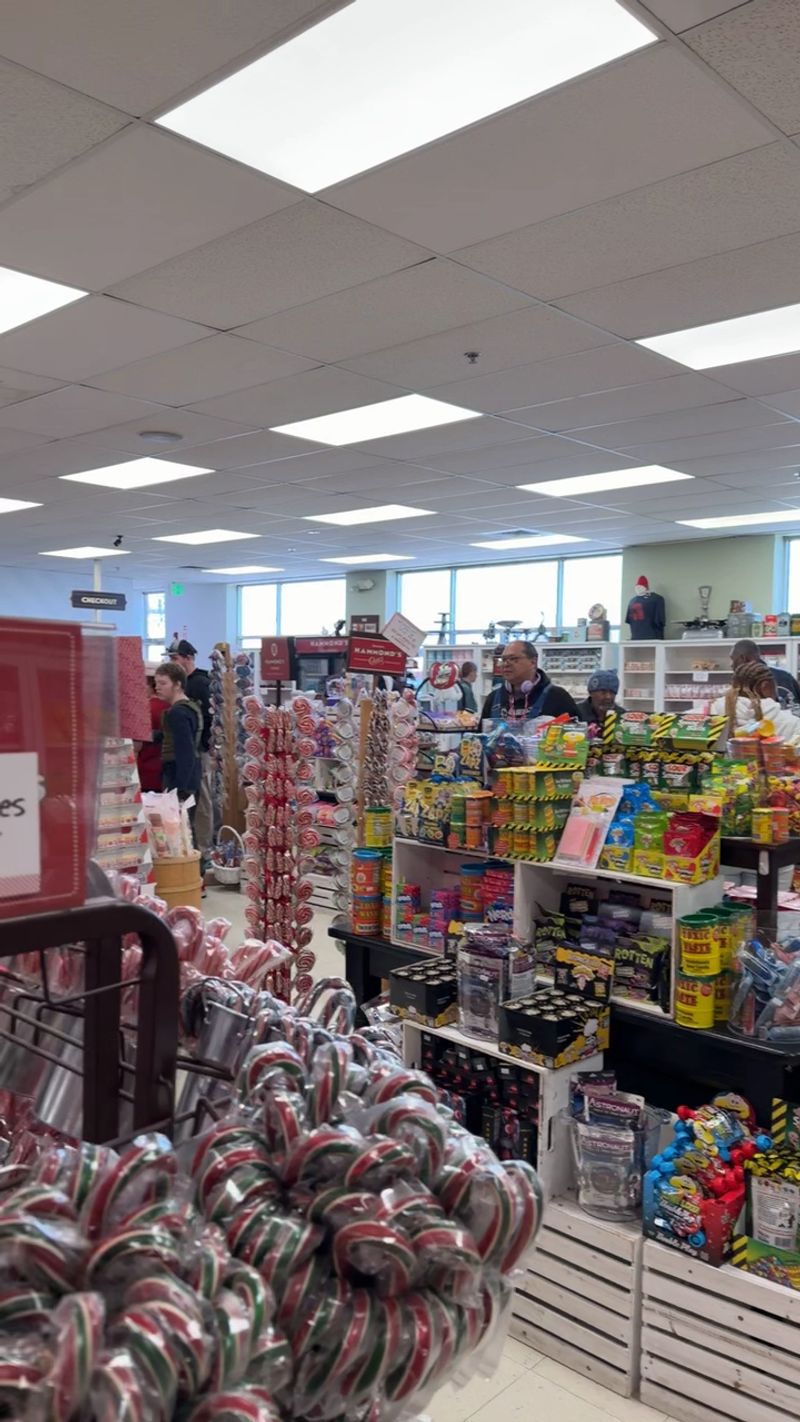
Mistakes rarely taste this good. The factory store at Hammond’s Candies has a special area called the Oops Room.
It features sweets with cosmetic imperfections, broken pieces, and occasional surplus products.
A slightly crooked candy cane can still offer the same familiar peppermint flavor, even when its shape differs from the usual design.
Rather than setting aside every imperfect piece, the factory makes selected treats available through this section.
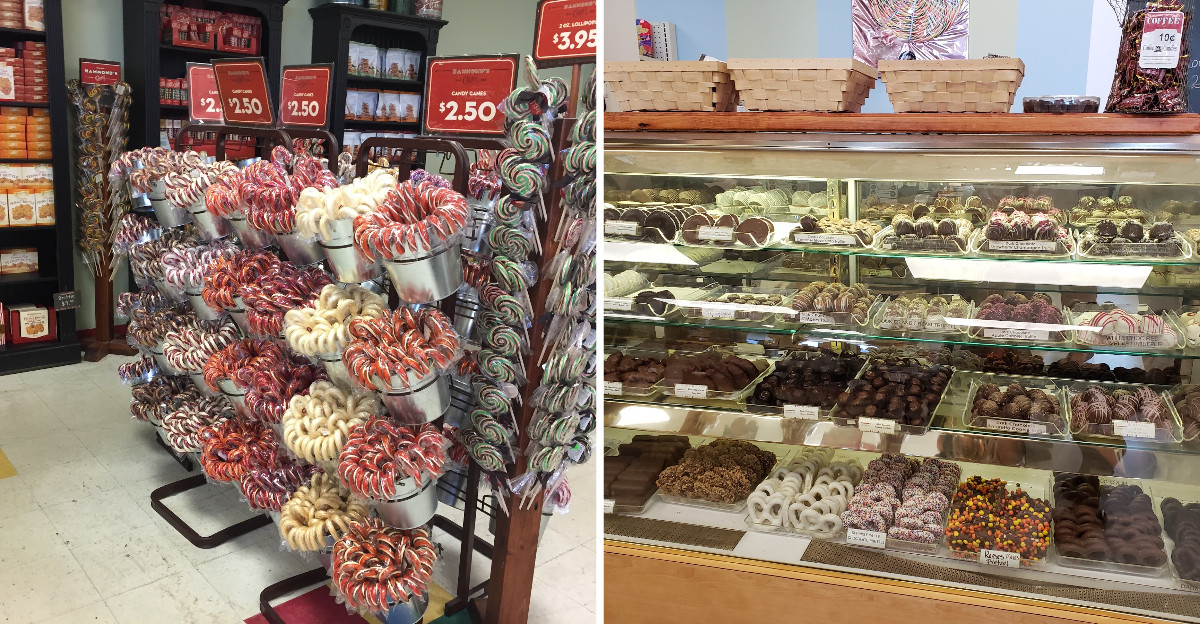
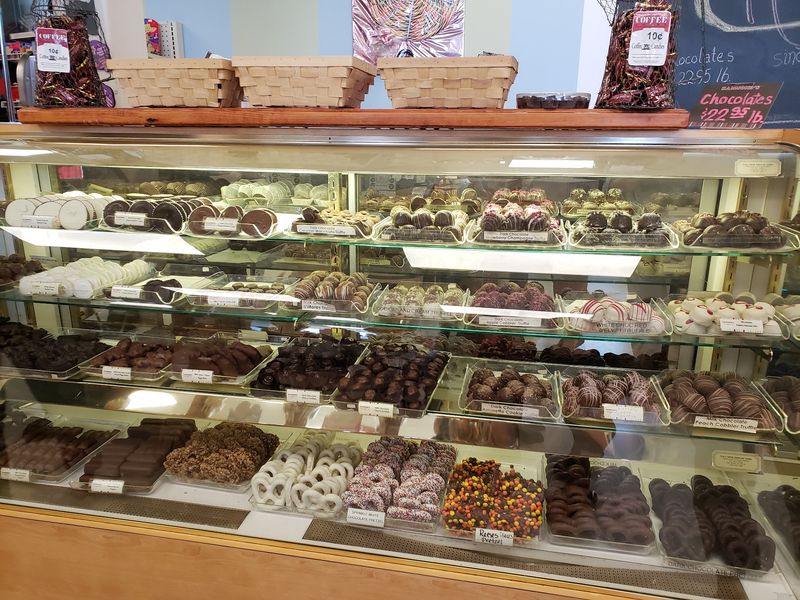
The main store offers another extensive assortment of sweets, including traditional candy canes, handmade chocolates, caramel treats, and seasonal specialties.
Colorful candy displays make browsing an experience in itself. Some shelves feature individually wrapped candies, while others hold gift boxes, novelty sweets, and larger collections designed for sharing.
The selection changes throughout the year, particularly around major holidays. You might find festive candy shapes in winter, colorful lollipops in spring, or traditional favorites available year-round.
The factory store is open Monday through Saturday from 9 AM to 4 PM. Sunday shopping is also available from 11 AM to 4 PM, even though regular factory tours aren’t offered that day.
Finding The Factory Takes A Little Extra Attention

North of downtown Denver, the candy factory operates inside a 35,000-square-foot building.
You’ll find Hammond’s Candies at 5735 Washington Street, Denver, Colorado 80216, near the intersection with 58th Avenue.
The property is part of a working industrial area rather than a traditional shopping district.
That makes it worth paying attention to the entrance as you approach, particularly if you’re unfamiliar with the neighborhood.
Parking is available at the facility, making the factory accessible for families arriving by car. Most of the visit takes place indoors, so the tour works well during changing weather conditions.
The factory’s production areas are viewed from designated spaces, keeping visitors separate from the manufacturing equipment.
Morning or early-afternoon reservations work particularly well because tours finish before the store closes. The final scheduled factory tour begins at 2:15 PM, while shopping continues until 4 PM.
If you’re visiting on Sunday, the store remains open, but you’ll need another day to see the production process.
The factory has been part of Denver’s candy-making history since 1920, and its handmade traditions continue more than a century later.
Between the vintage machinery, colorful candy displays, and complimentary factory experience, this Colorado destination offers a particularly sweet way to spend an afternoon.