10 Lost Massachusetts Tourist Attractions That Never Made It Into Your Travel Plans
You should never assume a house is made of wood.
In one Massachusetts neighborhood, a whole house was built from newspaper, and so were the curtains and the piano.
The surprises keep stacking up from there. A sculpture garden out west keeps a life-size dragon that breathes fire.
A quiet roadside lawn hosts a herd of rocking horses that come and go on their own schedule. A stained-glass globe still shows the world as it looked in 1935.
That’s actually a pretty useful thing to know before your next weekend.
The famous landmarks will still be there next year. Shouldn’t the oddballs get their turn first?
1. Paper House
Recycling bins everywhere should feel a little jealous of this place. Somebody took stacks of old newspaper and turned them into the walls of an actual house.
The Paper House began in 1922 as a summer-home experiment by mechanical engineer Elis Stenman.
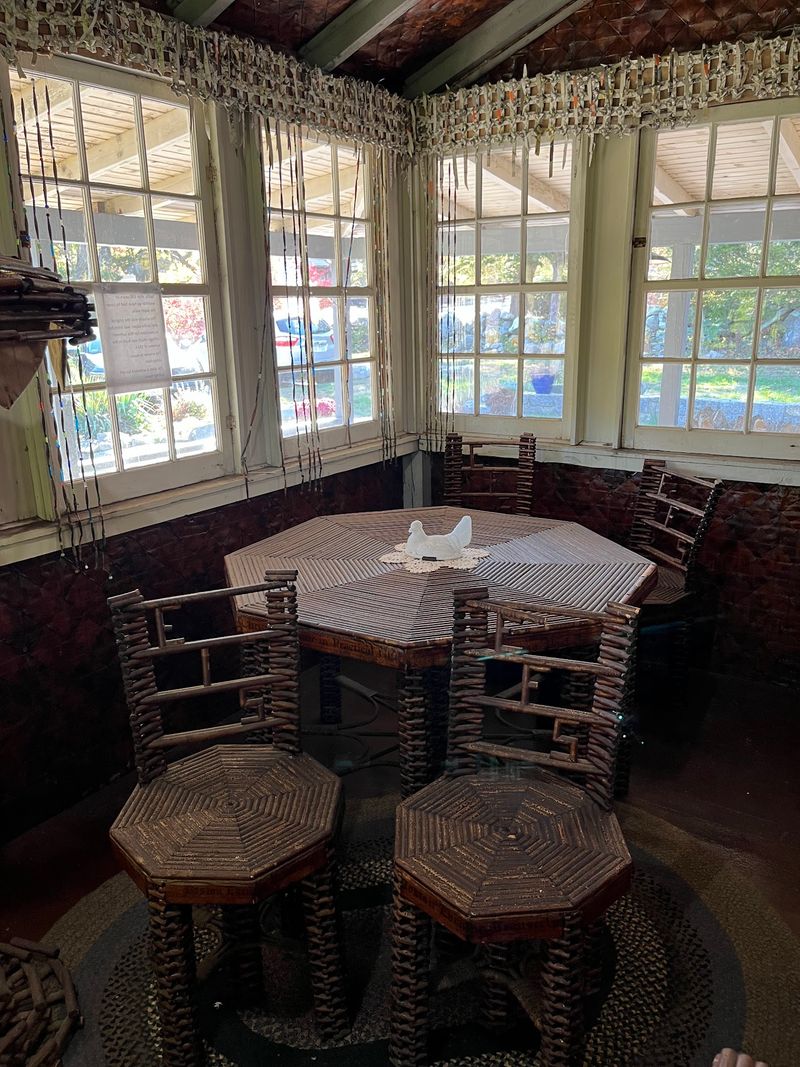
Its framework, floor, and roof are wooden, but the walls contain approximately 215 layers of newspaper, bonded with homemade paste and sealed with varnish. That distinction makes the achievement even more interesting.
Inside, chairs, tables, and shelves are fashioned from tightly rolled newspaper. The curtains use paper too, while a real piano is covered with paper rolls.
Headlines and advertisements remain visible in places, creating a peculiar record of life a century ago.
The cottage stands at 52 Pigeon Hill Street in Rockport, on a residential street away from the busier harbor. The family-maintained museum is self-guided, so you can linger over the craftsmanship without following a tour group.
Visits normally run from the second Friday in April through the last Sunday in October, from 10 AM to 5 PM. Additional November weekends depend on weather. Admission uses an honor system, and there are no public restrooms on the property.
Be considerate of the neighboring homes and narrow road when parking. It’s a modest stop, but I suspect you’ll look at old newspapers very differently long afterward, even in your recycling bin.
2. Hammond Castle Museum
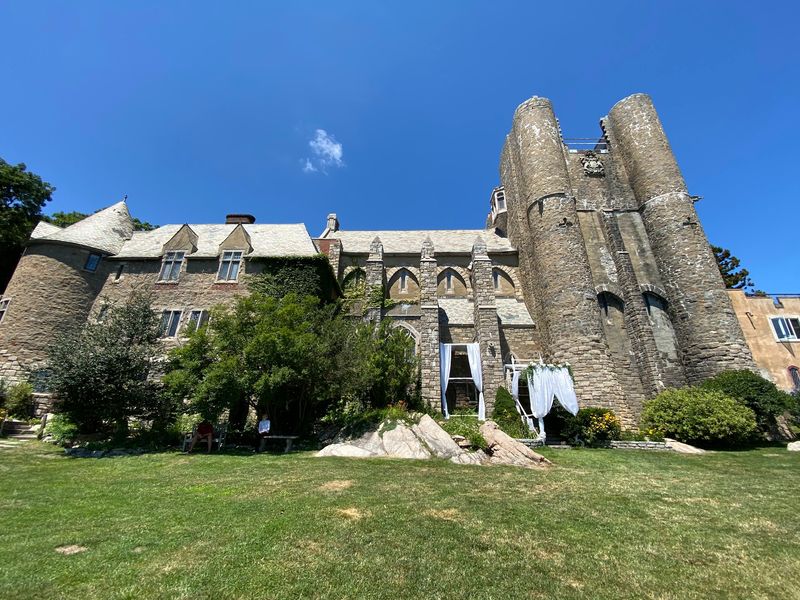
Who builds a medieval castle on the coast in the 1920s? An inventor fascinated by remote-control technology, that’s who.
John Hays Hammond Jr. constructed Hammond Castle between 1926 and 1929 as both a home and a laboratory.
He filled its passageways with architectural pieces and antiques gathered during his travels, surrounding his research rooms with an atmosphere borrowed from several European centuries.
The Great Hall, indoor courtyard, library, and invention exhibits give visitors plenty to explore.
The castle’s stonework, arches, and unusual rooms make it easy to forget you’re beside a modern New England neighborhood. From the grounds, the Atlantic spreads out beyond the building, adding an entirely different kind of spectacle.
The entrance is reached from 80 Hesperus Avenue in Gloucester, Massachusetts. Visitors arriving by car must reserve admission in advance because on-site parking is limited and street parking on the approach is restricted.
Those using transit or a rideshare can obtain admission on arrival, subject to space.
Regular daytime touring in 2026 runs through mid-November, with the seasonal Deck the Halls program beginning later that month.
Standard museum hours are 9 AM to 3:30 PM, with final entry at 2:45 PM; special evening dates follow their own schedules.
A shop and restrooms are available, but allow time to explore the surrounding grounds. This house never intended to look ordinary, and it certainly succeeds.
3. Bancroft Tower
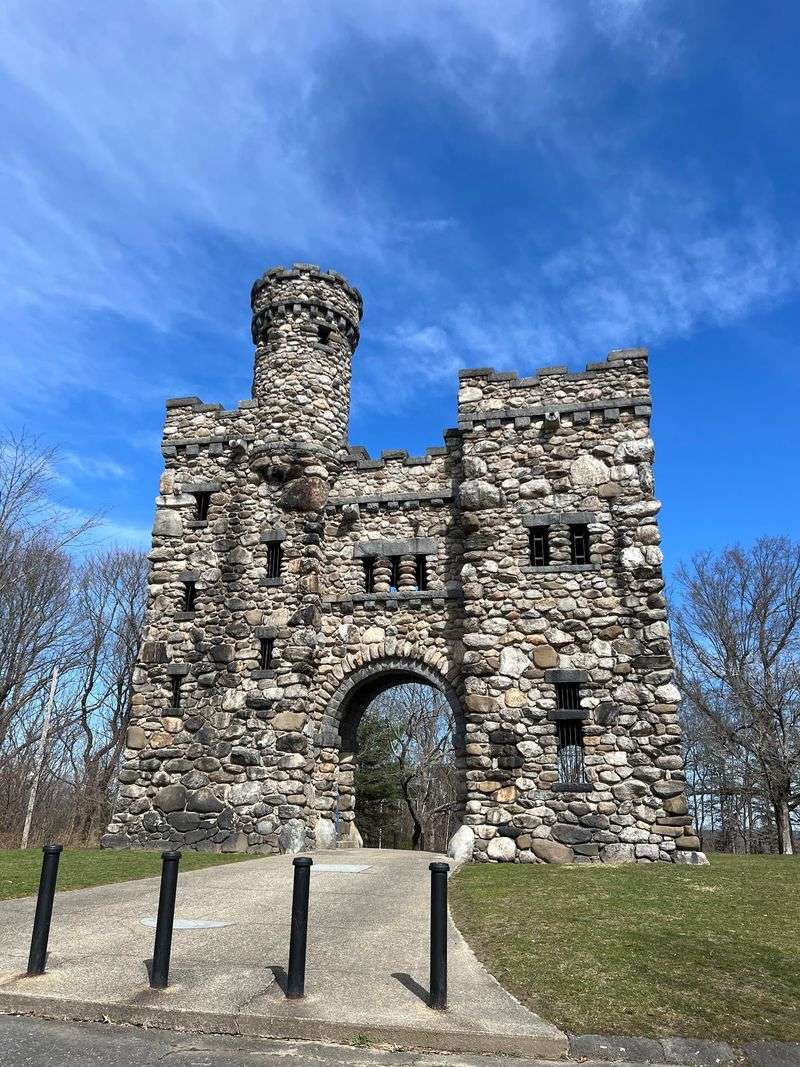
Worcester has a castle, sort of. It’s a 56-foot stone tower that looks like a miniature fortress parked on a hill.
Public benefactor Stephen Salisbury III built it in 1900 to honor historian and diplomat George Bancroft, whose childhood connection to Salisbury’s family helped inspire the tribute.
Boulders, cobblestones, and rough-faced granite give the monument its dramatic, old-world appearance.
The central arch is flanked by square towers with crenellated tops. A round turret and narrow openings add to the illusion, although the structure was conceived as a recreational lookout rather than a residence.
You reach it by following Bancroft Tower Road into Salisbury Park, on Worcester’s Prospect Hill.
The park offers broad views over the surrounding city and hills, and a stone locator map helps visitors recognize distant landmarks. It’s a pleasant place to spend a little time outdoors even without entering the monument.
The tower’s interior is normally closed; occasional permitted openings are arranged separately. Don’t plan on climbing to the top during an ordinary visit. Salisbury Park’s posted hours are 8 AM to 8 PM, and parking is available within the park.
Look closely at the stonework, then step back to appreciate how unusual the tower looks among the surrounding trees.
On a bright afternoon, the setting makes a particularly memorable photo stop. Sometimes a castle-shaped monument is enough of an adventure all by itself.
4. Edward Gorey House
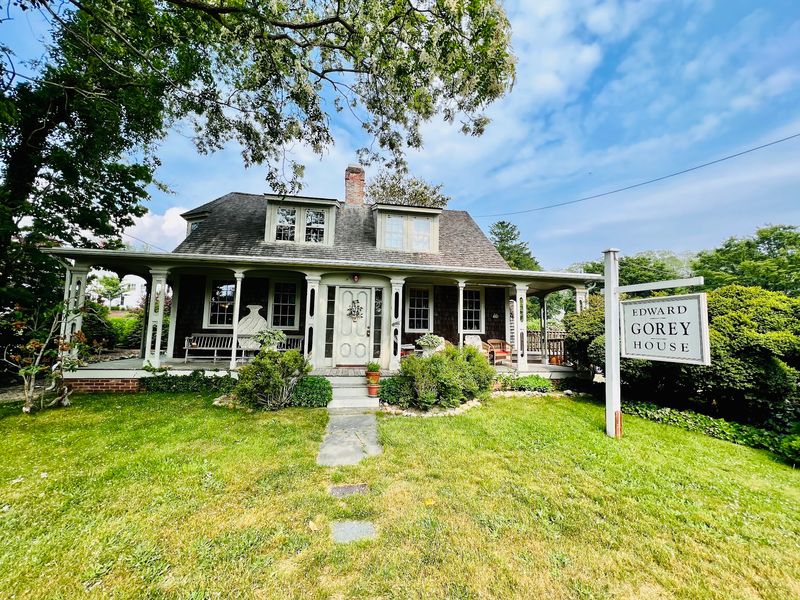
Spooky drawings and a Cape Cod sea captain’s home sound like an odd match. Somehow, they fit together perfectly.
Edward Gorey, the author and illustrator celebrated for intricate pen-and-ink artwork, bought the house in 1979.
The building itself dates to 1820, and his former residence became a museum in 2002. His personal possessions, books, and artwork give the rooms a wonderfully individual character.
You’ll find the house at 8 Strawberry Lane in Yarmouth Port on Cape Cod, overlooking the village common.
It’s compact enough to explore without devoting an entire day, yet its displays invite close attention. Details reveal Gorey’s interests in theater, language, and animals, especially cats.
The 2026 exhibition, O Sordid Type, explores his playful experiments with hand lettering. Rotating annual exhibitions help keep the experience fresh for returning visitors, while the gift shop offers books and other items connected to his creations.
Reservations are strongly encouraged. From October 16 through December 27, Friday and Saturday visits run from 11 AM to 4 PM, with Sunday hours from noon to 4 PM.
Earlier in the year, the schedule includes additional weekdays. The final admission is at 3:30 PM.
A guided introduction adds context to the illustrations and keepsakes. Most Cape Cod itineraries chase beaches, but this little house offers a quieter, rather eccentric alternative when you want an afternoon devoted to imagination.
5. Ponyhenge
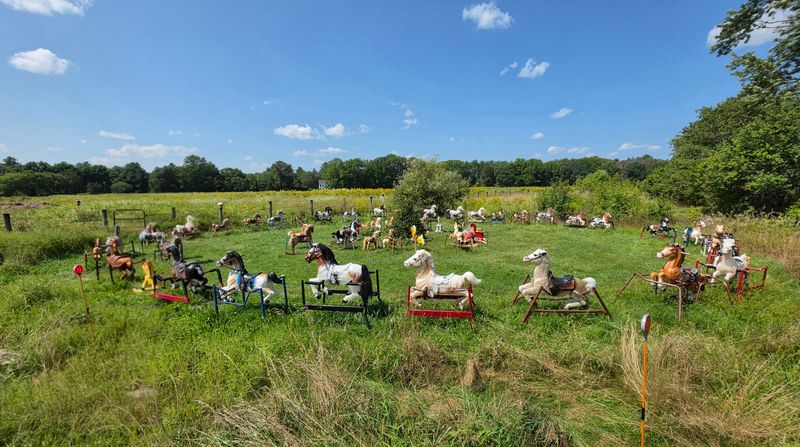
Somewhere in Lincoln, a herd grazes that never needs feeding. That’s because the herd is made of rocking horses.
Ponyhenge is a roadside gathering of toy ponies, hobby horses, and other ride-on figures arranged in a grassy field. Nobody can promise exactly what you’ll find: the toys appear, shift positions, and occasionally form circles or neat lines.
The display began around 2010 with a single horse. Additional toys arrived over the years, turning an ordinary stretch of country road into a peculiar local tradition.
Its name is a cheerful nod to England’s Stonehenge, although the horses are considerably easier to move.
To find the scene, follow Old Sudbury Road in Lincoln and look near 47 Old Sudbury Road. There’s no ticket booth, organized tour, or conventional parking lot, so a visit is best treated as a brief roadside stop.
The field is privately owned, and that matters. Respect any posted instructions, keep the driveway clear, and photograph the display without riding or rearranging the toys. Pull over only where it’s safe and permitted along the narrow road.
The changing lineup is the attraction, so older photographs may show a different arrangement from the one you encounter. A drive through the surrounding wooded countryside makes the detour even more enjoyable.
Some attractions need elaborate equipment; this one needs only a collection of secondhand ponies and a generous sense of humor.
6. Lizzie Borden House
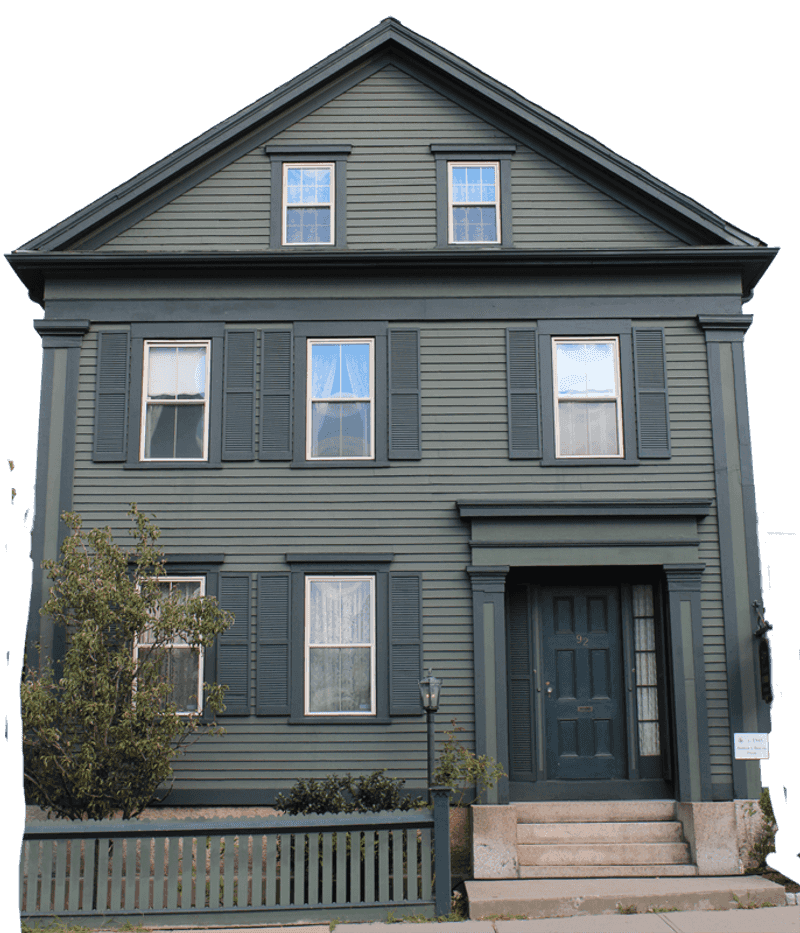
Most bed and breakfasts brag about their pancakes. This one is better known for one of Fall River’s most enduring historical mysteries.
The Lizzie Borden House occupies the original residence associated with the widely discussed 1892 Borden case.
Its rooms preserve the atmosphere of a late nineteenth-century home, complete with period-style furnishings and spaces closely connected to the family’s daily life.
Today, the property operates as both an inn and a museum. Daytime house tours explore the rooms and explain how the event became the subject of public fascination, while evening walking tours focus on Fall River’s folklore and historic streets.
Separate late-night experiences explore the building’s unusual reputation. The home stands at 230 Second Street, where six historic rooms and suites are available for overnight stays.
Spending the night offers a different perspective on the building, but a daytime visit is enough to appreciate its architecture and preserved interiors.
House tours last about ninety minutes and are offered daily, with departures generally between 10:30 AM and 4:30 PM.
The guided house tour is intended for visitors aged ten and older. Overnight stays and specialized experiences should be booked ahead.
Parking behind the property is limited, with metered street spaces nearby. Arrive with an interest in history rather than an expectation of theatrical surprises. The strongest feature is the building itself, an enduring part of Fall River’s story.
7. Natural Bridge State Park
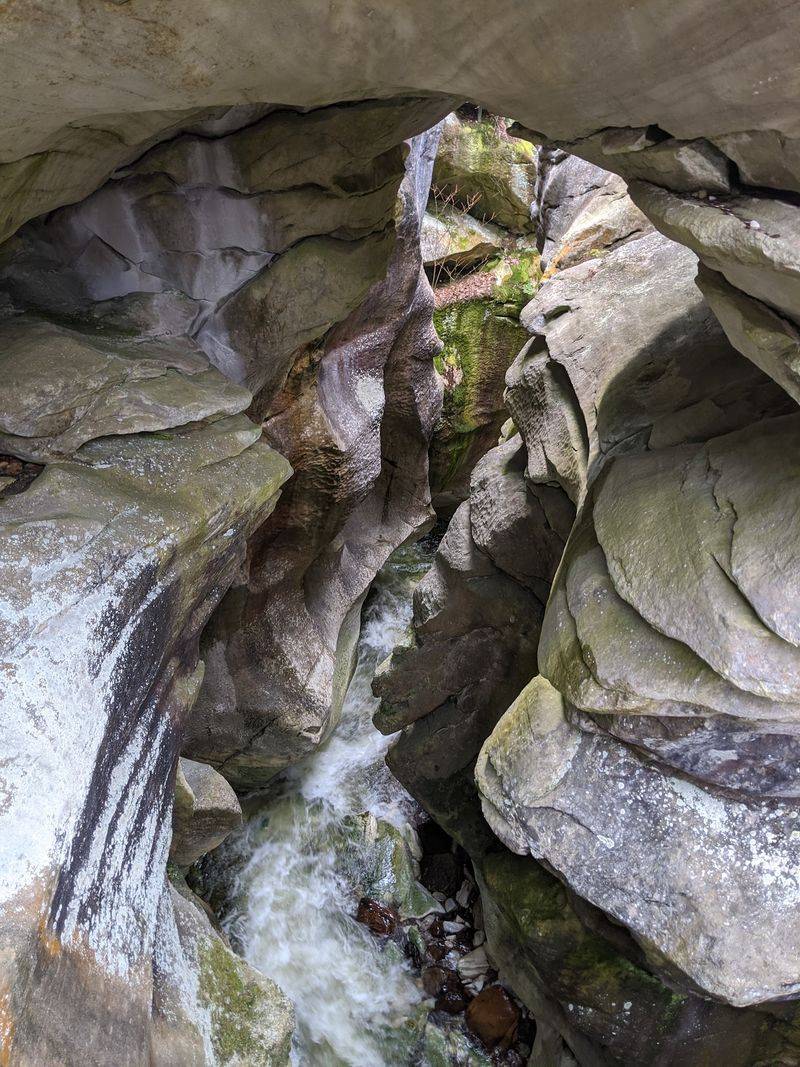
Nature built a bridge in North Adams and used marble to do it. Fancy, right?
The park protects North America’s only natural white marble arch, spanning a dramatic gorge carved by flowing glacial water.
The marble bedrock is approximately 550 million years old, while the distinctive bridge took shape through erosion following the last ice age.
Hudson Brook threads through the narrow, sixty-foot-deep gorge beneath the arch. Nearby, an old marble quarry and a human-built white marble dam show how the same stone shaped both the landscape and local industry.
The entrance is on McAuley Road in North Adams, near the northern end of the Berkshires. Walking routes and viewing areas provide different perspectives on the formations, with picnic spaces and restrooms available during the operating season.
Dogs are permitted, although visitors should follow posted park rules. The gorge and marble features are for viewing rather than climbing, and swimming is prohibited.
For 2026, the park operated from May 16 through October 25, daily from 9 AM to 4:30 PM. Its regular visitor season has finished, so plan this Massachusetts detour for a future reopening rather than assuming year-round access.
Pair the outing with time in downtown North Adams or another Berkshires stop. The contrast between polished-looking marble and rushing water is remarkable, and the geological history makes an already unusual bridge even more fascinating.
8. The Eric Carle Museum Of Picture Book Art
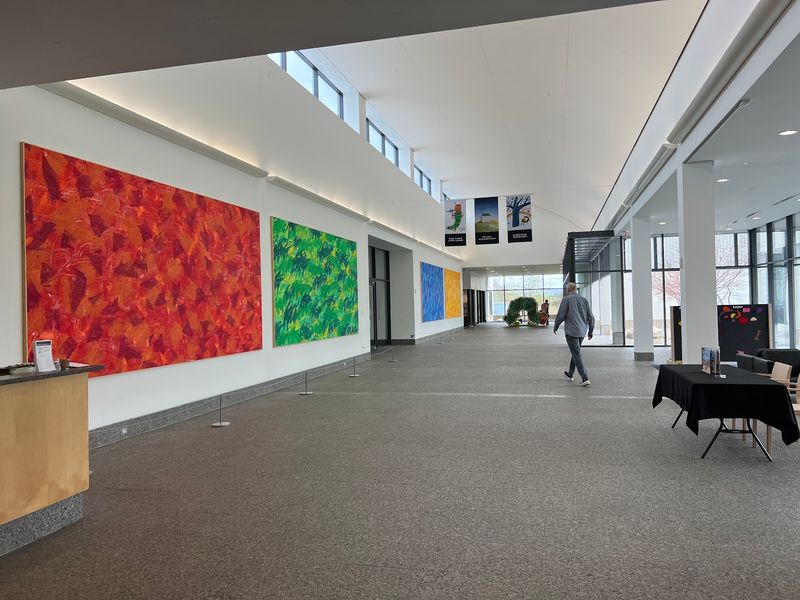
That very hungry caterpillar has a museum, and it’s in Amherst. Famed illustrator Eric Carle helped create it himself.
Established in 2002 by Carle and his wife, Barbara, the museum treats picture-book illustrations as artwork worth studying, preserving, and celebrating. The galleries feature original pieces by many artists, extending well beyond Carle’s colorful collages.
Exhibitions rotate, which means a familiar childhood favorite might appear alongside drawings by an illustrator you’ve never encountered.
The approach appeals to adults as much as children, particularly anyone fascinated by how words and pictures work together.
The museum’s home at 125 West Bay Road includes an art studio where visitors can experiment with materials and techniques inspired by the exhibitions.
A reading library offers a quieter space to enjoy books, and the bookshop carries illustrated titles and creative gifts.
Wednesday through Friday hours are 10 AM to 4 PM. Saturdays run until 5 PM, while Sundays begin at noon and end at 5 PM. Monday and Tuesday are regular closing days, with selected evening programs adding another visiting option.
On-site parking and accessible facilities help families plan their visit. Give the art studio a little extra time rather than rushing from gallery to gallery.
It’s satisfying to admire an illustration and then try making something yourself. The caterpillar may draw you in, but the world of picture books makes this place special.
9. Three Sisters Sanctuary
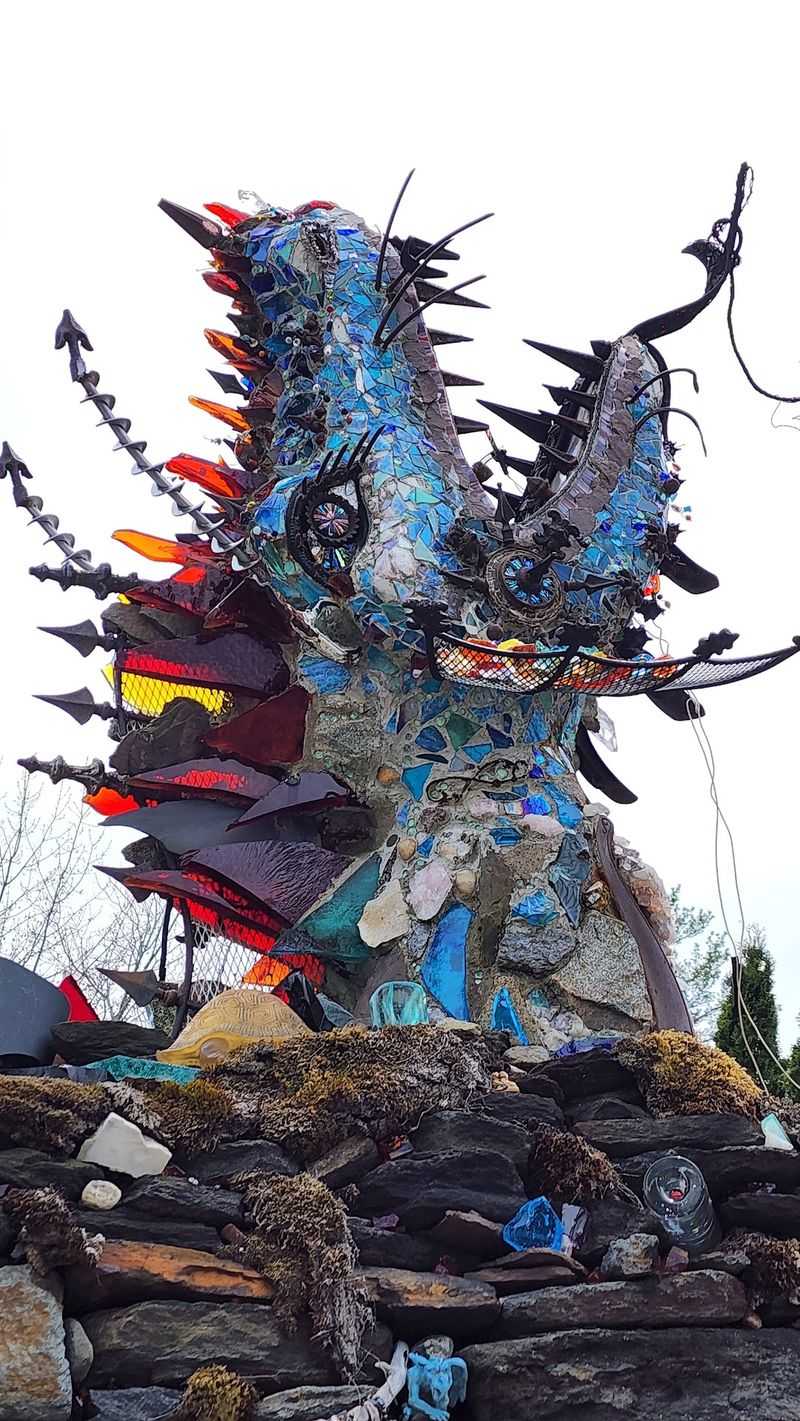
A fire-breathing dragon lives in Goshen. Luckily, it’s an enormous mosaic sculpture, and it only produces flames during occasional demonstrations.
Three Sisters Sanctuary combines gardens, stonework, mosaics, and imaginative installations across a hillside landscape.
The most dramatic creation is an eighty-foot-long dragon whose body curls around a den filled with intricate artwork and small objects left by visitors.
The dragon was completed in 2016, with its flame effect added in 2019. Seeing the sculpture doesn’t guarantee a demonstration, but the creature’s enormous size and bright mosaic surface are plenty impressive on their own.
Across the grounds, more than 250 standing stones accompany perennial gardens, a labyrinth, and other sculptures.
Reclaimed materials and carefully planted spaces turn the route into a sequence of unexpected discoveries. An outdoor amphitheater also accommodates performances and gatherings.
The sanctuary’s entrance is at 188 Cape Street in Goshen, in western Massachusetts. It opens daily from 8 AM to 6 PM, with parking and a restroom available on site.
Visitors can bring lunch for the outdoor picnic areas, and there is limited wheelchair access on some paths.
Plan on wandering rather than following a strict itinerary. Different flowers, changing light, and occasional events make the gardens feel different throughout the seasons.
The dragon is the obvious headline, but the stone labyrinth and smaller works reward an unhurried visit just as much.
10. Dr. Seuss National Memorial Sculpture Garden
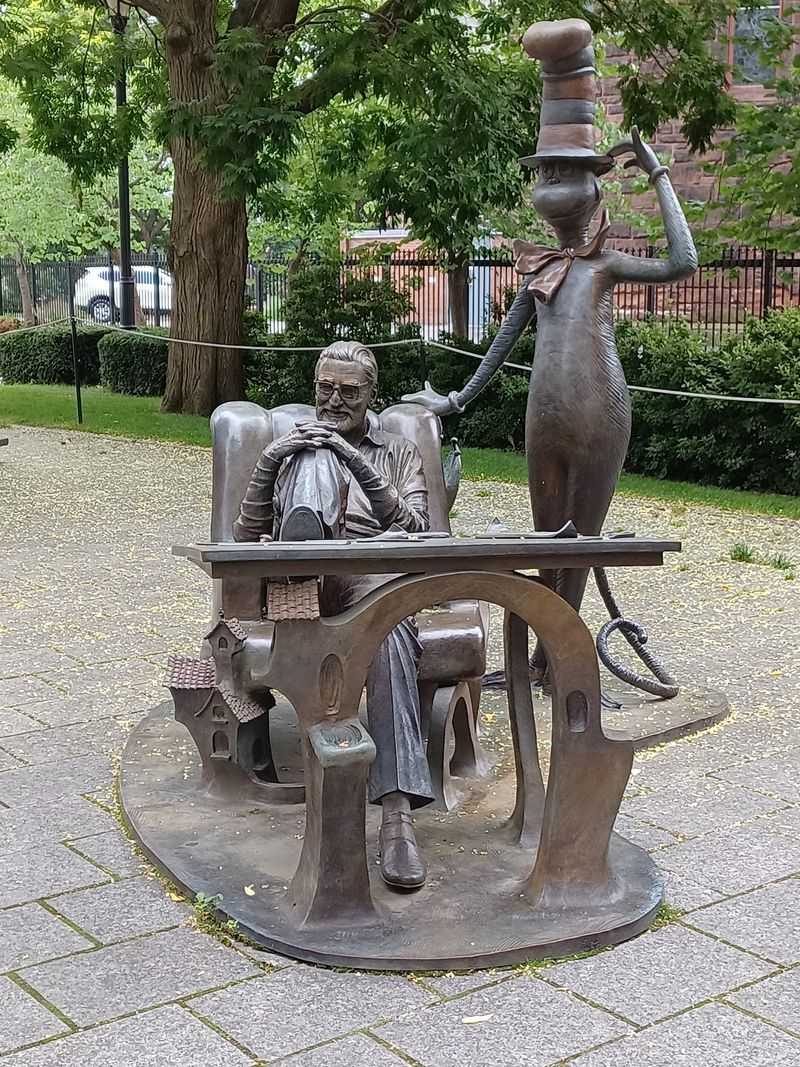
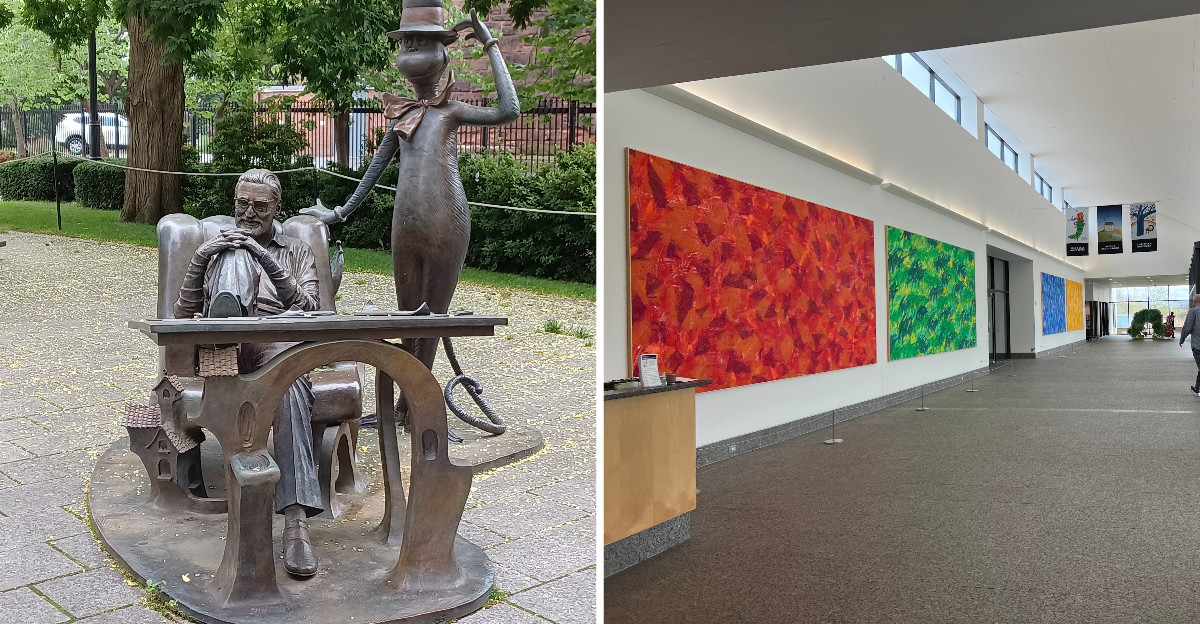
The Cat in the Hat would approve of this courtyard. Springfield turned a museum lawn into a bronze parade of storybook characters.
Theodor Seuss Geisel grew up in Springfield, making the city a natural home for a tribute to his imaginative books.
The outdoor sculpture garden opened in 2002, with more than thirty bronze figures created by his stepdaughter, sculptor Lark Grey Dimond-Cates.
Familiar characters include the Cat in the Hat, Horton, the Grinch, and the Lorax. The creator himself also appears in bronze, surrounded by figures from his colorful world.
You can wander between the sculptures at your own pace, discovering a favorite character around every turn.
The garden occupies the Springfield Museums grounds near 21 Edwards Street. Admission to the outdoor sculpture garden is free, while entering the indoor museums requires separate admission.
The Amazing World of Dr. Seuss Museum adds playful language activities and exhibits connected to the author’s life.
During the cooler months, the garden opens daily from 9 AM to 5 PM; longer evening hours apply during warmer months.
The grounds close on selected major holidays. Nearby parking and museum facilities make combining the garden with other Springfield attractions easy.
Younger children can play at recognizing the characters, while adults may enjoy spotting illustrations remembered from childhood. It’s a cheerful finale for a Massachusetts trip, full of oversized personalities and surprisingly good places to pose.