This Legendary Massachusetts Lighthouse Has Survived More Than Two Centuries Of Storms
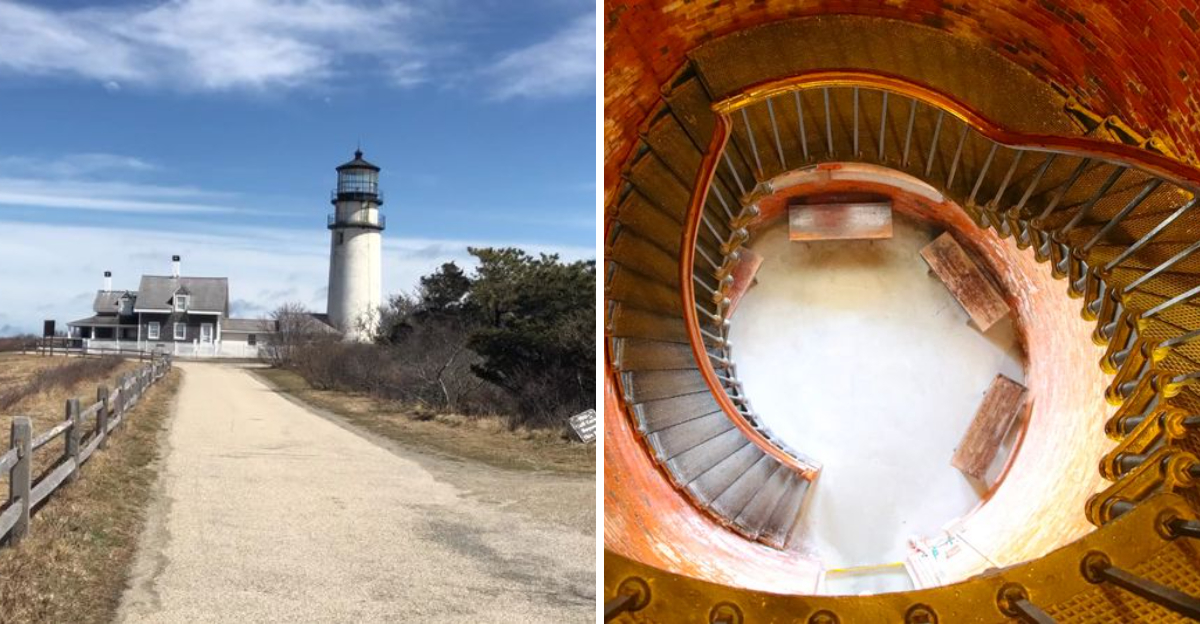
There are buildings that stand and buildings that endure.
The difference between the two becomes very clear when you are standing on a windswept bluff above Cape Cod looking at something that has been doing its job since 1797.
I spotted the white tower before I even reached the parking lot, and something about the way it sat there against the sky, completely unbothered by the centuries stacking up around it, made me slow down.
Massachusetts has no shortage of history, but this particular piece of it has a quality that most historical sites lack entirely. It is not preserved behind glass or reconstructed for atmosphere.
It is simply still there, still warning ships away from one of the most treacherous stretches of coastline on the East Coast, exactly as it has been doing since the second president of the United States was in office.
That kind of staying power deserves your full attention.
The Oldest On Cape Cod
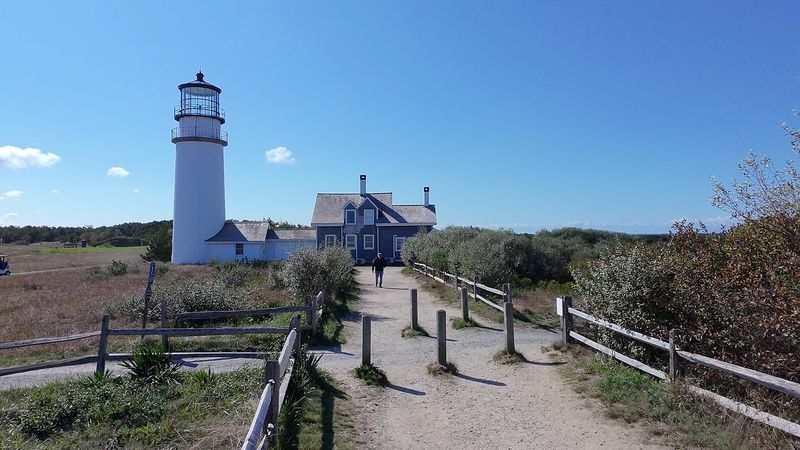
Cape Cod Highland Lighthouse holds a record that most Massachusetts landmarks would envy. It is the oldest lighthouse on all of Cape Cod, first lit in 1797 under President George Washington.
That is over two centuries of guiding ships safely past one of the most dangerous stretches of coastline in North America.
The current tower was built in 1857 and stands 66 feet tall. Its light flashes every five seconds and can be seen 23 miles offshore on a clear night.
Sailors have relied on this beacon through hurricanes, nor’easters, and everything the Atlantic could throw at it.
What makes this lighthouse feel so alive is the sheer weight of time behind it. You are not just looking at a pretty tower.
You are standing next to something that has outlasted wars, shipwrecks, and generations of keepers who called this bluff home. First-time visitors often go quiet when that sinks in.
It is the kind of quiet that means something. It is located at located at 27 Highland Light Rd, North Truro, Massachusetts.
The Bluffs That Keep Shifting
Here is a fun fact that will genuinely surprise you: the lighthouse has been moved. Not metaphorically.
Physically picked up and relocated in 1996 because the eroding bluffs were getting dangerously close to swallowing it whole. The cliff had crept within 100 feet of the tower, and engineers had to act fast.
The entire 430-ton structure was lifted onto rails and rolled 450 feet inland to safer ground. It took about two weeks and cost around 1.5 million dollars.
The effort was a community-driven rescue mission, and it worked beautifully.
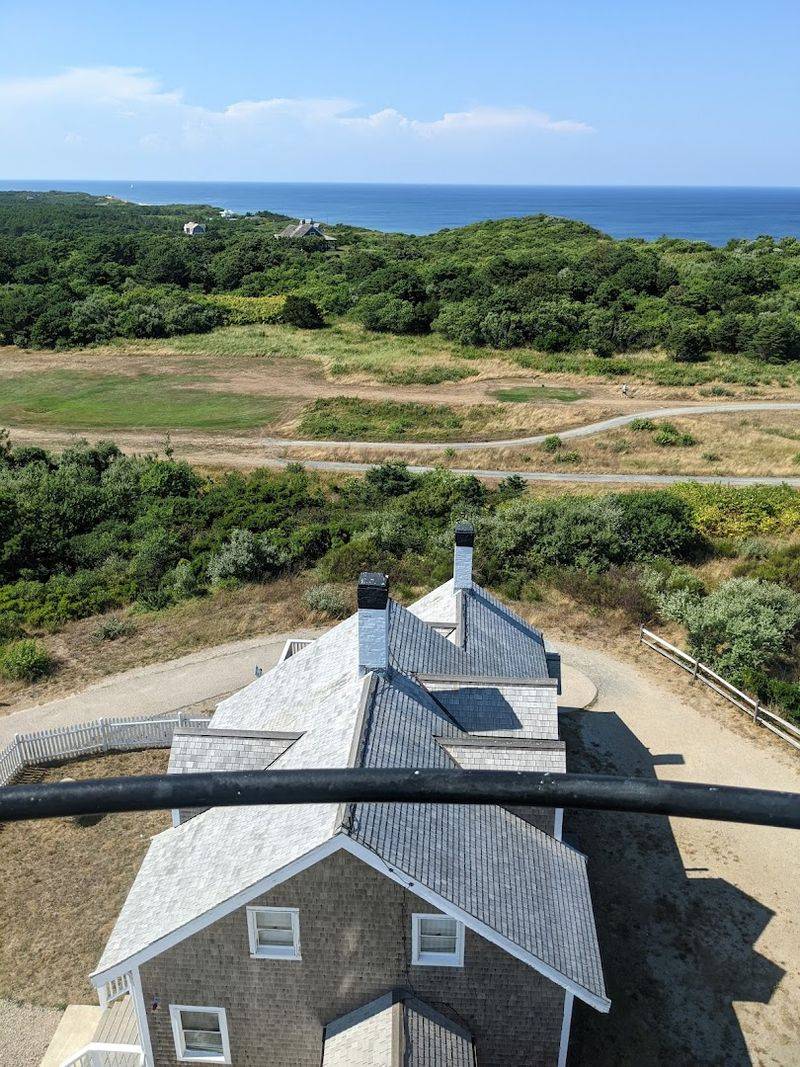
Today the bluffs still erode at a rate of roughly three feet per year. Standing at the edge and looking down at the Atlantic crashing below gives you a real sense of why this coastline earned the nickname the Graveyard of the Atlantic.
The land itself is always moving, always changing. The lighthouse, now safely repositioned, watches all of it from a much more comfortable distance.
It is one of the few structures in Massachusetts that has literally outrun its own destruction. That deserves some respect.
Ships Beneath The Waves
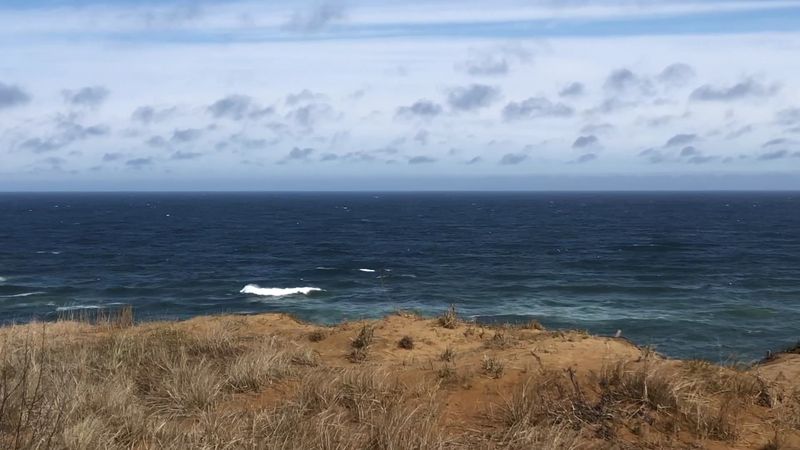
The waters off Highland Lighthouse are not just scenic. They are historically treacherous.
More than 3,000 shipwrecks have been recorded in the waters around Cape Cod, and a significant number happened right near this stretch of coastline in North Truro.
The shoals here shift constantly, making navigation genuinely difficult even for experienced captains.
Before the lighthouse existed, ships had almost no warning when they were too close to the outer Cape.
The original 1797 light changed everything. It gave mariners a reference point and saved countless lives over the following decades.
The lighthouse was considered so critical that the federal government funded its construction personally.
Visiting the site and knowing what lies beneath the surface adds a layer of meaning to the view. The ocean looks beautiful from up on the bluff.
But it has a long memory.
Local historians and maritime enthusiasts still document wrecks in the area, and some artifacts from those lost ships have been recovered over the years.
The lighthouse stands above all of it, still flashing, still warning, still doing exactly what it was built to do more than 200 years ago.
The Keeper’s Life Was No Vacation
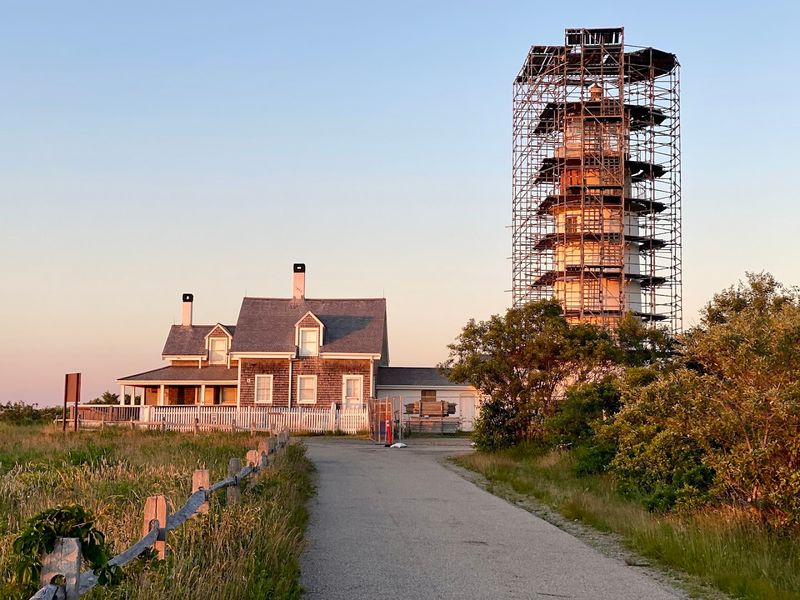
Romantic as it sounds to live beside a lighthouse, the keepers who worked here had genuinely demanding lives.
They were responsible for keeping the light burning through every storm, every fog bank, and every bitter Cape Cod winter. Missing a night was not an option when ships depended on that beam.
The keeper’s dwelling still stands next to the tower and now serves as a small museum. Walking through it gives you a clear picture of what daily life looked like in the 1800s.
The rooms are modest, the ceilings are low, and everything is built for function rather than comfort.
Keepers kept meticulous logbooks recording weather, ship sightings, and maintenance details. Some of those original logs still exist and are fascinating to read.
One keeper noted a storm so fierce that the tower shook and the lens rattled in its housing. He kept the light going anyway.
The United States Lighthouse Service eventually became the Coast Guard, and the last keeper left when the light was automated in 1986. The building remembers all of them, even if most of their names have faded from public memory.
The Fresnel Lens That Does The Heavy Lifting
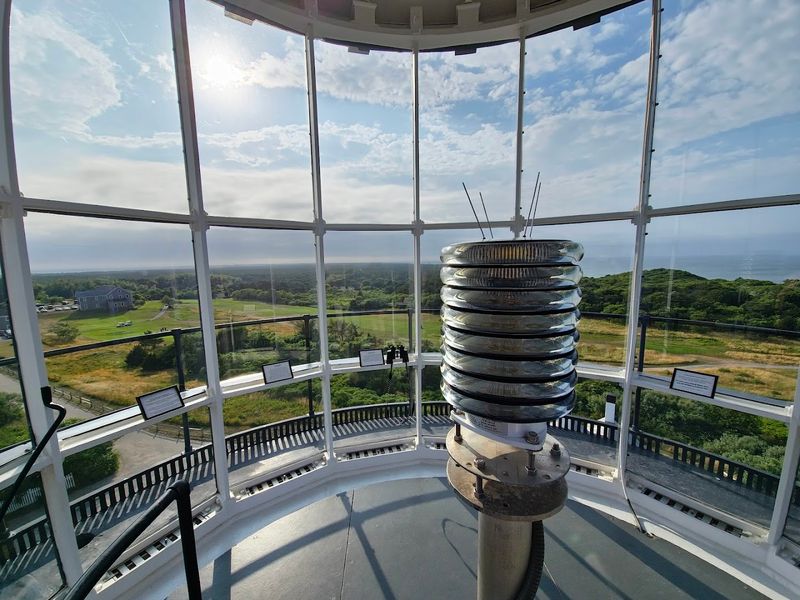
The lens inside Highland Lighthouse is one of the most impressive pieces of optical engineering you will ever see up close.
It is a fourth-order Fresnel lens, a style of lens invented by French physicist Augustin-Jean Fresnel in the early 1800s. The design uses concentric rings of prisms to focus light into a powerful, concentrated beam.
Before Fresnel lenses, lighthouse lights were relatively weak and inefficient. The new design multiplied the visible range dramatically.
At Highland Lighthouse, the lens focuses the beam to a reach of 23 miles on a clear night, which is remarkable for a relatively compact tower on a sandy bluff.
Seeing the lens in person is worth the trip on its own. The glass prisms catch light in a way that feels almost alive, refracting colors and shifting as you move around it.
The engineering is elegant without being showy.
It is a reminder that some of the most effective solutions in history were designed without computers or modern tools.
Fresnel figured out the math by hand, and lighthouses around the world still use his basic design today. That is a legacy that deserves more credit than it usually gets.
The Golf Course Next Door Has A Story Too
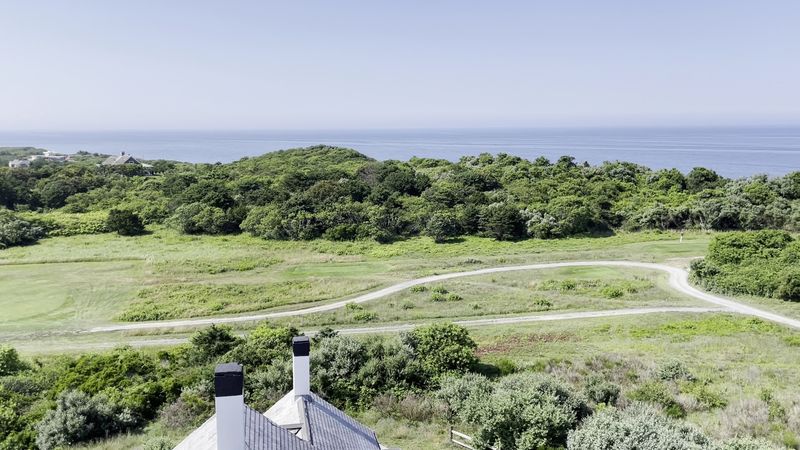
Right next to the lighthouse sits Highland Links, the oldest golf course in Massachusetts and one of the oldest in the entire country. It was established in 1892, making it a historic landmark in its own right.
The combination of a centuries-old lighthouse and a Victorian-era golf course in the same spot is genuinely unusual.
The course is a public links-style layout that hugs the bluffs above the ocean. Playing here means dealing with wind, sea grass, and views that will absolutely wreck your concentration.
It is not the fanciest course in New England, but it might be the most memorable one.
The two landmarks coexist in a way that feels natural rather than odd. Both draw visitors who appreciate something with real age and character.
The golf course is managed by the Cape Cod National Seashore, which keeps the entire area from being overdeveloped.
That protection means the landscape around the lighthouse looks surprisingly similar to how it looked a hundred years ago.
The combination of maritime history, natural beauty, and a working golf course makes this corner of North Truro genuinely one of a kind. You are unlikely to find anything else quite like it anywhere on the East Coast.
Cape Cod National Seashore Protects The Whole Area
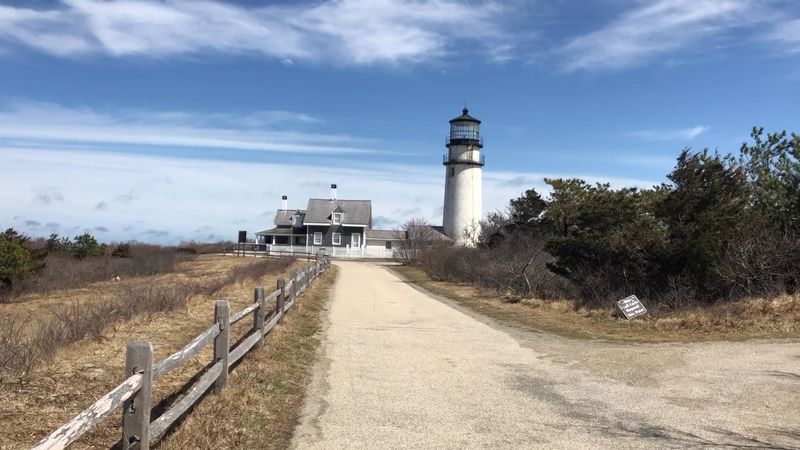
The reason Highland Lighthouse still looks the way it does is largely thanks to the Cape Cod National Seashore, established by President John F. Kennedy in 1961.
The designation protected over 43,000 acres of land along the outer Cape from commercial development. Without it, this stretch of coastline would likely look very different today.
The National Seashore oversees the lighthouse property and works with the Highland House Museum to manage public access.
Rangers lead guided tours during the summer season, and the visitor experience is well organized without feeling over-produced. The trails around the site offer some of the best coastal walking on all of Cape Cod.
Kennedy had a personal connection to Cape Cod, and the legislation he signed to create the National Seashore is considered one of the most important conservation acts in Massachusetts history.
The lighthouse benefits directly from that protection every single day. Visitors who come expecting a quick photo stop often end up spending two or three hours exploring the surrounding landscape.
The bluffs, the dunes, the views out to sea, and the lighthouse itself combine into an experience that feels complete rather than rushed. It rewards the people who slow down and actually look around.
What To Expect When You Show Up
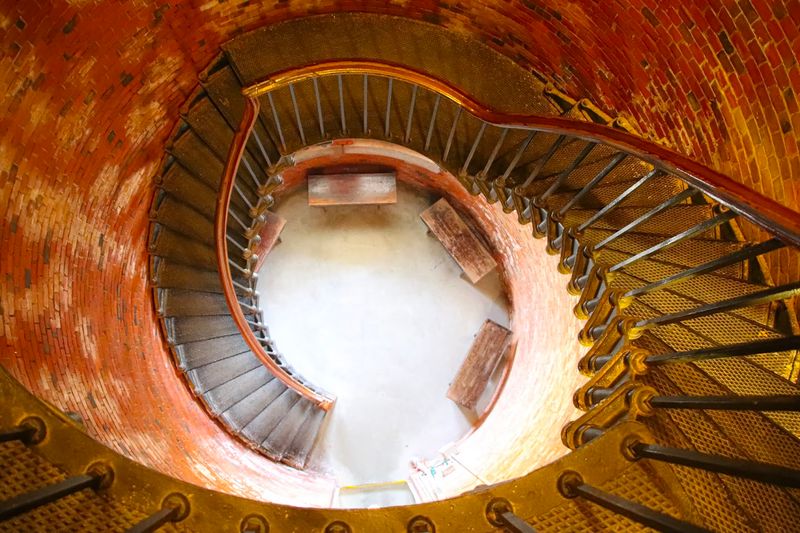
Planning a visit to Highland Lighthouse is straightforward and genuinely worth the effort. The lighthouse is open for tours during the summer season, typically from late spring through mid-fall.
Climbing the tower is allowed with a small fee, and the view from the top on a clear day is the kind that makes people stop talking mid-sentence.
The Highland House Museum, located nearby, adds real depth to the visit. It covers the history of North Truro and the surrounding area with well-curated exhibits that are accessible to all ages.
Kids especially enjoy the lighthouse climb, and the museum staff are knowledgeable and enthusiastic without being overwhelming.
Parking is available on site and the walk from the lot to the lighthouse is short and easy. The area can get busy on summer weekends, so arriving in the morning or on a weekday gives you a much more relaxed experience.
The gift shop carries locally made items and books about Cape Cod maritime history. Before you leave, walk to the edge of the bluff and take one last look at the Atlantic.
The lighthouse has been watching that view for over 200 years. Spending five quiet minutes doing the same feels like the right way to say goodbye.