10 Texas Secret Spots That Feel Like A Full Vacation Escape
A swimming pool in the West Texas desert covers 1.75 acres, and nobody fills it with a hose. A natural spring does the work. Give that a second.
You probably read the word pool and moved right along. But a spring keeping that much water clear, out in country known for dust and heat, deserves more than a quick glance.
It means a diving board can exist where you would expect only cactus and tumbleweeds.
That’s a little more interesting once you think about it.
It’s also not the only Texas surprise like this. Hundreds of miles away, a canyon swimming hole sits below a 50-foot waterfall inside a limestone grotto.
Apparently the state saves its best water tricks for people who pay attention.
1. Balmorhea State Park, Toyahvale
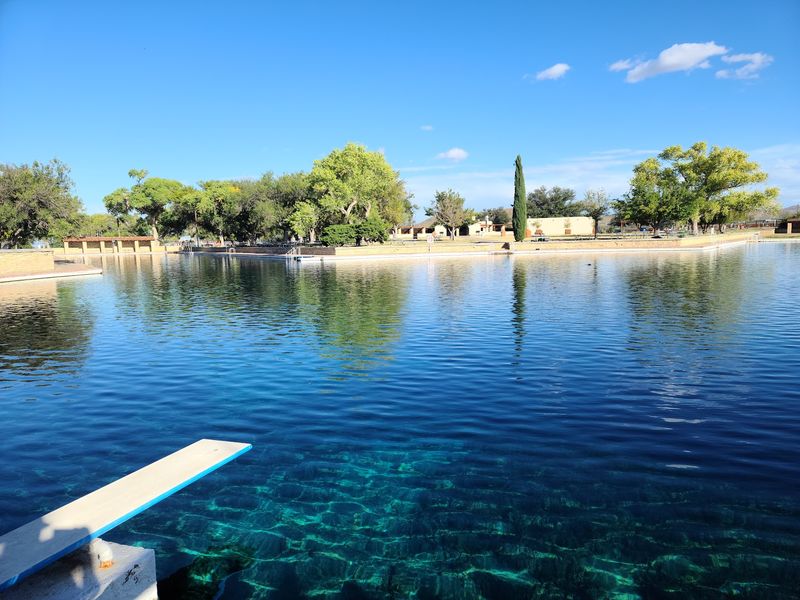
Desert towns don’t usually come with a diving board, but this one does.
It stands beside a 1.3-acre swimming pool supplied entirely by San Solomon Springs, an astonishing contrast with the dry landscape surrounding Toyahvale.
The water stays remarkably clear, and the pool’s deeper sections attract experienced swimmers and certified scuba divers.
Shallower areas offer a gentler place to cool off. Because depths change substantially, children need close supervision, and there are no lifeguards.
The Civilian Conservation Corps built the park in the 1930s, leaving a spring-fed retreat with trees, picnic sites, and historic architecture.
The entrance is at 9207 State Highway 17, Toyahvale. Beyond swimming, restored desert wetlands support native fish and offer another reason to explore the grounds.
You can even stay overnight. Campsites and the retro San Solomon Springs Courts let you turn a swimming stop into a proper vacation. Waking up near an enormous desert pool makes an ordinary hotel morning seem rather predictable.
Pool access runs from 8 a.m. until 7:30 p.m. or sunset, whichever comes first, with an annual cleaning closure usually in early May.
Reserve a day pass before making the drive, especially during summer and holiday periods when capacity fills quickly. The spring does all the filling here; you just have to bring the swimsuit.
2. Caddo Lake State Park, Karnack
You can feel like you drove to Louisiana without ever leaving Texas.
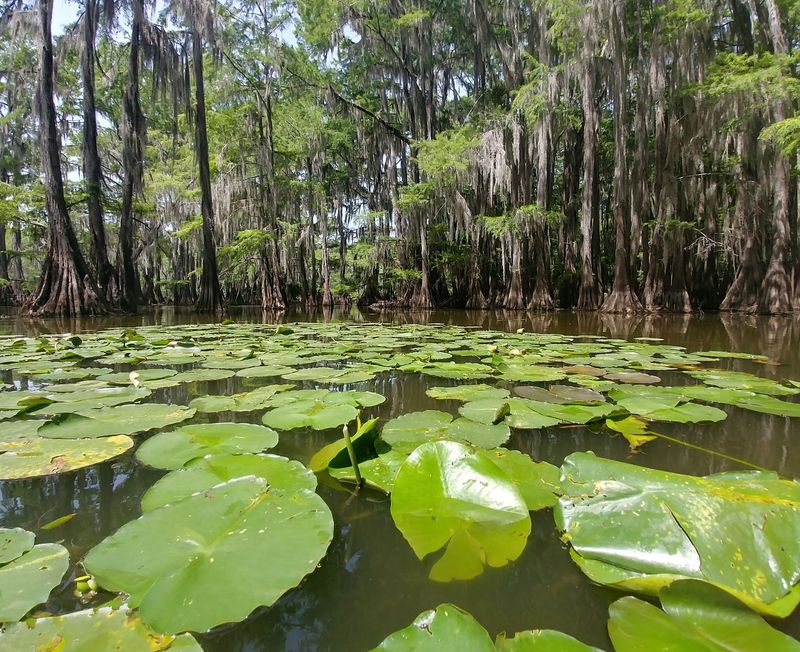
Caddo Lake State Park sits near the eastern state line, where bald cypress trees rise directly from dark water and Spanish moss hangs from their branches.
The best way to appreciate the atmosphere is from a canoe. The entrance is along 245 Park Road 2 in Karnack.
Rentals are available at the park, with paddles and life jackets included, while marked waterways lead through Saw Mill Pond and Big Cypress Bayou. Experienced paddlers can venture farther toward the lake’s winding channels.
Wildlife makes the scenery even more interesting. Birds move between the trees, fish ripple the surface, and alligators inhabit these wetlands. Enjoy the view from a respectful distance and leave the animals undisturbed.
Prefer dry ground? Roughly 2.5 miles of trails cross forested hills, including paths near structures built by the Civilian Conservation Corps. The same program constructed the park’s historic cabins, which remain available for overnight stays.
Visitors can also choose screened shelters or campsites, turning a canoe outing into a weekend surrounded by cypress trees.
Daily public hours are 8:15 a.m. to 4:45 p.m., and day-use reservations are recommended. Bring binoculars and give yourself time to notice the small movements between the mossy branches. The stillness is half the attraction.
3. Hamilton Pool Preserve, Dripping Springs
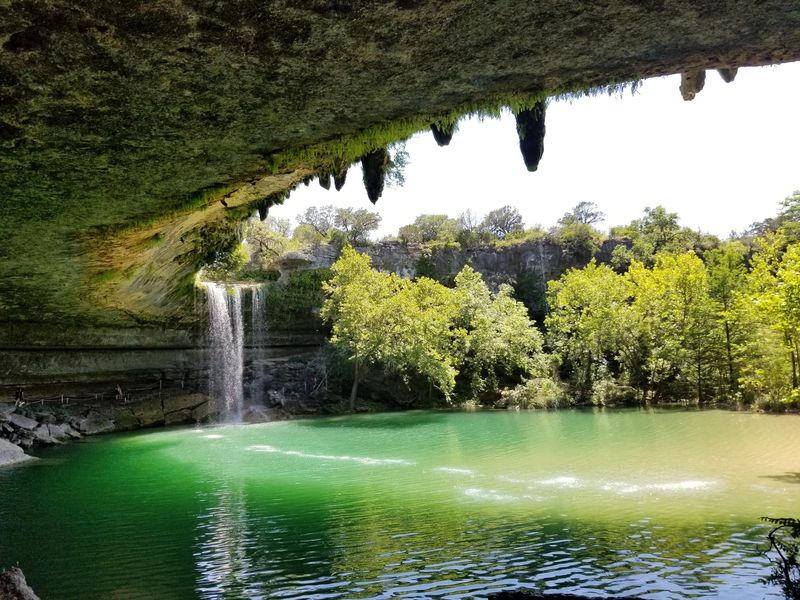
A waterfall drops 50 feet into a turquoise pool here, and the pool sits inside a limestone grotto. Yes, this is still Central Texas.
Hamilton Pool Preserve lies in the Hill Country near Dripping Springs.
Its remarkable basin formed when the roof of an underground river collapsed, leaving a huge stone overhang framing the water.
Getting there involves a rugged quarter-mile trail with uneven steps. Once the canyon opens below, cypress trees, ferns, and the limestone walls create a view that barely resembles the dry hills above.
Swimming requires special attention to current conditions. Water entry is temporarily suspended as of early November 2026 because of recent rainfall and bacteria levels, and even when it resumes, only a restricted section may open.
The path beneath the overhanging cliff also remains closed because of falling rocks. Enjoy the waterfall from permitted viewing areas rather than planning on floating beneath it.
Reservations are mandatory every day, with morning entry from 9 a.m. to 12:30 p.m. and afternoon entry from 2 to 5:30 p.m. Bring drinking water, sturdy shoes, and cash for the entrance payment; the reservation itself is arranged in advance.
The preserve is at 24300 Hamilton Pool Road, Dripping Springs. Wildlife watching and the scenery alone can fill the visit. The best souvenir is remembering that natural places set their own rules.
4. Colorado Bend State Park
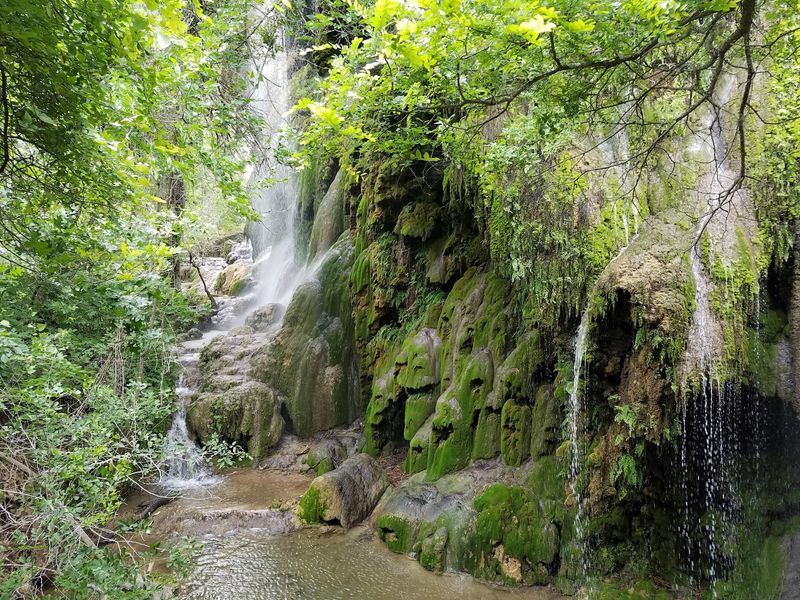
Some state parks hand you a waterfall at the parking lot, but this one makes you earn it. The reward is Gorman Falls, a spectacular 70-foot cascade surrounded by delicate mineral formations.
Colorado Bend State Park follows the Colorado River through rugged Hill Country terrain. More than 35 miles of hiking and biking trails pass limestone slopes, wooded canyons, and overlooks where the river appears far below.
The Gorman Falls Trail is a three-mile round trip with a rocky surface and a steep final descent. Use 1201 Colorado Park Road, Bend, for the entrance.
Wear shoes with reliable grip and bring plenty of water. The waterfall’s travertine formations are fragile, so admire them from the designated viewing area.
For a different kind of water adventure, the Spicewood Springs Trail follows a series of clear pools and small waterfalls.
Swimming is permitted in designated spring areas when conditions allow. Guided cave tours offer another perspective beneath the limestone landscape, with advance booking needed.
Camping stays pleasantly simple. Riverside and walk-in sites suit travelers who enjoy quieter evenings and fewer conveniences, while the river offers opportunities for paddling and fishing.
Gates are open daily from 6 a.m. to 10 p.m. and the park frequently reaches capacity, so arrange your visit ahead.
5. Monahans Sandhills State Park
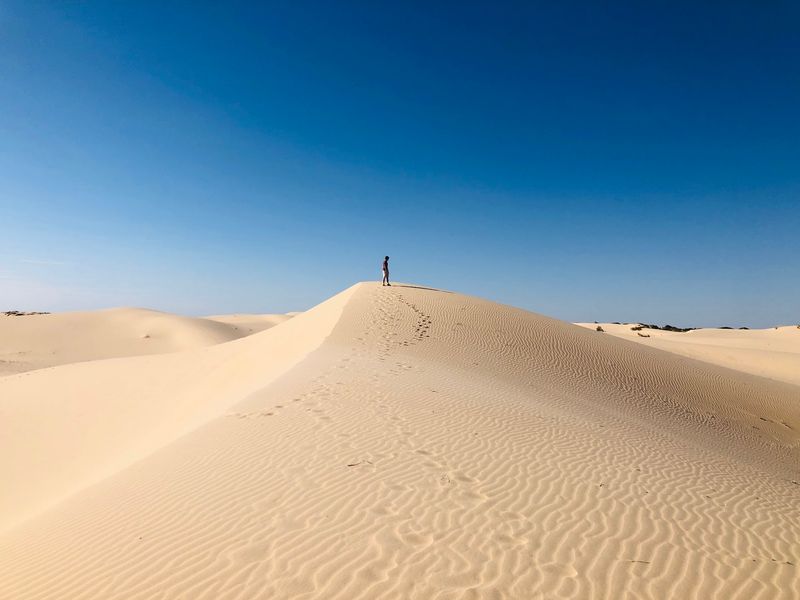
Sledding in Texas usually requires a rare snowstorm, but here you slide downhill on sand. Monahans Sandhills State Park turns a stretch of the Permian Basin into a giant natural playground of rolling dunes.
Wind continuously reshapes the pale sand, creating ridges and slopes that can look different from one visit to the next.
There are no marked hiking trails, so visitors explore the dunes freely while keeping track of their starting point.
Sand discs can be rented at headquarters from 8:30 a.m. to 4:30 p.m. Climb a dune, sit on the disc, and let gravity handle the return trip. Expect a little sand in your shoes afterward.
That’s part of the experience.
The Dunagan Visitor Center offers exhibits about local plants, animals, and the landscape’s history. Horse owners can use a designated 800-acre riding area, while overnight guests have campsites equipped with water and electricity.
The park entrance at 101 Park Road 41, Monahans, is easily reached from Interstate 20. Its gates operate daily from 7 a.m. to 10 p.m., making sunset an especially tempting time to explore.
Summer sand can become extremely hot, so bring water and choose cooler hours for climbing. Stay long enough to watch the final sunlight slide across the ridges. Few playgrounds come with a horizon this wide.
6. Caverns Of Sonora
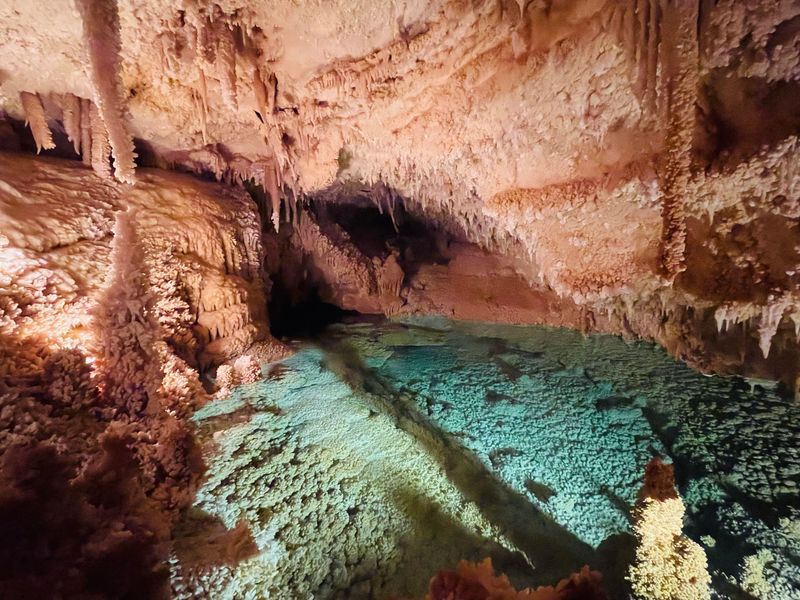
Out on private ranch land near Sonora, the real show happens 155 feet underground.
That’s the depth reached on the guided Crystal Palace Tour at Caverns of Sonora, a cave celebrated for its intricate formations.
Crystalline shapes cover the walls, with twisting helictites, delicate cave decorations, and flowstone appearing along the winding route.
The close-up details are astonishing, especially when you consider how gradually mineral deposits form.
Guides lead groups of no more than twelve through nearly two miles of passages. The tour lasts about one hour and forty-five minutes and includes approximately 360 stair steps.
Comfortable shoes are essential, and the cave stays warm and humid rather than chilly.
Visitors can bring cameras, but bags and loose belongings must remain outside to help protect the formations. The caverns sit at 1711 Private Road 4468, Sonora, near Interstate 10’s Exit 392.
Specialty tours are also offered by advance arrangement for those interested in more adventurous underground exploration.
A gift shop, gemstone activities, and camping facilities make the ranch grounds worth exploring before or after your tour.
The attraction opens daily, generally from 9 a.m. to 5 p.m. during the cooler season and 8 a.m. to 6 p.m. during warmer months. Book ahead, and prepare for a staircase-filled journey beneath the ranch, right beneath your feet.
7. Japanese Tea Garden, San Antonio
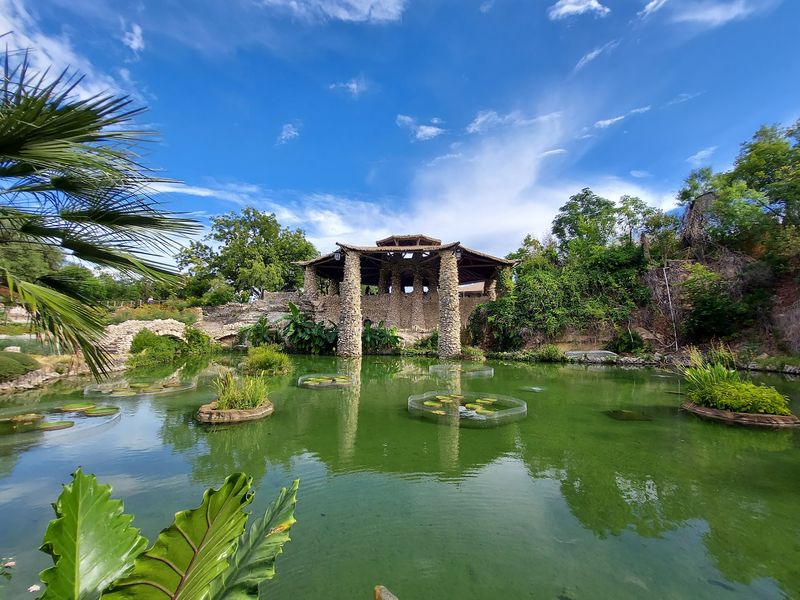
An old limestone quarry is not where you’d expect to find koi ponds. Yet that’s the backstory of this garden just north of downtown San Antonio.
The Japanese Tea Garden took shape in 1917 and 1918, when an abandoned quarry was transformed into a landscaped retreat with stone bridges, winding paths, and a Japanese-style pavilion.
Its shaded terraces now overlook pools filled with colorful koi.
The waterfall is a highlight, dropping about 60 feet through the former quarry walls. You’ll find the entrance at 3853 North St. Mary’s Street, San Antonio.
Stone arches and carefully planted greenery make the surrounding paths feel wonderfully removed from the nearby city streets.
A Japanese-American family later operated a tea room here, and the garden’s evolving identity reflects an important piece of the city’s cultural history.
The Jingu House restaurant continues the tradition of enjoying food in this leafy setting, serving Asian-inspired dishes and refreshments.
Admission is free, and leashed dogs are welcome. The upper garden and pavilion are accessible by ramp, while reaching the lower garden involves stairs. Keep that in mind if your group includes anyone who prefers a level route.
Garden hours are 7 a.m. to 5 p.m. daily, making an early stroll particularly appealing. Take your time around the koi ponds. Quite a transformation for limestone.
8. Palo Duro Canyon State Park
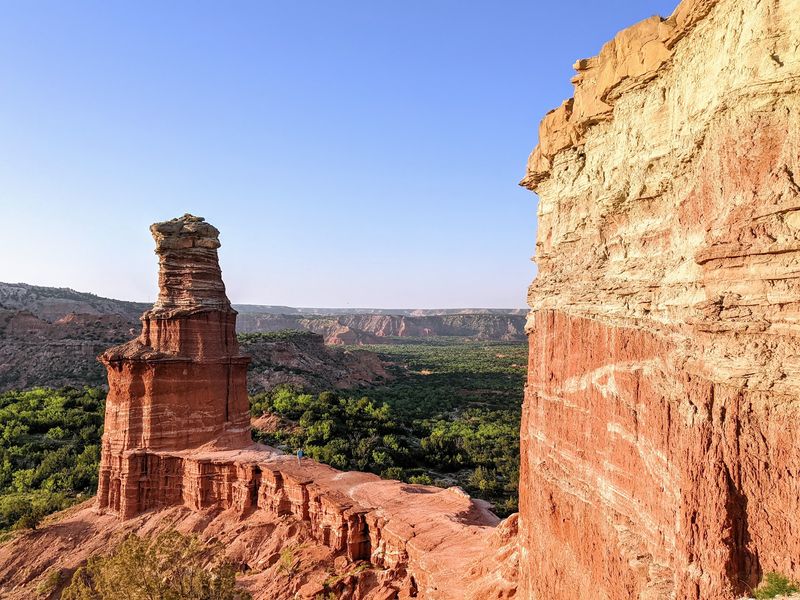
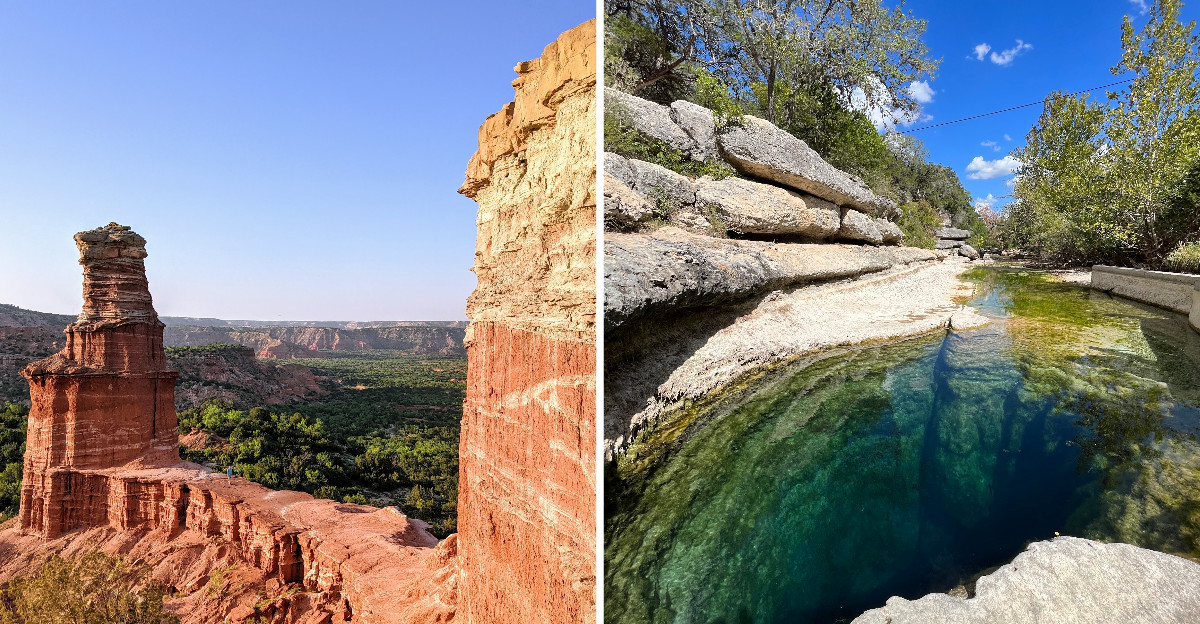
Driving across the flat Panhandle, you’d never guess an 800-foot canyon is waiting below. Then the ground simply drops away.
Palo Duro Canyon State Park protects part of the country’s second-largest canyon system, stretching through the landscape in layers of red, orange, and pale stone.
Sunlight shifts across the cliffs throughout the day, giving the same overlook a different appearance by evening.
Lighthouse Rock is the signature formation, reached by a popular hiking trail across the canyon floor.
The main entrance is at 11450 Park Road 5, Canyon. Start early and carry generous drinking water, because summer temperatures can climb quickly below the rim. The park sometimes restricts trail access during extreme heat.
More than 30 miles of trails accommodate hikers, cyclists, and riders. Prefer sightseeing without a long climb? A scenic road descends to the canyon floor, with stops for enjoying the changing terrain.
Stay overnight in a campsite, historic cabin, or furnished glamping accommodation.
During summer, the Pioneer Amphitheatre hosts a longstanding outdoor musical, bringing another dimension to the canyon experience. Its 2026 season has ended, with future dates announced separately.
Gates open daily from 7:30 a.m. until 10 p.m. Reserve ahead during popular periods.
If you hike or simply watch the light travel across the rock, the landscape makes an ordinary weekend feel enormous.
9. Jacob’s Well Natural Area, Wimberley
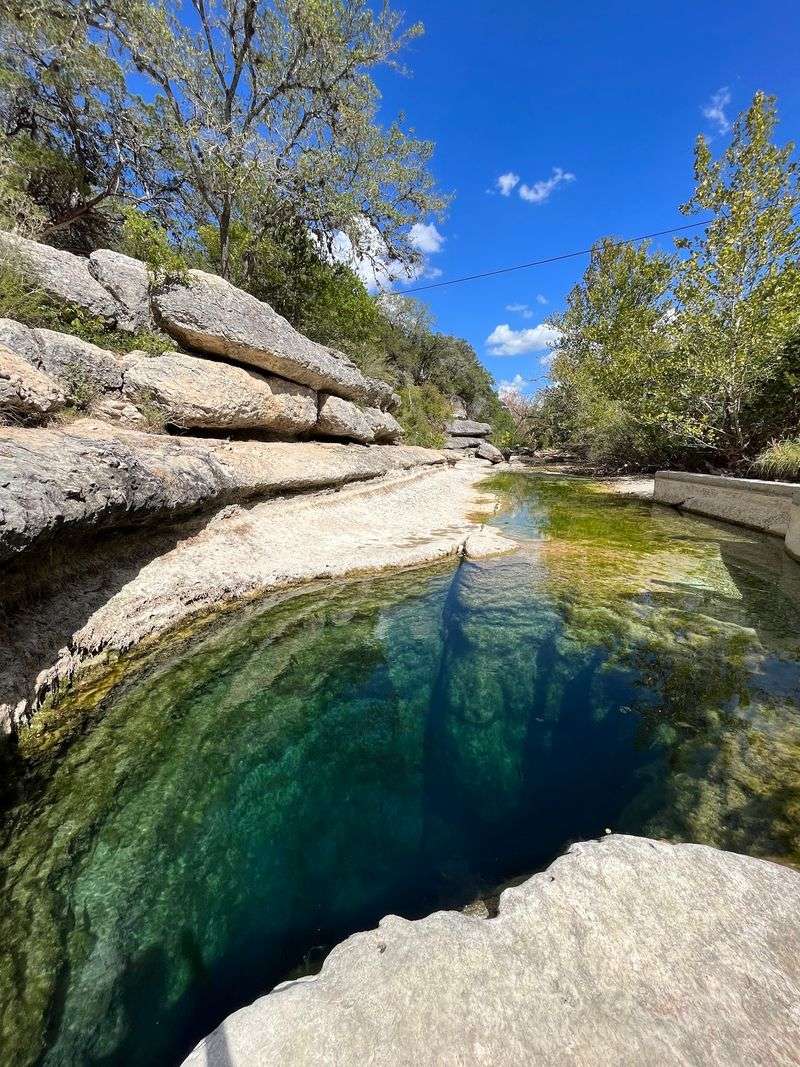
Peek into Jacob’s Well and the water seems to go down forever. The spring opening extends roughly 30 feet downward, leading into an underwater cave system beneath the limestone landscape.
This 81-acre natural area near Wimberley protects the famous spring and surrounding woodland.
A quarter-mile trail leads from the parking area toward the well, crossing compacted granite, natural limestone, and several sets of stairs.
The spring is best enjoyed from land right now. Swimming has been suspended since 2022 because of low flow and water-quality concerns, and the closure remained in effect in November 2026.
Even so, looking into the circular opening reveals an extraordinary piece of Hill Country geology.
There’s much more to do than stand beside the water. Find Jacob’s Well at 1699 Mount Sharp Road, Wimberley.
Approximately three miles of trails invite wandering, with interpretive gardens, picnic areas, a sundial, a labyrinth, and a children’s loose-parts play area. Free guided walks are offered on selected Saturday mornings from September through June.
The grounds generally open daily from 8 a.m. to 6 p.m., with last entry at 5:30 p.m. General admission and parking are free.
Bring a camera and allow time for the surrounding trails. The remarkable view doesn’t require getting into the water. There’s plenty to enjoy on dry ground.
10. Gage Hotel, Marathon
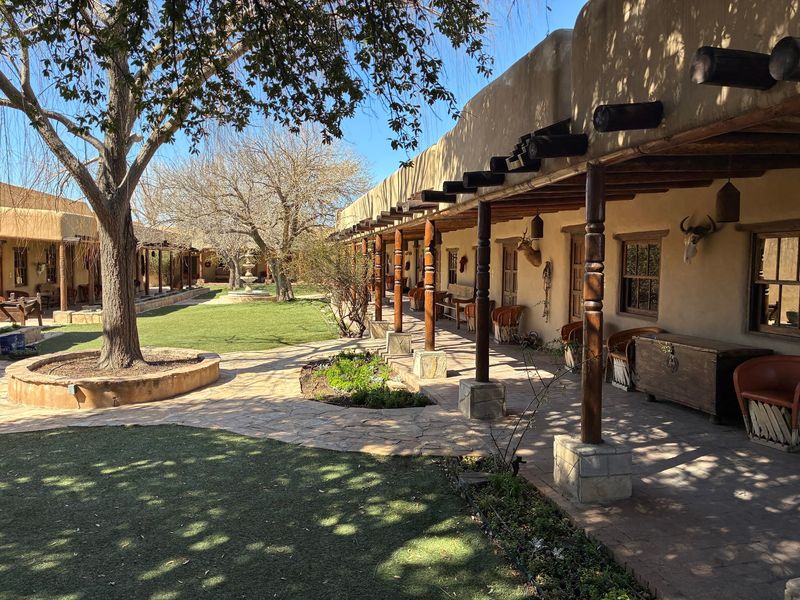
A tiny railroad town in remote Brewster County is home to a historic hotel built for slowing down. Marathon is small, quiet, and far from big cities, which is exactly why it works.
The Gage Hotel opened in 1927, with distinctive brick architecture designed by a prominent Southwestern architect. The hotel’s main address is 102 Northwest First Street, Marathon, beside Highway 90.
Today, its accommodations range from rooms in the historic building to casitas and additional guesthouses, all drawing on the surrounding ranching and borderland traditions.
When the desert sun is out, the outdoor pool becomes the place to be. It’s open for swimming year-round, with a separate hot tub beside it.
Guests looking for additional relaxation can book massages or facials at Gage Wellness, which also has a steam room and spa courtyard.
Dinner doesn’t require a drive. The on-site 12 Gage Restaurant serves seasonal Southwestern dishes in a warm dining room, while the V6 Café offers breakfast and lunch.
Afterward, it’s easy to take a quiet walk beneath Marathon’s famously open skies. Its location makes a convenient base for exploring the Big Bend region, especially for travelers who want comfort after long days outdoors.
Treat it as a base camp with better sheets. Reserve ahead, bring a book, and let the desert set the pace for once.