This Enormous Texas Antique Mall Offers 60,000 Square Feet Of Vintage Treasures
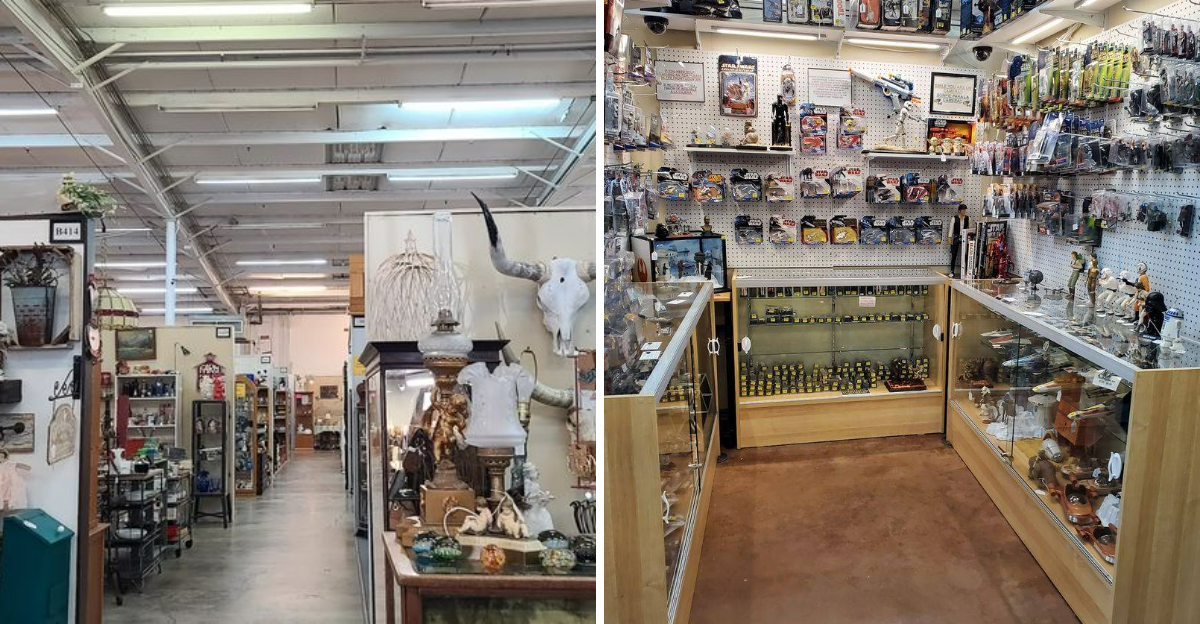
What happens when a building refuses to tell you what’s inside until you’re already through the door? That’s the trick this place pulled on me during a slow Saturday morning when I expected a quick ten minute stop.
Two hours later I was still wandering aisles packed with old signs, glass cabinets, and furniture older than my grandparents. Nothing about the outside gave away the scale of what was waiting.
Dealers fill booth after booth with items pulled from attics, estate sales, and barns across Texas. Vintage toys sit near hand tools nobody makes anymore.
Old advertising signs cover entire walls. Shoppers lose track of time here more often than they’d like to admit.
Texas hides some of its best finds behind the plainest buildings, and this one might be the biggest surprise yet.
Sixty Thousand Square Feet Of Wandering Room
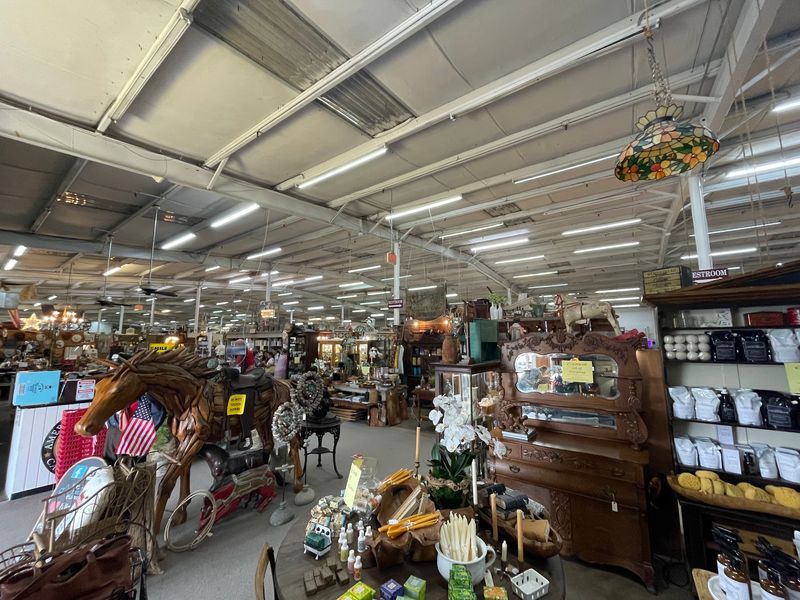
Most antique shops fit inside a single room. Sixty thousand square feet is a different animal entirely.
The floor plan stretches so far that the back wall feels like a rumor. Aisle after aisle opens into another aisle, and each one carries a completely different mood.
Arriving late in the afternoon may leave too little time to explore the entire mall before closing.
Comfortable shoes matter more than you would guess. Regular shoppers describe the visit as a serious walk, not a quick browse, and they are right.
The size also means the crowd spreads out. Even on a busy weekend you can stand in front of a display case without anyone bumping your elbow.
Plan on two hours minimum if you want to see everything once. Three hours is more honest if you actually read tags and open drawers.
You can find all of it at LoneStar Antiques, sitting right along Denton Highway. The address is 5605 Denton Hwy, and there is also a hat bar inside worth finding.
More Than Two Hundred Dealers Under One Roof
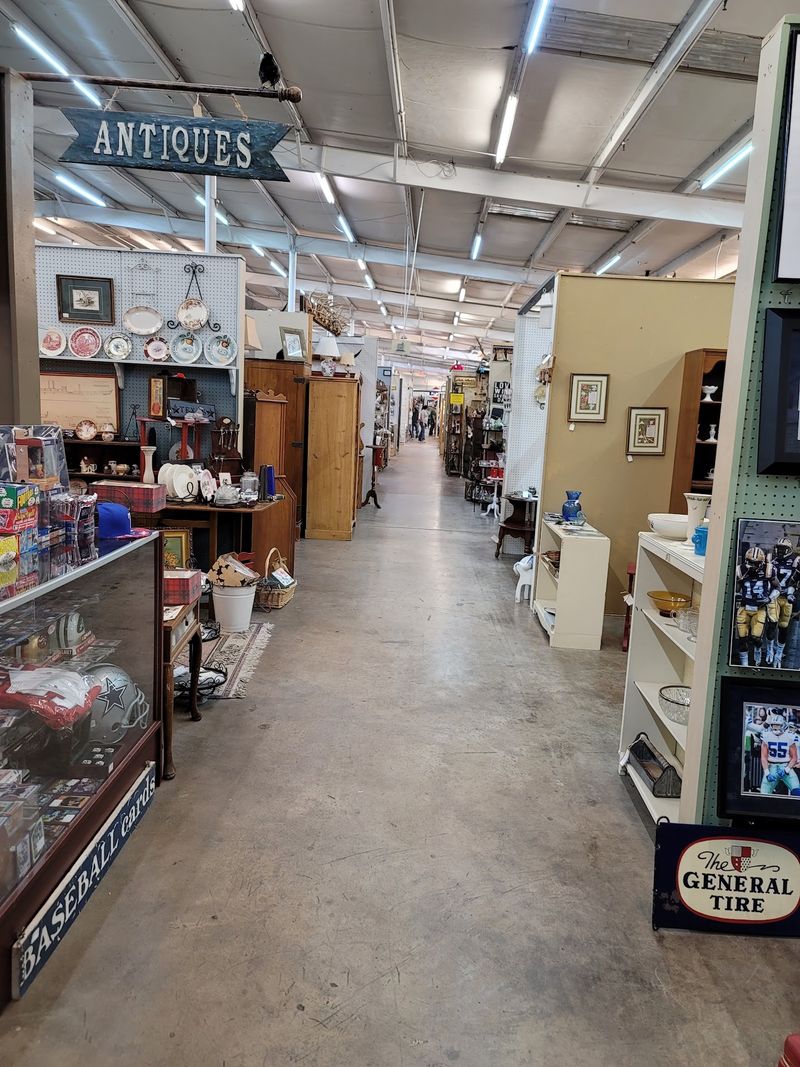
Imagine two hundred separate shops agreeing to share a single building. That is the basic idea behind the vendor setup here.
The antique mall features more than 200 unique dealers, creating an enormous variety of merchandise.
Each booth reflects one person’s taste. One dealer stocks nothing but delicate porcelain, while the neighbor three steps away leans hard into rusty farm tools.
That mix is what keeps the walk interesting. You never settle into a rhythm because the scenery changes every ten feet.
Prices shift from booth to booth too. Some vendors price aggressively, others price for a quick sale, and comparing the two is part of the fun.
Similar items may appear at different prices, so comparing several booths before buying can be worthwhile.
Sales also pop up randomly. Individual booths sometimes run their own discounts, so a tag that looks steep might already be marked down at the register.
The Tea Room That Steals The Show
Shopping burns more energy than people admit. Luckily, lunch waits inside the building.
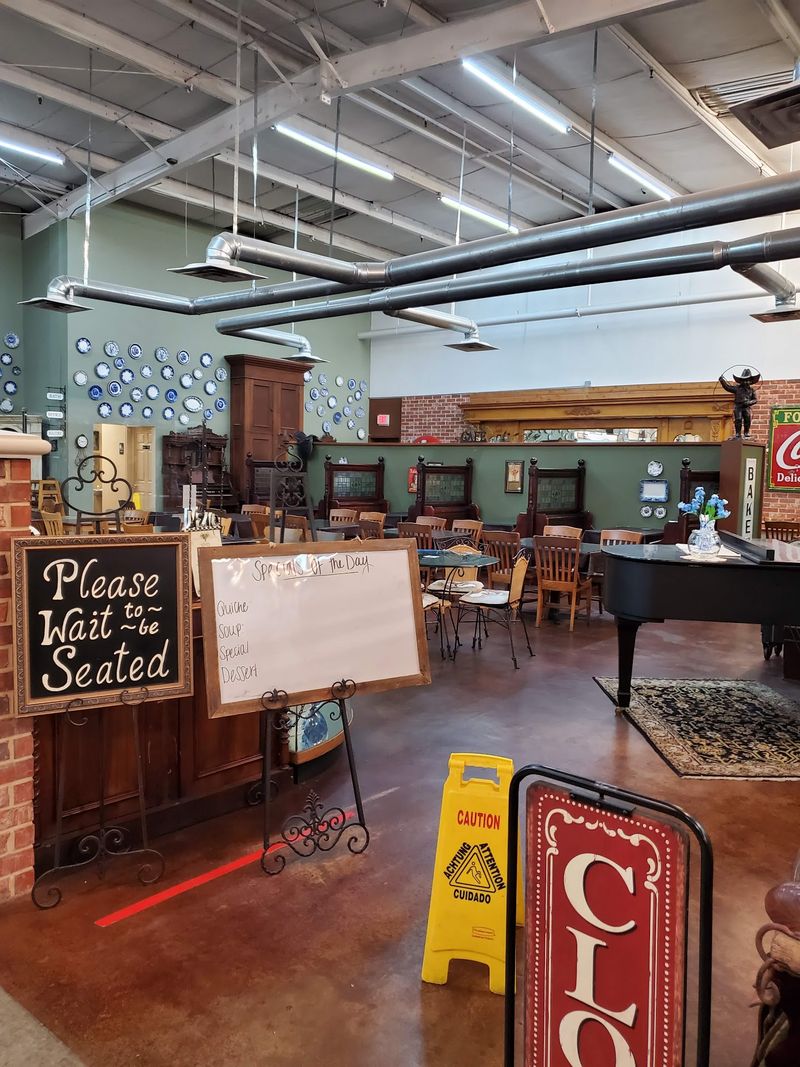
The on-site tea room serves real meals, not vending machine snacks. Homemade quiche shows up in conversation constantly, and so do the soups.
Potato soup has a loyal following. Strawberry cake gets mentioned nearly as often, usually by people who swore they were only stopping for coffee.
Daily specials rotate, which gives repeat visitors something new to try. Chicken tortilla soup is one of the standouts when it appears.
The room itself sits near the restrooms, off to one side of the shopping floor. Tables are close together and the pace stays relaxed.
Service here gets steady praise. Servers remember faces, and they do not rush anyone finishing a bowl.
Visitors frequently mention the homemade quiche as one of the tea room’s popular lunch options.
Some folks skip the shopping entirely and come only for lunch. Honestly, that is a defensible choice.
Live Piano Music While You Shop
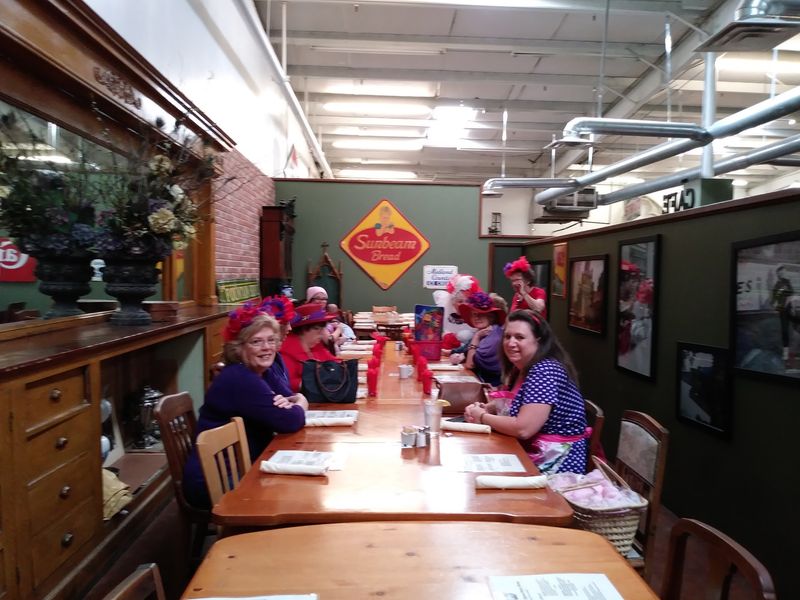
Background music in most stores comes from a speaker in the ceiling. Here it sometimes comes from actual fingers on actual keys.
A pianist occasionally plays in the tea room, and the sound drifts out into the nearby aisles. It is not scheduled every day, which makes catching it feel lucky.
The effect is hard to describe until you experience it. Old furniture and live piano go together better than you would expect.
Diners linger longer when the music starts. Shoppers slow down too, drifting toward the closer booths just to keep listening.
Live piano music is occasionally mentioned by visitors as a pleasant addition to the tea room’s atmosphere.
Because performances are not regularly scheduled, visitors should treat the live music as an occasional bonus. There is no guarantee, so treat it as a bonus.
I caught a few songs during my second visit. It turned an ordinary errand into a genuinely pleasant afternoon.
Booth Facades That Look Like A Tiny Village
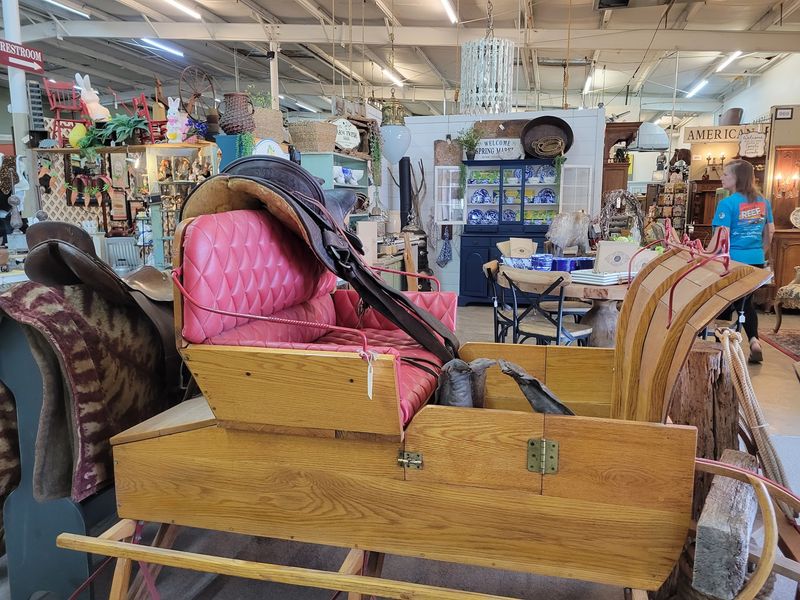
Certain sections of the floor stop looking like a store and start looking like a street. Vendors have built facades that mimic old storefronts.
Wooden fronts, painted signs, and little display windows turn a plain booth into something theatrical. Walking that stretch feels like strolling through a small town from another century.
The effort behind these setups is obvious. Dealers clearly enjoy building the scene as much as selling the merchandise.
Photographers love this area. The lighting and detail work make for pictures that do not look like typical shopping trip snapshots.
It also helps with navigation. When somebody says meet me by the storefront row, you actually know where to go.
Kids react well to this part too. A wall of glassware bores them, but a fake shop front holds attention.
Some visitors have compared the whole building to an antique theme park because of touches like these. That description fits better than you might think.
Take your time here. The details reward a slow second pass.
Furniture Big Enough To Fill A Ballroom
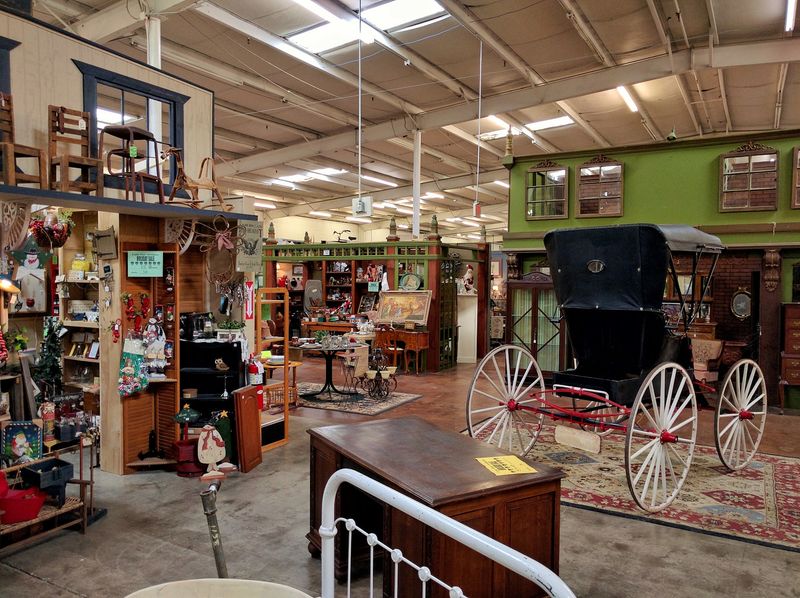
Toward the back, the merchandise scales up dramatically. Small trinkets give way to pieces that need a truck and two strong friends.
Dining sets built for twelve people sit under chandeliers the size of beach umbrellas. Museum-quality furniture shows up in this section regularly.
Carved wood, heavy armoires, and long farmhouse tables fill the space. There have even been carriages on the floor at times.
The left side of the building holds a big wood furniture area as well. Between the two, serious buyers have plenty to study.
Measure your room before you fall in love. I have watched people realize too late that a sideboard would not clear their doorway.
Prices in this zone vary widely. Condition, age, and dealer all play a part, so ask questions before deciding.
Even if you are not buying, the craftsmanship is worth seeing. Joinery like this rarely shows up in modern showrooms.
Rustic farmhouse decor rounds out the section nicely.
Glass Cases Packed With Small Wonders
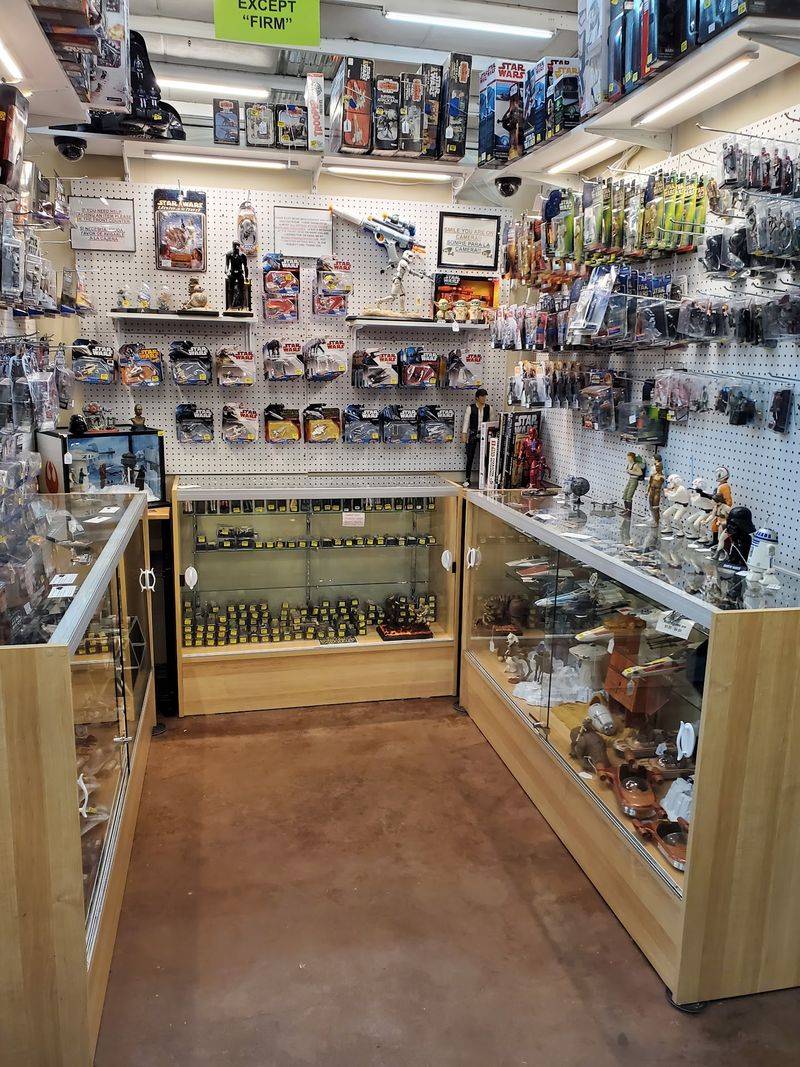
The middle of the store belongs to the little things. Two rows of display cabinets stretch out, each one crammed with small treasures.
Coins, jewelry, figurines, and old toys sit behind glass. Vintage glassware and European porcelain also make regular appearances.
Collectors gravitate here first. The cases hold the kind of items that disappear fast when priced right.
Beanie Babies have shown up in impressive quantities, which delights anyone who remembers the nineties. Retro trinkets and ephemera round out the mix.
Staff will unlock a case if you want a closer look. Just ask at the counter, and someone will help.
They will also hold items at the front while you keep shopping. That service alone saves you from carrying fragile things through crowded aisles.
Bring a small notebook if you collect seriously. Case numbers and booth numbers matter when you want to track something down later.
Patience pays off here. The best finds hide behind the obvious ones.
An Inventory That Refuses To Sit Still
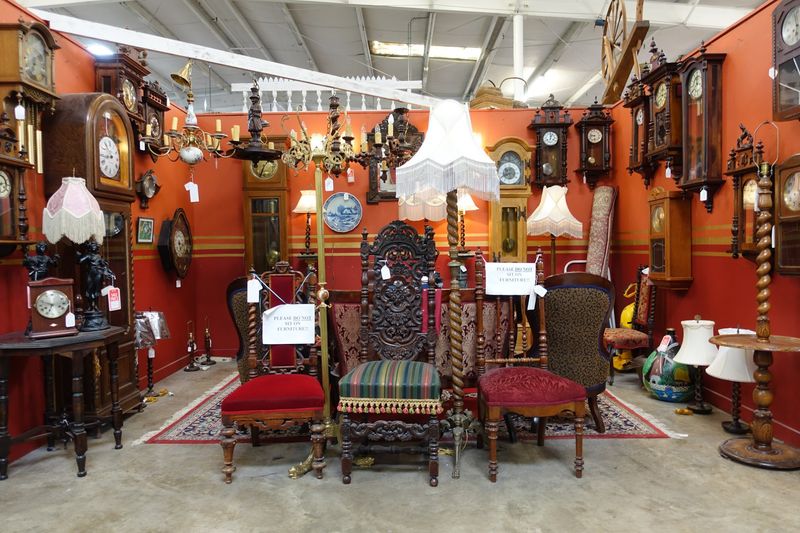
Come back next month and half the merchandise will be different. Turnover here moves quickly.
Dealers restock constantly, which means the store you remember is never quite the store you return to. Regulars visit monthly for exactly that reason.
Old advertising signs, a vintage slot machine wheel, and a Sinclair dinosaur have all appeared on the floor. American history from the past century and a half turns up in unexpected corners.
Mid-century pieces mix with decorative arts and seasonal decor. Art, gifts, and quirky one-off finds fill the gaps between.
That constant change rewards repeat trips. Something you passed on in spring will be gone by summer, replaced by three things you never expected.
I passed on an enamel sign once, told myself I would think about it, and lost it within two weeks. Lesson learned.
If a piece speaks to you, buy it. Second chances are rare in a place this fluid.
Practical Details Worth Knowing Before You Go
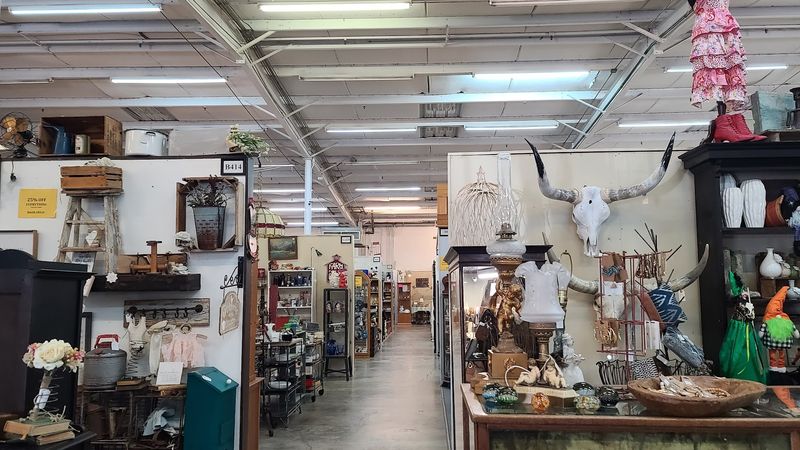
A little planning turns a good visit into a great one. Start with the bag policy.
Backpacks and large bags are not allowed inside, including smaller backpack-style purses. The rule exists to protect merchandise and prevent accidental breakage in narrow aisles.
Exceptions are made for diaper bags and medically necessary bags. Leave the rest in your car and carry a slim wallet instead.
Hours run Monday through Saturday from 10 in the morning until 6 in the evening. Sunday runs 11 to 5, which is a shorter window.
Staff give closing reminders roughly thirty minutes ahead and flash the lights, since there is no intercom. Arrive early if you want a full look around.
The building is wheelchair accessible with customer parking, restrooms, and air conditioning. Texas summers make that last one essential.