10 Spectacular Day Trips In Virginia You Can Reach By Train
One Virginia train depot shares its building with a dinosaur exhibit. Naturally, that raises a perfectly reasonable follow-up question.
Why would a train station need fossils? Here’s what I actually know.
The same depot holds a visitor center and a history museum, and the dinosaur display features local fossil finds.
What the facts don’t explain is how a rail stop became the town’s go-to time machine.
Another station on this list sits a short walk from a battleship that served in World War II, Korea, and Desert Storm.
You can swap traffic for a train window and still land somewhere great.
Which ticket are you booking first?
1. Old Town Alexandria Waterfront
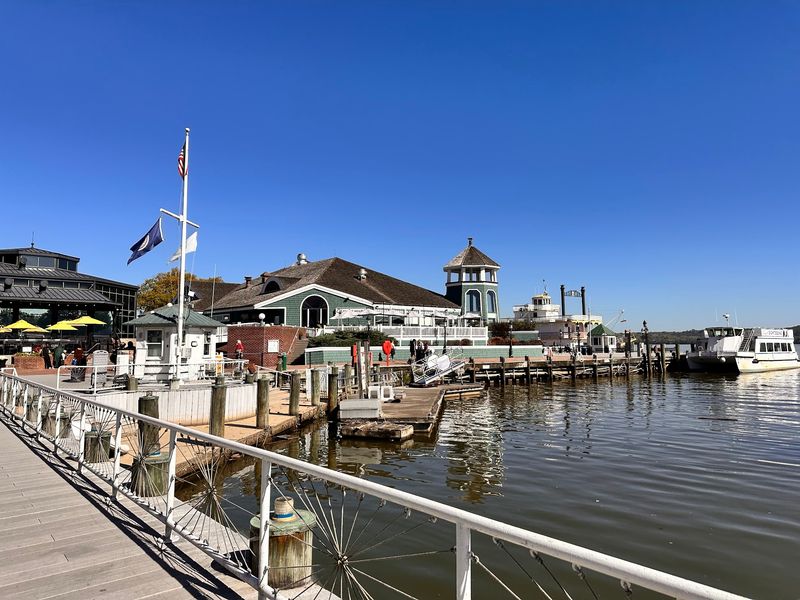
A seven-foot-wide house is just one oddity waiting near this riverfront. The Hollensbury Spite House on Queen Street dates to 1830, and its remarkably narrow facade still inspires double takes.
Start at Waterfront Park, where open lawns, riverside paths, and changing public art invite an unhurried wander. The park stretches along the Potomac, with boats passing beyond the piers and benches facing the water.
Your destination is near 1 Prince St, Alexandria, at the river end of Old Town.
From Alexandria’s Amtrak station, walk toward King Street or use the free King Street Trolley, which ends at City Hall and Market Square, several blocks from the waterfront.
Keep an eye out for a propeller from the USS Pompon, displayed near the Torpedo Factory waterfront. Inside the Torpedo Factory Art Center, working artists occupy studios in a former naval industrial building.
Continue to the Stabler-Leadbeater Apothecary Museum for a glimpse of historic medicines, or explore the rooms of Gadsby’s Tavern Museum. King Street adds independent shops and plenty of places for lunch.
Before returning, find the cobblestones of Captain’s Row on Prince Street. Founders Park offers another peaceful river view, just north of the busiest waterfront blocks.
On a sunny afternoon, the harbor makes a great place to watch boats arriving from across the Potomac. The Virginia shoreline looks especially lovely in changing light.
2. Historic Old Town Fredericksburg
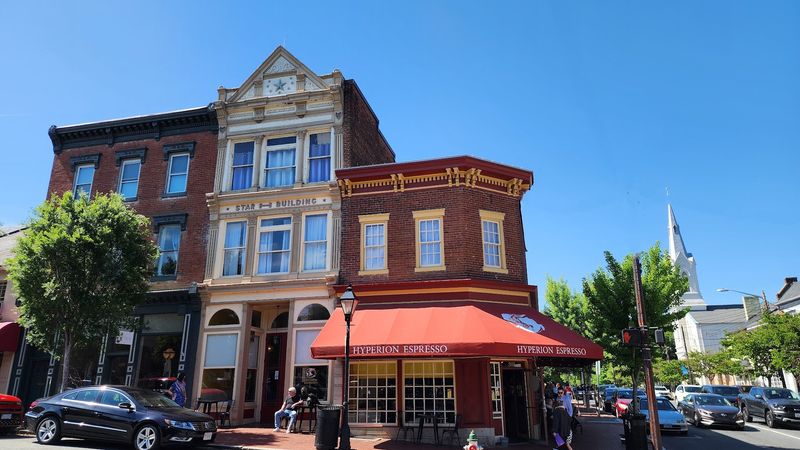
George Washington’s mother, sister, and younger brother all left their mark on this small grid of streets. Talk about a family that liked to spread out.
The Mary Washington House recalls the years his mother spent in town, while Historic Kenmore preserves the elegant home of his sister and her husband. His brother once lived in the building now interpreted as the Rising Sun Tavern.
The Hugh Mercer Apothecary Shop is another memorable stop. Its historic rooms introduce visitors to herbs, instruments, and medical practices of the eighteenth century.
William St, Fredericksburg, provides an easy starting point for exploring downtown. Amtrak and commuter trains arrive nearby, so you can head into the historic streets without renting a car.
Caroline Street brings independent shops, galleries, bakeries, and inviting lunch choices. The Fredericksburg Area Museum occupies the historic Town Hall and Market House, with exhibits about the community across many centuries.
If you’d rather stretch your legs outside, follow a riverside path along the Rappahannock. The downtown historic district encompasses approximately forty blocks, so an afternoon can disappear surprisingly quickly.
Make time for a guided house tour, but check operating hours before choosing which one. Then return to the station with a pastry and a few more stories than you arrived with.
3. Williamsburg Amtrak Station
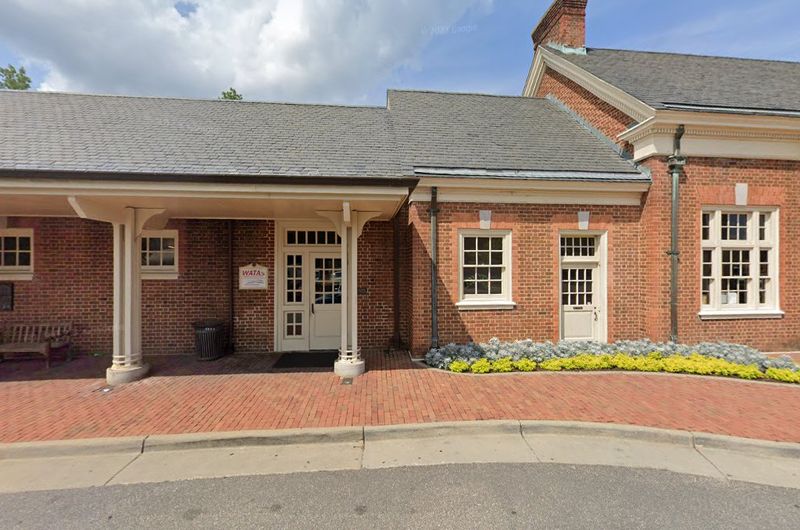
Railroad tracks once ran closer to the heart of Williamsburg. During the restoration of the colonial town, the line shifted west, and a new station opened in 1936.
The handsome brick depot has a steep roof and white-columned entrance, giving your arrival a little architectural ceremony. It still serves Amtrak passengers, alongside local buses and visitor transportation.
You’ll arrive at 468 N Boundary St, Williamsburg, about four blocks from the Colonial Williamsburg Historic Area. That’s close enough to head straight toward the eighteenth-century streets without arranging a car.
Across more than 300 acres, restored buildings and costumed interpreters introduce historic trades and daily routines. You can watch demonstrations, tour buildings, and explore gardens between the brick and wooden houses.
Merchants Square adds cafés, shops, and places to pause for lunch. Nearby, the College of William & Mary brings another layer of history to the walkable center.
For attractions farther away, the Patriot Shuttle connects the station with destinations including Jamestown and Yorktown. Check its timetable before planning a longer excursion, since traveling beyond downtown takes additional time.
Back near the station, the Art Museums of Colonial Williamsburg feature decorative and folk art. The depot has a staffed waiting area, but no public Wi-Fi, so save directions before setting off.
4. Charlottesville Amtrak Station
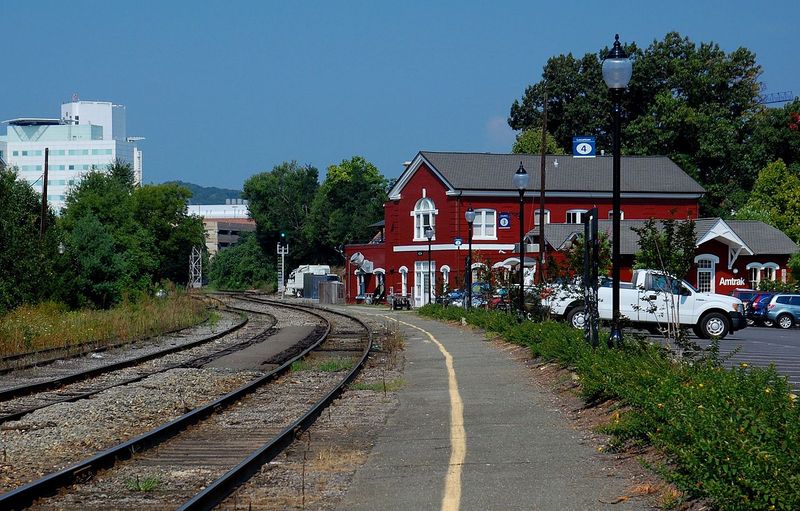
Two rail lines cross just south of this station, which makes it a rare kind of crossroads. Amtrak’s Cardinal, Crescent, and Northeast Regional all serve Charlottesville.
The passenger facilities occupy a former Railway Express Agency building from the nineteenth century. That little piece of rail history places you between two very different attractions: a lively downtown and a historic university campus.
Your train pulls in at 810 W Main St, Charlottesville. Head east for the Downtown Mall, a brick pedestrian promenade lined with restaurants, shops, performance spaces, and café tables.
Go west instead and you’ll reach the University of Virginia, whose central Lawn and Rotunda were designed by Thomas Jefferson. The university’s historic core forms part of a UNESCO World Heritage site.
If your legs need a break, the fare-free trolley connects downtown with the university area. It’s useful for covering more ground without spending the afternoon searching for parking.
Monticello is another major attraction, although it requires transportation beyond the walkable center. Reserve a timed tour if Jefferson’s mountaintop home is your priority.
For an easier afternoon, browse downtown bookstores, enjoy a pastry, and stop at a gallery. The station has an indoor waiting area, making it simple to regroup before boarding your return train.
5. Staunton Amtrak Station
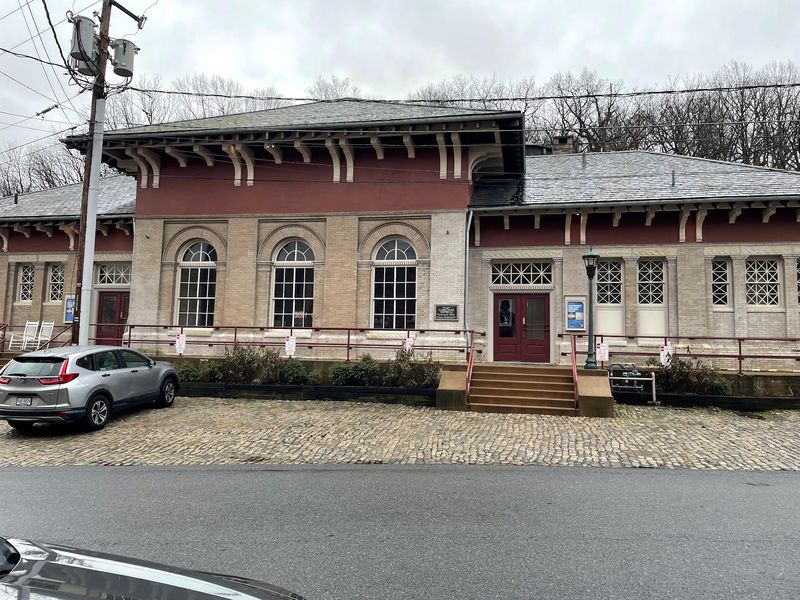
Shakespeare would recognize one stage in this Shenandoah Valley town. The Blackfriars Playhouse recreates his indoor theater, bringing energetic performances to a remarkably intimate setting.
The station stands within Staunton’s Wharf historic district, where brick buildings and old rail infrastructure frame the streets. Passengers wait in a former Chesapeake and Ohio signal house dating to about 1886, not the larger historic depot next door.
The Camera Heritage Museum holds thousands of historic cameras, while Sunspots Studios lets you watch glass artists work. The Woodrow Wilson Presidential Library and Museum explores the life of the president born here.
Find the rail stop at 1 Middlebrook Ave, Staunton. From there, the Blackfriars Playhouse and downtown shops are within walking distance, with steep streets offering a little exercise between stops.
Beyond downtown, the Frontier Culture Museum displays historic farm buildings and demonstrations. Allow additional travel time for that outing, or stay close to the station for cafés and galleries.
The downtown trolley operates on weekdays and Saturdays, but not Sundays. Train service is more limited: Amtrak’s Cardinal stops here three days a week, so a same-day round trip may not be practical.
For a relaxed Shenandoah Valley getaway, that’s a fair excuse to linger among the remarkable architecture. The town’s restored storefronts make even a short afternoon stroll feel like an architectural tour.
6. Culpeper Amtrak Station
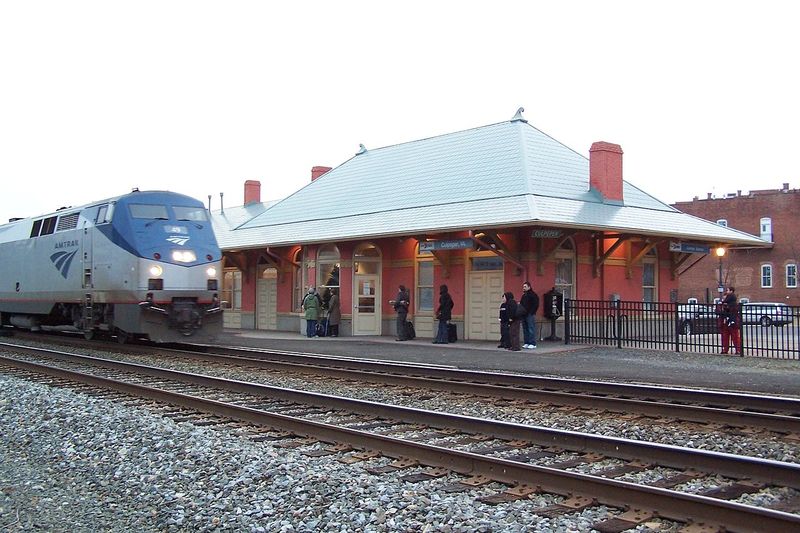
Dinosaurs and train tickets don’t usually share a roof. At this depot, they do, thanks to the Museum of Culpeper History inside the station building.
Its Triassic Gallery showcases dinosaur tracks discovered in a local quarry, including impressions dating back more than 200 million years. That is a remarkable introduction to a town better known for brick storefronts and cafés.
The station’s address is 111 S Commerce St, Culpeper. The museum and visitor center occupy adjoining space in the restored depot. The historic Southern Railway building dates to 1904 and remains an active passenger stop.
Start with the museum, where exhibits also explore the railroad’s arrival and the area’s earlier communities. Its galleries generally open daily, making it an unusually convenient attraction for rail passengers.
Then wander to East Davis Street. Victorian storefronts hold boutiques, restaurants, and art shops, with painted signs and window displays inviting you to slow down.
The town’s history includes George Washington, who became Culpeper County’s surveyor in 1749, years before the downtown streets took their present form.
Seasonal markets sometimes gather near the depot, adding produce and crafts to the outing. Before you book, compare Amtrak arrival and departure times carefully.
7. Lynchburg Kemper Street Station
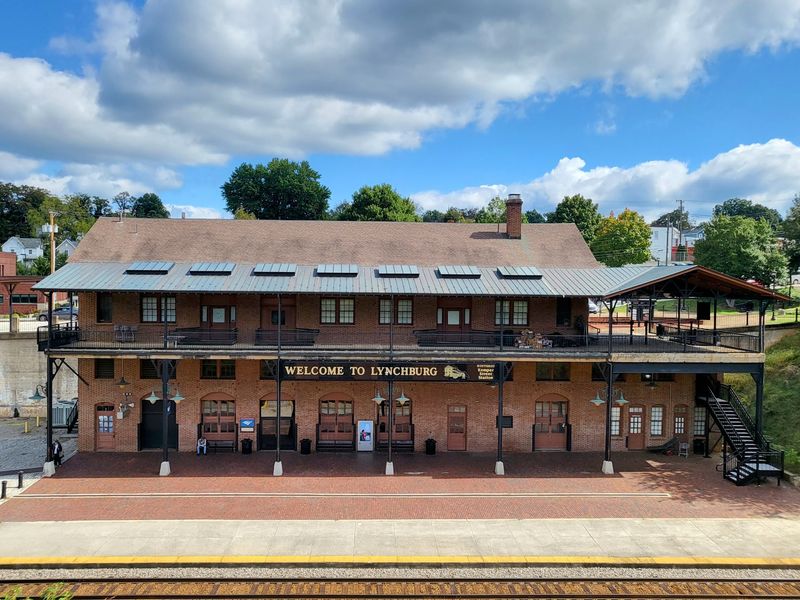
Few farmers markets can claim a longer run than the one waiting in Lynchburg. The Community Market traces its origins to 1783, when the city was still taking shape along the James River.
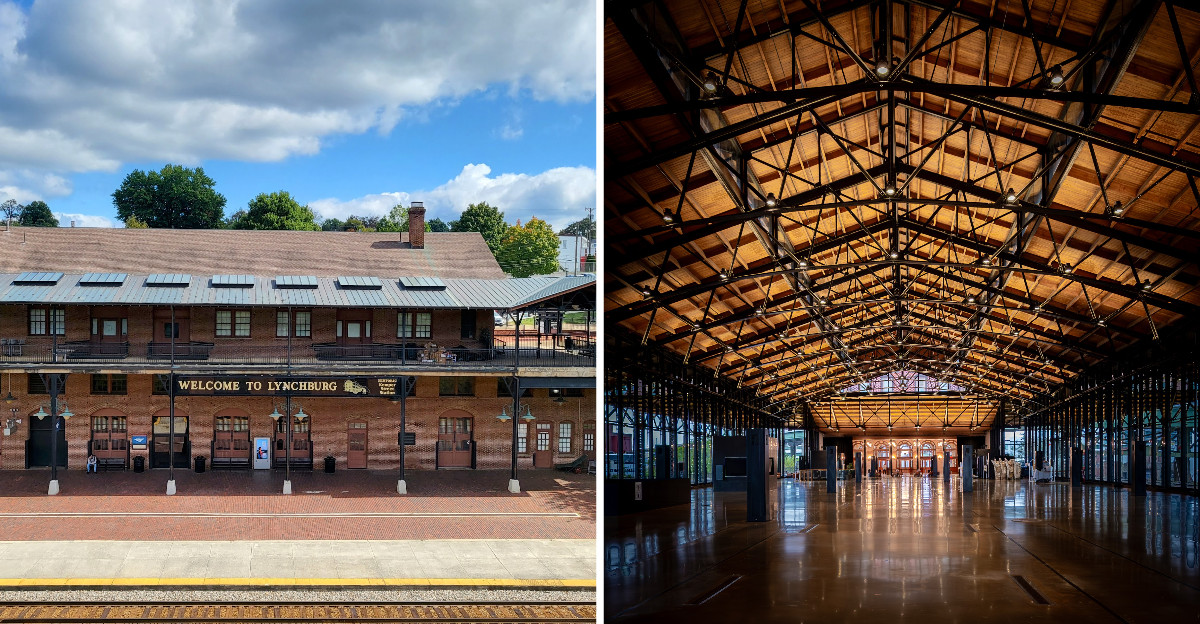
Your train arrives at the brick Kemper Street Station, opened in 1912 and restored in the early 2000s. It’s southwest of downtown, so plan a short bus ride or a longer walk rather than expecting the market outside the station doors.
Downtown, the Community Market brings produce, specialty foods, crafts, and small eateries together. The Bluffwalk offers elevated views toward the James River, with terraces and restaurants nearby.
For a longer outdoor outing, follow the Percival’s Island Trail, where a former rail corridor carries walkers and cyclists over the water. Point of Honor offers a historic house and gardens across the river.
The rail stop is at 825 Kemper St, Lynchburg. Local buses connect with the city, while the nearby Kemper Station Trail links to the larger Blackwater Creek trail network.
Art lovers can explore the Maier Museum at Randolph College, although reaching campus requires extra travel. Thomas Jefferson’s Poplar Forest is farther outside downtown and best treated as a separate excursion.
Check the train schedule before setting out, leaving enough time to return from the center to Kemper Street.
8. Roanoke Amtrak Station
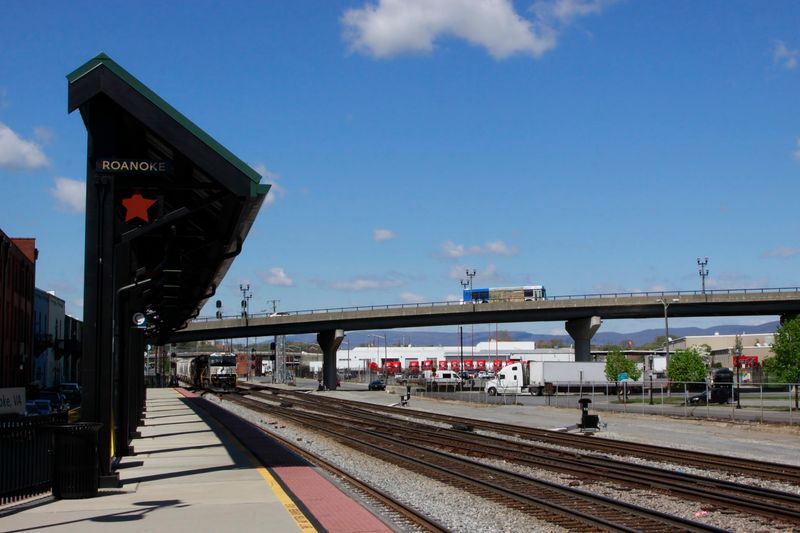
Railroad fans, this one’s for you. Downtown Roanoke has a museum packed with steam locomotives, and some were built right here in town.
The Virginia Museum of Transportation is a walk from the platform, with historic railroad equipment, automobiles, and aviation exhibits.
Nearby, the former Norfolk and Western passenger station houses the O. Winston Link Museum, devoted to striking railroad photography.
Roanoke’s Amtrak stop sits at 55 Norfolk Ave SW, Roanoke, close to the city’s walkable downtown attractions. Unlike a traditional depot, it’s a sheltered platform without an indoor waiting room or ticket counter.
The Taubman Museum of Art is another downtown highlight, offering contemporary architecture and art across several galleries. General admission is free, leaving more time for wandering its exhibitions.
Center in the Square brings together family attractions, including the Roanoke Pinball Museum, Kids Square, and a rooftop space. Its science museum arrangements are changing, so check individual attractions before building the day’s schedule.
For a classic downtown stroll, browse the City Market area and stop for lunch. Mill Mountain’s Roanoke Star offers a broader valley view, but you’ll need transportation to reach it comfortably.
Amtrak service returned in 2017. Give yourself a little extra time before departure, since the platform has limited passenger amenities.
9. Norfolk Amtrak Station
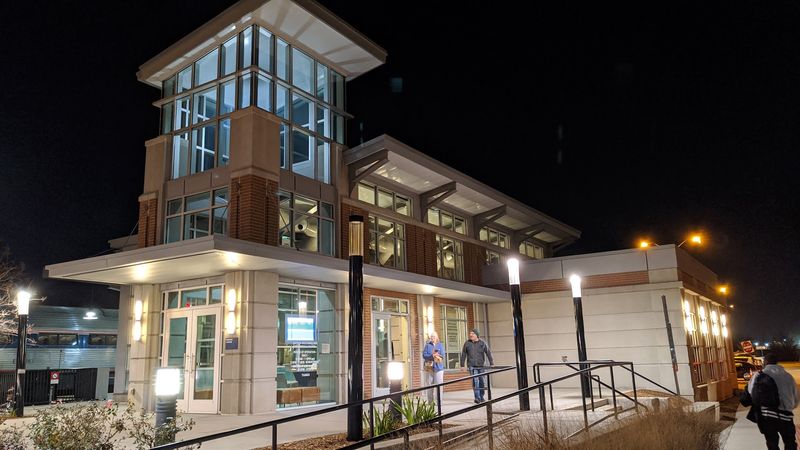
Not many train rides end within reach of a battleship. In Norfolk, the Battleship Wisconsin waits beside Nauticus, its huge decks and turrets dominating the waterfront.
Commissioned in 1944, the ship served across several decades and now welcomes visitors for self-guided exploration. Nauticus adds interactive maritime exhibits, making the two attractions an excellent pair for a full afternoon.
You can also follow part of the Elizabeth River Trail, a 10.5-mile path connecting waterfront neighborhoods, parks, and city attractions. There’s no need to walk all of it; even a short stretch adds lovely harbor views.
Your arrival point is 280 Park Ave, Norfolk, beside Harbor Park baseball stadium. The Tide light-rail stop nearby makes getting into downtown straightforward without a car.
Town Point Park opens onto the waterfront, while the Waterside area offers places to eat and watch boats. The Chrysler Museum of Art is farther inland, with a major glass collection and free general admission.
A ferry across the Elizabeth River leads to Portsmouth, where historic streets make another appealing walk. Just leave time for the crossing back to Norfolk before your train.
Nauticus closes on Mondays, and ship access can vary with conditions. Book the return journey before deciding how many attractions to fit in.
10. Main Street Station
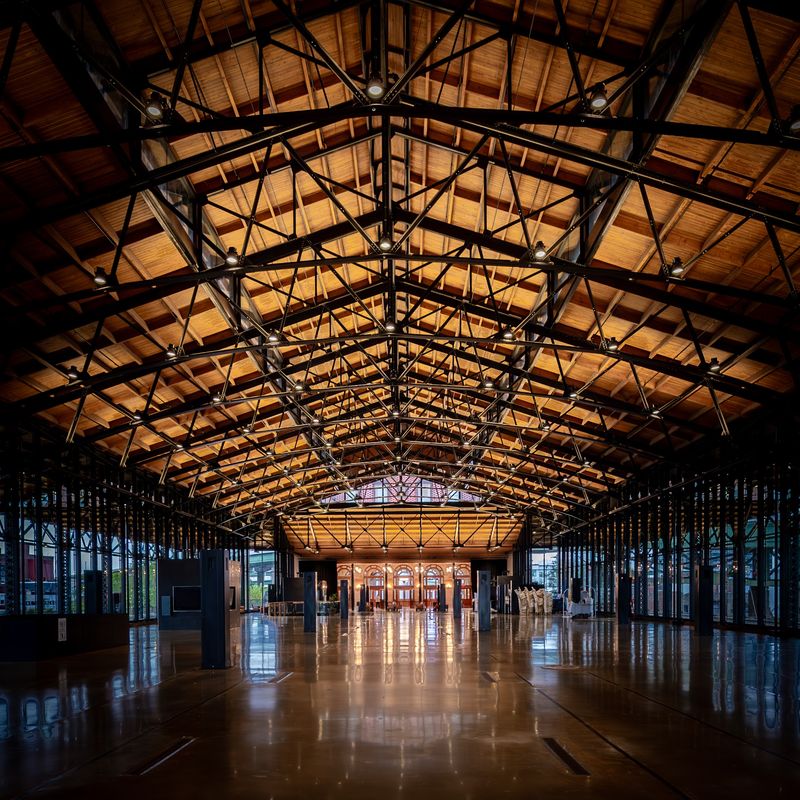
A clock tower has been greeting Richmond travelers since 1901. The station is often called the Clock Tower, and one look explains why.
The station stands at 1500 E Main St, Richmond, in Shockoe Bottom. The visitor information area offers a useful starting point for exploring the surrounding streets.
Main Street Station combines a grand Renaissance Revival building with a long, restored train shed. Its brick walls, sweeping rooflines, and enormous clock face make the arrival feel like part of the sightseeing.
Nearby, the 17th Street Market hosts community events and seasonal vendors. The Canal Walk follows historic waterways beside the James River, while narrated boat tours operate on selected dates during the warmer months and into November.
History fans can visit the Poe Museum or explore the architecture around the State Capitol, designed by Thomas Jefferson. For a longer outing, the GRTC Pulse bus rapid-transit line reaches other neighborhoods and cultural destinations.
Cyclists can follow the connector toward the Virginia Capital Trail, which stretches more than fifty miles toward Williamsburg. Try a short section.
The station also hosts exhibitions and special gatherings, so even people without train tickets sometimes stop inside.
Check your specific service carefully: Richmond has two Amtrak stations, and not every train uses Main Street.