The Charming Small Town In New Hampshire That’s Made For A Relaxing Weekend Getaway
How long can a candy counter get before someone starts calling it a hallway? Well, there’s an answer.
One shop in northern New Hampshire holds the world record for the longest candy counter, and it stretches 112 feet.
Yes, that’s longer than a basketball court. Row after row of candy jars fill the space, and the sweetness doesn’t stop at the door.
The same small town is the birthplace of the author who created Pollyanna, the famously glad girl from a beloved 1913 novel.
A covered bridge crosses a rushing river just steps from the main drag, and the whole downtown is easy to explore on foot.
Could a weekend get any easier on the nerves?
Your Sweet Tooth Has Never Faced A Counter This Long
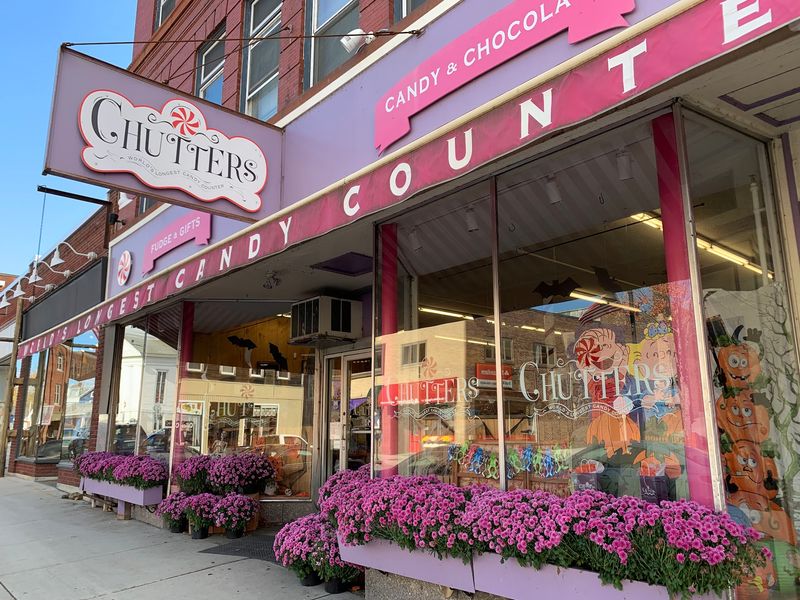
Grab a bag and start walking, because the candy keeps going. Chutters, at 43 Main Street in Littleton, holds the Guinness World Record for the longest continuous candy counter on the planet.
The record measurement is 111 feet and 11 inches, although the shop rounds that up to 112 feet. The three-tiered counter stretches along the store, displaying hundreds of candy varieties in glass jars.
Gummies, sour candies, jellybeans, chocolates, caramels, licorice, and nostalgic favorites create a rainbow of choices. Some are familiar from childhood, while others offer something new to try.
You fill your own bag, so the only real challenge is self-control. Good luck with that once you pass the tenth jar of gummies.
The building has an interesting history, too. Chutters began as a general store in the late nineteenth century, long before the candy counter became its signature attraction.
The Littleton location currently opens daily from 10 AM to 5 PM.
Since the shop sits directly on Main Street, it makes an easy starting point for exploring downtown. You can grab something sweet, step outside, and continue toward the river.
The Gladdest Girl In Fiction Was Born From This Town
Eleanor H. Porter was born in Littleton in 1868. Decades later, she wrote Pollyanna, the 1913 novel about a girl who finds something to be glad about in every situation.
The book became so popular that the word Pollyanna entered everyday English. Not bad for a literary legacy that began with a writer from a small mountain town.
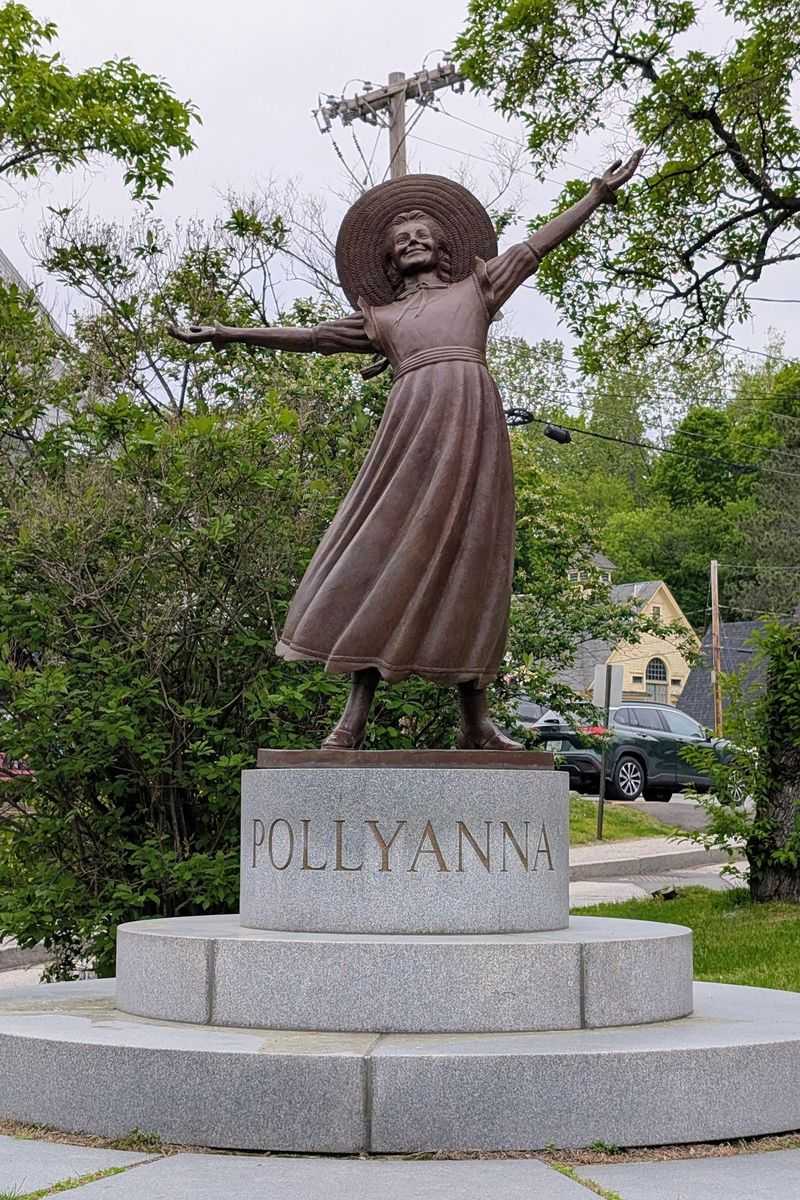
Today, a bronze statue of Pollyanna stands outside the Littleton Public Library at 92 Main Street. She greets passersby with her arms spread wide, looking as cheerful as ever.
The sculpture was unveiled in 2002 and has become one of the town’s most recognizable landmarks.
Littleton embraces the connection enthusiastically. It calls itself the Glad Town, and the annual Pollyanna Glad Day celebrates the character’s enduring message of optimism.
The 2026 celebration took place on June 13, marking the event’s twenty-fourth year.
For book lovers, the library lawn makes an especially meaningful stop. Bring a copy of the novel or simply take a moment to appreciate the sculpture.
A fictional character inspiring a real town’s personality more than a century later is a rather wonderful literary achievement.
Stroll Across A Covered Bridge Without Leaving Downtown
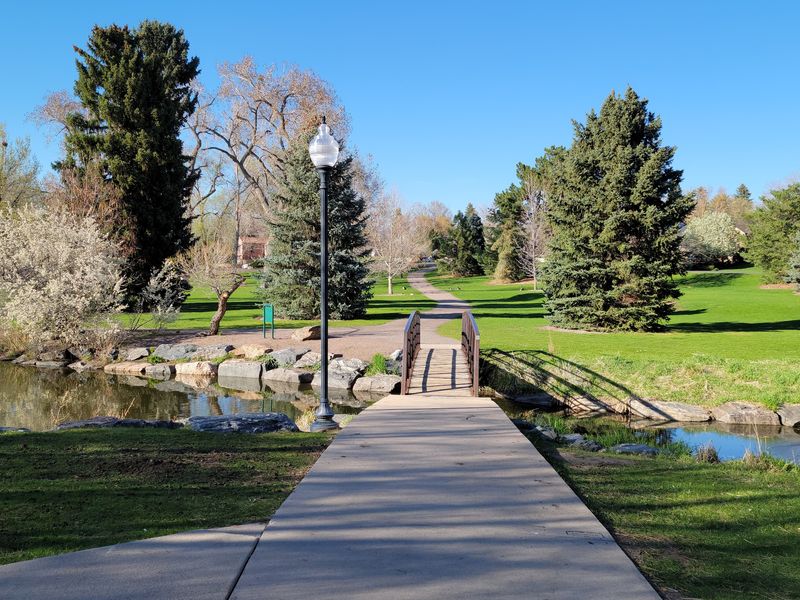
Most covered bridges in New England sit along quiet country roads. The Riverwalk Covered Bridge in Littleton stands just behind Main Street instead.
Built in 2004, it’s a pedestrian bridge crossing the Ammonoosuc River. Its traditional timber design gives the structure an old-fashioned appearance despite its relatively recent construction.
Walking through it, you’ll hear water moving over the rocky riverbed below.
The covered bridge connects downtown with the riverfront, making it easy to include in a leisurely walk.
Nearby, the historic grist mill and its waterwheel create one of Littleton’s most recognizable scenes. In autumn, colorful trees add another layer to the river views.
The waterfront is especially enjoyable when you have a few minutes to linger rather than rushing between stops.
One detail matters for anyone planning a longer walking loop. The nearby Curran Suspension Bridge has been closed since September 17, 2026, while its condition is assessed. The Riverwalk Covered Bridge remains a separate crossing.
This is one of those New Hampshire attractions that doesn’t require an elaborate itinerary. A short walk from the shops brings you directly to the river.
A Mill From 1798 Still Watches The River Roll By
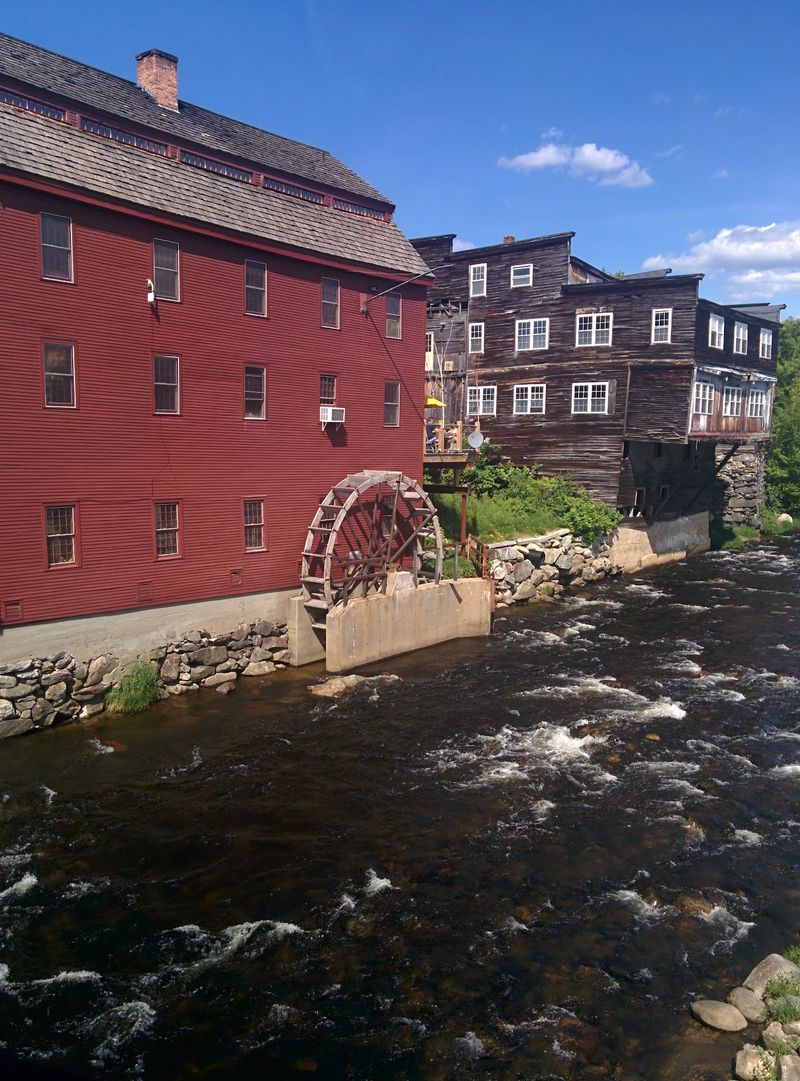
Long before candy jars and souvenir shops, Littleton ran on water power. The Littleton Grist Mill dates to 1797, making it one of the town’s oldest surviving commercial buildings.
The mill stands at 18 Mill Street, directly beside the Ammonoosuc River.
It was built when the surrounding community depended on local mills for processing grain. Water power helped turn the machinery that ground grain into flour, making the river central to everyday life.
The building continued serving different purposes through the generations before undergoing a substantial restoration in 1997.
Its red exterior, historic structure, and prominent waterwheel remain an important part of the waterfront landscape.
The mill property has accommodated commercial spaces and food businesses over the years, although visitors should treat the building primarily as a historic landmark rather than assuming a working-mill tour is available.
You can appreciate its exterior from the nearby riverfront and covered bridge.
The juxtaposition is what makes this stop interesting. A structure dating to the eighteenth century sits beside a pedestrian bridge completed more than two centuries later.
And somehow, they look perfectly at home together.
Main Street Was Clearly Designed For Wandering With No Plan
Some downtowns demand a map. Littleton’s Main Street just asks you to start walking and see what turns up.
The street is lined with historic buildings, independent shops, galleries, and places to grab a meal. Most of the fun comes from popping in and out without a fixed schedule.
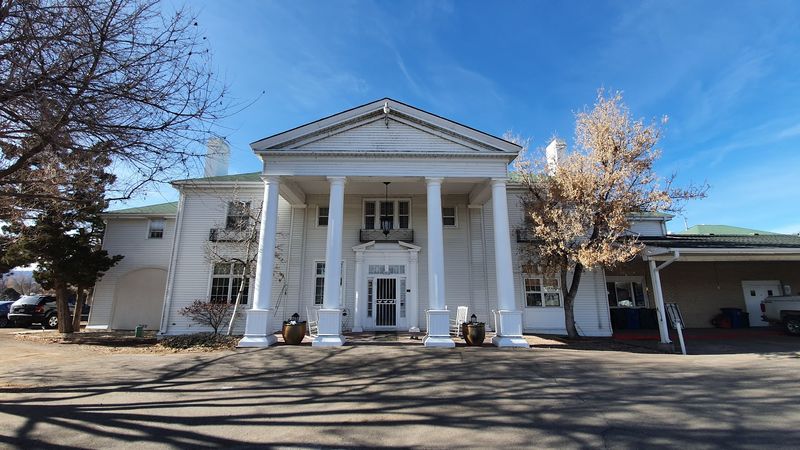
Thayers Inn adds a big dose of history to the stroll. The hotel opened on January 14, 1850, and remains one of the White Mountains’ longstanding lodging landmarks.
Its imposing columns and architectural details make it easy to recognize.
President Ulysses S. Grant visited Littleton in 1869 and appeared on the hotel’s balcony, adding a memorable chapter to the building’s history.
The Main Street buildings reveal several generations of architecture, from nineteenth-century commercial storefronts to later additions.
Bookshops, specialty stores, and local craft businesses provide plenty of reasons to browse.
Comfortable shoes are a good idea because the riverfront and shopping district are close enough to explore together.
For a small New Hampshire town, Littleton packs a surprising amount of history into a compact downtown.
Take your time looking above the storefront windows. The architectural details are often just as interesting as what’s being sold downstairs.
The 3D Photos Of The 1800s Got A Big Boost Here
Long before virtual reality headsets, people peered at stereoscopic photographs. These paired images created a three-dimensional effect when viewed through a special device.
Littleton played a major role in that nineteenth-century fascination.
From 1867 to 1909, the Kilburn Brothers produced and distributed thousands of stereoscopic views from their factory in town.
Their photographs depicted mountain scenery, distant cities, and places that many households could otherwise experience only through pictures.
At the time, stereoviews provided a popular form of home entertainment. A simple handheld viewer made the flat images appear surprisingly deep.
The Littleton Public Library preserves an extensive collection of Kilburn stereographs in its New Hampshire Room, including more than 10,000 slides in its cataloged holdings.
Selected historical photographs are also available in digital collections. For anyone interested in photography, this history adds an unexpected dimension to a downtown stroll.
A historical marker near Cottage Street and Kilburn Street commemorates the factory’s contributions.
It’s remarkable to think that a small White Mountains town once helped people around the world explore distant places without ever leaving their parlors.
Sleep In The House That Once Marked The Edge Of Town
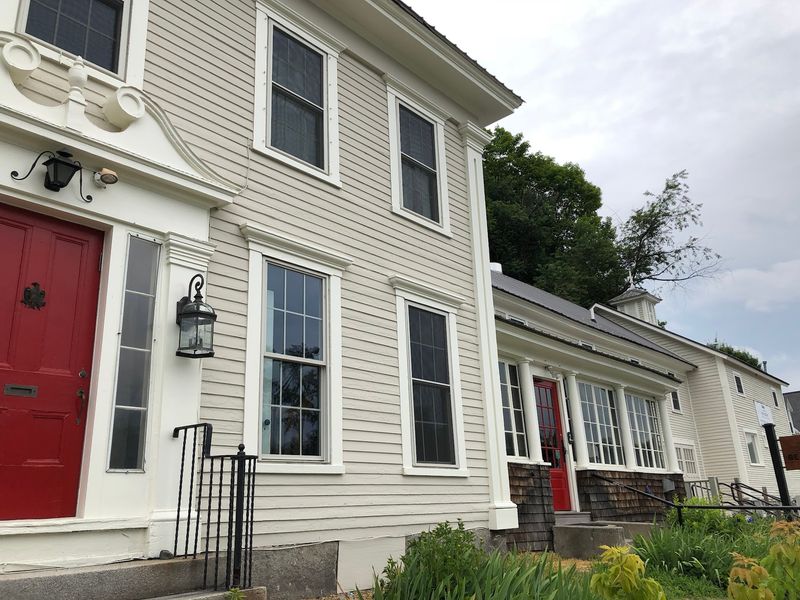
For more than a century, one farmhouse stood as the last house on Main Street. Its old address, 247, still survives as part of the building’s history.
That house is The Beal House, at 2 West Main Street in Littleton. It was built in 1833 as a Georgian-style farmhouse with a symmetrical exterior.
In 1933, the property became a rooming house, beginning its long association with travelers.
The original building included a barn and carriage house, reflecting its agricultural beginnings. An old Town Line sign provides another reminder of the days when the property marked the edge of the community.
Today, the inn offers seven guest suites, each with a private bathroom.
After a year of renovations, the lodging reopened with refreshed accommodations while preserving the character of the historic house. A two-night minimum stay applies, which conveniently matches the length of a relaxing weekend.
The property has also housed a restaurant, with plans for renewed public dining service. Its availability should be checked separately from room reservations.
For travelers who enjoy historic accommodations, spending a weekend in a former farmhouse adds another chapter to Littleton’s story.
Mountain Views Are Only A Short Drive Away
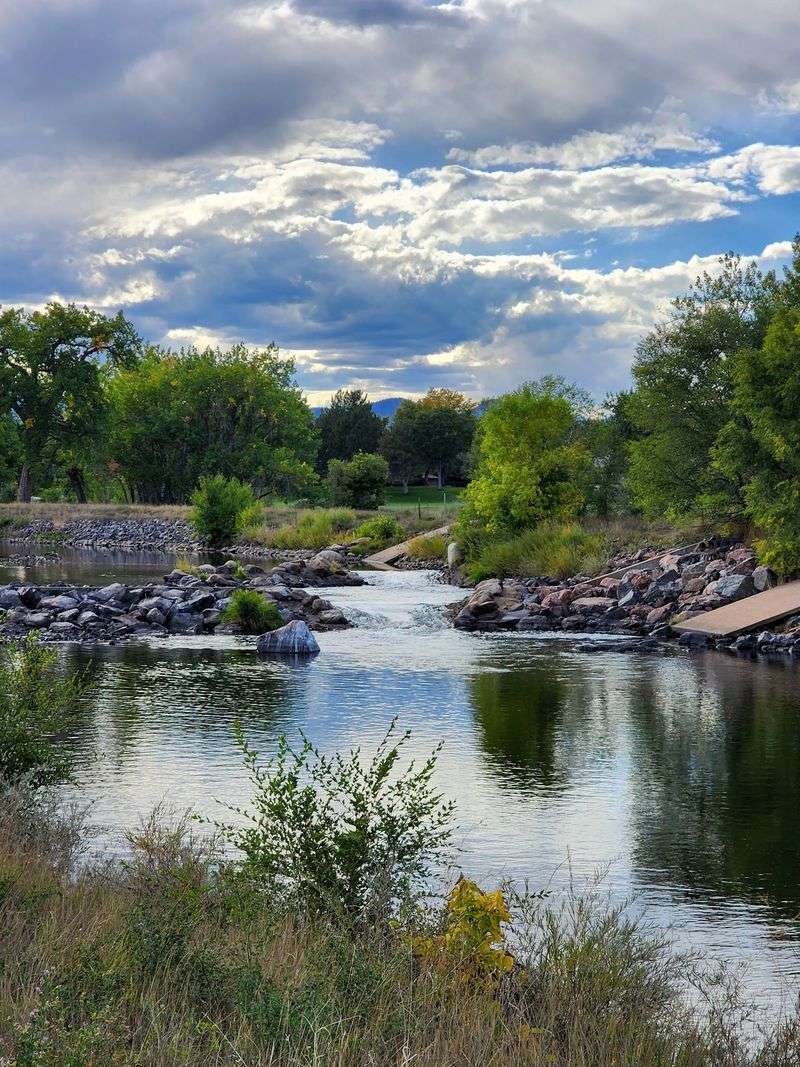
Fifteen minutes. That’s roughly all it takes to trade Littleton’s Main Street for the dramatic cliffs of Franconia Notch State Park.
The park sits in the heart of the White Mountains, surrounded by towering peaks and impressive natural scenery.
One of its best-known attractions is Flume Gorge, an 800-foot-long granite chasm with towering rock walls, waterfalls, and wooden walkways.
The gorge trail operates seasonally and finished its 2026 season on October 25. During its operating months, the two-mile loop takes approximately an hour and a half to explore.
Cannon Mountain rises nearby, offering another impressive backdrop.
Its historic aerial tramway, however, completed its final season in October 2025. A replacement system is being planned, so tram rides are currently unavailable.
There are still plenty of reasons to explore the park, including Echo Lake, the Basin, and scenic viewpoints along the Franconia Notch Parkway.
Winter brings skiing and snowboarding to Cannon Mountain, while warmer months offer hiking and lakeside recreation. The best part is returning to town afterward.
You get mountain scenery during the day and a comfortable, walkable downtown waiting for you in the evening.