Inside Idaho’s Bonner County Museum, A Century Of Logging Tools Lines The Walls
A big yellow caboose sits parked on a museum lawn, and the train tracks are nowhere in sight. That alone should tell you this stop plays by its own rules.
The building behind it holds more than one million cataloged photographs, objects, and artifacts. Tucked among them is an exhibit called Big Timber, built around the logging work that shaped a corner of northern Idaho.
I like how a small museum can carry the weight of an entire region’s working past.
There’s also a forestry and fire prevention display, a 1930s-era kitchen, and stories reaching back to the first people of the area. I believe places like this explain a town better than any postcard could.
So what does a century of saws, rails, and lake country history look like up close?
A Lakeside Park Holds The Panhandle’s Memory Bank
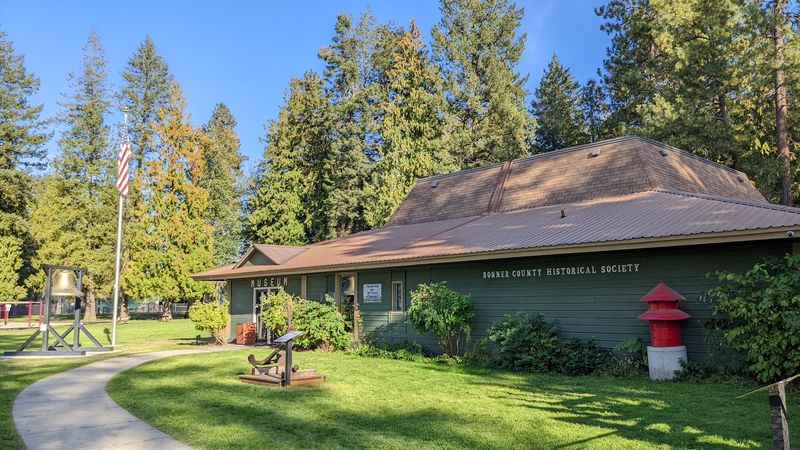
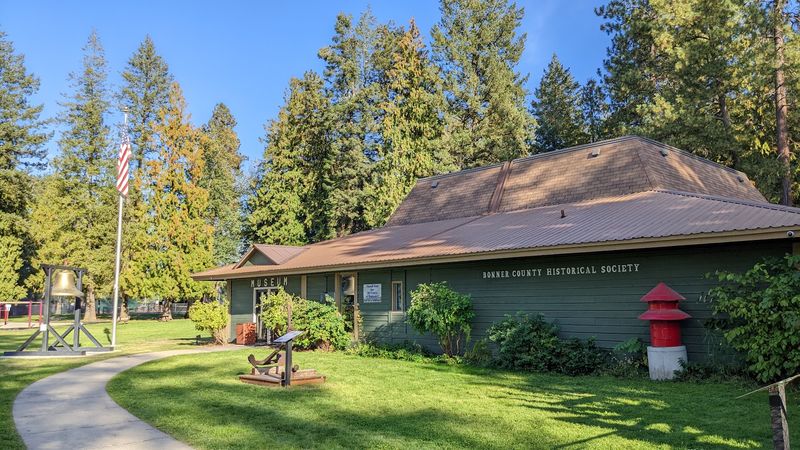
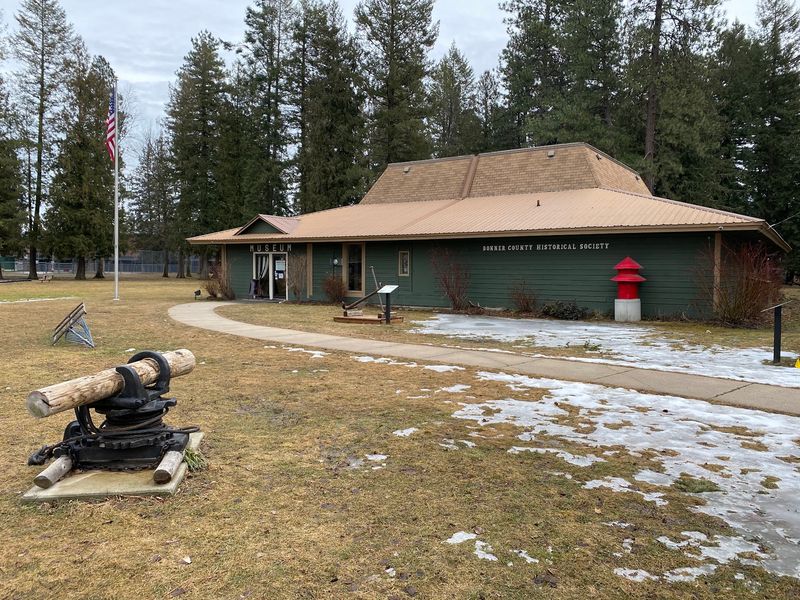
Sandpoint sits way up in the Idaho Panhandle, and its history has a tidy home base. The Bonner County Historical Society & Museum anchors Lakeview Park, close to the shores of Lake Pend Oreille.
The museum tells the story of Bonner County from start to finish. That runs from the Kalispel and Kootenai people to the settlers who later shaped the region.
Geology gets its moment too, along with explorers, railroads, mining, and plenty of logging. Local families appear throughout, which keeps the story personal instead of dusty.
The building itself is modest in size. Don’t let that fool your expectations, because the shelves and cases are packed with material from across the county.
Most people can cover the exhibits in a couple of hours. That makes it an easy add-on to a lake day, a downtown stroll, or a scenic drive north.
The museum also runs educational programs and guided tours for anyone who wants extra context. It’s a working history center, not a frozen time capsule.
Think of it as a well-organized attic for an entire county. Only here, everything comes with a label and a reason it matters.
Fifty Years Of Volunteers Saving Bonner County’s Stories
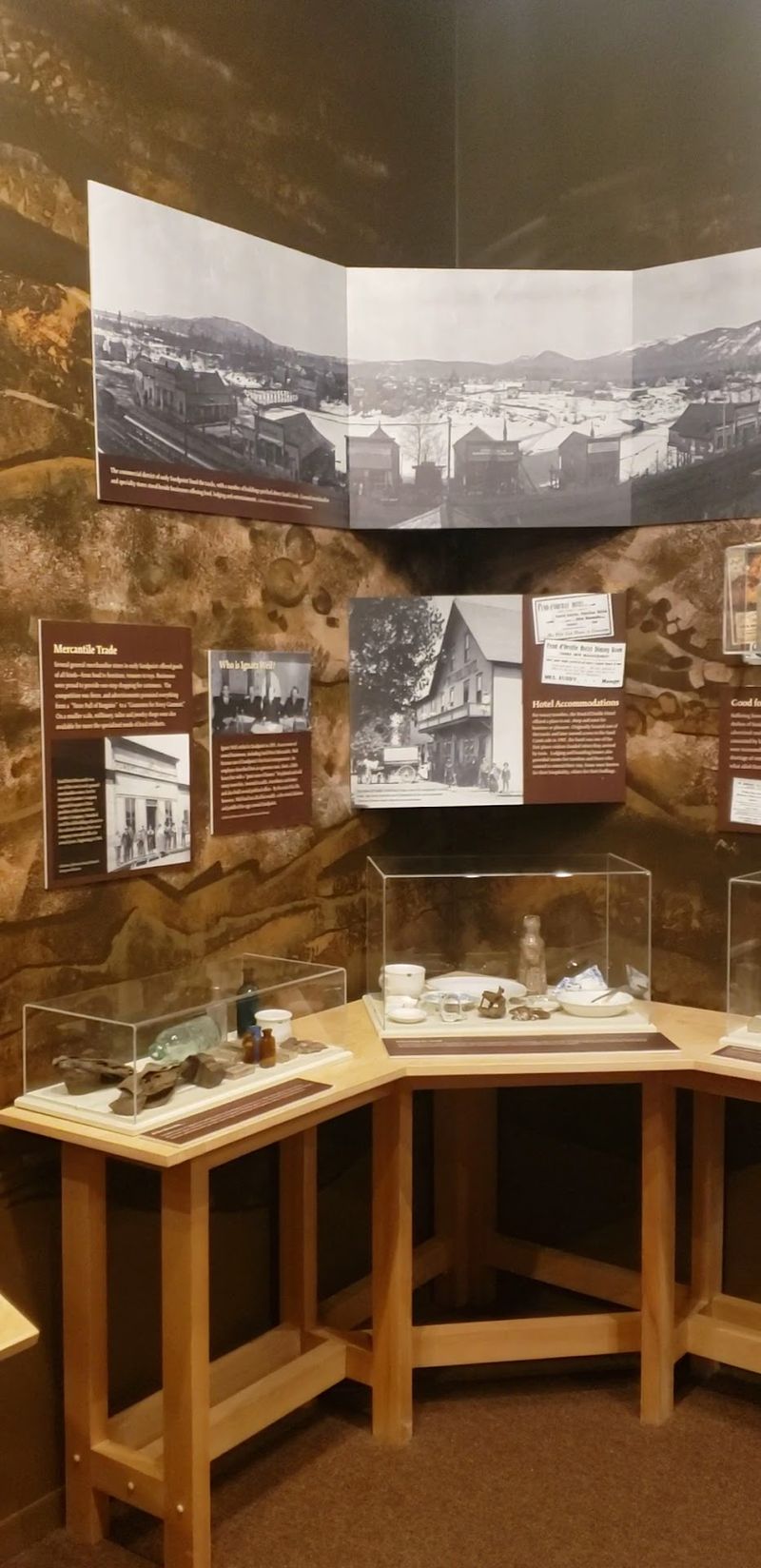
Back in 1972, a group of people decided Bonner County’s past deserved a proper home. The Bonner County Historical Society formed that year and has kept collecting ever since.
More than five decades later, the numbers are a little staggering. The collection now tops one million cataloged photographs, objects, and artifacts.
That count includes maps, a reference library, and genealogical materials. Researchers can use these resources with staff assistance, which is a gift for anyone tracing family roots.
Curious whether your great-grandparents ran a homestead near Priest River or Clark Fork? This is the kind of place where those threads sometimes turn up.
The research room also holds train trestle dioramas built by Art Young. They sit on a high shelf, so ask staff before you go hunting for them.
All of this reflects decades of steady, patient work by the historical society. Nobody assembles a million items by accident, after all.
The effort shows in how the displays are labeled and grouped. Many sections list artifacts, their donors, and where each piece came from, which turns browsing into a local who’s-who.
Big Timber Gives The Old Logging Camps Their Due
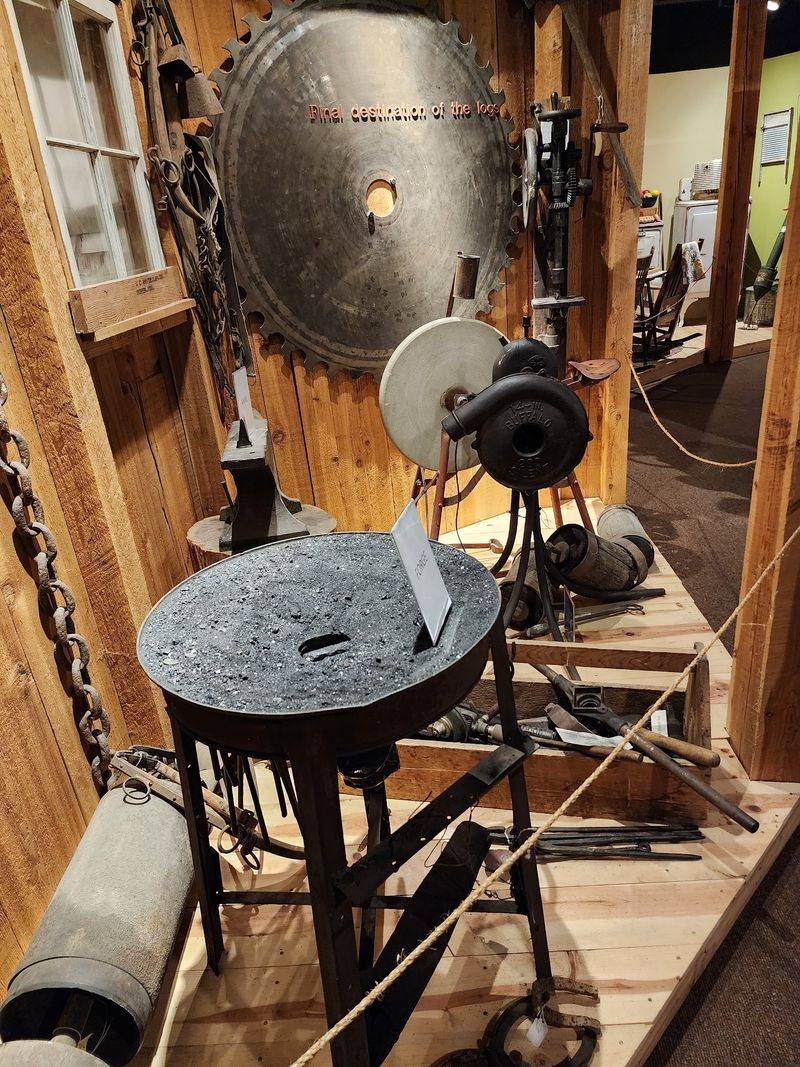
Crosscut saws, axes, and black-and-white camp photos tell a gritty story in the museum’s Industries section. The centerpiece for timber fans is Big Timber: Logging North Idaho.
The exhibit explores how early residents used the land to earn a living. Logging sits right alongside farming and mining in that story.
Timber mattered enormously here, especially as logging, lumber, and railroad work grew during the 1920s. Those industries helped build Bonner County into what it became.
Seeing the hand tools makes the scale of that work hit home. Felling a giant tree without a chainsaw sounds like a full workout before breakfast.
The displays connect the tools to the people who swung them. That human angle keeps the section from feeling like a hardware store with better lighting.
Families with a logging past in the Panhandle will likely spot familiar scenes. Plenty of Idaho households still trace their roots to the woods and the mills.
It’s the section that best matches this article’s headline. Give it some extra minutes, because the details reward a slower look.
Smokey Would Approve Of The Fire Prevention Corner
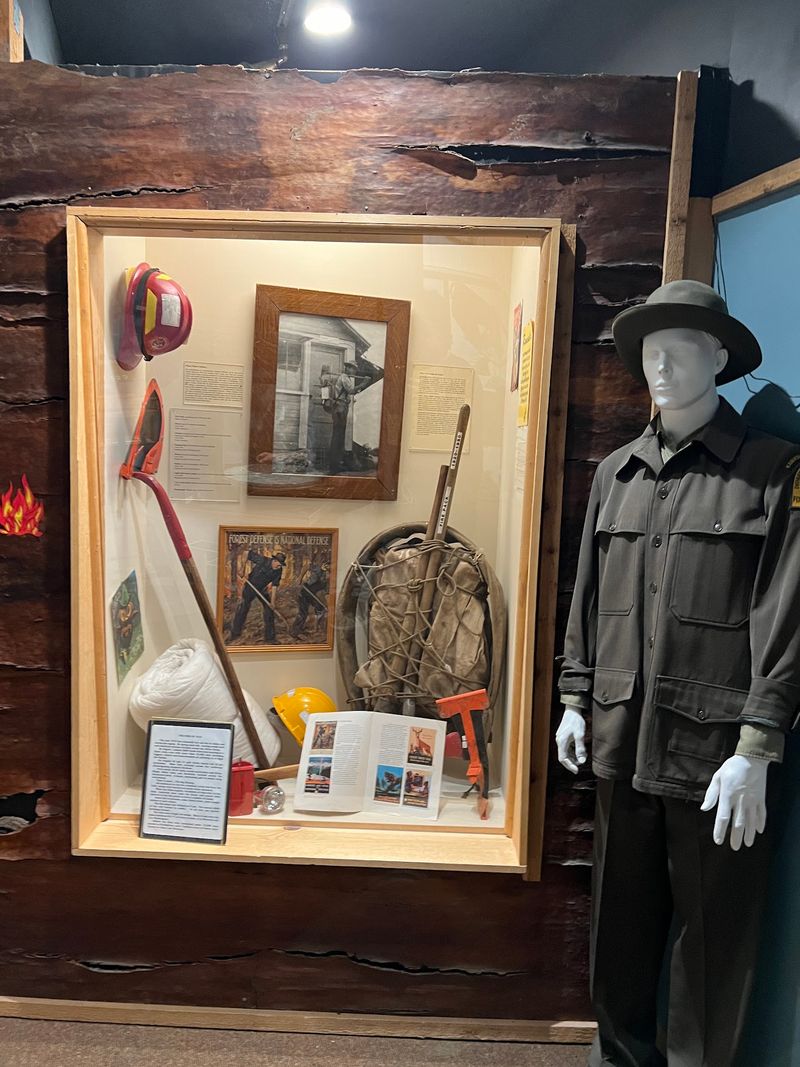
Forests feed the economy here, but they also need protecting. The museum’s forestry and fire prevention exhibit tackles both sides of that relationship.
It’s a smart pairing with the logging displays nearby. One part shows how timber built the county, and the other shows how people learned to guard it.
North Idaho’s woods have shaped life for generations of residents. Wildfire awareness remains part of everyday summer conversation across the Panhandle.
That gives this section a surprisingly current feel. History rarely lands this close to the evening news.
Kids may find this corner especially easy to follow. Fire safety is a lesson most of them already know from school, so the connection clicks quickly.
Adults get something different from it. The exhibit adds depth to the forests they hike, camp in, and drive through every year.
Pair it with a walk in Lakeview Park afterward. The trees outside suddenly look a lot more interesting once you know what it takes to keep them standing.
The Kalispel And Kootenai Story Comes First
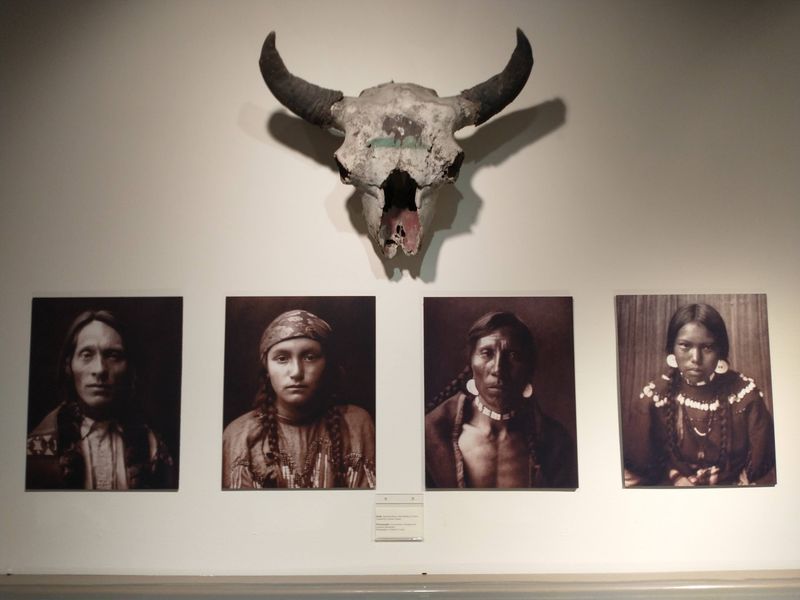
Long before sawmills and rail lines, the Kalispel and Kootenai people called this region home. The museum starts its county story with them, and that choice feels right.
Displays include artifacts found in the area and historic photographs. Those photos give faces and names to a history that textbooks often rush past.
From there, the timeline moves through explorers, including Lewis and Clark. Settlers, pioneers, and notable local citizens follow in turn.
The exhibits handle difficult chapters plainly. Events are presented as they happened, without sanding off the uncomfortable edges.
That straightforward approach helps visitors understand how the county really developed. It also makes the later logging and railroad sections easier to put in context.
Geology rounds out the early story too. The land itself, shaped over ages, explains why people settled where they did around Lake Pend Oreille.
Spend a few quiet minutes with the photographs here. They carry a lot of weight for such a small space, and they set the tone for everything that comes after.
A 1930s Kitchen And Other Curious Corners
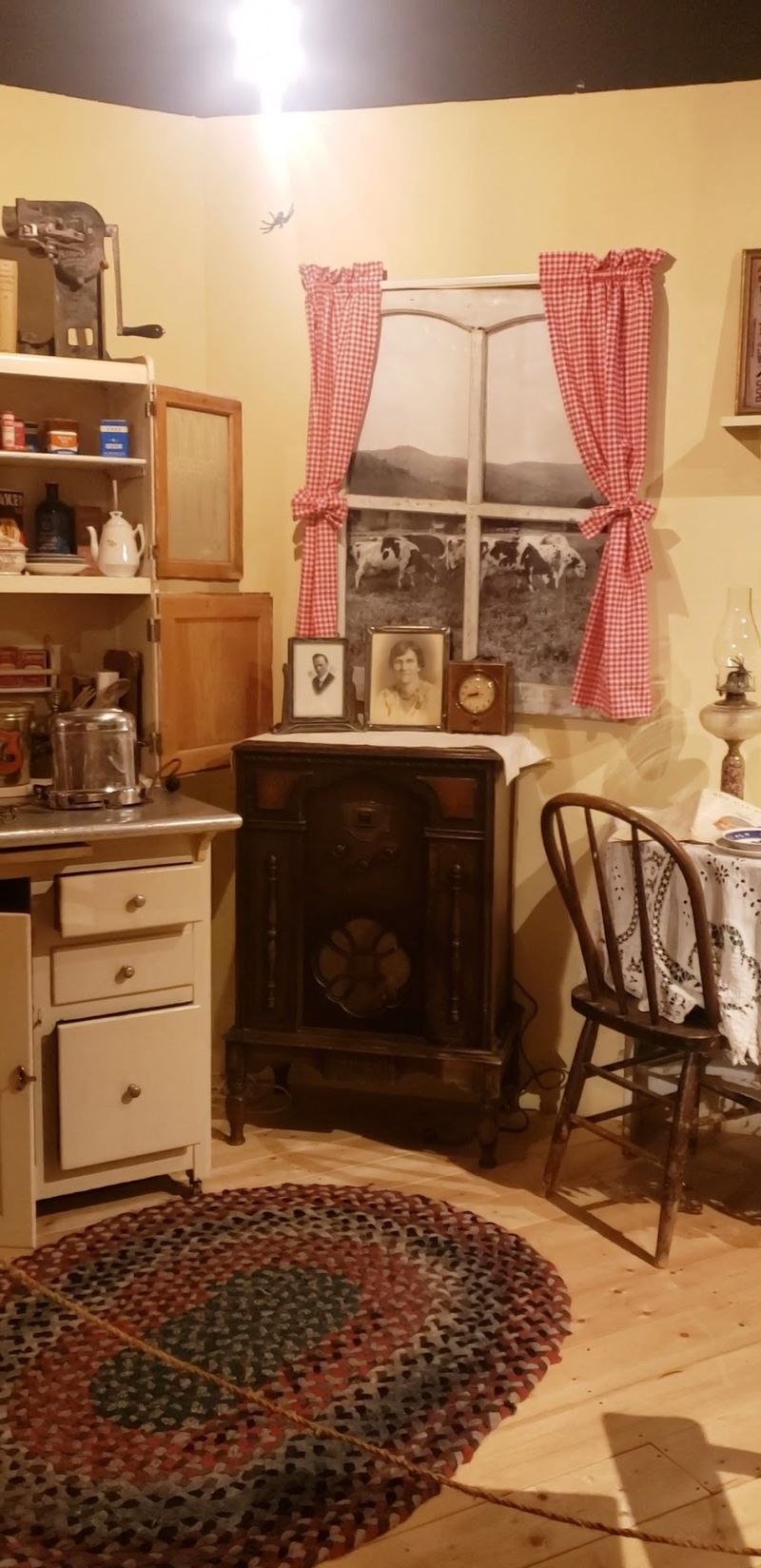
Nothing sparks a round of did-grandma-have-one-of-those quite like a vintage kitchen. The museum’s 1930s-era kitchen display is a favorite stop for exactly that reason.
It shows daily home life from a time when cooking took real muscle. Wood stoves and hand tools did the work that a microwave handles in ninety seconds today.
Beyond the kitchen, permanent sections cover the railroad, mining, and logging. Rotating specialty collections change things up between visits.
Past special exhibits have explored the role of women in settling northern Idaho. Another earlier one spotlighted oddities and curiosities, including taxidermy.
That mix of steady and changing displays keeps the museum lively. A return trip may reveal something you missed or never saw before.
Antiques fill the cases in nearly every direction. Small rooms here hold a remarkable amount of stuff, all of it neatly organized.
Bring a friend who loves old household gadgets. You’ll end up with a running commentary on every can opener, washboard, and mystery tool along the way.
That Bright Yellow Caboose Steals The Lawn
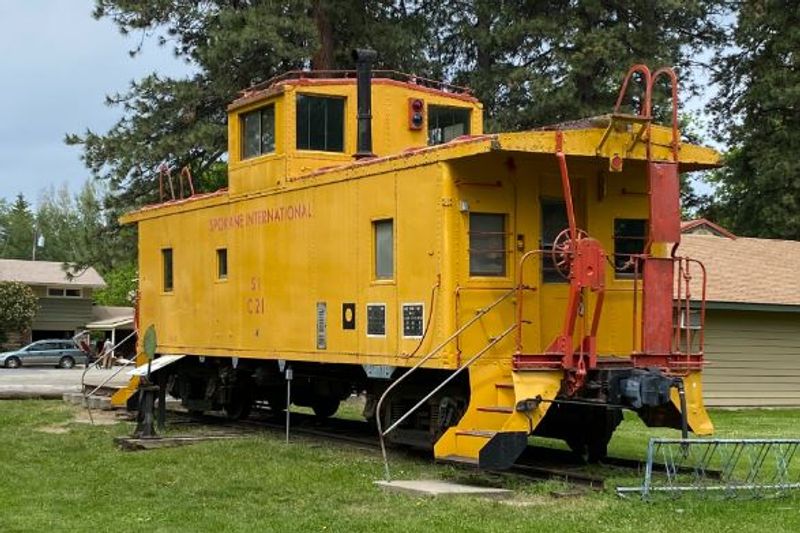
Railroads helped make Sandpoint, so a caboose out front makes perfect sense. The big yellow one on the museum lawn is impossible to miss from the street.
It nods to the rail lines that carried timber and people through Bonner County. Trains and logging grew up side by side here, especially during the busy 1920s.
The caboose has held displays of its own over the years. Posted signs ask visitors not to climb on it, so admire it the polite way.
Other outdoor displays show off an eclectic mix of regional artifacts. They span roughly two centuries of life in this part of Idaho.
Kids tend to gravitate toward anything shaped like a train. Grown-ups aren’t much different, honestly.
It also makes an easy photo backdrop for a family outing. Just snap pictures outside, since the museum restricts photography indoors, so check before raising your phone.
Railroad buffs will want to pair it with the indoor rail exhibits. Together they paint a clear picture of how tracks reshaped this lakeside town.
Gardens, Playgrounds, And A Festival Next Door
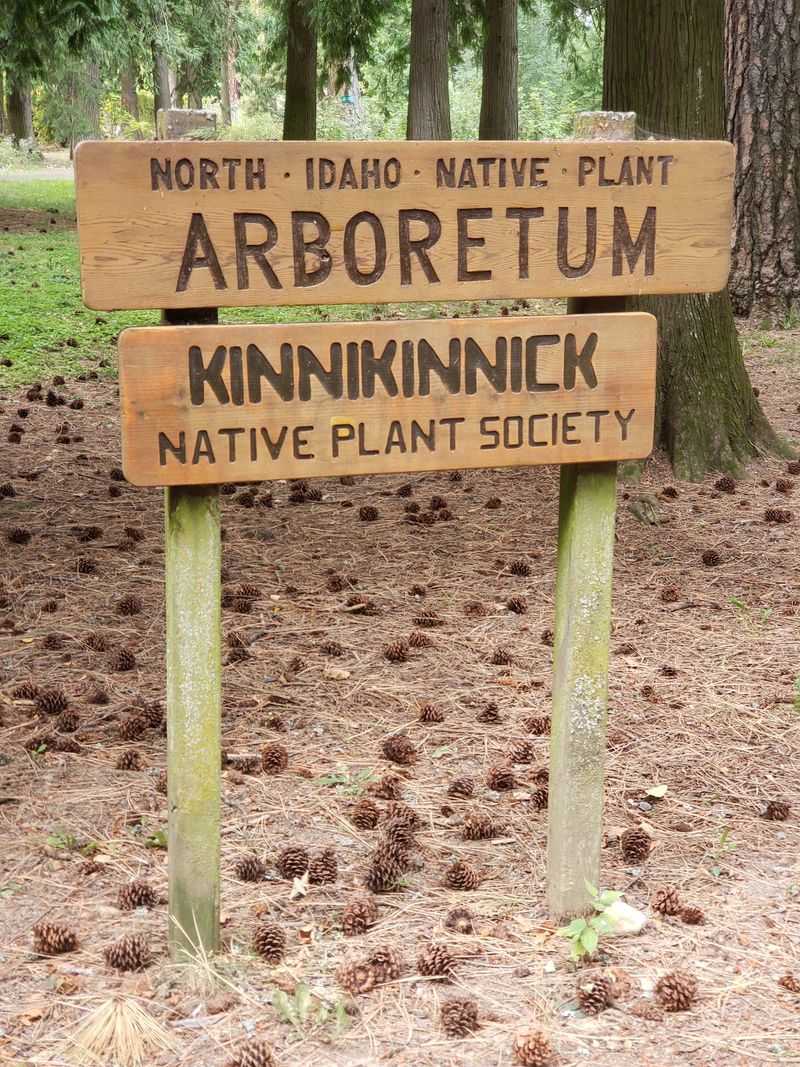
Few museums come with an arboretum practically on the doorstep. The Kinnikinnick Native Plant Society arboretum sits right in Lakeview Park.
Its garden settings feature native perennials, subalpine plants, and stands of native conifers. Volunteers clearly put serious care into the grounds.
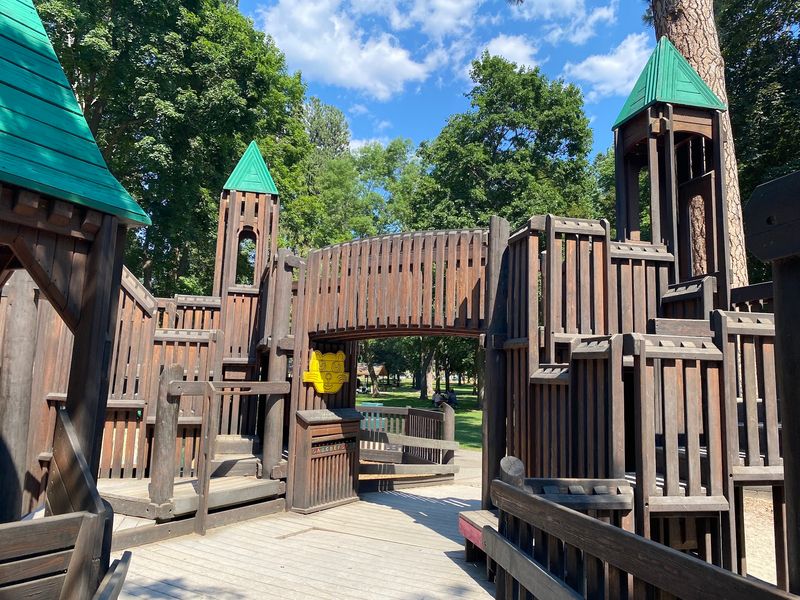
Lakeview Park adds picnic areas, a playground, and tennis courts. That makes the museum a handy anchor for a whole afternoon, not just an hour indoors.
Families can split the day easily. Burn off some energy on the playground, then head inside for logging tools and train history.
Memorial Field sits next to the park and offers a boat launch. It also hosts the annual Festival at Sandpoint every August.
Visiting during festival season? Expect a busier neighborhood, and plan your museum stop with that in mind.
The setting gives the Bonner County Historical Society & Museum a relaxed, outdoorsy feel. Not every history stop lets you finish with a picnic and a stroll through native Idaho plants.
Plan Around Weekday Hours Before You Drive North
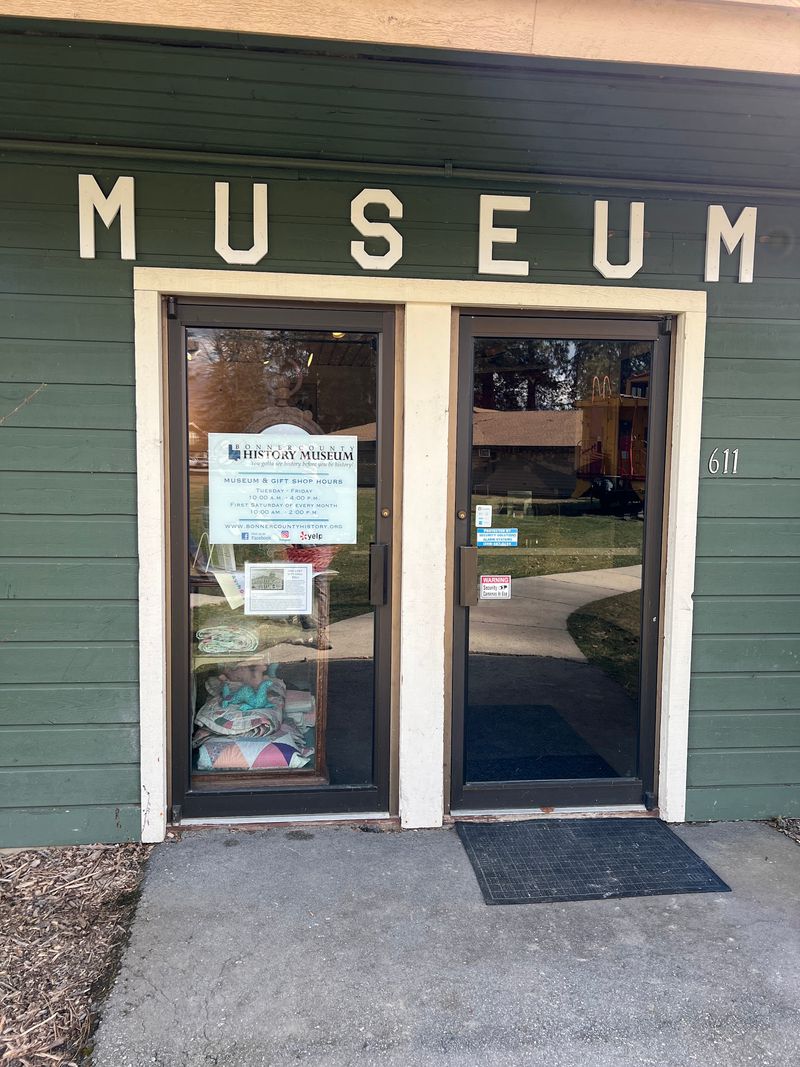
Timing matters here more than at most attractions. The museum keeps weekday daytime hours, generally Tuesday through Friday, and closes Sunday and Monday.
There’s also a monthly first-Saturday opening with shorter hours. Admission is free for everyone on those Saturdays, which makes them a sweet deal.
Otherwise, entry costs just a few dollars. Seniors and kids pay less, while members and young children get in free.
You’ll find it at 611 S. Ella Avenue in Sandpoint, Idaho.
It sits inside Lakeview Park, an easy hop from downtown.
Drivers coming from Coeur d’Alene should leave plenty of time. Arriving right before closing can mean finding the door already locked.
Hours can shift, so check before driving. A quick look ahead saves a long, disappointed ride home along Highway 95.
A couple of hours covers the exhibits comfortably. Add the arboretum and park, and you’ve got a full, low-cost Panhandle outing.
Small Building, Big Payoff For Curious Idahoans
Some outings cost a fortune and fade by dinner. This one costs a few dollars and sticks around in your head.
The Bonner County Historical Society & Museum packs geology, first peoples, rail lines, mines, and timber into a compact space. The displays are thoughtfully arranged and easy to follow.
Docents and volunteers greet visitors and answer questions. Then they let you wander at your own pace, which is the ideal museum arrangement.
A small gift shop rounds things out with books focused on local history and culture. It’s a nice place to grab a souvenir with actual substance.
History buffs, families, genealogists, and newcomers to Bonner County all have reasons to stop by. Even longtime residents can learn something new about their own streets.
Logging fans especially should make the trip. A century of saws and stories in one Idaho building is worth an afternoon.
Go on a weekday, wander the park after, and wave at the caboose. That’s a pretty great day up north.