A Connecticut Government Building Has A Strange Museum Of Curiosities Hidden On Its Upper Floor
Government buildings aren’t usually the first places that come to mind when you’re looking for something wonderfully strange. You expect official rooms and a lot of serious history.
But apparently, one building has a rather unexpected surprise upstairs.
A historic Connecticut government building houses a fascinating collection of curiosities that reveals a much stranger side of local history.
Now that’s what caught my eye.
I love the thought of visiting somewhere for its historical importance and discovering an unusual museum that feels completely different from what you expected.
And curiosity collections have a special way of making you wonder why certain objects were considered so interesting in the first place.
Sometimes the stories behind the exhibits are even more entertaining than the objects themselves.
There’s also something amusing about finding such an unexpected attraction inside a building associated with government business.
Who would think to look upstairs for something like that?
It’s a reminder that history isn’t always as serious as the buildings preserving it might suggest.
1. The Top Floor Holds A Two-Headed Calf, And That Is Just The Start
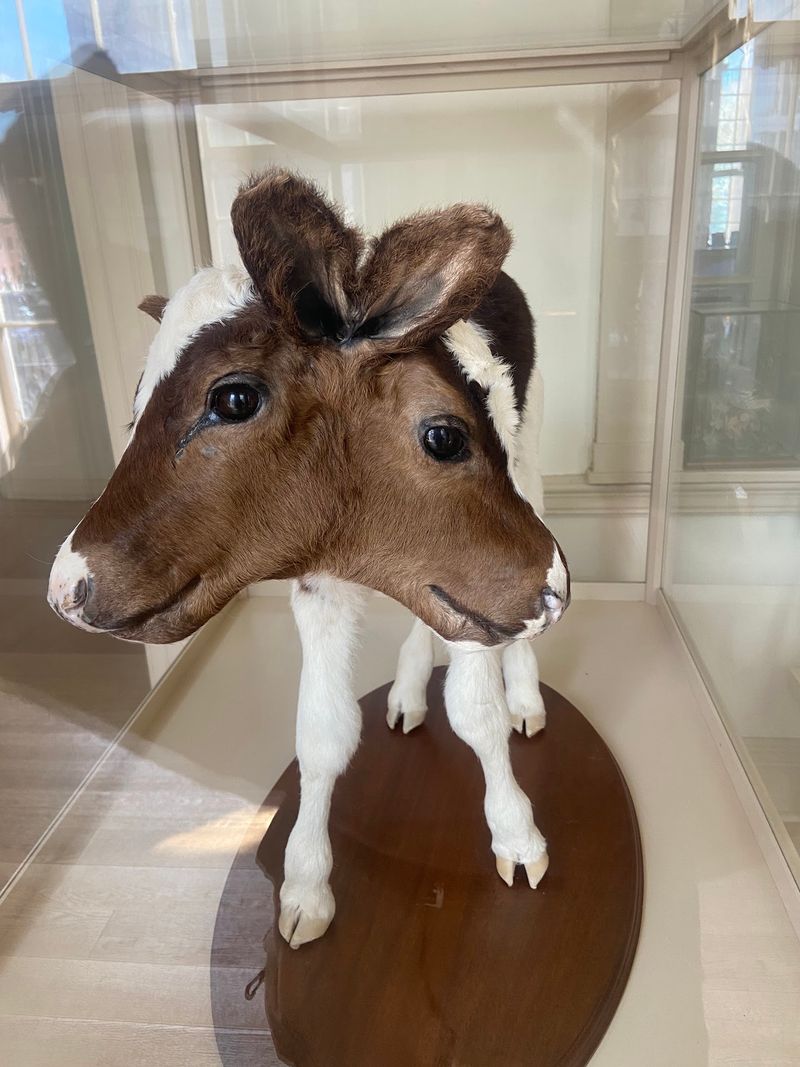
Two heads on one calf? That’s only the beginning of the strange things waiting inside this historic government building.
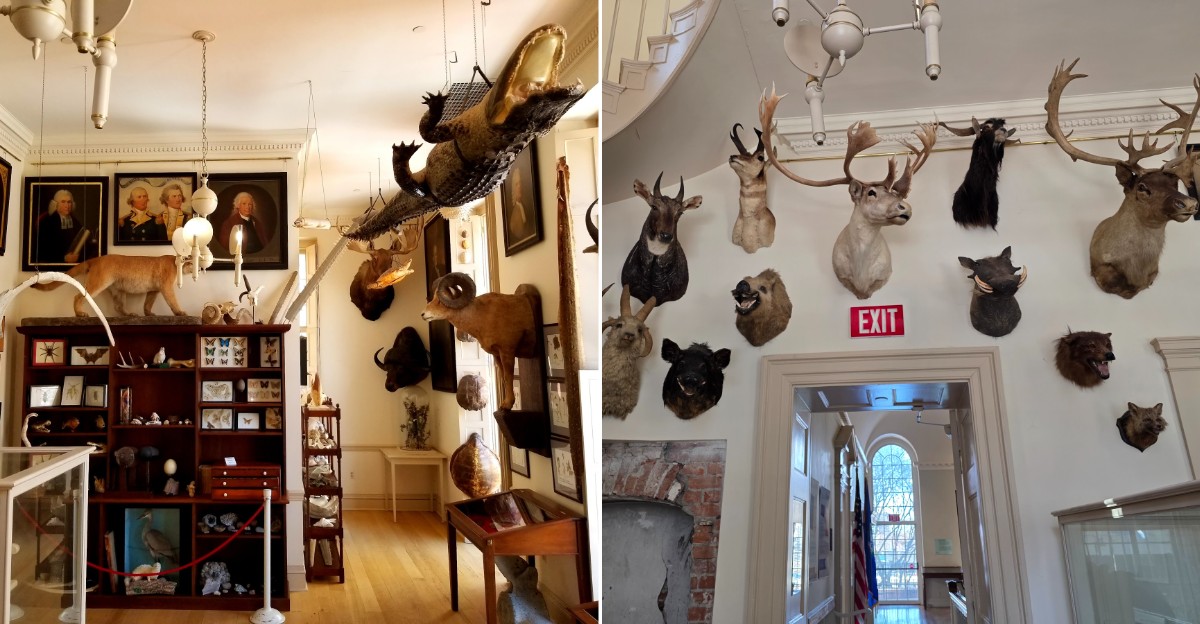
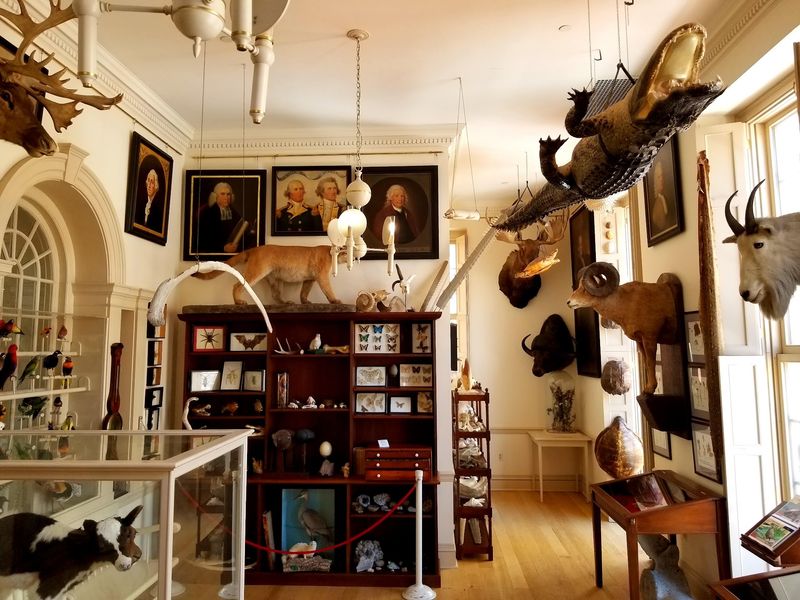
Up on the third floor of Connecticut’s Old State House, a museum of curiosities turns an ordinary history visit into something wonderfully unexpected.
The Museum of Natural and Other Curiosities takes inspiration from the collections of early Americans, who enjoyed gathering unusual objects from nature. Its name also honors Joseph Steward, the man behind the original collection.
The exhibits are certainly memorable. A two-headed calf shares the spotlight with a two-headed pig, while a mummified hand adds another unusual surprise.
Then there’s the alligator, stretching roughly eight feet long. Glass cases also display preserved ocean creatures, giant insects, birds, and hunting trophies.
For something a little gentler, the butterfly collection brings a welcome splash of color. Its delicate specimens offer an interesting contrast to the stranger exhibits nearby.
The entire room recreates the atmosphere of an old-fashioned curiosity cabinet, when scientific interest and entertainment often went hand in hand.
Saving this floor until the end makes the experience even more entertaining. After exploring the serious history downstairs, those unexpected exhibits feel especially amusing.
And yes, kids will probably notice that second head before anyone else.
2. A Painter Opened The Original Oddity Show Way Back In The 1790s
Joseph Steward was a portrait painter with a big imagination. Around 1796 or 1797, he opened a museum in the attic of this brand-new statehouse.
That makes his project one of the earliest museums in America. Think about the timing.
George Washington was still president when Steward started showing off his collection.
Crowds liked it so much that he needed more room. In 1808, Steward moved the growing collection to a larger building.
After 1822, his original collection was dispersed, and the museum eventually disappeared from public view. For a long stretch, the curiosity museum existed only in old records.
Then came a four-year renovation in the 1990s. The museum was carefully recreated and reopened in 1997, exactly two centuries after the original debut.
Steward’s own talents still show up today. Original paintings by him hang in the space, including portraits of George Washington, Benjamin Franklin, and William Penn.
I love that pairing of famous founders and preserved oddities. It tells you a lot about what early Americans found exciting.
Big ideas, big personalities, and a good old-fashioned mystery specimen all fit in one room.
3. Look Up At The Cupola Before You Even Reach The Door
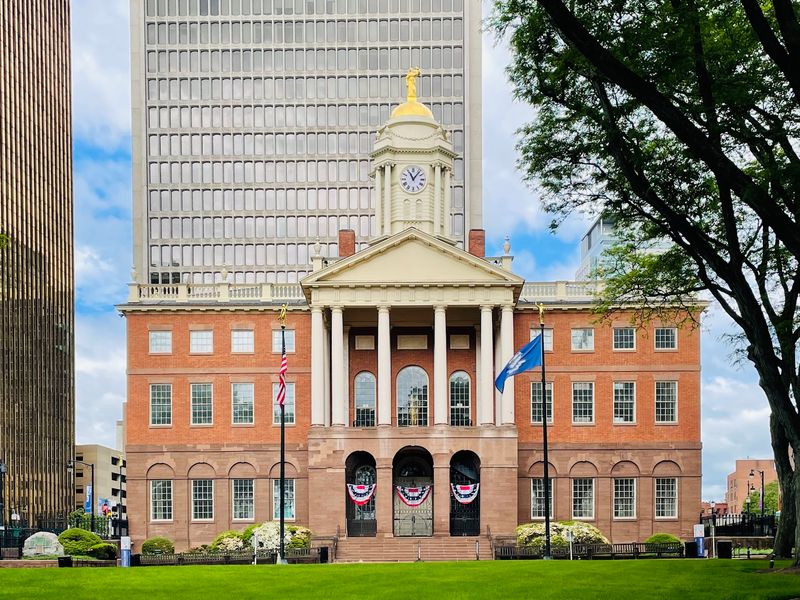
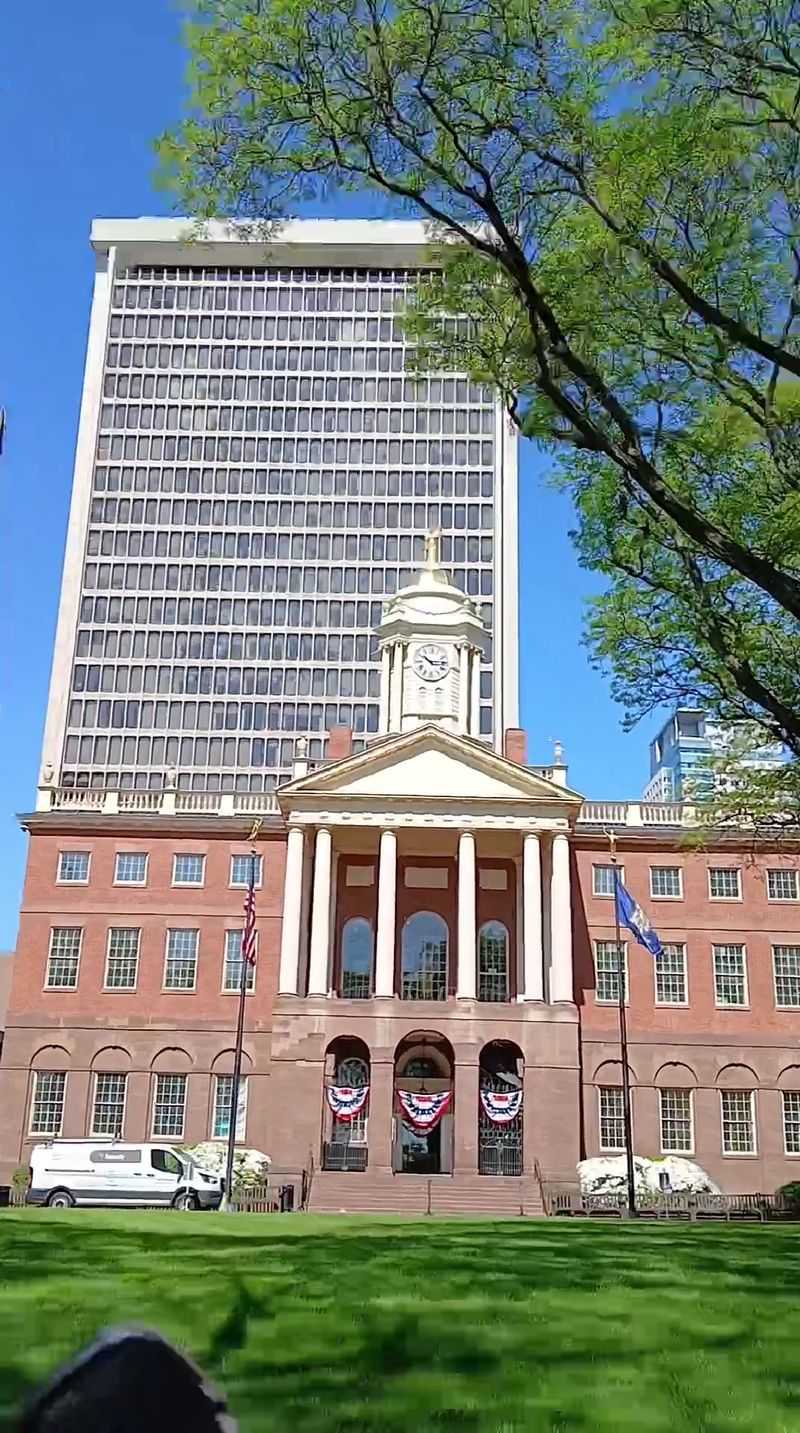
Brownstone at the bottom, brick on top. The building’s first story uses Portland brownstone, while the upper two stories feature brick laid in a Flemish bond pattern.
Charles Bulfinch designed the structure, and it was completed in 1796. Its look bears a strong resemblance to the Town Hall of Liverpool, England.
A balustrade was added in the early 1800s. Then, in 1827, the cupola went up with a bell and John Stanwood’s Statue of Justice on top.
Justice still keeps watch over downtown. She’s a fun detail to spot from the sidewalk before heading inside.
The building earned National Historic Landmark status in 1960. It’s one of the nation’s oldest surviving state capitol buildings, which is quite a distinction to carry.
Here’s a practical idea. Walk a full lap around the outside first.
The mix of reddish stone and warm brick looks great in photos, and you’ll notice details that are easy to miss later.
Plaques out front share bits of history too. Consider them a free appetizer before the main course of chambers and curiosities.
4. Two Grand Chambers Show Off Very Different Moods
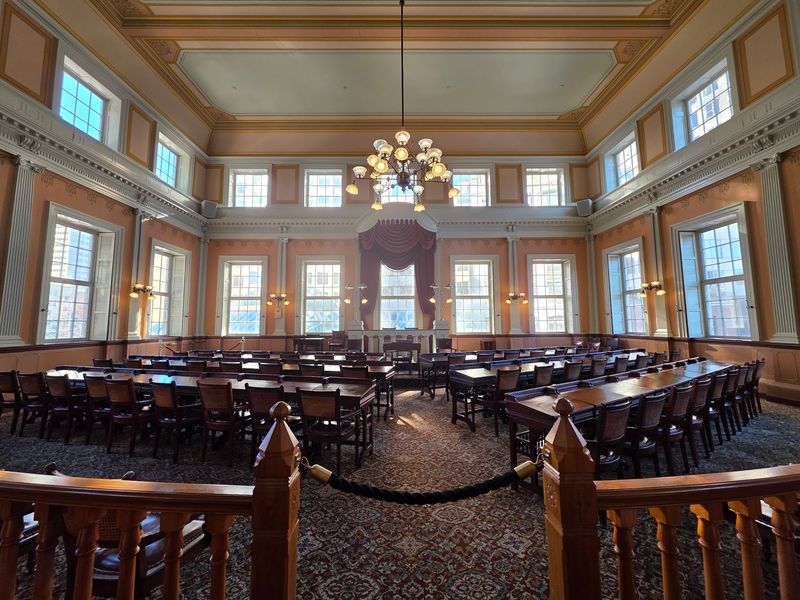
From 1796 to 1878, this was where Connecticut ran its government. All three branches met under one roof before a new capitol took over.
Today, the restored chambers on the second floor feel like time capsules. Each one wears a different style, which keeps things interesting.
The Senate Chamber reflects the Federal style of the building’s early years. Expect elegant, restrained design that feels very late 1700s.
Look for the portrait of George Washington by Gilbert Stuart. It’s known as one of the rare Stuart portraits still hanging in its original location.
Across the way, the Hall of the House of Representatives takes a Victorian turn. The change in style shows how the building evolved over its working life.
Comparing the two rooms is half the fun. It’s like visiting the same house in two different centuries without needing a time machine.
Guided tours help a lot here. Guides can point out details and explain what happened in each room.
You’ll leave knowing why the Constitution State takes its history so seriously.
5. A Courtroom Here Helped Shape A Famous Fight For Freedom
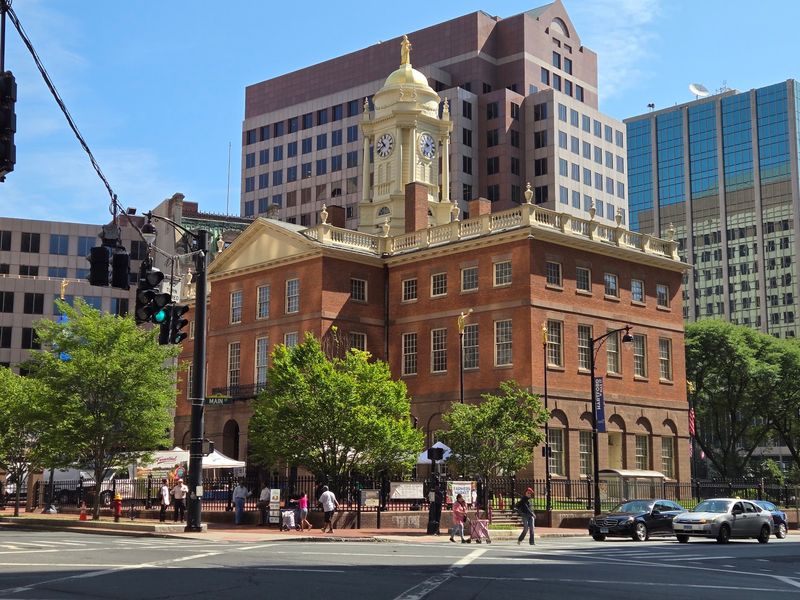
In 1839, a group of captives from the ship Amistad arrived in the state. Their first trials began in this building’s courtroom.
The case grew into one of the most important legal stories in American history. It raised huge questions about liberty and justice that still matter.
Today, the courtroom shows off a Colonial Revival look, like the building’s halls. Exhibits share the story of the Amistad captives and their long legal journey.
Standing in a room with this much weight feels different. It’s a reminder that big history often happens in surprisingly ordinary spaces.
This room is also a great place to slow down. Read the panels, take your time, and let the story sink in.
Families with older kids might find it especially meaningful. It opens up real conversations about fairness, courage, and the law.
The building also hosted the Hartford Convention in 1814. So the courtroom isn’t the only spot where major national debates unfolded.
Honestly, a two-headed pig upstairs is wild. A courtroom tied to freedom downstairs is unforgettable.
6. Guided Or Solo, Plan Your Route Through Three Floors Of Stories
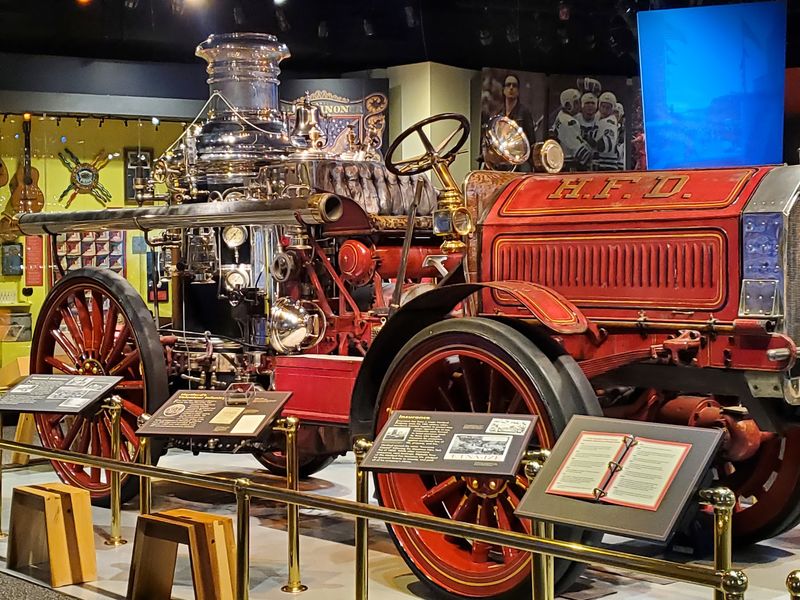
Tour style is your choice at Connecticut’s Old State House. Guided tours and self-guided visits are both available.
The building sits at 800 Main Street, Hartford. It’s open Tuesday through Saturday from noon to 5 p.m., and closed Sunday and Monday.
A guided tour gives you context that signs can’t fully cover. Afterward, you can still wander back to favorite rooms on your own.
Going solo works well if you like to linger. Maybe the butterflies need ten extra minutes.
No judgment here.
Plan to cover all three levels. The lower floor focuses on history exhibits, the second floor holds the legislative chambers, and the third floor brings the curiosities.
Hours are fairly compact, so arriving earlier in the afternoon gives you breathing room. Double-check the schedule before heading out, since special events can shift things.
School groups often visit through educational programs too. The building runs as a museum through a partnership between the Connecticut General Assembly and the Connecticut Democracy Center.
That civic focus shows. This place wants visitors to understand how government actually works.
7. Summer Concerts And A Farmers Market Bring The Lawn To Life
Museums don’t always throw parties outside. This one does, and the front lawn becomes a community hangout.
A summer concert series brings music right to the heart of downtown Hartford. It’s an easy way to enjoy the landmark without stepping indoors at all.
A downtown farmers market also sets up here. Fresh local goods with a 1796 backdrop is a pretty great combination.
Special events pop up throughout the year too. The exact lineup changes, so keeping an eye on the event calendar is smart.
School programs keep the inside busy during the academic year. Students learn about civics, history, and how decisions get made.
I think this mix is what keeps the building feeling alive. It’s not frozen in time.
It still gathers people together, which is exactly what it was built for.
If you’re planning a day trip, try lining up your visit with an event. You could tour the chambers, peek at the curiosities, and then catch a show.
Not a bad way to spend an afternoon.
8. Ghost Stories Add One More Layer Of Curiosity
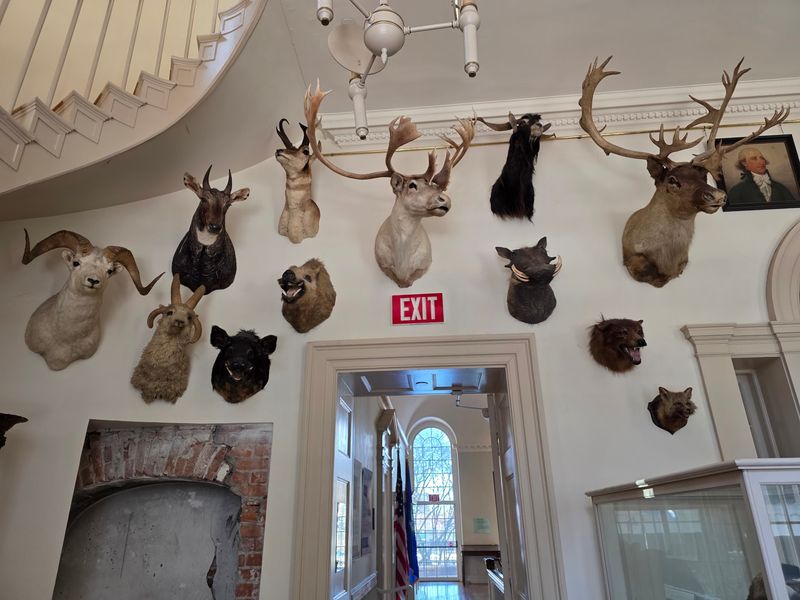
A building with a mummified hand upstairs was always going to attract spooky rumors. Sure enough, this place has a haunted reputation.
The TV show Ghost Hunters even investigated the Old State House. Whether you believe in spirits or not, that’s a fun bit of trivia.
Honestly, the reputation makes sense. A building that has seen more than two centuries of debates, trials, and public life carries a lot of stories.
Add a room full of preserved creatures, and imaginations start running. A two-headed calf doesn’t exactly calm the nerves.
Still, the real magic here comes from history you can confirm. The trials, the portraits, the chambers, and Steward’s collection are spooky enough in their own quiet way.
For fans of the mysterious, this is a perfect add-on detail. Ask a guide about the building’s legends during your tour and see what they share.
Skeptics can simply enjoy the architecture. Believers can keep one eye on the hallway.
Either way, Connecticut’s Old State House proves that a government building can be wonderfully strange from basement to cupola.