Most People Don’t Know Alabama Sits On A Massive Marble Deposit, Here’s Where To See It
A bust of Abraham Lincoln in the U.S. Capitol Rotunda was carved from marble dug out of central Alabama.
That same white stone runs underground for roughly 32 miles.
Specific facts like that make lazy descriptions almost impossible.
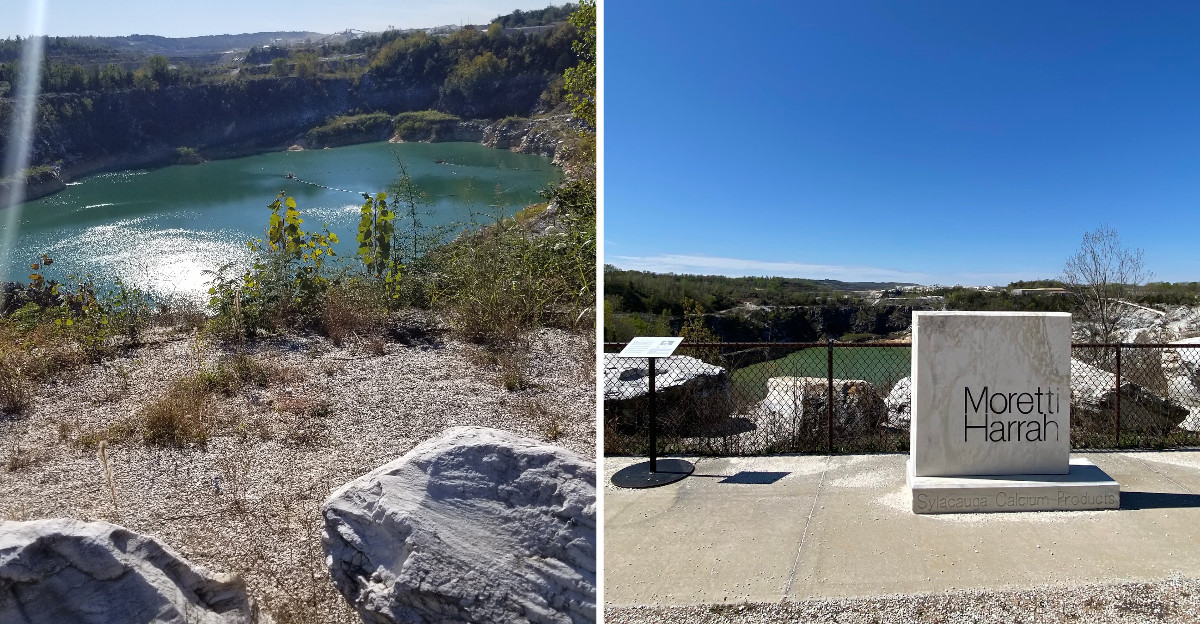
A quarry is supposed to be a dusty hole, but this one is filled with water and ringed by bright white rock.
The marble also pulls double duty in a very sneaky way. Some of it gets crushed into powder for paint, plastics, and even toothpaste.
Good luck making that sound boring, because the facts are doing most of the work here, and I’m mostly along for the ride.
A Free Peek Into One Of The Finest White Marble Deposits Anywhere
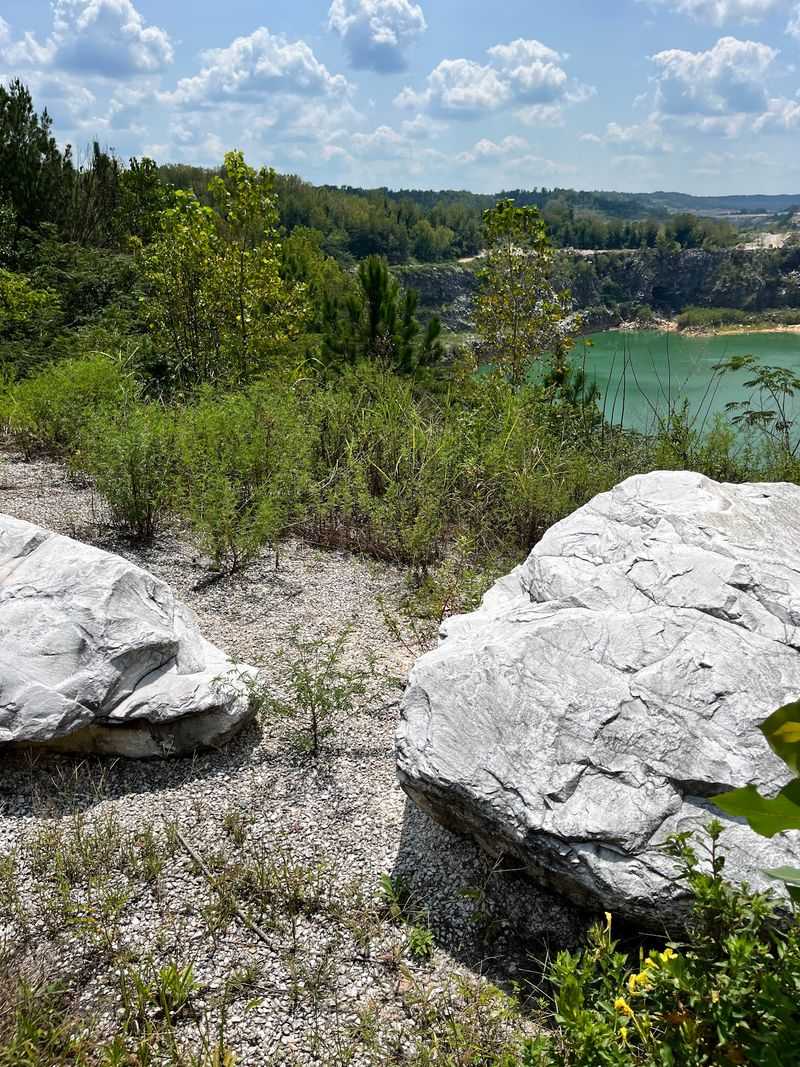
Most free roadside stops give you a nice view and a parking spot. Imerys-Gantt’s Quarry Observation Point gives you a look straight into one of the best-known marble deposits in America.
The overlook sits above historic Gantt’s Quarry in Sylacauga, Alabama, a town that proudly calls itself the Marble City. Imerys maintains the observation area.
Its signs also recall Gantt’s Quarry Village, where families once lived around the industrial site, with schools, a store, and a post office.
Admission is free, and published visiting hours run from 9 AM to 4 PM daily. Access can occasionally depend on the gate, so checking before a longer drive makes sense.
The setup is simple, with an open viewing area and historical panels.
The quarry itself is inactive, although the surrounding region remains an important center for marble processing. This is a place to appreciate decades of excavation rather than watch quarry equipment at work.
You can admire the quarry and be back on the highway without losing your afternoon.
The Numbers Behind This Underground Giant Are Wild
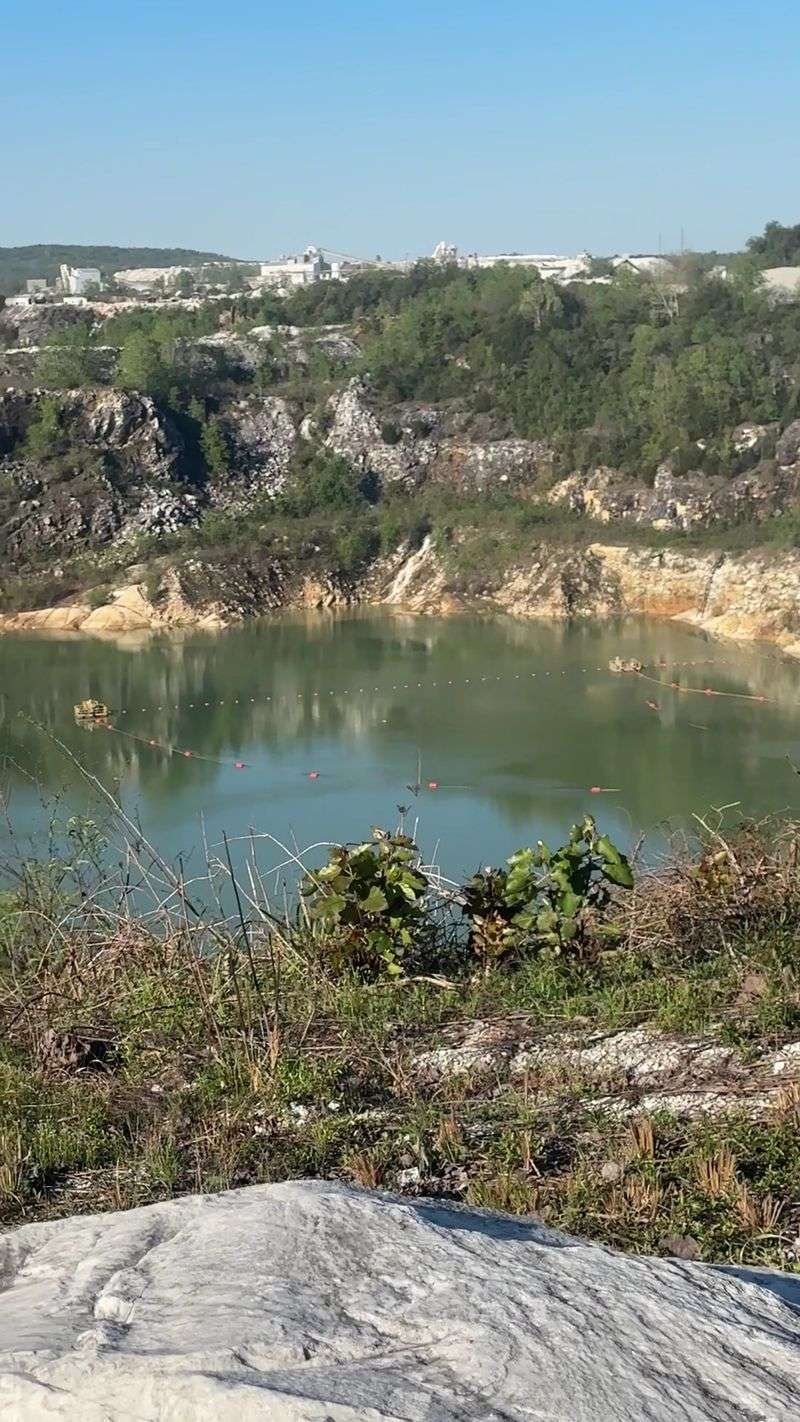
Thirty-two miles long and about a mile and a half wide. Those are the commonly cited measurements for the marble belt running beneath this part of Alabama.
Depth is the part that really stretches the brain. It’s generally described as about 400 feet deep.
Geologists call marble metamorphic rock. It began as limestone, then changed under intense heat and pressure.
The original seafloor sediments date back roughly 500 million years, giving the deposit an astonishingly long geological history.
This marble is particularly prized for its light color, fine texture, and high calcium carbonate content. It also occurs in cream tones.
Standing at the overlook helps those big numbers feel real. The flooded pit is only one opening into a much larger deposit.
It’s a little humbling. You’re looking at a small piece of something a map can barely do justice.
An Army Surgeon Gets Credit For Spotting It First
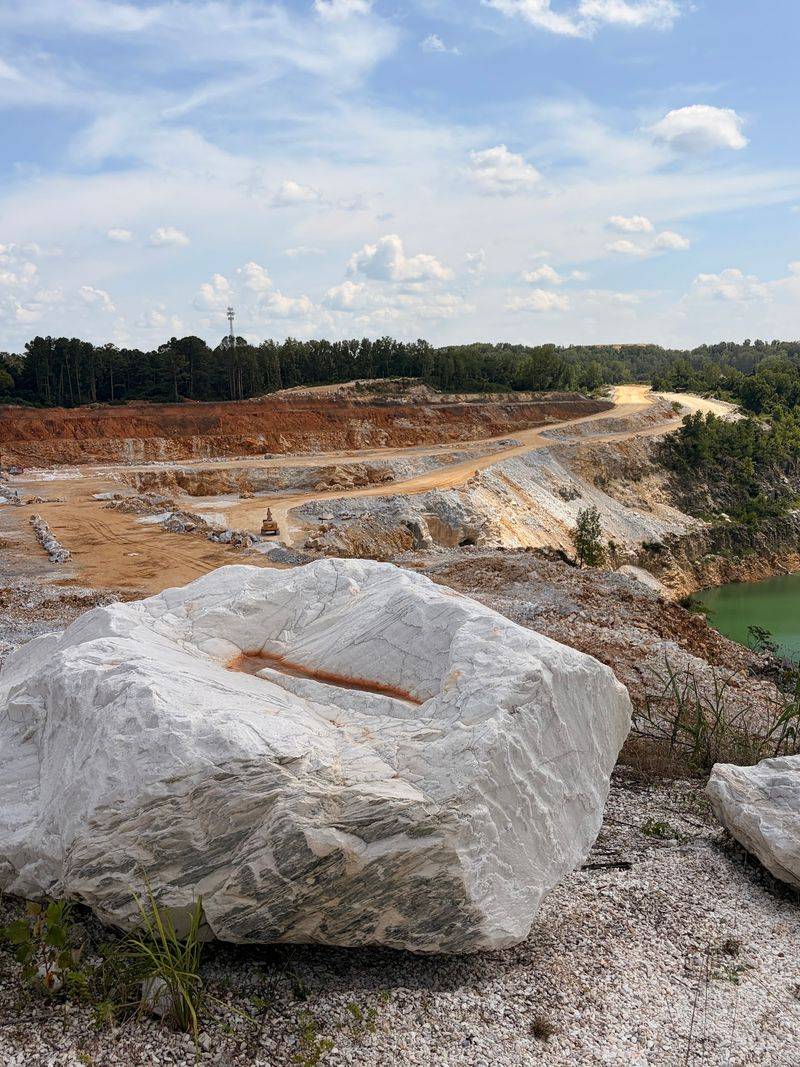
History has a funny way of handing big discoveries to people who weren’t looking for them. Local accounts credit physician Edward Gantt, traveling through the area with Andrew Jackson’s party around 1814, with noticing the marble.
He wasn’t a geologist or a stone carver. He was a doctor who apparently had a good eye for interesting rocks.
Gantt acquired quarry land in the 1830s and joined business partners. Commercial production in the area began during that decade, and the first marble sales followed soon afterward.
In time, quarrying drew skilled stoneworkers and businesses to the growing community.
His name became attached to Gantt’s Quarry, which later grew into an industrial community. By the early twentieth century, the Alabama Marble Company was producing stone there for building and ornamental work.
Marble also helped shape the town’s identity. Local industry expanded around extracting and processing stone.
The signs at the observation point connect that backstory to the landscape right in front of you. The pale quarry walls put those dates in context.
It’s quite a legacy for a chance encounter with an unusual stretch of stone.
That Water Color Looks Like It Belongs Somewhere Tropical
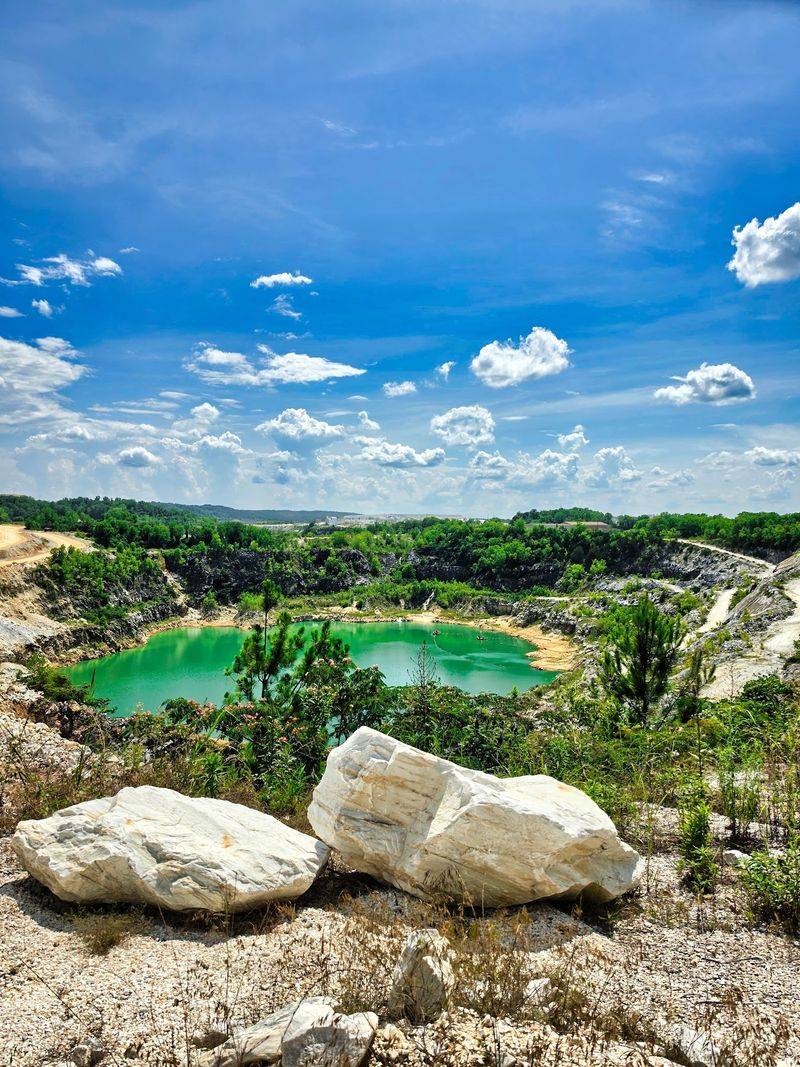
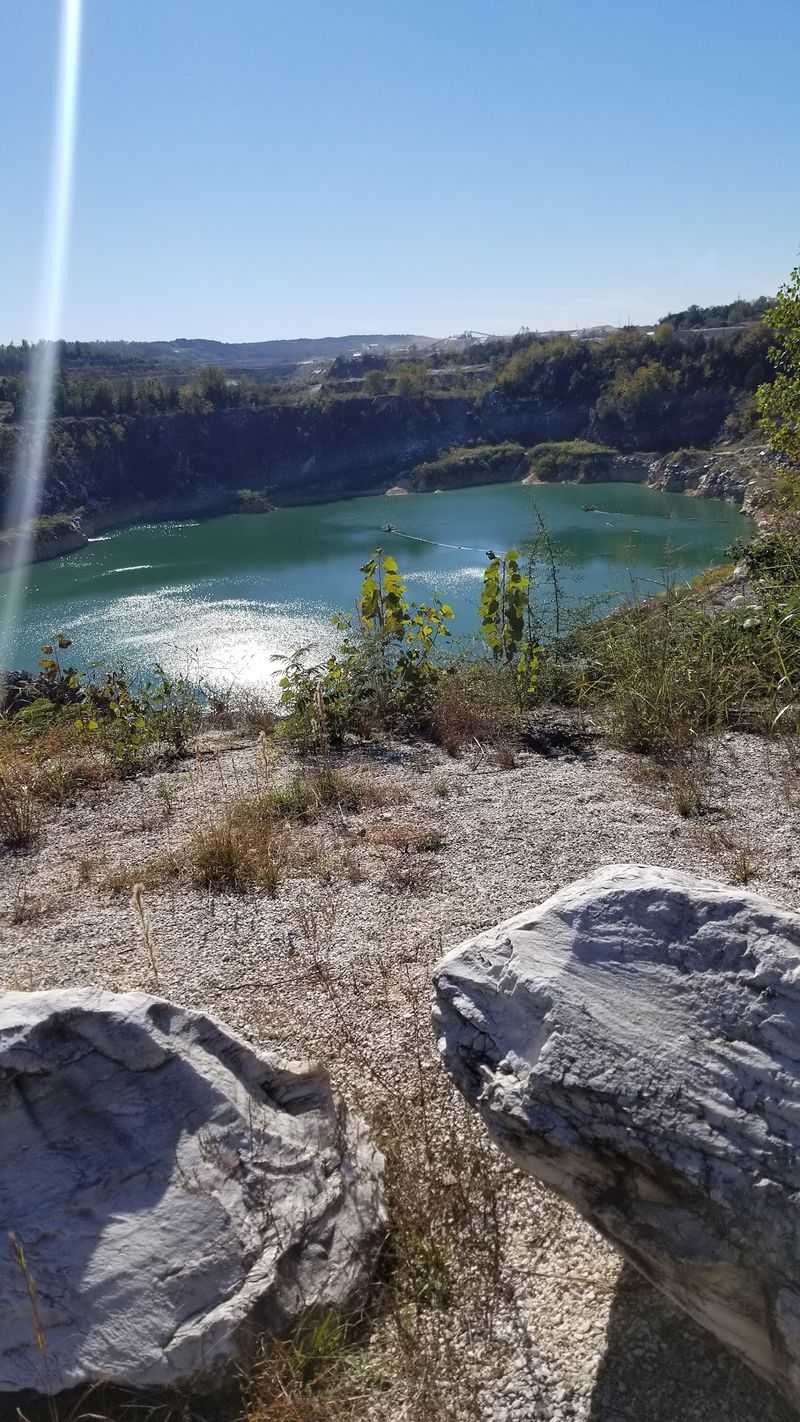
Blue-green water between white cliffs is hardly an expected sight in Talladega County. Yet that’s exactly the scene at the bottom of Gantt’s Quarry.
After excavation stopped in this particular pit, water collected in the quarry basin. The water has also served as a supply for nearby industrial plants, giving this peaceful-looking pool a practical role.
The flooded site now presents a striking contrast between pale marble walls and the deep color below.
The effect is almost lagoon-like, minus the beach chairs. Sunlight reveals shades of blue and green beside carved ledges.
Sunny days tend to show off the colors best. If you’re planning photos, daylight before the posted 4 PM closing time is a smart choice.
Keep in mind that this is a viewing spot, not a swimming hole. Stay within the designated observation area rather than approaching the steep quarry edges.
Zoom in on the cut faces and terraces across the pit. They reveal the quarry’s industrial past.
It’s the rare industrial landscape that ends up looking downright pretty. Nature and old engineering have made an unexpected pair.
Your Next Trip To Washington Might Feel A Little Different
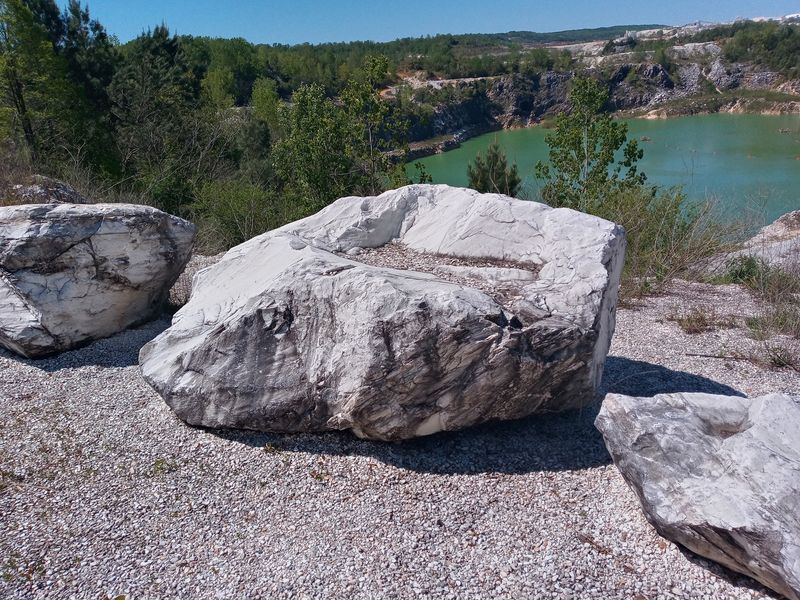
Plenty of famous buildings get their stone from faraway places. Some of America’s most recognizable landmarks contain marble from Alabama.
The Lincoln Memorial in Washington, D.C., is one of the clearest examples. Its ceiling panels use translucent marble from the state, treated with wax to allow light through. The seated Lincoln statue uses Georgia marble.
Over in the U.S. Capitol, there’s another connection. Gutzon Borglum carved a monumental bust of Abraham Lincoln from Sylacauga marble in 1908.
It once stood in the Rotunda and has been displayed in the Crypt since 1979. Borglum later sculpted the presidents at Mount Rushmore.
Italian sculptor Giuseppe Moretti, known for Birmingham’s giant Vulcan statue, established a marble studio in Sylacauga and admired the quality of its white stone.
A marble block from Gantt’s Quarry also went into the Washington Monument in 1851. No wonder the stone became known beyond Talladega County.
Once you’ve seen the source landscape at the overlook, those national landmarks might feel a bit more personal. You’ll know where part of their story began.
This Marble Has An Unexpected Connection To Your Bathroom
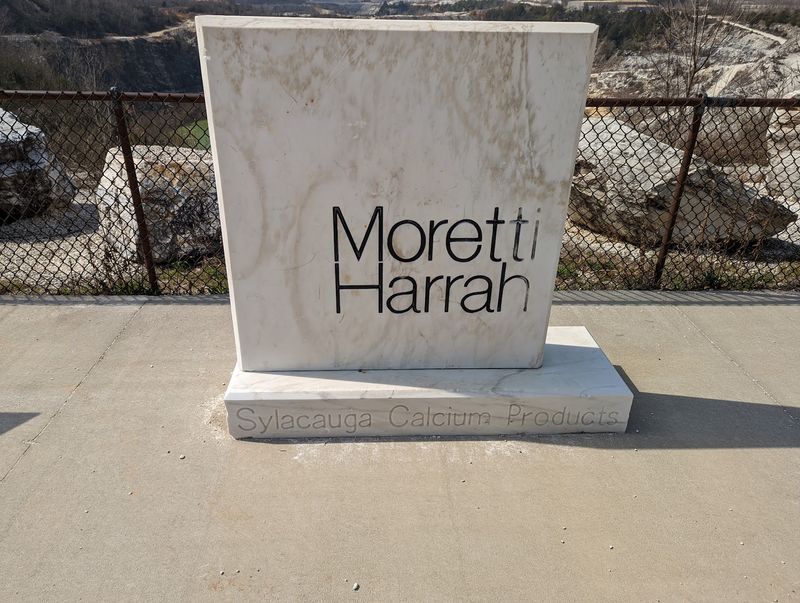
Toothpaste. Paint. Plastics.
Those aren’t the first things that come to mind when someone says marble, but they’re part of this mineral belt’s modern story.
Much of the marble becomes calcium carbonate powder rather than building slabs. Imerys is among the companies associated with that industrial work.
Ground calcium carbonate has many practical uses. It can be blended into paint, paper coatings, plastics, construction materials, and certain pharmaceutical products.
It’s also used as a mild abrasive in some toothpastes. That’s a fascinating connection, although an ingredient label alone won’t tell you which quarry supplied the mineral.
Its whiteness and texture also matter in manufacturing. Fine mineral particles can serve as fillers that improve a product’s texture or help produce a consistent finish.
So while famous monuments get the spotlight, everyday products do much of the heavy lifting. Even a bathroom cabinet can hold a surprising connection to marble.
The view connects the old quarry to an unexpectedly modern industry.
Read The Signs, Because They Do A Lot Of Talking
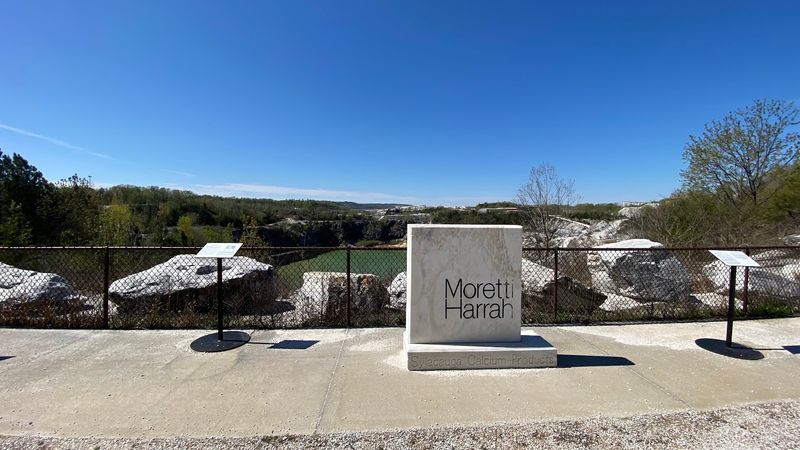
Good signage can turn a five-minute stop into a mini museum visit. The observation point has informational panels explaining the marble industry’s history and the remarkable deposit beneath Sylacauga.
They cover Edward Gantt, the quarry’s growth, and marble’s varied uses.
Take a few minutes to read them before snapping photos. The view makes much more sense once you know what you’re looking at.
From the designated overlook, you can see the flooded quarry and its pale stepped walls. The surrounding landscape reveals the scale of the industry.
Families can make a little scavenger hunt out of the signs. Find the deposit’s length, look for the name Gantt, and then study the terraces across the water.
The viewing area is simple. It’s a scenic stop rather than a tour through the pit, so all the interesting details are visible from a safe distance.
Shade and facilities may be limited, so bring water and prepare for the weather.
A few minutes with the displays can change how you see the landscape. Those walls preserve geology and industrial history.
Getting There Takes Less Effort Than You’d Think
Road trippers on U.S. Highway 280 are in luck. The overlook sits a short detour from the main route, making it easy to add to a trip through Sylacauga.
The address is 241 Sylacauga Fayetteville Hwy, Sylacauga, AL 35151. Watch for the entrance sign along Fayetteville Highway, a short distance from U.S. 280.
Sylacauga is southeast of Birmingham and northwest of Auburn. The overlook is roughly three-tenths of a mile off U.S. 280.
Here’s one practical tip worth taking seriously. The site is reached through a gate, and access can vary even when standard hours are posted.
Check with the local visitor information office before making a special trip. Published hours are 9 AM to 4 PM daily, but confirmation is worthwhile if you’re coming from farther away.
Stay in the viewing area and enjoy the panels and flooded quarry.
With a little planning, this is a rewarding stop. Few short detours give you such a direct look at the stone behind so many familiar landmarks.