The 10 Alabama Attractions That Helped Shape American History
History in Alabama does not stay behind glass or beneath a marker. These attractions carry stories that helped shape the character of a nation.
Museums, monuments, and preserved sites all contribute meaningfully to this list. Each location holds a chapter deserving slow and genuinely attentive engagement.
Visitors who engage fully leave carrying something lasting and hard to name. The state holds more significant history per mile than most people anticipate.
I stood at one site and felt the full and unmistakable weight.
Alabama rewards the patient and curious in ways textbooks simply cannot replicate. Start wherever the list draws you and let history guide you.
1. Sloss Furnaces National Landmark
You might not believe me, but few industrial sites in America feel as raw and powerful as this one.
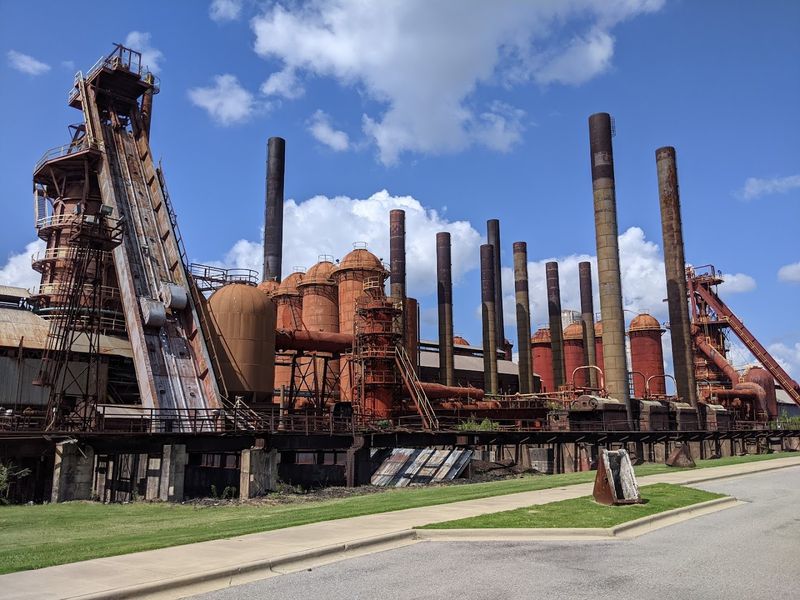
Sloss Furnaces in Birmingham stands as a preserved iron-making complex that operated from 1882 to 1971.
For nearly 90 years, these furnaces produced pig iron around the clock.
The site played a central role in Birmingham becoming a steel powerhouse. Workers from diverse backgrounds shaped the city’s identity here.
Today, the national landmark welcomes history lovers and curious travelers alike. You can walk among the towering blast furnaces and rusted machinery. Interpretive signs explain exactly how iron was made.
The museum inside adds important context about labor history. African American workers faced harsh conditions here, and their stories are told with honesty and respect. That history is not glossed over.
Metal arts festivals and concerts also take place on the grounds throughout the year. The industrial setting creates an unforgettable backdrop for any event. It is both haunting and beautiful at the same time.
Photography enthusiasts absolutely love this place. The textures, scale, and light create stunning images at every turn. Find it at 20 32nd St N.
2. Ivy Green, Birthplace Of Helen Keller
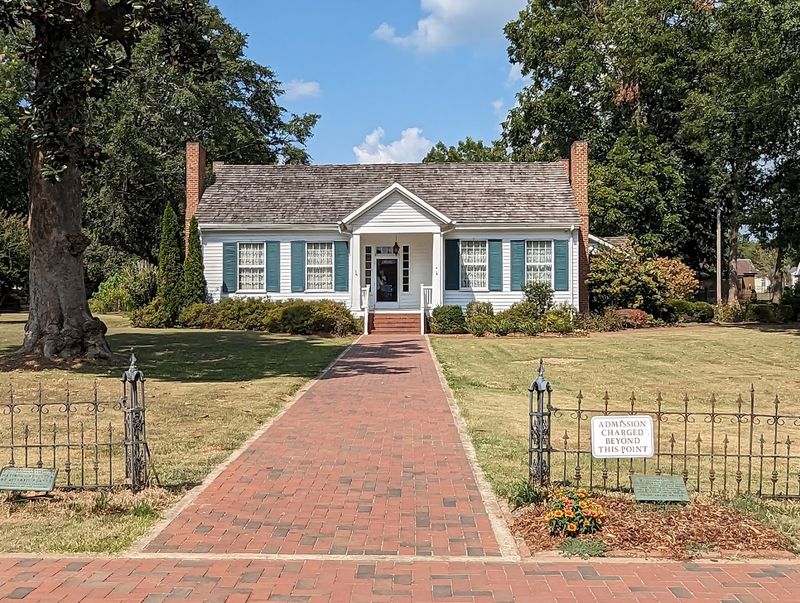
I never would have guessed that a small white cottage in northern Alabama would hold one of history’s most inspiring stories.
Ivy Green in Tuscumbia is the birthplace of Helen Keller, born here in 1880.
Keller lost her sight and hearing as a toddler after a serious illness. Her journey from isolation to communication changed how the world understood disability. This modest home is where that transformation began.
The original furniture and personal belongings are still inside the house. Going through the rooms gives you a genuine sense of life in the 1880s South. Nothing feels staged or overly polished here.
Outside, the famous water pump stands in the yard. It marks the exact spot where young Helen first connected a word to its meaning. That moment is considered one of history’s great breakthroughs in human learning.
Guided tours are available and are highly informative. The guides share details you simply will not find in textbooks. Their storytelling brings Keller’s early life into sharp focus.
The grounds are shaded and peaceful, making it a lovely stop any time of year. Ivy Green sits at 300 N Commons St W. It is a small place with an enormous legacy.
3. Dexter Avenue King Memorial Baptist Church
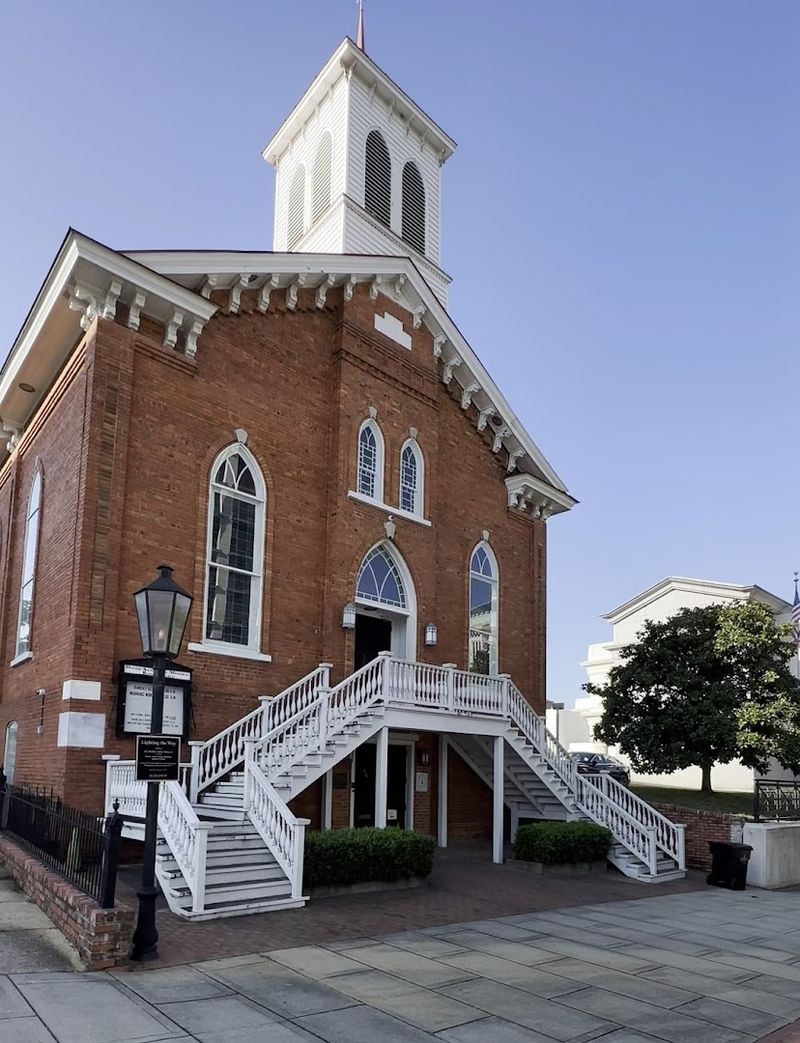
Can you believe that one church served as the nerve center of the entire American Civil Rights Movement?
Dexter Avenue King Memorial Baptist Church in Montgomery is exactly that kind of historic powerhouse.
Dr. Martin Luther King Jr. served as pastor here from 1954 to 1960. During those years, the Montgomery Bus Boycott was launched and organized from this very building. That boycott lasted 381 days and changed American law.
The church itself dates back to 1889. Its red brick exterior is modest, but its interior holds extraordinary murals depicting the civil rights struggle. Every image tells a chapter of a larger national story.
Guided tours take you through the sanctuary and the basement meeting rooms. You stand in the same spaces where strategy, prayer, and courage come together. It is genuinely moving to be there.
The church remains an active congregation to this day. Services are held regularly, connecting the past to the present in a living way. That continuity makes it unlike any museum experience.
Montgomery itself has many civil rights landmarks nearby, making this a natural anchor for a full day of history. The church is located at 454 Dexter Ave. Few addresses in America carry more weight.
4. USS Drum Submarine
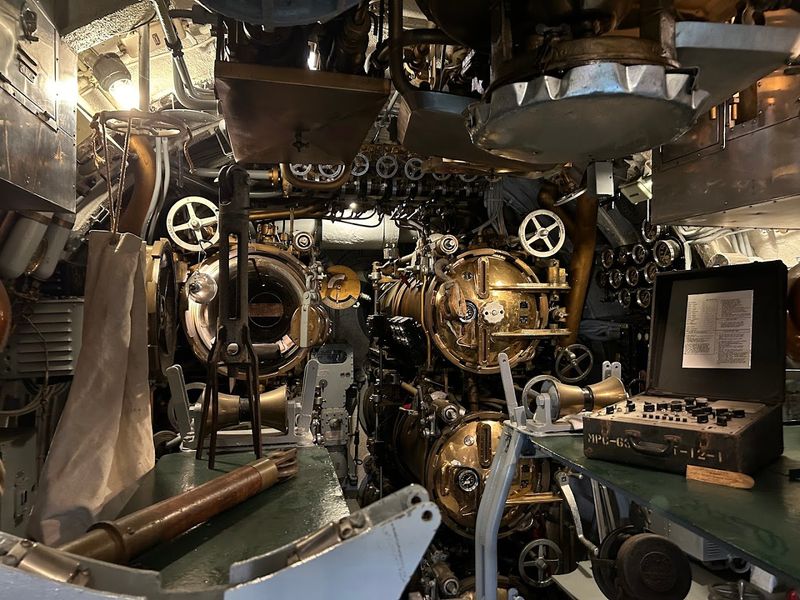
Trust me, standing next to a World War II submarine is a completely different experience from reading about one in a book.
The USS Drum in Mobile is the oldest American submarine on public display in the country. Commissioned in 1941, the USS Drum completed 13 war patrols in the Pacific.
The submarine is docked at USS Alabama Battleship Memorial Park. You can tour the interior and squeeze through the narrow passageways. The cramped quarters reveal just how demanding submarine life truly was.
Original equipment, torpedoes, and crew quarters are all preserved inside. Signs explain each section clearly, so even younger visitors understand what they are seeing. It is hands-on history in the best possible way.
The park also features a massive battleship and several aircraft on display. Spending a full day here is easy and deeply rewarding. Each exhibit adds another layer to America’s wartime story.
Mobile’s warm Gulf Coast climate makes this an enjoyable stop year-round. The USS Drum is at 228 Battleship Pkwy. It is a genuine piece of living naval history.
5. Edmund Pettus Bridge
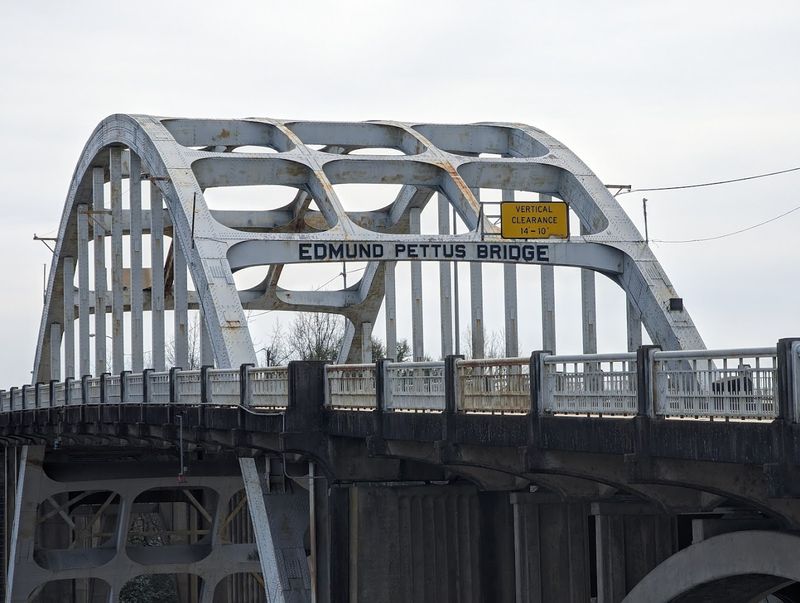
Believe me, there are few moments in American history as powerful as what happened on this bridge in March 1965.
The Edmund Pettus Bridge in Selma is where civil rights marchers faced violent resistance on Bloody Sunday.
That day, hundreds of peaceful marchers were met with force as they crossed the bridge. The images broadcast on national television shocked the country. Public outrage helped push the Voting Rights Act of 1965 into law.
The bridge itself spans the Alabama River and dates back to 1940. Its steel arch design is simple but unmistakable. Seeing it in person carries a weight that photographs simply cannot capture.
Each year, the bridge hosts the Bridge Crossing Jubilee commemoration. Thousands gather to honor those who marched and to reflect on how far the country has come. The event draws people from all over the nation.
Selma’s National Voting Rights Museum sits nearby at 6 US-80 East, adding essential context to the bridge’s story. Spending a few hours in both locations creates a full and meaningful experience. History feels very close here.
The bridge is accessible at any hour and free to see. It stands in downtown Selma, right at the foot of Broad Street. Few landmarks in America speak as directly to the idea of freedom.
6. Historic Redstone Test Stand And The U.S. Space And Rocket Center
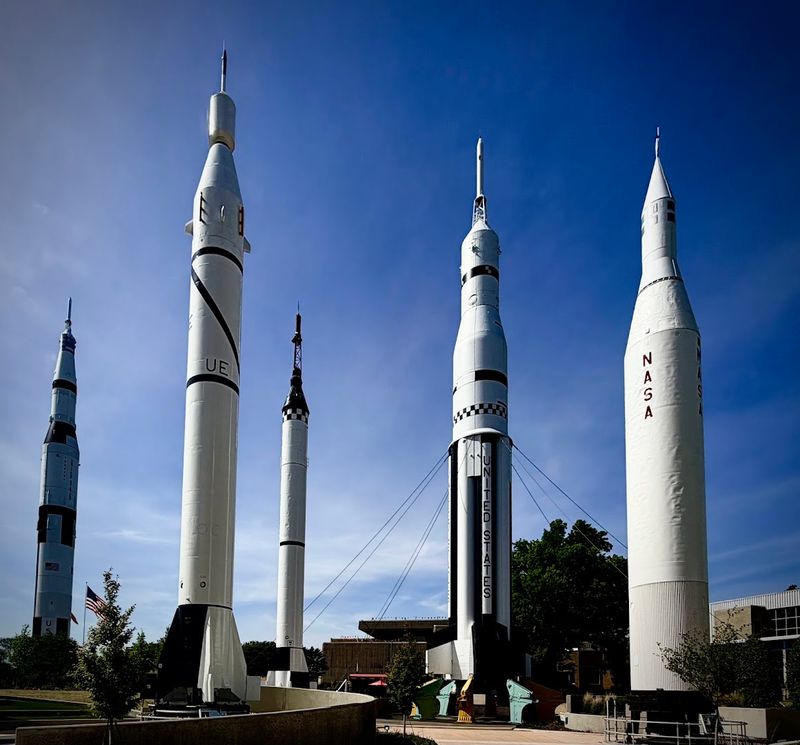
Who would have thought that a test stand in northern Alabama would help launch the American space age?
The Historic Redstone Test Stand in Huntsville is where some of the most critical rocket tests in NASA history took place.
Built in the 1950s, this massive structure was used to test the Redstone rocket. That rocket eventually carried America’s first astronauts into space. The work done here directly shaped the Mercury and Apollo programs.
Huntsville earned the nickname Rocket City because of this legacy. The Marshall Space Flight Center, where the test stand is located, remains an active NASA facility. Its history stretches from early rockets to the Space Launch System used today.
The U.S. Space and Rocket Center at 1 Tranquility Base nearby offers a deeper look at this history. Full-scale rockets and capsules are on display throughout the campus. It is one of the most comprehensive space museums in the world.
Families with children especially enjoy the interactive exhibits and space camp programs. The hands-on activities make complex science feel approachable and exciting. Young visitors often leave wanting to become engineers or astronauts.
The test stand’s grid reference is J8MM+6H. Getting there requires some planning, but the payoff is absolutely worth the effort. This is where America learned to reach for the stars.
7. Vulcan Park And Museum
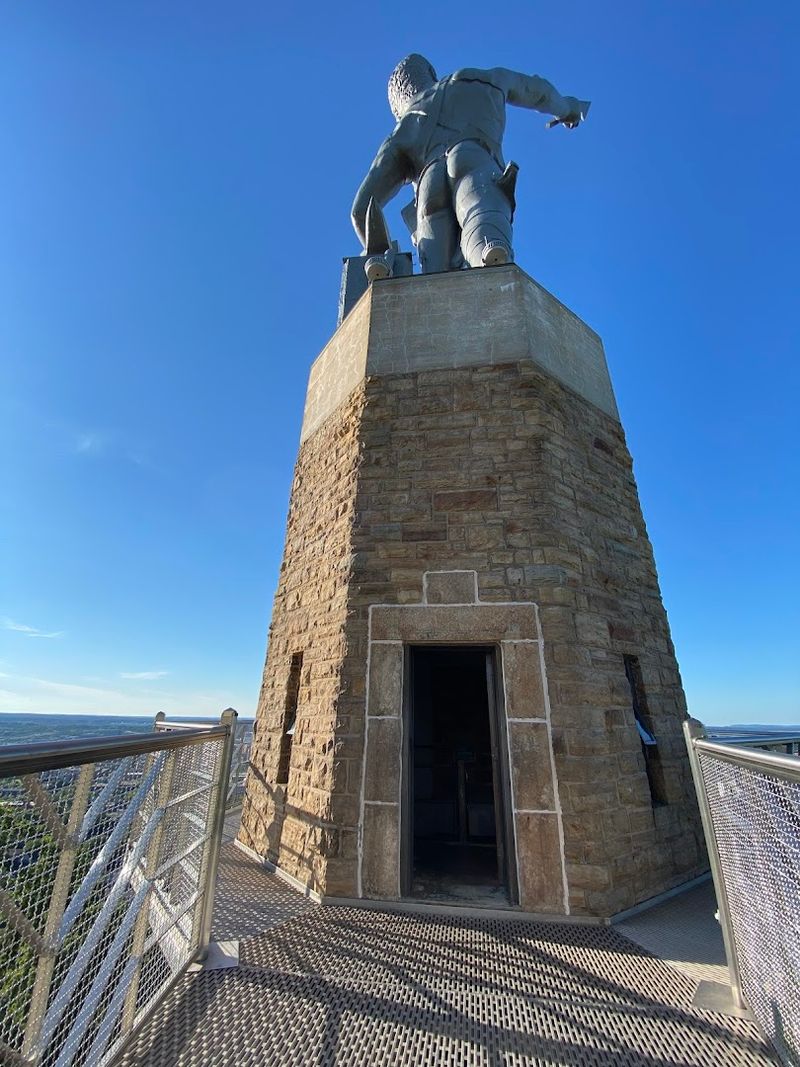
I know, right, a giant Roman god standing on a hilltop above an American city sounds almost too strange to be true.
Vulcan Park and Museum in Birmingham is home to the largest cast iron statue in the world. The Vulcan statue stands 56 feet tall and was created for the 1904 World’s Fair in St. Louis.
It represents Vulcan, the Roman god of fire and the forge. His presence honors Birmingham’s iron and steel industry heritage.
After the fair, the statue was returned to Birmingham and eventually placed on Red Mountain. The hilltop location gives visitors a sweeping panoramic view of the entire city. On a clear day, the view stretches for miles in every direction.
The museum at the base of the statue tells Birmingham’s industrial story with engaging exhibits. You learn how iron ore, coal, and limestone all came together in this specific region.
That geological luck made Birmingham unique in the American South.
An observation tower elevator takes you up for an even higher view. Sunsets from this vantage point are especially spectacular. Photographers make special trips just for that golden-hour light.
This destination is at 1701 Valley View Dr. It is a surprisingly fun and educational stop for all ages. Few statues in America have a better backstory.
8. Tuskegee Institute National Historic Site
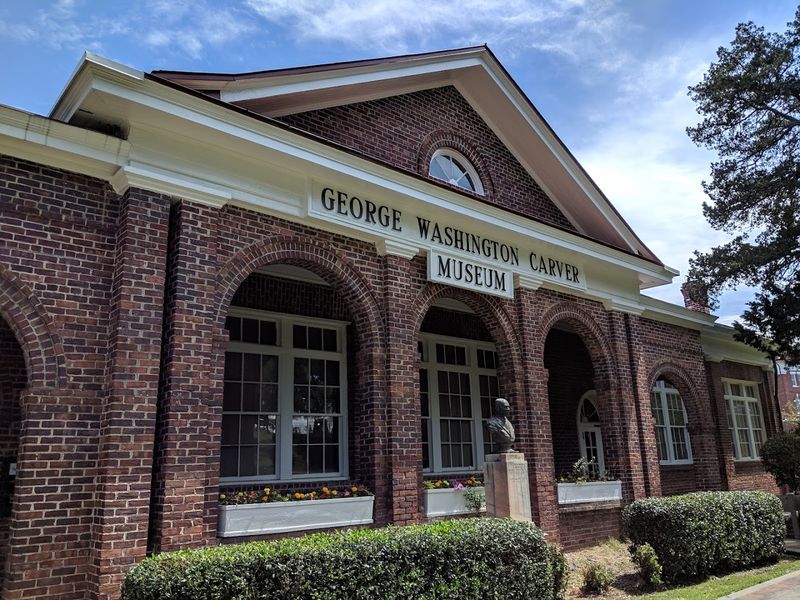
Doesn’t it seem remarkable that a school founded with almost no money became one of America’s most important educational institutions?
Tuskegee Institute National Historic Site in Tuskegee was established in 1881 by Booker T. Washington with a mission to educate freed African Americans.
From its earliest days, students literally built the campus with their own hands. They made the bricks and constructed the buildings as part of their education.
That self-reliance became a defining feature of the institution’s identity.
George Washington Carver conducted his famous agricultural research here for decades. His work with peanuts, sweet potatoes, and other crops transformed Southern farming.
His lab and legacy are both preserved on campus.
During World War II, the Tuskegee Airmen trained at the nearby airfield. These pioneering African American military pilots broke barriers with skill and courage.
Their story is told at the Tuskegee Airmen National Historic Site, also on campus grounds.
Today, Tuskegee University remains a fully operating historically Black university. Its campus is a National Historic Site, blending active academic life with preserved history.
That combination makes it unlike most historic sites you will ever encounter.
The institute is at 1200 W Montgomery Rd. Plan to spend at least half a day exploring the grounds and museum. The depth of history here is genuinely staggering.
9. Wilson Lock And Dam, Muscle Shoals And Florence
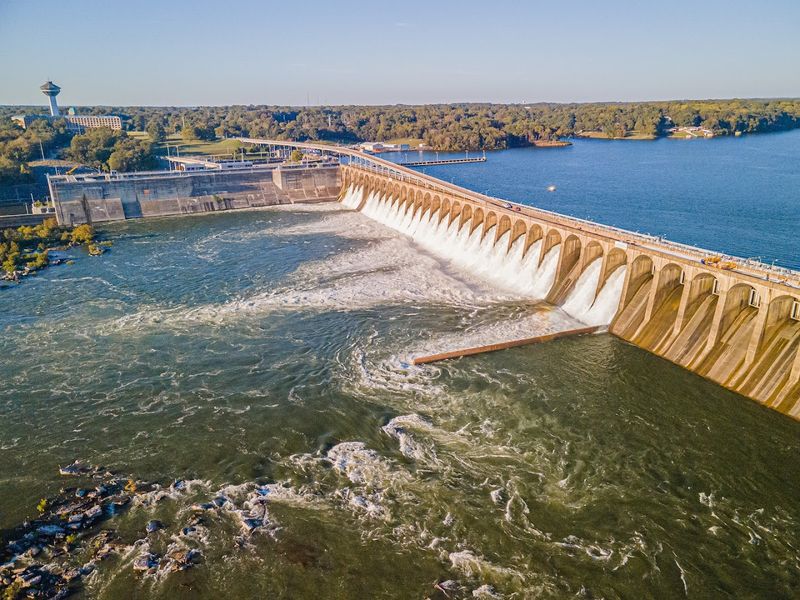
Would you ever think that a dam could reshape an entire region’s economy and transform a nation’s approach to public energy?
Wilson Lock and Dam, straddling the Tennessee River near Muscle Shoals and Florence, did exactly that. Construction began during World War I to support nitrate production for national defense.
After the war, debate raged over whether the government should retain or sell the facility. That debate ultimately led to the creation of the Tennessee Valley Authority in 1933.
The TVA became one of the most ambitious public works projects in American history. It brought electricity to rural communities that had never had it before. Wilson Dam was the anchor that made that entire vision possible.
The lock system allows large river vessels to navigate around the dam safely. Watching a massive barge pass through the lock chambers is a surprisingly fascinating experience. The engineering involved is impressive on every level.
The surrounding area is also known for its music history. Muscle Shoals became a legendary recording hub in the 1960s and 1970s. The combination of musical and industrial heritage makes this region uniquely layered.
Wilson Lock and Dam sits between Muscle Shoals and Florence along Highway 72. There is no admission fee to view the dam from public overlooks. It is an often-overlooked landmark with an outsized American legacy.
10. Moundville Archaeological Park
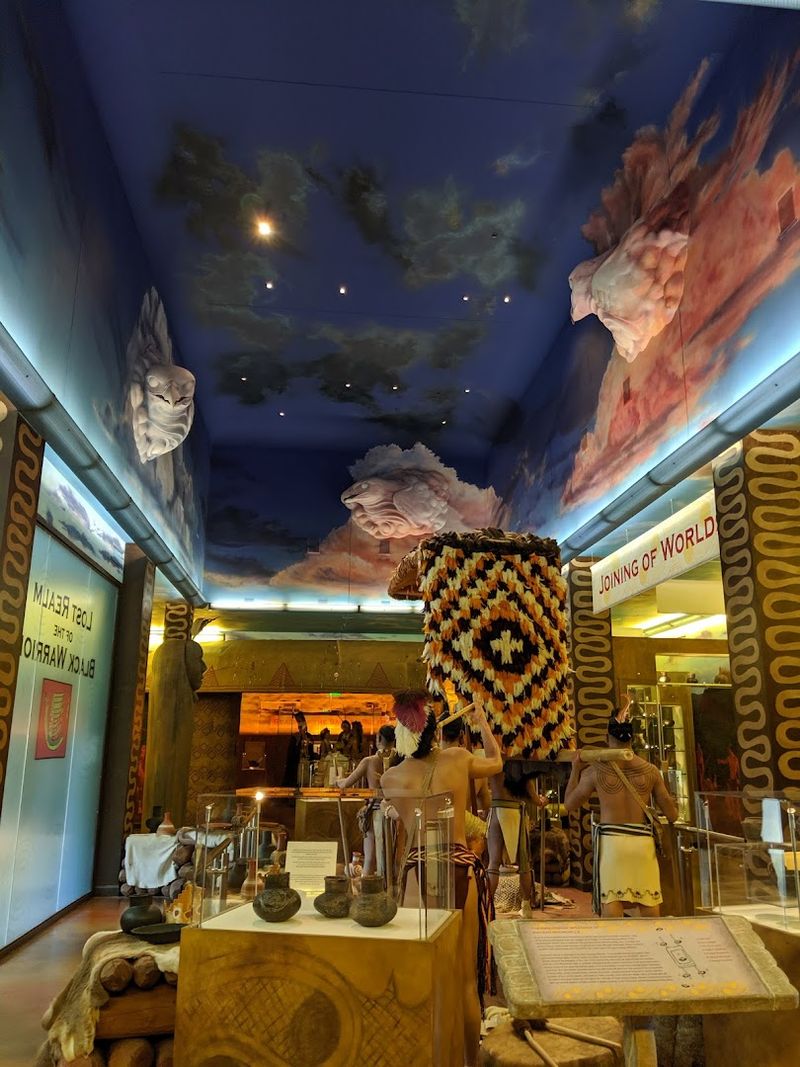
I must admit, nothing quite prepares you for the scale of ancient earthen mounds rising from a flat Alabama field.
Moundville Archaeological Park preserves one of the most significant Native American sites in North America.
Between roughly 1000 and 1450 CE, this site was a major ceremonial and political center. At its peak, it was home to thousands of people from the Mississippian culture.
More than 25 flat-topped mounds still stand across the 300-acre site. The largest rises nearly 60 feet above the surrounding landscape. Standing at its base, you feel the weight of centuries pressing down gently around you.
The on-site Jones Archaeological Museum holds thousands of artifacts recovered from the mounds. Pottery, tools, ceremonial objects, and jewelry are all beautifully displayed.
The craftsmanship visible in these objects is extraordinary for any era.
A nature trail winds through the site and along the Black Warrior River. The peaceful setting makes it easy to imagine the community that once thrived here. Deer and birds are frequently spotted along the path.
The park hosts an annual Moundville Native American Festival each October. Traditional music, dance, and crafts bring Indigenous culture to life in a respectful celebration. Find the park at 634 Mound State Parkway, Moundville.