BASE Jumpers Leap 486 Feet Off This Idaho Bridge Above The Snake River All Year
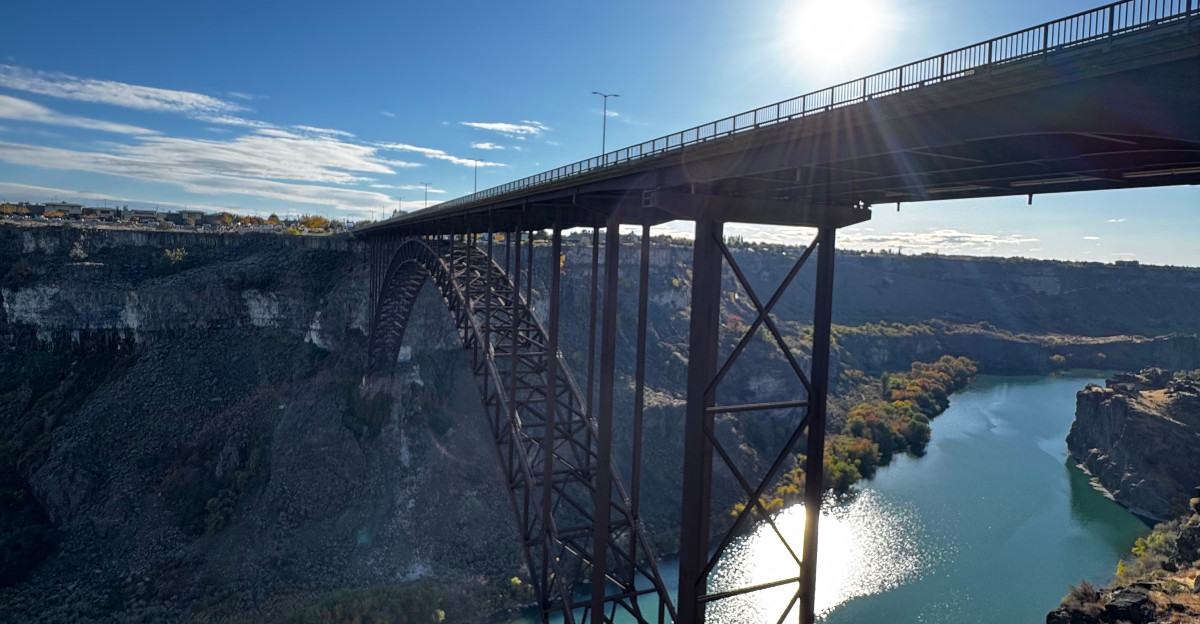
People step off the railing of a busy highway bridge here on purpose, and nobody needs a permit to do it.
The drop is 486 feet straight down to the Snake River.
That’s a rare thing in the United States. Most man-made structures ban BASE jumping outright, but this one in southern Idaho allows it all year long.
I like how ordinary the setting feels at first.
Semi trucks rumble across the deck while parachutes bloom open beneath it, and a paved trail lets you watch from the canyon rim.
I can’t imagine standing at that railing myself. Watching someone else do it, though?
That sounds like a perfect afternoon stop.
So what makes this span so special, and where should you stand to see the show?
A Truss Arch That Turns A Highway Into A Launch Pad
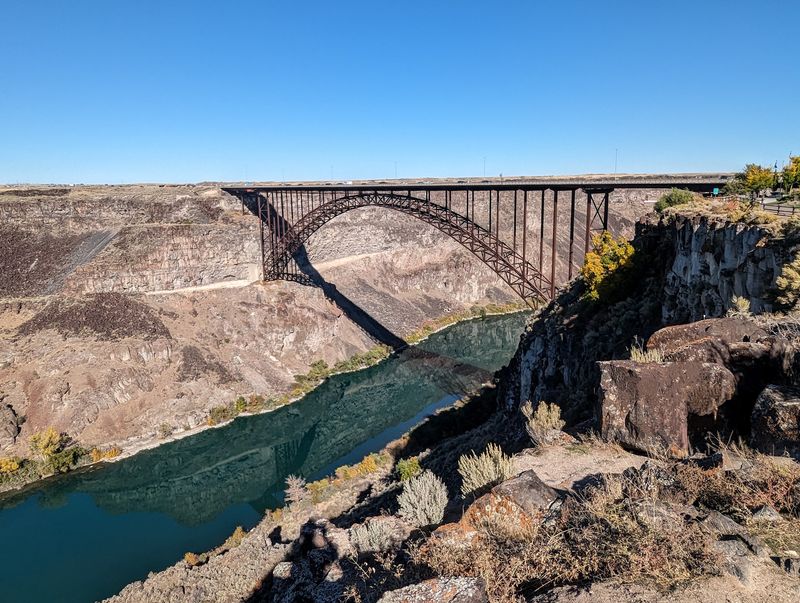
Four lanes of U.S. Highway 93 cross the Snake River Canyon on one of Idaho’s most recognizable landmarks.
The Perrine Memorial Bridge, officially the I. B.
Perrine Bridge, links Twin Falls County with Jerome County.
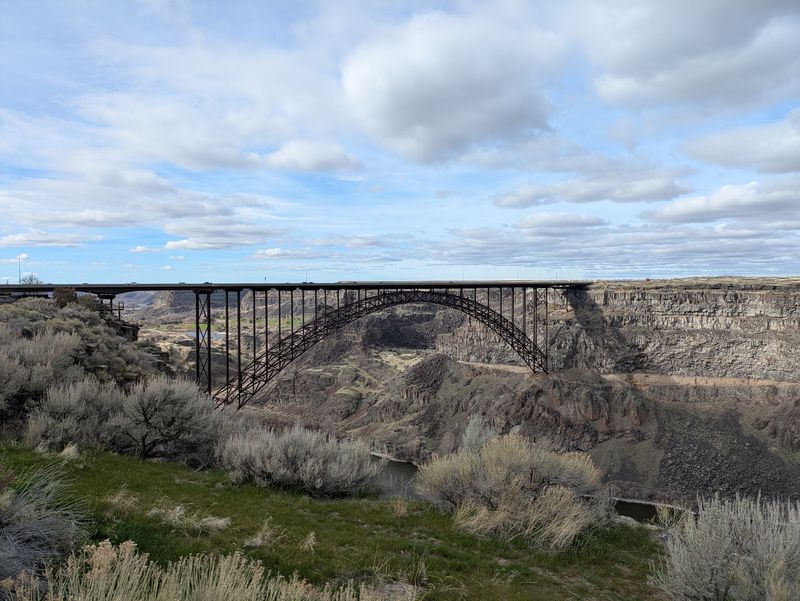
Its steel truss arch stretches roughly 1,500 feet from rim to rim. The deck sits about 486 feet above the water, which is taller than most downtown skyscrapers in the state.
Engineering fans will notice the clean, minimalist design right away. There’s no fussy decoration, just a strong arch doing serious work over a very wide gap.
Then there’s the twist that makes it famous worldwide. BASE jumping is legal here all year, and jumpers don’t need a permit to leap.
That status puts the bridge in rare company across the United States. Thrill-seekers travel from around the globe to the Magic Valley just to stand at this railing.
Most travelers simply drive across without realizing what’s below. A quick pull-off at the canyon rim changes the whole experience, and it costs nothing to look.
Sound like a lot for one bridge? Wait until you see who uses it for skydiving practice.
From A 1927 Toll Crossing To A 1976 Landmark
Long before today’s arch, a steel cantilever bridge carried travelers over this canyon starting in 1927. Drivers had to pay a toll to cross it back then.
The state of Idaho bought that first bridge in 1940 and ended the toll. It served the region for nearly five decades before a replacement arrived.
The current span opened to traffic in 1976. It was built to handle the heavier loads and steady growth of southern Idaho.
In 2000, the bridge officially took the name of I. B.
Perrine. He was a key figure in early irrigation projects and the founding of Twin Falls.
That connection matters more than it might seem. Irrigation transformed dry Snake River Plain land into the farms that gave the Magic Valley its name.
So every crossing quietly honors the person who helped turn sagebrush into fields. It’s a nice bit of history hiding in plain sight on a highway sign.
Many locals still call it simply the Perrine Bridge. Either name works, and both point to the same towering steel arch above the river.
Three To Five Seconds Of Pure Nerve
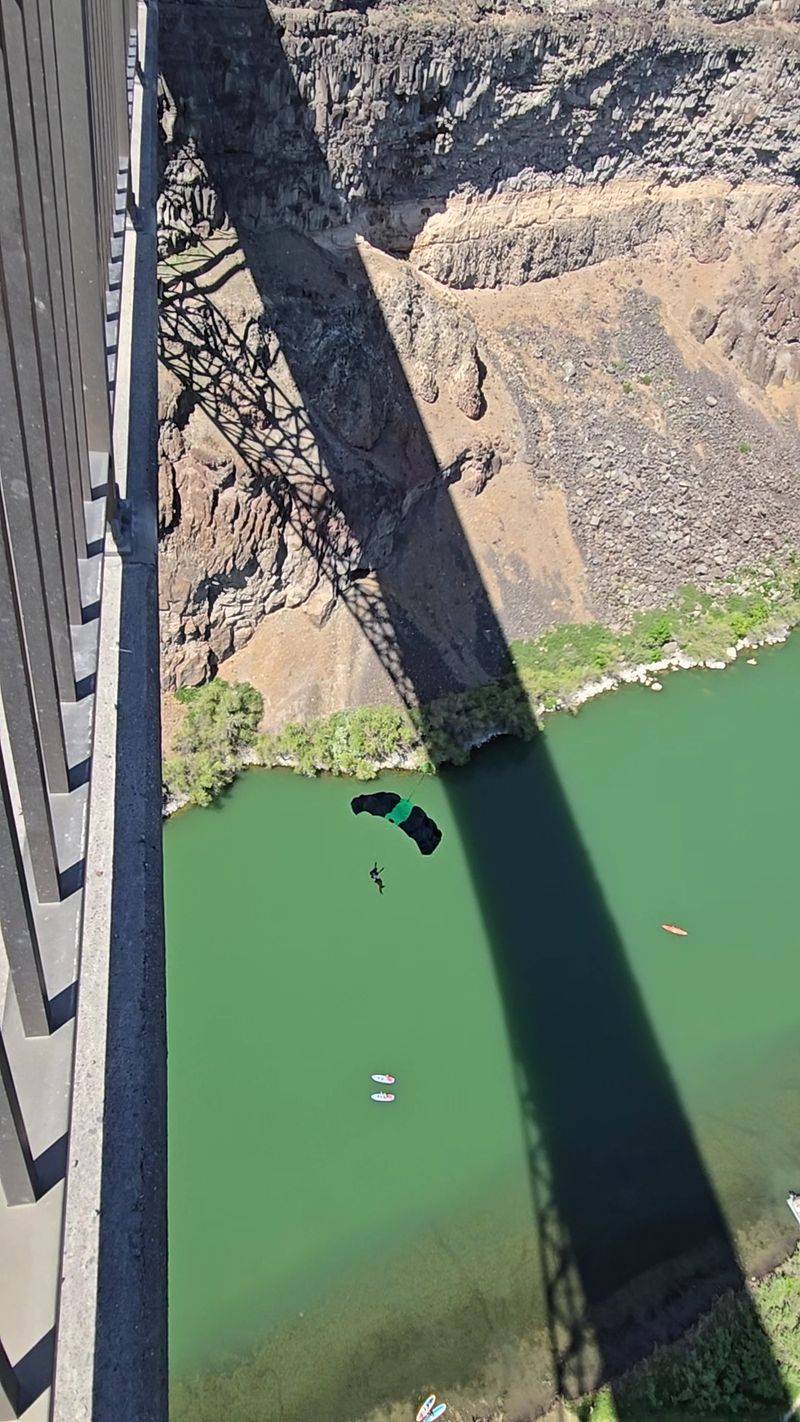
Here’s the math that makes palms sweat. Jumpers typically get only three to five seconds between leaving the bridge and opening their parachutes.
That tiny window demands skill, careful gear checks, and close attention to weather. Wind matters a lot, and calm conditions are what jumpers want most.
BASE stands for Building, Antenna, Span, and Earth. The Perrine Bridge counts as the span, and it’s one of the best-known legal spans in the country.
Jumpers usually leave from near the middle of the deck. After a short free fall, canopies open and they steer toward landing areas beside the river.
Some performers add flips or acrobatics before the canopy opens. Others focus on landing precisely on a target near the water.
The sport carries real risk, and the community treats safety seriously. Experienced instructors in Twin Falls provide training for people who want to learn properly.
Watching from the rim gives you all of the excitement with none of the pressure. Your feet stay planted on solid Idaho basalt, which seems like a very reasonable choice.
Front-Row Seats Along The Canyon Rim
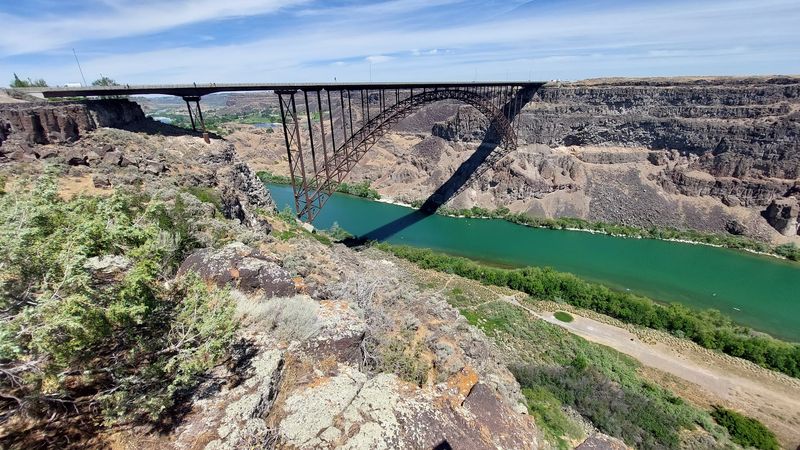
Good news for anyone with a fear of heights. The best seats for the jumping show are on solid ground along the canyon rim.
A paved trail runs from the visitor center parking area toward and beneath the bridge. It’s an easy walk, and the path continues along the canyon as far as you’d like to go.
You can also walk across the bridge itself on the pedestrian walkway. The view straight down to the river is something your stomach will remember.
Observation points east of the bridge offer a great side angle on jumpers. From there, you can follow a jump from the railing to the landing.
Dogs are welcome on the paths, and there’s a bike route too. Stairs and dirt sections mix with pavement in a few spots, so sturdy shoes help.
Pull-offs on both sides of the bridge have room for larger vehicles. RV and semi drivers can stretch their legs without squeezing into tight spaces.
Bring patience along with your camera. Jumps follow no set schedule, so lingering a bit improves your odds of catching one.
The Visitor Center That Anchors Every Stop
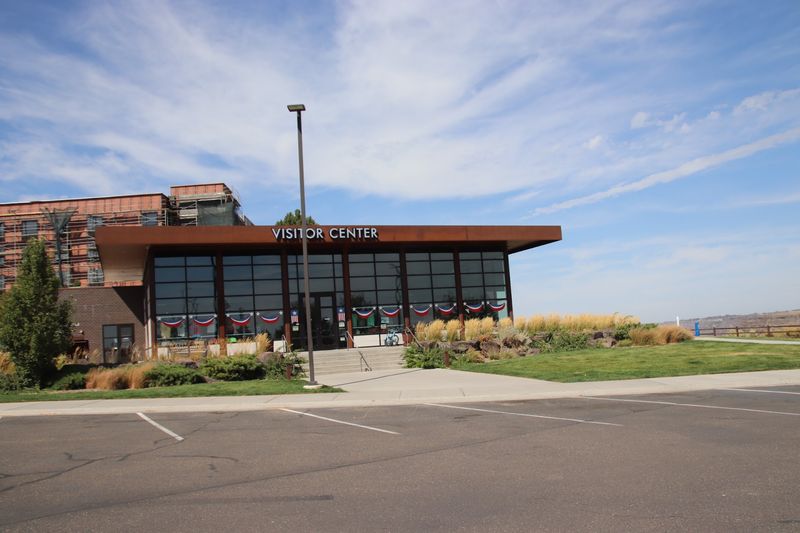
Every good bridge visit starts with a parking spot and a restroom. The Twin Falls Visitor Center handles both, plus plenty more.
You’ll find it at 2015 Nielsen Point Place in Twin Falls, Idaho 83301. It sits right on the south rim beside the bridge.
Inside, displays and information cover the canyon and the surrounding Magic Valley. There’s also a gift shop for souvenirs, maps, and local keepsakes.
Overlooks next to the building give you a clean look at the arch right away. Many people snap their first photos before even leaving the lot.
The park-like grounds connect directly to the walking paths under the bridge. It’s an easy starting point for families and road trippers alike.
Visiting the bridge and overlooks is free. Visitor center hours vary, so check before driving if you want to browse inside.
The location feels a little surprising at first, set back from a busy shopping area. Then the canyon opens up behind the building, and everything makes sense very quickly.
Calm Mornings And Golden Sunsets Over The Gorge
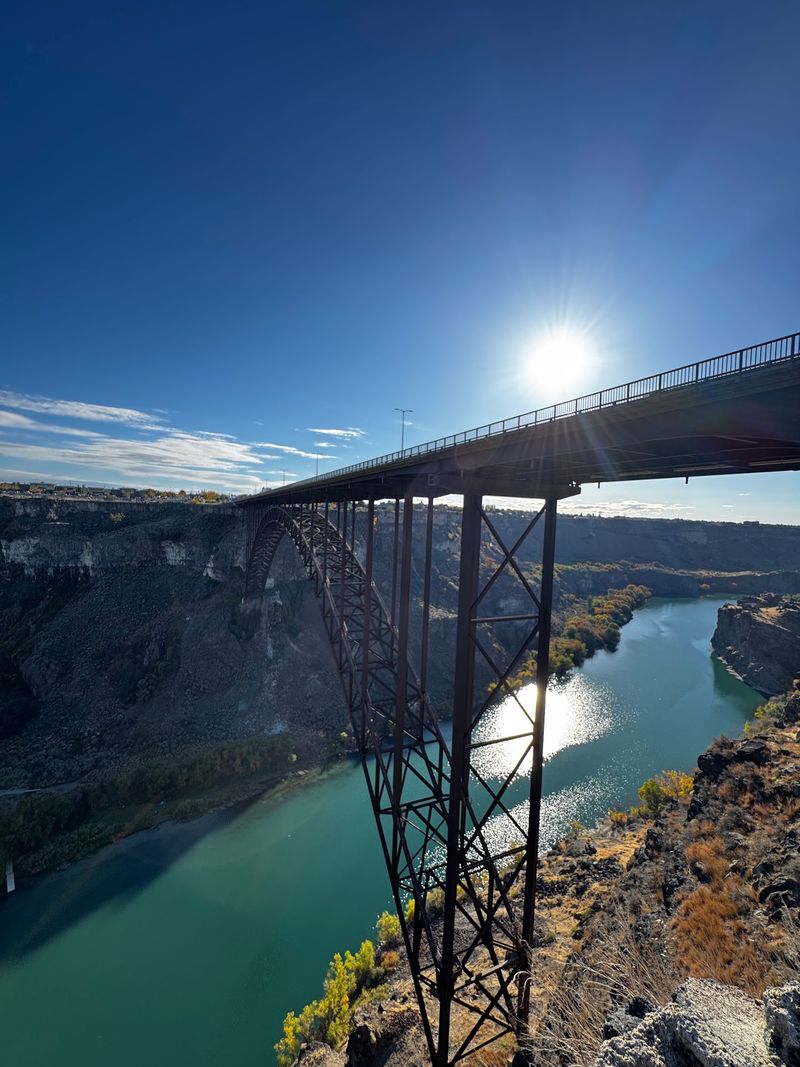
Timing can make or break a jumper sighting. Calm mornings and good-weather weekends from spring through fall usually offer the best chances.
Jumping still happens year-round, which is the whole point of this bridge’s reputation. Winter visits simply call for warmer layers and a little more luck.
Wind is the big variable. When breezes stay low, jumpers are more likely to head out from the center of the span.
Evenings bring a different kind of payoff. Sunset paints the canyon walls in warm gold, and people park on both rims just to watch it happen.
Some folks use the shopping center lot on the opposite side for sunset views. It offers another angle on the arch as the light fades.
Holidays can add something extra too. A giant American flag has been suspended between the canyon walls for the Fourth of July and September 11th.
Those flag displays are temporary, so don’t count on them every visit. When they appear, though, the canyon becomes one enormous patriotic backdrop.
Kayaks, Paddleboards, And Golf Far Below
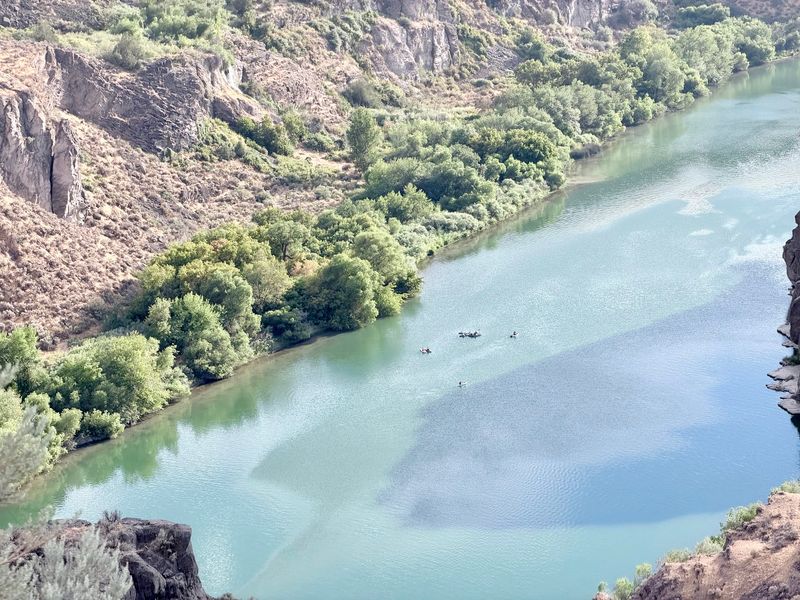
Not everyone stays up on the rim. Down on the Snake River, kayakers and paddleboarders glide right under the bridge and its parachuting visitors.
That gives you a wildly different perspective on the arch. Looking up 486 feet makes the structure feel even bigger than it does from above.
Golf courses sit on the canyon floor too. Golfers can see the bridge towering overhead while they line up their shots, which is a rare kind of scenery.
The river and canyon walls create a calm counterpoint to the action above. Paddlers often share the view with jumpers drifting down toward the landing areas.
A small waterfall is visible from the trail near the bridge. It’s a pleasant bonus on the walk beneath the span.
Planning to paddle? Check local outfitters and current river conditions before heading out on the water.
The canyon floor shows why this spot works for so many interests. Thrill-seekers, paddlers, and golfers all share the same dramatic slice of southern Idaho.
Evel Knievel’s Ramp And The Niagara Of The West
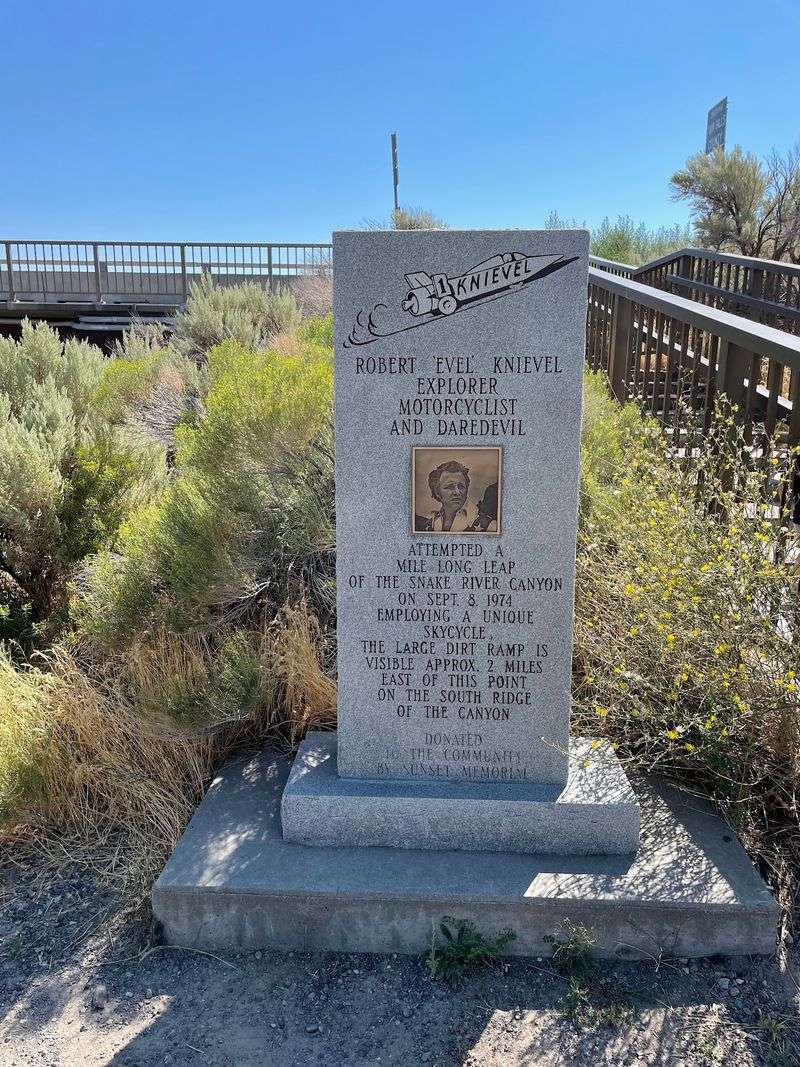
About 1.5 miles east of the bridge, a famous dirt ramp still sits on the south rim. Evel Knievel launched from it during his 1974 Snake River Canyon jump attempt.
The jump didn’t go as planned, but the legend stuck around. A memorial to Knievel was dedicated nearby in 1985.
Seeing the ramp makes the canyon’s width hit home. It’s hard to believe anyone tried crossing that gap in a rocket-powered cycle.
Shoshone Falls is another must-see in the area. Often called the Niagara of the West, the falls are taller than Niagara Falls.
The canyon itself has a fascinating origin story. Geologists link its dramatic shape to the Bonneville Flood, which roared through about 17,000 years ago.
That flood carved waterfalls and cliffs throughout the Magic Valley. The result is one of the most dramatic river corridors in Idaho.
Pair the bridge with the ramp and the falls for an easy day out. All three sit close enough for a relaxed afternoon loop.