Two Million Years Of Mammoth Bones Fill The Halls Of This Nebraska Museum
A Columbian mammoth skeleton standing more than 15 feet tall waits inside one Nebraska museum. It’s often called the largest mounted mammoth of its kind on display anywhere.
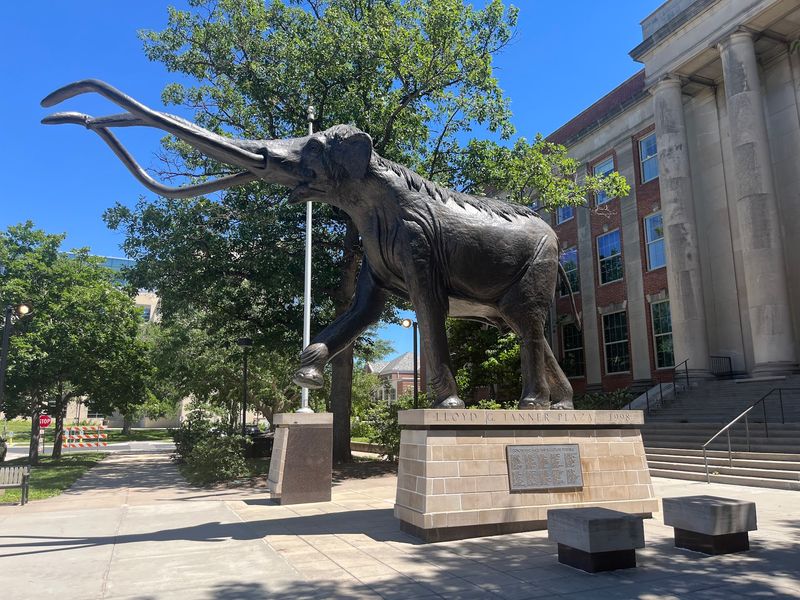
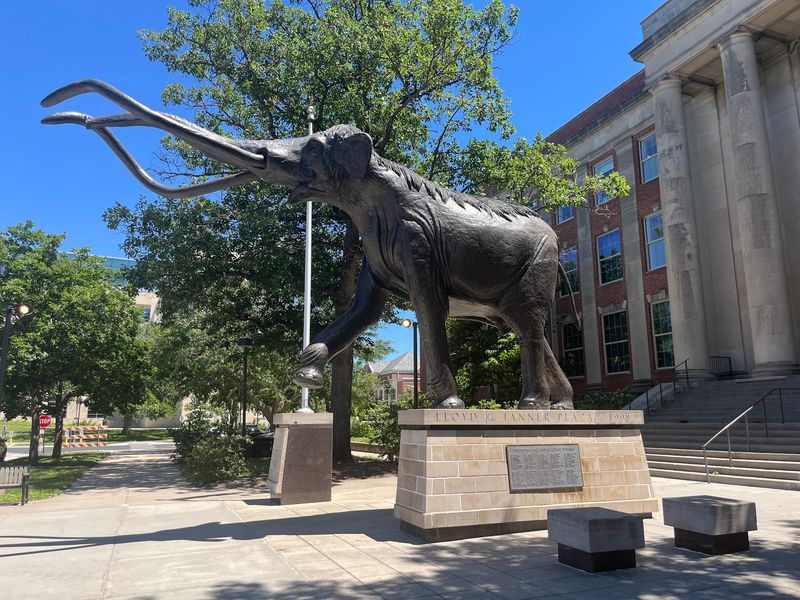
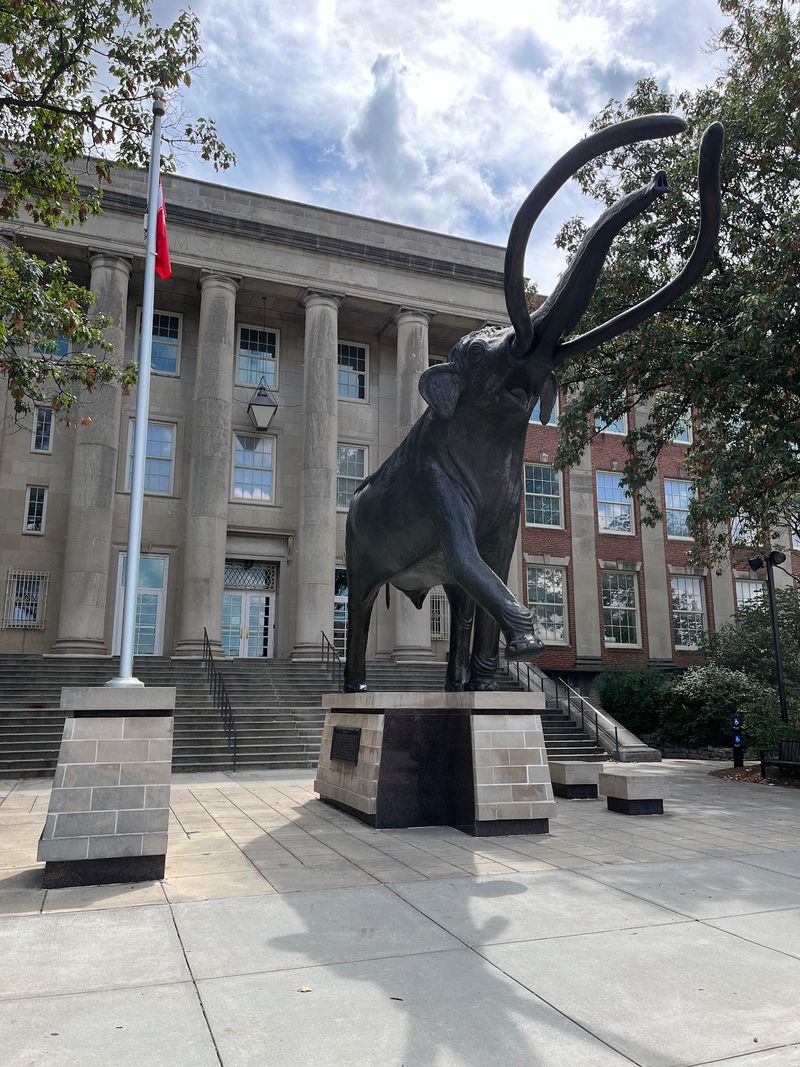
His name is Archie. A bronze copy of him greets you outside before you even reach the doors.
I like that the welcome committee weighs several tons.
Inside, a whole hall traces elephants that wandered the Great Plains over millions of years. Mammoths, mastodons and gomphotheres line up like a family reunion nobody could plan.
The fossils came from Nebraska ground, which makes the story feel close to home.
I can’t imagine a better rainy afternoon than wandering past giants that once crossed this exact state. Then there’s a planetarium, a working fossil lab and a fourth floor packed with prairie stories.
So how long would it take you to see it all?
A Natural History Treasure On A College Campus
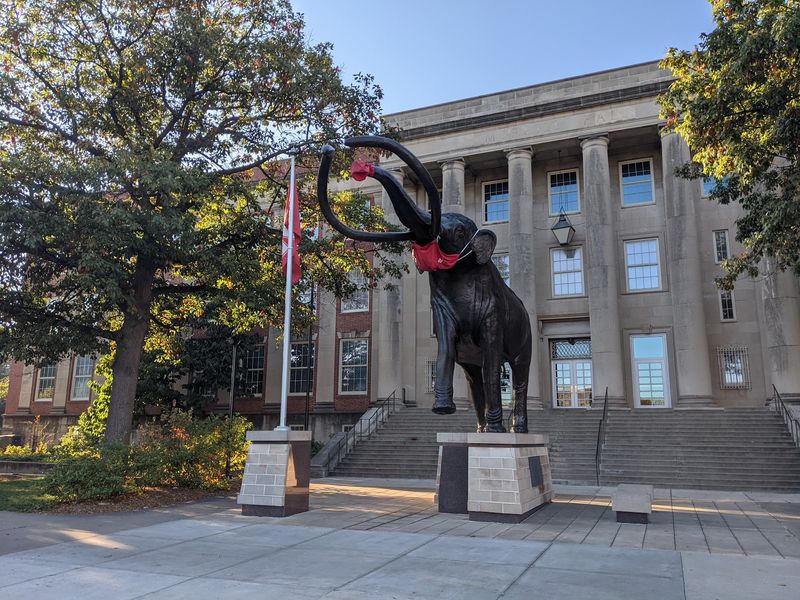
Few college buildings come with a bronze mammoth parked out front. The University of Nebraska State Museum – Morrill Hall sits right on the University of Nebraska-Lincoln City Campus.
The museum itself dates back to 1871, which makes it older than plenty of Nebraska towns. Its focus is the natural and cultural history of the state, from ancient fossils to living prairie.
Many folks simply call it Elephant Hall. That nickname tells you exactly where the spotlight lands.
Fossil elephants are the headline act, and they’ve earned top billing.
The building spans four levels of exhibits. You’ll find dinosaurs, rocks, minerals, a planetarium and galleries about Nebraska’s First Nations.
Hands-on stations pop up on nearly every floor.
Here’s what makes the place feel special for Nebraskans. Many of the fossils came from Nebraska soil, dug up across the state over generations.
So the creatures on display aren’t strangers from faraway lands.
They’re former neighbors, in a very long-term sense. Some of them roamed land you’ve probably driven past on the way to Grandma’s house.
That connection turns a museum trip into a family history lesson with extra legs and tusks.
How A Regent’s Fossil Funding Built Elephant Hall
Money for dinosaurs sounds like a modern dream job. Charles H.
Morrill made it real back in 1892, when he started financing paleontology fieldwork in western Nebraska.
Morrill served for years on the university’s Board of Regents. His support sent researchers into the field, and those trips filled shelves with fossils.
Eventually, all those bones needed a proper home.
That home was dedicated on May 28, 1927. The building took his name, and it has carried Nebraska’s deep past ever since.
Nearly a century later, it’s still doing the heavy lifting.
The building changed over the decades as the university grew. Today, it’s devoted to natural history collections and public exhibits.
The broader museum cares for a staggering number of specimens, reported at more than 13 million.
That count includes ethnographic and archaeological objects, not just fossils. Most of it supports research, while a curated slice fills the public galleries.
Think of the exhibits as the trailer for a very long movie.
I love that one regent’s interest in western Nebraska rocks shaped generations of field trips. Somewhere, a fourth grader is gazing up at a mammoth because of choices made in 1892.
Not a bad legacy at all.
Archie, The Columbian Mammoth Who Steals Every Scene
Over 15 feet tall. That’s Archie, the Columbian mammoth at the heart of Elephant Hall, and he doesn’t need a stage.
He’s widely described as the largest mounted mammoth of his kind on display in the world. Standing beneath those curved tusks makes adults feel like kindergartners again.
It’s a humbling and slightly hilarious moment.
Archie’s story starts in Lincoln County, Nebraska. The fossil was found there in the early 1920s, with sources citing 1921 or 1922.
By 1933, he had arrived at Morrill Hall.
He’s been the centerpiece ever since. Generations of Nebraska kids have craned their necks at him, then gone home and drawn him in crayon.
Some of those kids now bring their own grandkids.
Archie also has a twin of sorts outside. A life-size bronze statue stands on the plaza, so you meet him before buying a ticket.
It’s a popular spot for photos, for obvious reasons.
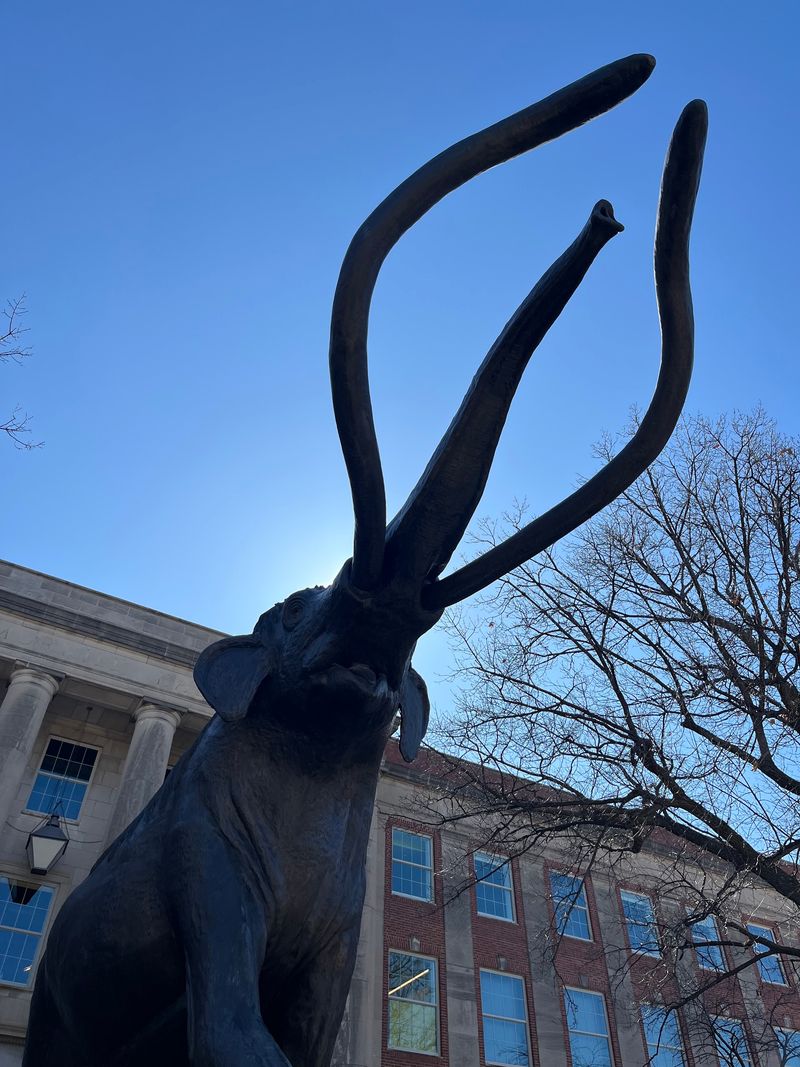
Here’s my advice: give Archie a few slow laps. The skeleton looks different from every angle, especially those sweeping tusks.
You’ll notice details on the third pass that you totally missed on the first.
Millions Of Years Of Elephant Ancestors Lined Up
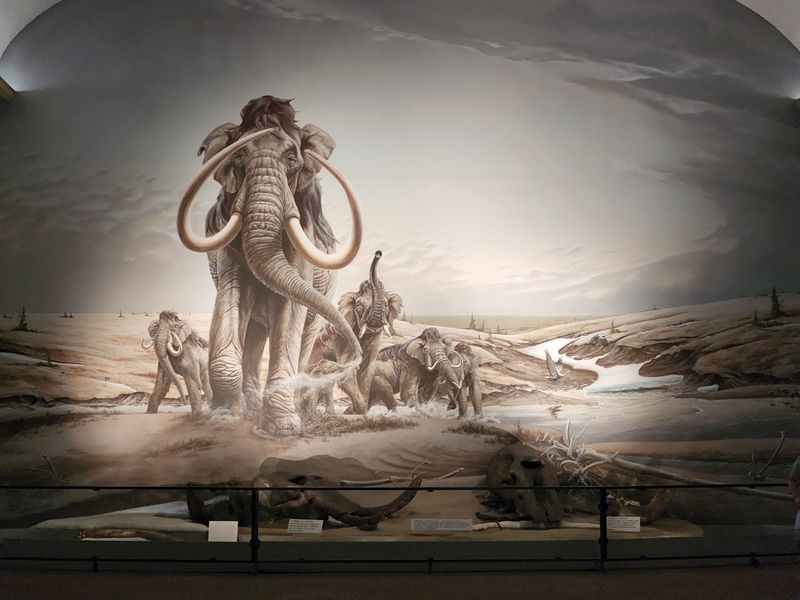
Gomphotheres. Say it out loud and you already sound smarter.
These ancient elephant relatives share Elephant Hall with mammoths and mastodons.
The hall walks you through the evolutionary history of elephants found in Nebraska. Different species stand side by side, showing how tusks, skulls and body sizes changed over time.
It’s basically a family photo album built from bones.
Why Nebraska, of all places? The state’s rich fossil beds preserved an amazing range of proboscideans, the group that includes elephants.
Few places can tell this story with so many local specimens.
Some relatives look familiar, while others seem gloriously strange. Odd jaws and unusual tusk shapes make you rethink what an elephant should look like.
Kids love spotting the weird ones.
The scale of time here is hard to wrap your head around. These animals span millions of years, long before anyone planted corn on the plains.
Every skeleton represents a different chapter of that saga.
Take your time reading the labels as you go. They connect each animal to the next, so the whole hall flows like a story.
By the end, Archie feels less like a lone celebrity and more like the latest headliner.
Giant Camels, Rhinos And Dinosaurs Nebraska Never Mentions
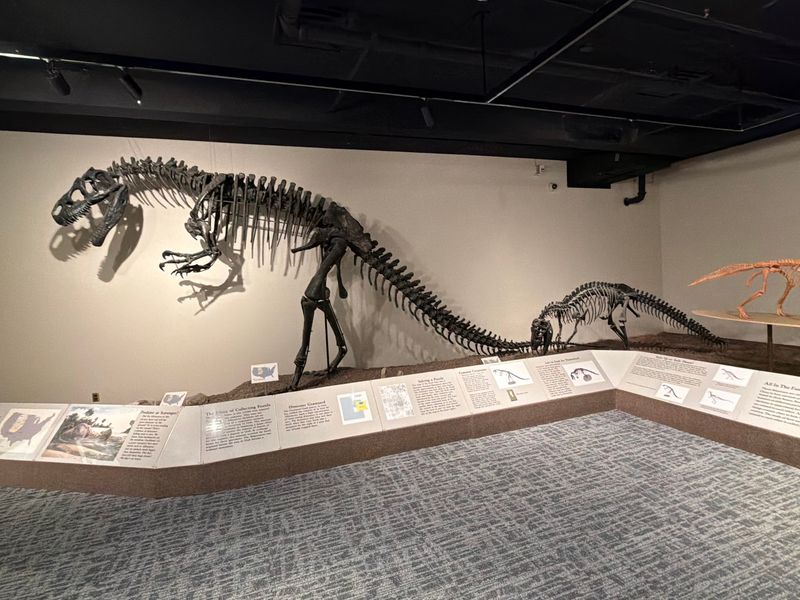
Rhinos in Nebraska? Absolutely, and camels too.
The fossil galleries prove the plains once hosted animals you’d expect in a safari brochure.
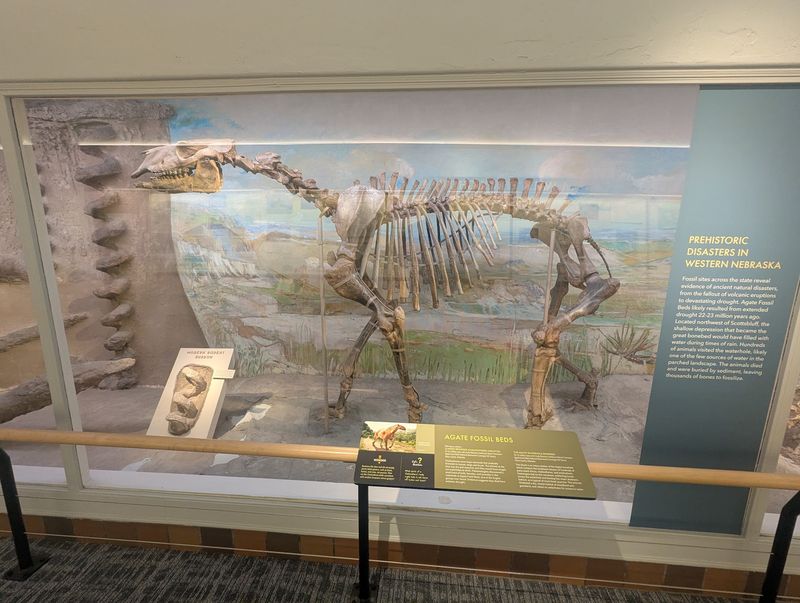
Beyond the elephants, the museum shows off prehistoric rhinoceroses and towering camels that once roamed this region. Glyptodonts, armored relatives of armadillos, also make an appearance.
Each one rewrites your mental picture of Nebraska.
Dinosaurs get their own spotlight in the Mesozoic Gallery. Replica fossils of Stegosaurus and Allosaurus stand there, posed in an older style.
Look closely and you’ll spot some charming vintage touches in that gallery.
Painted murals add color to the fossil displays. Paleoartist Mark E.
Marcuson created murals dating to around 1995. They help bring the bones back to life with scenery and skin.
I love how the galleries mix eras. One room feels like a throwback to museum trips past, while another feels freshly updated.
Together, they show how science and storytelling keep evolving.
It’s easy to rush past these galleries on the way to Archie. Please don’t.
The rhinos and camels deliver the biggest surprises, mostly because nobody expects them in a state better known for cattle and cornfields.
Watching Real Scientists Work In The Visible Lab
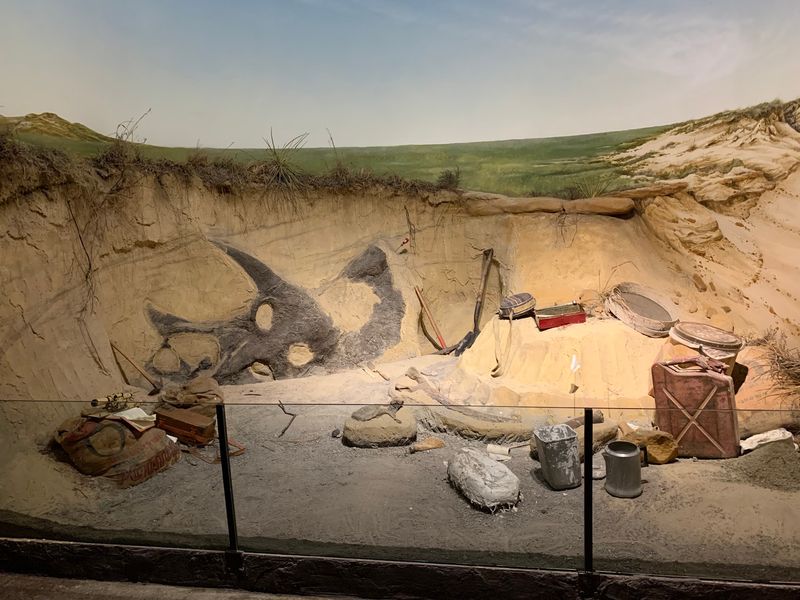
Most museum work happens behind locked doors. At Morrill Hall, the Visible Lab lets you watch it happen in real time.
The lab gives visitors a window into fossil preparation and research. You can see how specimens are carefully cleaned, studied and readied.
It turns finished displays into a process you can actually follow.
This might be the best answer to the question every kid asks. How do they get the bones out of the rock?
Here, the answer is right in front of you.
Volunteers and staff sometimes share what they’re working on. Some of the fossils being sorted come from ancient sediment, holding tiny treasures that are easy to miss.
Small finds matter just as much as giant tusks.
It’s a good reminder that the museum isn’t frozen in time. Research continues, and new discoveries keep adding to Nebraska’s fossil record.
That’s pretty exciting for a building nearly a century old.
Plan a few extra minutes for a stop here. Activity varies from visit to visit, so what you’ll see changes.
If someone is working, you might catch the moment a tiny piece of history gets revealed.
Cherish Nebraska Brings The Prairie Indoors
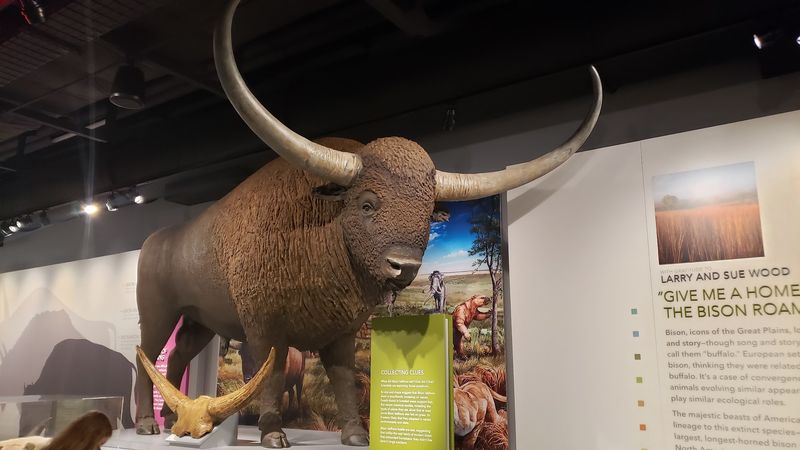
Eleven thousand square feet of Nebraska, all under one roof. That’s Cherish Nebraska, the big exhibit on the museum’s fourth floor.
It opened in February 2019 and covers the state’s natural story from ancient times to today’s prairie. Bright artwork, touch screens and specimen drawers fill the space.
The whole gallery feels modern and lively.
Here you’ll explore Nebraska’s biodiversity in fresh detail. Animals, plants and landscapes from different regions all get their moment.
Even longtime residents tend to learn something new about their own backyard.
The specimen drawers are a quiet highlight. Pull one open and you’ll find carefully arranged natural history treasures waiting.
It’s like snooping through a scientist’s closet, but totally allowed.
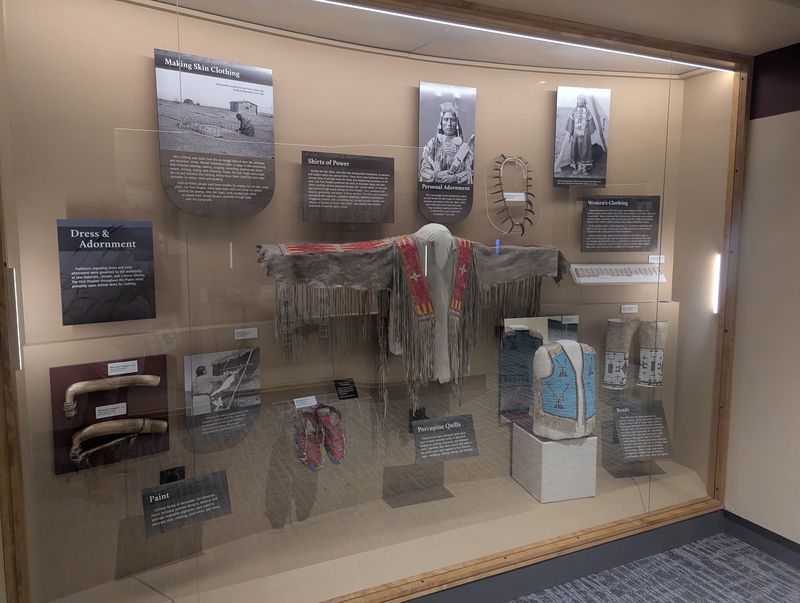
The museum also honors the First Nations of Nebraska with thoughtful exhibits. Geology and geography get plenty of attention too.
Together, these pieces build a fuller picture of the state.
Don’t skip this floor because you’re tired from the fossils. Cherish Nebraska ties everything together, connecting ancient creatures to the living prairie today.
For a proud Nebraskan, it may be the most satisfying gallery in the building.
A Spinning Globe And Some Very Tiny Parasites
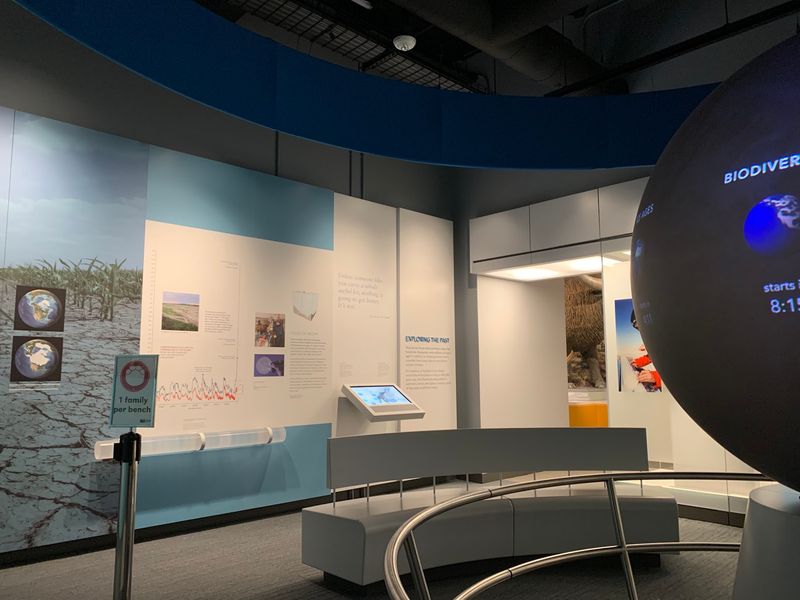
Five feet across and glowing with data. The digital globe in the Sustainable Earth gallery is hard to walk past without stopping.
This gallery takes a wide view of our planet. The globe displays global patterns in a way that clicks instantly for visual learners.
Kids and adults both seem to linger longer than planned.
Then there’s something completely different. The museum’s parasitology collection lives on an upper floor, complete with a digital parasite table.
The museum itself calls it a guest favorite.
Yes, parasites. It sounds a little gross, and that’s exactly why people love it.
Seeing these tiny organisms up close becomes weirdly fascinating within minutes.
Microscopes and touch screens appear throughout these modern floors. They let you zoom into details that would be invisible otherwise.
Science feels hands-on rather than behind glass.
I appreciate how the museum pairs the enormous with the microscopic. Downstairs, you’ve got mammoths taller than a basketball hoop.
Upstairs, you’re studying creatures smaller than a grain of rice, and somehow both are equally memorable.
Little Explorers Rule The Marx Discovery Center
Beavers and honeybees are the stars here. The renovated Marx Discovery Center uses a Nature’s Builders theme to explore animal engineers.
Kids learn how creatures build homes, dams and hives. Then they get to try it themselves with hands-on activities.
Learning sneaks in disguised as playtime.
A fossil dig sandbox lets young paleontologists uncover their own discoveries. There’s also a magnetic wall where kids design their own burrows.
Expect some serious construction projects from tiny architects.
Microscopes and touchable samples appear around the museum’s hands-on areas too. Small fingers can explore textures and details instead of just reading signs.
That keeps attention spans happily engaged.
The museum is accessible for strollers and wheelchairs, which helps families move between floors. Restrooms and drinking fountains are spread throughout.
Those small comforts make a multi-hour visit far easier.
Grandparents, take note. This spot works beautifully for a grandkid outing, especially on a chilly Nebraska afternoon.
You might even find yourself digging in the sandbox, and honestly, nobody will judge you for it.
The Mueller Planetarium Takes You Off The Planet
After millions of years of Earth history, why not leave the planet entirely? The Mueller Planetarium sits right inside Morrill Hall.
Its full-dome theater wraps you in a 360-degree view of space. Shows explore the universe and our place in it.
It’s a striking contrast to the fossils just down the hall.
Planetarium shows need a separate ticket from general museum admission. The extra cost is modest, but plan for it ahead of time.
Showtimes vary, so check the schedule before you go.
Families with younger kids especially enjoy the experience. The dome makes stars and planets feel huge and immersive.
For little ones, it can feel like a real rocket ride.
I like pairing the planetarium with Archie on the same day. You start with ancient giants, then zoom out to galaxies.
It’s a whole lesson in scale, delivered in one afternoon.
A smart tip is to book your show time first. Then build your museum route around it.
That way, you won’t have to sprint from the dinosaurs when the dome lights start dimming.
Rocks, Minerals And A Gift Shop Worth Browsing
Rock hounds, this floor is for you. The museum’s rock and mineral displays feature an impressive variety of specimens.
Nebraska geology gets plenty of attention here. The exhibits explain how the state’s landscape formed over enormous spans of time.
It’s helpful background before you go hunting agates on your own.
Speaking of agates, Nebraska claims the prairie agate as its state rock. The blue agate holds the title of state gemstone.
Learning about the state’s geology makes those titles feel well deserved.
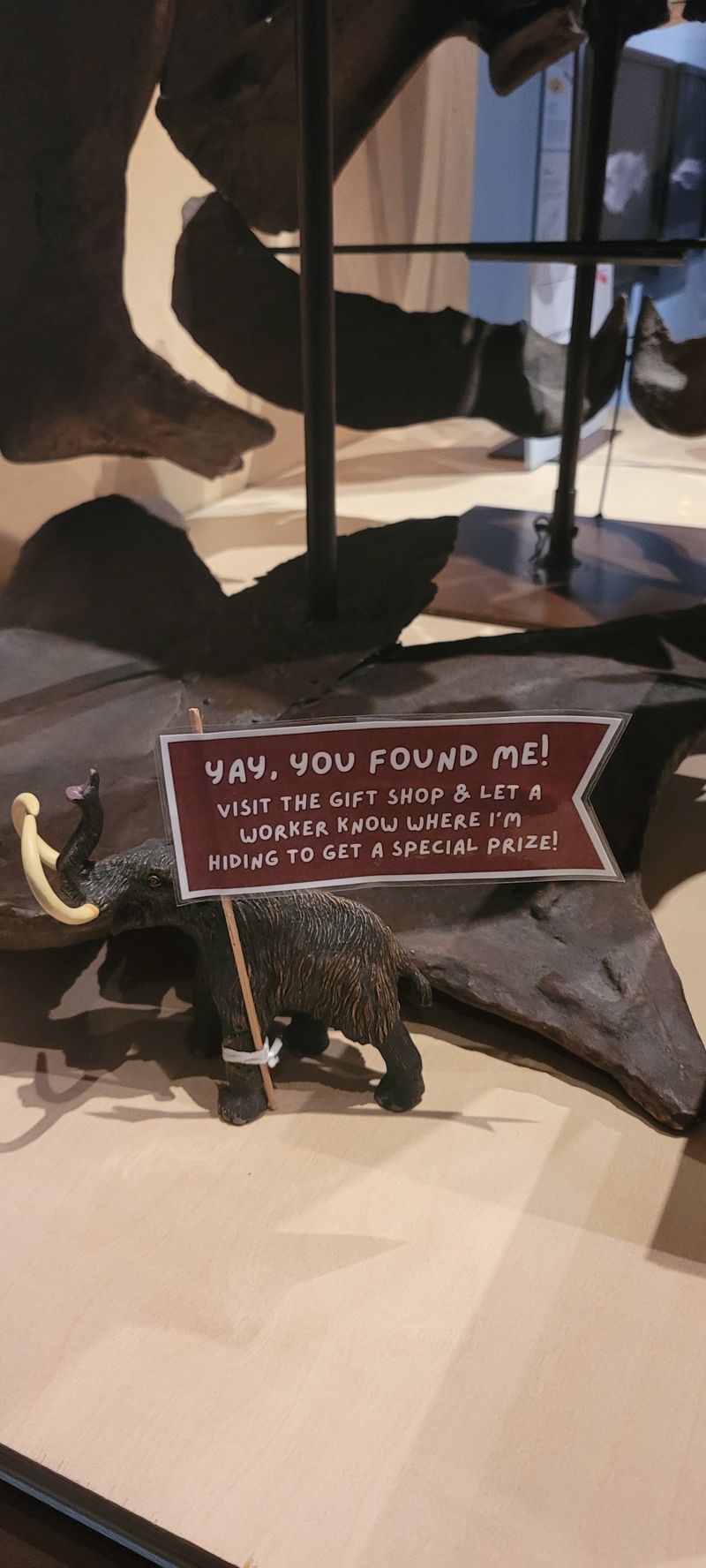
Before leaving, swing by the gift shop on the main floor. It stocks books, educational toys, rocks, fossils and souvenirs.
Kids tend to beeline for the shiny stuff.
A small fossil or polished stone makes a great keepsake. It turns a fun day into something that sits on a shelf for years.
Some young collectors start right here.
The shop also carries books for curious minds who want more. That’s a nice way to keep the learning going at home.
Just maybe set a budget first, because those fossil bins can be persuasive.
Who Will Love This Museum Most
Honestly, the list is long. Morrill Hall manages to keep both preschoolers and science buffs entertained without talking down to anyone.
Families get hands-on zones on multiple floors. Adults get detailed labels, research labs and thoughtful exhibits on Nebraska’s history.
Nobody feels stuck waiting for someone else.
Day-trippers from Omaha or Grand Island will find plenty to fill an afternoon. The museum is larger than many people expect from a campus museum.
Two hours goes by surprisingly fast.
History lovers will enjoy the First Nations exhibits and the century-old building itself. Fossil fans can spend ages in Elephant Hall alone.
Prairie lovers should head straight for Cherish Nebraska.
Students get a sweet deal, since admission is free for UNL students. Members of the ASTC Passport program may also get in free.
Check the details before you visit.
Solo visitors fit right in too. The quiet galleries make for an easy, unhurried outing.
If you love learning at your own pace, this is a peaceful place to spend a Nebraska afternoon.
Getting There, Parking And When To Go
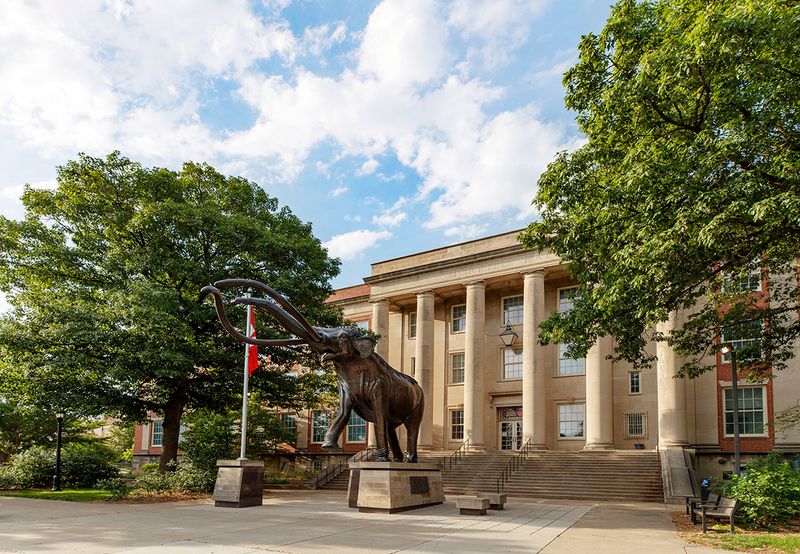
Finding the museum is the easy part. You’ll find it at 645 N 14th St, Lincoln, NE 68588, near 14th and Vine Streets.
The museum is open Tuesday through Sunday, with shorter hours on Sunday afternoons. It’s closed on Mondays.
Holiday schedules can change, so check ahead before making the drive.
Parking takes a little planning on a busy campus. A nearby parking garage requires just a short walk to the doors.
Museum parking spots exist too, but you may need your license plate number handy.
Admission is affordable, especially for a full afternoon of exploring. Planetarium shows carry a separate ticket.
Membership is available for anyone planning repeat visits.
Give yourself at least two hours to see the highlights. Remember the museum has four levels, including one below the main entrance.
Plenty of people miss that lower floor entirely.
Weekdays sometimes bring school groups, so timing matters. An afternoon visit may feel calmer.
Either way, Lincoln makes an easy drive from much of eastern Nebraska.
Why Archie Deserves A Spot On Your Calendar
Some museums feel like homework. The University of Nebraska State Museum – Morrill Hall feels more like a treasure hunt through Nebraska’s past.
You get the world’s largest mounted Columbian mammoth, plus a whole hall of his relatives. Add camels, rhinos, dinosaurs and parasites, and the variety stays fresh.
Few places pack this much into four floors.
The modern galleries keep the experience current. Cherish Nebraska, the Marx Discovery Center and the Visible Lab all show the museum still evolving.
Meanwhile, older touches carry a sweet dose of nostalgia.
Then there’s the hometown pride factor. So many of these fossils came out of Nebraska ground.
That makes every skeleton feel like part of the state’s own family story.
I believe this is one of the best affordable outings in Lincoln. It works for a rainy day, a grandkid visit or a solo afternoon of wandering.
You’ll probably leave already planning the next trip.
So go say hello to Archie. Pose with his bronze twin outside, then head in and meet the real deal.
After two million years of history, he’s earned a visit.