This Quiet Louisiana Church Feels Like Stepping Into Another World The Moment You Enter
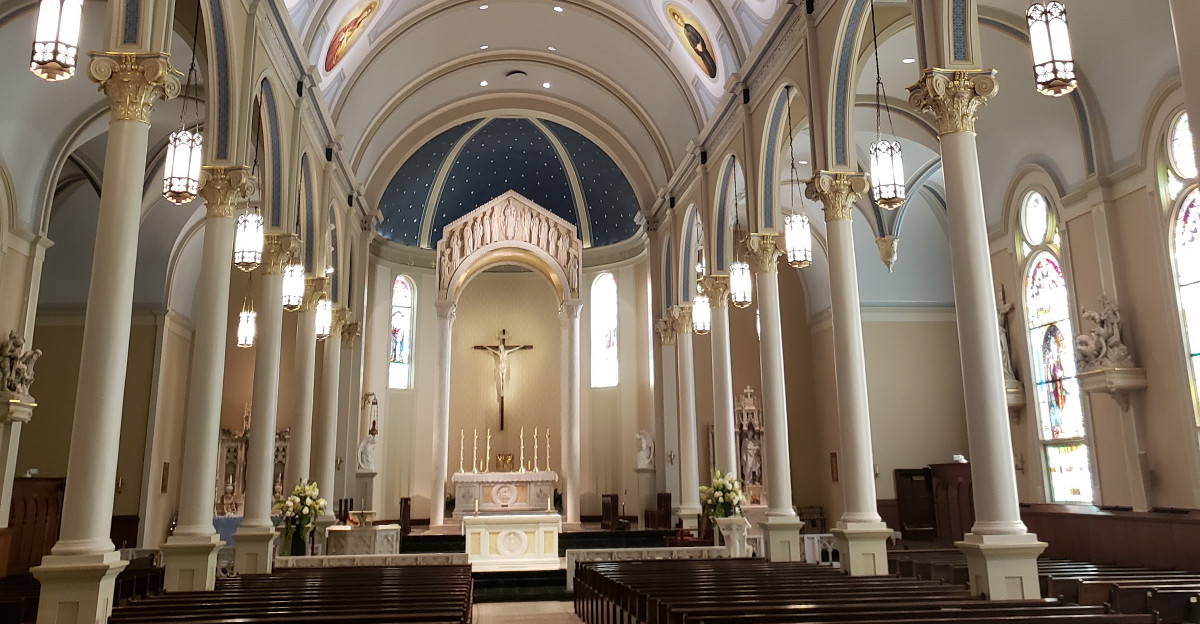
Ten murals on canvas now float across the ceiling of one red brick church in Louisiana.
They sit inside painted molding with nine tones, so your neck may file a complaint before your eyes do. Then comes the backstory, and it’s a whole different kind of wow.
The priest who founded this parish bought the land that became an entire town. He kept some for the church and sold the rest to neighbors.
Which deserves more attention, the art or the origin story? I refuse to pick, and honestly, that’s the fun part.
A building can dazzle you and also explain why a whole town exists.
Few places manage both under one roof, so it seems fair to look up and look back.
A Town Exists Because A Priest Went Land Shopping
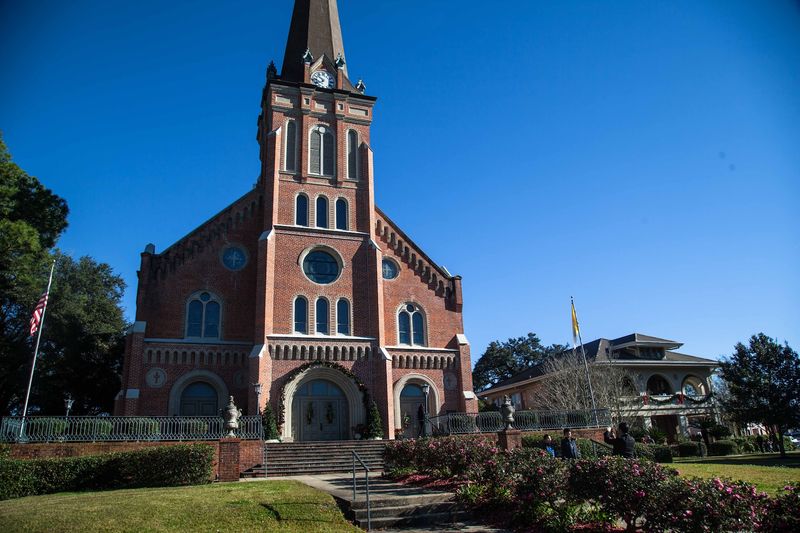
Most towns grow around a crossroads or a river landing. Abbeville grew around Saint Mary Magdalen Catholic Church, and that’s no exaggeration.
The parish began in 1842 with Père Antoine Désiré Mégret, a French priest. On July 25, 1843, he purchased approximately 135 acres along the Vermilion River.
He reserved land for the church, rectory, cemetery, and public spaces while dividing other portions into lots for settlers.
Those parcels became the heart of a brand-new town. Mégret even named Abbeville after his birthplace in France, giving the community a personal connection to his own history.
That connection makes this church more than a pretty landmark. It’s basically the town’s starting line, still standing in brick and stained glass.
Plenty of Louisiana communities have historic churches. Far fewer can trace their original town plans directly to the priest who established their parish.
Keep that in mind as you approach the front steps. You’re looking at a landmark closely connected to the surrounding streets, shops, and squares.
Founders often fade into old record books. Père Mégret, on the other hand, left his mark on a map, a street sign, and a sanctuary that still welcomes people every week.
Fourth Time Turned Out To Be The Charm
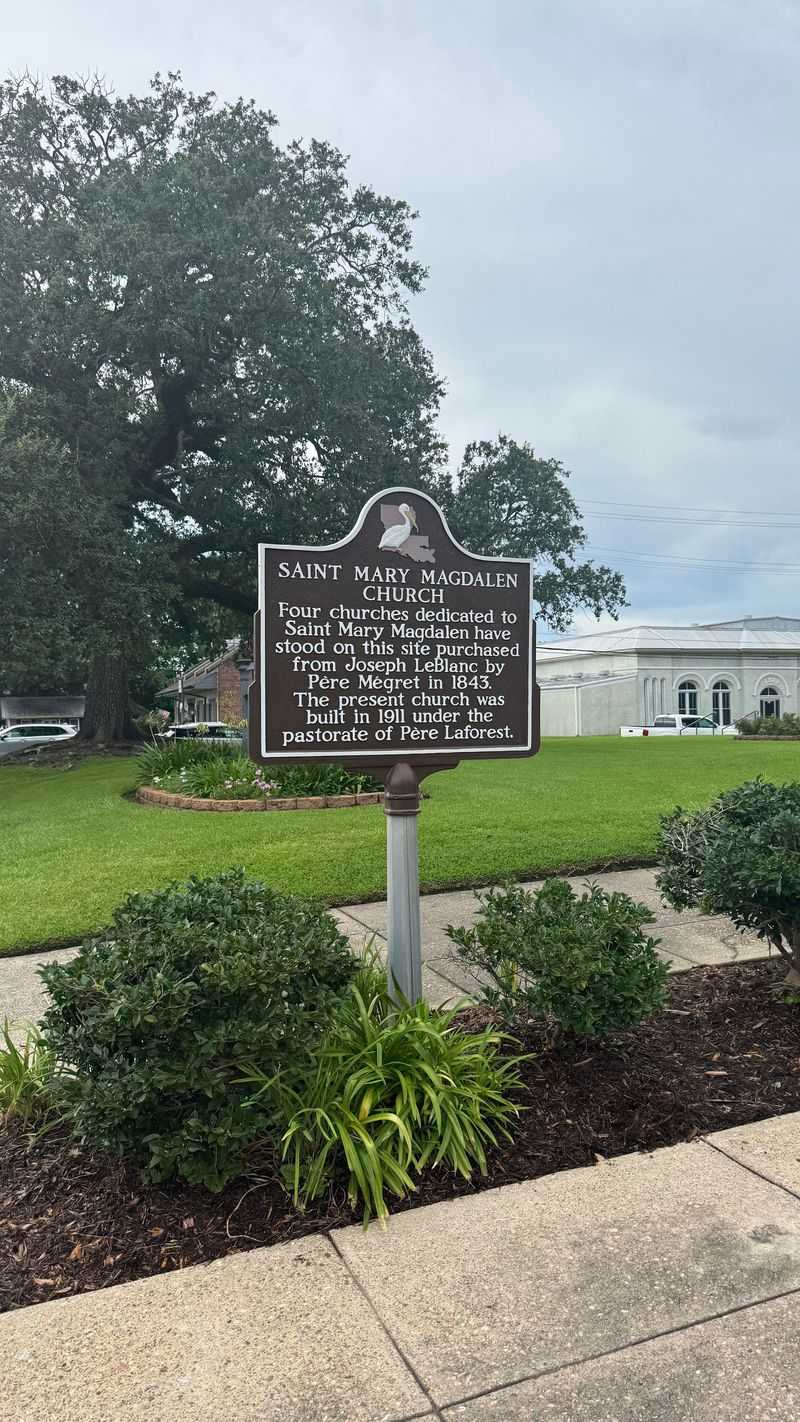
More than a century of rebuilding shaped the church you see today. Its history stretches back to a modest nineteenth-century chapel.
The first church was a remodeled home belonging to Joseph LeBlanc, dedicated in the spring of 1844.
As the congregation grew, additional church buildings followed. A larger third church was constructed during the 1880s and served the parish until a fire in 1907.
The community responded by beginning another building project, creating the impressive brick church that now anchors downtown Abbeville.
Reverend Fabian Laforest guided the parish during that major undertaking. The present church entered service in 1911, with the remaining work completed in 1920.
That makes the building you see today the fourth church in the parish’s historical account.
Each generation contributed something to the site, from the original chapel to the soaring structure with its elaborate decorative features.
The grand arches and spires represent decades of investment in a gathering place that remained central to community life.
So when you admire the sturdy walls, give them some credit. They’ve been part of the Abbeville skyline for more than a century.
Red Brick, Bold Spires, And Zero Shyness
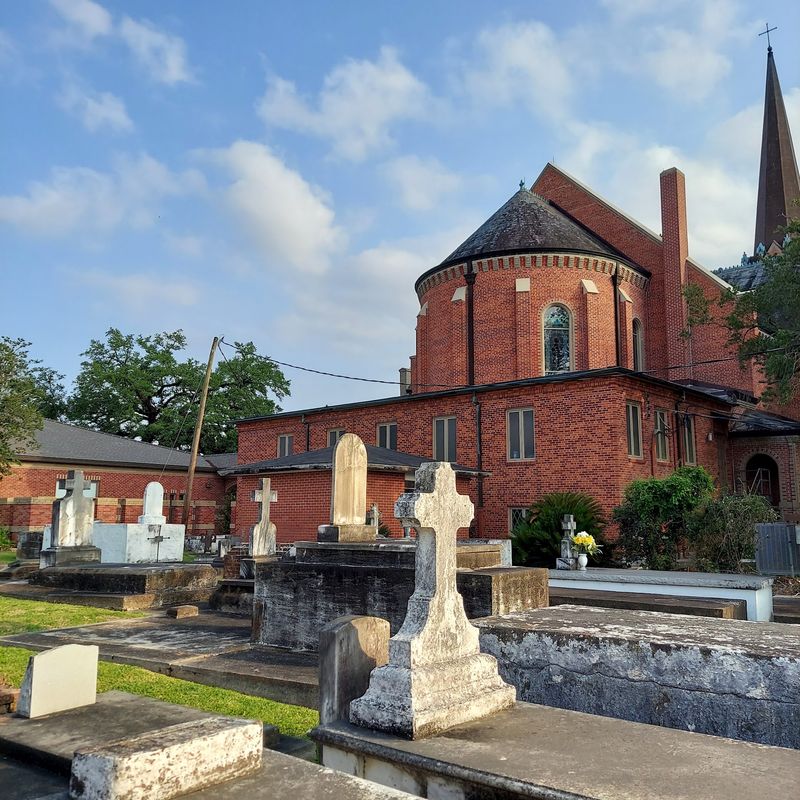
Red brick does a lot of heavy lifting on this facade. Buff-colored brick accents trace the edges like neat trim on a fancy jacket.
The style combines Gothic architecture with Romanesque Revival details, arranged in a cruciform basilica plan. In plain terms, it’s a cross-shaped church that loves arches and isn’t afraid to show off.
Look along the outer walls and you’ll spot projecting buttresses. They reinforce the structure while adding strong, rhythmic lines to the view.
The central tower features a louvered belfry topped by an octagonal spire. Its height draws attention from nearby downtown streets.
During the 1950s, Monsignor Paul Fusilier carried out improvements that included installing a new cross atop the spire.
Nearby, the rectory adds a different flavor. Built in 1921, it follows the American Foursquare style, boxy and practical next to all that soaring brick.
Its restrained appearance provides an interesting contrast with the church’s decorative exterior.
Bring a camera and step back for the full shot. Up close, the brick patterns are fun, but the whole silhouette is the real showstopper against a Louisiana sky.
Your Eyes Will Need A Minute Once The Doors Open
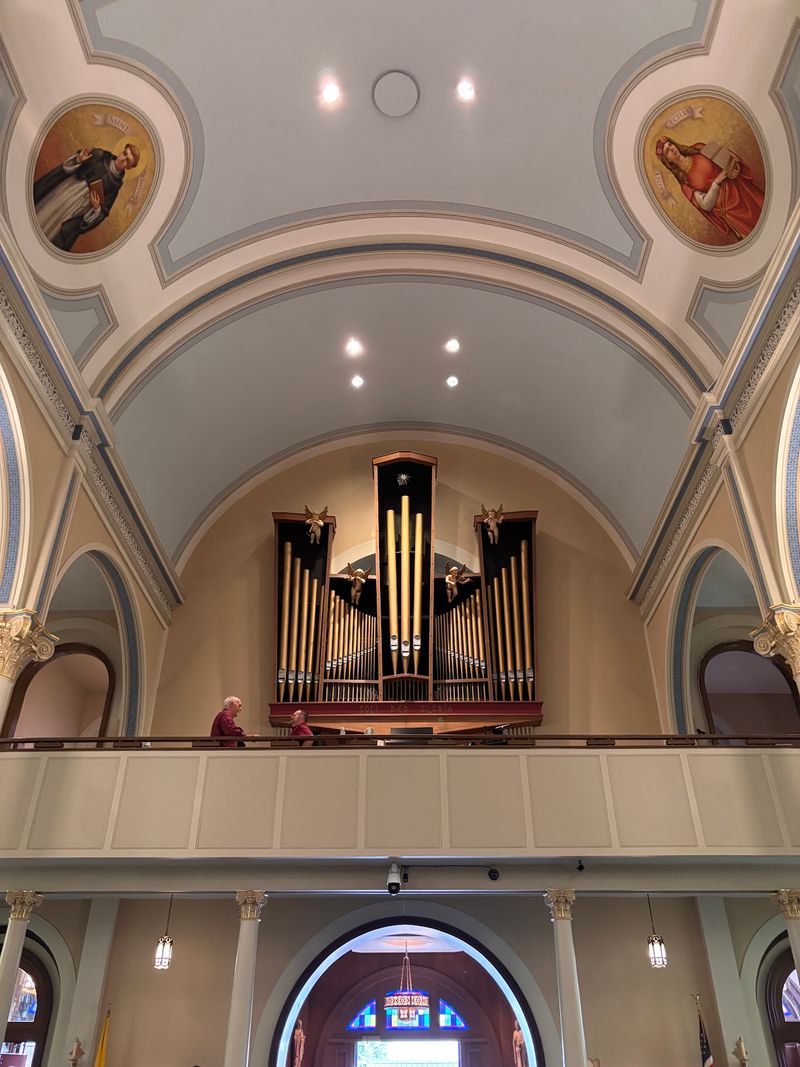
Jewel tones, pastels, gold leaf, and carvings that look like alabaster all crowd your vision at once. It’s a lot, and that’s exactly the point.
The interior follows the cross shape of the building. Three arches frame the space, supported by eighteen Ionic and Corinthian columns.
Those columns wear gold-leaf capitals at the top. They catch the light and pull your gaze upward without any effort on your part.
Seating is generous too, with 84 pews. The church can accommodate up to 1,000 people, which helps explain the soaring scale.
The barrel-vaulted nave stretches toward the sanctuary, while additional arches divide the interior into architectural sections.
That size makes quiet moments feel even bigger. A nearly empty nave lets the colors and details speak louder than any tour guide could.
Take a slow walk down the center aisle when the church is open for visitors. Each step reveals another painted pattern or shining edge you missed a second earlier.
Here’s a tip for first-timers. Sit in a back pew for a few minutes before exploring, because the full view from there is the best introduction this sanctuary offers.
Stained Glass That Tells Stories In Color
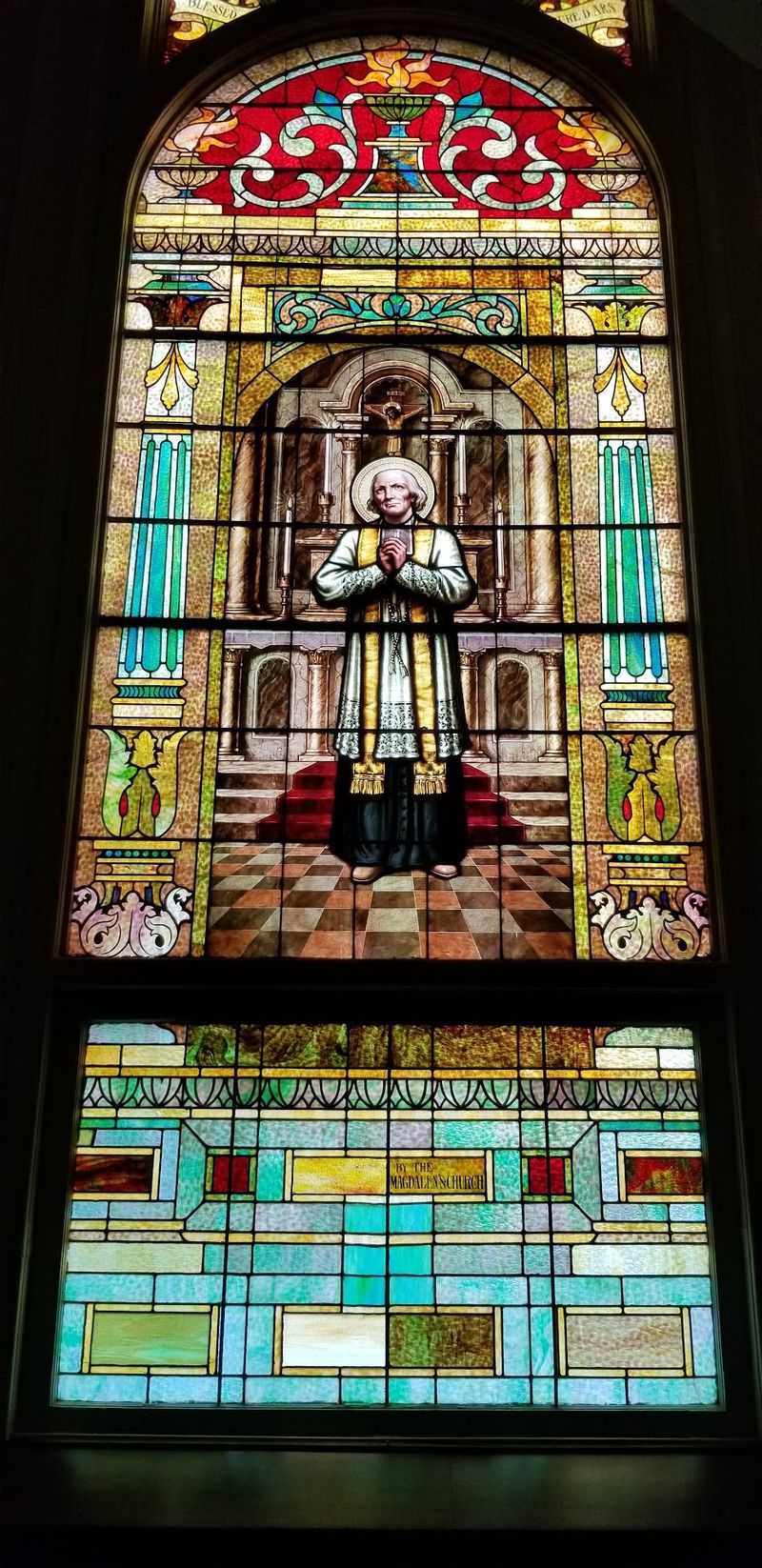
Eighteen windows line the nave, and every one has something to say. Saints and scenes from the life of Christ glow in deep, saturated color.
Ford Brothers Glass Studio designed them. The detailed figures, ornamental borders, and repeated symbols give the windows a consistent artistic character.
Look closely and patterns start popping up. Burning braziers appear as a unifying symbol of the Divine Presence.
Double pillars also repeat across the windows. They represent time and eternity, which is a pretty deep message for a decorative border.
Spotting these symbols turns a visit into a quiet scavenger hunt. Kids and grown-ups alike can enjoy finding the braziers and pillars window by window.
The images also connect individual religious figures with the wider decorative program of the church.
Light changes everything here too. Different times of day bring out different shades, so the same window can feel brand new on a second visit.
Bring a little patience for the tiny details. These windows reward people who linger, and rushing past them would be like skimming the best chapter in a great book.
Look Up, Because The Ceiling Got A Glow-Up
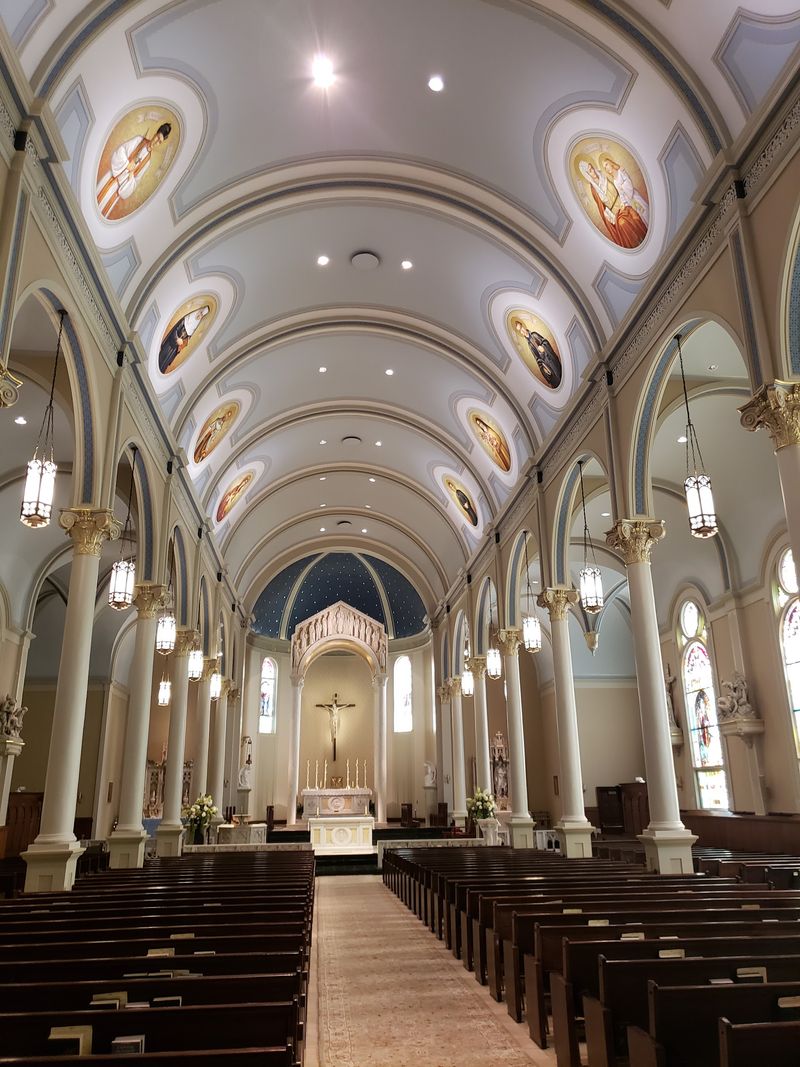
From April to December 2009, crews gave the interior a massive makeover. The project built on restoration efforts that had begun in 2004.
They repaired flat and ornamental plaster, then added base painting and trompe l’oeil stencils. Trompe l’oeil means fool the eye, and it does exactly that.
The team used 18 paint colors, 4 glaze colors, and 2 types of metal leaf. Faux finishes, gilding, and glazing rounded out the effort.
The headliners are ten new murals on the nave ceiling. One artist created them on canvas, and nine-tone painted molding frames each one.
Over the sanctuary, painted ribs, soft blue tones, and gold stars create a heavenly vault. It looks carved and dimensional, yet much of it is pure paint magic.
Lighting got attention as well. A new system was designed to enhance the colors, architectural features, and decorative details throughout the interior.
Restorers also repaired plaster surfaces and refreshed existing ornamental elements, giving the church a more unified appearance.
The renovation became an important chapter in preserving Louisiana’s religious architecture.
Try picking out which edges are real and which are painted. It’s surprisingly tricky, and your neck may need a stretch afterward, but the payoff is worth every tilt.
The Altar Area Is Pure Drama, In The Best Way
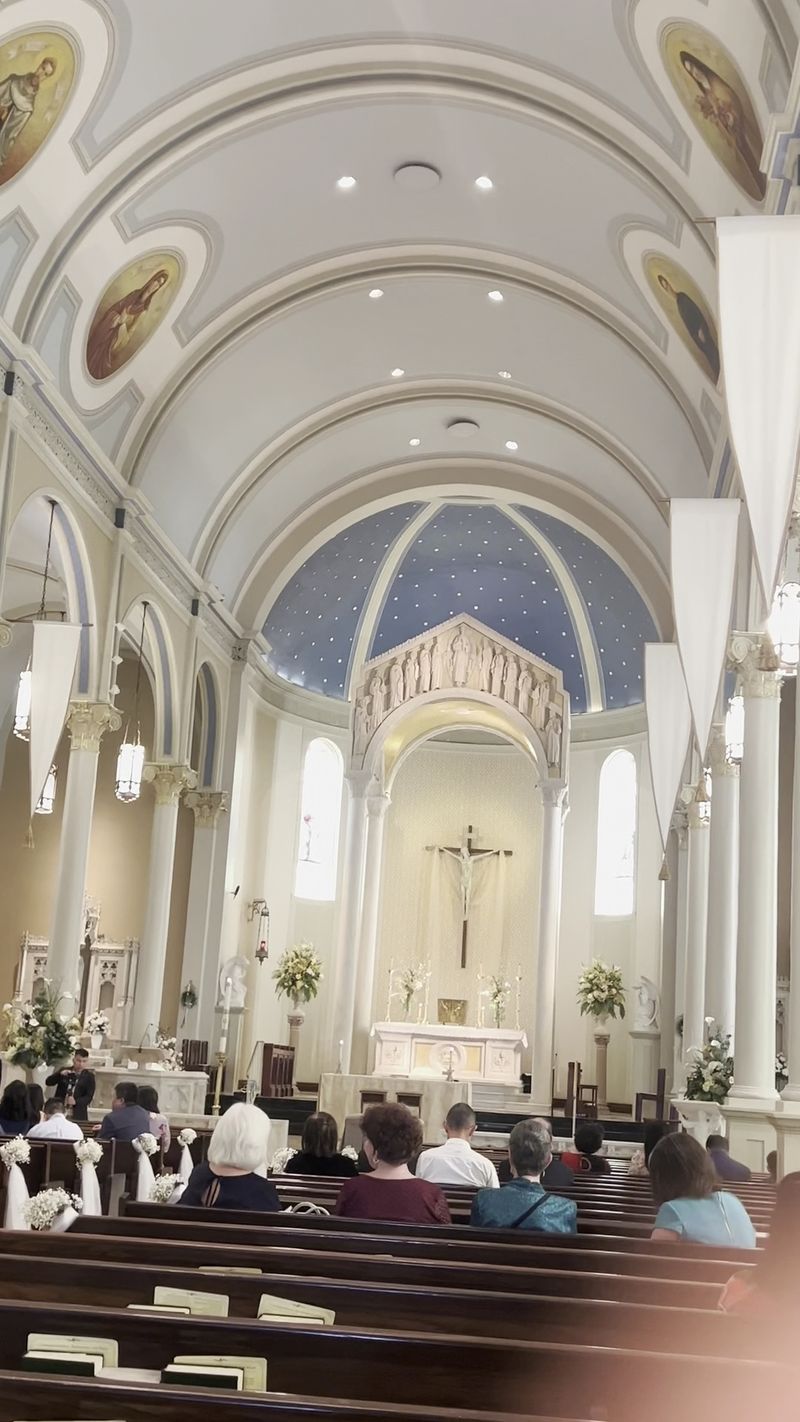
Front and center sits a semicircular apse, home to the sanctuary. An oak ciborium forms a canopy over the altar area, featuring figures of Christ and the twelve apostles.
The baldachino, another name for the altar canopy, received a dramatic faux marble finish during restoration. It now appears carved from a single piece of marble.
At its center, the Holy Spirit appears as a descending dove. It’s a striking focal point that ties the whole space together.
Flanking the main area are marble side altars. They hold statues of the Blessed Virgin Mary and St. Joseph. The sanctuary’s blue ceiling and golden stars add another layer of color above the altar.
Don’t miss the Stations of the Cross either. These hand-painted canvases were obtained during Father Alexandre Mehault’s years of service, installed in 1918, and blessed in 1919.
During the 2009 renovation, they received a faux stone appearance. That finish helps them match the baldachino and keeps the room feeling unified.
The restoration also incorporated architectural furnishings from another historic New Orleans church.
Downtown Abbeville Wraps Around It Like A Welcome Mat
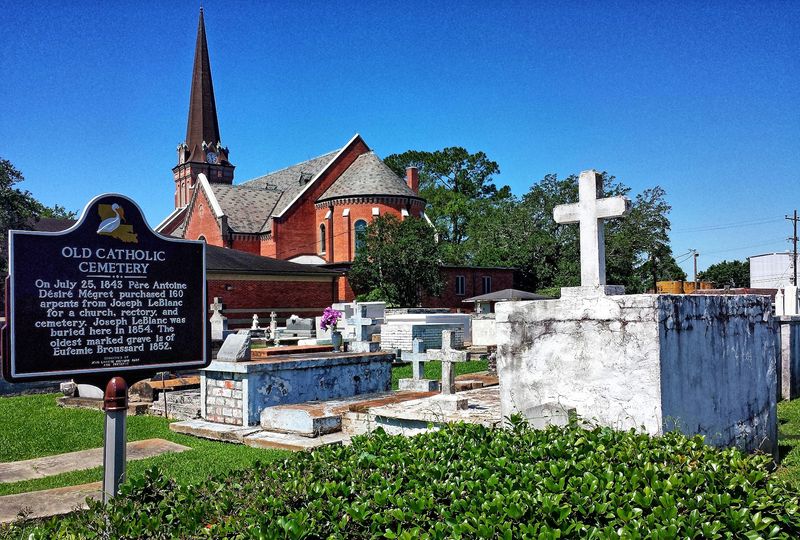
Location is everything, and this church nailed it. You’ll find it at 300 Pere Megret St, Abbeville, right in the middle of downtown.
The town developed beside Bayou Vermilion, and its original layout was inspired by French provincial villages.
The church belongs to the Downtown Abbeville Historic District. So the neighborhood around it carries plenty of its own old-town character.
In 1988, the church, rectory, and cemetery joined the National Register of Historic Places. That’s a triple honor for one historic complex.
The cemetery itself dates to the parish’s earliest decades, with records establishing its use during the nineteenth century.
Make a day of it by strolling the historic district afterward. Nearby Magdalen Square features mature oak trees, a fountain, and a gazebo. A statue honoring the town’s founder adds another connection to the church’s beginnings.
Historic storefronts, older residences, and downtown landmarks continue the architectural story beyond the church grounds.
Visiting this corner of Louisiana feels like flipping through a living scrapbook. Start at the church, wander outward, and let the town its founder created show you around.