Beneath A 1913 Glass Roof, This Pennsylvania Conservatory Grows 1,000 Poinsettias For Its Holiday Show
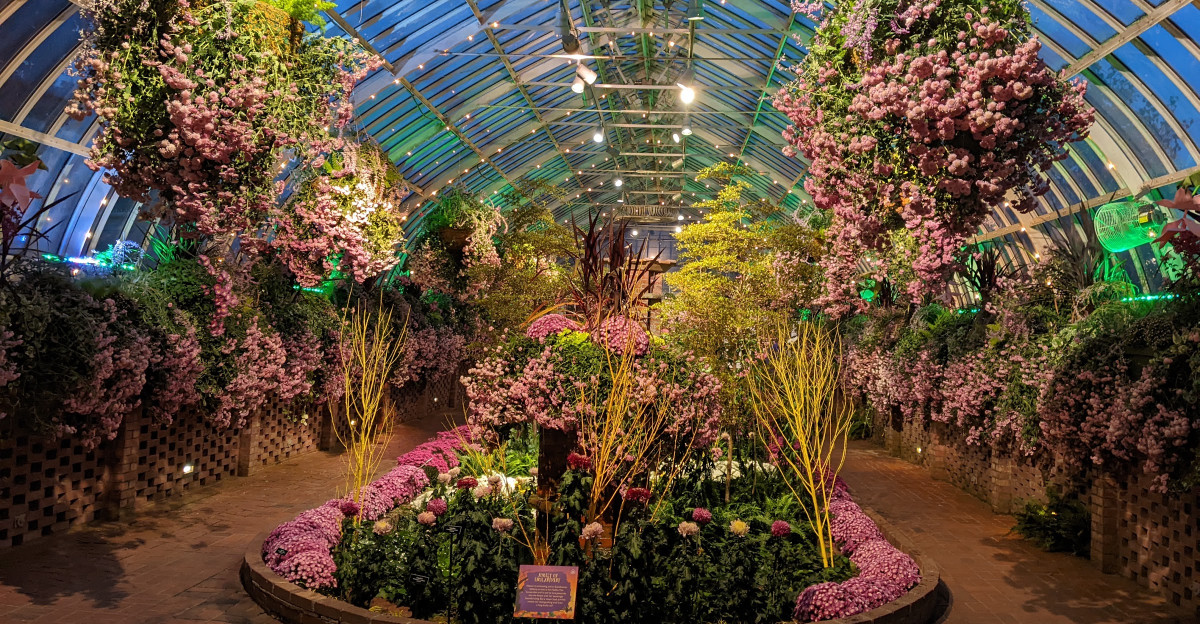
A ten-foot tree built entirely from poinsettias has been part of this holiday show. That alone made me stop scrolling.
The red and white blooms fill a Victorian glasshouse with 14 rooms.
Thousands of plants in more than 20 varieties take over the place every winter. Outside, the park grounds glow with strings of lights after dark.
I like how this spot flips a gray Pennsylvania December on its head. You leave the cold at the door and trade it for warm air and color.
Toy trains even chug through tiny plant-covered landscapes.
I can’t imagine a better excuse for a winter road trip. The glass overhead has sheltered these plants for generations.
Somebody has to water all of them, too. So how does a building that old still pull off a show this bright?
A Victorian Glass Palace Sitting Inside A City Park
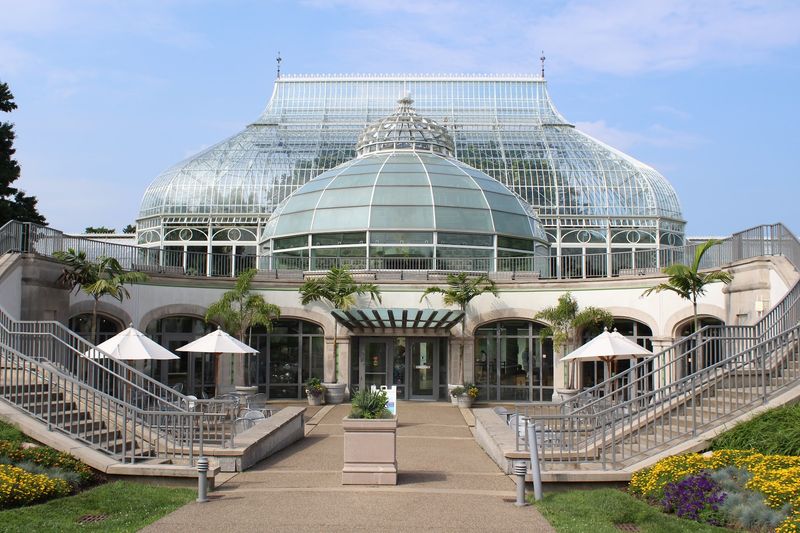
Greenhouses usually live behind garden centers, not in the middle of a major city park. Phipps Conservatory and Botanical Gardens breaks that rule in the best way, rising from Schenley Park in Pittsburgh.
The heart of the place is a steel-and-glass Victorian greenhouse. Around it spreads a campus of about 15 acres with indoor and outdoor gardens.
Inside, 14 rooms hold plants from all over the world. One room leads to the next, so the visit unfolds like a loop through different climates.
Every winter, the glasshouse turns into a holiday show packed with poinsettias. That’s the headline, but it’s far from the only reason to come.
The setting helps a lot. Schenley Park wraps the conservatory in green space, and the Oakland neighborhood sits right next door.
For Pennsylvania families, this is an easy day trip with a clear payoff. You get warm air, bright color and a building that looks like it belongs in a storybook.
Think of it as a botanical garden, a holiday tradition and a history lesson in one stop. Not bad for a place built to hold plants.
The Steel Baron Who Gave Pittsburgh A Greenhouse
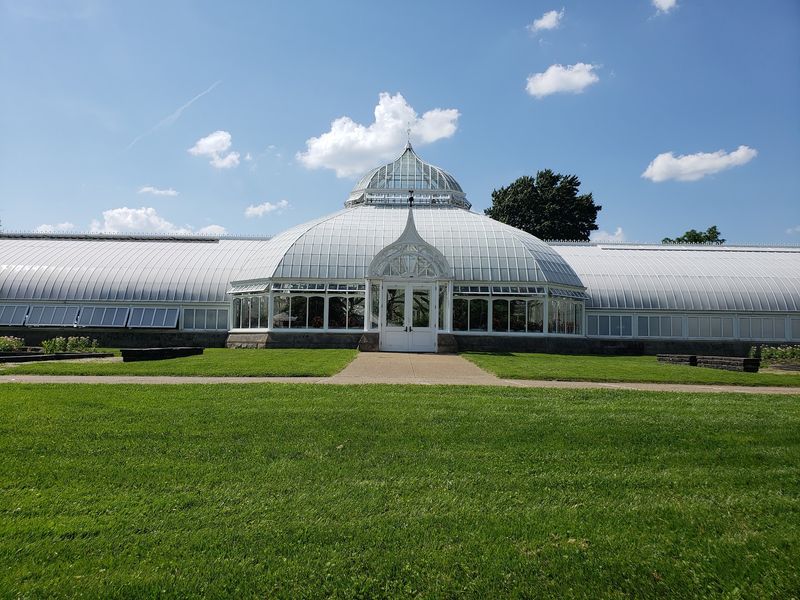
Back in 1893, philanthropist Henry Phipps Jr. handed Pittsburgh a gift made of glass. He wanted the conservatory to offer instruction and pleasure to the people of the city.
That mission still shapes the place today. You come for the flowers, and you leave knowing a little more about where plants grow and why.
Phipps made his fortune in the steel world, which fits the story nicely. A steel city got a steel-framed greenhouse from a steel-era businessman.
The gift went to the city, not to a private estate. That matters, because it meant everyday Pittsburgh families could enjoy tropical plants in the middle of winter.
Over the years, the conservatory has grown well beyond its original glasshouse. New gardens and buildings have joined the campus, but the Victorian core remains the star.
I like that the founding idea still feels current. Teaching people about plants while making them smile is a pretty solid plan for any century.
So when you stroll under those glass panels, you’re enjoying a gift that has been passed along for more than 130 years. Henry Phipps would probably approve of the poinsettias.
Glass And Steel Built By Famous Greenhouse Makers
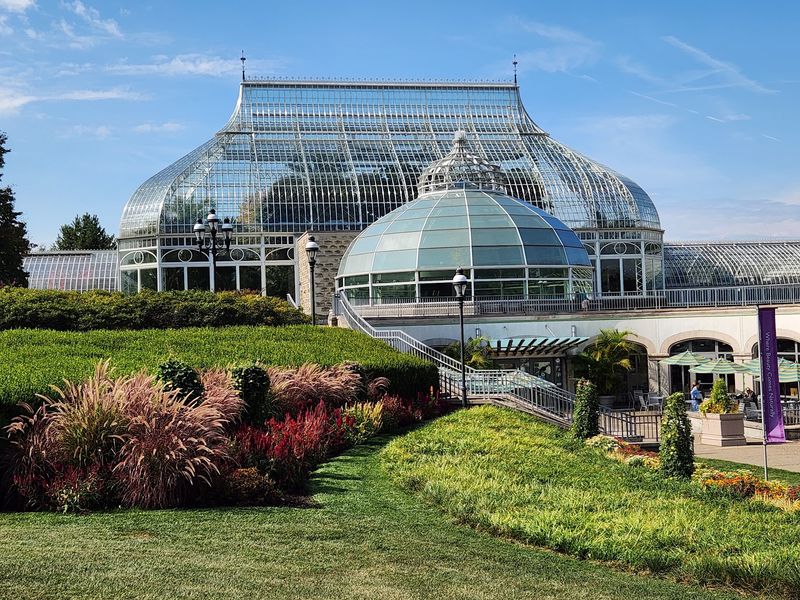
Lord and Burnham was the big name in American greenhouse building during the Victorian era. The firm designed the original glasshouse at Phipps, and its graceful lines still define the skyline of the park.
Look up once you’re inside. The curved glass and white framework do the heavy lifting, letting daylight pour down on everything below.
The building is a City of Pittsburgh historic landmark. It’s also listed on the National Register of Historic Places, which puts it in some pretty fancy company.
Glass buildings take constant care. Panes get replaced and repaired over the decades, yet the overall Victorian look has held on beautifully.
Here’s a fun detail. Plants sometimes grow so tall that staff have had to remove panes to give them room.
The architecture works as a display in its own right. Even if you couldn’t name a single plant, the domes and arches would keep your camera busy.
During the holidays, the glass catches the glow of the decorations. It’s hard to think of a better frame for thousands of red leaves than a historic greenhouse in a Pennsylvania winter.
Thousands Of Poinsettias Take Over Every Room
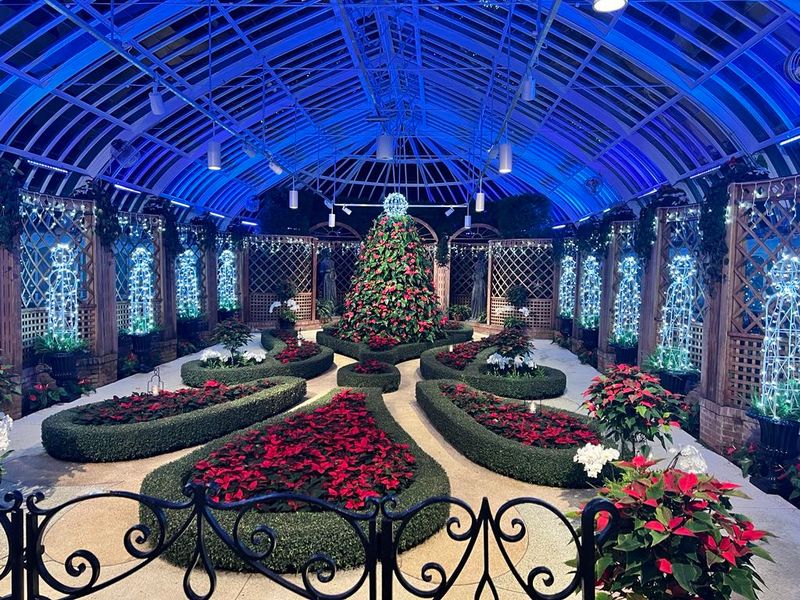
Red is the dominant color of the season here, and it shows up in waves. The holiday show at Phipps Conservatory and Botanical Gardens fills its glasshouse rooms with thousands of poinsettias.
Variety is part of the fun. The show has featured at least 21 different kinds, so you’ll spot more shapes and shades than the standard grocery store plant.
Those plants don’t just appear overnight. Growing poinsettias for a big display takes months of careful timing, light control and patience.
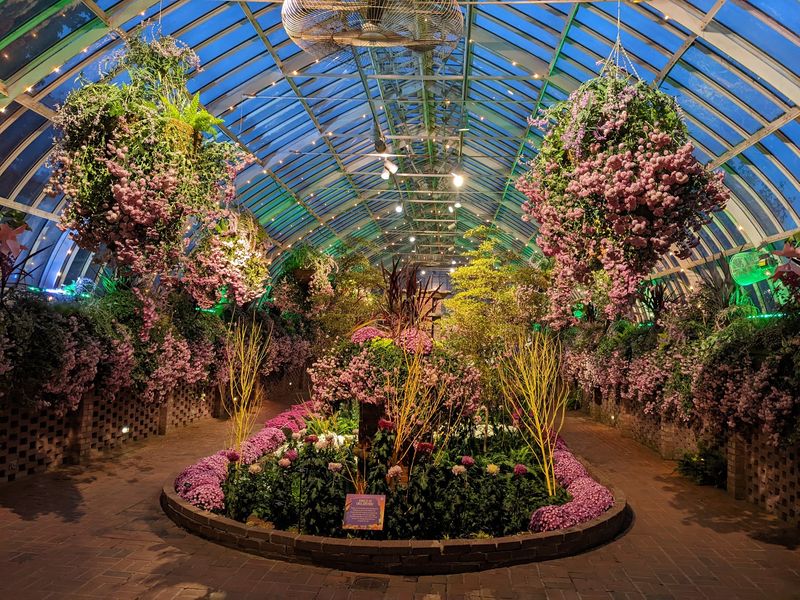
The payoff is a building that looks dipped in holiday color. Poinsettias line paths, cluster around features and frame the views through each doorway.
Paired with greenery and lights, the blooms feel festive without tipping into tacky. It’s holiday decorating done by people who really know plants.
The show usually runs from mid-November into early January. Dates can shift, so check ahead before you plan the trip.
If your own poinsettia tends to drop its leaves by New Year’s, consider this a masterclass. You might even pick up a few ideas for next year’s windowsill.
After Dark, The Winter Light Garden Glows
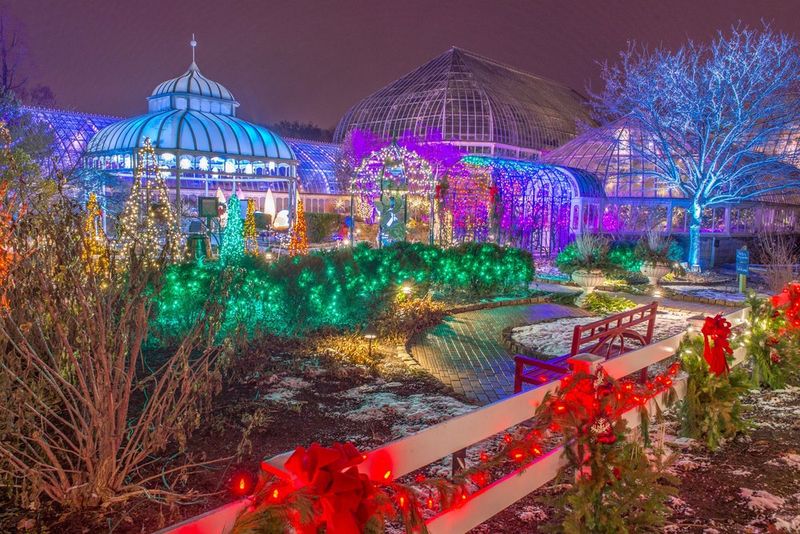
Sunset doesn’t end the fun here. Once evening falls, the Winter Light Garden switches on outside the glasshouse walls.
Glowing orbs, lit gazebos and strings of lights brighten the grounds. The scene feels like a cozy counterpart to the warm color indoors.
The contrast is the best part. One minute you’re in humid tropical air, and the next you’re wrapped in a scarf under a sky of tiny lights.
Bring a warm coat and gloves. Pennsylvania winter nights don’t care how pretty the lights are.
Friday evenings have typically offered later hours at the conservatory. That can make a dusk visit easier to fit into a busy week, but schedules shift during special events.
Many visitors build the trip around the timing. Arriving in the late afternoon lets you see the plants in daylight before the outdoor glow kicks in.
Photographers will appreciate the mix of light sources. The glass building itself looks especially pretty when it’s lit from inside against a dark sky.
Check ahead for evening dates and ticket times before you head out. Holiday nights tend to be popular, so planning pays off.
Tiny Trains Rolling Through Miniature Landscapes
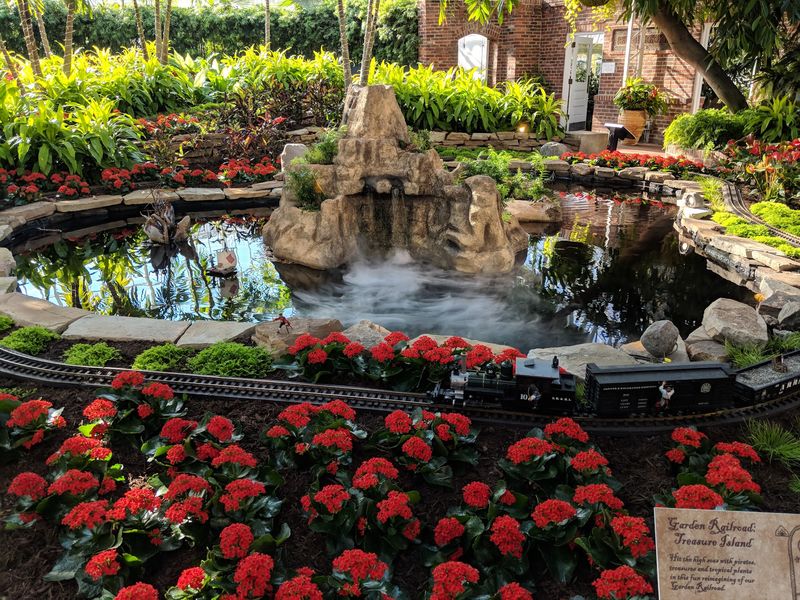
Ask any kid what the best part of the holiday show is, and trains might win. The Garden Railroad exhibit sends miniature trains rolling through scenes built with real plants.
It’s a clever twist on the classic holiday model train setup. Instead of plastic trees, the landscapes use living greenery shaped to fit the tiny world.
Grown-ups get hooked too. There’s something about spotting a small bridge or tunnel that brings out everyone’s inner seven-year-old.
The trains add motion to a show built mostly on still beauty. Kids can follow a train around its track while parents study the plant work.
Themes and layouts can change from season to season. That keeps the display fresh for families who make Phipps a yearly holiday habit.
Bring patience if you’re visiting with little ones. Once they lock onto those trains, you may be standing in one spot for a while.
Honestly, that’s not a bad problem to have. The surrounding rooms are warm, the decorations are bright, and the trains keep rolling without complaint.
Fourteen Rooms, Fourteen Different Climates
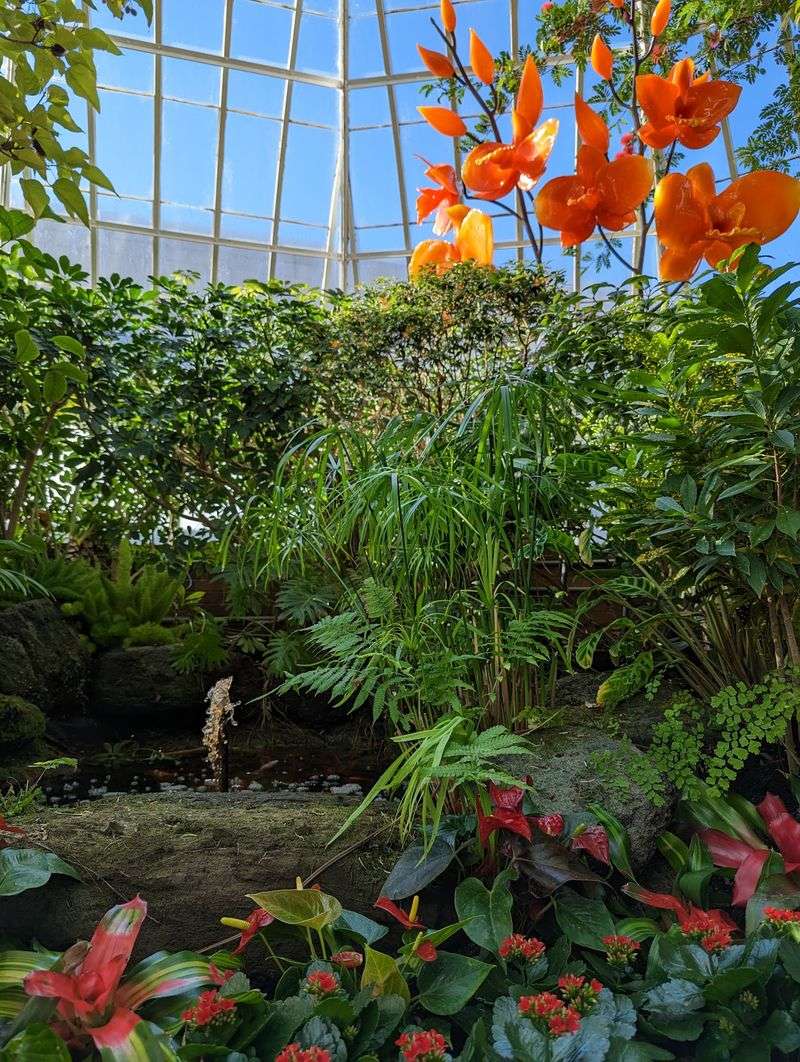
Turn left after the entrance and keep going. That simple route carries you smoothly through all 14 rooms of the glasshouse.
Each room has its own personality. The Palm Court shows off towering palms, while the tropical forest wraps you in warm, humid air.
Old ficus trees, waterfalls and a freshwater fish pond add depth to the tropical spaces. You’ll also find rooms devoted to fruits and spices, plus a desert room with sun-loving plants.
The sunken garden is another highlight. Its lower level creates a natural viewing spot for seasonal displays.
Dress in layers. Some rooms get quite warm, so bringing water is a smart move, especially in the tropical areas.
The building isn’t enormous, which works in your favor. Many people see the main rooms in about one to two hours without rushing.
Plant lovers can easily stretch that time. Reading labels and studying leaf shapes adds up fast when every corner holds something new.
In winter, the warm rooms feel like a mini vacation. It’s the closest thing to a tropical getaway you’ll find without packing a suitcase.
Orchids, Ferns, Bonsai And Giant Lily Pads
Lily pads big enough to look like serving platters float in one of the most memorable rooms. The Victoria amazonica pond room shows off these giant water lilies from South America.
Nearby, the orchid room delivers a completely different mood. Delicate blooms in odd shapes and bright colors make it a favorite stop for flower lovers.
The fern room leans into calm greens and soft textures. It’s a nice breather after the louder colors of the seasonal displays.
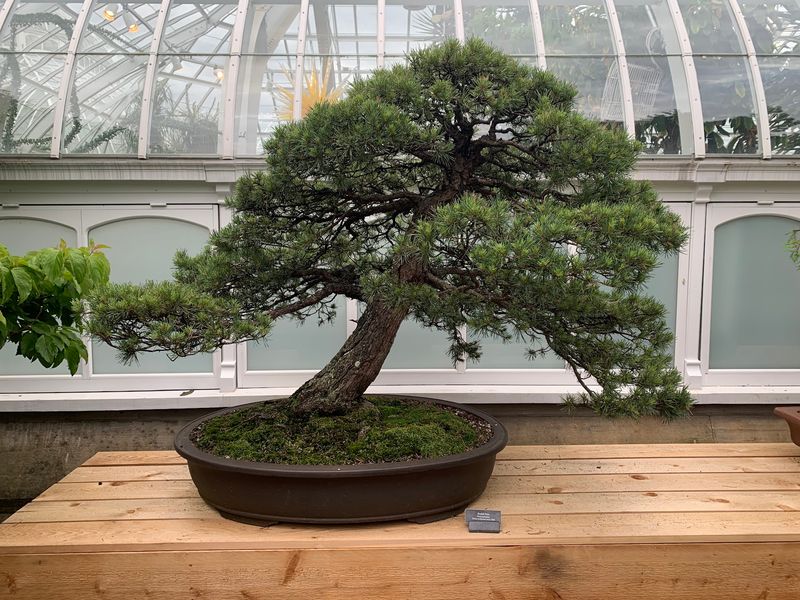
Bonsai fans get their own treat. Carefully trained miniature trees show the patience it takes to shape a plant over many years.
A Japanese courtyard garden adds yet another style. Clean lines and thoughtful plantings make it feel peaceful and quiet.
These permanent collections stay put while seasonal shows come and go. That means even a holiday visit includes plenty of year-round favorites.
Small creatures pop up too. Fish, frogs and insects appear in some exhibits, which keeps curious kids searching.
For anyone who thinks a greenhouse means rows of potted plants, these rooms are a happy correction. Each one feels like its own little world.
Parking, Tickets And A Spot For Lunch
You’ll find Phipps Conservatory and Botanical Gardens at 1 Schenley Dr, Pittsburgh, Pennsylvania 15213. It sits in Schenley Park, close to the Oakland neighborhood and its universities.
Free parking is available along Schenley Drive. Spaces can fill up, so arriving early in the day gives you better odds.
Timed tickets are typically required, especially during popular seasonal shows. Booking ahead saves you from a disappointing arrival.
The conservatory is generally open daily, with later evening hours on certain nights. Prices and hours shift with the seasons, so check ahead before making the drive.
Admission is considered fairly affordable for a full afternoon of exploring. Families on a budget can usually plan a visit without breaking the bank.
Hungry? Café Phipps serves fresh, healthy options like salads and sandwiches, along with drinks and light refreshments.
Plan for at least one to two hours inside. Add more time if you want to see the outdoor gardens or catch the evening lights.
Dress in layers for the warm rooms. Your winter coat will feel heavy fast once you hit the tropical forest.