This Louisiana Museum Lets You Climb Aboard A Real Offshore Oil Drilling Rig
A real offshore drilling rig, one that drilled hundreds of wells, now sits where anyone can walk its decks.
I find that wildly exciting. Most of us never ask where offshore drilling actually began, and the answer turns out to be right here in Louisiana.
This rig was the first of its kind. It was fully submersible, self-sufficient, and could be moved from job to job.
That one design idea helped launch an industry that reached far beyond the Gulf.
The question has a satisfying answer, and you can climb it. There are stairs, metal grating, crew quarters, and a galley.
Honestly, few history lessons come with a 60-foot climb.
The Only Place You Can Board A Real Offshore Rig
Most museums keep their best treasures behind glass. The International Petroleum Museum & Exposition hands you a staircase instead.
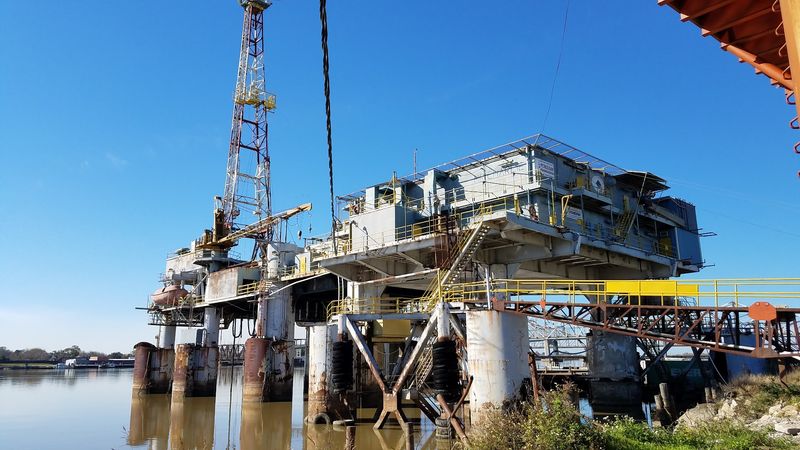
The star here is Mr. Charlie, a genuine offshore drilling rig. It isn’t a replica built for display, and that matters more than you’d think.
This enormous structure worked in the Gulf of Mexico from 1954 until 1986. During those decades, it drilled more than 200 wells and became an important part of offshore engineering history.
The museum is recognized as the only place where the general public can walk aboard an authentic offshore drilling rig. That’s quite a distinction for one riverside attraction.
Visitors can explore the preserved equipment, crew accommodations, and working areas through guided tours.
The machinery is authentic, giving the experience a completely different feeling from a conventional exhibition.
Mr. Charlie now rests along the Atchafalaya River in Morgan City, where its enormous framework rises above the surrounding waterfront.
The structure itself tells an incredible story, from the heavy machinery above to the self-contained living spaces below.
Meet Mr. Charlie, The Rig That Changed Everything
Back in 1952, crews started building something few people had seen before. Construction began at Alexander Shipyards in New Orleans and finished in late 1953.
Mr. Charlie entered service in 1954. It became the world’s first fully transportable, submersible, and self-sufficient offshore drilling rig.
The mind behind it was Alden “Doc” Laborde, a marine engineer who envisioned an offshore platform that could move between drilling locations.
His idea was remarkably practical. Instead of constructing a separate permanent platform for every new site, the rig could travel by water, settle onto the seafloor, complete its work, and move again.
The vessel was named in honor of Charles Murphy, whose family helped support its construction.
Its first assignment came in 1954, when Mr. Charlie began drilling for Shell Oil Company in East Bay near the Mississippi River’s mouth.
Over the following 32 years, it worked on hundreds of wells for major petroleum companies.
The rig could operate in water up to approximately 40 feet deep, an important capability during that period. Eventually, offshore exploration moved into considerably deeper waters, and Mr. Charlie retired in 1986.
A Louisiana engineering idea had already helped transform how offshore drilling operations worked worldwide.
Size Matters When Your Floor Sits 60 Feet Up
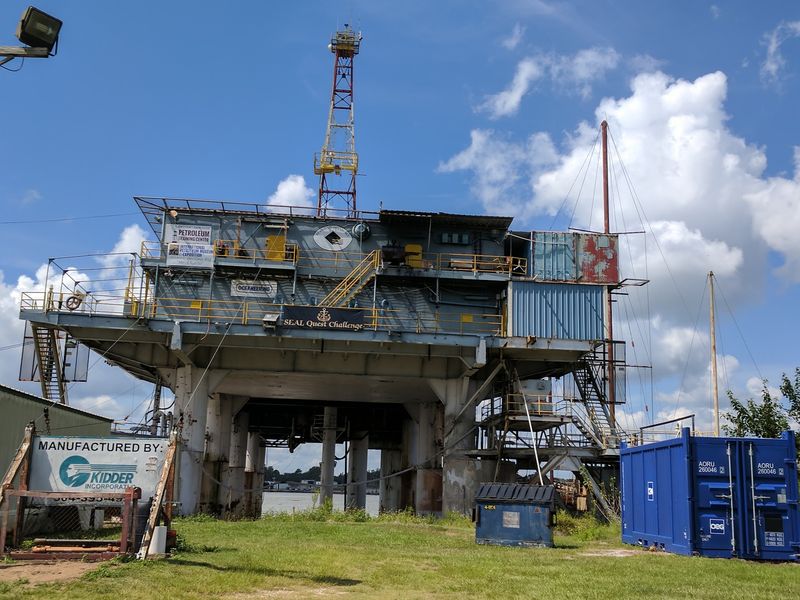
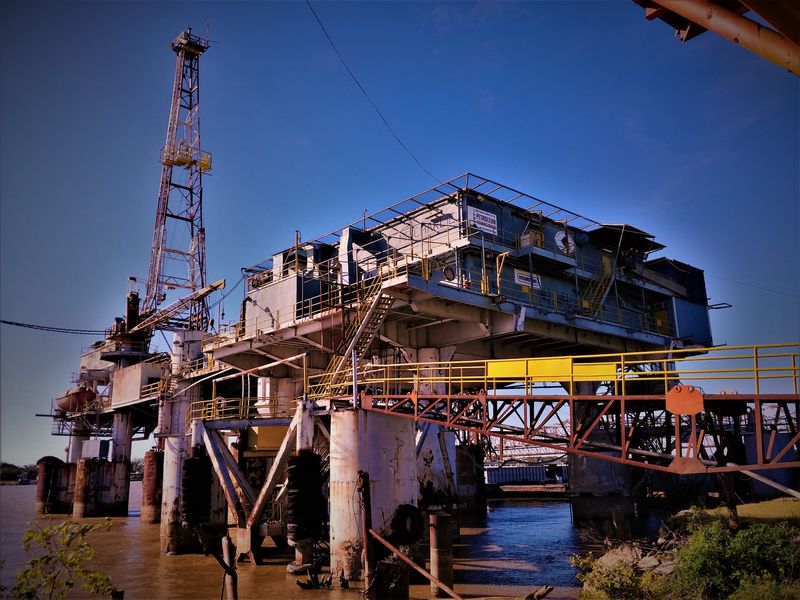
Sixty feet. That’s how high the platform floor rises above the barge on Mr. Charlie.
The barge itself stretches approximately 220 feet long and 74 feet wide. Under the living quarters, pontoons extend the width to 136 feet. Standing beside it, you’ll feel pleasantly tiny.
The barge runs 14 feet deep, with a four-foot skirt extending beneath its bottom on both sides. Those numbers sound ordinary on paper until you see how much machinery the structure supports.
Massive steel columns connect the barge to the elevated working platform.
These columns served a practical purpose beyond support. They carried essential connections for electricity, water, air, and access between different levels.
Up top sits the platform containing drilling equipment and crew facilities. Everything needed for extended offshore operations had to fit into this carefully engineered arrangement.
Here’s a practical tip. Wear sturdy shoes with good grip, since the tour involves stairs, metal grating, and industrial walkways.
The layout also includes confined spaces and elevated platforms. Visitors with mobility concerns should discuss access arrangements before their trip.
Few attractions in Louisiana let you examine engineering on this scale from the very platform where the equipment once operated.
Bunks, A Galley, And Life Far From Shore
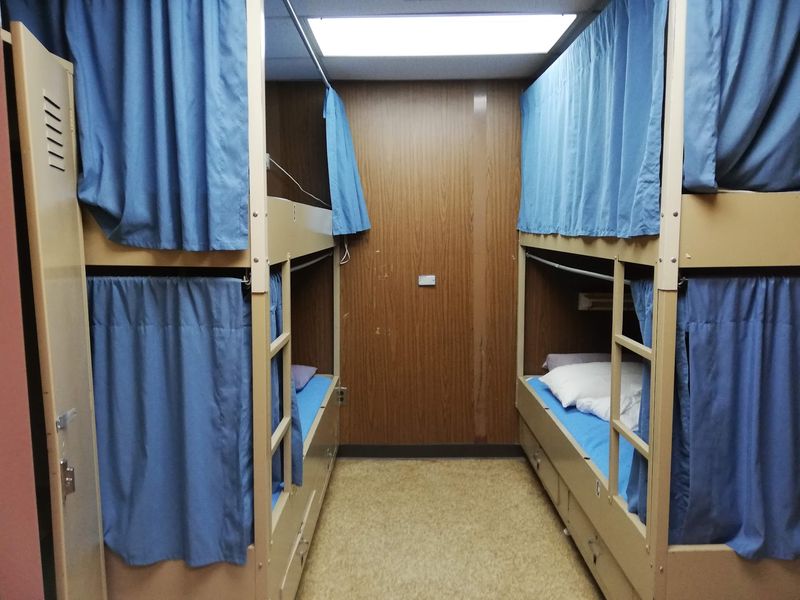
Fifty-eight people could live aboard Mr. Charlie at once. Now imagine sharing one floating workplace with that many people for an extended period.
The rig functioned as a nearly self-sufficient offshore facility.
Crews worked, ate, and slept aboard the platform, relying on its own systems for electricity, drinking water, communications, and other essentials.
That meant the structure needed a proper living area, not just drilling machinery. On a guided tour, the crew accommodations reveal how the space was organized.
The galley served as the kitchen, preparing meals for people working different schedules throughout the day.
Sleeping quarters gave workers somewhere to rest between shifts, while storage areas held food, supplies, and personal belongings. These rooms are among the most interesting parts of the experience.
The industrial equipment is impressive, but the living quarters help explain what an extended offshore assignment actually involved.
Suddenly, the enormous steel platform begins to feel like a small, self-contained community.
The rig also carried medical supplies and equipment for handling emergencies, allowing crews to operate far from shore.
Guides Turn Heavy Machinery Into Great Stories
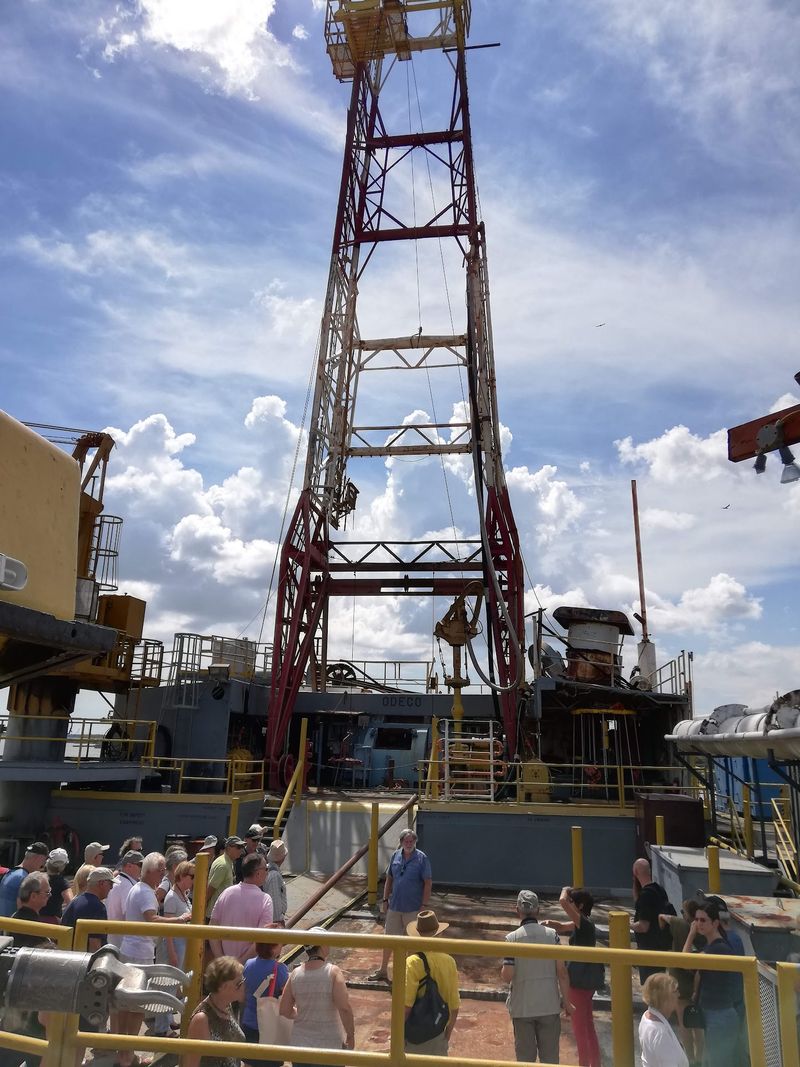
A drill floor can look like a puzzle of pipes and gears. A good guide turns that puzzle into a story you’ll remember.
Guided tours explain how offshore drilling technology developed, how the equipment operated, and why Mr. Charlie represented such an important engineering advancement.
The experience focuses on the actual working areas of the rig rather than models or simulated equipment.
Visitors can learn how the platform was transported, how its lower structure rested on the seafloor, and how drilling operations were supported from above. One particularly fascinating detail involves the rig’s stability.
Once Mr. Charlie reached a drilling site, water was introduced into its flotation compartments, allowing the lower structure to settle securely onto the seabed.
When operations finished, the process could be reversed so the rig could move elsewhere. Guides also explore the daily responsibilities of offshore crews and the systems that kept the facility running.
Tours usually last approximately ninety minutes, allowing time to explore the equipment and ask questions.
A Museum That Still Trains The Pros
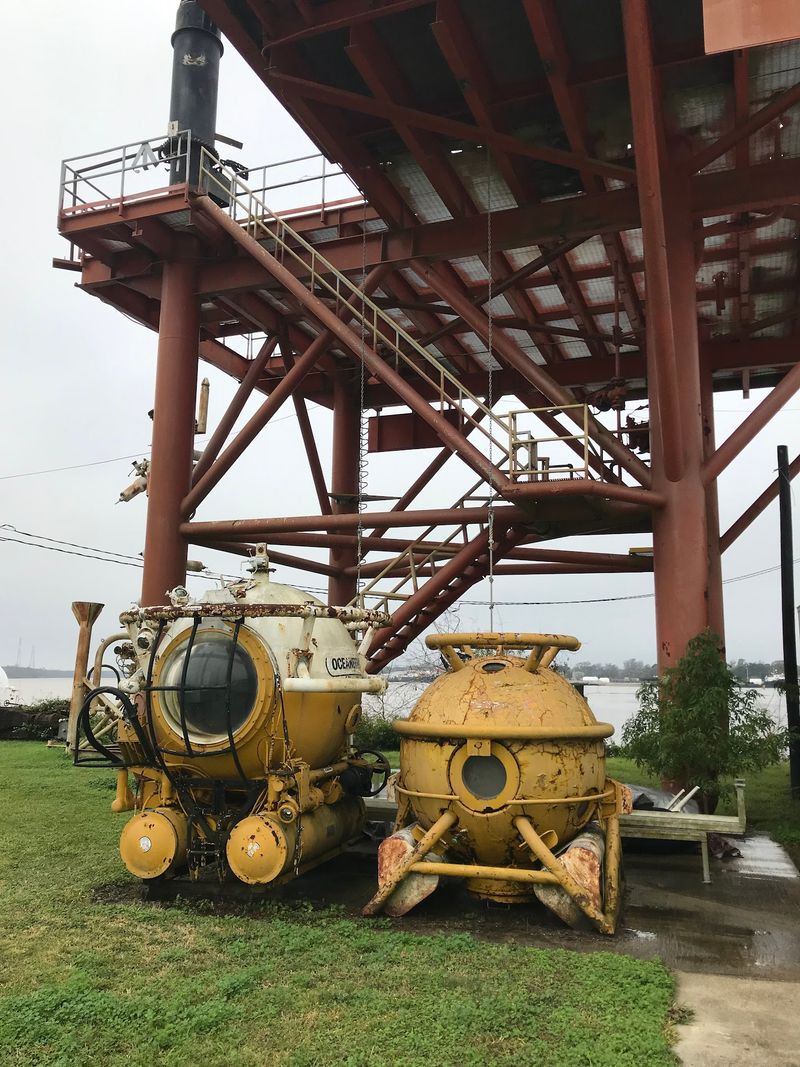
Plenty of retired machines end up as quiet monuments. Mr. Charlie got a second career instead.
The International Petroleum Museum & Exposition serves as both a public museum and an educational facility associated with offshore industry training.
That double life gives the place a real purpose beyond preserving its machinery.
The same rig that once helped demonstrate a new approach to drilling now introduces visitors and industry learners to the equipment and working conditions of earlier offshore operations.
Preservation came from people who knew the structure particularly well. Former crew members and local petroleum industry workers helped establish the museum and protect the historic platform.
Their efforts allowed Mr. Charlie to remain accessible in Morgan City rather than disappear into private industrial storage. The museum preserves a story closely connected to the region’s economic development and engineering achievements.
Its displays also demonstrate how offshore technology evolved from relatively shallow-water equipment into increasingly sophisticated systems.
For students considering technical careers, the setting offers a rare chance to examine a real working environment from an earlier generation. For everyone else, it’s simply fascinating.
Big Honors Landed On This Old Rig
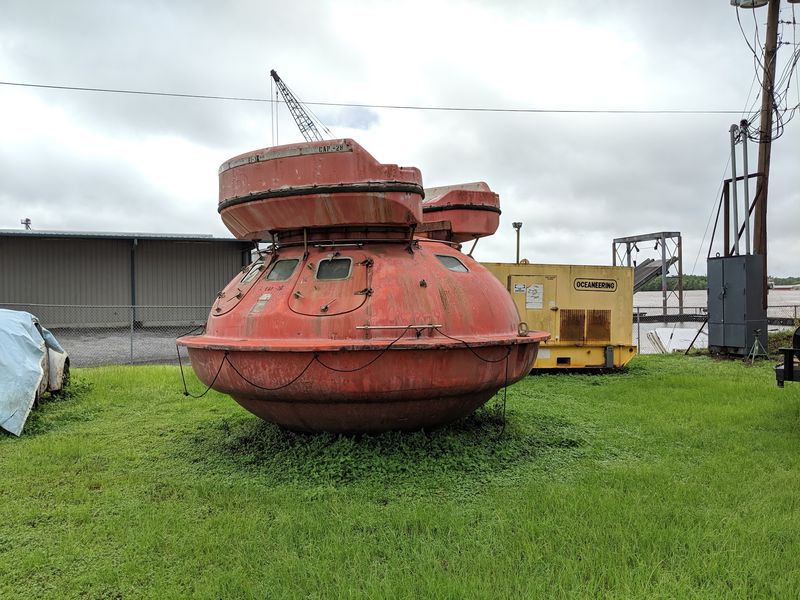
December 2024 brought big news. Mr. Charlie was officially named a National Historic Landmark.
The designation recognizes the rig’s extraordinary contribution to American engineering and industrial history.
It became the first National Historic Landmark in St. Mary Parish and the country’s first representing the offshore petroleum industry.
That’s a remarkable distinction for a structure originally designed to operate in water approximately 40 feet deep. This wasn’t its first honor, either.
In 2012, the American Society of Mechanical Engineers designated Mr. Charlie a Historic Mechanical Engineering Landmark.
That recognition highlighted its groundbreaking design as the first fully transportable, submersible, and self-sufficient offshore drilling rig.
Few industrial attractions earn recognition from both engineering organizations and national preservation authorities.
Those honors reflect the importance of its original construction and the technological changes that followed.
Mr. Charlie helped demonstrate that a mobile drilling platform could operate as an independent offshore facility, establishing a model that influenced later developments.
Time Your Trip Right And Bring Your Curiosity
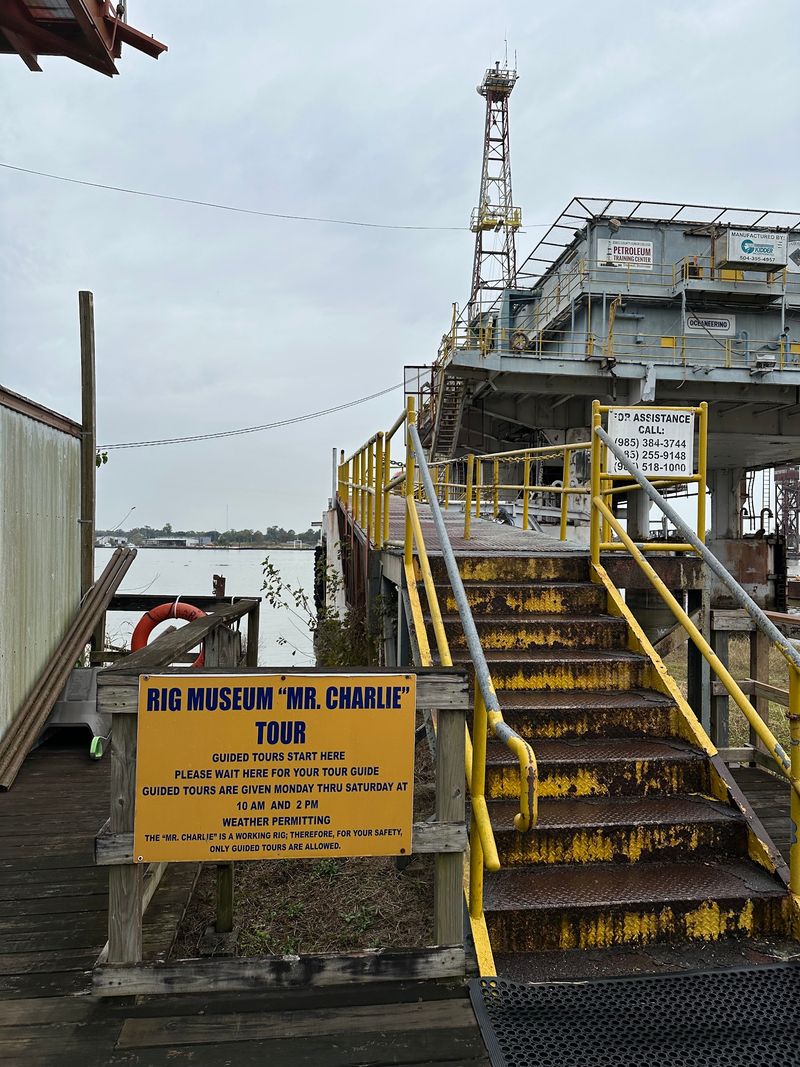
Timing is everything here. Guided tours generally begin at 10 a.m. and 2 p.m., Monday through Saturday, weather permitting.
The museum sits at 111 First St., Morgan City, LA 70380, along the Atchafalaya River.
Its waterfront setting makes it a distinctive addition to a southern Louisiana road trip, particularly for anyone interested in engineering, maritime history, or unusual museums.
Tours typically take about ninety minutes. Small groups can visit without advance reservations, while parties of five or more should arrange their tour ahead of time.
The museum is generally closed on Sundays, and tour availability may change with special events or weather conditions.
Visitors should also be prepared for the rig’s original industrial layout, with narrow passages and elevated platforms.
Morgan City’s riverfront provides a pleasant opportunity to explore the surrounding area before or after the tour.
The city has a long connection with marine transportation and offshore engineering, making the museum an especially meaningful local landmark. Then just enjoy it.