Mosaics And Stained Glass Cover The Twin Towers Of Idaho’s Cathedral In The Capital
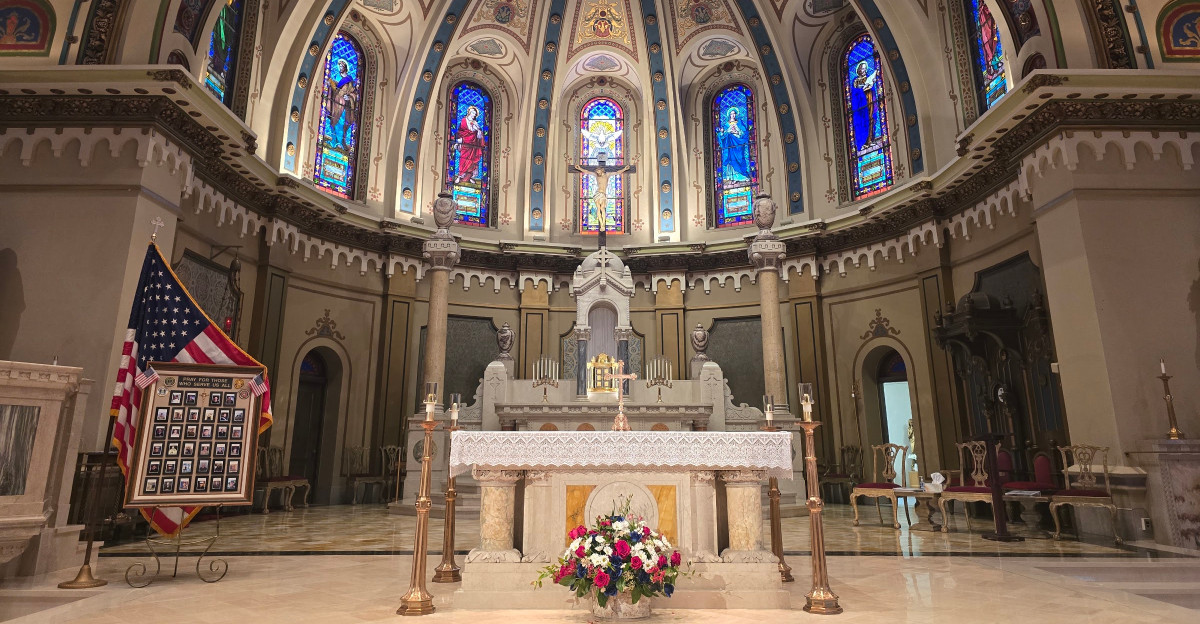
Two big sandstone towers in Idaho’s capital were drawn with tall pointed spires.
More than a century later, they still end in flat tops, and the reason is refreshingly practical.
The builders didn’t want to drown the parish in debt. So they built in stages, starting with a cornerstone in 1906.
They kept going for roughly fifteen years, until the doors finally opened on Easter Sunday in 1921.
The stone came from a hill you can see from downtown. Most of the colored windows came from Chicago in 1920.
The organ inside holds about 2,900 pipes, which is a number I can’t read without grinning.
I like how this building wears its budget decisions and its big artistic choices side by side.
One part feels unfinished, and another feels extravagant. So how does a place like that come together?
The Romanesque Landmark Holding Down Downtown Boise
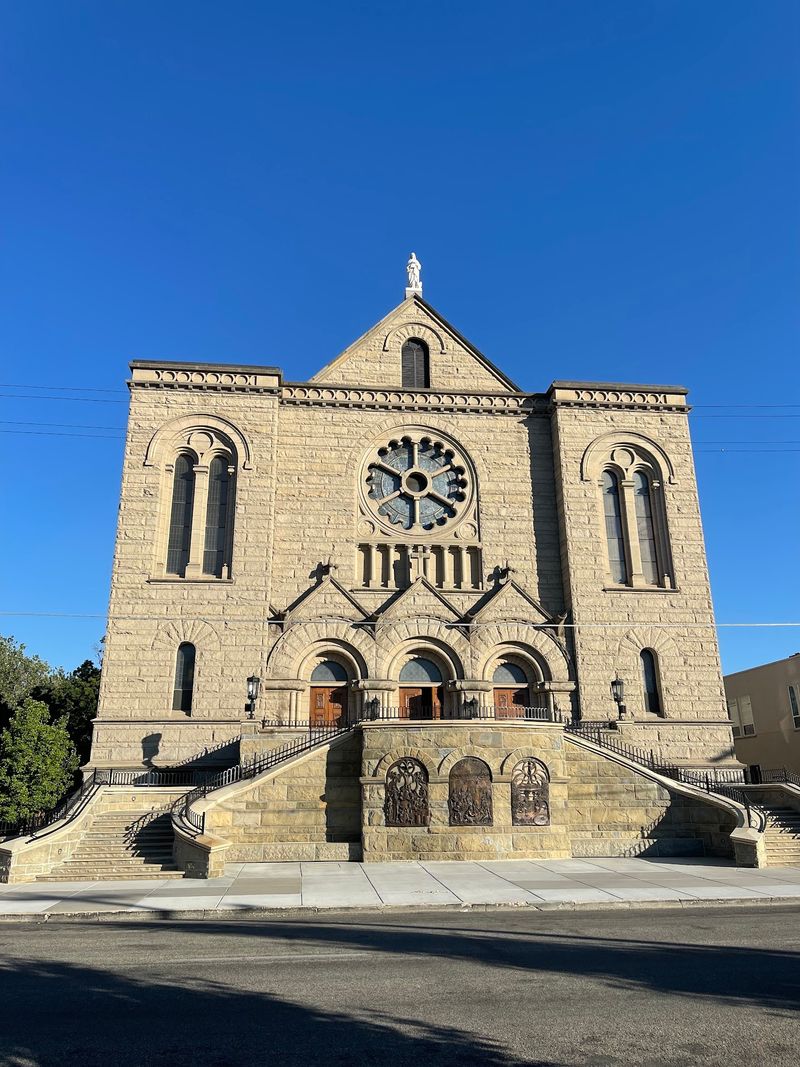
Downtown Boise has plenty of brick and glass, but one block on 8th Street looks like it wandered over from medieval Europe. That block belongs to the Cathedral of Saint John the Evangelist, an active Catholic cathedral in Idaho’s capital.
It serves as the seat of the Diocese of Boise. In plain terms, it’s the main church for the Catholic bishop who oversees the whole state of Idaho.
The building follows the Romanesque Revival style. Think rounded arches, thick stone walls and a heavy, grounded look instead of soaring pointed Gothic drama.
A pair of towers frames the front entrance. They give the cathedral a silhouette you can pick out from several blocks away, even with taller buildings nearby.
The cathedral doesn’t stand alone, either. A rectory and St. Joseph’s School share the surrounding block, which together form a recognized historic grouping.
Visitors are welcome beyond regular worship services. The cathedral offers self-guided visits plus docent-led tours, so curious architecture fans can explore without guessing what they’re seeing.
That makes it an easy add to a downtown afternoon. You get history, art and a quiet room, all within an easy stroll of the city center.
Fifteen Years Of Patient Building On A Pay-As-You-Go Plan
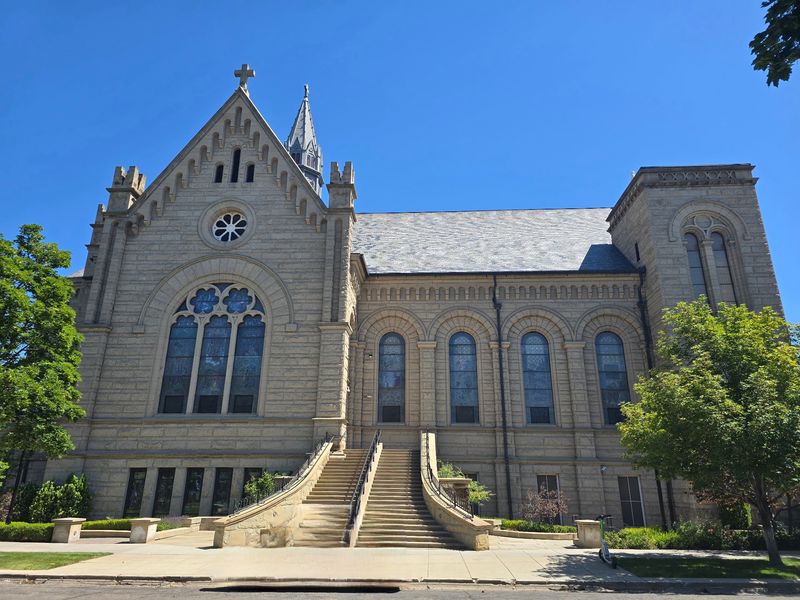
Patience built this cathedral more than any single check. The cornerstone went down in 1906, and the parish chose to build in stages rather than borrow heavily.
That choice stretched the timeline. The walls and roof were done by 1912, and the full superstructure was finished in 1916.
Then came the long wait for the finishing touches. The cathedral was finally dedicated on Easter Sunday, March 27, 1921.
Fifteen years from cornerstone to dedication sounds slow today. Back then, it showed a congregation determined to get it right without a crushing bill.
The design came largely from Tourtellotte and Hummel. That Boise firm shaped a huge share of Idaho’s early public and civic architecture, so the cathedral sits in good company.
Fans of Idaho buildings will recognize the firm’s name from other landmarks around the state. Here, it tackled one of its most ambitious religious projects.
The story didn’t end in 1921. The cathedral earned a spot on the National Register of Historic Places in 1978, then went through a major renovation and rededication in 1979.
So the building you see today blends early craftsmanship with careful later updates.
Sandstone Hauled In From Table Rock Next Door
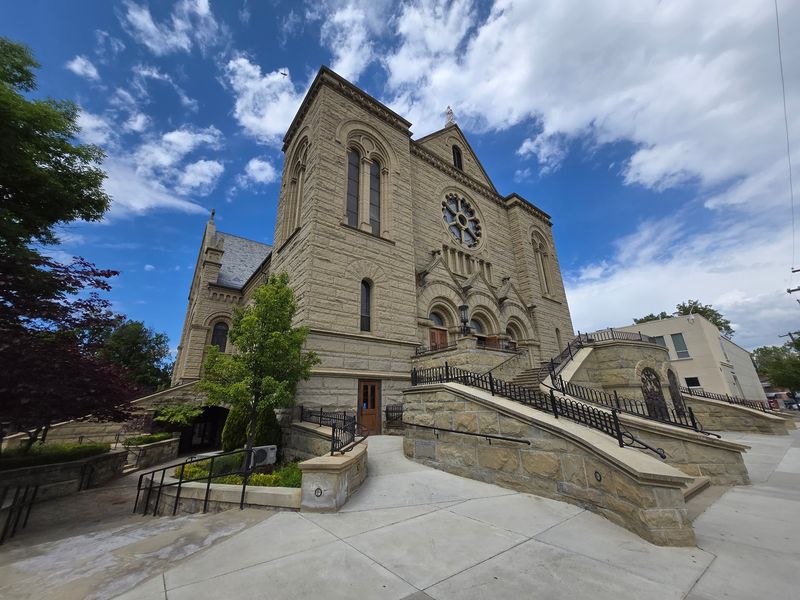
Here’s a fun bit of hometown pride. The cathedral’s exterior is made of Boise sandstone quarried at Table Rock, just outside the city.
Table Rock is the flat-topped landmark many Treasure Valley residents already know. So the cathedral is, quite literally, built from a piece of the local skyline.
That sandstone gives the walls their warm, earthy color. It also ties the building to other early Boise structures made from the same quarry.
Using nearby stone made sense for a parish watching its budget. Hauling material a short distance beat shipping heavy blocks across the country.
Look closely at the walls and you’ll notice the texture of the cut stone. Each block shows the hand work that went into shaping it more than a century ago.
Afterward, you can glance up toward Table Rock itself. It’s a satisfying moment to connect the hill on the horizon with the cathedral right in front of you.
Few buildings let you trace their roots that easily. This one practically points at its birthplace, which makes the history feel close and personal for anyone who knows the area.
Twin Towers That Kept Their Flat Tops
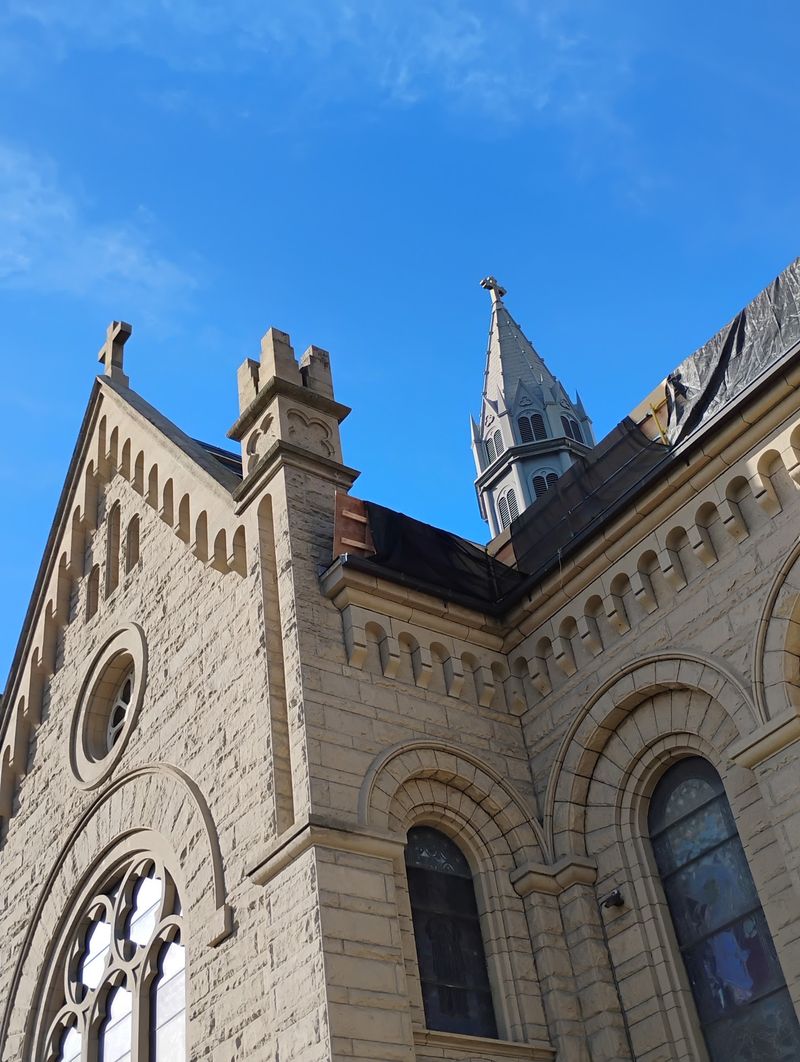
Would you notice that something is missing? The two front towers were originally designed to carry pointed spires.
Those spires never went up. Cost concerns during construction led to a flat finish instead, and the towers have stayed that way ever since.
Honestly, the flat tops have become part of the building’s personality. They give the facade a sturdy, squared-off look that matches the heavy Romanesque style.
The towers still do their main job well. They flank the grand entrance and give the cathedral its recognizable outline in the Boise cityscape.
I like that the building doesn’t hide its practical side. The towers tell a quiet story about a parish that chose finishing over overspending.
For photographers, the towers make an easy anchor for a shot. Stand across 8th Street and you can fit both of them, plus the main doors, into one frame.
Next time someone mentions an unfinished landmark, this one belongs in the conversation. It’s proof that a missing piece can still leave a lasting impression on an entire downtown.
Chicago-Made Windows Telling Stories In Color
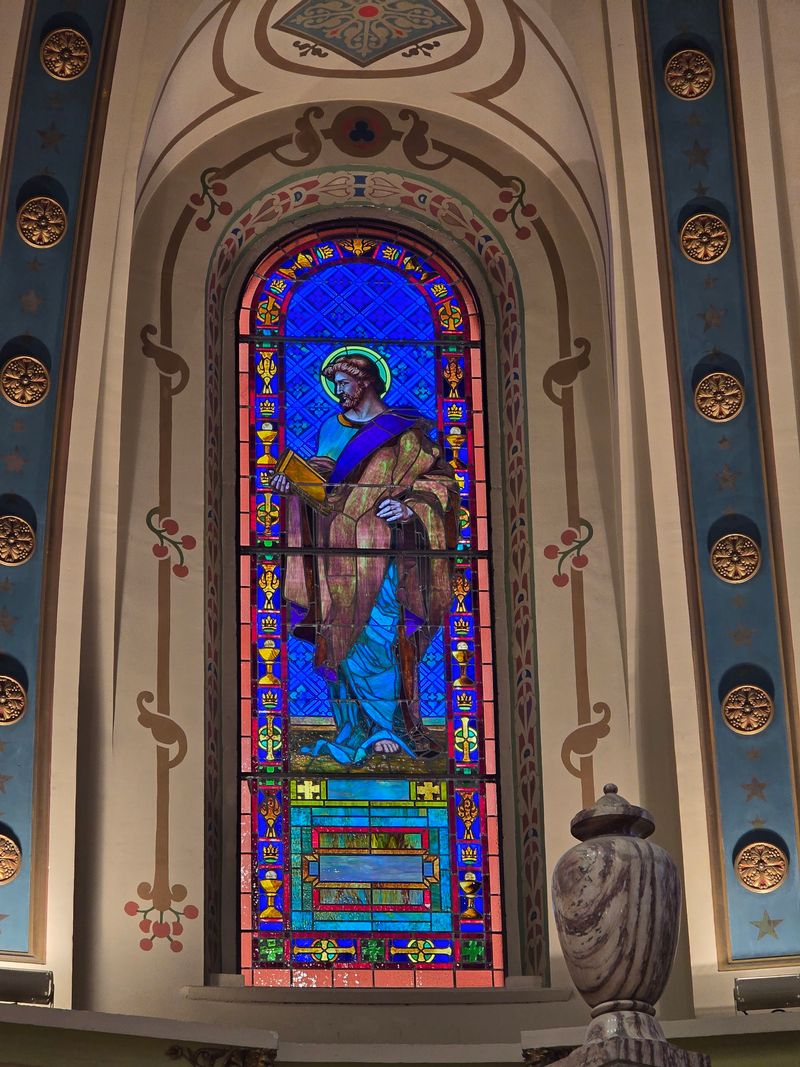
In 1920, a Chicago company shipped a whole lot of color to Idaho. The John J.
Kinsella Company fashioned and installed most of the cathedral’s stained glass windows that year.
The windows depict biblical stories in rich detail. Scenes include moments from the life of Christ, the Adoration of the Magi and the Ascension.
Here’s a neat technical detail. The faces of the figures are painted, but most of the glass itself is colored all the way through.
That colored glass is what makes the windows glow. When sunlight hits them, the reds, blues and golds spill across the interior.
Timing your visit for a bright day pays off. Different windows light up as the sun moves, so the room’s mood shifts throughout the day.
The windows also work like a picture book in glass. You can follow stories from one window to the next without reading a single word.
With the cathedral dedicated in 1921, these windows arrived just in time for the big opening. More than a century later, they remain the interior’s main attraction for many visitors to Boise.
A Rose Window Up Front And A Newer Glow In The Apse
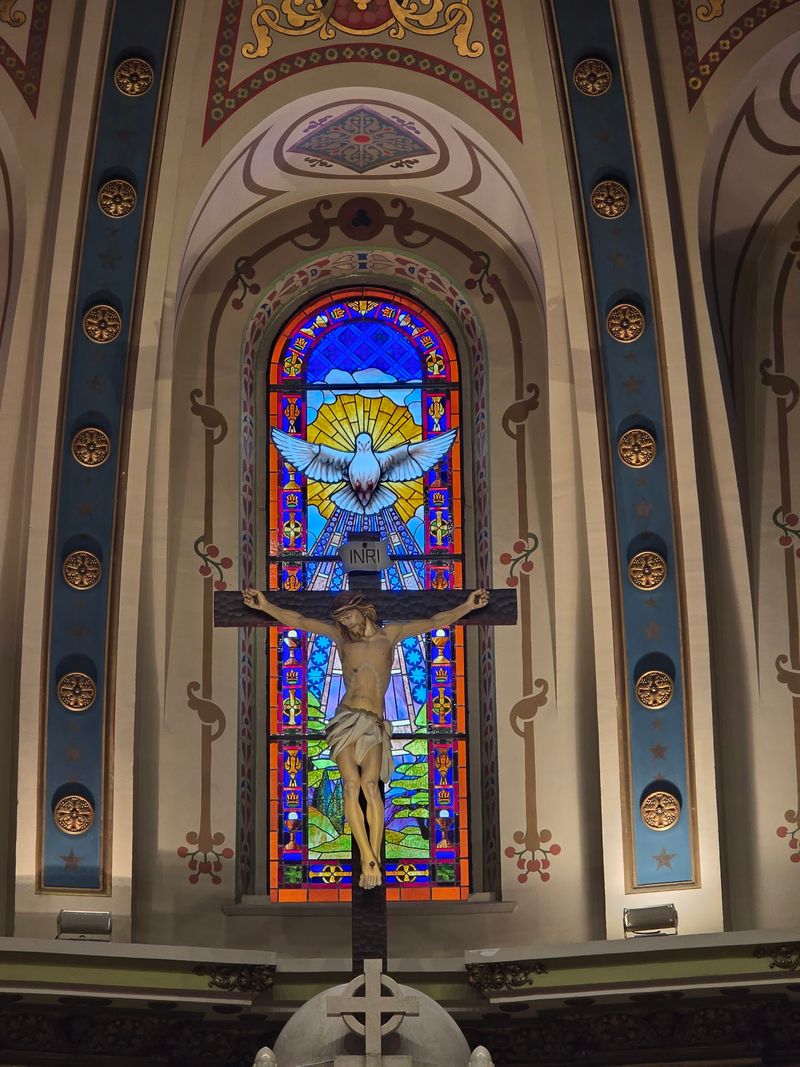
Turn around before you leave. A large rose window sits above the main entrance, and it’s easy to miss if you only face forward.
Rose windows are round, with glass arranged in a pattern that radiates from the center. This one adds a big burst of color to the front of the church.
The newest major window lives at the opposite end. In 1979, the Rambusch Decorating Company of New York installed a window portraying the Holy Spirit in the apse.
That 1979 window arrived during the cathedral’s major renovation and rededication. It shows how the building kept adding art decades after its first windows went in.
So you get two eras of glass in one visit. The 1920 Chicago windows and the 1979 New York window make a fun side-by-side comparison.
Try standing in the middle of the nave and looking both ways. You’ll catch the rose window behind you and the apse window ahead.
That kind of bookend design rewards anyone who slows down. It’s a small move that turns a quick look into a fuller tour of the cathedral’s art.
Roughly 2,900 Pipes And One Big Sound
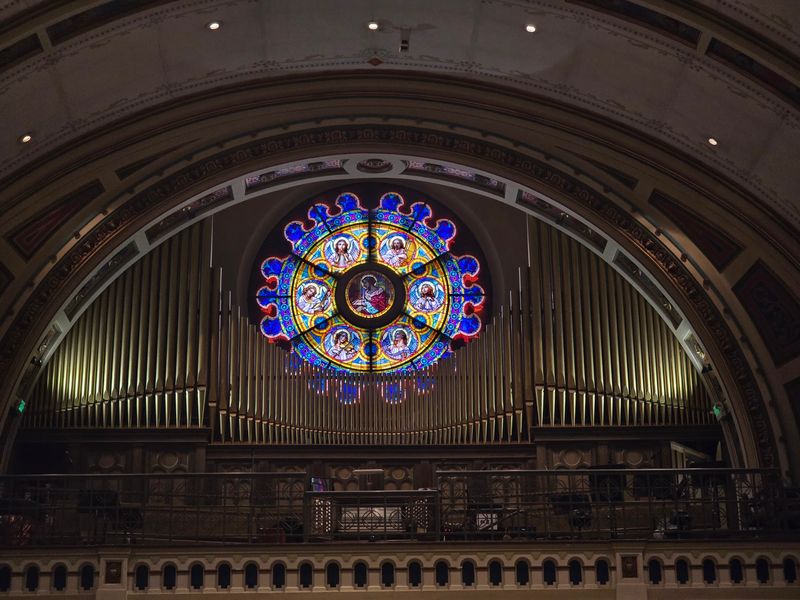
Count to 2,900 and you’ll get bored long before you match this organ. The cathedral’s instrument has about 2,900 pipes and three manuals, meaning three keyboards for the organist.
Tellers-Kent installed it in 1921, the same year the cathedral was dedicated. At the time, it ranked among the largest organs in its part of the country.
Pipe organs work by pushing air through pipes of different sizes. Small pipes give high, bright notes, while tall pipes produce deep tones you can almost feel.
An instrument this size can fill a big stone room. The thick walls and broad interior give that sound plenty of space to travel.
Music has long been part of life here. The cathedral holds daily Mass, and the organ and choir support worship throughout the year.
For music lovers, the organ alone is reason to check the schedule. Hearing it in person beats any recording, especially in a room built for that kind of sound.
Not bad for an instrument that has been working in Idaho for more than a century, right?
Plan Your Weekday Stop On 8th Street
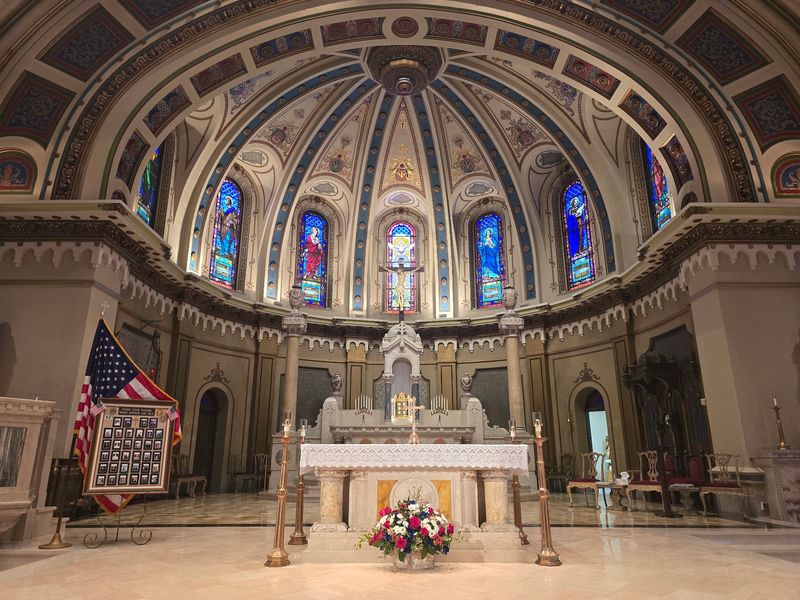
Weekdays are your friend here. The Cathedral of Saint John the Evangelist sits at 807 N 8th St, Boise, ID 83702, just north of the downtown core.
Visiting hours are posted for Monday through Friday, with a shorter window on Fridays. Weekend visits outside Mass are a different story, so plan tours for midweek.
Hours can shift during maintenance work. Checking the cathedral’s own schedule right before you go saves you a wasted trip.
Self-guided visits let you wander at your own pace. Docent-led tours add stories and context you won’t get from simply looking around.
Remember that this is an active parish first. Keep voices low, and be mindful of anyone praying while you admire the windows.
Pair the stop with other downtown Boise sights for an easy Idaho day out. The cathedral works nicely as a calm break between busier errands.
Is it worth the detour? For anyone who loves history, stained glass or a building with a good backstory, I believe it absolutely is.
Those flat-topped towers have been waiting more than a century to show you around.