This California Hospital Treats Some Of The Toughest Medical Cases And Just Earned A Major National Honor
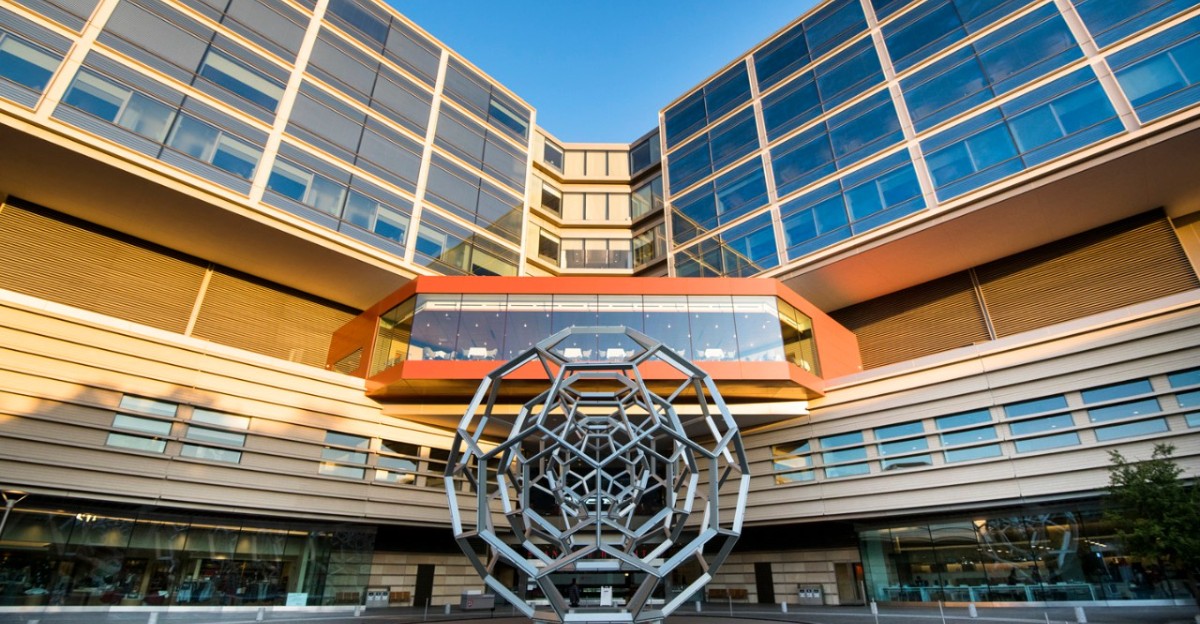
Back in 1981, surgeons at one hospital pulled off the world’s first combined heart-lung transplant. That’s two vital organs swapped in a single operation, and nobody on Earth had done it before.
The same place performed the first successful adult heart transplant in the United States in 1968.
Even earlier, in 1956, it treated the first patient in the Western Hemisphere with a linear accelerator. That machine still shapes cancer care today.
That kind of track record is wild for one California campus. Most hospitals hope for one headline-making moment. This one keeps collecting them.
Now the honors are stacking up too. A national quality group just placed it among the top academic medical centers in the country.
Only about 1.6 percent of American hospitals have earned Magnet designation five times, making Stanford’s achievement particularly rare.
A National Quality Award Put This Hospital In Rare Company

Trophies usually go to athletes, but Stanford Health Care – Stanford Hospital keeps winning them for patient care.
Vizient, a major health care performance company, gave Stanford Health Care its 2025 Bernard A. Birnbaum, MD, Quality Leadership Award.
That award is a big deal in hospital circles. It looks at how well academic medical centers deliver safe, effective, and fair care.
In the 2025 Vizient Quality and Accountability Study, Stanford ranked fifth out of 118 peer institutions for inpatient care. It also earned a five-star performer rating.
Then in 2026, Vizient placed it in the top 10 nationally for both inpatient and outpatient care.
Doing well in one category is impressive enough. Landing near the top in both takes serious teamwork across a huge system.
Why should you care about a ranking? These studies measure things that matter to real patients.
Think safety, results, and how smoothly care moves from one step to the next.
So if you ever need a hospital that sweats the details, this one has the paperwork to prove it. Not bad for a place that started as a small children’s convalescent home in 1911.
Medical History Was Made Here More Than Once

Few hospitals can point to a whole list of medical firsts. Stanford’s list reads like a highlight reel from the history of modern medicine.
California’s first kidney transplant happened here in 1960. Eight years later, the team completed the first successful adult human heart transplant in the United States.
Then, in 1981, came the world’s first combined heart-lung transplant.
Each of those moments opened doors for patients everywhere. Doctors around the globe learned from what happened on this campus.
The story goes back even further. In 1956, Stanford treated the first patient in the Western Hemisphere using a medical linear accelerator.
That device remains a core tool for treating cancer today.
It’s easy to forget that every routine treatment was once brand new. Somebody had to be brave enough to try it first, and carefully enough to get it right.
That pioneering spirit still shapes the hospital now. Stanford Medicine regularly turns big lab discoveries into treatments for real patients.
I’d say that’s the kind of legacy you can’t buy. You have to earn it, one bold step at a time.
The Cases Other Hospitals Send Away Often End Up Here

Complex care is the specialty. Stanford Health Care routinely handles some of the most difficult procedures performed anywhere in the world.
Its experts are known internationally for cancer treatment, neuroscience, surgery, cardiovascular medicine, and organ transplants. Those fields cover a lot of the scariest diagnoses a family can face.
Take the brain and spine. The neurosurgery team uses advanced imaging, robotic tools, and computer-assisted surgery for tricky cases.
They treat brain and spinal cord tumors, serious head and spine injuries, Parkinson’s disease, and epilepsy.
Transplants are another strength. The hospital performs a high volume of solid organ transplants.
That includes complex multi-organ cases like heart-lung transplants.
Specialized care also extends to patients with obesity who need surgeries such as gastric bypass. Those operations call for careful planning before, during, and after the procedure.
Here’s a practical tip worth remembering. If a local doctor says your condition needs a specialist center, ask about a referral to a major academic hospital.
Places like this one see rare problems far more often than smaller hospitals do. That experience can make a real difference.
Helicopters Land Right On The Roof For The Worst Emergencies

Look up at the main building and you might spot a helicopter touching down. The roof has a landing facility for Life Flight helicopters, which rush critically ill and injured patients in fast.
That rooftop matters because Stanford Hospital is a Level 1 trauma center. The American College of Surgeons has verified it at that top level since 1998.
What does Level 1 mean? It means the hospital can provide complete care for the most severe injuries around the clock.
Surgeons, specialists, and equipment stay ready day and night.
Here’s the surprising part. It’s the only facility between San Francisco and San Jose that offers this level of trauma care. That’s a long stretch of busy Northern California.
So when a terrible crash or major injury happens on the Peninsula, this is often where help arrives. Every minute counts in those moments.
The heart team adds another layer of readiness. The Joint Commission and the American Heart Association recognize Stanford Health Care as a Comprehensive Cardiac Center.
In plain words, serious heart emergencies get evidence-based care backed by national standards.
Nurses Here Hold An Honor Most Hospitals Never Reach

Ask anyone who has stayed in a hospital, and they’ll likely mention the nurses first. At Stanford, the nursing team has earned national bragging rights.
Its nurses received Magnet designation for the fifth time. Stanford Health Care has held this recognition since 2009.
Magnet status comes from the American Nurses Credentialing Center. It honors hospitals with outstanding nursing quality, strong leadership, and a culture that supports nurses.
Only a small percentage of American hospitals hold Magnet designation, making it a significant recognition of nursing excellence.
Why does it matter to patients? Strong nursing teams catch problems early and keep care moving smoothly. They’re also the people you see most during a stay.
The hospital also follows a philosophy called C-I-Care. It focuses on respect, clear communication, and teamwork with patients and families.
One helpful tip applies anywhere you get care. Write down your questions before the nurse or doctor visits.
A short list keeps you from forgetting what matters most. Good care teams appreciate an informed patient, and Stanford’s culture is built around that kind of conversation.
Safety Grades That Would Make Any Parent Proud

Report cards aren’t just for students. Hospitals get graded too, and Stanford keeps bringing home straight A’s.
The Leapfrog Group, an independent watchdog, has given Stanford Health Care five consecutive “A” grades for patient safety. Those grades look at things like preventing infections and avoiding errors.
The federal government weighed in as well. In 2025, the Centers for Medicare and Medicaid Services gave the hospital its top five-star overall rating.
That star rating covers several areas. It includes safety of care, readmissions, patient experience, timeliness, and overall outcomes.
Scoring five stars means the hospital did well across the board, not just in one spot.
U.S. News and World Report adds even more weight.
Stanford made its Best Hospitals Honor Roll for the ninth straight year in 2023-2024. It was also ranked No. 1 in California, tied with several other top hospitals.
Want to check any hospital yourself? Leapfrog and Medicare both post their ratings online for free.
It only takes a few minutes. That’s smart homework before a planned surgery, and it helps you ask better questions.
Rankings Show Strength In Nearly Every Specialty

Eleven out of fifteen. That’s how many adult specialties earned national rankings from U.S. News and World Report for 2023-2024.
The hospital also landed “high performing” status in 19 of 21 procedures and conditions. That’s a lot of green lights on one scoreboard.
Some specialty ranks really stand out. Pulmonology came in at No. 7, while cardiology and diabetes and endocrinology each placed No. 9. Gastroenterology and GI surgery, plus geriatrics, both ranked No. 10.
Cancer care landed at No. 11 nationally. Nephrology, which focuses on kidneys, earned high-performing status.
Stanford also appeared in the Top 20 Best Hospitals Honor Roll for 2024-2025. Within its region, it was named the leading hospital in the San Jose metro area.
Rankings aren’t everything, of course. A great hospital for your neighbor’s knee might not be the right pick for your heart. Still, wide strength across so many fields says something important.
It suggests that skilled teams work across the whole building. When one problem leads to another, help is usually just down the hall.
A Newer Building With A Big Brain Behind It
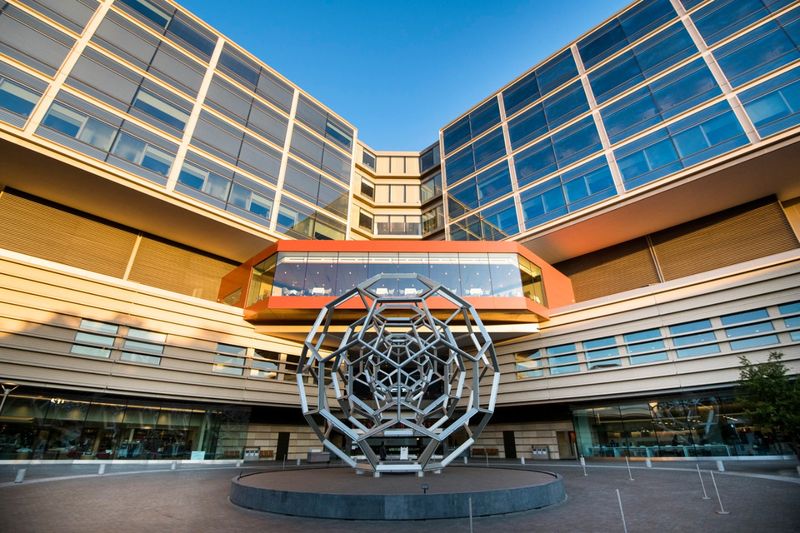
In 2019, a new inpatient facility opened for Stanford Hospital. It gave this historic institution a modern home for its patients.
You’ll find it at 500 Pasteur Drive, Stanford, California 94305. Fun twist: even with that Stanford address, the main hospital building sits within Palo Alto city limits.
The roots go deep here. Stanford Hospital officially started in 1959, when the medical school moved from San Francisco to the university campus.
In 1968, Stanford University fully took over and renamed it Stanford University Hospital.
That close tie to a university is a huge part of the hospital’s power. It belongs to Stanford Medicine, alongside the Stanford University School of Medicine and Stanford Children’s Health.
Research doesn’t stay locked in a lab. Discoveries can move into patient care faster when scientists and doctors share a campus.
The people count is impressive too. Stanford Health Care has more than 2,800 medical staff members.
It also trains over 1,500 residents and clinical fellows. That means tomorrow’s top doctors are learning right alongside today’s experts, which keeps the whole place sharp.
Precision Health Points Toward Medicine’s Next Chapter

Most medicine waits for you to get sick. Stanford Medicine is pushing hard on a different idea called Precision Health.
The goal is simple to say and tough to do. It uses advanced technology and personal care to predict, prevent, and cure disease with precision.
Think of it like a custom-fit approach instead of one-size-fits-all. Your genes, history, and health data can help guide decisions made just for you.
That fits the hospital’s long habit of trying new things. The same campus that launched historic transplants now looks for ways to stop problems before they start.
For everyday readers, there’s a useful takeaway. Know your family’s health history and share it with your doctor.
That simple step is the low-tech version of precision care, and it works anywhere.
Stanford Health Care – Stanford Hospital stays open 24 hours a day, every day. It serves people from across California and far beyond.
From a 1911 children’s home to a national award winner, the journey keeps going. I can’t wait to see what first this place adds to its list next.