The Best State Park In Missouri For A Family Day Outdoors
A woolen mill here still holds its original 19th-century machinery.
No other American woolen mill from that era can say the same. That is a great fact for impressing your kids, or at least confusing them.
Then again, some families just want a sandy beach and a paved loop for bikes.
A 100-acre lake handles that job without any history lesson attached. I can’t choose between old gears and kayaks. Luckily, nobody here is asking me to.
Then there’s the octagonal schoolhouse from 1856. Eight walls, one classroom, and zero corners for a kid to get sent to.
This Missouri park keeps stacking up good reasons to visit. Clearly, it never learned the meaning of one main attraction.
The Only Mill Of Its Kind Still Has Every Gear In Place
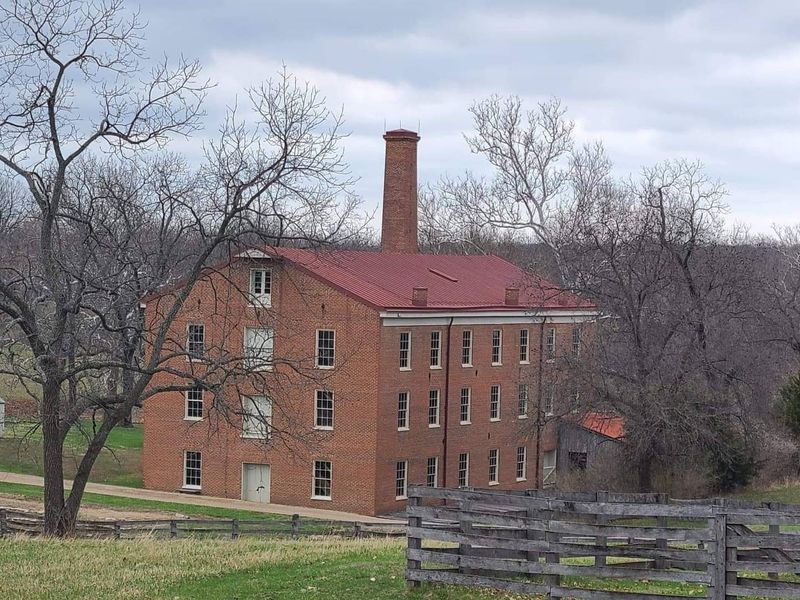
Most old factories lost their machines long ago. Watkins Woolen Mill State Park and State Historic Site kept its original textile machinery right where it belongs.
The three-story mill opened in 1860. It’s the only 19th-century textile mill in North America with its original machinery still intact and in place.
That rarity earned big honors over the years. The site became a National Historic Landmark in 1966 and a National Mechanical Engineering Historic Landmark in 1980.
Guided tours take you inside for a small admission fee. You’ll see carding machines, spinning equipment, and looms that once transformed raw wool into blankets, fabric, and yarn.
More than 50 major textile machines remain inside. The original steam engine and enormous boiler offer another fascinating look at early industrial technology.
The mill operated until 1898, and its equipment remained remarkably well preserved. Today, it offers a rare opportunity to see how a working factory operated in 19th-century Missouri.
A Twelve-Room House With A Smokehouse, Icehouse, And More
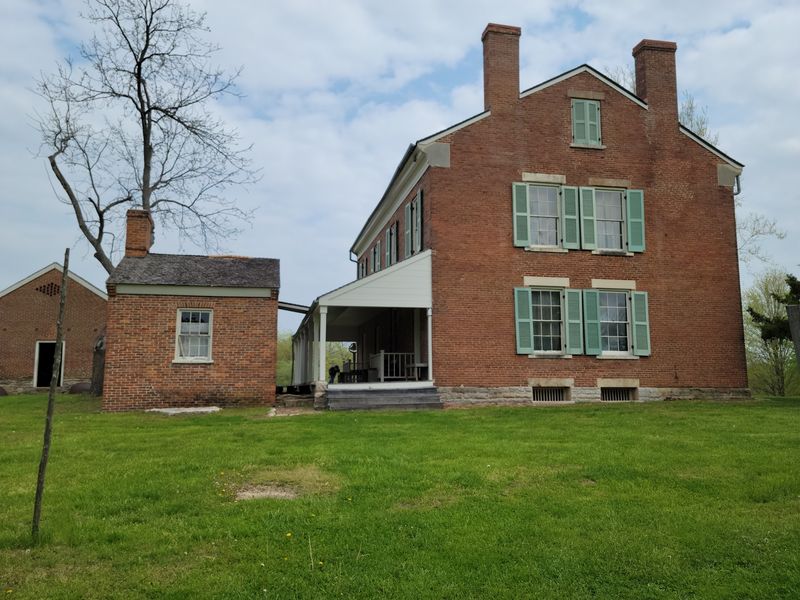
Waltus L. Watkins did not build a modest cabin. His family moved into a substantial brick house in 1854, replacing the small log home they had occupied since arriving on the property.
He had established the Bethany farm back in 1839. By the time the mill rose nearby, the Watkins property had developed into an extensive agricultural and industrial operation.
The house contained parlors, bedrooms, a winter kitchen, and a full basement used partly for food storage and dairy work.
The guided house tour goes well beyond fancy parlors. You can see the dairy cellar, summer kitchen, smokehouse, icehouse, and fruit dry-house.
Outside, there’s a garden and poultry areas too. It’s basically a lesson in how a large household managed everyday life before modern appliances.
Kids tend to get curious about the icehouse. Ask how a family kept food cold through a Missouri summer without electricity.
The answer involves blocks of winter ice stored beneath insulating materials, a practical system that required plenty of planning.
Costumed Interpreters Bring The 1870s Back To Life
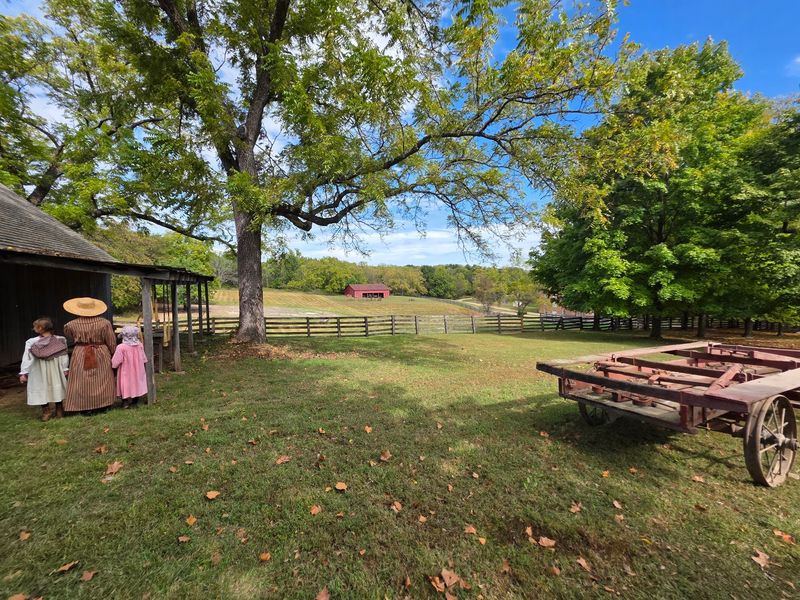
Yarn-making, gardening, and wood stove cooking bring history much closer than a textbook ever could. The site’s Living History Program introduces activities that were commonplace during the 1870s.
Costumed interpreters lead participating groups through hands-on lessons. Depending on the selected program and season, students can try laundry techniques, rag-rug weaving, traditional games, gardening, or cooking.
The historic farm also maintains heirloom plants and traditional livestock breeds, helping explain how agricultural life supported the mill and the surrounding community.
For kids, this beats any textbook chapter. They can discover how everyday chores worked before modern appliances and compare those tasks with their routines at home.
The demonstrations connect neatly to the mill tour. Learning how wool was handled makes those enormous machines seem even more impressive.
The Living History Program is primarily arranged for educational groups, with advance reservations required. Other public interpretive events take place on selected dates throughout the year.
Planning around one of those events can add an extra dimension to your visit.
Eight Walls And Eight Corners At This Little School
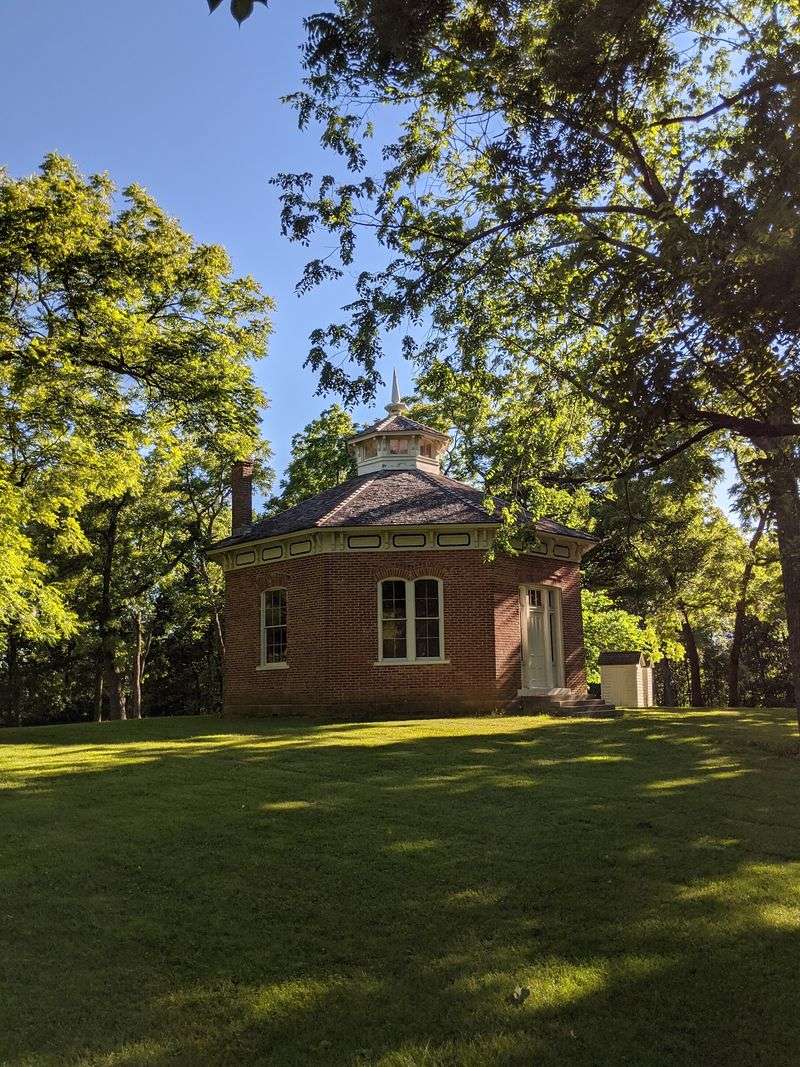
Octagons usually show up in geometry lessons, not classrooms. The Franklin School breaks that expectation with eight sides, and it has stood on these grounds since 1856.
Built of brick, the unusual schoolhouse features tall windows, a cupola, and a symmetrical design that immediately distinguishes it from ordinary rural schools.
Nearby stands the Mount Vernon Baptist Church, built in 1871. Together, they show that the Watkins story was about a whole community, not just one family.
Both historic buildings are part of the preserved property, a short distance from the main mill complex.
Kids usually have one big question about the schoolhouse. Why eight sides? It’s a fun mystery to talk through while you circle the building.
Compare it to your own child’s school while you’re there. One room, one teacher, and students of different ages sharing lessons sounds unusual to modern children.
The site also offers a reserved educational program inside Franklin Academy, where students can experience traditional spelling, reading, and arithmetic lessons.
The church adds another interesting stop with its simple 19th-century architecture.
Start At The Museum And Thank Yourself Later
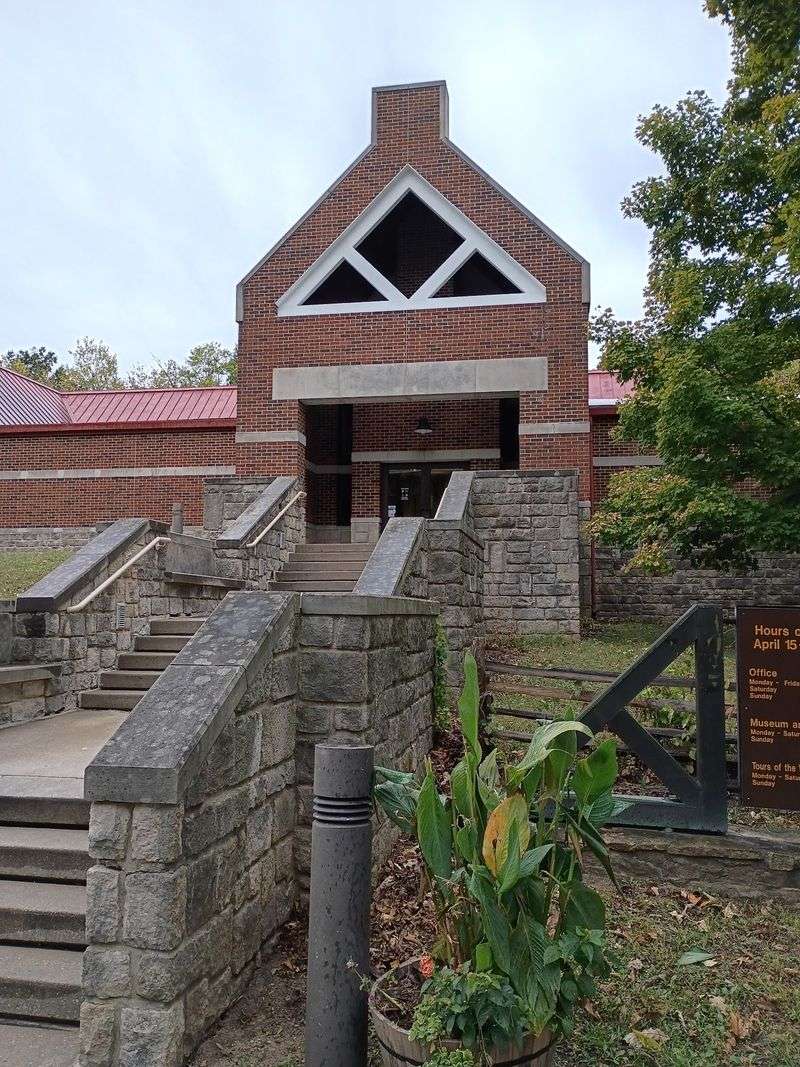
Smart visits begin indoors. The visitor center museum lays out the story of the Watkins family, their Bethany farm, and the woolen mill.
Exhibits also explain how industrialization changed life in the 19th century. That context makes everything outside click into place.
A 25-minute orientation film runs here too. It’s a great way to get everyone on the same page before the tours start.
Best of all, admission to the grounds and visitor center is free. Guided tours of the historic buildings require a separate admission.
The museum keeps seasonal hours. From April 15 through October 31, it opens at 9:30 AM Monday through Saturday and 10:30 AM on Sundays, closing at 5 PM.
From November through mid-April, the museum closes at 4:30 PM. Holiday schedules and weather conditions can affect access.
Allowing time for the introductory exhibits makes the rest of the experience more meaningful, especially when traveling with children.
Outside, the preserved buildings and surrounding farm landscape provide a fascinating glimpse of Missouri’s agricultural past.
Sand, Splashes, And A 100-Acre Lake Waiting For You
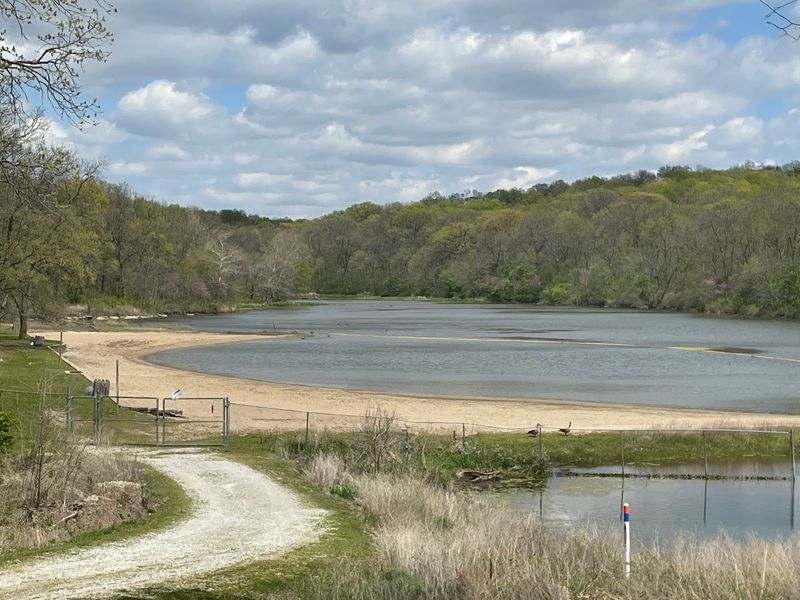
History buffs get the mill, but water lovers get Williams Creek Lake. This 100-acre lake is the outdoor heart of the park.
A sandy swimming beach sits along the northern shore with a change house nearby. During the swimming season, families can spread out their towels and enjoy a sunny afternoon beside the water.
Kayaking offers another way to explore. A boat-launching area includes a paved ramp, courtesy dock, and a separate sandy launch suited to smaller watercraft.
Kayak rentals are also offered through the campground check station when seasonal services are operating.
Anglers have plenty to catch here. The lake supports bass, catfish, crappie, and sunfish, giving beginners and experienced anglers several possibilities.
An accessible fishing dock near the dam makes casting easier for people with different mobility needs.
Shade near the beach can be limited, so bring sunscreen and comfortable clothing for warm-weather visits.
Swimming is seasonal, generally running from late May through early September. The lake remains part of the park’s scenery throughout the year.
Wheels, Strollers, And Sneakers All Love This Lake Loop
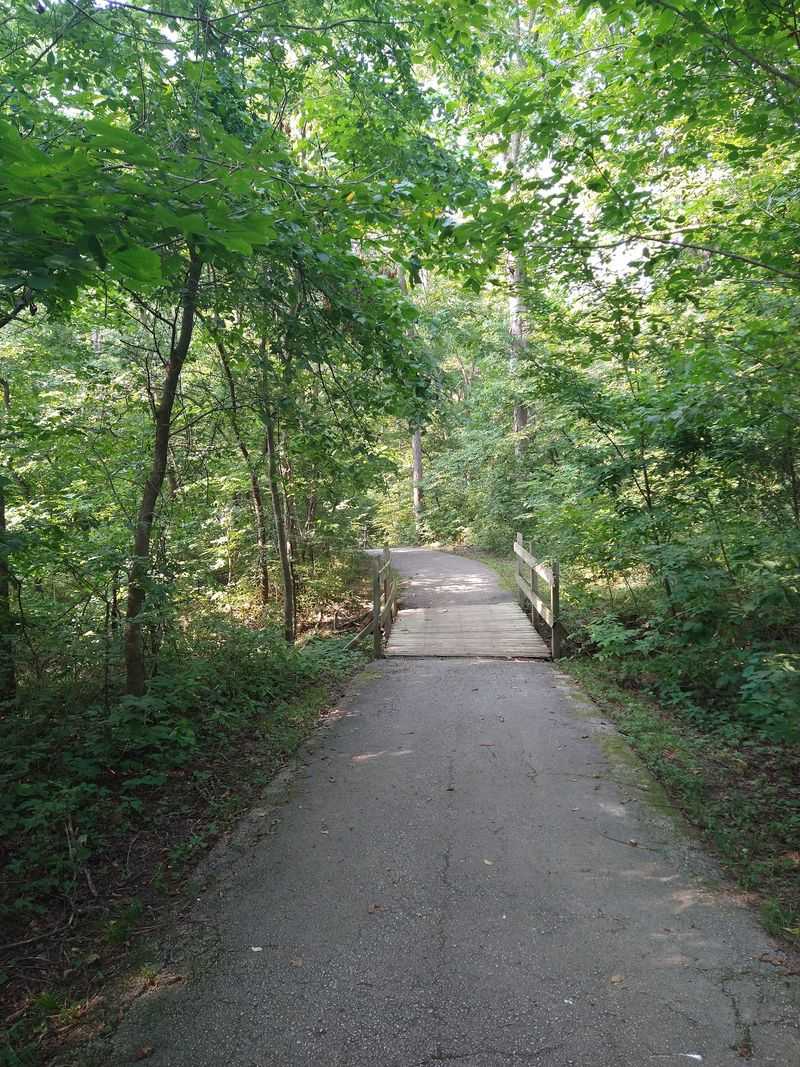
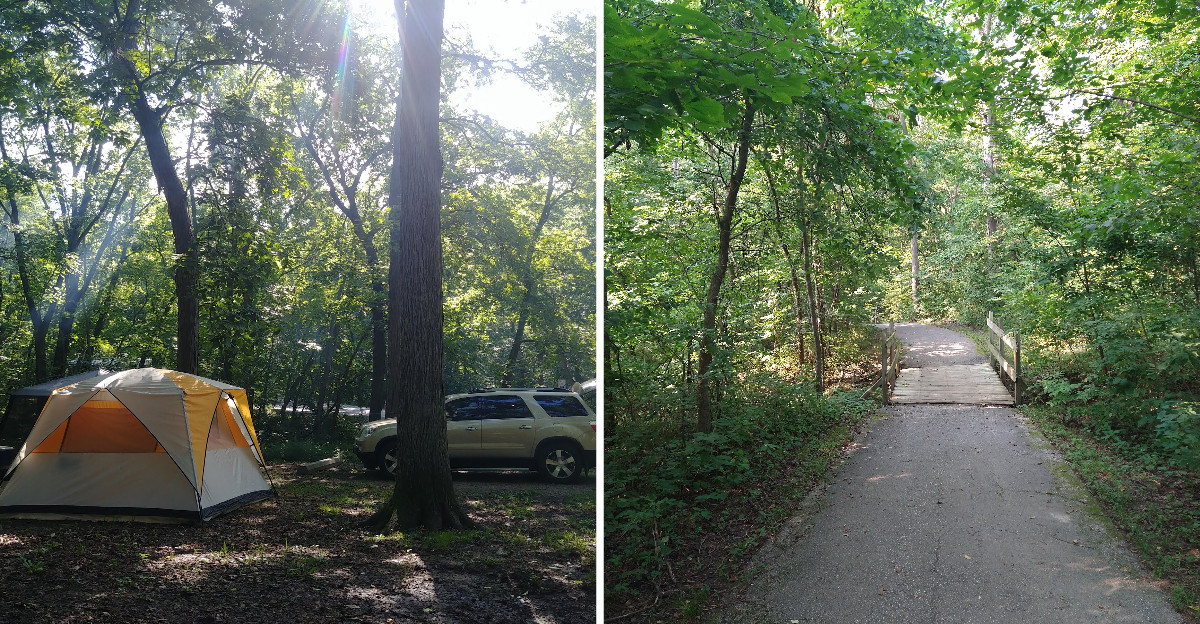
Roughly 3.8 miles of asphalt wrap around Williams Creek Lake. That’s the Paved Bicycle Lake Trail, and it’s a wonderful option for families who enjoy outdoor exercise.
The route is eight feet wide and features six wooden bridges and one metal truss bridge.
Walkers, runners, and cyclists can share the trail, which passes through oak-hickory woodland and opens onto attractive lake views.
The path has moderate slopes rather than being completely flat. Families with younger cyclists may prefer exploring one section instead of completing the entire loop.
Picnic areas sit along parts of the trail. That makes it easy to stop for lunch or simply enjoy the scenery.
Horse fans aren’t left out either. A separate equestrian trail system covers approximately 3.6 miles through wooded terrain.
These natural-surface paths provide another way to explore the park, with connecting routes offering different distances.
Keep your eyes open as you go. White-tailed deer, wild turkeys, and songbirds inhabit the surrounding woodland.
Stay The Night And Wake Up Next To The Lake
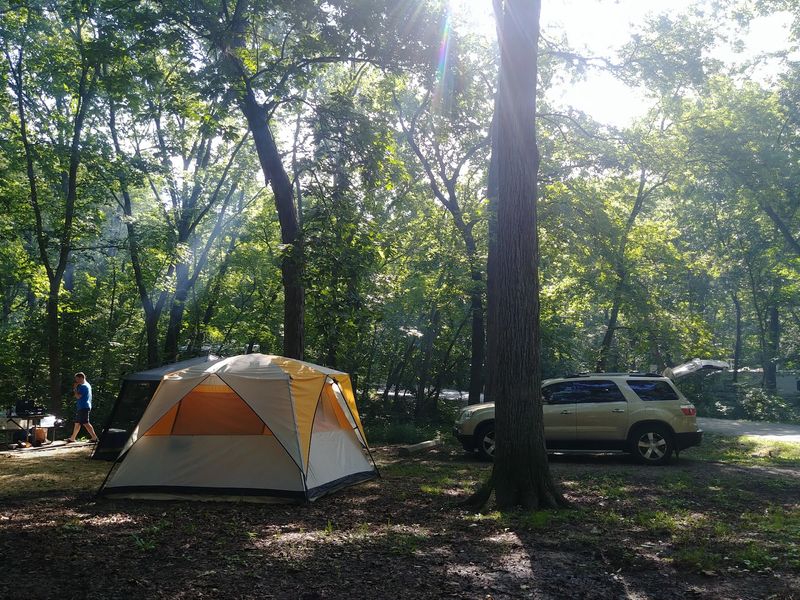
Day trips are great, but sleeping over doubles the fun. Watkins Mill State Park has 96 campsites, and 74 of them feature electric hookups.
The campground occupies a wooded area near the southern end of Williams Creek Lake, offering a convenient base for longer visits.
Sites accommodate tents and recreational vehicles, with basic and electric camping options available. Several accessible campsites and larger family sites are also part of the campground.
During the main camping season, showerhouses, restrooms, laundry facilities, and a sanitary dumping station serve registered campers.
The lake, trails, and historic site are all nearby, making it easy to spread activities across two days.
There is one important scheduling detail for 2026. Construction has closed the campground and campground road throughout November and December, including the campground playground and the parking lot near the eastern side of the dam.
Grab A Grill And Make A Whole Day Of It
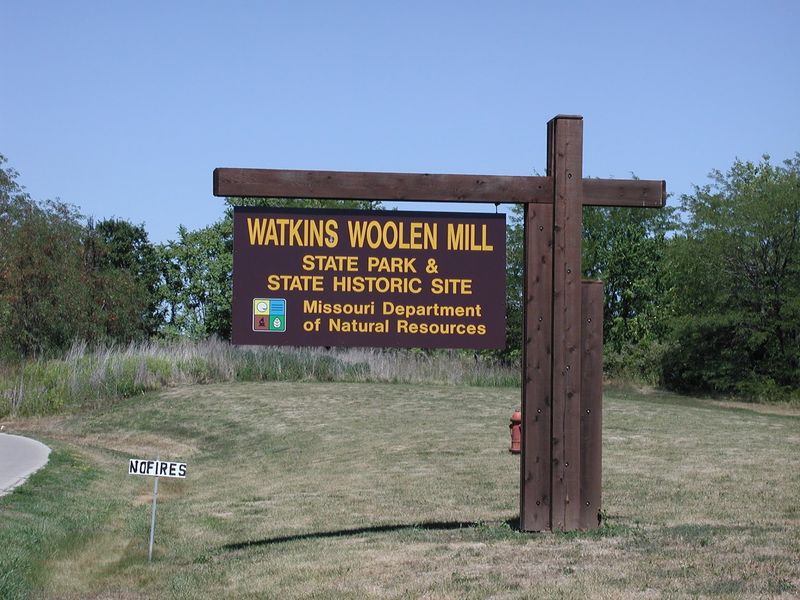
Lunch decides whether a family outing ends with smiles or grumpy faces. Luckily, picnic areas with tables and grills are scattered throughout the park.
Bigger groups can reserve a covered shelter house. Birthday parties, family reunions, and group outings can all take advantage of its tables and cooking facilities.
The shelter accommodates up to 80 people and provides electricity, a water hydrant, and convenient access to the paved bicycle trail.
Getting here is simple. The park sits at 26600 Park Road North, Lawson, MO 64062, in Clay County.
Kansas City, Excelsior Springs, and Kearney are all within driving distance. That makes this an easy pick for a spontaneous Saturday.
The property joined the Missouri state park system in 1964. Decades later, it still blends serious history with plain old outdoor fun.
A full summer day might look like this: museum film, mill tour, picnic lunch, then a bike ride and beach time.