This Historic Virginia Tavern Dates Back To 1766 And Its Garden Serves Food Inspired By The 18th Century
Your lunch table here sits under a scuppernong grapevine that has been growing for decades.
That means your sun umbrella is a native Southern grape plant, which is a pretty fancy upgrade from canvas.
The vine shades the yard behind a tavern that first opened its doors back in 1766.
Back then, this street in Virginia buzzed with lawmakers, merchants, and big ideas about freedom. Many of the people who helped shape a brand-new country walked these same blocks.
Today, the building next door tells the old story, while the garden handles the feeding.
Pull up a seat, unwrap something warm, and let the past do the talking. History rarely comes this well shaded.
A 1766 Tavern Story Starts With One Ambitious Innkeeper
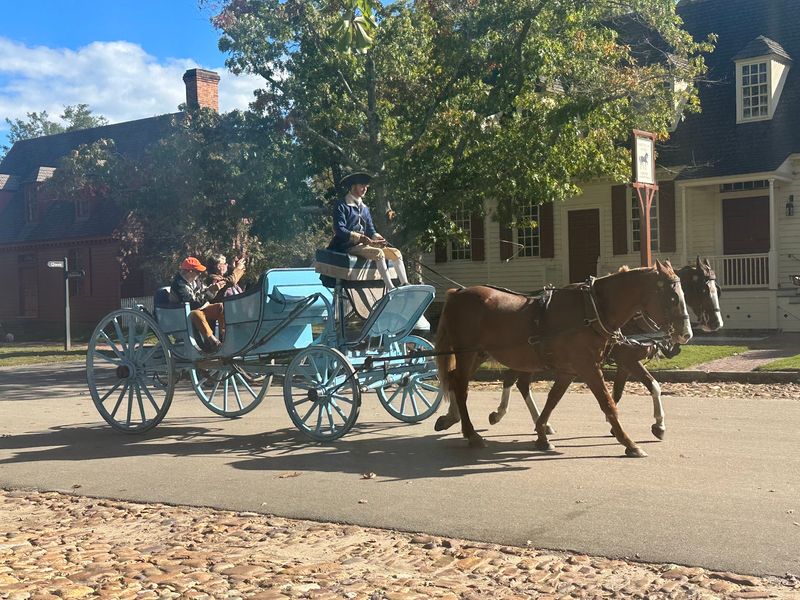
Back in October 1766, a man named Josiah Chowning advertised the opening of his tavern in Williamsburg. His announcement offered hospitality to travelers, their attendants, and even their horses.
The establishment catered to ordinary customers rather than exclusively serving the wealthiest members of colonial society.
Historians associate establishments like this with the middling sort, a social group that included tradespeople, shopkeepers, and independent farmers.
Today, that tradition lives on in the outdoor dining garden behind Chowning’s Tavern. It sits within Colonial Williamsburg, the living-history museum occupying part of Virginia’s former capital.
The original establishment operated for a relatively short period. By 1768, another proprietor had taken over the business.
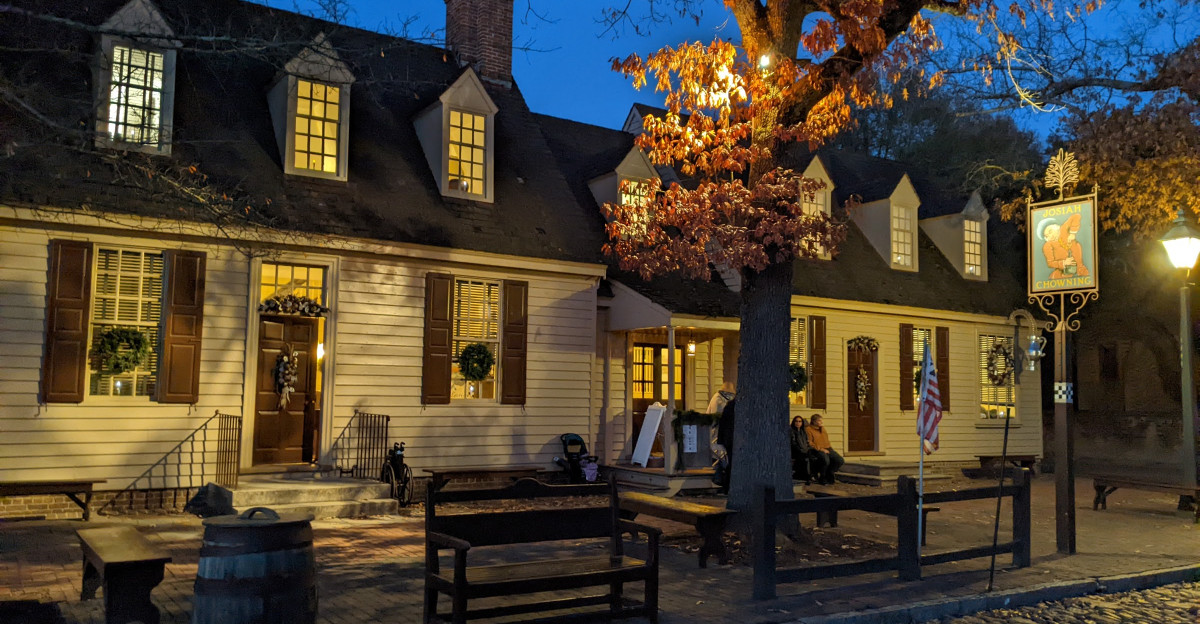
Colonial Williamsburg reconstructed the present building in 1941.
Archaeological investigations and historical documents informed its design, although subsequent discoveries suggest that Chowning’s original tavern stood somewhere nearby rather than precisely on this site.
The white wooden building and its distinctive hanging sign nevertheless illustrate the appearance of an eighteenth-century public house.
You Will Want A Seat Under That Famous Grapevine
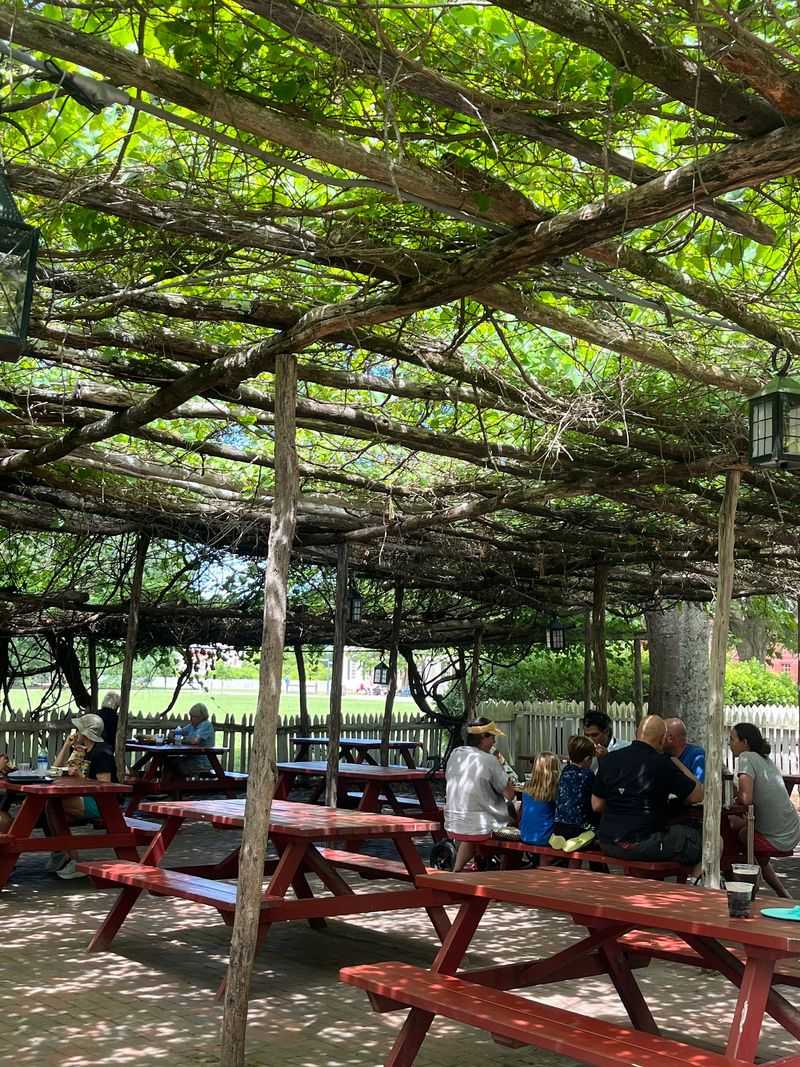
Leaves overhead, sunlight filtering through, and a picnic-style table waiting below. During the growing season, that is the main scene in the garden behind the old tavern.
The star of the yard is a grape-covered arbor historically planted with scuppernong vines. Scuppernongs are a variety of muscadine grape native to the southeastern United States.
The arbor was incorporated into the twentieth-century reconstruction of the property, reflecting the outdoor gathering spaces associated with eighteenth-century establishments.
On a warm Virginia afternoon, that shade feels like a gift. You get fresh air without sitting directly beneath the bright sun.
The arrangement also fits the colonial character of the surrounding neighborhood. Gardens and enclosed yards behind buildings served practical purposes in the 1700s, providing space for plants, household activities, and outdoor gatherings.
Since the seating is outdoors, weather matters considerably here. The grapevine also loses its foliage during the colder months, giving the garden a different appearance in winter.
Hand Pies That Would Make A Colonial Traveler Nod In Approval
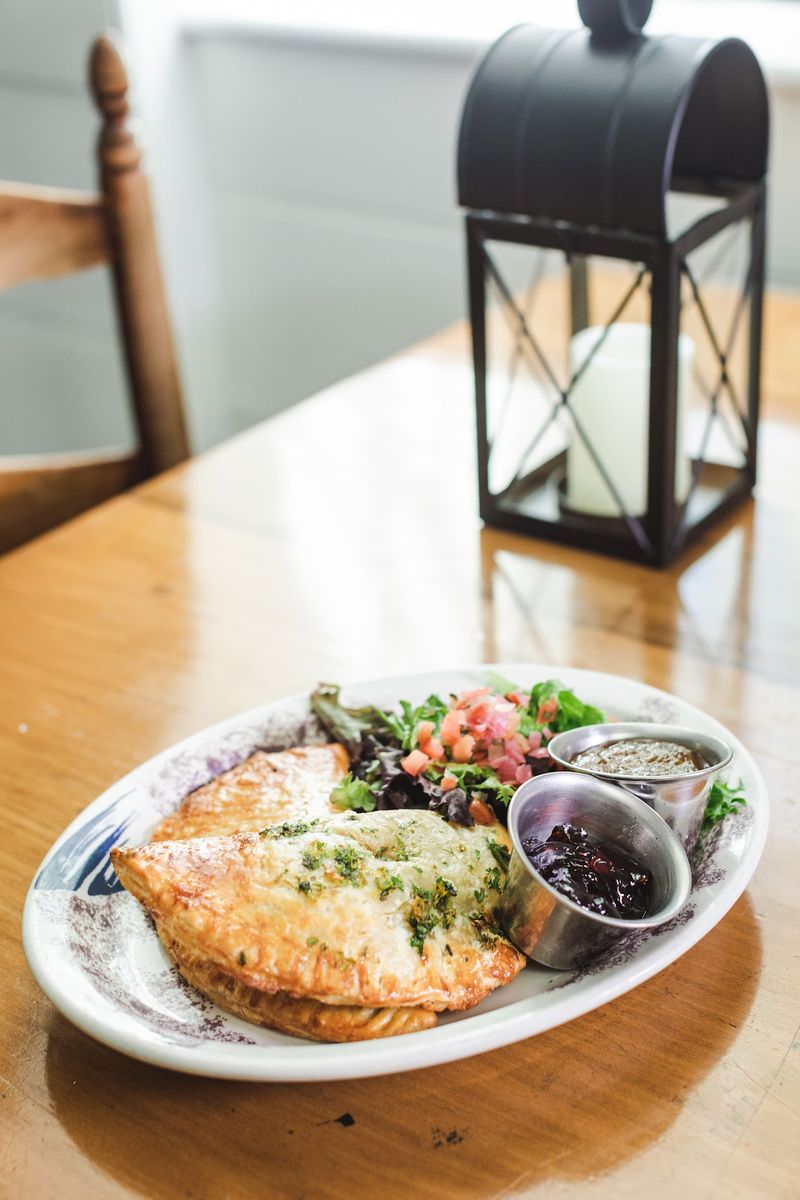
Long before anyone invented the drive-through, people needed food they could carry. Savory pasties offered a practical solution, with pastry folded around a filling.
The garden’s culinary offerings have included historically inspired pasties. Beef and chicken fillings reflect English cooking traditions that accompanied settlers across the Atlantic.
These handheld pies connect neatly to the tavern’s eighteenth-century roots. Their enclosed pastry makes them particularly convenient for eating without an elaborate table setting.
Enjoying one outdoors feels fitting. You can hold lunch in one hand and a street map in the other.
Chowning’s former indoor menu featured dishes such as Welsh rarebit, Brunswick stew, and onion pye, offering different interpretations of traditional cooking.
The garden continues that approach with a simpler selection. Its grill menu features Brunswick stew accompanied by warm cornbread, another longstanding Colonial Williamsburg specialty.
Pasties have also been available from the neighboring snack stand, although individual offerings depend on the operating schedule.
If you’re interested in historical cooking, these dishes provide an approachable introduction to earlier culinary traditions without requiring an elaborate sit-down meal.
Modern Cravings Get Plenty Of Love Too
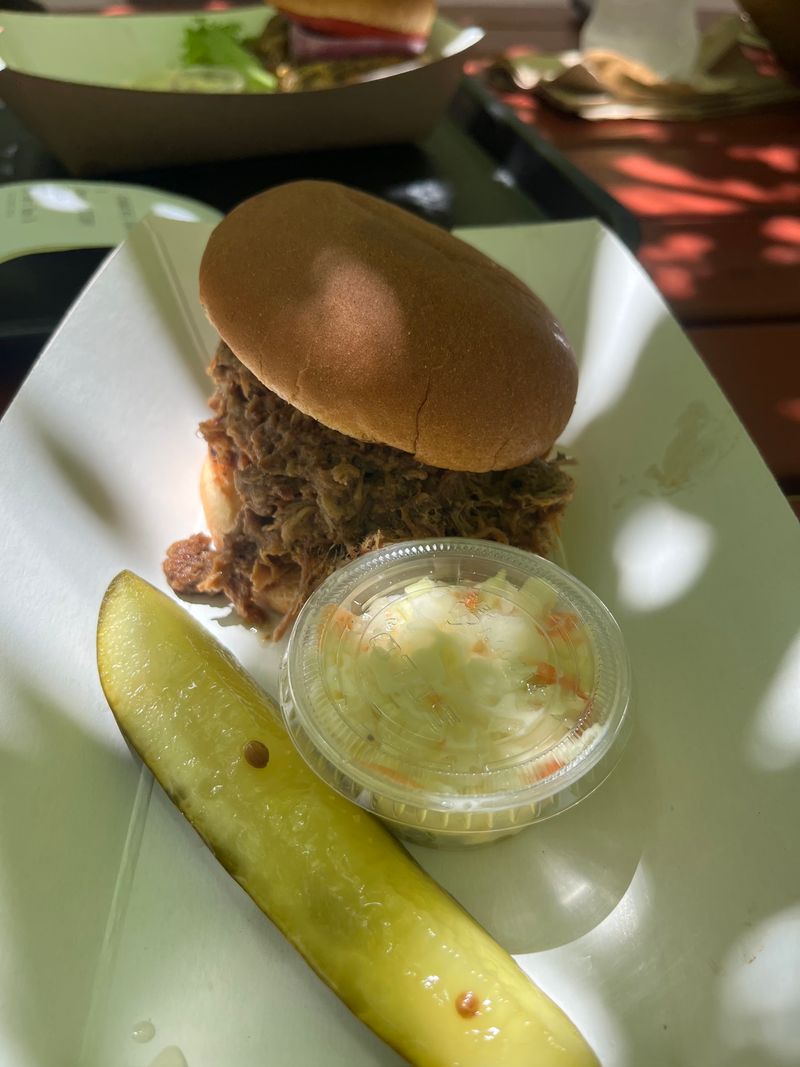
Not every kid in your group wants a history lesson for lunch. Luckily, the garden menu also covers twenty-first-century favorites.
You’ll find familiar choices like Angus beef hamburgers, chicken sandwiches, and barbecue pork. Coleslaw, potato salad, pickle chips, and potato chips round things out nicely.
Hot dogs and bratwurst also appear on the grill menu. Children have their own selection, including hamburgers, cheeseburgers, and peanut butter and jelly sandwiches.
Interestingly, some apparently modern dishes have historical connections of their own. The barbecue pork takes inspiration from The Experienced English Housekeeper, a cookbook written by Elizabeth Raffald and first published in 1769.
The sausage preparations draw on eighteenth-century cookbooks as well, connecting familiar ingredients with older cooking methods.
Ordering from the outdoor counter keeps the experience casual. It’s a convenient arrangement for anyone taking a break between historical attractions.
Ginger ale and other soft drinks provide refreshing accompaniments to lunch.
The combination of historic culinary influences and recognizable favorites makes the garden suitable for families with different tastes.
The Old Tavern Next Door Is Taking A Well-Earned Break
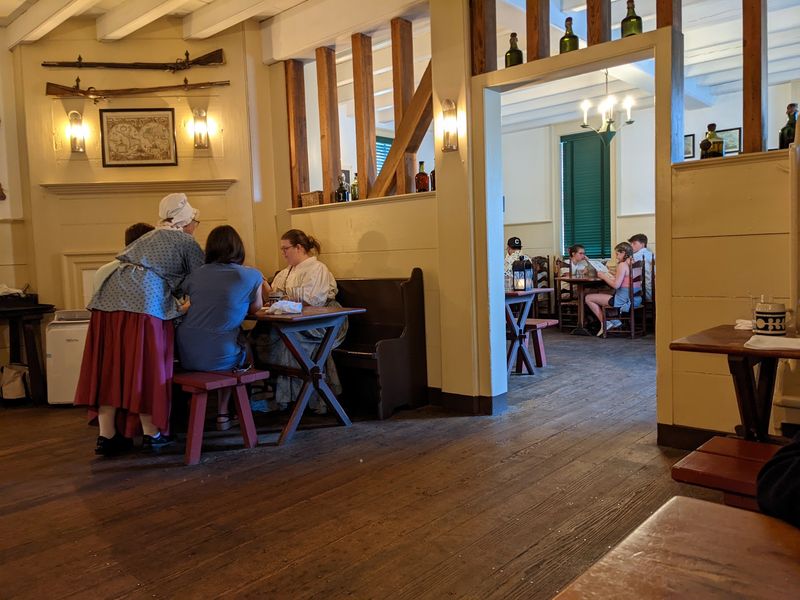
Here’s something worth knowing before you go. The indoor dining rooms of Chowning’s Tavern are currently closed, while the outdoor garden continues offering food when operating conditions permit.
That means you won’t be eating beside the tavern’s fireplaces during your visit.
The garden stands directly behind the reconstructed building, allowing you to appreciate the historic surroundings without entering the former dining rooms.
The building itself remains an interesting architectural stop. Its white weatherboards, shuttered windows, and traditional rooflines reflect building styles associated with eighteenth-century Williamsburg.
Inside, the tavern historically featured simple wooden furniture, stoneware table settings, and period-inspired decorative details.
A renovation completed in 2015 introduced changes intended to recreate the informal atmosphere of an eighteenth-century English public house more closely.
Those rooms once provided a setting for meals and historical entertainment, but no confirmed date for the resumption of regular indoor dining has been announced.
Knowing this beforehand helps you prepare for the experience that is available today.
Timing Your Visit Takes A Little Planning
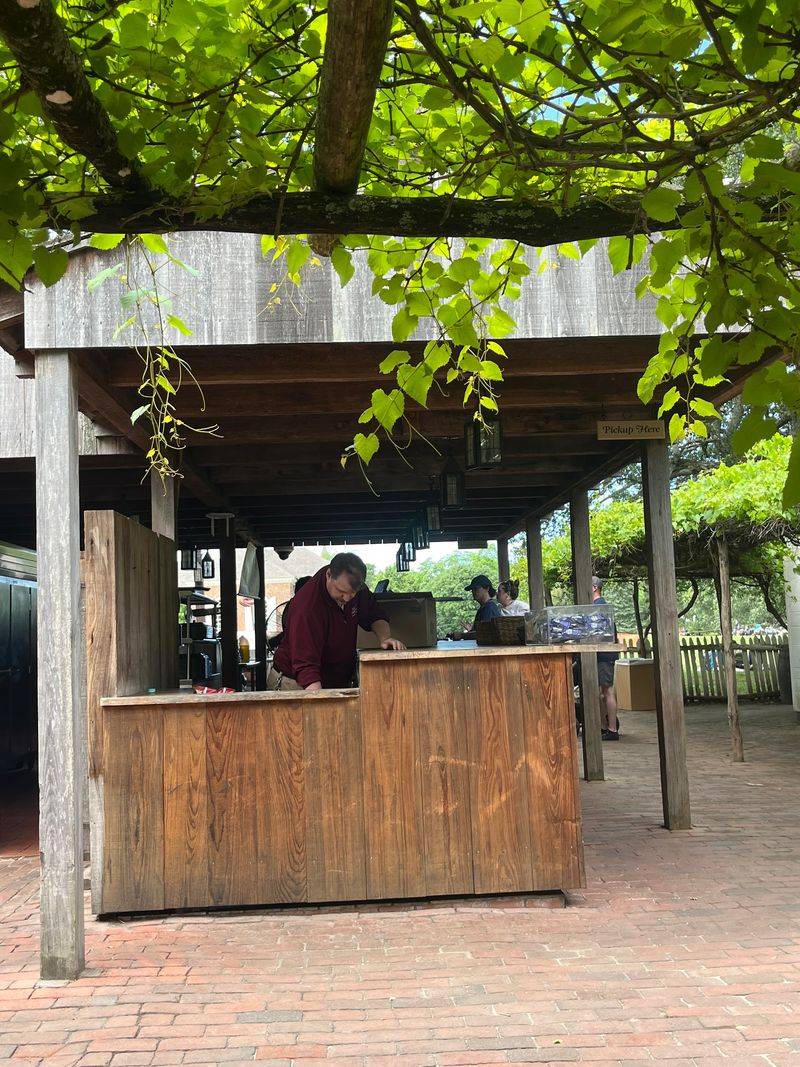
Lunch is the name of the game at this garden. Chowning’s outdoor dining area generally operates from 11 a.m. to 5 p.m., weather permitting.
Regular service runs Tuesday through Saturday. Sundays and Mondays are closed, so plan your colonial feast accordingly.
The garden also offers extended holiday hours on December 4–5, 11–12, and 18–19, 2026, remaining open until 7 p.m. on those dates.
That provides additional time to enjoy the surroundings during Colonial Williamsburg’s festive season, provided the weather cooperates.
The location makes timing easy, though. The garden sits near the middle of the Historic Area, allowing you to stop between museum visits and other activities.
Colonial Williamsburg encompasses more than 300 acres. A midday meal provides an opportunity to rest your legs before the next round of sightseeing.
Families might want to eat a little earlier, leaving additional time for afternoon demonstrations, guided tours, and exploring the surrounding streets.
Remember that outdoor service depends on suitable conditions.
A little planning goes a long way. Show up on the right day, and the hardest choice might be deciding between Brunswick stew and a barbecue pork sandwich.
Colonial Games Once Turned Dinner Into A Party
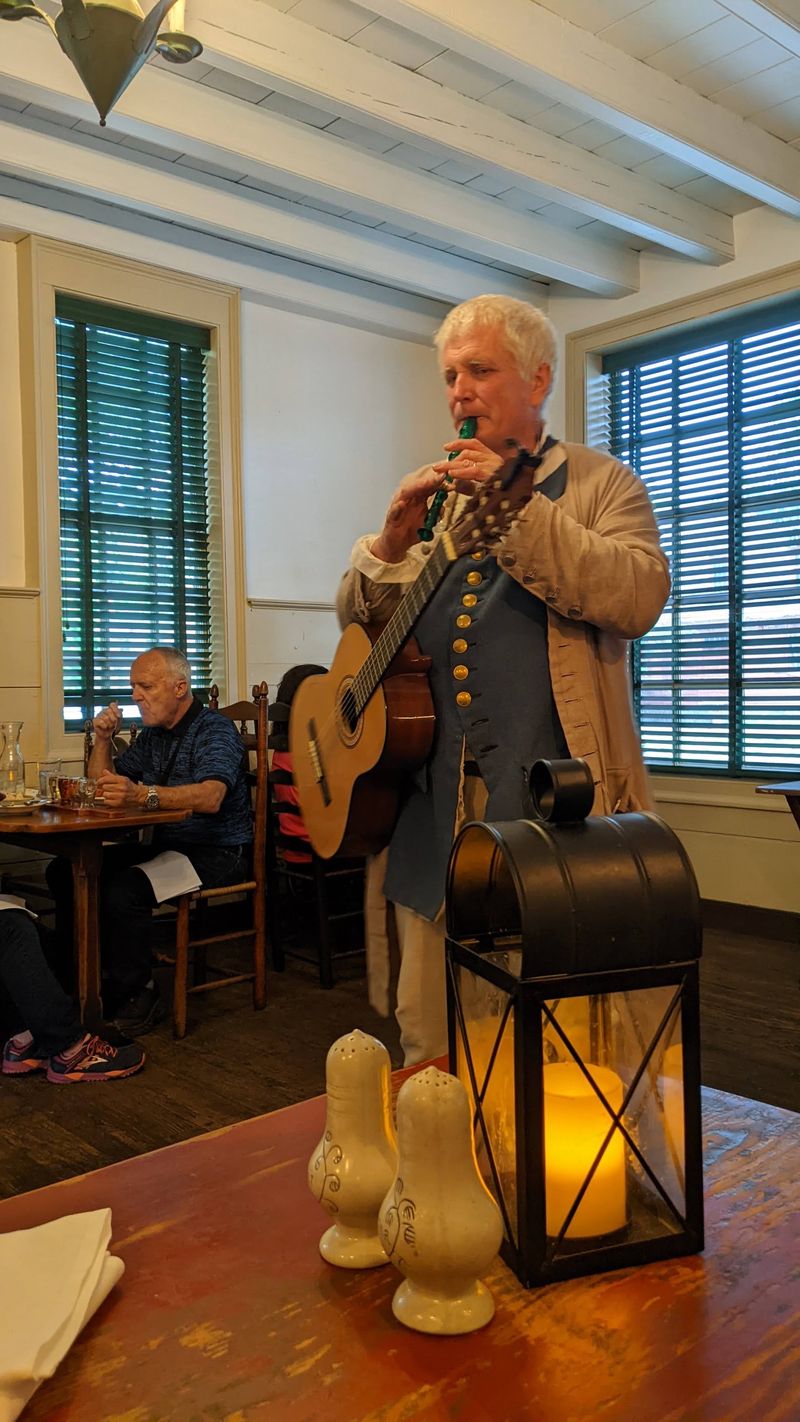
Gambols might sound like a made-up word, but it’s real. Chowning’s Tavern used the term for its evening entertainment, which included traditional games, music, and other social activities.
Taverns in the 1700s were more than places to eat. They provided gathering spaces where travelers and townspeople could exchange news, conduct business, and enjoy one another’s company.
Chowning’s recreated aspects of that tradition through its historical dining programs. Evening activities introduced participants to forms of recreation familiar to earlier generations.
The Gambols program appeared in Colonial Williamsburg’s entertainment schedules for many years, including a revival in 2021.
Although those particular evenings are not currently advertised at Chowning’s, historical entertainment remains an important part of the museum’s broader programming.
Costumed interpreters demonstrate eighteenth-century occupations, while scheduled musical performances introduce audiences to instruments and compositions from the period.
The Fifes and Drums also perform along Duke of Gloucester Street on selected occasions, bringing another historical tradition into the neighborhood.
It’s a reminder that everyday life centuries ago involved more than political discussions and important documents.
Sometimes, it involved a game, a familiar tune, and an enjoyable evening shared with others.
Your Lunch Comes With The Best Street In Town
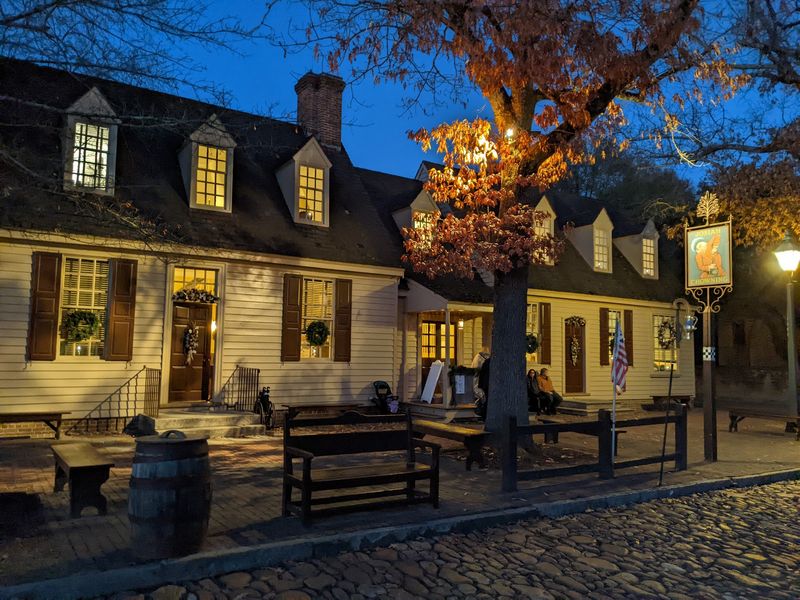
Location is everything, and this garden nailed it. You’ll find the outdoor dining area behind Chowning’s Tavern at 109 E Duke of Gloucester St, Williamsburg, VA 23185.
Duke of Gloucester Street is the principal thoroughfare through Colonial Williamsburg’s Historic Area. It’s lined with preserved and reconstructed shops, homes, and public buildings.
The tavern stands near the historic Courthouse and Market Square, making it a convenient stop between attractions.
Williamsburg served as the capital of Virginia from 1699 until 1780. Leaders including George Washington, Thomas Jefferson, and Patrick Henry spent time in town, participating in political discussions that helped shape the emerging nation.
Exploring this street offers an opportunity to discover the surroundings in which those important historical developments unfolded.
After eating, you can visit nearby trade shops and museums. Admission tickets provide access to guided historical sites, demonstrations, and selected educational programs.
The surrounding neighborhood offers enough variety to fill an entire afternoon, from traditional craftsmanship to reconstructed public buildings.
Few lunch spots offer this particular combination of historical architecture and eighteenth-century culinary influences.