A 75-Foot Cross Rises Above This Arizona Shrine And Welcomes Pilgrims Year-Round
You notice the cross first because ignoring seventy-five feet of stone and sky is nearly impossible.
High above southern Arizona, this shrine pairs monumental religious art with a hillside path, stone Stations of the Cross, and broad valley views.
The scale changes as you climb. A towering statue of Mary stands near the summit, while local stonework pulls attention back to the details underfoot.
The panorama alone earns a pause!
Pilgrims come for prayer, yet architecture and landscape give other visitors plenty to absorb. There is no reason to hurry.
Pause along the path, turn around occasionally, and let the elevation reveal more of the valley with every few steps.
A Retirement Dream Turned Shrine
Back in 1988, a couple from Illinois bought eight acres in Ash Canyon with one modest goal in mind. They wanted a quiet retirement home with a view of the Arizona high desert.
Plans shifted in 1990 during a pilgrimage to Medjugorje. Standing near the stone cross on Mount Krizevac, they looked out over the valley below and felt something click.
Once home, they noticed how closely their own hillside resembled that faraway mountainside. That single realization sparked the idea for a towering cross and a shrine open to anyone who wanted to climb it.
What began as a retirement plan became a decades-long project that now draws travelers from across the country. I love how ordinary the beginning was, because it makes the finished site feel even more remarkable.
The couple never set out to build a landmark visible for miles. They simply followed an idea and kept going when the work got hard.
You can see the result for yourself at Our Lady of the Sierras, located at 10310 S Twin Oaks Rd in Hereford.
Zoning Battles And Stubborn Faith
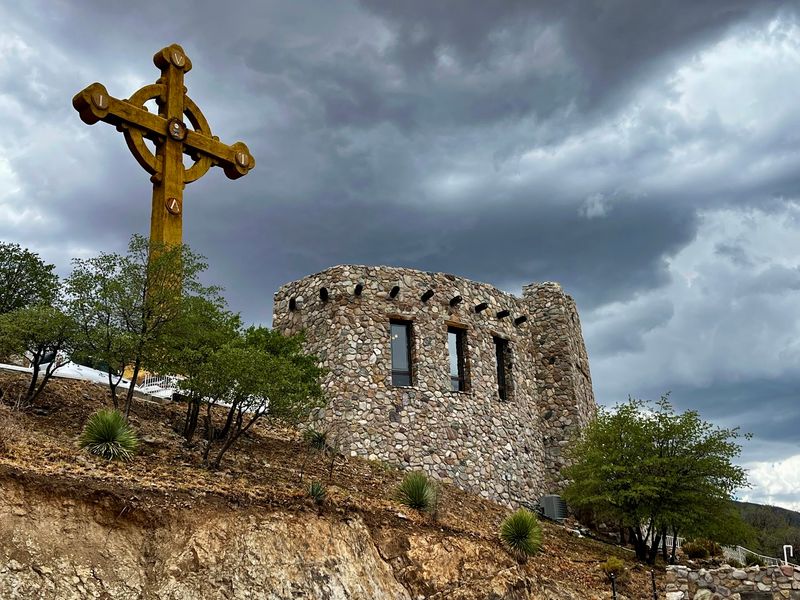
Dreaming big is easy. Getting county approval for a 70-plus-foot cross is another story entirely.
Cochise County rules capped most structures at 30 feet, which put the whole plan in jeopardy. A clever workaround saved it: if the project qualified as a monument, the height limit no longer applied.
Adding a small chapel to the design did the trick. Even then, some neighboring landowners pushed back over how the structure would look on the ridgeline.
Years of legal wrangling followed, along with serious expense. The founders held their ground and eventually won the right to build.
The cross and Madonna projects were commissioned in 1993, but construction began in March 1997 after years of legal challenges. The cross and Mary statue were completed that year, followed by the chapel in 1998.
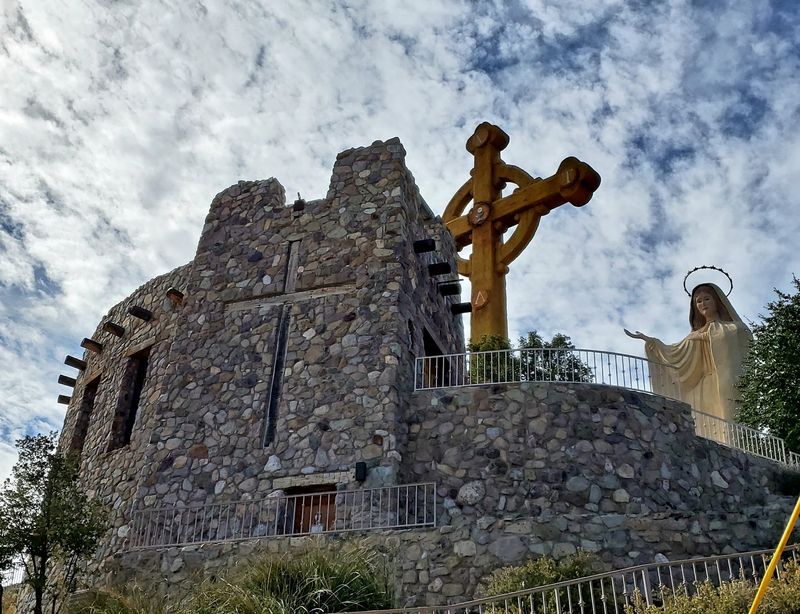
Craftspeople from both sides of the Mexico and Arizona border worked on the chapel together. They used river rock gathered nearby and limestone brought up from Mexico, giving the building a warm, handmade character.
Knowing this history changed how I looked at the place. Every stone represents somebody refusing to quit.
Meeting The Celtic Giant
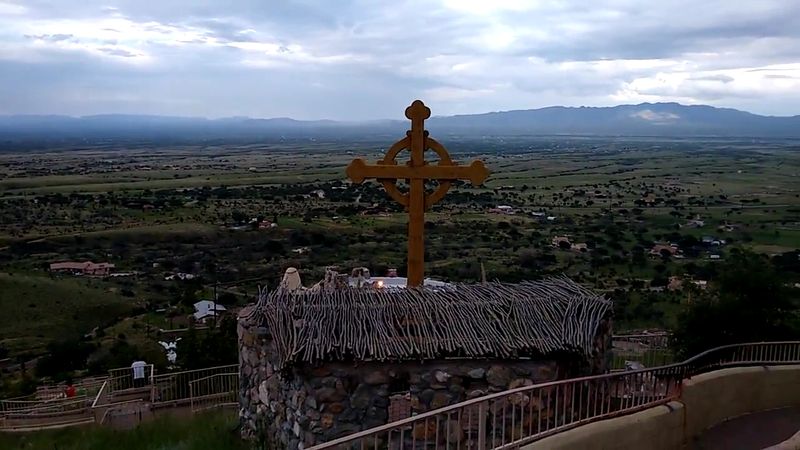
Thirty tons of steel, concrete, and fiberglass rise from the hilltop, and somehow the whole thing looks like carved timber.
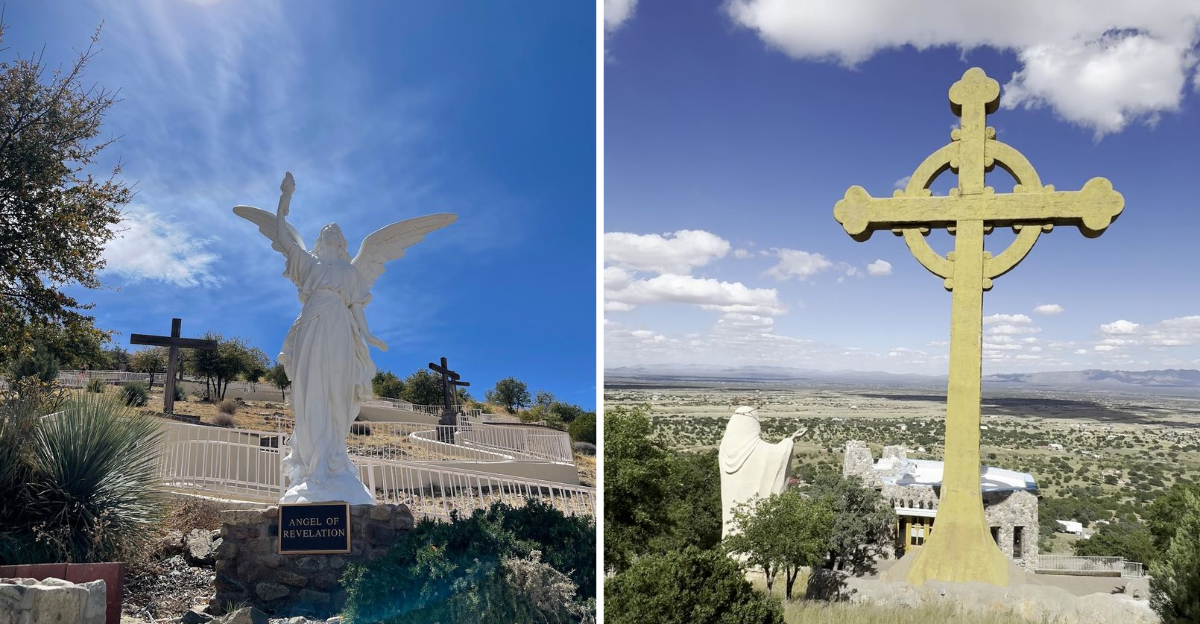
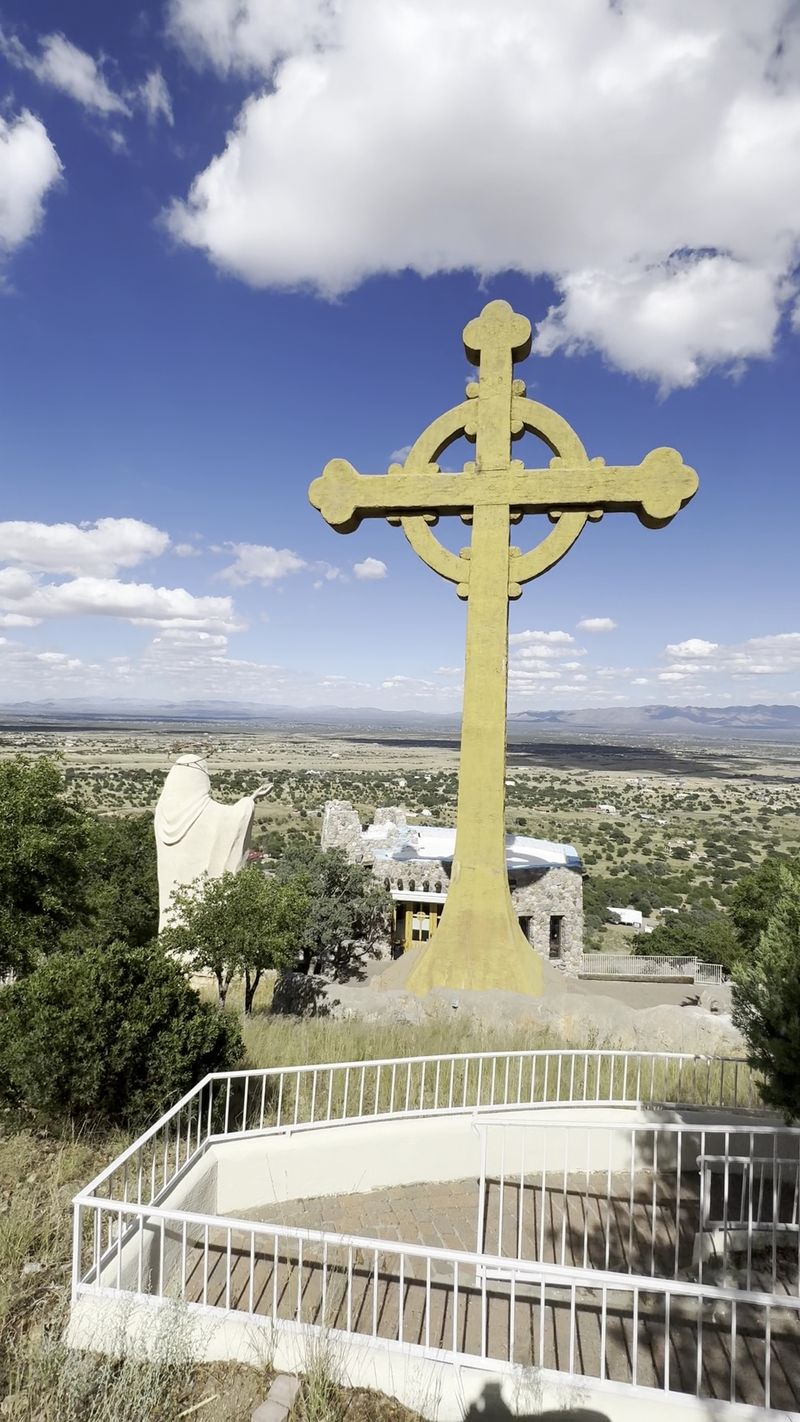
The 75-foot Celtic cross is hand-sculpted to mimic natural wood grain, and the illusion holds up even from a few feet away.
Where the beams meet, a crown of thorns wraps around a symbol of the Eucharist. The Latin word VITA, meaning life, appears at the four ends.
Standing to its right is a 31-foot statue of the Blessed Virgin Mary weighing roughly 25 tons. Welded steel forms the frame beneath a hand-sculpted concrete surface.
The statue was deliberately designed with an outstretched arm oriented toward the cross and toward Mexico, which lies only about five miles south.
That small detail gave me pause. Few monuments in Arizona are so deliberately aware of their geography.
Photographers will want a wide lens, because backing up far enough is nearly impossible on the narrow summit. Morning light hits the cross beautifully, while late afternoon warms the statue.
Six Hundred Steps Of Reflection
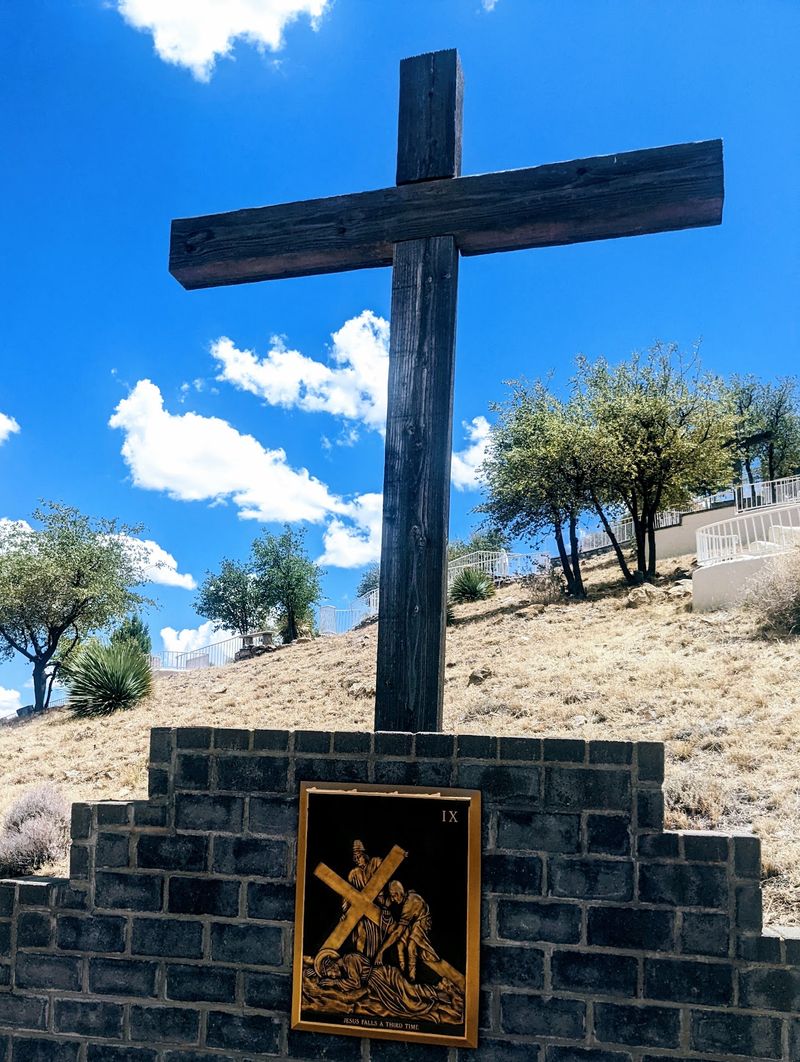
Bring good shoes. The Stations of the Cross route makes a steep roughly 600-foot journey up the mountainside from the lower parking area.
Fourteen outdoor Stations of the Cross line the route. Two craftsmen, Jose and Jesus, worked with the shrine’s volunteer crew on the stations, with cast-bronze plaques incorporated into the project.
Benches appear at regular intervals, which I appreciated more than I expected. Sitting down and catching your breath turns into an unplanned moment of quiet.
The Our Lady of Guadalupe Grotto was completed in fall 2004, adding another devotional space to the shrine grounds.
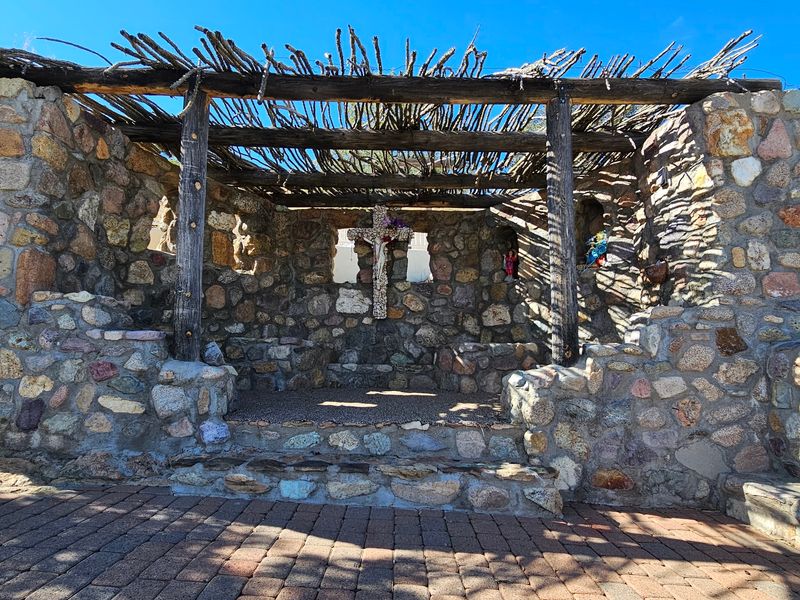
Another smaller grotto waits near the Celtic cross itself. It offers a tucked-away spot to sit with the valley spread out below.
Descending can be trickier than climbing, so take the stairs slowly on the way down. Handrails help, but loose footing on a steep grade is no joke.
Current visitor information confirms handicap-accessible facilities and a handicap drop-off for guests who cannot manage the full climb.
The Fire That Spared The Cross
The June 2011 Monument Fire swept through the Huachuca Mountains, ultimately burning more than 30,000 acres and destroying dozens of homes and other structures.
The founders lost their residence. Flames reached the shrine and gutted the chapel interior along with nearby buildings.
The 75-foot cross and the 31-foot statue of Mary survived the fire, with contemporary accounts reporting that neither was scorched or damaged by soot.
Photographs from that summer show the surviving cross and Mary statue standing amid a heavily burned landscape, creating a striking contrast with the surrounding damage.
Restoration of the chapel interior wrapped up in 2012. The land itself has been healing far more slowly, one season of grass and scrub at a time.
The surrounding terrain has continued recovering since the fire, with new vegetation gradually returning to the landscape.
For me, that recovery story is the real heart of the place. Buildings can be rebuilt, but the willingness to rebuild says more.
Views Across The San Pedro Valley
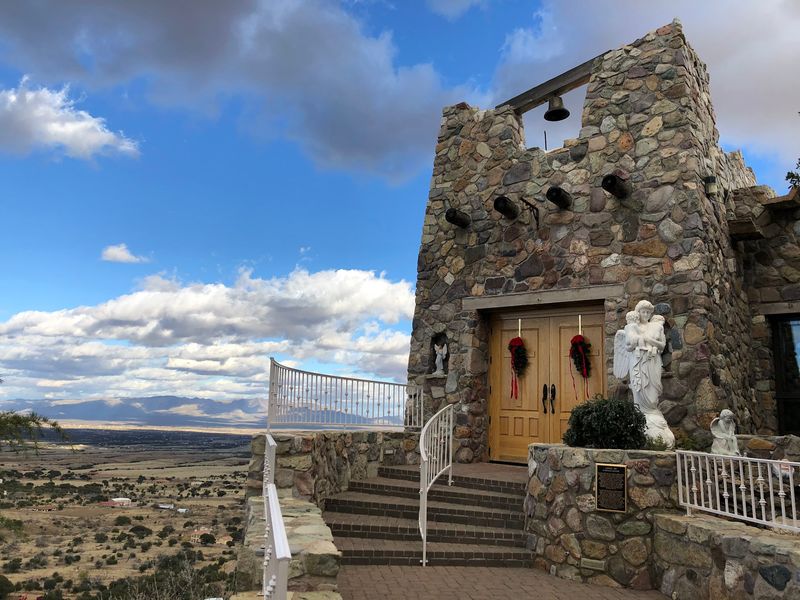
The shrine sits at roughly 5,300 feet in the Huachuca Mountains, high above the San Pedro Valley below.
The panorama runs a full 360 degrees. On a clear day I could pick out the direction of Bisbee and Tombstone, with Douglas, Agua Prieta, Benson, and Willcox all part of the sweep.
Miller Peak and Carr Peak rise behind the shrine. Look south and the Mexico border sits plainly in view, along with San Jose Peak and the far foothills.
Deer, roadrunners, squirrels, and a wide variety of birds are among the wildlife documented around Ash Canyon.
Birders know this canyon well. The variety of species here is one of the region’s quiet claims to fame in Arizona.
Sunrise and late-day light can add another dimension to the broad views across the San Pedro Valley and surrounding mountains.
Bring binoculars if you own a pair. The distant towns and circling hawks reward a closer look.
Angels, Grottos, And Retreat Houses
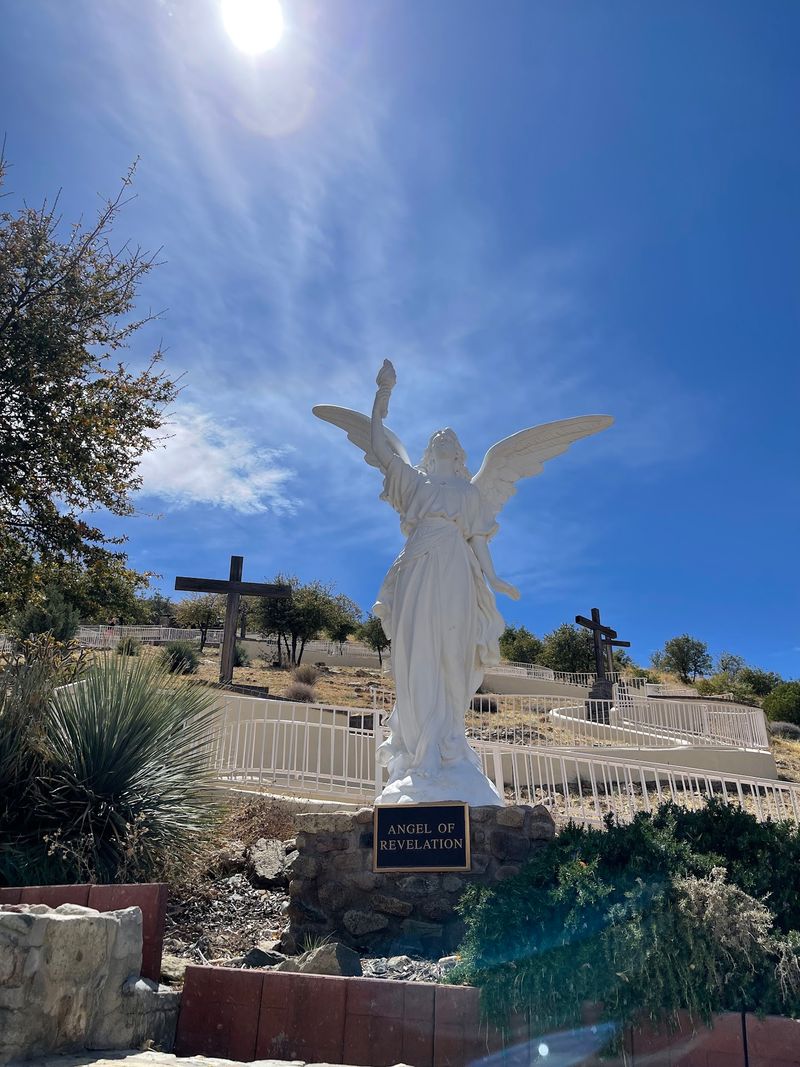
Most visitors fixate on the cross and miss the smaller treasures scattered across the grounds. That would be a shame.
An Angel of Revelation was installed in 2004, while the white marble Guardian of the Children followed in 2005 near the chapel’s north entrance.
Mary’s Knoll serves as the shrine’s visitor center and prayer house, with current hours varying by day of the week.
La Purisima Retreat and Pilgrimage Center was incorporated in spring 2000 and now offers retreat facilities and overnight accommodations for groups, including youth groups.
St. Joseph House near the entrance serves priests, clergy, and religious order members seeking retreat or sabbatical time. Not every shrine thinks that far ahead.
Restrooms are available below the chapel and at Mary’s Knoll.
I spent an extra half hour just wandering between statues. Each one occupies its own pocket of the hillside.
Give yourself more time than you think you need. Rushing Our Lady of the Sierras defeats the entire point.
Planning Your Visit Right
The chapel is currently open from 9 a.m. to sunset March through September, with Sundays ending at 5 p.m.
Winter hours are shorter and can change, so the shrine recommends checking its current schedule before visiting.
The current Sunday schedule lists Mass at 3 p.m. every week, with English Mass on the first and third Sundays and Spanish Mass on the second, fourth, and fifth Sundays.
Handicap-accessible facilities and a designated handicap drop-off are currently available for visitors who cannot manage the full hillside route.
A few house rules keep the site peaceful. Smoking, food, and climbing on the rocks are not allowed anywhere on the grounds.
Driving down the steep grade takes more nerve than driving up. Use low gear and go slowly.
The turnoff sits about a mile off Highway 92, and Tucson travelers should budget roughly two hours each way across southern Arizona.
People of every belief are welcome, and plenty of visitors come purely for the scenery. Our Lady of the Sierras manages to feel sacred and open at the same time, which is a rare balance worth experiencing yourself.