A Hidden California Restaurant Serves Dinner Inside An 1886 Country Schoolhouse
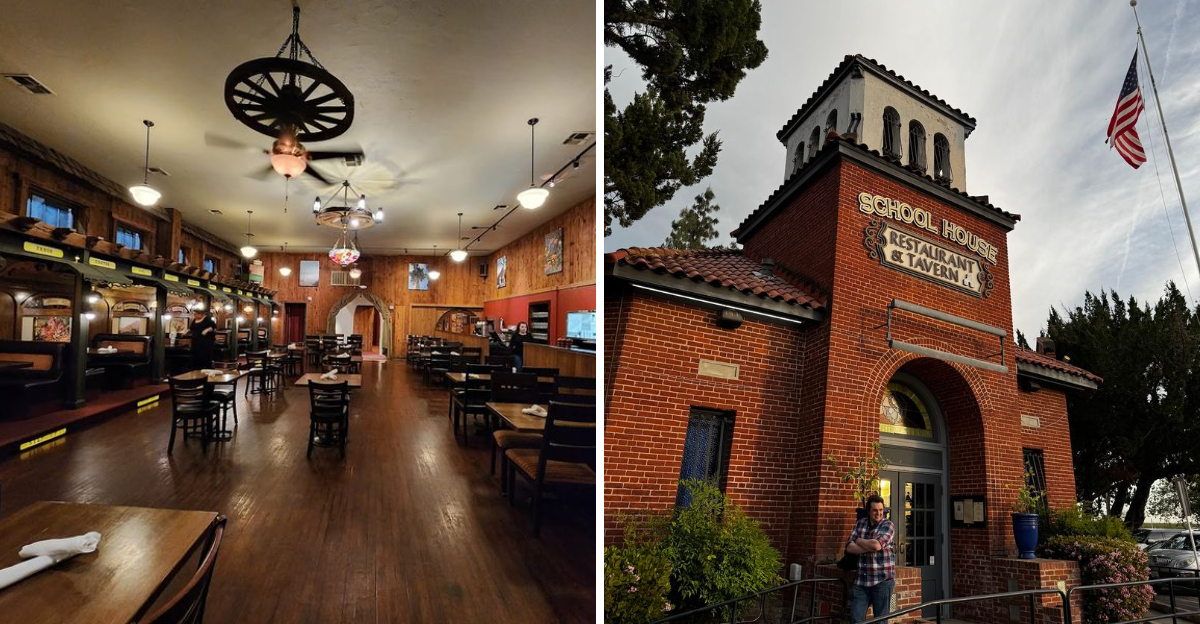
The building looks like it should still be waiting for a bell to ring. You step inside expecting creaky floors and perhaps a chalkboard left behind from another century.
Instead, tables are set for dinner and the evening takes on the strange charm of eating somewhere that was never meant to become a restaurant.
A quiet corner of California turns an 1886 country schoolhouse into a meal you remember for more than the food.
The history is present without taking over.
You notice it in the proportions of the room, the aged details, and the feeling that generations passed through these walls long before anyone considered serving dinner here.
Come for the unusual setting. Stay because old buildings seem to make every conversation feel a little more interesting.
The Restaurant Occupies A Real Country Schoolhouse
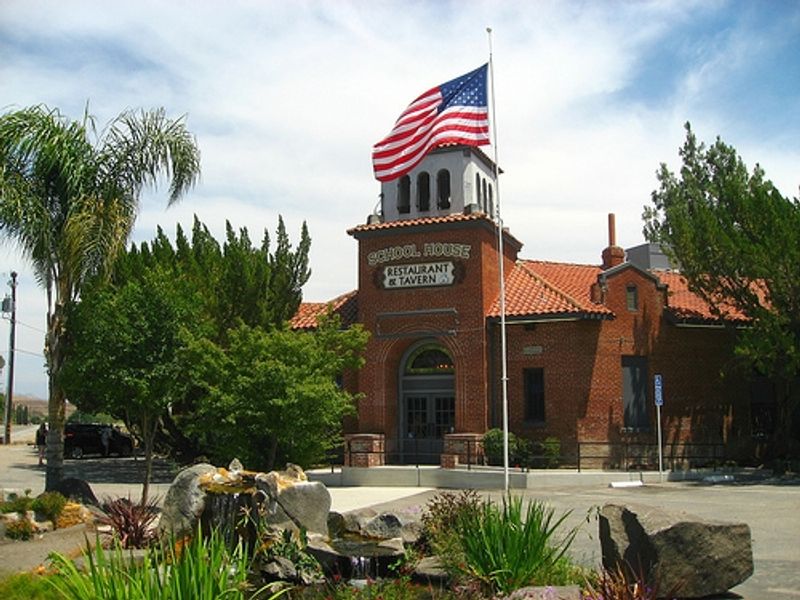
Not every restaurant can claim its dining room once echoed with the sound of children reciting lessons, but School House Restaurant & Tavern can.
The building standing today was constructed in 1921, replacing an earlier structure that dated back to 1890, and it served as the Frankwood School for the surrounding Central Valley farming community for decades.
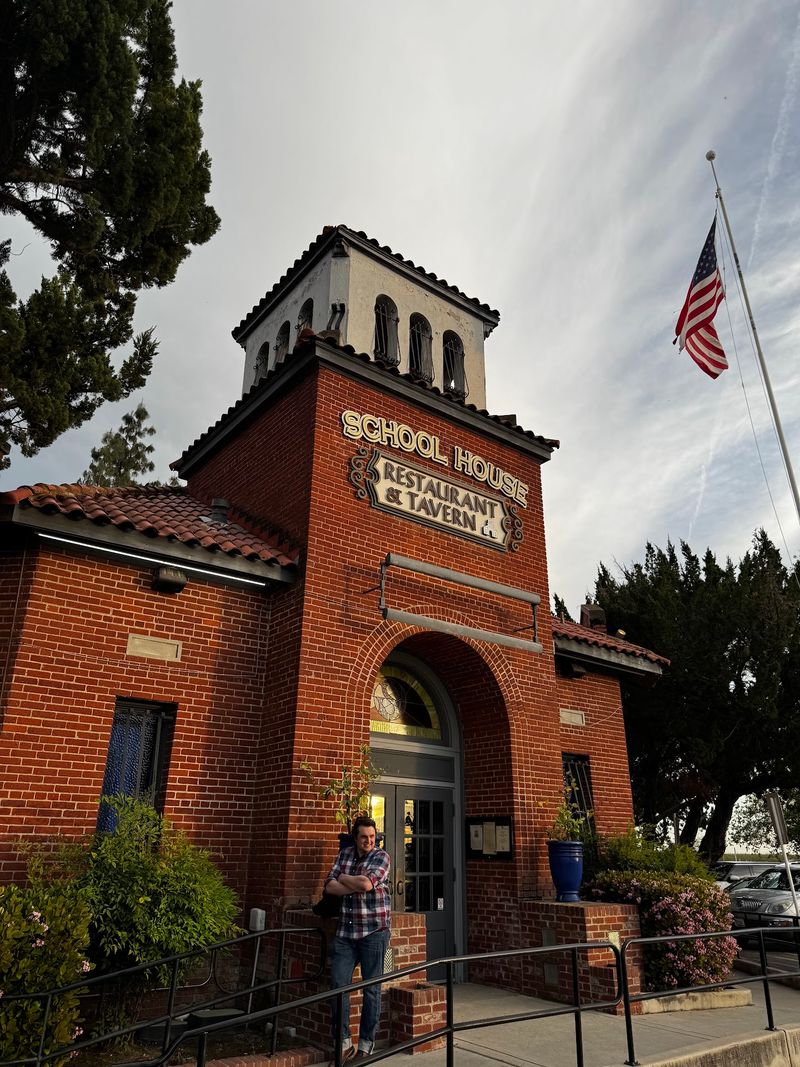
Walking up to the entrance already feels different from pulling into a strip mall parking lot.
The brick walls carry the kind of weight that only time can give a building.
Thick and solid, they hold the temperature steady and give the interior a quieter, more settled feeling than most modern restaurants can replicate.
Seasonal light filters through the windows in ways that shift depending on the hour, adding a natural warmth to the space.
For anyone who grew up in a rural area or spent time in an old schoolhouse, the atmosphere carries a familiar comfort that is hard to manufacture.
The bones of the building were built for community, and the current use keeps that spirit alive in a genuinely honest way.
The Auditorium Became The Main Dining Room
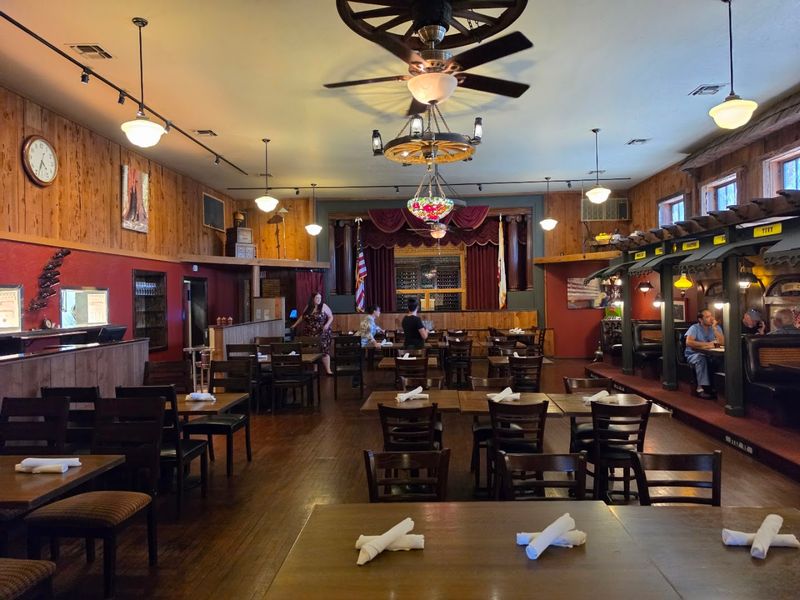
There is something quietly theatrical about eating dinner on a floor that once served as a school auditorium.
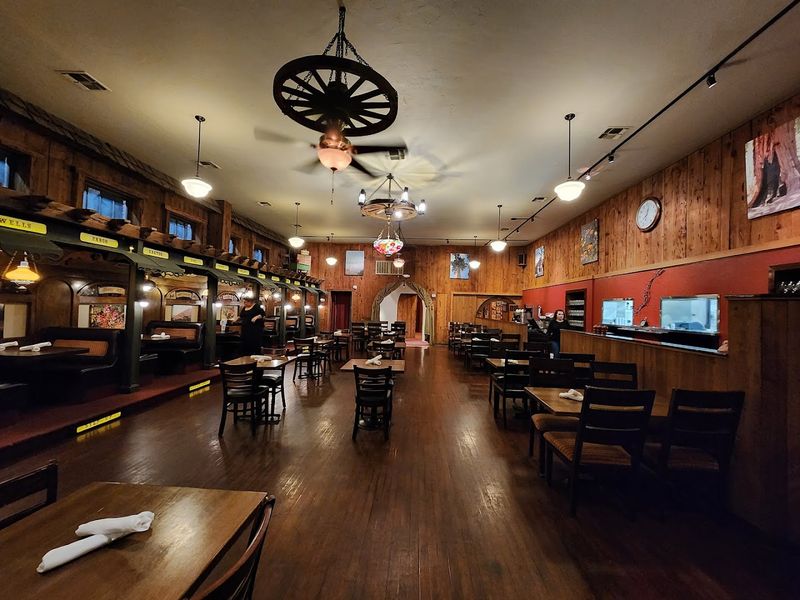
The main dining room at School House Restaurant & Tavern occupies exactly that space, and the original stage is still very much present at one end of the room.
A custom-built wine rack now sits atop the stage, giving the old performance area a new kind of purpose without erasing what it once was.
High ceilings stretch overhead and contribute to the open, airy feel of the room.
The layout allows for a comfortable number of tables without the space feeling cramped, though the hard surfaces do mean that noise levels can climb on a busy evening.
Arriving earlier in the dinner service tends to offer a calmer atmosphere for those who prefer a quieter meal.
The auditorium’s scale works in the restaurant’s favor by giving the room a sense of occasion without requiring formal attire or stiff behavior.
Families, couples, and small groups all seem to fit naturally into the space. The mix of vintage character and contemporary table settings creates an atmosphere that feels relaxed and special at the same time.
An Old Classroom Became The Tavern
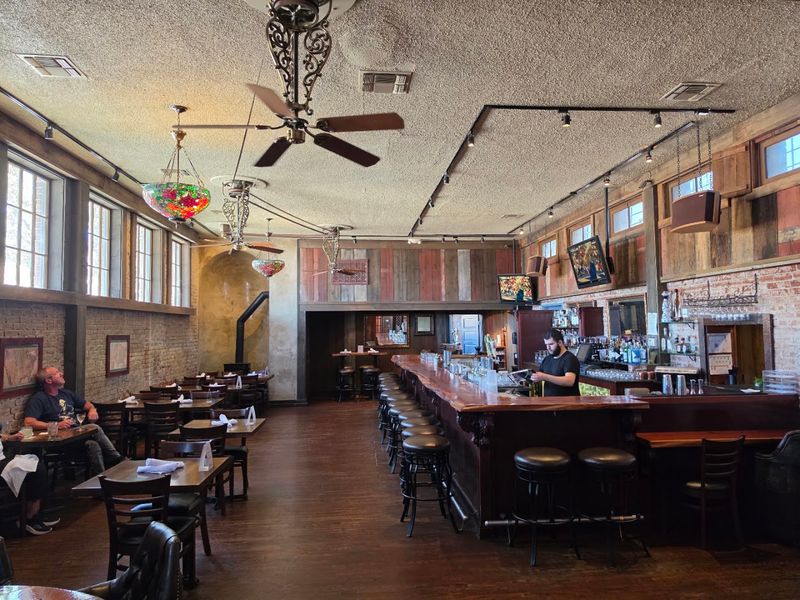
One of the building’s former classrooms has been converted into a more casual tavern space that offers a different kind of experience within the same historic walls.
The tavern side tends to draw visitors who want a more relaxed atmosphere or who arrive without a reservation.
The tavern menu can differ from the main dining room offerings, giving guests a reason to explore both sides of the building across separate visits.
Seating in the tavern has a pub-like comfort to it, with the kind of laid-back energy that makes it easy to settle in after a long drive through the valley or a day spent exploring nearby national parks.
Walking between the two spaces within the same building gives a clear sense of how thoughtfully the conversion was handled.
The classroom origins of the tavern area are still readable in the room’s proportions and layout, even as the decor has been adapted for its current purpose.
For first-time visitors who feel unsure about committing to a full dinner reservation, the tavern provides a welcoming entry point into what the restaurant does well.
School Antiques Fill The Interior
Plenty of restaurants try to create atmosphere with decorative pieces ordered from a catalog, but the antiques inside School House Restaurant & Tavern come with actual provenance.
Old desks, lockers, globes, and framed photographs appear throughout the building as natural extensions of its history rather than props placed for effect.
Some of the photographs on the walls date back to 1890, connecting the current space directly to the earliest years of the site.
Pausing to look at the photographs while waiting for a table or walking to the restroom turns into a small history lesson about the Central Valley farming community that once sent its children here.
The faces in those images belong to real families who shaped the region, and having them displayed openly gives the restaurant a sense of respect for the past that feels genuine.
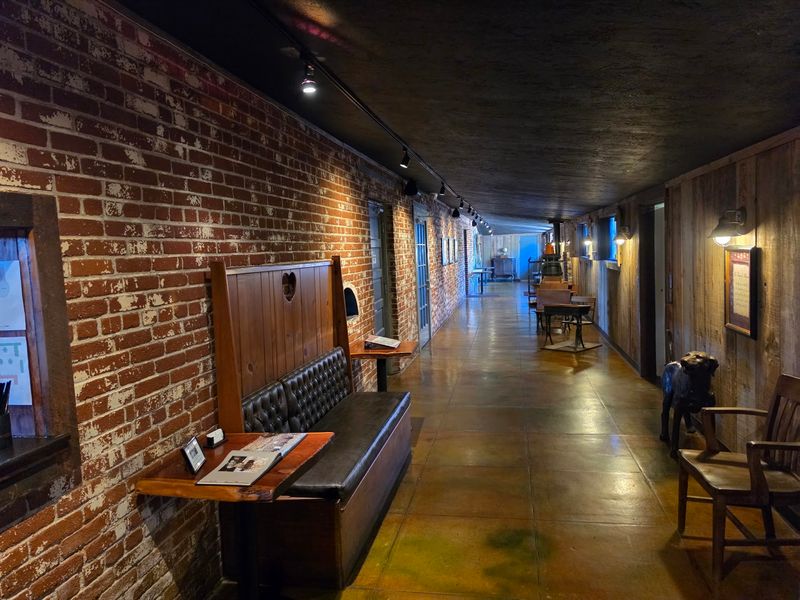
The original floor plans of the school are also posted in the interior hallway, offering visitors a chance to compare the building’s current layout with what it once looked like in its educational years.
Small details like this reward curious guests who take a moment to look around before focusing on the menu. The antiques are not background noise here; they are part of the experience itself.
Classes Ended Here In 1958
For nearly seven decades, the building on Frankwood Avenue functioned as an actual school serving children from the surrounding farming community.
Classes continued at the Frankwood School until 1958, meaning the building accumulated a genuine and substantial educational history long before anyone thought to put tables and chairs inside it.
Knowing the school operated through the mid-20th century helps explain why so many of the interior details feel authentic rather than reconstructed.
The building was not abandoned early or repurposed quickly. It had a full life as an educational institution before its next chapter began, and that longevity shows in the quality and character of what remains.
Visitors who grew up in California’s Central Valley during the postwar decades may find the atmosphere particularly resonant.
Rural schoolhouses of that era had a specific look and feel that the restaurant preserves without exaggerating.
The worn textures, solid brickwork, and generous room proportions all reflect a time when school buildings were constructed to last and to serve an entire community rather than just a single generation.
The Building Once Housed The Sherwood Inn
Before the current restaurant concept arrived, the old schoolhouse had already lived a previous life as a dining destination.
For close to 30 years, the property operated as the Sherwood Inn, a western-themed steakhouse and saloon that gave the building its first identity as a place where the public came to eat and gather.
That earlier chapter helps explain why the building survived in relatively good condition through several ownership transitions.
Restaurants that occupy historic structures often face the challenge of balancing preservation with practicality, and the Sherwood Inn years appear to have kept the building in active use long enough to prevent serious deterioration.
By the time new owners arrived with a fresh vision, the structural bones were still sound enough to support a significant transformation.
Knowing that the Sherwood Inn preceded the current restaurant adds an extra layer of depth to the building’s timeline.
The schoolhouse has now served as a school, a western steakhouse, a period of vacancy, and finally the refined American restaurant it is today.
Each phase left some mark on the property, and together they tell the story of a building that has consistently mattered to the people who have passed through its doors over more than a century.
The Current Restaurant Opened In 2012
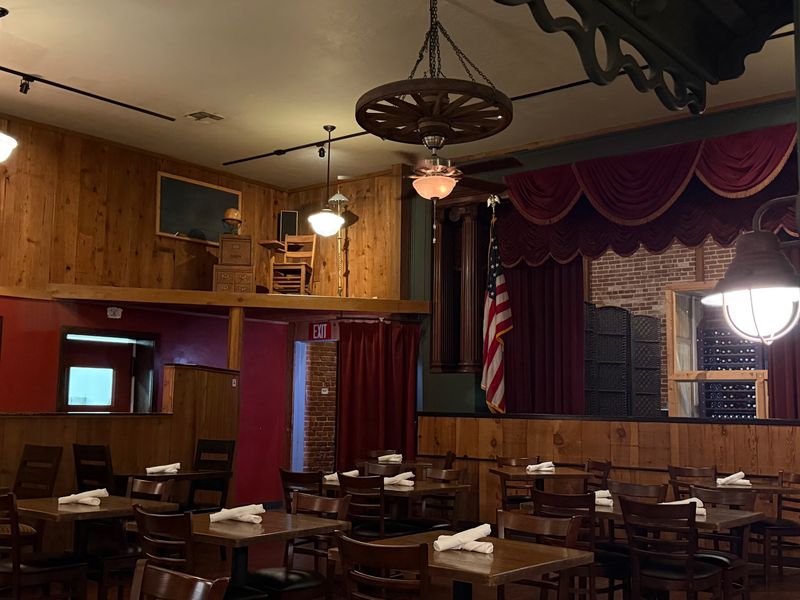
After years of vacancy and a period of careful restoration, the doors of School House Restaurant & Tavern officially opened in January 2012.
The new concept brought a contemporary dining approach to a building that had not seen active use in nearly a decade, and the combination of the historic setting with a refined menu quickly earned the restaurant a reputation.
Opening a destination restaurant in a small agricultural town east of Fresno required a certain kind of confidence in the product.
The location is not on a major tourist corridor, and the nearest large city is about 20 to 25 minutes away.
That distance, however, turned out to work in the restaurant’s favor by giving it a sense of discovery that diners seem to genuinely appreciate.
School House Restaurant & Tavern is located at 1018 S. Frankwood Avenue, Sanger, California 93657, and can be reached by phone at 559-787-3271.
The restaurant has built a strong following over more than a decade of service, earning positive ratings from a substantial number of diners who have made the trip.
For a restaurant in a converted schoolhouse along a rural avenue, that kind of sustained reputation reflects something real about the quality of the experience offered here.
Nearby Farms Influence The Menu
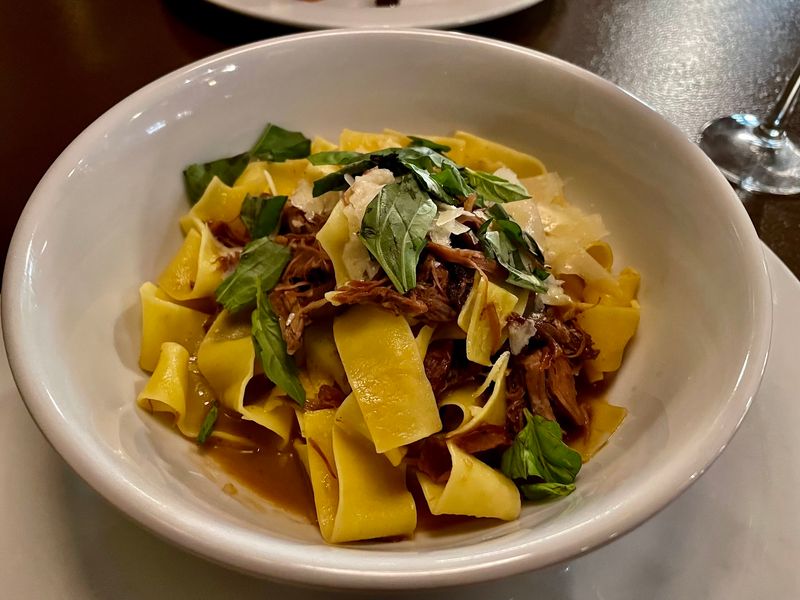
Sitting in the middle of one of the most productive agricultural regions in the United States gives School House Restaurant & Tavern an ingredient advantage that most restaurants would have to work much harder to replicate.
The kitchen draws on seasonal fruits, vegetables, and herbs sourced from farms that are sometimes only minutes away from the restaurant’s front door.
That proximity shows up directly in the flavor and freshness of what arrives at the table.
During peak growing seasons, local farmers have been known to leave trays of fresh produce directly for the kitchen to incorporate into the day’s dishes.
The relationship between the restaurant and its surrounding farmland is not just a talking point on a menu; it reflects the actual rhythm of how the kitchen operates from week to week.
Ingredients change as the seasons shift, which means the menu stays connected to what is actually growing in the valley at any given time.
For diners who care about where their food comes from, the Central Valley context adds a layer of meaning to each dish that goes beyond technique alone.
The same region that supplies produce to much of the country also supplies this kitchen, and that fact lends the menu a kind of honest authority that is hard to argue with.
The Menu Gives Familiar Food A Refined Upgrade
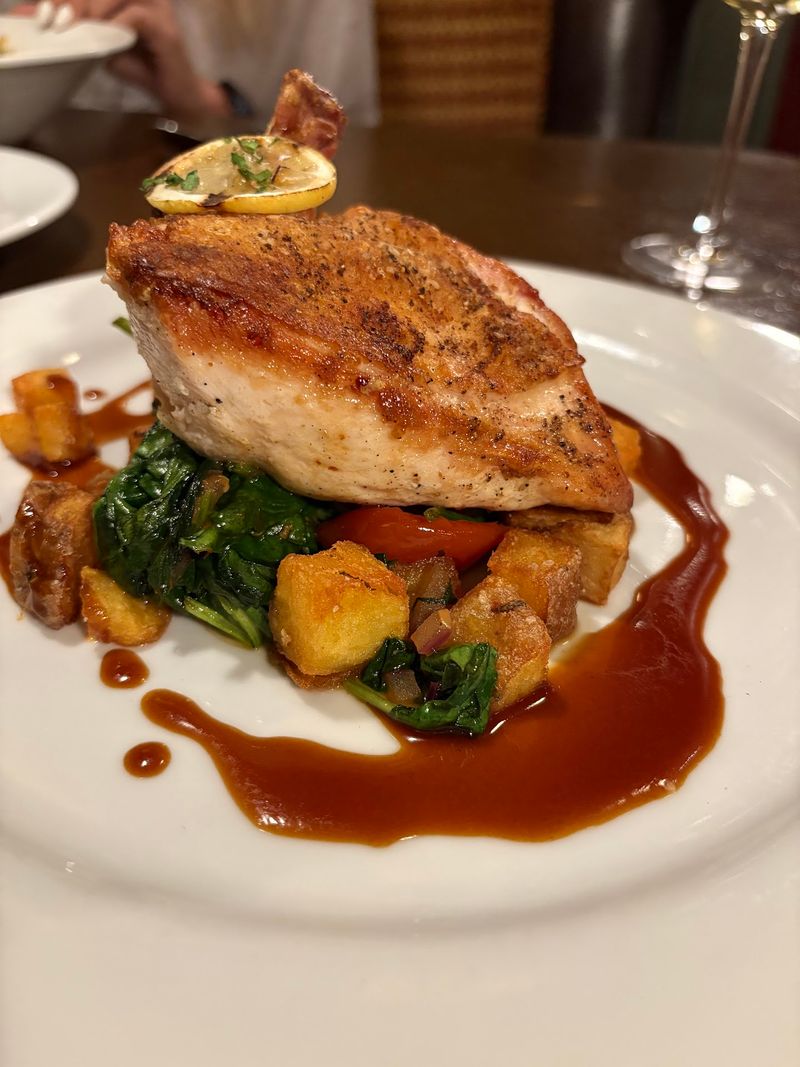
Comfort food and fine-dining technique do not always coexist comfortably, but the menu at School House Restaurant & Tavern manages to hold both ideas at once without feeling confused.
Recognizable dishes are elevated through careful preparation, house-made components, and locally sourced ingredients rather than being replaced by unfamiliar or experimental concepts.
The approach tends to put guests at ease while still delivering something noticeably above the ordinary.
Everything from ketchup to sauces is made in-house, reflecting a kitchen philosophy that values process as much as presentation.
The classic meatloaf, for example, features a sauce that takes four days to complete, turning a dish most people associate with weeknight dinners into something genuinely worth ordering at a restaurant.
Fresh pasta also appears on the menu, contributing to the ingredient-driven style of cooking that runs throughout the kitchen’s output.
Crab fritters, pan-seared fish, seasonal risotto, and house-made bread have all appeared among the offerings at various times, giving the menu enough range to satisfy different tastes without spreading too thin.
Desserts like lemon olive oil cake with fig ice cream and limoncello cheesecake have drawn consistent enthusiasm from diners.
The menu rewards guests who come without fixed expectations and let the kitchen’s current seasonal focus guide their choices.