A Journey Down The Most Mysterious Highway In California
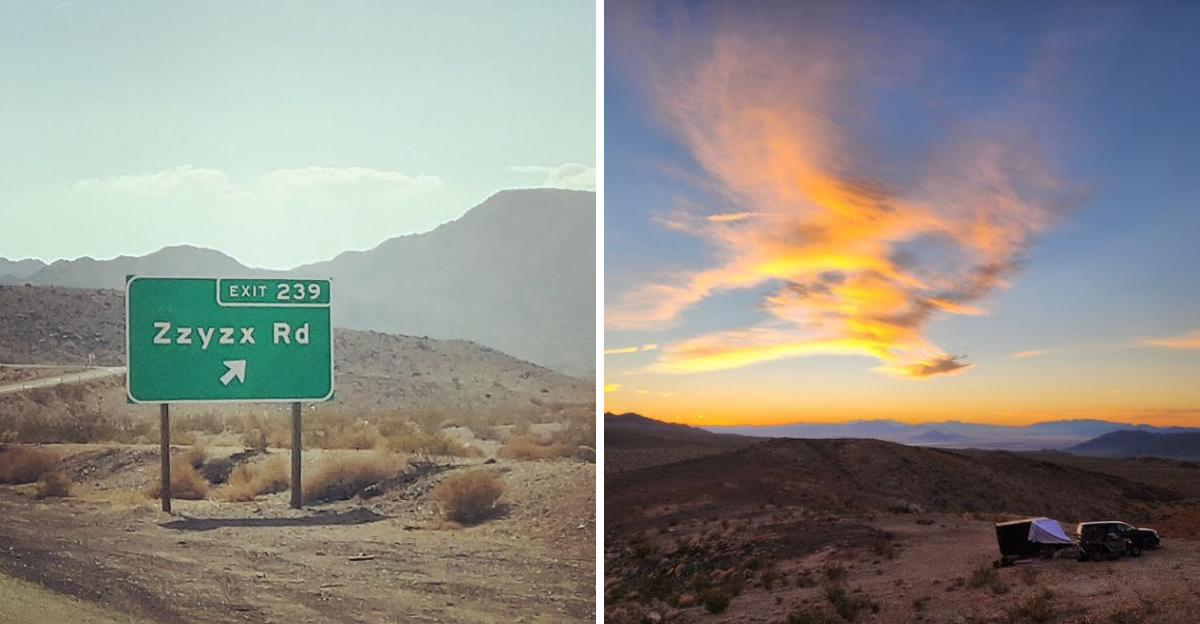
A road name like this doesn’t feel real at first. It makes you slow down, then look again just to be sure you read it right.
At a glance, it almost seems like a typo, something slightly off that doesn’t quite belong there. But the more you think about it, the harder it is to ignore.
Most people keep driving without giving it much thought, while others start wondering what’s actually out there and whether it’s worth the detour.
Curiosity creeps in quietly, and that one small sign in the middle of the desert starts to feel like an invitation you didn’t expect to follow.
Out here, California holds onto some genuinely strange stories.
The road itself doesn’t look like much at first, but the farther you go, the more it starts to feel like there’s something behind it.
Bits of history, unusual ideas, and a story that doesn’t quite unfold the way you expect begin to come into focus the longer you stay with it.
What begins as a quick detour slowly turns into something you keep thinking about long after you leave.
It all starts with that small green sign along Interstate 15, pointing toward Zzyzx Road.
1. The Unusual Name That Sparked Endless Curiosity
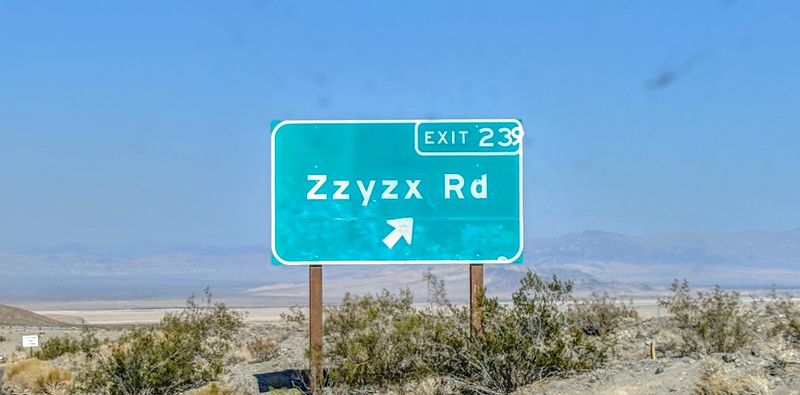
Few road signs in America have caused more double-takes than the small green marker pointing toward Zzyzx Road.
Pronounced “Zye-zix,” the name sounds like something invented for a science fiction novel, but it has a very deliberate and calculated origin story.
Back in 1944, a man named Curtis Howe Springer chose this name specifically because he wanted it to be the last word in the English language alphabetically.
He believed that by placing his creation at the very end of the alphabet, it would stand out in directories, maps, and conversations forever.
That strategy certainly worked, because people are still talking about it decades later.
The pronunciation trips up nearly everyone at first glance, with many visitors guessing wrong before being corrected.
Local rangers at the nearby Desert Studies Center are used to explaining it to curious newcomers.
The name itself has become a kind of landmark before the road is even reached, sparking curiosity in gas stations, road trip conversations, and travel blogs across the country.
It remains one of those rare geographical names that feels almost too strange to be real, yet here it is, printed clearly on official California maps.
2. A Road That Leads Almost Nowhere
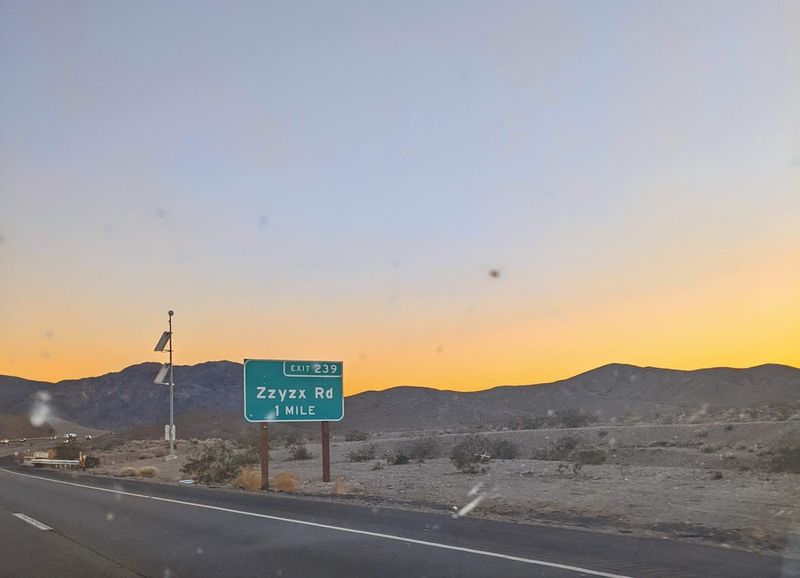
Zzyzx Road is not a shortcut, not a scenic bypass, and not a connector between two major destinations.
It stretches roughly four and a half miles from Interstate 15 before dead-ending at the Desert Studies Center, which sits on the edge of a dry lake bed called Soda Lake.
The road itself is narrow and unassuming, cutting through flat desert terrain with low scrubby brush on either side. There are no gas stations, no coffee shops, and no cell signal for most of the drive.
What the road does offer is an almost cinematic sense of isolation that very few places in Southern California can still provide.
On a weekday morning, it is entirely possible to drive the full length without passing another vehicle.
The pavement is rough in places, and the surrounding landscape shifts subtly between salt flats, sandy soil, and patches of desert vegetation.
Visitors who expect a dramatic destination at the end may feel surprised by how quiet and understated the arrival feels.
Yet that quietness is exactly what draws a certain kind of traveler, someone looking for something real and unhurried rather than polished and packaged for tourists.
3. Hidden Deep Inside The Mojave Desert
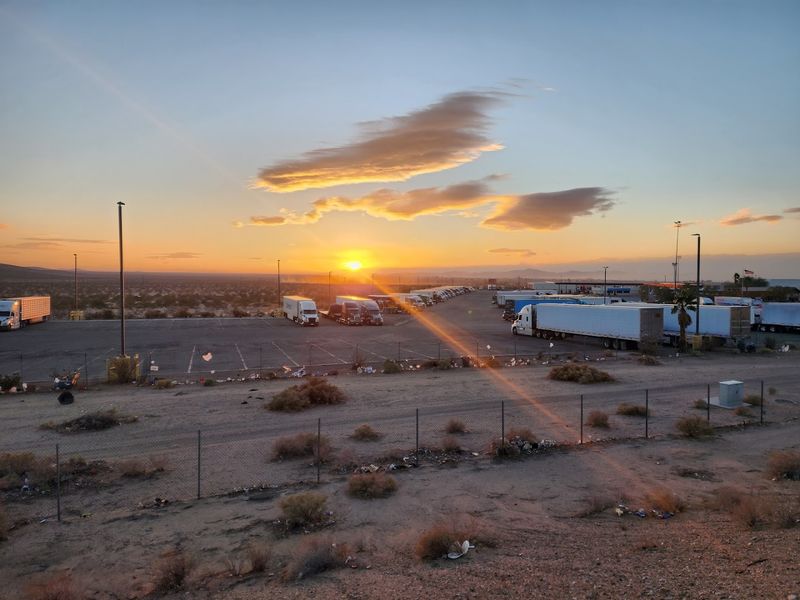
The Mojave Desert covers a massive stretch of Southern California, and Zzyzx Road sits tucked within one of its quieter and less-visited corners.
Located near Baker, California, the road is accessible from Interstate 15 roughly halfway between Barstow and the Nevada state line.
Summer temperatures in this part of the desert can climb well above 110 degrees Fahrenheit, making spring and fall the most comfortable seasons for a visit.
During cooler months, the desert takes on a surprisingly gentle quality, with soft light filtering across the salt flats and distant mountain ranges turning purple and gold in the late afternoon.
Wildlife that stays hidden during summer heat tends to become more visible during these milder periods.
Bighorn sheep, coyotes, and various bird species have all been documented in the area surrounding Zzyzx Road.
The ecological richness of this desert corner is easy to overlook when driving past at highway speed, but slowing down and spending even an hour exploring on foot reveals a surprisingly active natural environment.
The Mojave here feels ancient and unhurried, as if the land itself is indifferent to the curious visitors who occasionally wander in from the interstate.
4. Once Home To A Controversial Desert “Resort”
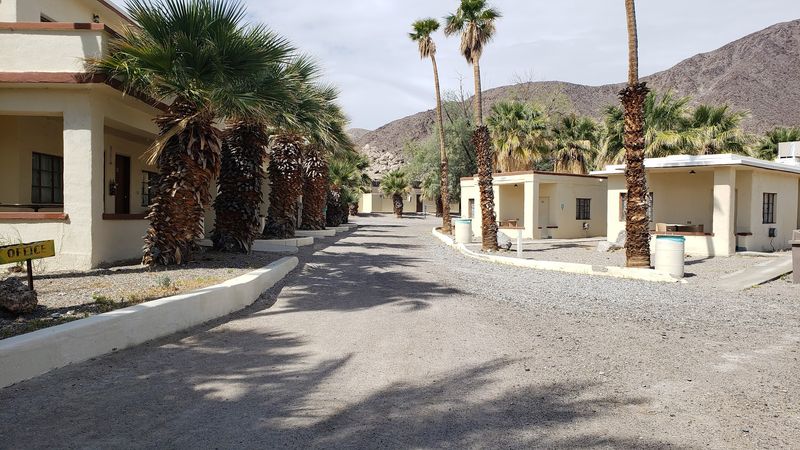
Long before it became a research center, the land at the end of Zzyzx Road was home to a sprawling desert retreat that blended health claims, religious broadcasts, and showmanship into one unusual package.
Curtis Howe Springer established the Zzyzx Mineral Springs and Health Spa in 1944, building it up over decades into a complex that included a hotel, a church, a small castle-like structure, mineral baths, and even an airstrip.
Springer promoted the spa heavily through his radio broadcasts, reaching audiences across the American Southwest with promises of healing mineral waters and restorative desert air.
Guests arrived from various states, drawn by his enthusiastic pitches and the allure of an exclusive desert getaway.
The American Medical Association, however, was deeply skeptical of his health claims and publicly criticized his methods, eventually earning him the unflattering nickname the “King of Quacks.”
Despite the controversy, the spa operated for decades and left behind a physical footprint that is still partially visible today.
Some of the original buildings remain standing on the property, now used by the Desert Studies Center for housing and administrative purposes.
Walking through the site gives visitors a layered sense of history, equal parts ambition, spectacle, and cautionary tale about the fine line between vision and deception.
5. The Man Who Created Zzyzx
Curtis Howe Springer was a man who understood the power of a good story, and he spent much of his life telling one about himself.
Born in 1896, he traveled through the American Southwest as a self-described radio evangelist and medicine man, blending religious messaging with health product sales in a way that attracted both devoted followers and serious critics.
He claimed the title of doctor without any verifiable medical credentials, a detail that eventually caught up with him.
In 1974, after decades of operating his desert compound on federal land without proper authorization, the United States government revoked his land claim and had him evicted from the property.
Springer was in his late seventies at the time, and the eviction marked the end of his Zzyzx chapter.
What makes Springer such a fascinating historical figure is the sheer scale of what he built in such an inhospitable environment.
Without heavy machinery or major financial backing, he constructed a functioning resort in the middle of one of North America’s hottest deserts.
His motivations were certainly complicated, mixing genuine entrepreneurial spirit with questionable ethics.
He passed away in 1986, leaving behind a name that will almost certainly outlast any other legacy he might have hoped to create.
6. A Place Surrounded By Strange Desert Silence
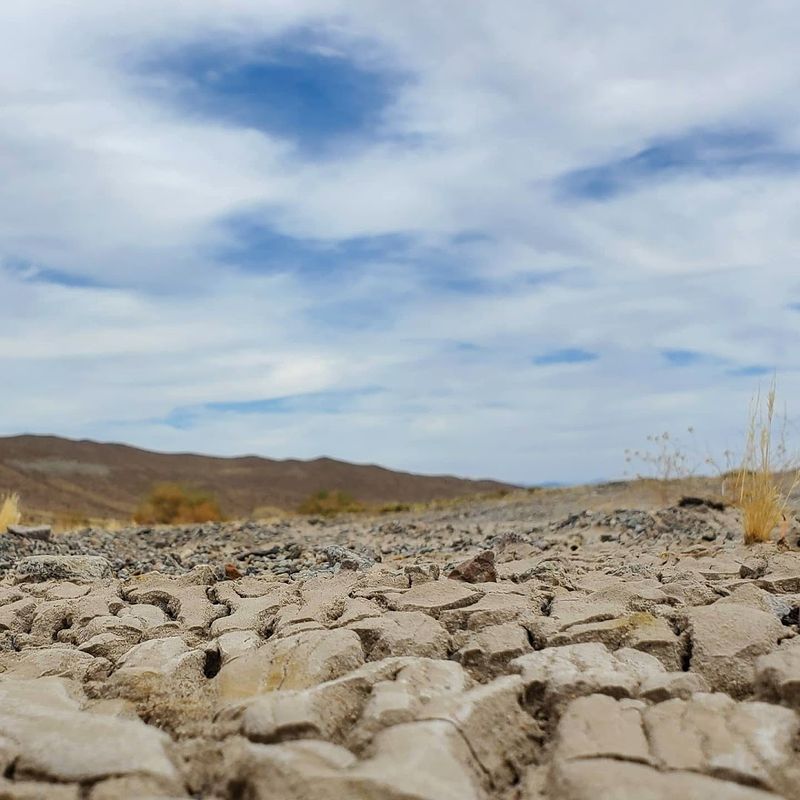
There is a particular kind of quiet that exists at the end of Zzyzx Road that is difficult to describe without experiencing it firsthand.
The nearest town of any size is Baker, roughly seven miles away, and even that small community barely registers as noise from the Zzyzx site.
Out here, the absence of traffic, voices, and mechanical hum becomes something almost physical. On a calm day, the silence is layered and textured rather than simply empty.
Wind moves through dry brush with a papery rustle, and distant birds call across the salt flats in short, clear bursts.
The sound of footsteps on gravel feels surprisingly loud against that backdrop, a reminder of how accustomed most people are to constant background noise in daily life.
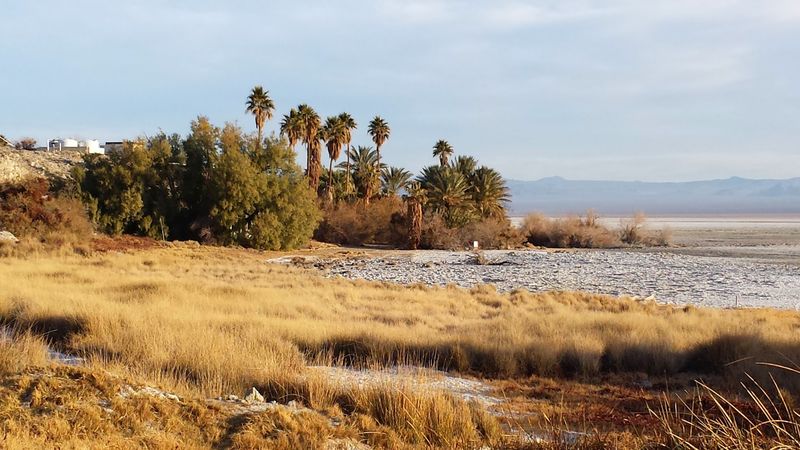
Visitors who spend time sitting quietly near Lake Tuendae or along the edge of the dry lake bed often describe the experience as unexpectedly calming.
The desert has a way of slowing the pace of thought, and the stillness at Zzyzx feels earned rather than manufactured.
There are no speakers playing ambient music, no curated soundscapes, and no staff creating atmosphere. The silence here is entirely genuine, shaped by geology and distance rather than design.
7. The Road’s Connection To Mineral Springs
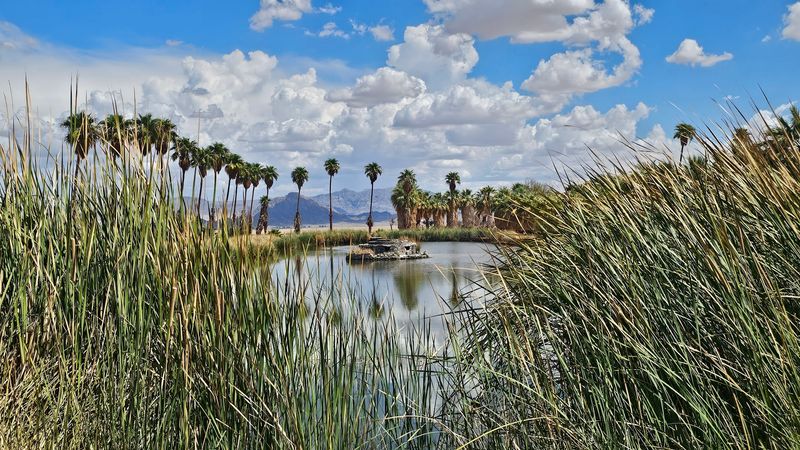
One of the more surprising features at the end of Zzyzx Road is the presence of actual water in the form of Lake Tuendae, a small artificial pond that Springer originally created to supply his mineral spring operations.
The water source beneath the site is real, fed by underground springs that bring mineral-rich water to the surface in an otherwise bone-dry landscape.
Springer used these springs as the centerpiece of his health spa marketing, claiming the mineral water had restorative properties that could treat various ailments.
Whether those specific claims held any scientific merit was disputed even during his lifetime.
What is not disputed is that the water itself attracted wildlife and created a small but genuine oasis in the surrounding desert.
Today, Lake Tuendae serves an important ecological purpose as the primary habitat for the Mojave tui chub, a small freshwater fish that is listed as endangered.
Researchers from the California State University system monitor the fish population as part of ongoing conservation efforts at the Desert Studies Center.
The lake is visible from the walking path near the center and can be observed from the shoreline, though entering the water is not permitted in order to protect the fish and their habitat.
8. Why It Became One Of California’s Most Talked-About Roads
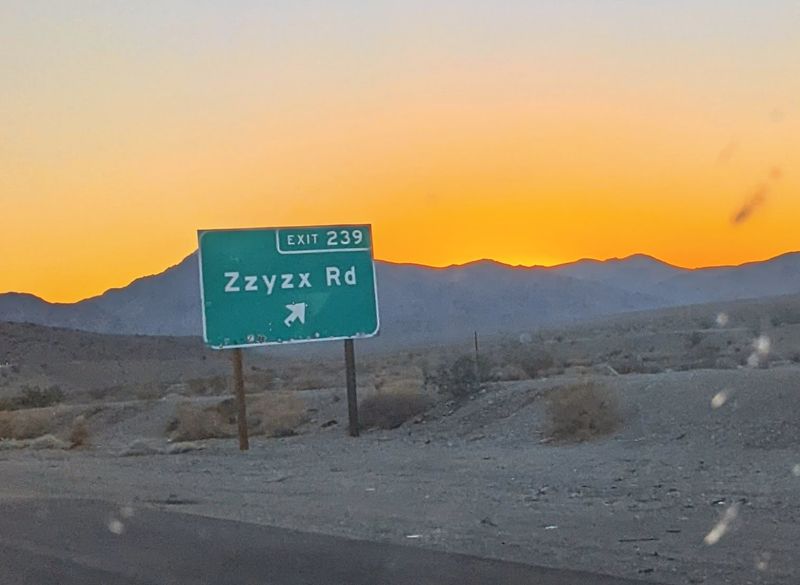
Part of what made Zzyzx Road so culturally magnetic is simply the name itself, which hits a perfect combination of absurdity and memorability.
Travelers on Interstate 15 heading between Los Angeles and Las Vegas began noticing the sign and sharing their reactions long before social media existed to amplify the experience.
Word of mouth, travel columns, and radio segments kept the name circulating through popular culture for decades.
The road gained an additional layer of notoriety in 2006 when a low-budget horror film titled Zyzzyx Road was released, loosely inspired by the location.
The film became notable less for its story and more for reportedly earning the lowest theatrical gross in cinema history, collecting just thirty dollars during its limited release.
That strange footnote only added to the road’s odd cultural biography.
Travel writers, geography enthusiasts, and road trip bloggers have consistently included Zzyzx Road on lists of California’s most unusual destinations.
The combination of a genuinely strange name, a real and layered history, and the visual drama of the surrounding desert gives the road a personality that purely scenic routes sometimes lack.
It is the kind of place that rewards curiosity and punishes indifference, offering more to those willing to slow down and look carefully.
9. What Remains Of Zzyzx Today
After Springer was evicted in 1974, the land at the end of Zzyzx Road did not sit empty for long.
The California State University system took over the site in 1976 and converted it into the Desert Studies Center, a working research and educational facility that hosts university students, scientists, and environmental researchers throughout the year.
Several of Springer’s original structures still stand on the property, including some of the low-slung buildings that once housed spa guests.
The Desert Studies Center at Zzyzx is located at 49441 Zzyzx Rd, Baker, CA 92309, and while it primarily serves academic groups, the grounds around Lake Tuendae are accessible to day visitors during daylight hours.
Walking paths allow guests to observe the lake, the surrounding desert vegetation, and the remnants of the old spa complex at a comfortable pace.
The atmosphere on the property is quiet and academic rather than tourist-oriented, which gives the visit a refreshingly unpolished feel.
There are no gift shops, no admission booths, and no guided tours for general visitors.
What remains is something more honest than a typical attraction: a working place with a complicated past, sitting in the middle of the desert, doing something genuinely useful with its unusual inheritance.
10. Why People Still Make The Drive
For a road that leads to a research center in the middle of the desert, Zzyzx Road attracts a surprisingly consistent stream of visitors year after year.
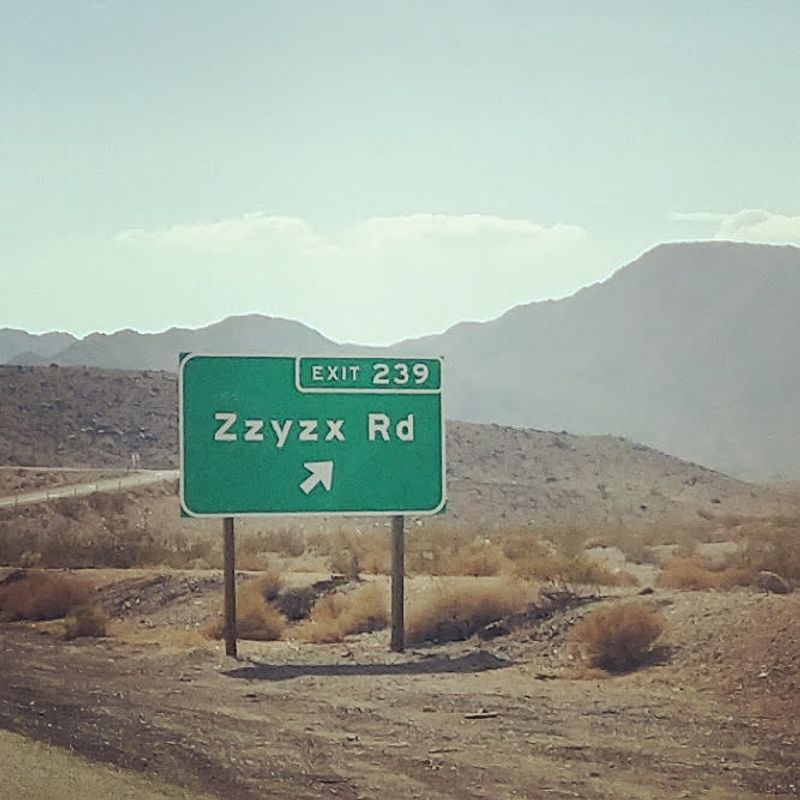
Some come for the novelty of the name, hoping to snap a photo with the sign and cross an unusual item off their road trip checklist.
Others arrive with a genuine interest in the history, the geology, or the quiet that the place reliably provides.
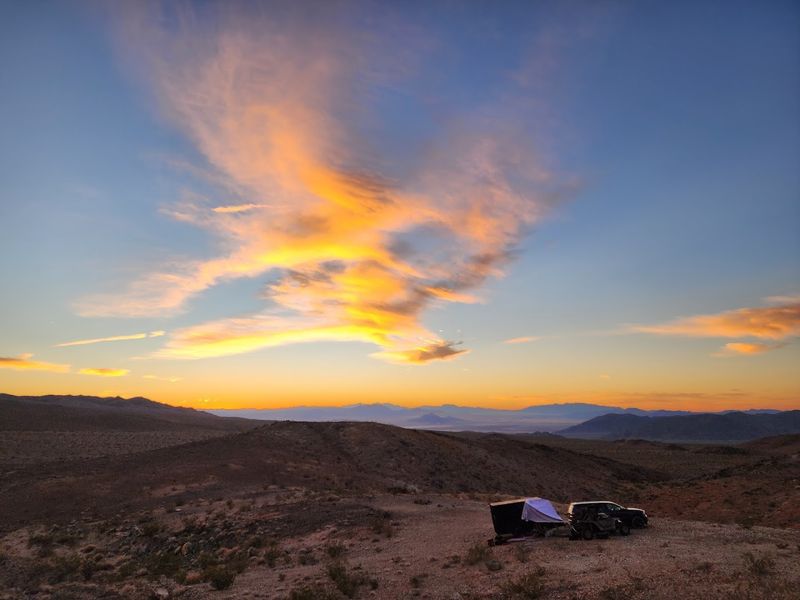
The drive itself is part of the appeal. Leaving the roar of Interstate 15 behind and rolling slowly down that narrow desert road creates an immediate shift in atmosphere.
The landscape opens up around the vehicle, the sky seems larger, and the sense of distance from ordinary daily life becomes tangible within just a few minutes of driving.
Visiting during early morning or late afternoon tends to offer the most comfortable temperatures outside of summer, along with softer light that makes the surrounding landscape feel warmer and more textured.
Bringing water, wearing sun protection, and checking road conditions before visiting are all practical steps worth taking.
The road requires no special vehicle, no permit, and no reservation for day visits, making it one of the more accessible genuine desert experiences available along the Interstate 15 corridor in California.