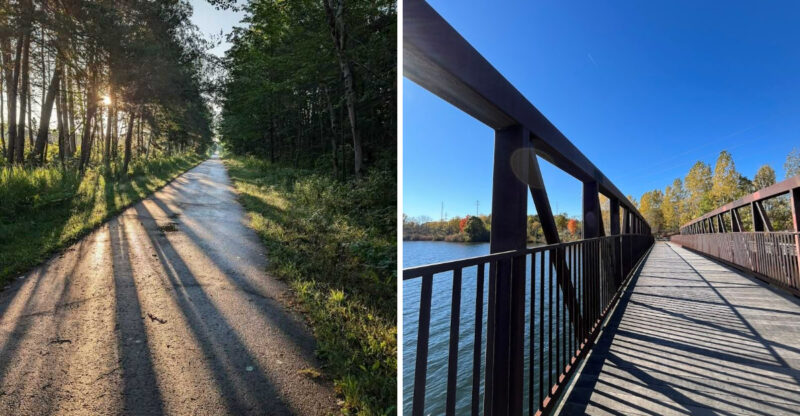
A Peaceful Michigan Shoreline Where The Great Lakes Still Feel Untouched
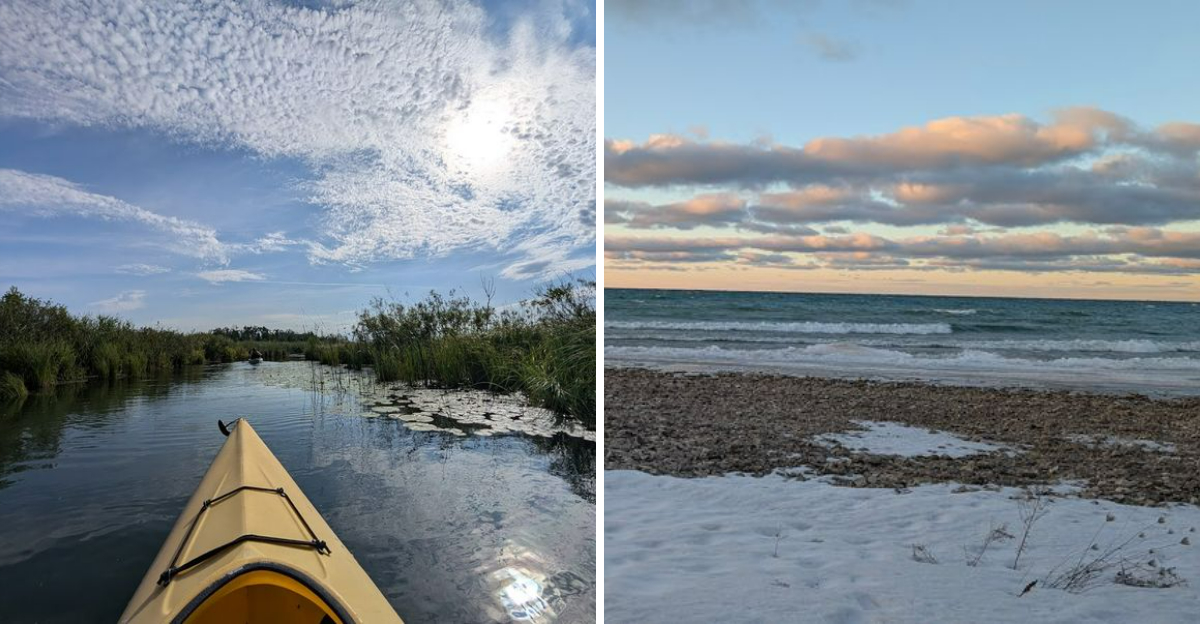
Michigan has a secret, and locals would rather you didn’t find it. Most people drive straight past this stretch of Lake Huron without a second glance and honestly, that’s exactly the point.
No signs begging for your attention. No entrance fee.
No crowds. Just seven and a half miles of shoreline so untouched it almost feels illegal to be standing there.
The state has been quietly protecting this place for decades, and the state isn’t in any hurry to put it on a billboard.
While the rest of Michigan’s coastline fills up with beach chairs and bluetooth speakers every summer, this little corner of the Lower Peninsula stays exactly as it has always been. Raw, windswept, and stubbornly indifferent to tourism.
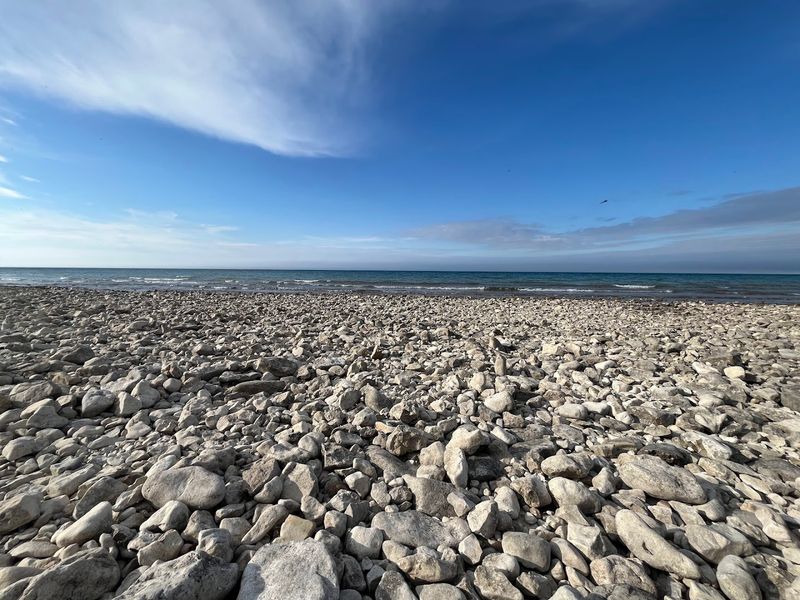
Limestone cobbles crunch under your feet. Coastal wetlands stretch in every direction.
Lake Huron sits heavy and grey on the horizon. You will wonder how a place this beautiful stayed so invisible for so long.
Seven And A Half Miles Of Undeveloped Lake Huron Shoreline
Most shorelines in Michigan have been touched, trimmed, and tidied. Not this one.
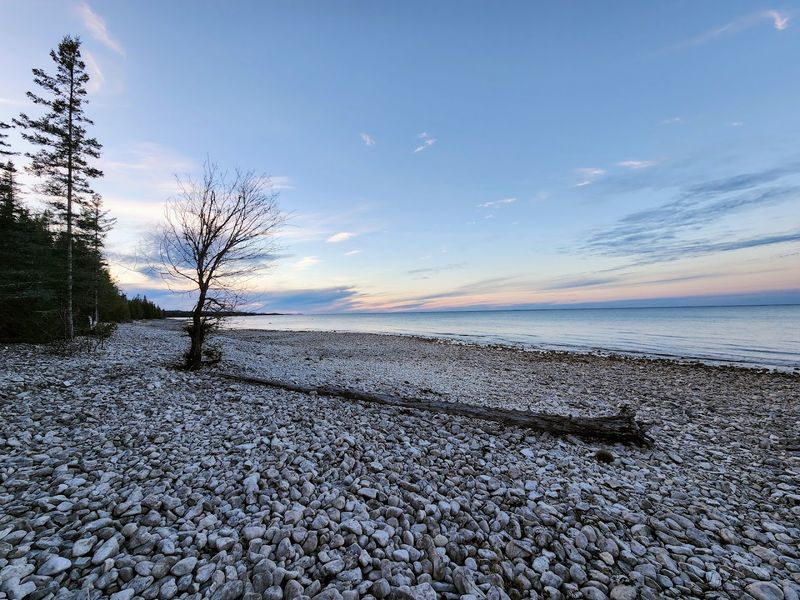
The stretch of Lake Huron coastline inside Thompson’s Harbor State Park runs roughly seven and a half miles without a single concession stand, parking meter, or lifeguard tower in sight.
What you get instead is raw lake edge. Rocky beaches, wind-bent cedars, and water so clear it almost looks edited.
The color shifts from pale green near the shore to deep blue farther out, and on calm days the reflection of the sky makes the whole surface look like glass.
Getting to the waterline takes some effort. The road in from US-23, just north of Presque Isle, is long and gravel, running close to four or five miles before it ends at the shore.
That distance is exactly why the crowds never show up. On a Monday in late August, you might be the only car in the lot.
The beach itself is covered in smooth rocks, not sand, so flip-flops won’t cut it. Bring sturdy shoes and plan to move slowly.
The rocks are worth examining up close because many of them are fossils, pulled smooth by centuries of wave action. This shoreline rewards patience in a way that sandy beaches simply cannot.
Fossil Hunting Along The Rocky Beach
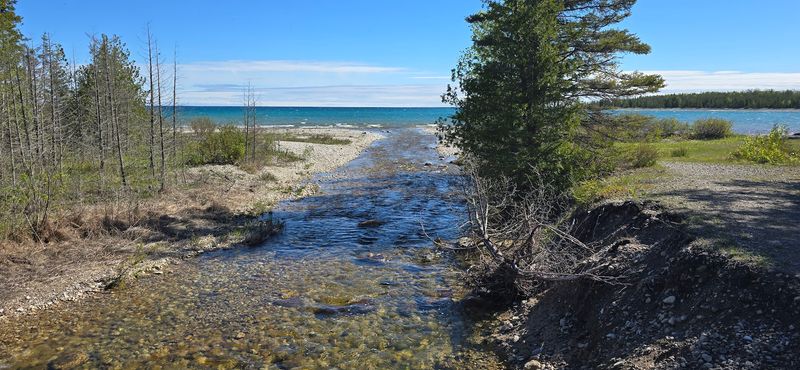
Picking up a rock and realizing it holds the outline of a creature from millions of years ago is a genuinely strange feeling. At Thompson’s Harbor, that feeling is available to anyone willing to crouch down and look carefully.
The rocky beach along Lake Huron is loaded with fossil stones. Rock hunters in the northern part of the state often search for Petoskey stones along these shorelines, and this stretch can offer good opportunities for finding them.
Wave action smooths the stones over time, which makes the fossil patterns stand out beautifully against the grey and tan surfaces.
You do not need any special equipment or knowledge to enjoy this. Just slow down, pick up rocks that catch your eye, and hold them up to the light.
Wet stones show the patterns most clearly, so a small water bottle helps you see your finds properly before deciding which ones to keep.
State law allows visitors to collect small amounts of rocks and minerals from state parks for personal, non-commercial use, but always check current park rules before pocketing anything.
Kids absolutely love this part of the visit, and honestly, so do adults who were not expecting to spend forty five minutes crouching over pebbles with genuine excitement.
Spring Wildflowers Along The Forest Trails
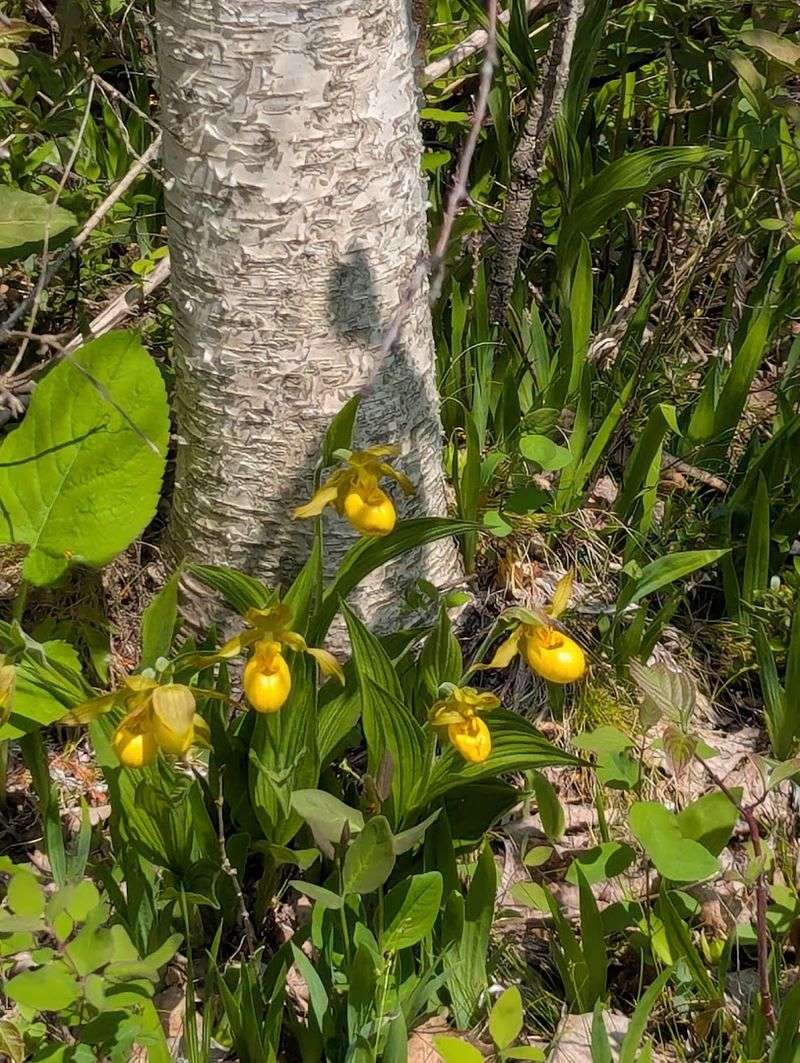
Spring at Thompson’s Harbor is something wildflower enthusiasts plan their calendars around. The park sits in a region where rare native plants thrive in the thin, rocky soil between the cedars and pines.
Yellow Lady Slippers appear along the trails in late spring, their pouched blooms hanging like tiny lanterns between the leaves. Red Columbine shows up around the same time, adding bursts of deep red-orange to the forest floor.
Then, if your timing is right, the Dwarf Lake Iris appears in carpets that stretch across entire sections of trail.
The Dwarf Lake Iris is actually the state wildflower. It is a small, delicate plant that blooms in pale purple and blue, and it grows in the exact type of open woodland habitat that Thompson’s Harbor protects.
People who have returned multiple years in a row describe seeing it everywhere during peak bloom.
The bloom windows are short, usually a few weeks each. Checking bloom timing before your visit makes a real difference.
The DNR and local nature groups sometimes post updates when the Lady Slippers and Iris are peaking. Coming at the right moment turns a good hike into something that feels almost surreal, like walking through a painting someone forgot to finish.
Birdwatching Across A Diverse Lakeshore Habitat
Bring binoculars. Seriously, do not leave them in the car.
Thompson’s Harbor is a legitimate birdwatching destination, and the variety of species you can encounter in a single morning walk is genuinely impressive.
The park covers around 5,000 acres of mixed habitat, including open scrub forest, cedar wetlands, and rocky shoreline. That range of environments attracts an equally wide range of birds.
The mix of shoreline, forest, and wetland habitat supports a variety of bird species, especially during migration seasons.
The park sits along a migratory corridor that channels birds between Lake Huron and the interior forests of northeastern Michigan. During spring and fall migrations, the variety spikes noticeably.
Waterfowl use the harbor area, and raptors sometimes cruise the shoreline looking for fish near the rocky points.
Mornings are the best time to be out. The park is quiet enough that you can hear birds before you see them, which gives you time to stop and locate them before they move on.
Bug spray is essential from late spring through summer, as the wetland areas produce mosquitoes with impressive enthusiasm. A long-sleeved shirt and a calm pace will take you far here.
The Stone Path Cabin Experience
Staying overnight at Thompson’s Harbor changes everything. Day trips give you a taste of the place, but spending a night or two inside the park gives you the full, unhurried version of it.
There is a real difference between arriving in the morning and leaving by sunset versus actually sleeping inside a place this quiet.
The park offers rental cabins, including the Stone Path Cabin, which sits right on the grounds and puts you steps away from the trails and shoreline. No driving back to town.
No motel parking lot. Just the park, the trees, and whatever quiet you brought with you.
Waking up before anyone else arrives is a different experience entirely. Morning light filters through the cedars, birds start up before the wind picks up, and the complete absence of traffic noise does something good to your head.
It resets something in you that you did not realize needed resetting.
Book through the DNR website and plan well ahead. The cabins fill up fast in summer and early fall, and this is not the kind of place you want to leave to last minute planning.
Four days here can go by faster than a single busy weekend at home.
Hiking Trails Through Scrub Forest And Cedar Wetlands
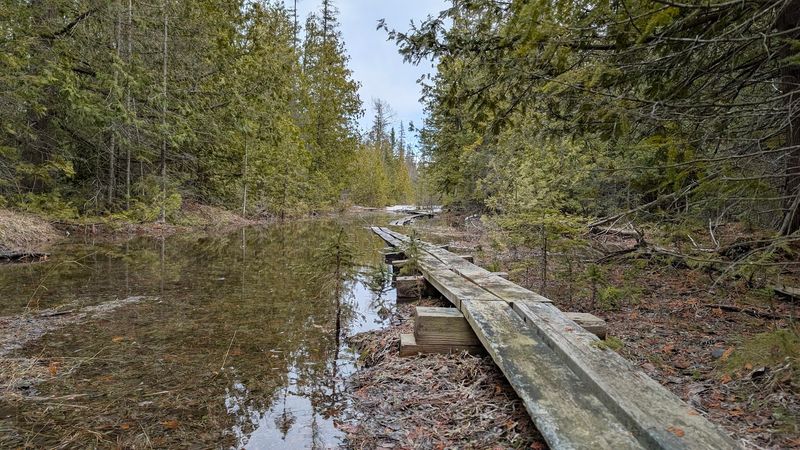
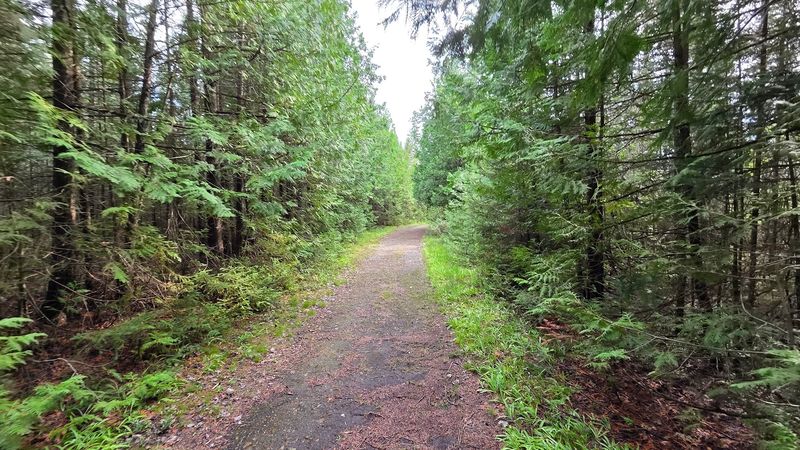
Six miles of trails can cover a lot of different worlds when the park is built the way Thompson’s Harbor is built. The trails here move through open scrub forest, dense cedar stands, and wetland edges before eventually delivering you to the Lake Huron shoreline.
The terrain is mostly level, which makes it accessible without being boring. Well-marked trail signs keep navigation straightforward, so you are not spending half your hike second-guessing yourself.
That said, the two-track roads inside the park can be confusing if you wander off the main trail system, and at least one visitor has ended up at a dead end after following a track that looked promising.
The diversity of ecosystems packed into one hike is the real draw. You move from dry, sun-exposed scrub with sandy soil to cool, dim cedar swamp within the same walk.
The shift in light, smell, and sound between those two environments is dramatic. Birdsong changes, the ground softens, and the air gets noticeably cooler under the cedars.
Ticks are present in the warmer months, so checking yourself after the hike is important. Wearing light-colored clothing helps you spot them before they become a problem.
The trails reward slow walkers more than fast ones because the interesting stuff, the flowers, the birds, the fossils, all requires stopping to notice it.
The Long Gravel Road Into The Park
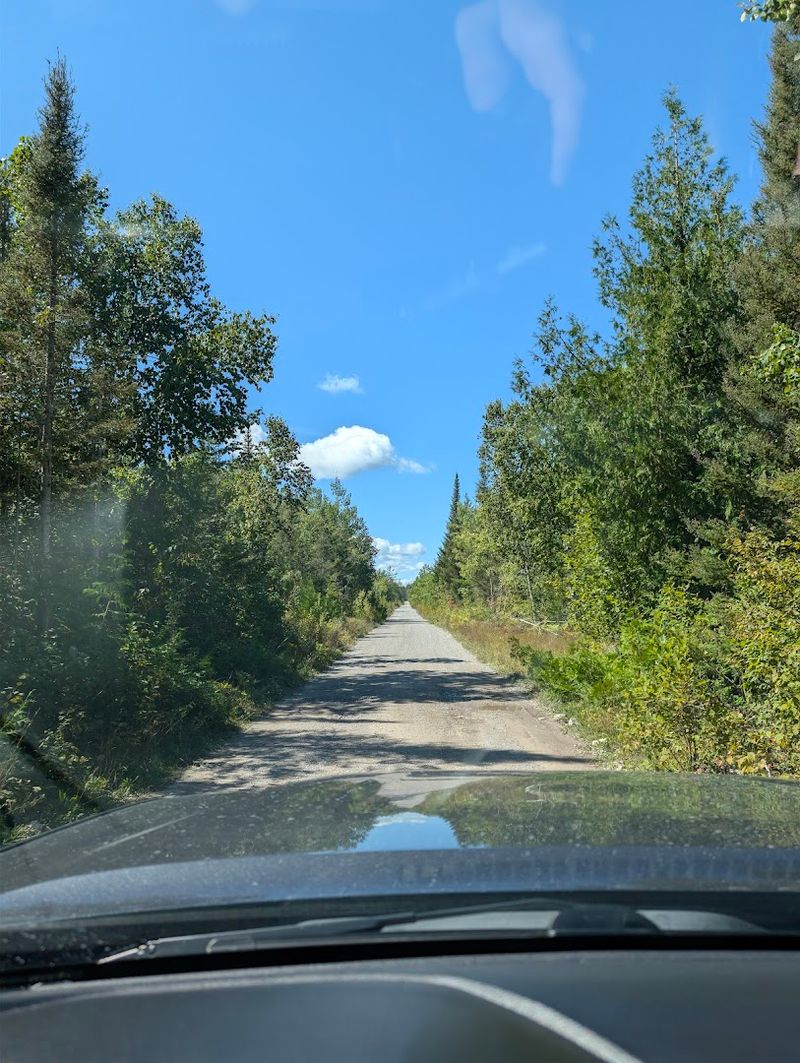
Not every park feature is on the trail map. Sometimes the access road itself is part of the experience, and at Thompson’s Harbor, the road in is a genuine filter for who actually shows up.
From US-23 north of Presque Isle, the entrance road runs through several miles of gravel before reaching the parking area. It is narrow, winding, and bumpy enough that a low-clearance vehicle will feel every pothole.
Some sections have been eroded by water running down the center of the road, which adds to the adventure depending on your mood about that kind of thing.
The result of this access situation is a park that stays genuinely quiet. On weekdays, especially outside peak summer, you can arrive and find yourself completely alone.
No other cars, no background chatter, just the sound of your own footsteps on gravel and whatever birds are working the tree line that morning.
That solitude is not accidental. It is a byproduct of the park’s undeveloped character and the DNR’s commitment to keeping it that way.
Thompson’s Harbor is classified as a natural area, not a developed recreation site, which means the rough road is a feature, not a bug. If the gravel and potholes put you off, this park will politely redirect you somewhere else.
Everyone else gets the whole place to themselves.
Unpredictable Weather Along Lake Huron
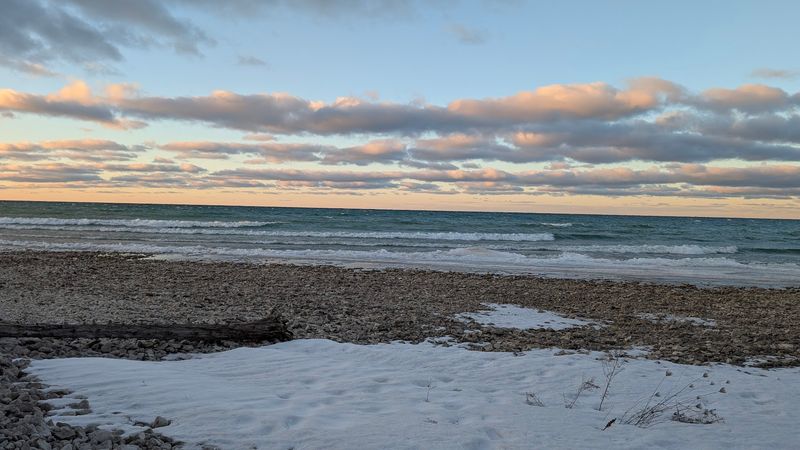
Michigan weather does not follow a script, and nowhere is that more obvious than along the Lake Huron shoreline at Thompson’s Harbor. One hiker described experiencing sun, wind, rain, and snow all within a single eight-mile outing, and that is not unusual here.
The park sits on the northeastern coast of the Lower Peninsula, exposed to lake-effect weather systems that can shift in under an hour. That unpredictability is part of what makes a visit here feel so alive.
You are not experiencing a managed outdoor environment. You are experiencing actual weather, actual seasons, actual nature doing whatever it wants.
Dressing in layers is not optional advice here. It is genuinely necessary.
A morning that starts warm and sunny can turn cold and blustery by early afternoon, especially in spring and fall. A waterproof outer layer, a mid-layer for warmth, and moisture-wicking base layers will keep you comfortable through most of what the park can throw at you.
The payoff for braving variable conditions is often spectacular. After a rain, the wildflowers look brighter and the fossil rocks on the beach glisten.
After a wind, the lake surface turns dramatic shades of grey and green that no photograph fully captures. Coming prepared means you get to stay out long enough to see all of it.
Why This Shoreline Feels Different Each Season
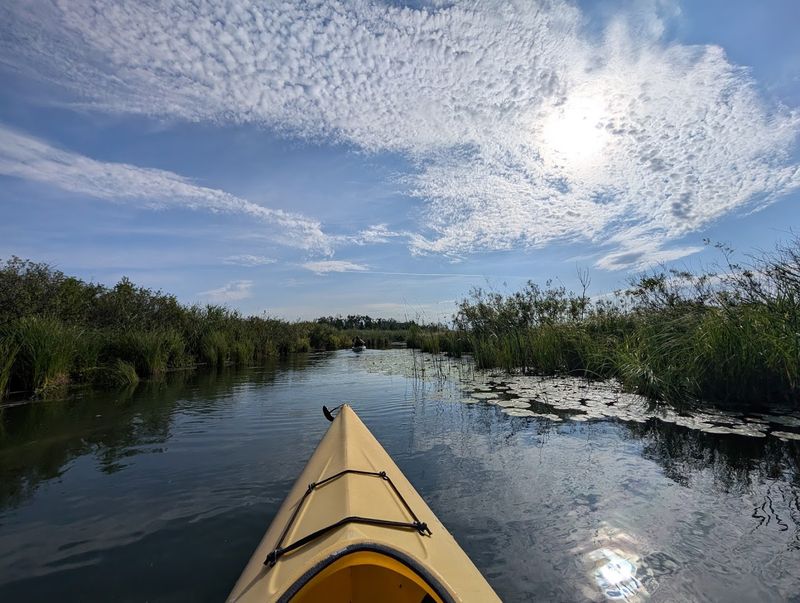
Some parks are one-visit places. You see the main thing, check it off, and move on.
Thompson’s Harbor is not that kind of park. People come back here every season, and each visit delivers something completely different.
Spring brings the wildflower spectacle, with Lady Slippers, Columbine, and Dwarf Lake Iris taking turns along the trails. Summer opens up the shoreline for fossil hunting and long, quiet walks beside water that stays cold even in August.
Fall turns the scrub forest into a mix of amber and rust, and the birdwatching during migration picks up considerably.
Winter visits are for the genuinely committed, and the reward is a shoreline that looks like a completely different planet. Ice formations along the rocky beach, bare cedars against a grey sky, and total silence broken only by wind off the lake.
Not everyone wants that experience, but those who do tend to describe it as unforgettable.
Returning visitors often note that each trip reveals something new, a flower they missed before, a trail fork they had not taken, a stretch of beach that looks different at a different time of year. That kind of depth is rare, and worth protecting.