All Aboard For 9 Spectacular Colorado Day Trips You Can Only Reach By Rail
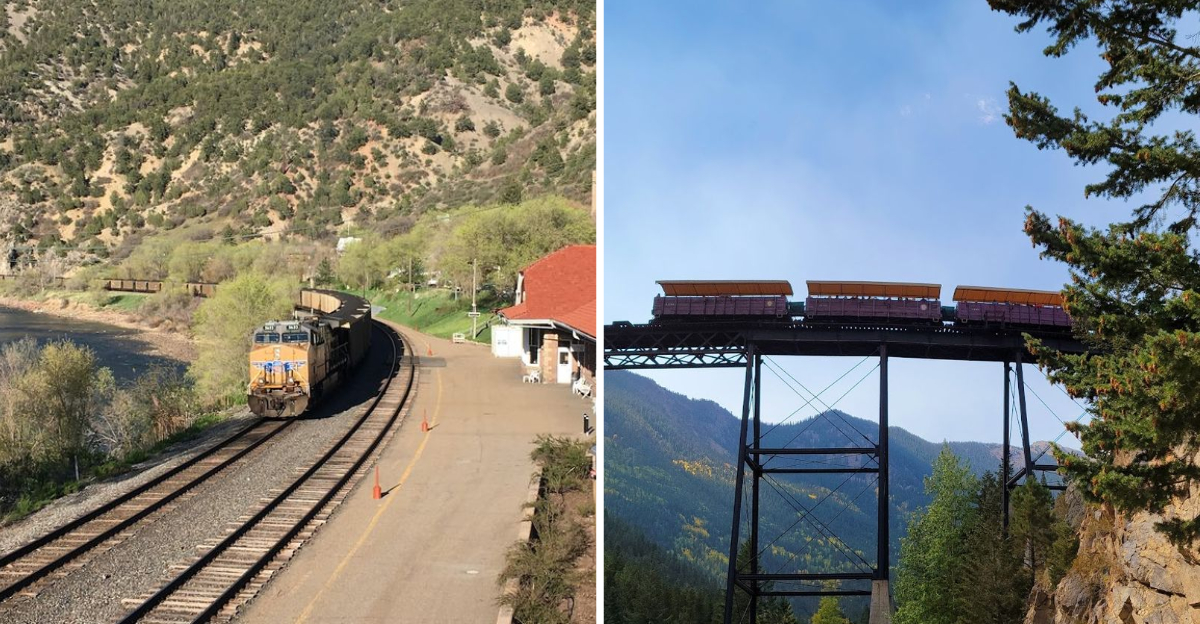
Trains still reach places cars never will. Some of the best scenery sits past the passes. You only get there by rail.
Colorado keeps a few secrets back there. I have ridden these old lines myself. Nothing beats the view from a train window.
One trip climbs a huge mountain peak. Another rolls into a frozen-in-time mining town. All of these are worth the ticket.
The Rockies just unfold beside you. You forget about the road completely.
Big windows frame something new. Some lines run only in summer.
Tickets often sell out fast. Book ahead and grab a window seat. Head to the nearest depot.
1. Durango & Silverton Narrow Gauge Railroad, Silverton
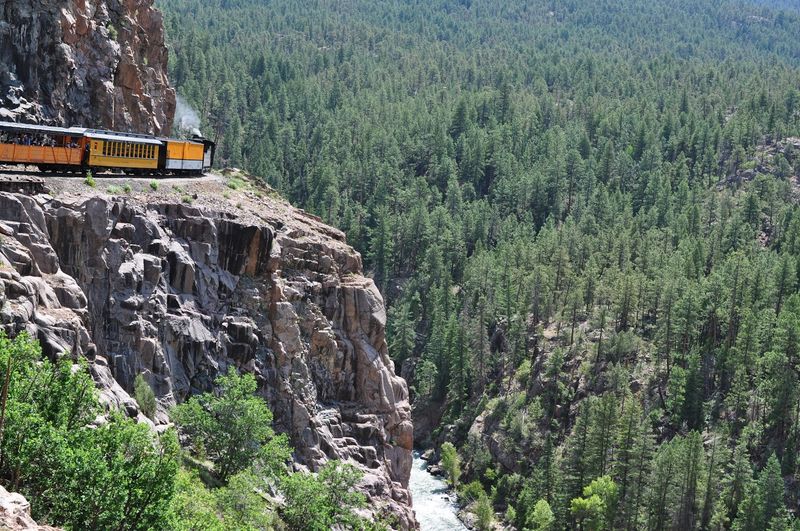
Trust me, very few train rides in America feel this cinematic.
The moment the coal-fired steam engine pulls out of Durango, you know you are in for something truly unforgettable.
The Durango and Silverton Narrow Gauge Railroad has been running continuously since 1882. That is over 140 years of steam-powered mountain travel, which makes it one of the longest-running narrow gauge railroads in the country.
The 45-mile route follows the Animas River through the rugged San Juan Mountains. Sheer canyon walls rise hundreds of feet on either side, and the river churns white below your window.
Silverton itself is a National Historic Landmark district. Its main street looks almost exactly as it did in the 1880s, with brick storefronts and wooden sidewalks lining every block.
You get about two hours in town before the return train departs. That is just enough time to explore the San Juan County Historical Museum and grab a hearty lunch at one of the local eateries.
The best months to ride are May through October, when the mountain wildflowers are blooming. Fall foliage in September turns the canyon into a blaze of gold and amber that no photograph can fully capture.
2. Cumbres & Toltec Scenic Railroad, Osier
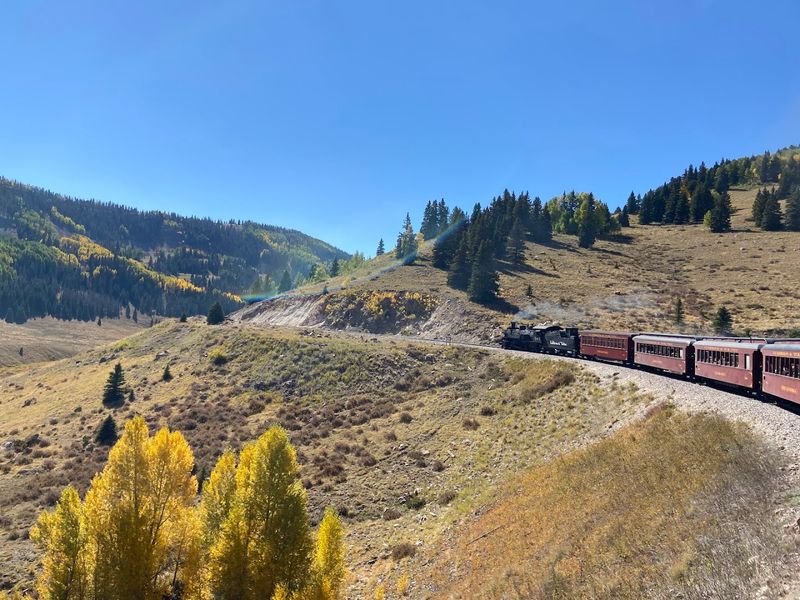
I must admit, the name Osier does not exactly ring a bell for most travelers. But the Cumbres and Toltec Scenic Railroad makes this remote Colorado stop one of the most rewarding rail experiences in the entire Southwest.
Osier sits at roughly 9,600 feet above sea level in a wide, grassy mountain valley. It exists solely as a lunch stop and turning point for passengers riding the historic steam railroad between Antonito and Chama, New Mexico.
The railroad itself is a National Historic Landmark, jointly owned by Colorado and New Mexico. It runs through 64 miles of wilderness that is otherwise completely inaccessible by paved road.
Passengers on the Colorado-side departure board in Antonito and ride through meadows, forests, and dramatic trestles before arriving at Osier. The views near Cumbres Pass at 10,015 feet are absolutely breathtaking on a clear summer day.
A hot lunch is served at the Osier Station dining hall, which has been feeding hungry rail passengers for generations. The meal is simple and hearty, perfect after a morning of mountain scenery rolling past your window.
Wildflowers carpet the meadows from late June through August. Autumn brings a patchwork of golden aspen trees that makes the entire valley glow like something out of a painting.
3. Broadmoor Manitou And Pikes Peak Cog Railway, Pikes Peak Summit
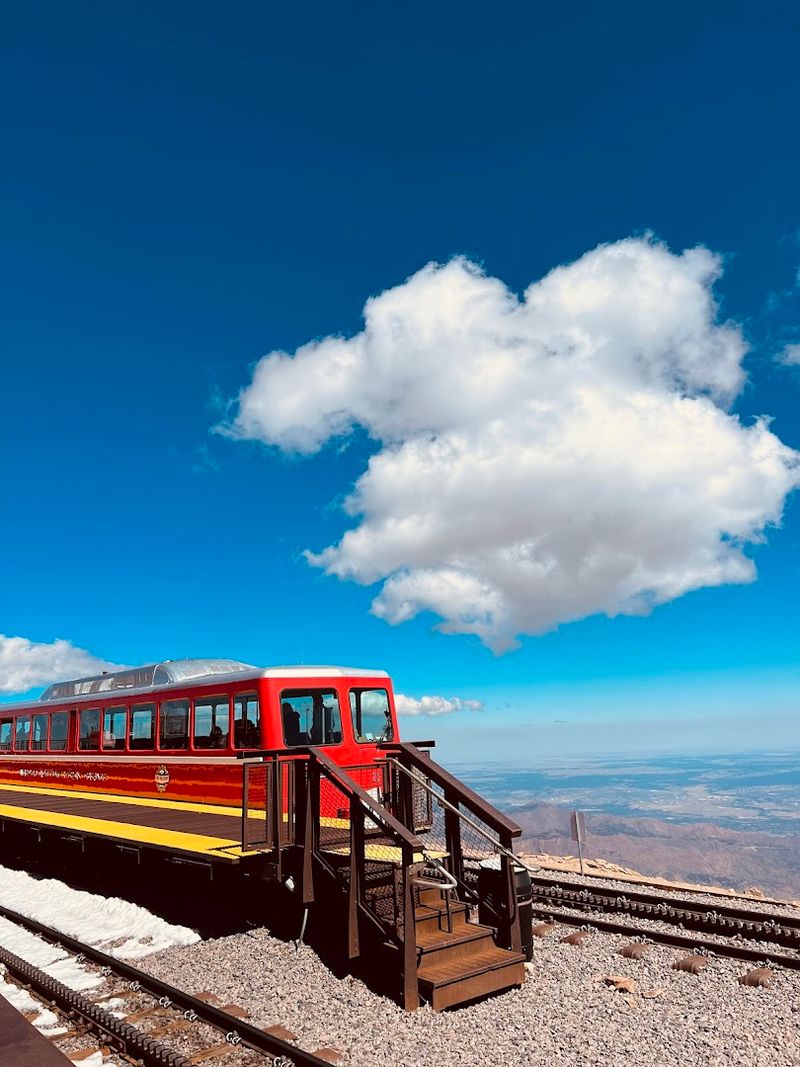
Can you believe there is a train that takes you all the way to the top of a 14,115-foot mountain?
The Broadmoor Manitou and Pikes Peak Cog Railway does exactly that, climbing from Manitou Springs to one of the most famous summits in America.
Pikes Peak, located just west of Colorado Springs, inspired Katharine Lee Bates to write “America the Beautiful” after seeing its views in 1893. Standing at the summit, it is not hard to understand why those words came to her.
The cog railway uses a rack-and-pinion system to grip the steep mountain track. The modern Swiss-built trains replaced the original fleet in 2021, offering a smoother and more comfortable ride than ever before.
The round trip covers about 18 miles and takes roughly three hours total. Passengers travel through six distinct ecological zones, from ponderosa pine forest to treeless alpine tundra, all in a single morning.
At the summit, a state-of-the-art visitor center offers warm food and incredible 360-degree views. On a clear day, you can see Denver, the Great Plains, and mountain ranges stretching deep into New Mexico.
Tickets should be reserved well in advance, especially for summer weekends. The train runs seasonally, so checking the schedule before planning your trip is a smart move.
4. Royal Gorge Route Railroad, Parkdale
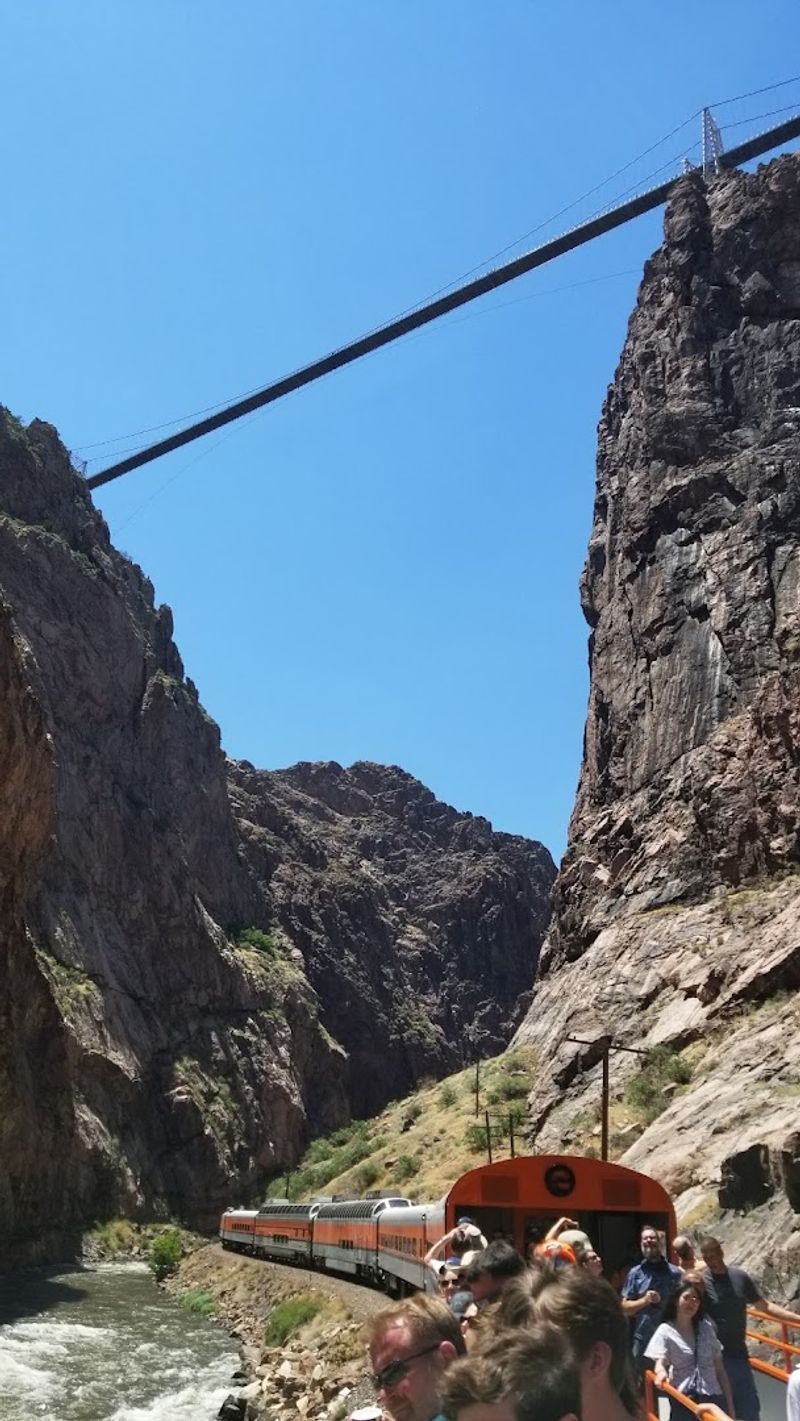
Believe me, no amount of photos can prepare you for the moment the canyon walls close in around your train.
The Royal Gorge Route Railroad runs through one of the most dramatic river canyons in North America, right through the heart of south-central Colorado.
The gorge stretches about ten miles, with granite walls soaring more than 1,000 feet above the Arkansas River. The train travels along the canyon floor, putting those towering walls right outside your window at arm’s reach.
Departing from Canon City, the train follows the Arkansas River upstream toward Parkdale. The round trip covers about 24 miles and takes approximately two hours of pure canyon scenery.
The railroad dates back to 1879, when it was built by crews working for competing rail companies in a fierce race to control the canyon. That historical drama adds a fascinating layer to every ride.
Multiple train experiences are available, including open-air gondola cars and climate-controlled coaches. Special dinner trains and themed excursions run throughout the year, making it a flexible option for all kinds of travelers.
Spring and early summer are ideal, when snowmelt pushes the Arkansas River to a roaring rush of white water. Watching rafters navigate the rapids from the comfort of a train seat is an experience that stays with you long after the ride ends.
5. Leadville & Southern Railroad, Fremont Pass
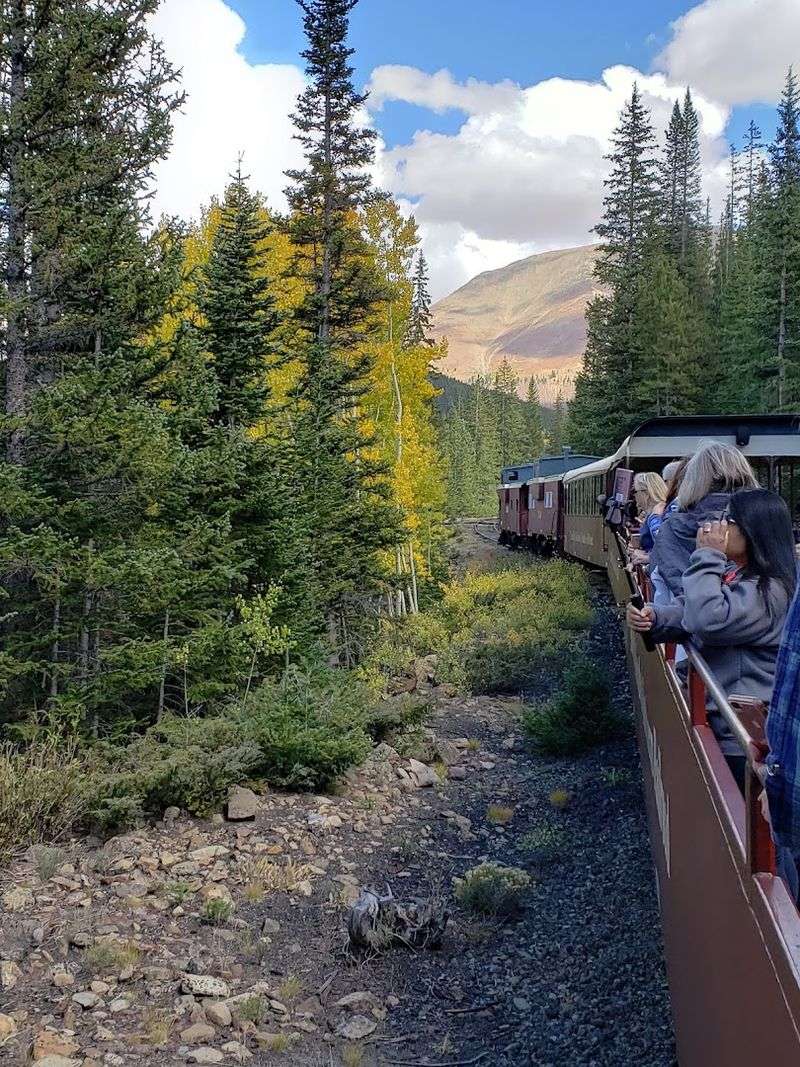
I never would have guessed that a small mountain railroad running out of a historic mining city could offer views this vast and humbling.
The Leadville and Southern Railroad takes passengers on a high-altitude journey that tops out near the Continental Divide at Fremont Pass.
Leadville is at 10,152 feet above sea level, making it the highest incorporated city in the United States. Starting from that elevation, the train climbs even higher through open alpine terrain that feels wonderfully remote.
The round trip covers about 22.5 miles through the upper Arkansas River valley. Passengers ride through wide-open meadows, past beaver ponds, and alongside mountain ridges dusted with snow even in summer.
The railroad uses historic diesel locomotives that have been running these tracks since the 1960s. The vintage equipment adds a certain charm that modern rail simply cannot replicate.
Fremont Pass sits at 11,318 feet and marks the boundary between Lake and Summit counties. On a clear day, the views of the Mosquito Range and Tenmile Range from the train are stunning.
The season runs from late May through early October, with fall being especially popular for the golden aspen displays. Leadville itself is worth exploring before or after your ride, with a rich mining history packed into its Victorian-era downtown streets.
6. Georgetown Loop Railroad, Silver Plume
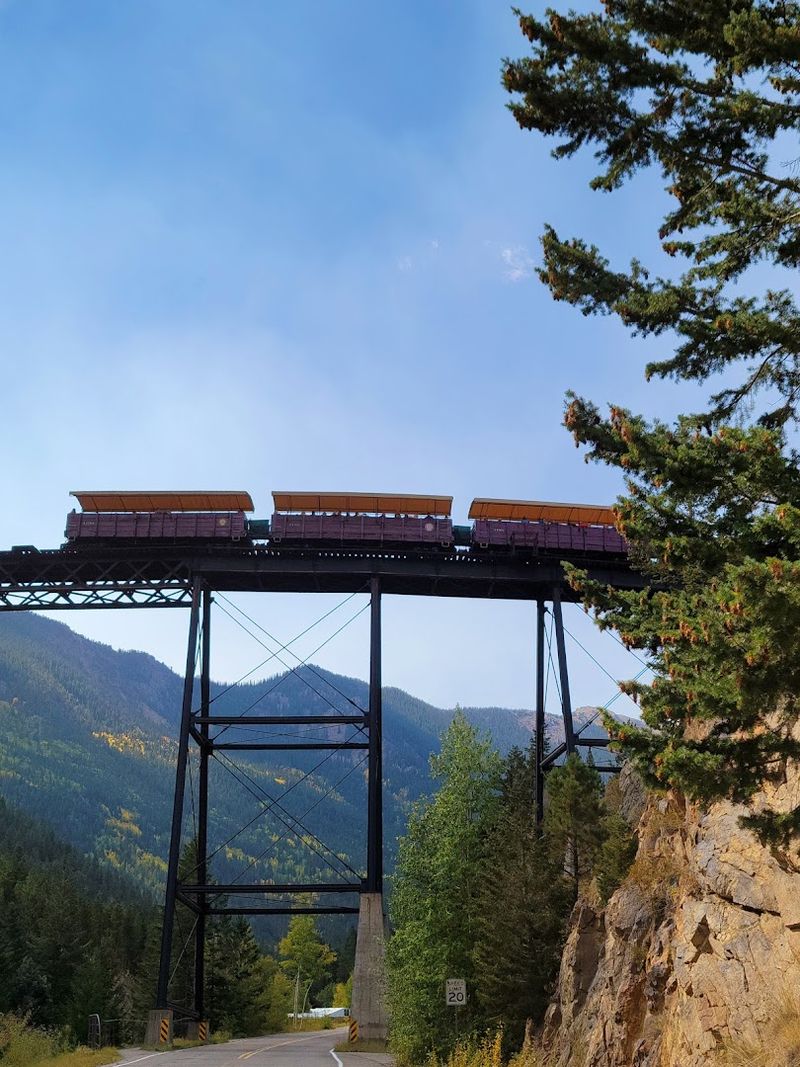
Who would have thought that a tiny mountain town with fewer than 300 residents could anchor one of Colorado’s most beloved historic rail experiences?
Silver Plume is the quiet star of the Georgetown Loop Railroad, a heritage railway that has been thrilling passengers since it was restored in the 1980s.
The original Georgetown Loop was an engineering marvel when it opened in 1884. The track spirals upward through Clear Creek Canyon, crossing the famous Devil’s Gate High Bridge at 95 feet above the creek below.
Trains depart from both Georgetown and Silver Plume, located in Clear Creek County just off Interstate 70. The round trip covers about six miles and climbs nearly 640 feet in elevation through a series of dramatic curves and switchbacks.
Silver Plume itself is a beautifully preserved Victorian mining town. The entire town is listed on the National Register of Historic Places, with original buildings lining the main street.
Optional mine tours at the Lebanon Silver Mine are available during the summer season. Going underground gives you a real sense of what silver miners experienced in the 1870s and 1880s.
Fall is arguably the most stunning time to ride, when aspen trees turn the canyon walls bright yellow. The contrast of golden leaves against grey rock and green pine is something you have to see in person.
7. Cripple Creek & Victor Narrow Gauge Railroad
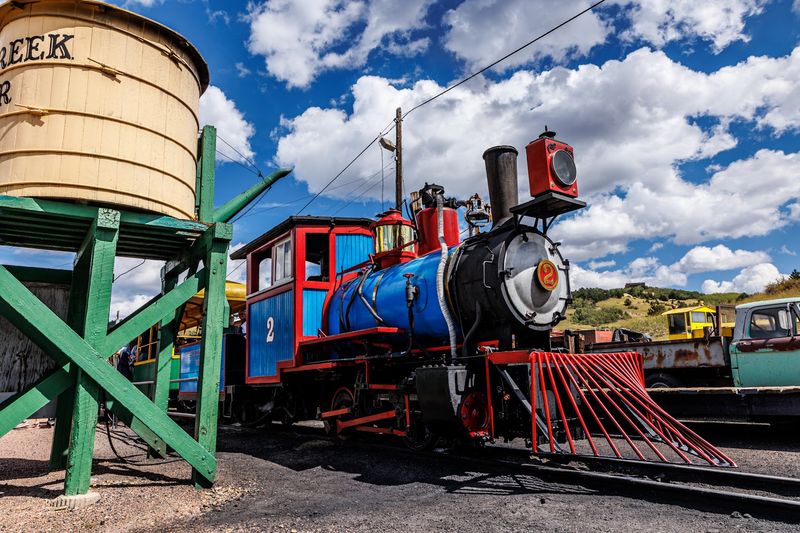
You might not believe me, but this little narrow gauge railroad packs more gold rush history into a four-mile ride than most museums manage in an entire building.
The Cripple Creek and Victor Narrow Gauge Railroad connects two legendary Colorado mining towns that once produced more gold than almost anywhere else in the world.
Victor sits in the Cripple Creek Mining District at about 9,700 feet elevation in Teller County. At its peak in the early 1900s, the district was producing tens of millions of dollars in gold every single year.
The train departs from Cripple Creek and winds through the historic mining district past old mine shafts, headframes, and tailings piles. The open-air cars give you unobstructed views of a landscape that still bears the marks of its gold rush past.
The ride itself is about 45 minutes round trip, making it an easy and fun addition to a broader Cripple Creek day trip. Knowledgeable narration during the ride explains what you are seeing and fills in the fascinating backstory.
Victor is a small, quietly charming town with original brick buildings and a proud mining heritage. The Lowell Thomas Museum in Victor tells the story of the district through photographs, artifacts, and personal accounts from the boom years.
Summer weekends tend to draw the biggest crowds, so arriving early gives you the best chance of a relaxed and unhurried experience on the rails.
8. Amtrak Winter Park Express
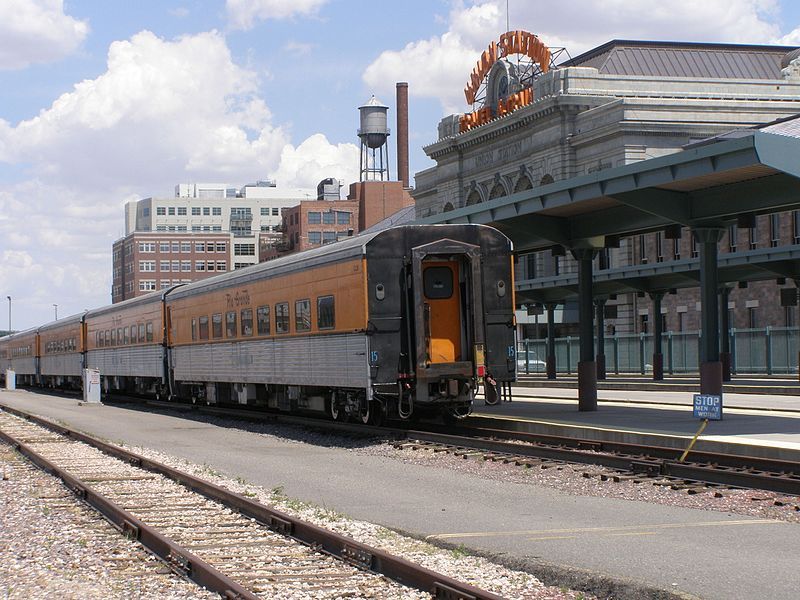
Doesn’t it seem almost too good to be true that you can board a train in Denver and step off directly at the base of a world-class ski resort?
The Amtrak Winter Park Express makes that exact dream a reality every winter weekend.
Winter Park Resort is located in Grand County, about 67 miles northwest of Denver. The train cuts through the Rocky Mountains via the famous Moffat Tunnel, a 6.2-mile bore that eliminated the need to cross treacherous mountain passes.
The Moffat Tunnel sits at 9,239 feet, the highest point on the entire Amtrak network. Riding through it is a unique experience, with the tunnel taking nearly seven minutes to pass through at train speed.
The Winter Park Express runs on select Saturdays and Sundays from January through late March. The schedule is designed specifically for skiers and snowboarders who want a car-free mountain getaway.
The train departs from Denver Union Station, a beautifully restored historic landmark in the heart of downtown. Passengers can check ski equipment and enjoy a relaxed journey that takes about two hours each way.
Winter Park Resort itself spans over 3,000 acres of skiable terrain across multiple mountain areas. After a full day on the slopes, the train ride back to Denver feels like the perfect, well-earned way to wrap up an epic mountain day.
9. Glenwood Springs, Amtrak California Zephyr
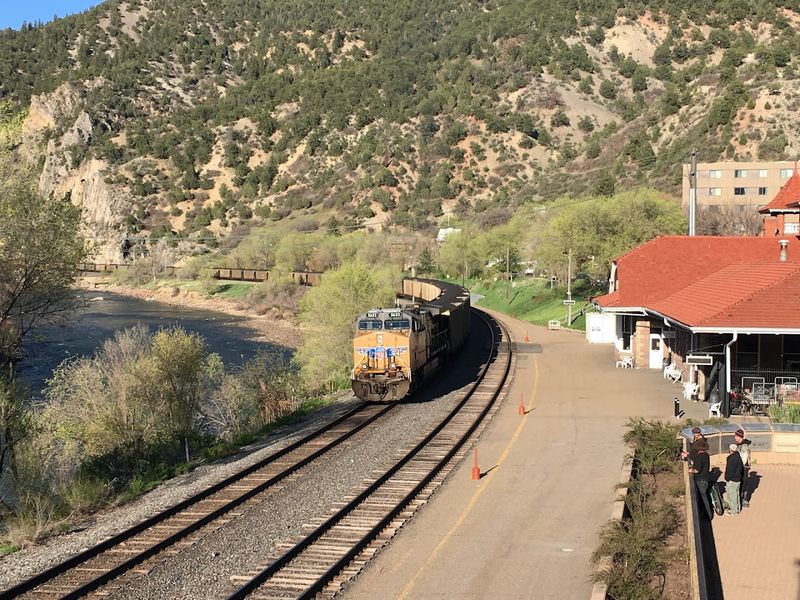
I know it sounds dramatic, but Glenwood Canyon might be the single most spectacular stretch of railroad scenery in the entire continental United States.
The Amtrak California Zephyr passes right through it on its way to Glenwood Springs making this one of the most rewarding train rides you can take without leaving the country.
Glenwood Canyon stretches about 12 miles along the Colorado River in Garfield County. The canyon walls rise more than 1,000 feet above the river, and the train tracks are carved directly into the cliff face in several sections.
The California Zephyr connects Chicago to San Francisco, stopping at Glenwood Springs along the way. Day-trippers from Denver can board in the morning and arrive in Glenwood Springs by early afternoon for a full day of exploring.
Glenwood Springs is famous for its natural hot springs, with the Glenwood Hot Springs Pool being one of the largest in the world. After a train ride through the canyon, soaking in the warm mineral waters feels like a well-deserved treat.
The town also sits at the entrance to Glenwood Canyon Recreation Area, offering hiking, cycling, and river activities along well-maintained trails. Doc Holliday’s grave is located in the local cemetery, adding a touch of Wild West history to the mix.
The return train departs in the late afternoon, giving you a second chance to soak in the canyon’s grandeur as golden light hits the cliffs on the way home.