An Eerie Ghost Town Is Lurking In Georgia And It’s Straight Out Of A Nightmare
I do not scare easily. I have watched horror movies alone at midnight and laughed through most of them.
But this place got under my skin in a way no film ever has. I found it by accident while planning a weekend drive through Georgia, and I almost turned back twice.
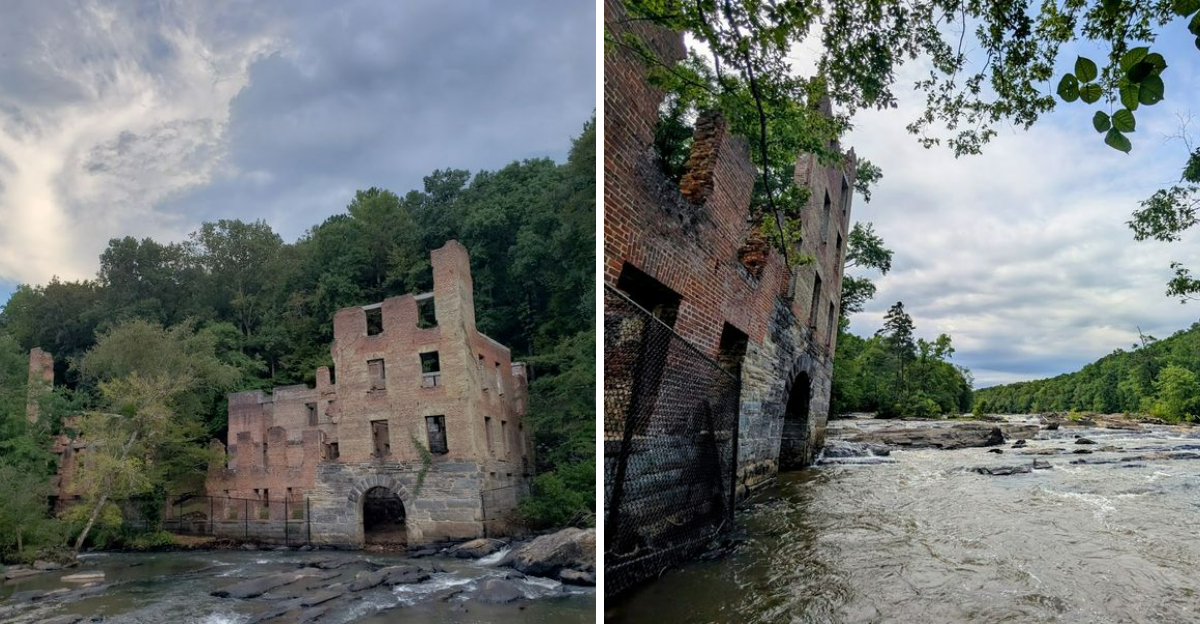
Crumbling brick walls rise out of the trees like something that refuses to be forgotten. Empty window frames stare back at you.
The only sound is rushing water, and somehow that makes it worse. People lived here once.
They worked, built, and dreamed here. Then they vanished, and the forest started taking everything back.
Georgia hides plenty of strange corners, but few of them feel this haunted in broad daylight. Bring a friend.
You will want the company.
The Ghost Town That Time Forgot
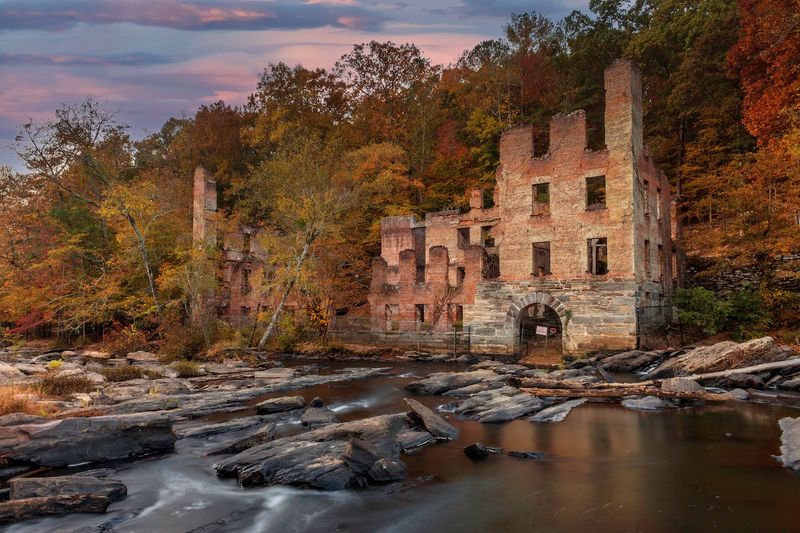
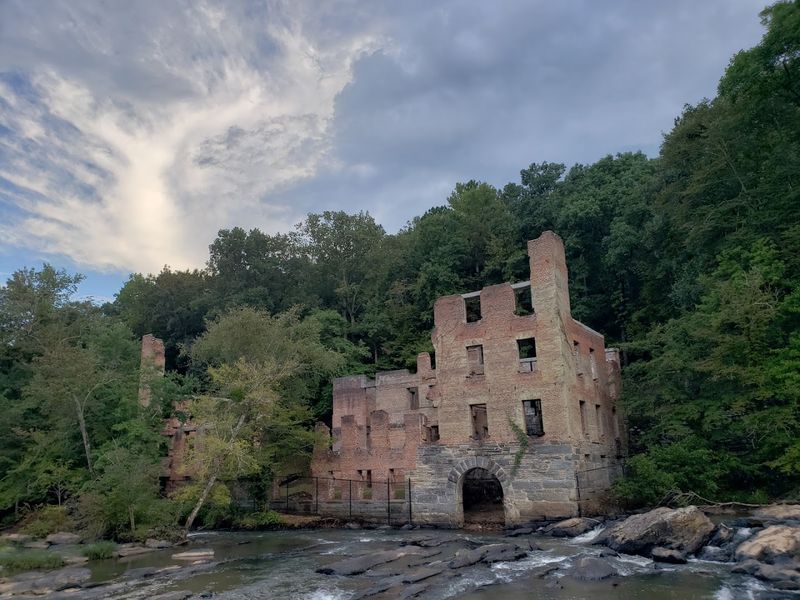
Brick walls that once hummed with machinery now stand hollow and silent. The New Manchester Mill Ruins rise from the forest floor like something straight out of a nightmare, roofless and raw.
Construction on this massive textile mill began in 1846, and it officially opened in December 1849. Back then, it was one of the largest and most modern factories in all of Georgia.
A full mill town, called Factory Town, grew up around it. About 250 people lived and worked there, with roughly 90 employed inside the factory walls.
The mill was renamed the New Manchester Manufacturing Company in 1857, honoring Manchester, England. That city was the global center of the textile industry at the time.
You can find this staggering piece of history inside Sweetwater Creek State Park at 1750 Mt Vernon Rd, Lithia Springs, GA 30122. The ruins sit right along the creek, waiting to be discovered by anyone brave enough to make the walk.
A Five-Story Factory Powered By A Creek
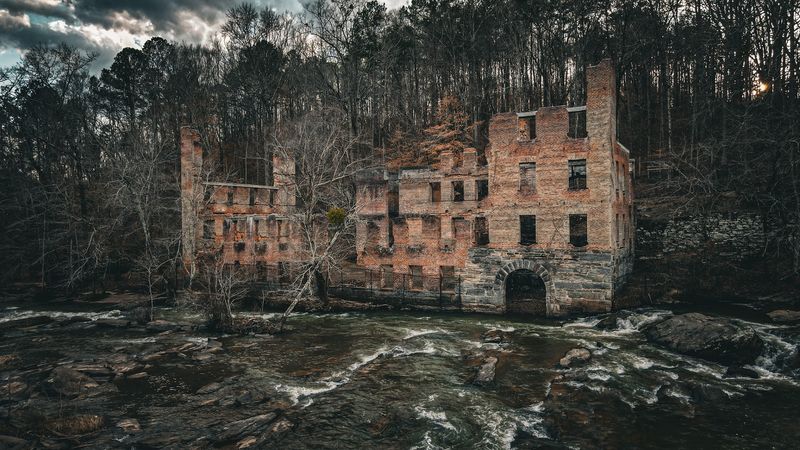
Picture a five-story building taller than anything else in Atlanta at the time. That was this mill, and it ran entirely on the power of rushing creek water.
A massive undershot breast-style mill wheel drove every piece of machinery inside. That wheel weighed somewhere between 45,000 and 50,000 pounds.
Workers hand-dug a 1,525-foot-long mill race to divert water from Sweetwater Creek directly to that wheel. Every loom, every spindle, every machine inside depended on that flow.
The mill produced cotton yarns and cloth at an impressive scale. It was genuinely cutting-edge technology for its era in the American South.
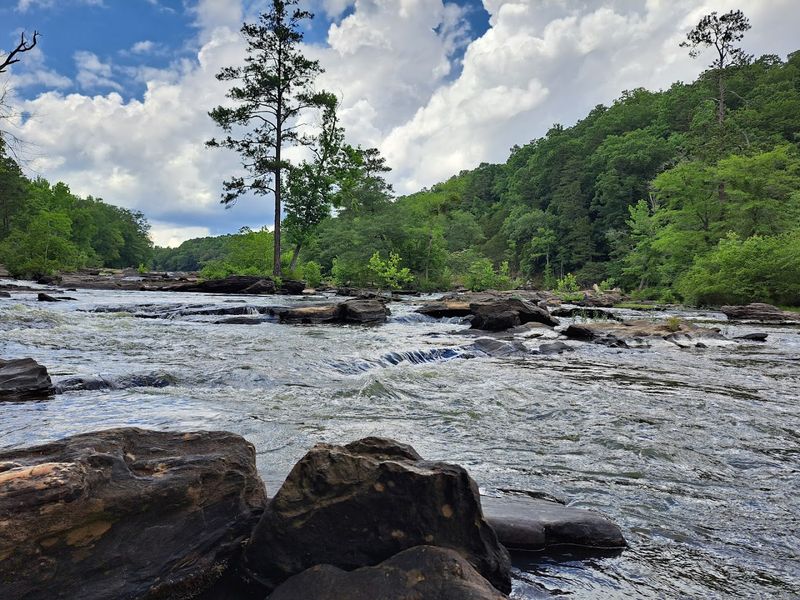
Standing beside Sweetwater Creek today, you can still hear that same water rushing past. It feels almost impossible to imagine the noise and energy this spot once produced every single day.
When The Mill Became History
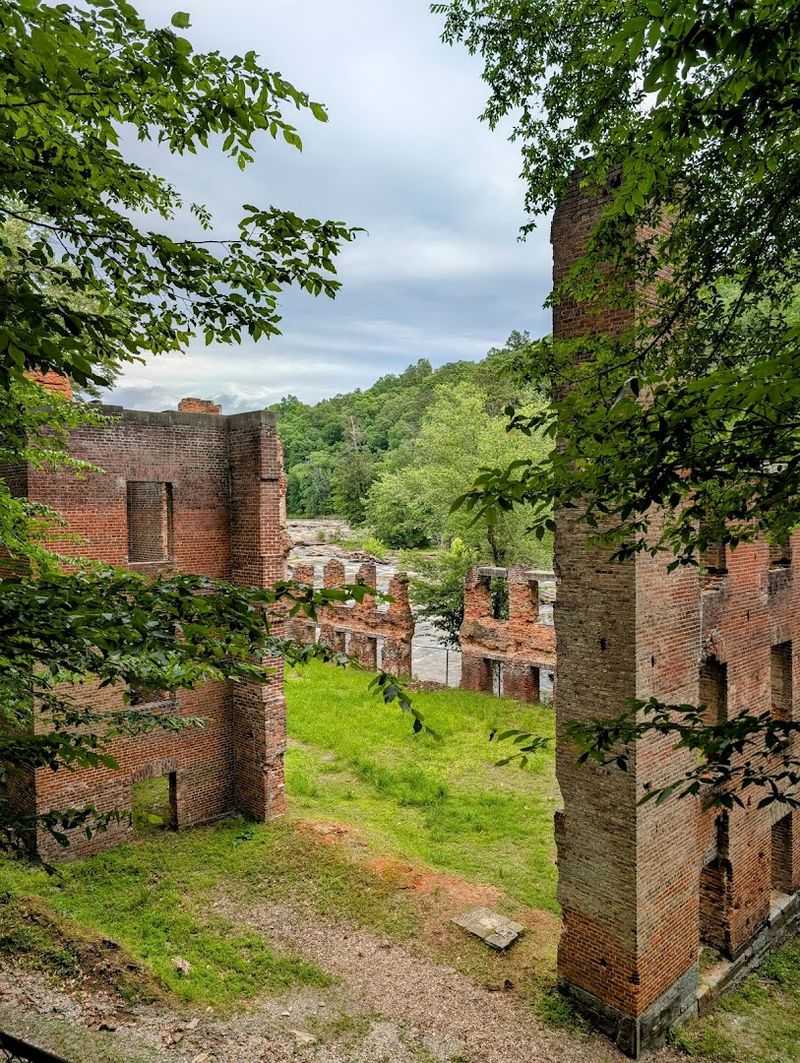
The story of this mill reaches back to the 1800s, when it stood at the center of daily life for an entire community. Hundreds of people earned their living within these brick walls.
Most of them were women, and many brought their children along to work beside them.
The mill produced cotton fabric that traveled far beyond this quiet stretch of river. For decades, the sound of looms echoed across the water from sunrise to sunset.
An entire village grew up around the factory, complete with a company store where workers gathered and traded news.
Then, in the summer of 1864, a fire swept through the buildings and changed everything. The mill was never rebuilt.
The workers moved on, the village emptied out, and the forest slowly began reclaiming what the flames left behind.
Today, the scorched brick walls still stand exactly where they did more than 150 years ago. Knowing that history while standing in front of these ruins completely changes how you see them.
These are not just old walls. They are the last remaining chapter of a community that once filled this valley with life, work, and ambition.
What The Ruins Look Like Up Close
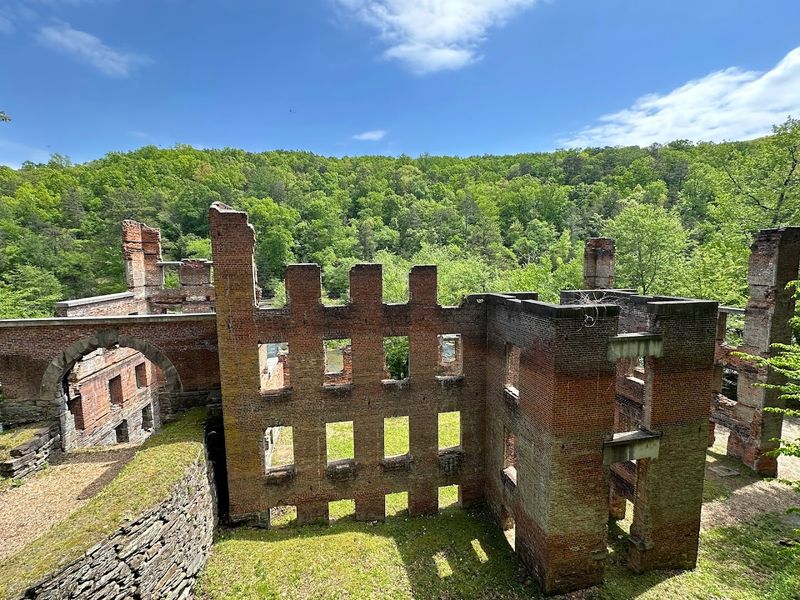
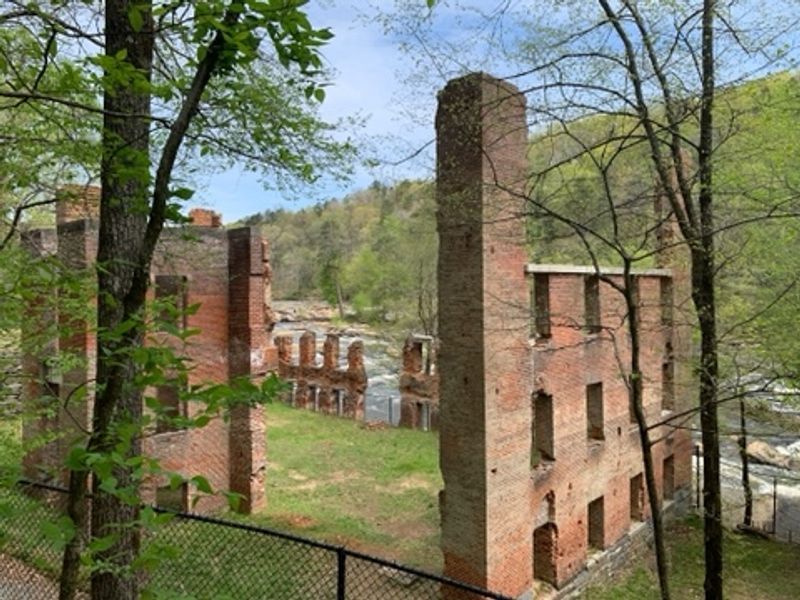
The first time you see them, the ruins look almost too dramatic to be real. The walls are thick red brick, slowly being swallowed by moss and vines from every direction.
Window frames stand open like hollow eyes staring out over the creek. There is no roof, no floor, just sky above and history below.
A solitary chimney still rises tall above everything else. It is a stubborn reminder of what this building used to be before the fire came through.
Extensive stabilization work was completed in 2017 to preserve the structure. Workers repointed mortar joints and installed steel supports to keep the walls standing safely.
Visitors can view the ruins from a well-placed viewing deck with benches. There are also stairs leading down toward the creek for different angles and perspectives.
Access inside the ruins is restricted for safety reasons. But the view from outside is striking enough to make every step of the trail completely worth it.
The Eerie Folklore That Follows This Place
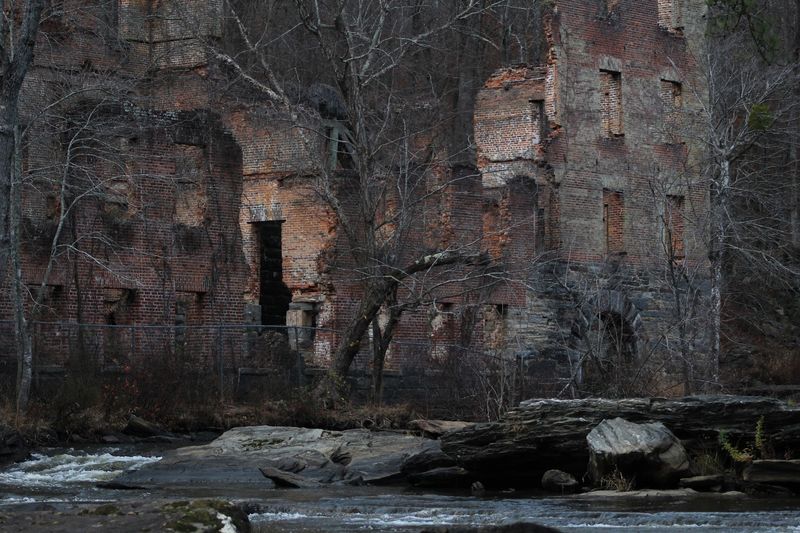
As the light fades near the ruins, the atmosphere shifts in a way that is hard to explain. Something about this spot just feels heavy, and local folklore has a lot to say about why.
Stories have circulated for years about the spirits of former mill workers lingering near the walls. Most of those workers were women and children, which makes the folklore feel especially haunting.
Some hikers report hearing strange sounds near the ruins. Distant mechanical chatter, rhythmic thuds, or faint voices drifting through the trees.
Sweetwater Creek itself plays into the legends. Some local stories claim its constant flow represents the eternal tears of the workers who were taken away and never returned.
Ghost hunters and paranormal enthusiasts are drawn to this spot regularly. The combination of violent history and crumbling architecture makes it a compelling destination for the curious.
The real horror here is not supernatural. It is documented history, and that makes the eerie feeling even harder to shake once you know the full story.
Hollywood Found This Spot Before You Did
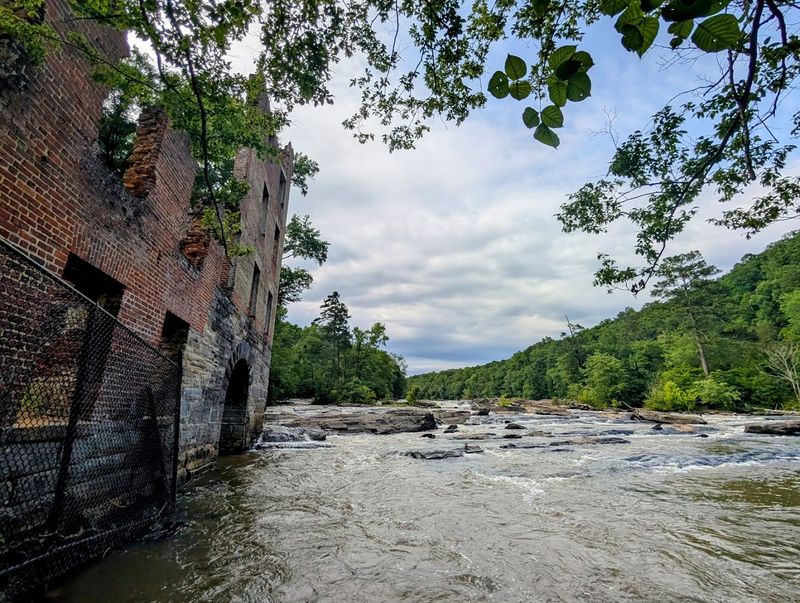
Here is something that stopped me mid-trail when I first heard it. These ruins have appeared in major Hollywood films, and you have almost certainly seen them without knowing it.
Fans of The Hunger Games franchise will recognize this location immediately. The ruins appeared in Mockingjay Part 1, lending a perfectly dystopian backdrop to the story.
Other productions also used this spot for its distinctive, cinematic look. The Hunger Games: Mockingjay Part 1 and Killing Season both filmed scenes her at various points.
A park ranger tour will point out the exact spot where a Hunger Games scene was filmed. Visitors have even gotten photos taken at that precise location during guided tours.
It is genuinely surreal to stand somewhere you have seen on a movie screen. The ruins look just as dramatic in person as they do on film, maybe more so.
This place earned its screen time honestly. The raw, crumbling beauty of these walls does not need special effects to look like something out of another world.
Hiking The Red Trail To Reach The Ruins
Getting to the ruins is part of the experience, and the trail itself sets the mood perfectly. The Red Trail is the most direct route and starts from the Sweetwater Creek State Park visitor center.
The path is mostly flat and wide, making it accessible for a broad range of visitors.
Benches are placed at intervals so you can rest and take in the scenery. The creek runs alongside parts of the trail, adding a calming soundtrack to the walk.
Past the ruins, the trail becomes noticeably more challenging. Rocky sections and steep inclines make the extended route better suited for more experienced hikers.
Wear closed-toed shoes and dress for the weather, especially in warmer months. Trail maps are posted at major junctions throughout the park to keep you oriented.
The park recommends checking their website for current tour dates before visiting. Guided tours with park rangers offer access and history that a solo walk simply cannot match.
Everything Else The Park Has To Offer
The ruins are the headline act, but the park surrounding them deserves just as much attention. Sweetwater Creek State Park covers 2,549 acres of forests, bluffs, and waterways.
Over nine miles of hiking trails wind through the park. They pass stunning rapids, rocky outcrops, and dense woodland that changes beautifully with each season.
The 215-acre George Sparks Reservoir is popular for fishing and boating. During warmer months, visitors can rent canoes, kayaks, and paddleboards right at the park.
An award-winning visitor center greets guests at the entrance. It features exhibits covering the area’s layered history and the wildlife that calls the park home.
Yurts and tent campsites are available for those who want to stay overnight. Picnic shelters and playgrounds make this a solid destination for a full family day out.
Park rangers lead interpretive programs and guided hikes throughout the year. These tours go deeper into the ecology and history of the area in ways that genuinely surprise most visitors.
Planning Your Visit Before You Go
Before you pack your bag and head out, a little planning goes a long way here. This spot is only 20 miles from downtown Atlanta, making it one of the most accessible history and nature combinations in the state.
The park is open daily from 7 a.m. to dark, while the office is open from 9 a.m. to 5 p.m. A parking fee is required, and annual Georgia State Parks passes are available.
Guided mill tours are available for a small fee and are absolutely worth booking. These tours give you access to information and perspectives you simply cannot get on your own.
Call ahead or check the park website to confirm tour schedules before your visit.
Bring water, sunscreen, and a good pair of walking shoes. The trail to the ruins is manageable, but comfort makes the whole experience much more enjoyable.
Visitor reviews often praise the ruins, trails, and creekside scenery. Once you see those ruins in person, you will completely understand why people keep coming back.