An Illinois Pizzeria Serves Cracker-Thin Tavern Squares So Crispy Locals Fight For The Corner Pieces
Some pizzas hide their personality under toppings.
This one puts it right on the crust, where blistered char from old-school deck ovens is considered part of the appeal, not something to trim away.
The cut creates another little obsession. Small squares mean crisp edges, and the corner pieces tend to get attention fast.
There is more going on behind the scenes too. The dough follows a guarded family recipe, the sausage is seasoned in-house, and the sauce brings a tangy bite that keeps the crispy slices from tasting heavy.
This Illinois tradition has stayed in the family for generations.
Delivery still is not part of the routine, which leaves one obvious question: how far would you drive for a pizza this particular about doing things its own way?
Those Four Little Corners Will Test Every Friendship At The Table
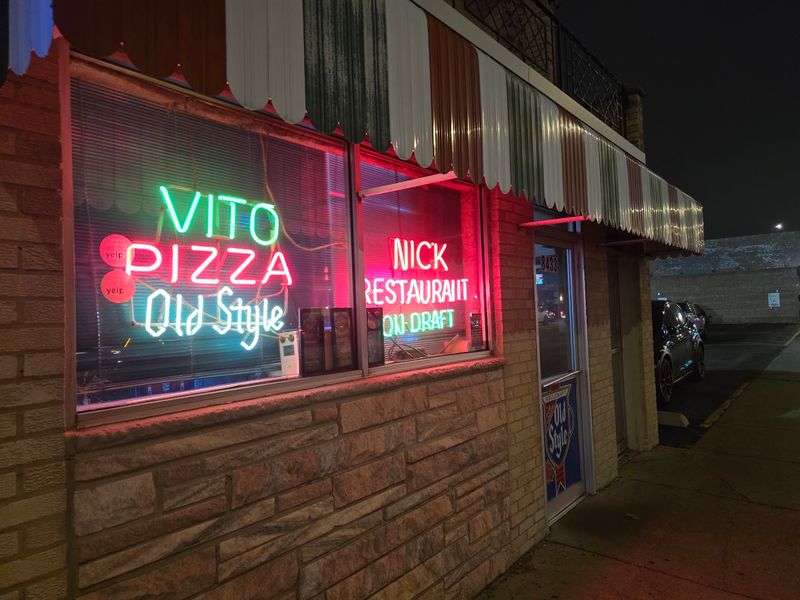
Square cuts change everything about pizza manners.
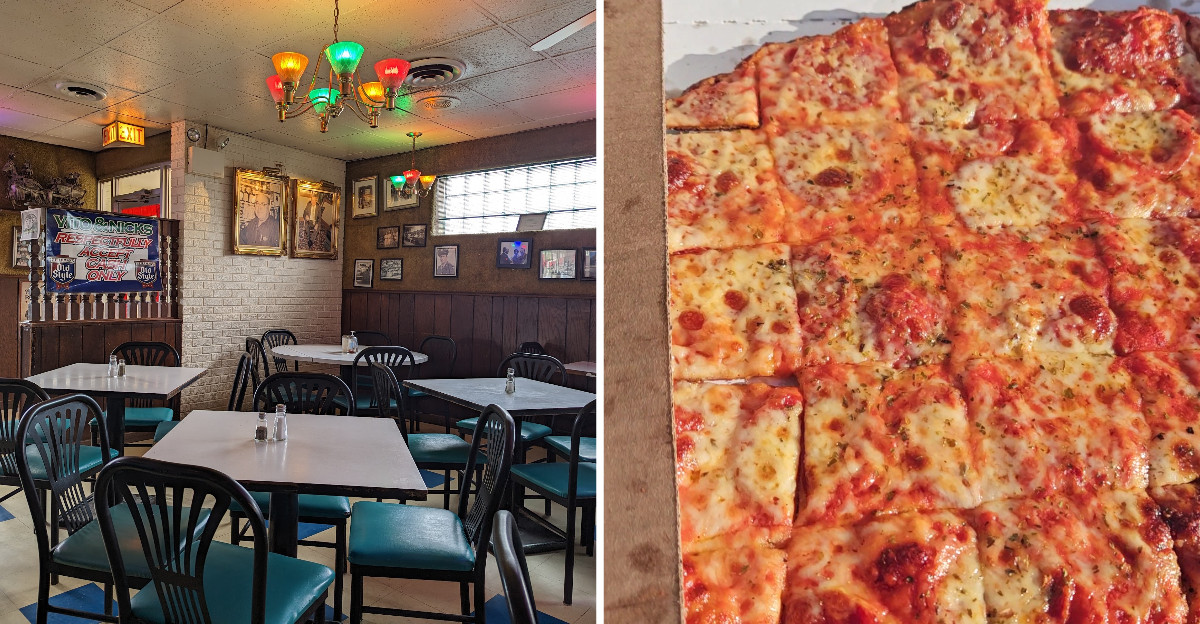
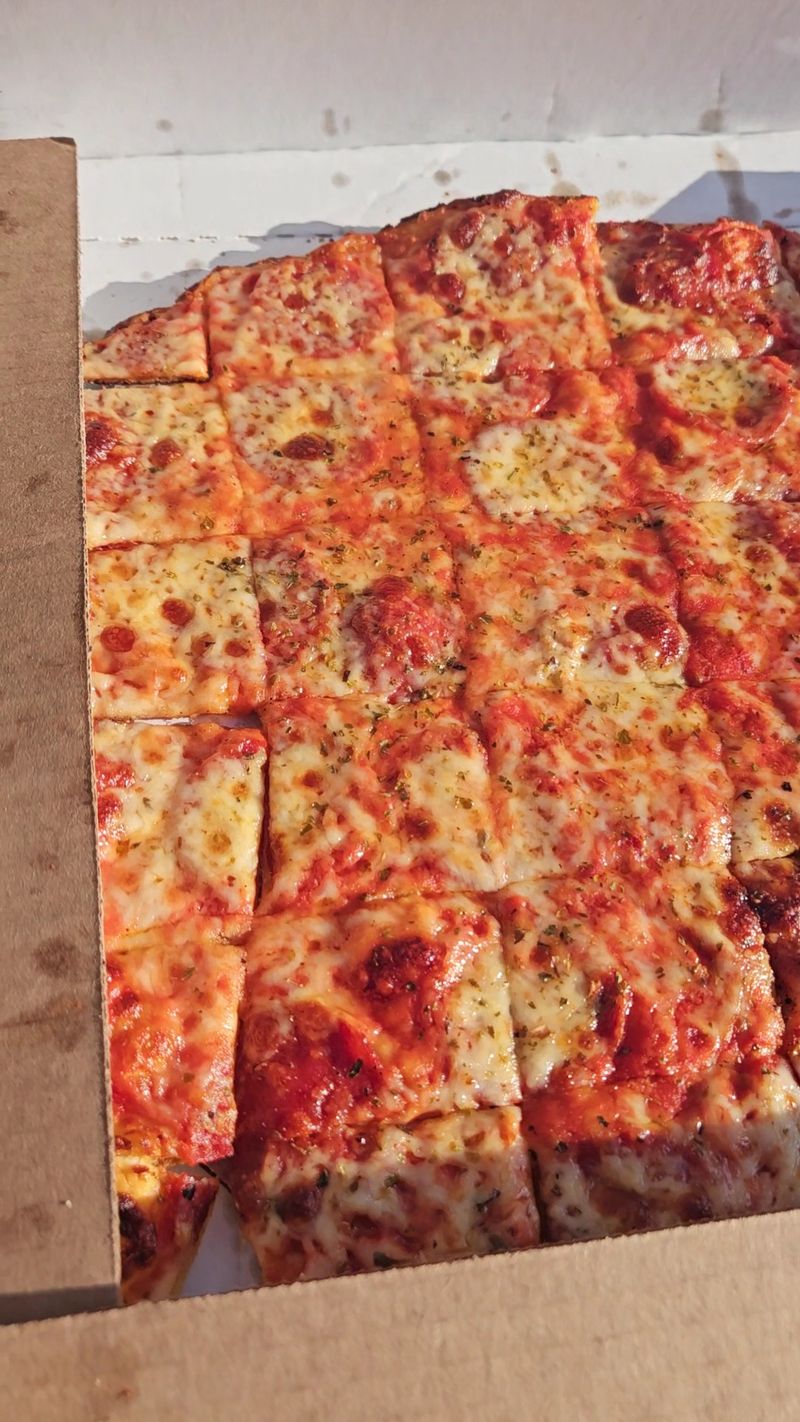
At Vito & Nick’s, a round pizza becomes a grid of small pieces instead of broad triangular slices, giving everyone a chance to take a square without committing to a full wedge.
The four corner pieces have two outer edges and less sauce, giving the toasted perimeter extra prominence. Center pieces hold more cheese and sauce, offering a different balance of flavors.
This style is strongly associated with Chicago’s South Side, where thin, square-cut pies became a familiar way to feed groups gathered around a table.
The pieces are easy to share, whether the table orders a simple cheese pie or several contrasting toppings. Small squares also make sampling a second flavor feel natural.
That tradition extends well beyond one Illinois neighborhood, but the original Vito & Nick’s remains closely connected with it.
When a pie arrives, the little squares encourage conversation and a leisurely pace. The question is who reaches for a corner first.
A Crust So Thin It Practically Snaps When You Lift It
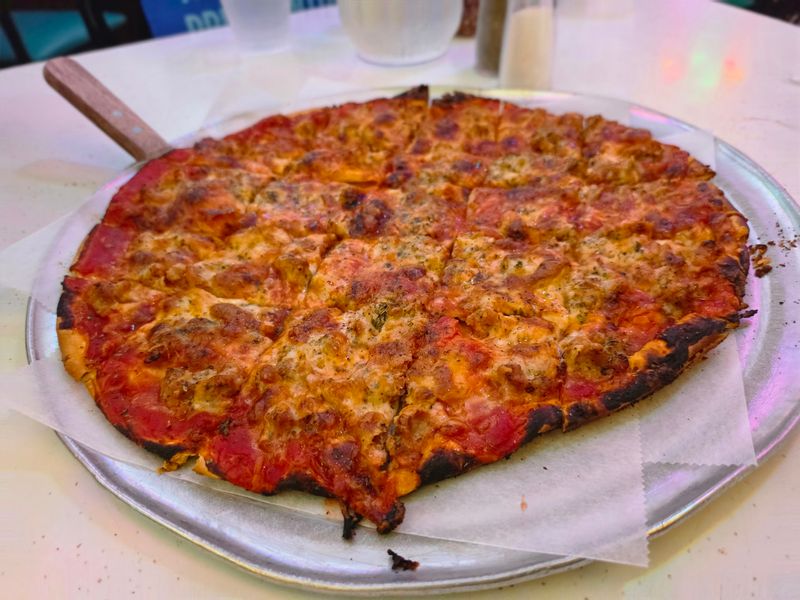
Crunch is the whole personality of this pizza.
The dough is worked extremely thin before baking, creating a firm base with a delicate, crisp finish instead of the soft, airy interior found in thicker styles.
The family has kept the dough formula closely guarded for decades. In the kitchen, a sheeter helps roll it into an even layer before the sauce, cheese, and toppings are added.
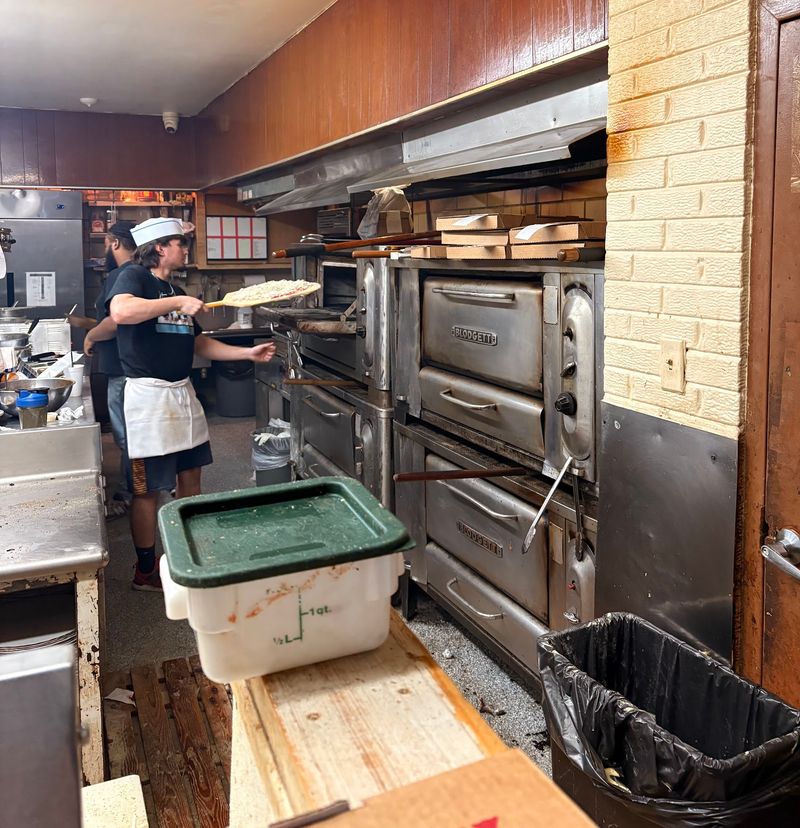
There is an equally distinctive approach to color. The kitchen has long favored a well-browned pie, with toasted patches of cheese and crust showing the effect of the deck ovens. The kitchen has used a vintage 1965 Blodgett oven.
That long-serving equipment helps explain why the characteristic color is as closely associated with the pizza as its thinness.
For a first taste, a plain cheese or sausage pizza makes the crust easier to appreciate. The toasted edges and bright sauce reveal a side of Chicago pizza beyond deep dish.
The Sausage And Sauce Give Each Square Its Character
Sausage is serious business on the South Side. Vito & Nick’s uses a carefully seasoned version that has been central to its pizza since the family began preparing pies in 1946.
Small pieces of fresh sausage are pressed into the dough above a thin layer of mozzarella, then covered with more cheese. The sausage cooks with the pizza, spreading its savory flavor across the surface.
The tomato sauce provides an important counterpoint. Spread across the thin dough, it brings brightness beneath the melted cheese and keeps the final result from feeling like cheese on a cracker. Balance matters more than elaborate toppings.
Other toppings include pepperoni, mushrooms, peppers, olives, spinach, garlic, basil, and giardiniera. Half-and-half orders invite comparisons.
An egg topping also appears on the menu, an unusual addition that shows how flexible the simple dough-and-cheese base can be.
For a first visit, sausage on its own makes an especially clear introduction to the recipe. Generations of practice come through in every little square.
Among Illinois pizzerias, that careful treatment of sausage remains a defining part of the restaurant’s identity.
Italian Beef Shows Up In More Ways Than One
Chicago’s familiar Italian beef sandwich has a place on this menu, but the same savory ingredient can also become a pizza topping.
Sliced beef is offered among the premium additions, allowing it to share the crisp base with mozzarella, tomato sauce, and any vegetables a diner chooses.
The pairing reflects the restaurant’s history. The family business began in the 1920s and changed addresses several times. By 1939, it served Italian sandwiches, sausage, and beef. Pizza followed in 1946.
Those traditions remain beside the famous pizza. Today’s sandwich selection includes beef, Italian sausage, meatball, and a beef-and-sausage combination.
The Big Nicky, meanwhile, puts a sausage burger on pizza bread for a playful connection between the two sides of the menu.
One specialty combines both meats on garlic bread with cheese and peppers, drawing on Chicago’s Italian-American food traditions.
Beef pizza gives a familiar filling a different form. A group can order sandwiches for some diners and a square-cut pie for others, then enjoy both sides of the family’s cooking tradition at the same table.
Fried Mushrooms, Ravioli, And Pasta Have Their Place
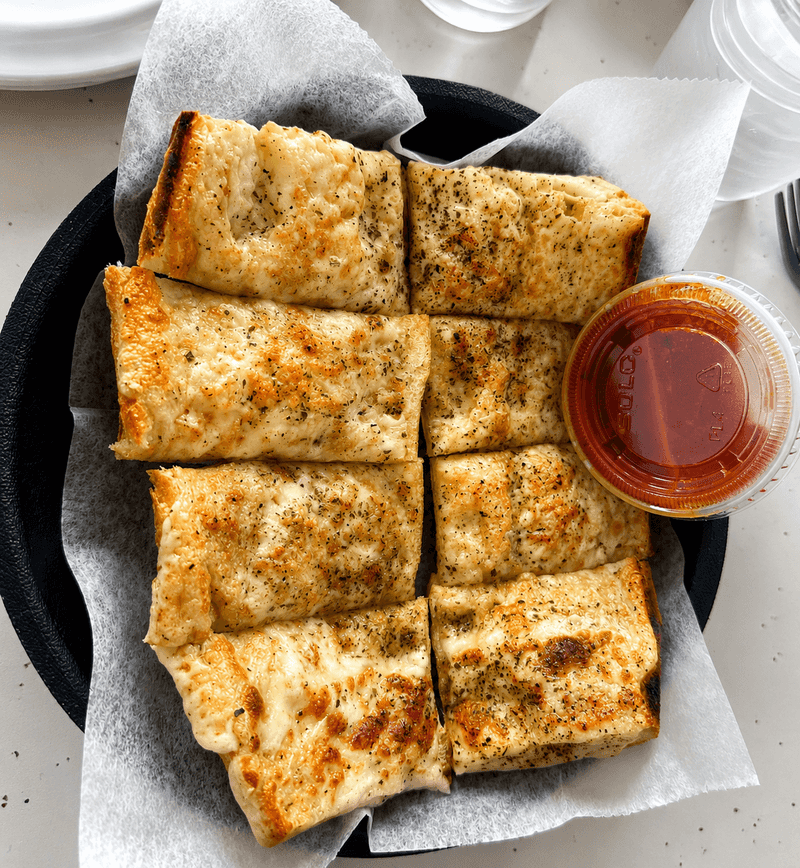
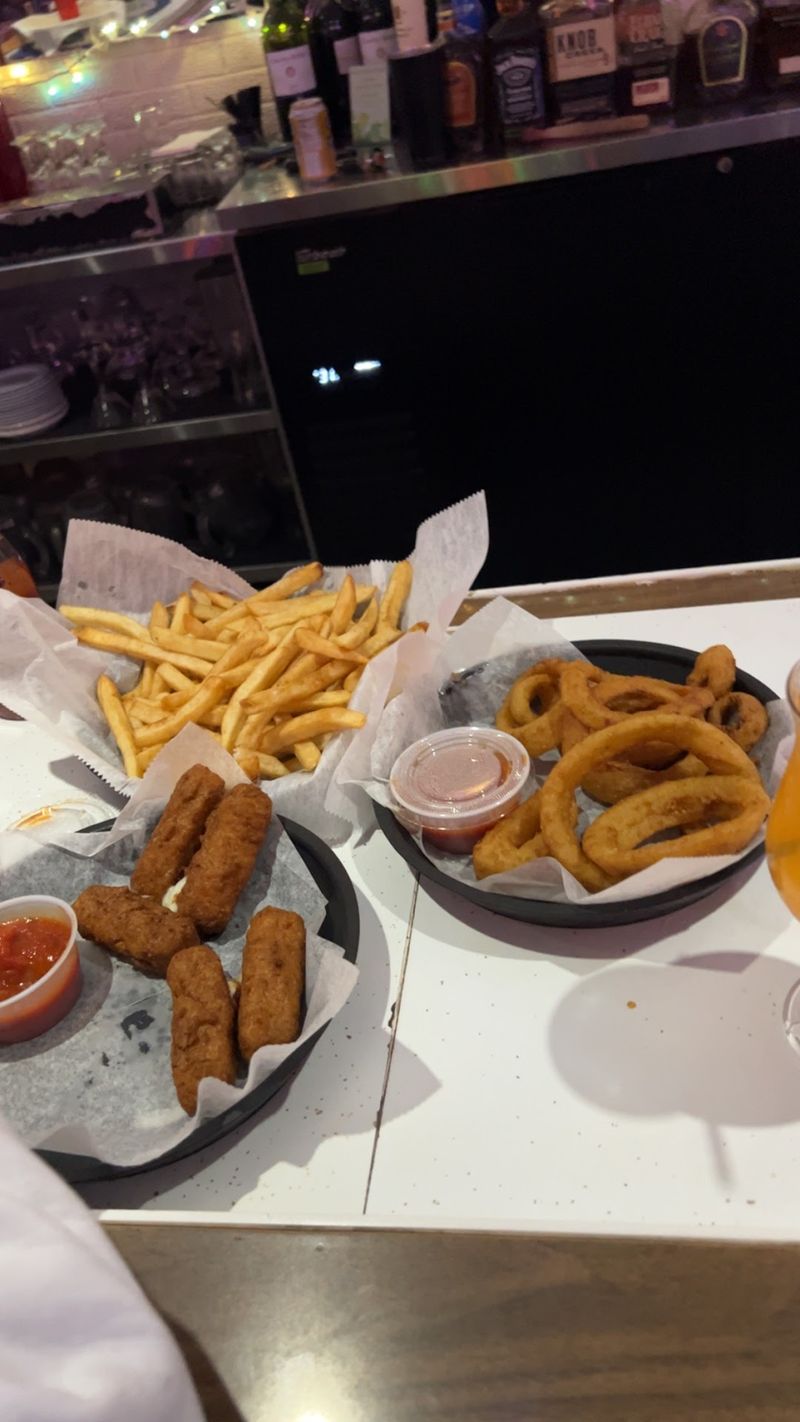
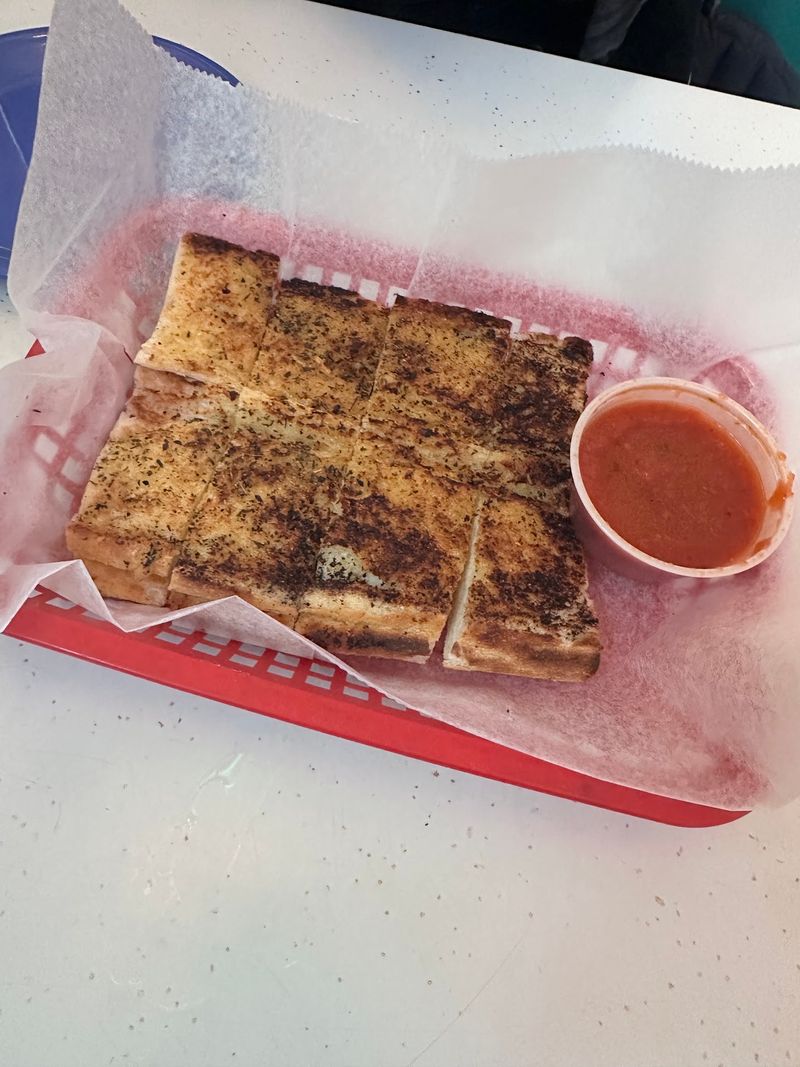
Pizza may lead the menu, but there is enough variety for a table with different appetites. Appetizers include battered mushrooms, onion rings, fried ravioli, garlic bread, and zucchini sticks.
They are easy to share while pizza bakes. Battered mushrooms offer a crisp coating and a softer center, while toasted garlic bread suits anyone wanting something simple with a little extra flavor.
Cheese ravioli provides a different version of the restaurant’s Italian-American comfort food. Pasta choices are equally familiar. Spaghetti, mostaccioli, baked mostaccioli, and meat or cheese ravioli come with salad and bread.
Dinner plates include fried chicken, perch, shrimp, and ribs, providing options beyond the oven. The menu even lists a small gluten-free pizza, although individual dietary needs should be discussed with the restaurant.
For visitors especially interested in the pizza, one shared appetizer and a thin-crust pie make a balanced introduction. For a larger family meal, a pasta dish adds something softer alongside the crisp squares.
The wider menu reflects the Italian-American cooking that sustained the business before its pizzas became famous.
No Delivery Driver Will Bring This Pizza To Your Door
Getting a pie from Vito & Nick’s still means visiting the South Side.
The restaurant serves customers in its dining room and prepares orders for pickup, but does not offer delivery from its original Chicago kitchen.
The policy goes back to Nick Barraco, who wanted customers to experience pizza fresh from the oven. Pickup remains available.
The restaurant stands at 8433 South Pulaski Road in Chicago, where the family established its present location in 1965. It opens at 11 a.m. Monday through Saturday and at noon on Sunday.
Closing times depend on the day, and final orders are taken half an hour before the kitchen closes.
The restaurant closes for Easter, Thanksgiving, and Christmas. Anyone planning a holiday visit should choose a different date instead of assuming the usual daily schedule applies.
The menu also lists partially baked pizzas for finishing at home. Still, enjoying a fresh square near the oven gives the crisp crust its best chance to make an impression.
Bring Cash And Enjoy An Old-Fashioned Routine
One practical detail is essential before sitting down: Vito & Nick’s accepts cash rather than credit cards or checks. It’s a longstanding policy, and planning for it makes the visit more straightforward.
Groups can decide how to split payment beforehand. The restaurant also applies an automatic gratuity to parties of eight or more, so larger gatherings should keep that arrangement in mind.
That simple routine reflects the restaurant’s emphasis on consistency. Order at the table, give the kitchen time to bake the pie, and enjoy the small squares as they arrive.
There is no need for an elaborate menu strategy when the signature dish is so specific. The original restaurant is unaffiliated with other similarly named businesses and frozen-pizza operations.
In an era when many meals can be ordered with a few taps, this Illinois pizzeria asks for a little planning instead. The result is an experience focused on the dining room, the family’s recipes, and the pizza itself.
The Dining Room Keeps Its South Side Personality
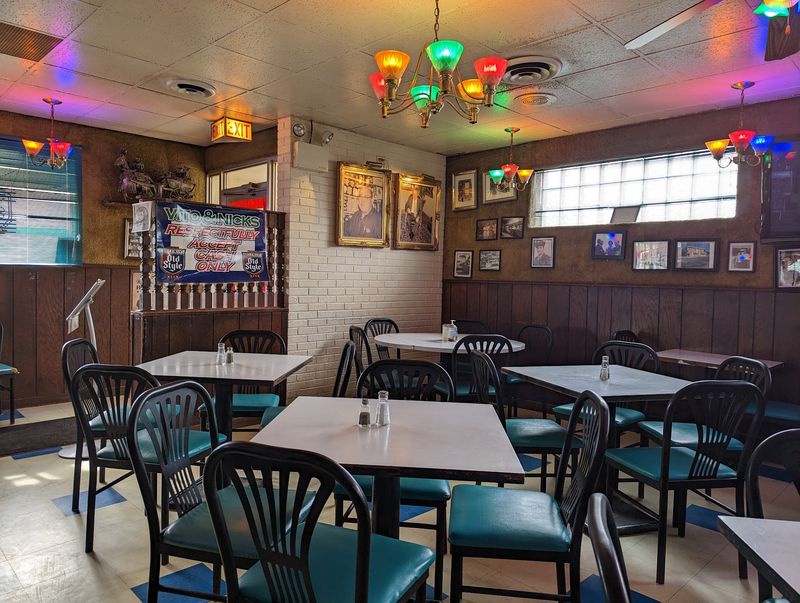
Wood-paneled surroundings and a lived-in neighborhood atmosphere make the dining room feel connected to its long history.
This is a place where a round pizza arriving in a grid of squares supplies most of the visual excitement.
The family changed addresses over its century-plus history, but the Pulaski Road restaurant has been here since the 1960s.
Photographs add to the continuity, while televisions occasionally show local games. There is a casual, familiar rhythm to the room, with pizza arriving as the centerpiece of the meal. That atmosphere suits a pizza designed for sharing.
Families can order a couple of topping combinations, friends can compare the crisp corners with the saucier center squares, and anyone new to Chicago thin crust can understand the appeal without a lengthy explanation.
The central idea remains thin, well-browned pizza divided into squares.
Across Illinois, pizzerias put their own spin on this style. At Vito & Nick’s, the lasting signature is the balance of crisp dough, tomato, cheese, and sausage. The simplest element remains its strongest attraction.