An Underrated North Carolina Town That Maps Simply Overlook
Many drivers heading through northeastern North Carolina speed past a community that holds some of the most remarkable stories in American history.
This settlement sits along the Albemarle Sound as a small waterfront sanctuary of fewer than 5,000 residents who seem perfectly content.
It’s a quiet corner of the state where the world’s fast pace feels like a distant memory. I stumbled across it on a Sunday afternoon while looking for a back road shortcut.
Three hours later I was still wandering the brick-lined streets and completely forgetting my original destination.
If you love history, water views, and the rare feeling of discovering something real, this is the kind of environment that rewards the curious.
The area remains a quiet witness to centuries of change while keeping its colonial soul intact for anyone willing to slow down.
Have you ever found a spot that felt like a secret meant just for you?
The Capital Raleigh Replaced
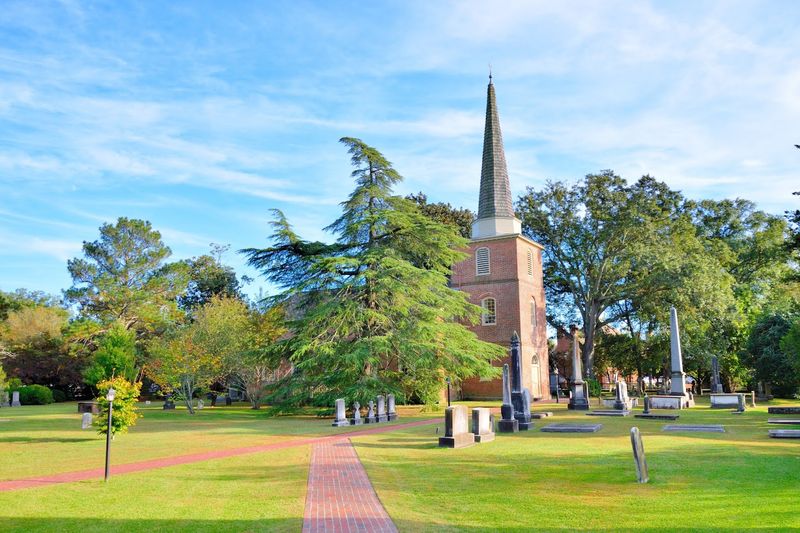
Long before Raleigh became the political center, this settlement called the shots. Edenton served as the colonial capital from 1722 to 1743.
The governor lived here during a very formative period. The population grew as its reputation for power expanded.
But what makes this history fascinating? It’s how it quietly ended.
The capital moved to Brunswick and Edenton simply stayed behind. It did not collapse or fade into total obscurity.
It kept its architecture and its dignity through decades.
The town was established in 1712 on Queen Anne’s Creek. It was renamed in 1722 to honor Governor Charles Eden.
Walking the streets today, you feel that old authority. The wide paths and stately homes remain largely unchanged.
The area was never rebuilt for tourism or modernized heavily. Much of what was built in the 1700s still remains preserved there today.
Individuals experience a place where colonial history is truly visible. It’s a rare chance to see the past directly.
This kind of authenticity is nearly impossible to manufacture. This community never had to try to look old.
Have you ever wondered what a 1700s capital felt like? It was much quieter than the cities of today.
The Secret To A Frozen Waterfront
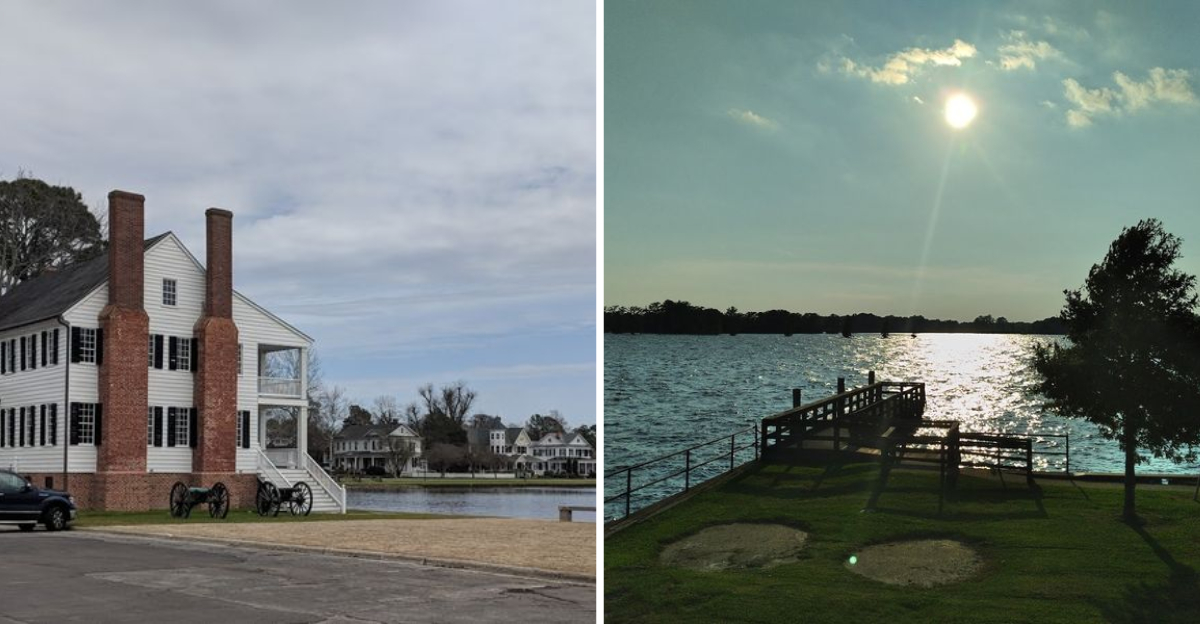
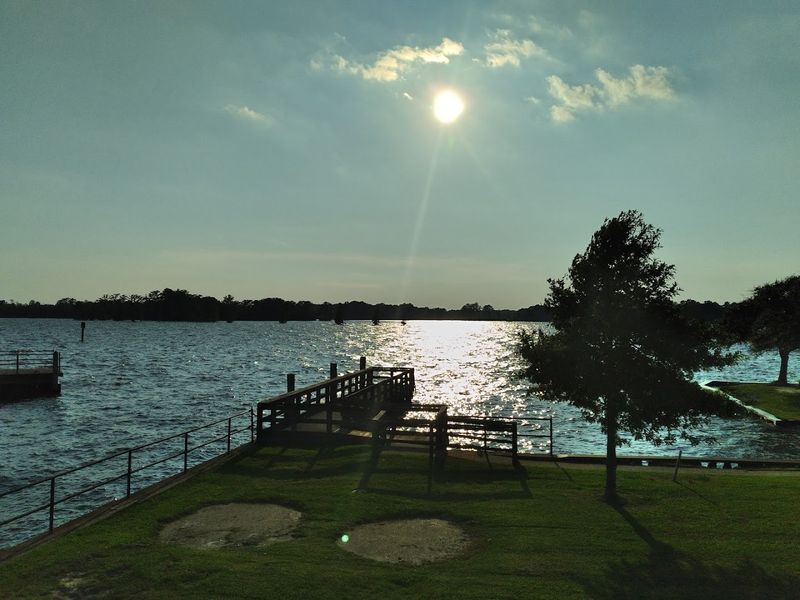
Standing at the bayfront park feels almost surreal today. The view has changed very little since the 1700s.
The Albemarle Sound stretches out roughly five miles across. The horizon sits low and remains completely uncluttered.
No high-rise hotels or neon signs exist here. No boardwalk vendors disrupt the local peace at all.
Just water, sky, and the occasional boat remain visible. These are the primary features of the local landscape.
The bay has always been central to the inhabitants. Early settlers chose this specific location at 36.045°N, 76.615°W.
The natural harbor offered shelter and access to trade. It was a perfect spot for a growing colony.
The waterfront park is a very peaceful gathering area. Locals sit on benches and kids feed the ducks.
This stillness is not emptiness but a form of preservation. It happened mostly by accident over many long years.
A 1795 hurricane silted the inlet and cut access. This event helped freeze the waterfront in time effectively.
It discouraged heavy commercial development for a long century. The Dismal Swamp Canal later shifted traffic toward Virginia.
These changes left the shoreline wonderfully unbothered for us. What seemed like a loss became a great gift.
Contemporaries get to enjoy it simply by looking out. The water remains the town’s most beautiful and quiet asset.
Walls That Breathe Since 1719
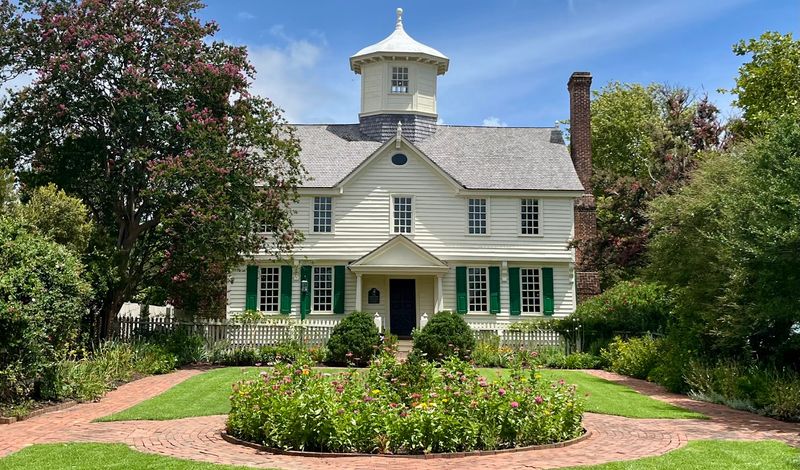
The Cupola House is a very old wooden structure. It was built around 1719 in northeastern North Carolina.
You can find it at 408 S Broad St. The house features a very distinctive octagonal top part.
The home predates the American Revolution by five decades. These walls were already old when the country formed.
It is part of the Historic Edenton State site. Its survival is something worth pausing to think about.
Wooden structures from the early 1700s rarely survive today. The humid coastal environment usually destroys them very quickly.
This one stands structurally dignified after three long centuries. It proves the great craftsmanship of the original builders.
Touring the home gives a sense of colonial life. No museum exhibit can fully replicate this interior feeling.
The room proportions and window placements reflect a new world. Everything was being built from scratch back then.
The town existed before the United States was born. This house is the most tangible proof of that.
It serves as a physical link to our foundations. It is a rare survivor of a very different era.
The structure offers that exact opportunity for any visitor. It stands as a silent witness to American history.
The wood tells a story that books often miss.
The First Women’s Political Protest
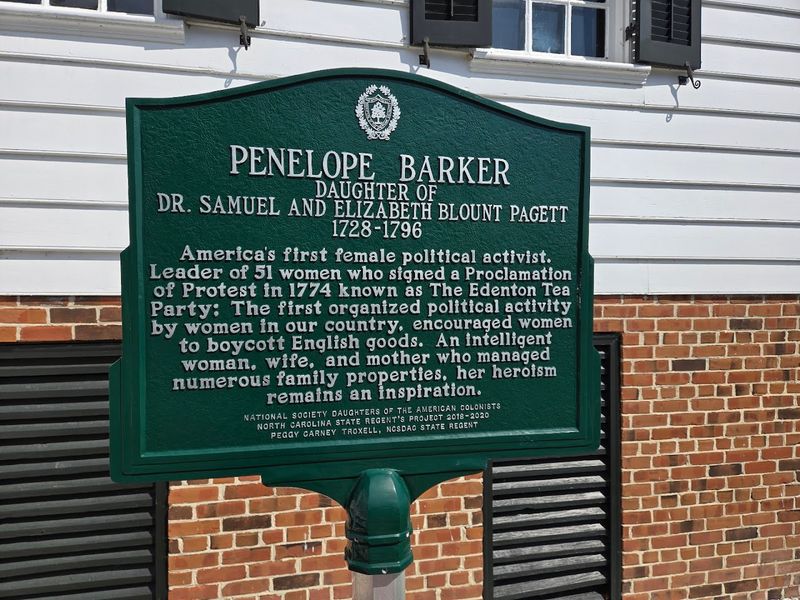
Most Americans know about the Boston Tea Party well. Fewer know about the 1774 event in this town.
A group of 51 women staged a protest. This was the first organized female political action here.
Penelope Barker led these activists in their bold mission. They signed a petition to boycott all English tea.
They also refused other British goods to show solidarity. The reaction in London was both immediate and quite loud.
British newspapers published satirical etchings to mock the group. They portrayed the women as reckless and very uncontrollable.
This suggests the protest landed harder than leaders admitted. It was a very effective piece of local resistance.
Penelope and her fellow signatories made a public statement. They did not throw tea into the dark harbor.
They made a documented and very brave political choice. It happened when women had no formal political voice.
The Barker House still stands, today and welcomes guests daily.
Many locals call it the living room of Edenton. It is a very welcoming place full of stories.
You can visit it seven days a week.
Spending time there gives a deeper sense of courage. It took nerve to sign that paper in 1774.
They publicly disagreed with the world’s most powerful empire.
Seven Years In A Crawl Space
Harriet Jacobs was born here in the year 1813. Her story is one of the most extraordinary stories.
After years of mistreatment, she made a brave choice. She went into hiding inside her grandmother’s small house.
She remained in a tiny crawl space for years. Harriet stayed in that dark spot for seven years.
She could hear her own children playing nearby. She watched the street through a very small peephole.
Most individuals cannot imagine seven days in those conditions. Harriet endured it for nearly a full decade alone.
When she finally escaped, she wrote her famous story. It became a cornerstone of American and African literature.
Her published autobiography is a classic.
The community acknowledges her legacy through several local markers. Her story adds a layer of depth to Edenton.
Pretty scenery is nice but history provides the soul. She was from this town and that matters.
Her narrative transforms the landscape into a powerful testament. It shows the human will to survive and thrive.
She is one of the town’s most important figures. Her voice still speaks through the pages of history.
America’s Last Screw-Pile Lighthouse
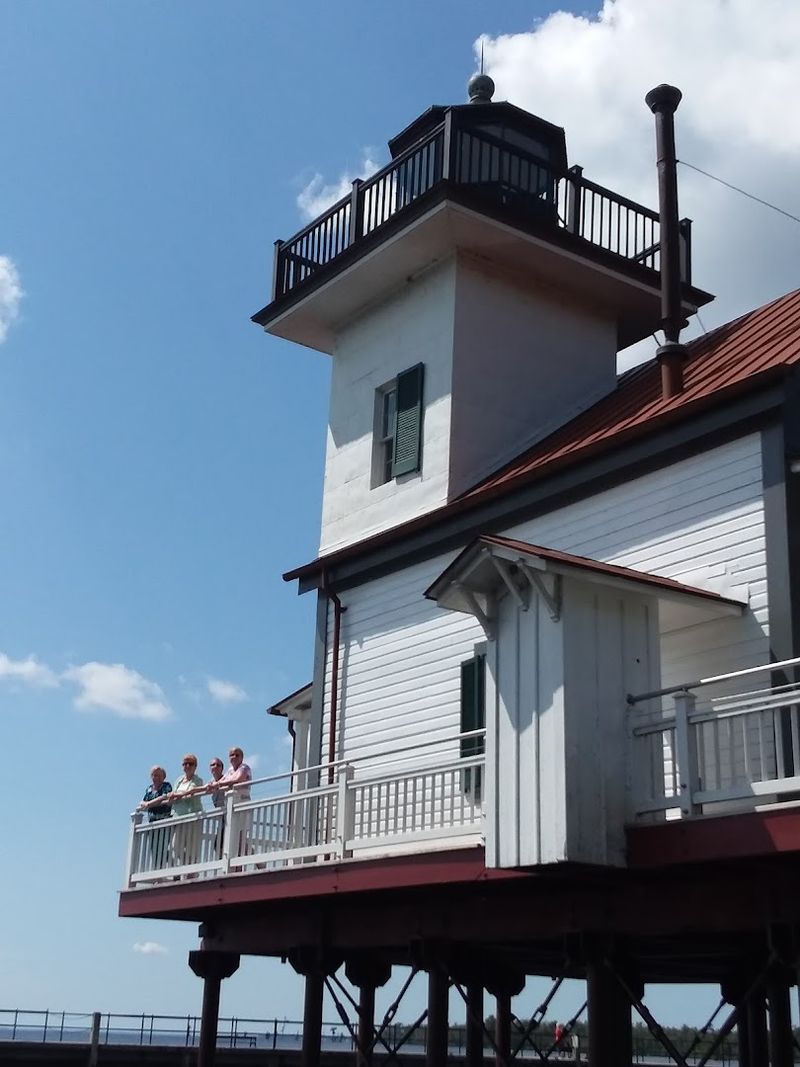
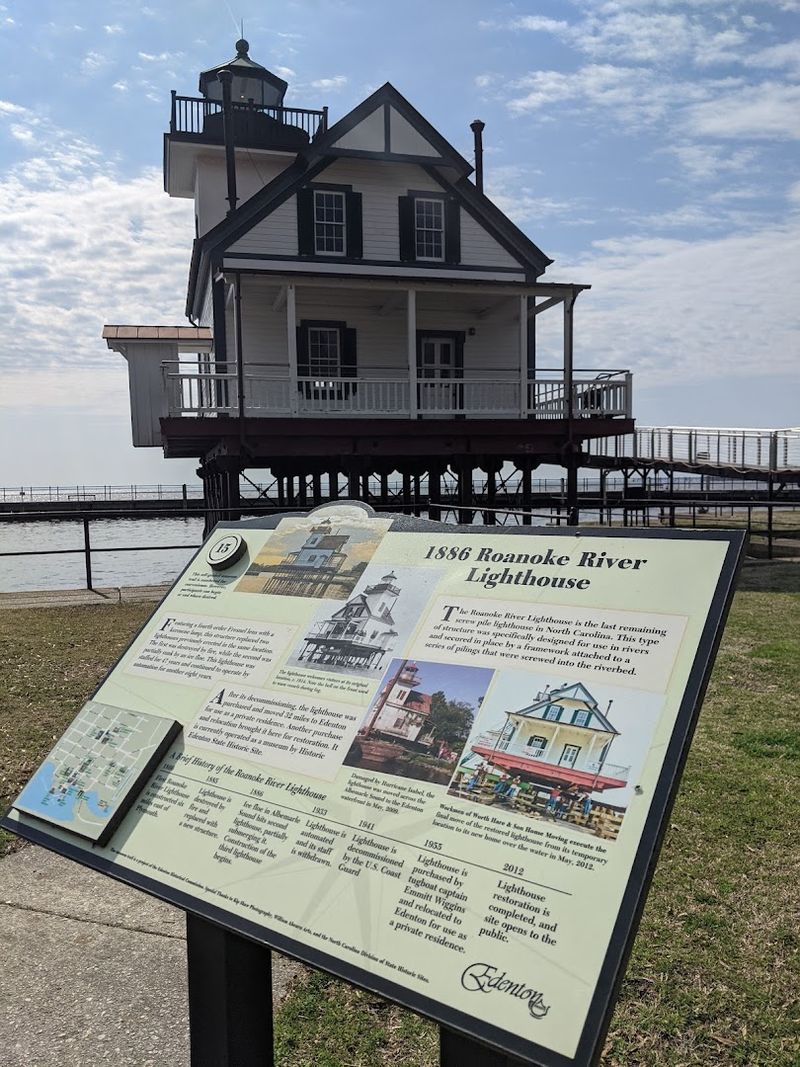
The Roanoke River Lighthouse looks like a cozy cottage. It sits on legs above the water even now.
It was constructed in 1886 for coastal navigation use. The design uses a very clever screw-pile engineering method.
Pilings were twisted into the bottom like giant corkscrews. This kept the structure anchored during very heavy storms.
It remains visually unusual and quite striking to see. It is the last surviving example of its kind.
That distinction makes it worth seeking out today. It operated until 1941 to guide ships safely home.
It was later moved to the waterfront as a museum. Visitors can tour the interior to see the rooms.
The space is modest and very functional inside. It was built for a job rather than show.
The architectural rarity of the building was almost accidental. This gives it a unique charm for every guest.
It is one of the most photographed local landmarks. The silhouette against the water is truly quite beautiful.
Can you imagine living on stilts during a hurricane? The light once kept sailors safe from the shore.
The museum tells the story of the brave keepers. They lived in isolation to keep the lamp burning.
It is a fascinating piece of our maritime past. You can explore every corner of the small house.
The Bronze Voice Of Resistance
Local attorney William Badham Jr. faced a problem in 1862. His military unit needed cannons but lacked raw materials.
He organized a collection of bronze bells from the area. Residents donated bells from the local courthouse and several churches.
These items were melted down and recast into four howitzers. The four cannons received names like the St. Paul and the Edenton.
These titles tied the weapons directly to the sacrificing community. The unit became known as the Edenton Bell Battery.
Bells usually call people together in peace. These specific objects were transformed into instruments of war.
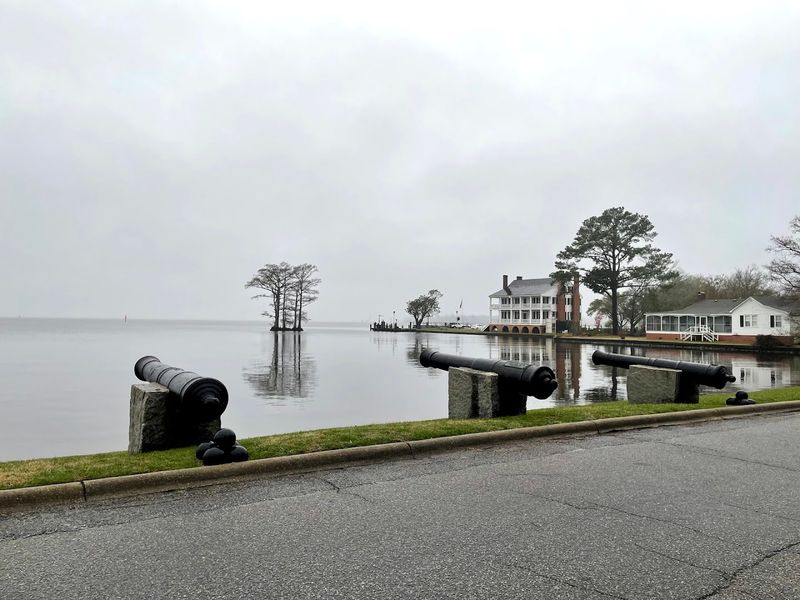
Two of the original four howitzers now sit at the waterfront park. Standing next to them gives the bronze mass a special weight.
They are not just artifacts of a past conflict. These objects tell a story of a community making do.
This resourcefulness remains deeply human and worth understanding today. Have you ever seen a weapon made from a church bell?
The display serves as a reminder of local ingenuity. It shows how the town adapted during its hardest years.
You can still see the fine craftsmanship on the barrels. Each piece reflects a moment of total community devotion.
Why Edenton Never Changed
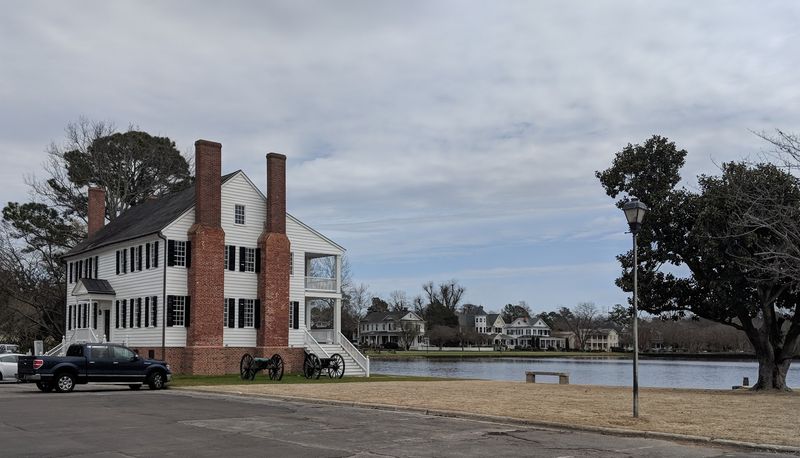
One truth about Edenton is that being forgotten saved it. Locals rejected a railroad in the 1800s.
A hurricane in 1795 also silted the main inlet. This event cut off major shipping traffic for years.
The Dismal Swamp Canal later rerouted commerce toward Virginia. Forces that typically drive rapid development went somewhere else.
Edenton aged gracefully rather than expanding frantically into a city.
The result is a town without chain restaurants.
The Historic Edenton State Historic Site preserves multiple properties. The overall streetscape has a coherence that modern towns lack.
You can walk the historic district in twenty minutes. Every step feels earned rather than staged for tourists.
Being overlooked by major highways did not diminish this place. It protected the original charm from modern sprawl.
In an era of fake attractions, Edenton stays quiet. It sits on the Albemarle Sound without asking for attention.
This preservation makes it absolutely worth every bit of interest.