13 Breathtaking California Destinations You’ll Want To Experience All Year Long
California is a state that never stands still, constantly revealing new sides of itself as the seasons change.
From sun-soaked deserts and rugged coastlines to misty redwood groves and alpine peaks, its landscapes feel endlessly varied and full of surprise.
One visit might be filled with wildflower-lined trails and ocean breezes, while another brings golden hillsides, quiet forests, or snow-dusted mountain escapes.
No matter when you arrive, California has a way of offering scenery that feels both dramatic and unforgettable. What truly sets the Golden State apart is its year-round appeal.
Spring awakens valleys with color, summer invites beach days and high-elevation adventures, fall softens the land with warm tones and cooler air, and winter transforms mountain regions into peaceful retreats.
Each season unlocks a different experience, rewarding travelers who explore beyond the usual highlights.
These thirteen destinations capture the heart of California’s natural beauty, showcasing places that shine no matter the time of year.
Whether you’re planning your next getaway or simply dreaming of wide-open landscapes, California promises moments that linger long after the journey ends.
1. Redwood National And State Parks
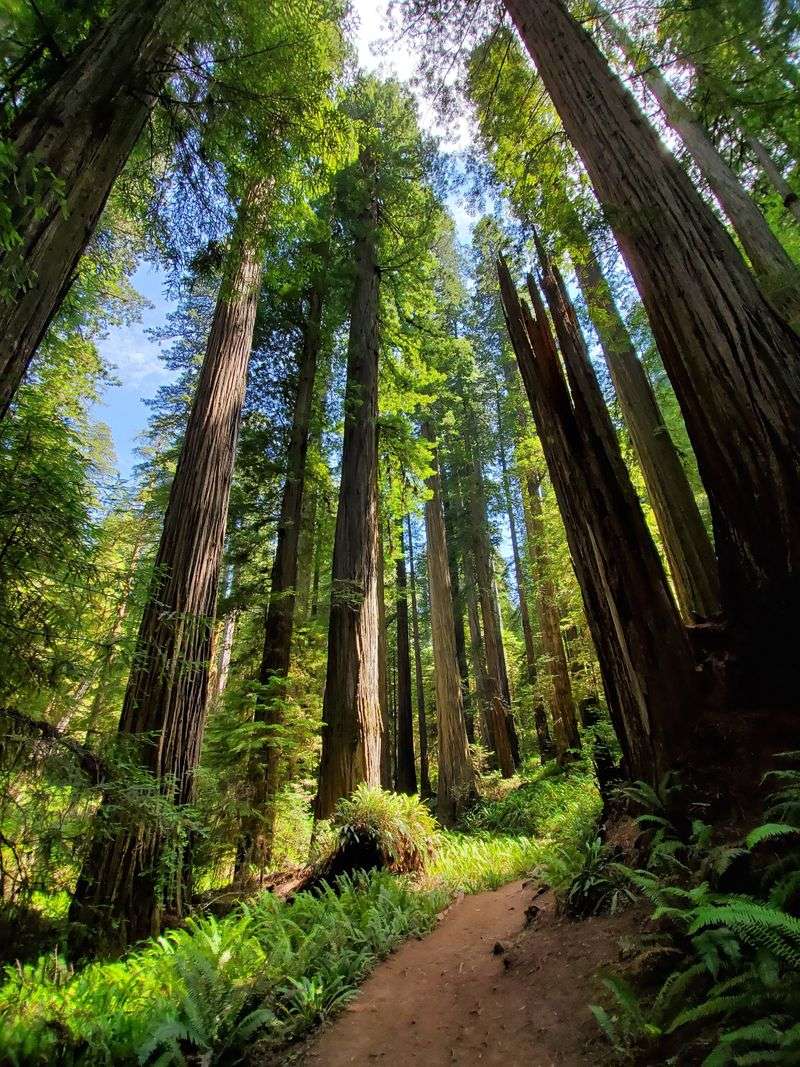
Ancient giants rise from the forest floor, their trunks wider than small rooms and their canopies reaching toward the sky in ways that make you feel wonderfully small.
Redwood National and State Parks protect some of the tallest trees on Earth, with groves that have stood for over a thousand years.
Sunlight filters through the dense foliage in soft beams, creating an almost sacred atmosphere as you walk among these natural skyscrapers.
Trails wind through fern-covered ground and alongside streams where Roosevelt elk sometimes graze in meadows.
The air feels cooler here, even on warm days, and the quiet is broken only by birdsong and the occasional creak of ancient wood.
Visiting in different seasons reveals new colors and moods, from spring’s fresh green growth to winter’s misty mornings.
The parks stretch along the northern coast, offering coastal overlooks and tide pools in addition to forest hikes.
Crowds tend to be lighter on weekdays and outside summer vacation months. Pack layers, as temperatures can shift quickly under the tree cover.
2. Mendocino Coast
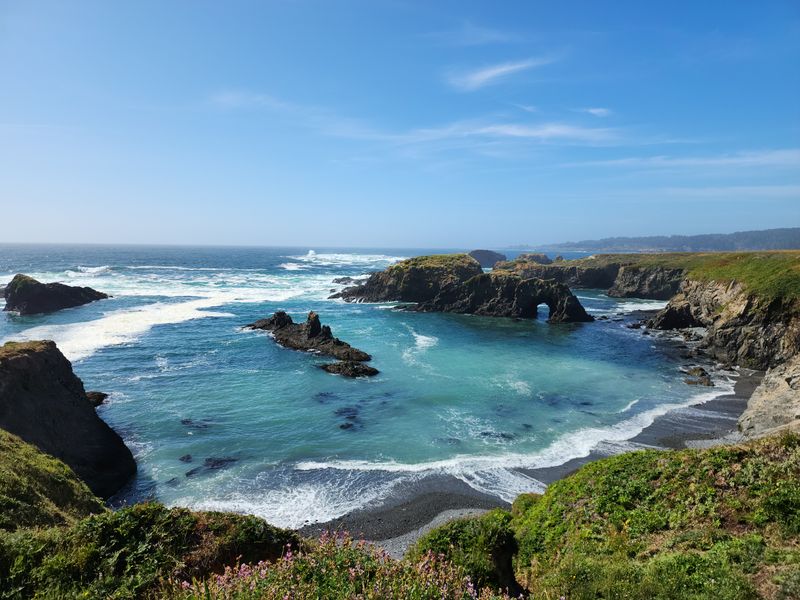
Rugged cliffs drop sharply into the Pacific, where waves crash against sea stacks and hidden coves carved by centuries of tides.
The Mendocino Coast feels remote and windswept, with Victorian-era buildings perched along bluffs and cypress trees bent by constant ocean breezes.
Small towns dot the coastline, each offering galleries, local cafes, and access to coastal trails that reveal new vistas around every bend.
Gray whales migrate past these shores twice a year, making spring and winter ideal for spotting them from headland viewpoints.
Tide pools teem with starfish and anemones during low tide, and beachcombing often turns up smooth stones and driftwood.
The light here changes constantly, shifting from bright and clear to soft and foggy within hours. Driving Highway 1 along this stretch requires attention, as the road curves tightly and hugs the cliff edge.
Parking at popular overlooks can fill quickly on weekends during peak season. Layers are essential, as coastal fog can roll in even on sunny days.
3. Palm Springs
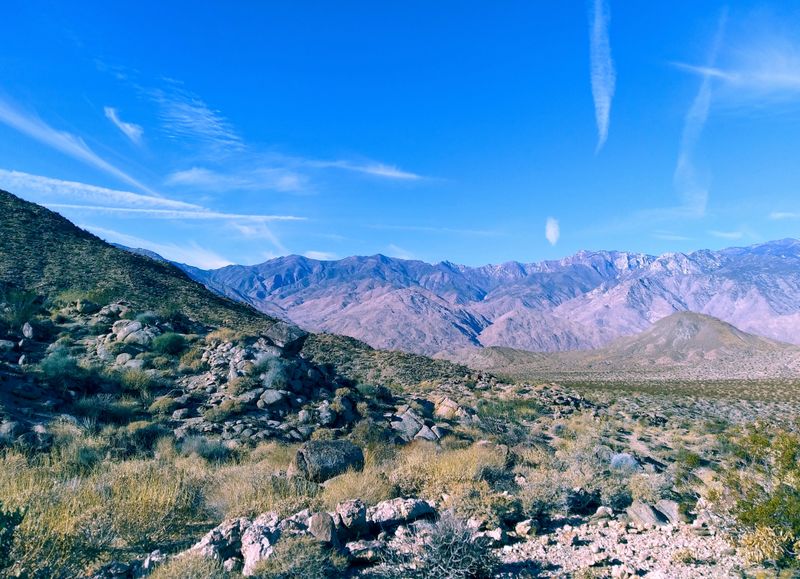
Desert mountains frame a city built for sunshine, where mid-century modern architecture meets endless blue skies and palm-lined streets.
Palm Springs has long been a retreat for those seeking warmth, especially during winter months when temperatures stay comfortably mild while much of the country shivers.
The downtown area features boutique shops, outdoor dining patios, and art galleries that reflect the area’s creative spirit.
The Aerial Tramway climbs around 6,000 feet from the desert floor to Mount San Jacinto, offering dramatic temperature shifts and alpine scenery in just minutes.
Hiking trails range from easy desert loops to challenging mountain climbs, and the landscape shifts from cacti and sand to pine forests and granite boulders.
Summer heat can be intense, with temperatures often exceeding 100 degrees, making early morning or evening the best times for outdoor activities.
Nearby Joshua Tree National Park extends the desert experience with otherworldly rock formations and unique plant life.
Weekdays tend to be quieter than weekends, especially during festival seasons. Sunscreen and water are necessities year-round.
4. Santa Cruz
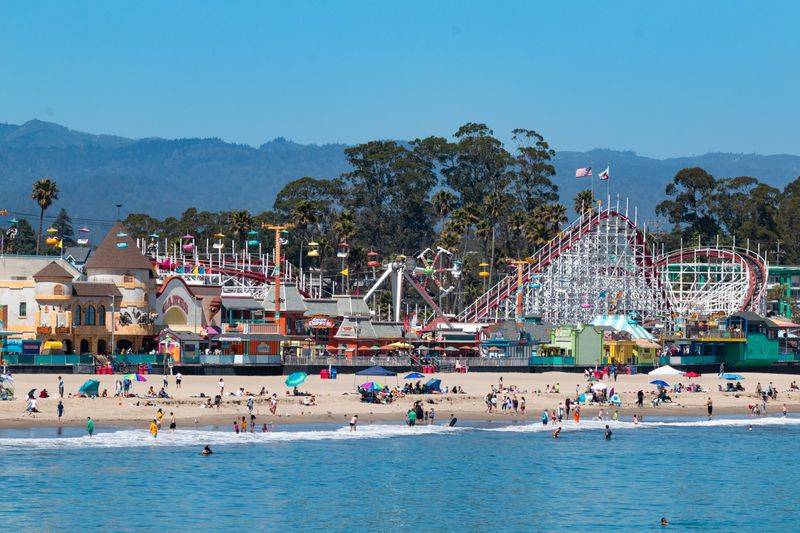
Surf culture meets laid-back coastal living in a town where the boardwalk’s vintage roller coaster sits just steps from sandy beaches and rolling waves.
Santa Cruz has a relaxed vibe that attracts surfers, students, and families looking for unpretentious seaside fun.
The beach stretches wide, with volleyball nets, fire pits, and a pier extending into Monterey Bay where sea lions often bark from the pilings below.
The Santa Cruz Beach Boardwalk at 400 Beach St, Santa Cruz, CA 95060 operates year-round, offering classic amusement rides and arcade games with ocean views.
Natural Bridges State Beach at 2531 W Cliff Dr, Santa Cruz, CA 95060 features a dramatic rock arch and seasonal monarch butterfly migrations that fill eucalyptus groves with thousands of orange wings.
Redwood forests rise just inland, providing hiking trails that offer shade and quiet contrast to the busy beach scene.
Downtown features independent bookstores, cafes, and music venues that reflect the town’s creative community.
Parking near the beach can be challenging on summer weekends. Water temperatures stay cool year-round, so wetsuits are common even in warmer months.
5. Mammoth Lakes
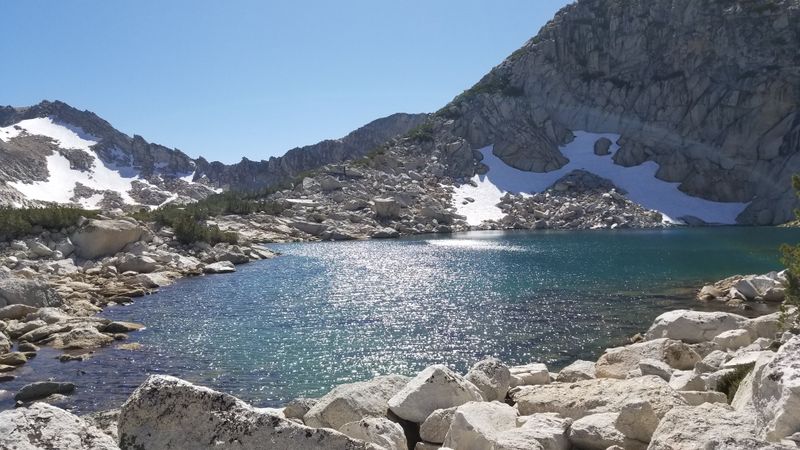
High in the Sierra Nevada, this mountain town transforms with the seasons, offering skiing and snowboarding in winter and hiking and fishing when the snow melts.
Mammoth Lakes sits at over 7,800 feet elevation, where the air feels thin and crisp and the landscape shifts from dense pine forests to alpine meadows dotted with wildflowers.
The area’s volcanic past is visible in hot springs and dramatic rock formations that add geological interest to outdoor adventures.
Mammoth Mountain receives substantial snowfall, making it a popular winter destination with a long ski season that sometimes extends into summer.
When the snow recedes, trails lead to alpine lakes with crystal-clear water and mountain peaks that offer panoramic views.
Devils Postpile National Monument features striking columnar basalt formations and Rainbow Falls, where afternoon light creates colorful mist.
The town itself has a casual mountain atmosphere with gear shops, casual eateries, and lodging options ranging from budget-friendly to upscale.
Summer weekends can be busy, but weekdays offer more solitude on trails. Elevation can affect visitors, so taking it easy on the first day helps with adjustment.
6. Carmel-By-The-Sea
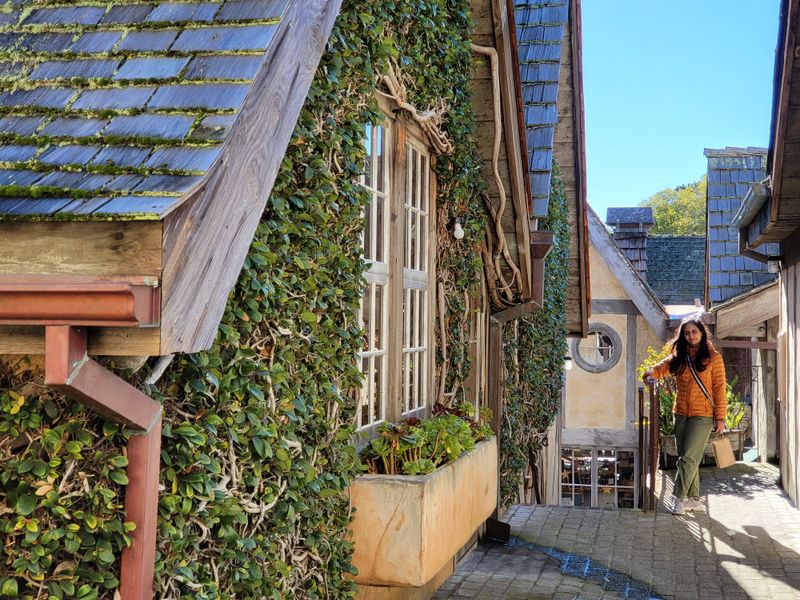
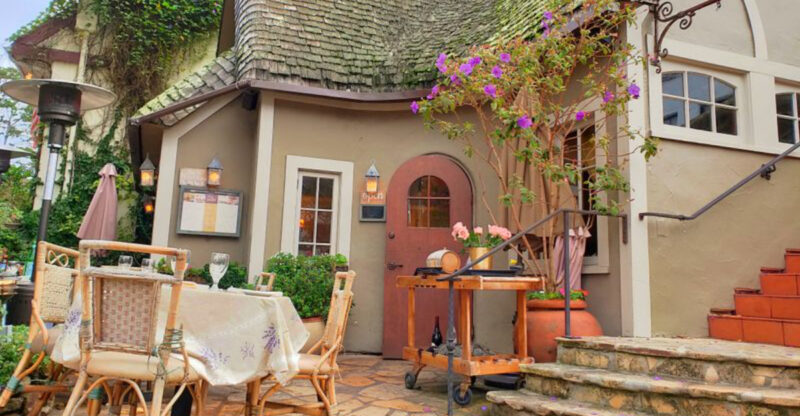
Fairy-tale cottages line winding streets in this coastal village where European charm meets California beaches and artistic tradition.
Carmel-by-the-Sea has no street addresses on most homes and is known for restricting chain restaurants, giving it a distinctly local character that feels deliberately preserved.
The downtown area is compact and walkable, with art galleries, boutiques, and cozy courtyards tucked between buildings with storybook architecture.
Carmel Beach stretches wide and white, with cypress trees framing views of turquoise water and dramatic rock formations.
Dogs are welcome off-leash, making it a popular spot for both visitors and locals with pets.
The 17-Mile Drive winds along the coast nearby, offering scenic overlooks and glimpses of famous golf courses and seaside mansions.
Mission San Carlos Borromeo del Rio Carmelo sits just south of town, featuring beautiful gardens and historic architecture dating to 1770.
Parking downtown can be limited, especially on weekends, but the compact layout makes walking easy once you arrive. Coastal fog is common in summer mornings, often clearing by afternoon.
7. Paso Robles
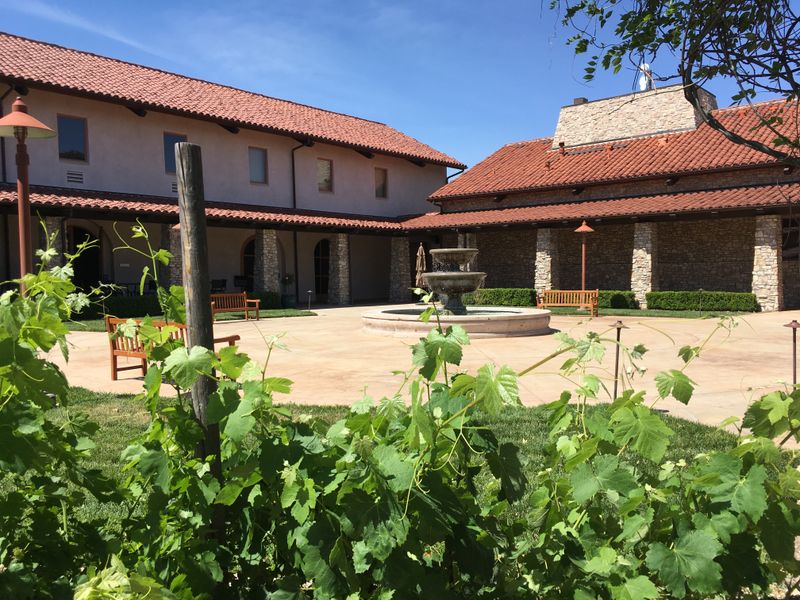
Rolling hills covered in grapevines stretch toward distant mountains in a region where warm days and cool nights create ideal conditions for growing wine grapes.
Paso Robles has emerged as a significant wine destination, with over 200 wineries offering tasting rooms that range from rustic barn settings to modern architectural showcases.
The area maintains a more casual, accessible atmosphere compared to some of California’s other wine regions, with many family-owned operations and friendly hospitality.
Downtown Paso Robles features a central square surrounded by restaurants, shops, and tasting rooms within walking distance of each other.
The region’s inland location means summer temperatures can climb high, while spring and fall offer milder weather for exploring vineyards.
Olive groves and almond orchards add to the agricultural landscape, and farm stands often sell local produce and nuts.
Hot springs exist in the area, with some spas incorporating the natural mineral water into treatments.
Weekdays tend to be quieter at wineries than weekends, allowing for more relaxed tastings and conversation. Designated drivers or tour services are wise choices when visiting multiple tasting rooms.
8. Laguna Beach
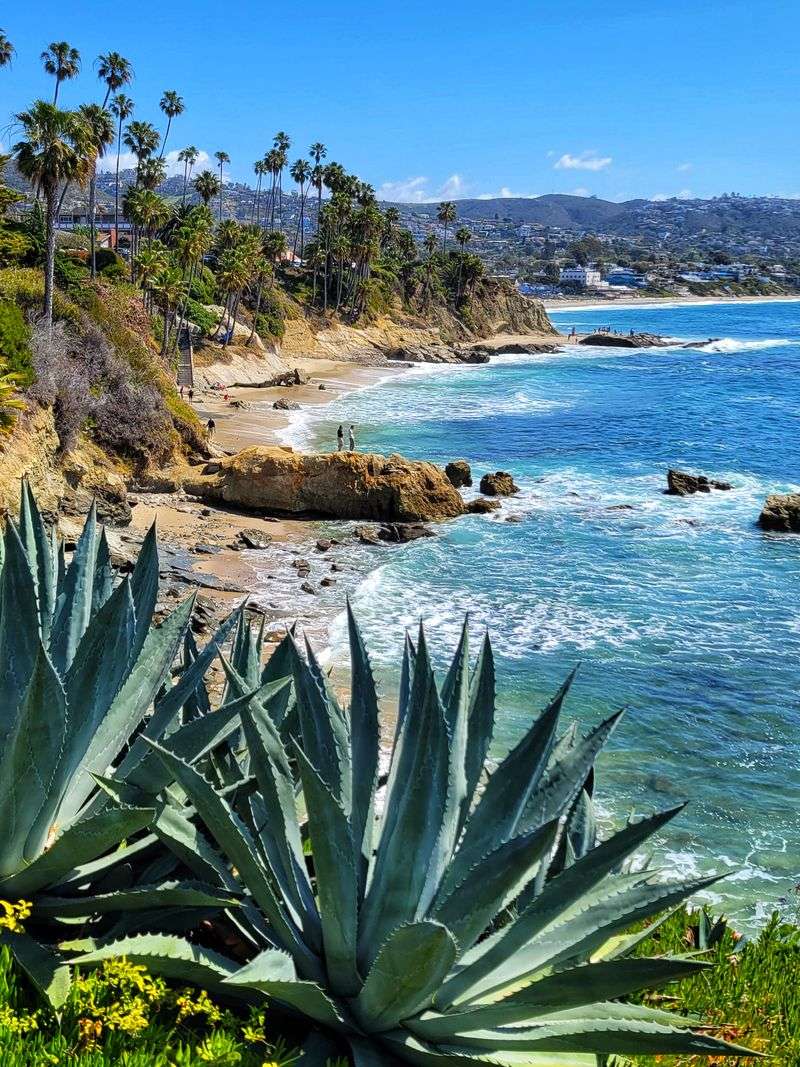
Art galleries and ocean views define this coastal community where creativity and natural beauty have attracted artists for over a century.
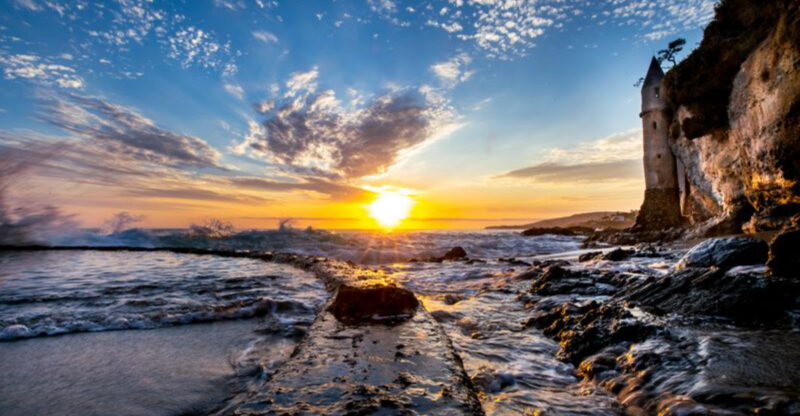
Laguna Beach features dramatic coves, tide pools, and beaches tucked between rocky headlands, each with its own character and appeal.
The town’s hilly terrain means many streets offer glimpses of the Pacific, and stairways lead down to hidden beach access points.
Public art installations dot the downtown area, and the Laguna Art Museum at 307 Cliff Dr, Laguna Beach, CA 92651 showcases California art with ocean views from its location near Main Beach.
The annual Pageant of the Masters presents living recreations of famous artworks, drawing visitors during summer months.
Heisler Park at 375 Cliff Dr, Laguna Beach, CA 92651 provides a clifftop walking path with benches, landscaped gardens, and multiple beach access points.
Downtown features a mix of galleries, restaurants, and shops within a walkable area, though parking can be challenging during peak season and weekends.
Tide pools at Treasure Island Beach reveal marine life during low tide. Water temperatures stay cool year-round, typical of Southern California’s coast, though summer brings warmer air temperatures and clearer skies.
9. Monterey
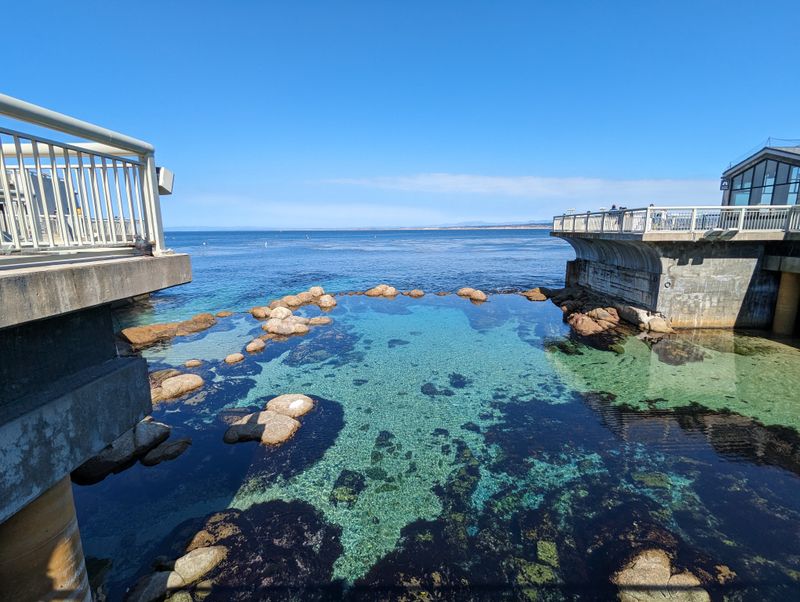
Historic Cannery Row transforms from its industrial past into a waterfront destination where marine science and tourism blend along Monterey Bay.
The Monterey Bay Aquarium stands as the area’s centerpiece, showcasing local marine life in exhibits that include towering kelp forests, playful sea otters, and mesmerizing jellyfish displays.
The aquarium sits at 886 Cannery Row, Monterey, CA 93940, where the building’s location offers views across the bay toward Santa Cruz.
Advance tickets are recommended, especially during summer and holiday periods, as daily capacity is limited.
The bay itself attracts wildlife year-round, with sea otters floating on their backs near the kelp beds and sea lions hauling out on docks and rocks.
Whale watching tours depart regularly, with different species passing through depending on the season. The Monterey Bay Coastal Recreation Trail extends for miles along the waterfront, perfect for walking or cycling with ocean views.
Old Fisherman’s Wharf offers seafood restaurants and shops in a setting that retains some historic character despite tourist development. Parking can be limited near popular attractions, though public lots are available throughout the area.
10. Death Valley
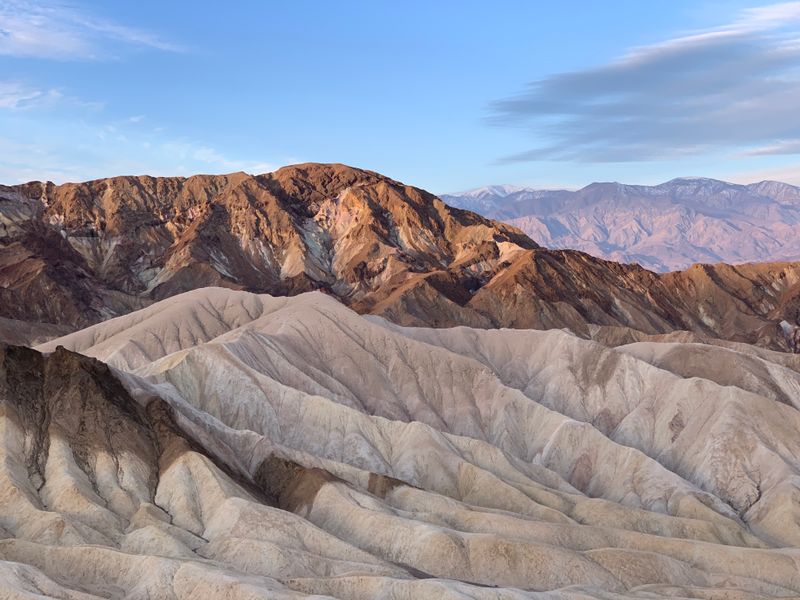
Extremes define this desert landscape, where summer temperatures can exceed 120 degrees yet winter nights may drop below freezing, creating one of Earth’s most dramatic environments.
Death Valley National Park encompasses vast salt flats, colorful badlands, sand dunes, and mountain ranges that rise abruptly from the desert floor.
Badwater Basin sits 282 feet below sea level, making it the lowest point in North America, where salt crystals form geometric patterns across the flat white surface.
Zabriskie Point offers sunrise views over eroded badlands painted in shades of gold, pink, and brown.
Mesquite Flat Sand Dunes provide classic desert scenery where wind creates constantly shifting patterns in the sand.
Artist’s Palette showcases hillsides colored by mineral deposits in unexpected purples, greens, and reds.
Visiting between November and March offers the most comfortable temperatures, though even winter days can be warm in the valley floor while higher elevations remain cool.
Summer visits require careful planning, with early morning or evening activities and plenty of water. Gas stations and services are limited, so arriving with a full tank is essential.
11. Los Angeles
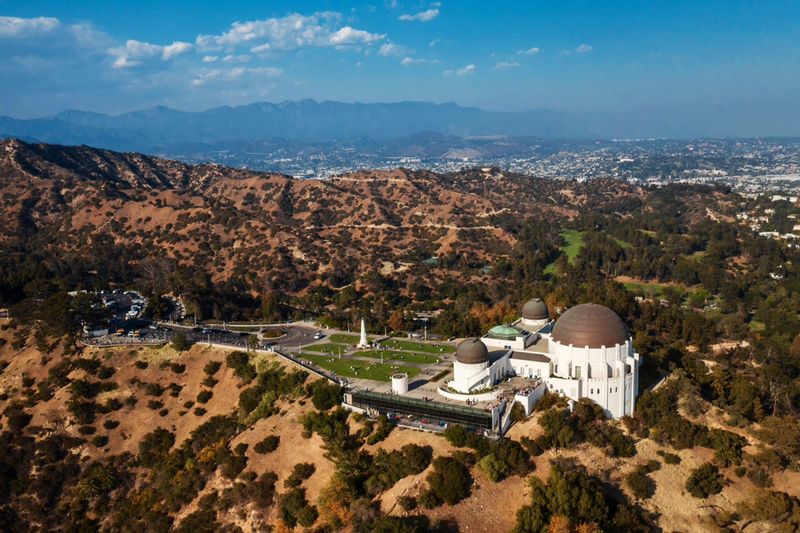
Sprawling across coastal plains and inland valleys, this massive metropolitan area offers everything from world-class museums to sandy beaches, mountain hikes to celebrity sightings.
Los Angeles defies simple description, with distinct neighborhoods that feel like separate cities, each with its own character and appeal.
The entertainment industry’s presence is felt throughout, from studio tours to the Hollywood Walk of Fame, though the city’s cultural offerings extend far beyond film and television.
Griffith Observatory provides free public access to telescopes and stunning views over the city and Hollywood Sign, while the Getty Center combines art collections with architecture and gardens overlooking the Pacific.
Beach communities like Santa Monica and Venice offer boardwalks, pier amusements, and ocean breezes.
Museums range from contemporary art at The Broad to natural history at Exposition Park at 700 Exposition Park Dr, Los Angeles, CA 90037.
Traffic is famously challenging, with rush hours extending longer than in most cities and surface streets often providing better alternatives to freeways. Public transportation has expanded but remains limited compared to other major cities.
The city’s size means planning is essential, as crossing from one area to another can take significant time. Weather stays mild year-round, with summer heat inland and coastal fog common in June.
12. Santa Catalina Island
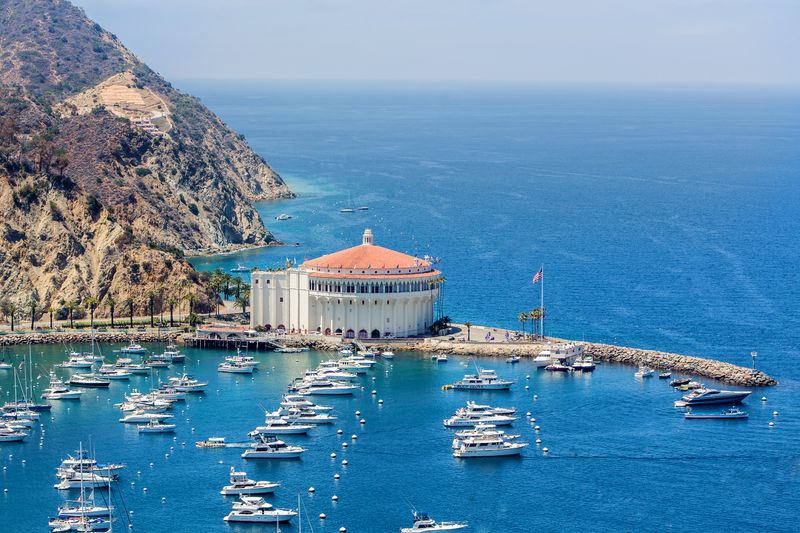
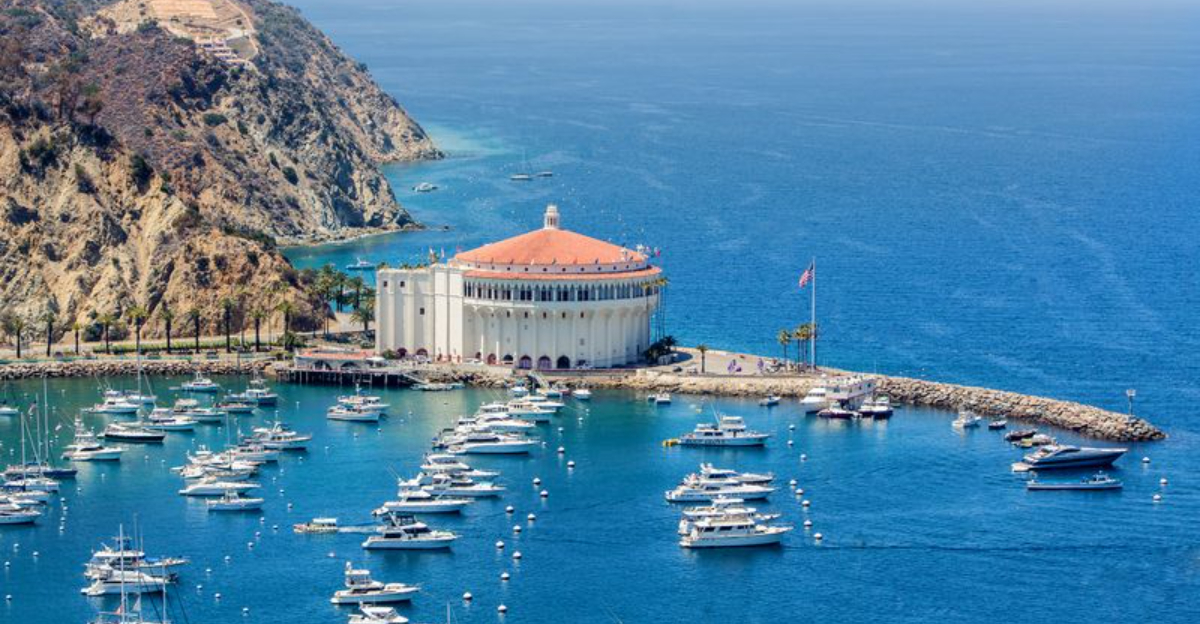
A ferry ride from the mainland transports visitors to an island where cars are restricted, buffalo roam the interior, and the pace slows to match the gentle lap of waves against the harbor.
Santa Catalina Island sits 22 miles off the coast, offering a Mediterranean-like atmosphere with clear water, rocky coves, and the charming town of Avalon clustered around a protected bay.
The iconic Catalina Casino building at 1 Casino Way, Avalon, CA 90704 dominates the waterfront, though despite its name, it has never housed gambling, instead featuring a theater and ballroom.
Snorkeling and diving reveal underwater gardens in the protected marine environment, while glass-bottom boat tours offer views without getting wet.
The interior remains largely undeveloped, with hiking and biking trails leading to secluded beaches and viewpoints.
Two Harbors, on the island’s west end, provides a quieter alternative to Avalon with more of a camping and outdoor focus.
Ferry service operates year-round from several mainland ports, with crossing times around one hour. Advance reservations are recommended during summer and weekends.
Golf carts can be rented for exploring, or visitors can walk Avalon’s compact downtown area. Accommodations range from historic hotels to camping, with advance booking essential during peak season.
13. Borrego Springs
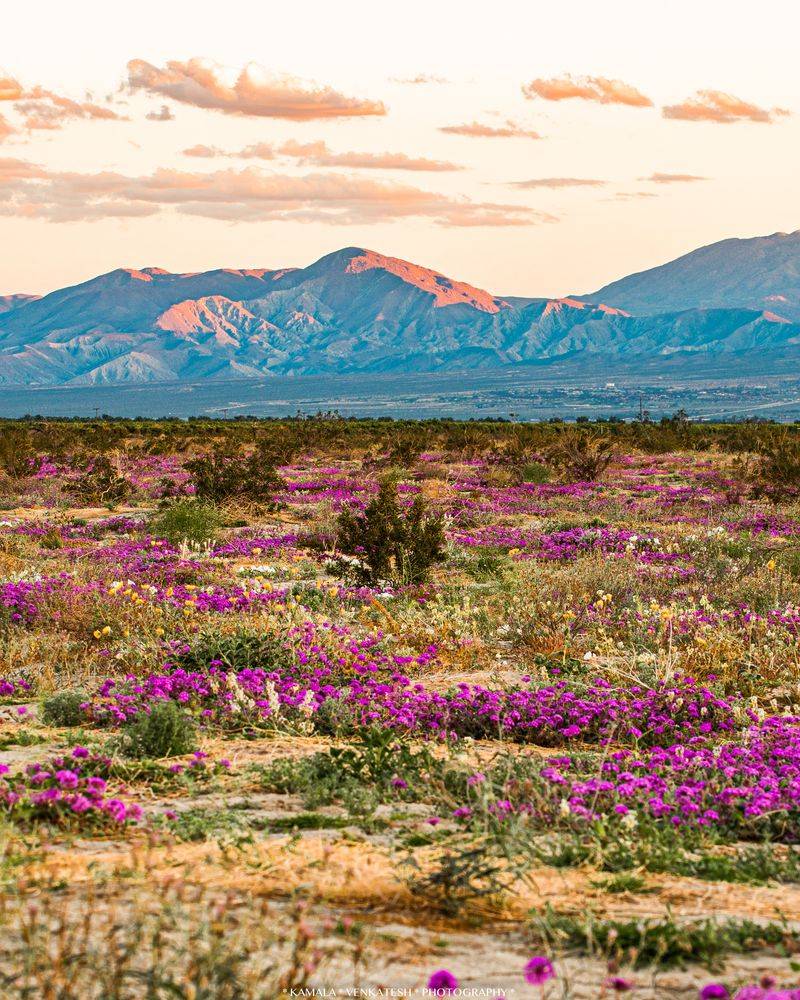
Desert solitude and dark skies define this remote community surrounded by Anza-Borrego Desert State Park, where civilization feels distant and nature dominates the landscape.
Borrego Springs sits in a valley ringed by mountains, with minimal light pollution making it an International Dark Sky Community where stars fill the night in ways rarely seen near urban areas.
Spring brings wildflower blooms that can carpet the desert floor in orange, purple, and yellow, though timing and intensity depend on winter rainfall.
Metal sculptures by artist Ricardo Breceda dot the desert landscape, depicting prehistoric creatures and animals in surprising locations throughout the area.
Hiking trails range from easy palm oasis walks to challenging mountain climbs, with the desert revealing subtle beauty in its plants, rocks, and wildlife.
Font’s Point offers panoramic views over the badlands, accessible via a sandy road that requires careful driving.
Summer temperatures regularly exceed 110 degrees, making fall through spring the preferred visiting seasons.
The small town has limited services, with a few restaurants and shops serving both residents and visitors.
Accommodations fill quickly during wildflower season and winter months, when snowbirds seek the warmth. Cell service can be spotty outside the town center.