12 Bucket List Hikes In Georgia Ranked From Easygoing To Bold
Georgia’s landscapes offer an incredible range of hiking experiences, making it a standout destination for outdoor lovers of all skill levels. Across the state, trails wind through dense forests, climb rugged mountain ridges, and lead to hidden waterfalls that feel like true rewards at the end of the journey.
In the north, the Blue Ridge Mountains provide cooler air and sweeping views, while farther south, coastal trails and wetlands introduce a completely different kind of natural beauty.
Some paths are perfect for a relaxed afternoon walk, while others challenge hikers with steep climbs and longer distances. No matter the difficulty, each trail offers a chance to slow down and connect with the outdoors. For beginners and seasoned hikers alike, these 12 Georgia hikes highlight the variety and adventure waiting across the Peach State, from easygoing routes to truly unforgettable climbs.
1. Anna Ruby Falls Trail
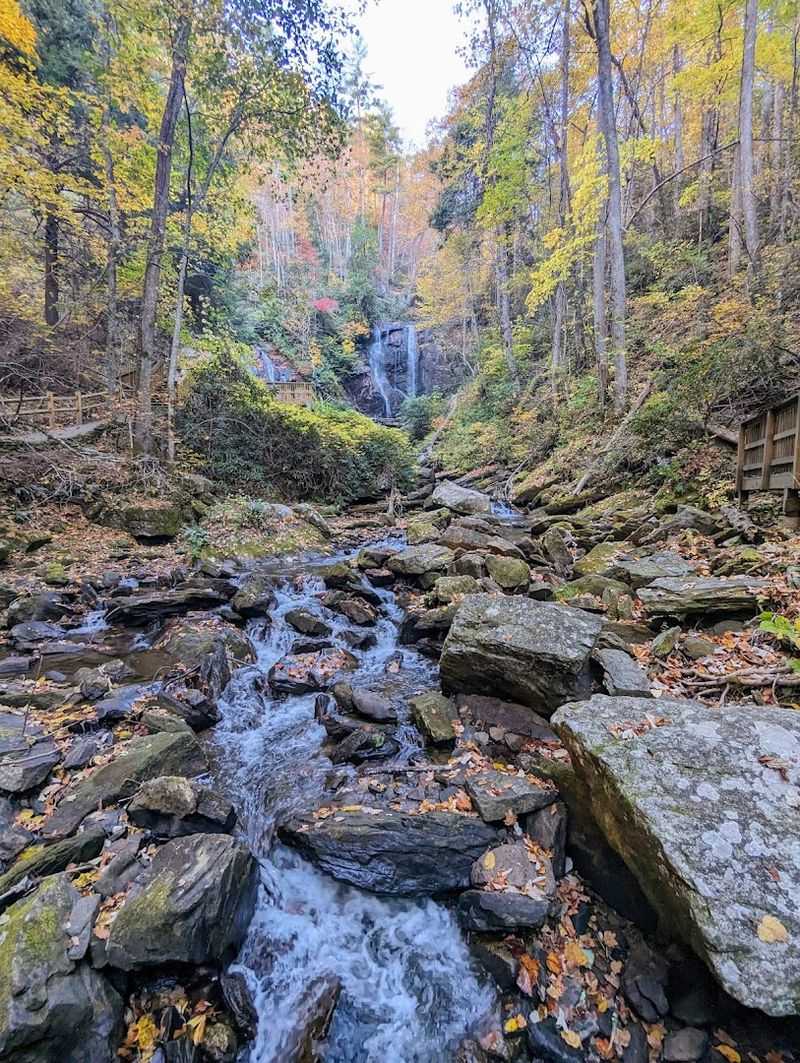
Some trails feel less like a hike and more like a stroll through a painting, and the Anna Ruby Falls Trail is exactly that. Located in the Chattahoochee-Oconee National Forest near Helen, Georgia, this 0.8-mile paved round-trip path follows a sparkling creek all the way to a stunning pair of waterfalls. The elevation gain is minimal, making it a wonderful choice for families with young children, older adults, or anyone easing into the hiking world.
The twin falls are formed where Curtis Creek and York Creek meet, creating a dramatic splash that photographers absolutely love. Expect the trail to be busiest on weekends and during fall foliage season, so arriving early in the morning can make a real difference. Parking is available at the trailhead, and a small fee applies.
Wear comfortable walking shoes rather than heavy boots, bring water, and enjoy every peaceful step of this accessible Georgia gem.
2. Tallulah Gorge Suspension Bridge Trail
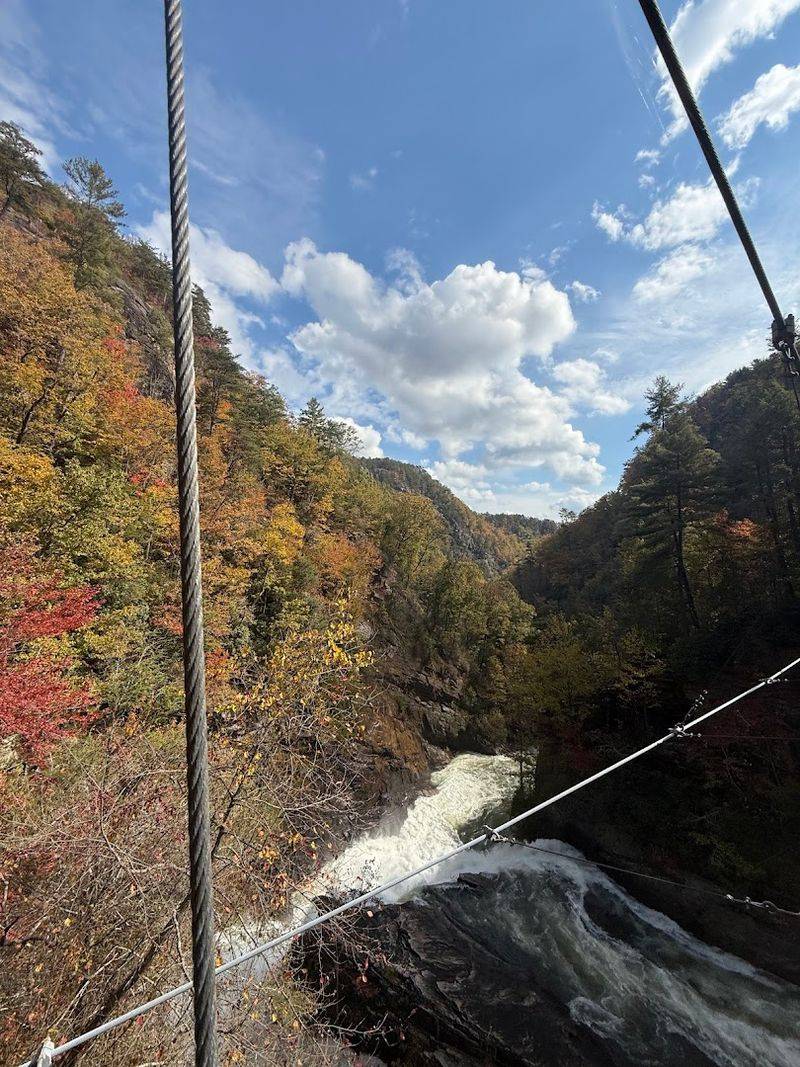
Standing on a swinging suspension bridge above a thousand-foot gorge is the kind of moment that sticks with a person for years. Tallulah Gorge State Park, located at 338 Jane Hurt Yarn Drive in Tallulah Falls, Georgia, offers a 2.25-mile Hurricane Falls Loop that takes hikers down into one of the most spectacular gorges in the eastern United States. The suspension bridge crossing is a highlight that feels adventurous without requiring serious mountaineering skills.
Permits are required to descend to the gorge floor, and they are limited daily, so planning ahead is smart. The rim trails offer sweeping views without needing a permit and are manageable for most fitness levels. Sturdy shoes with good grip are recommended because some sections involve stone stairs and uneven terrain.
Fall and spring tend to offer the most comfortable temperatures for this trail. Arrive early to secure your gorge-floor permit and claim a prime spot on that iconic bridge.
3. Amicalola Falls Trail
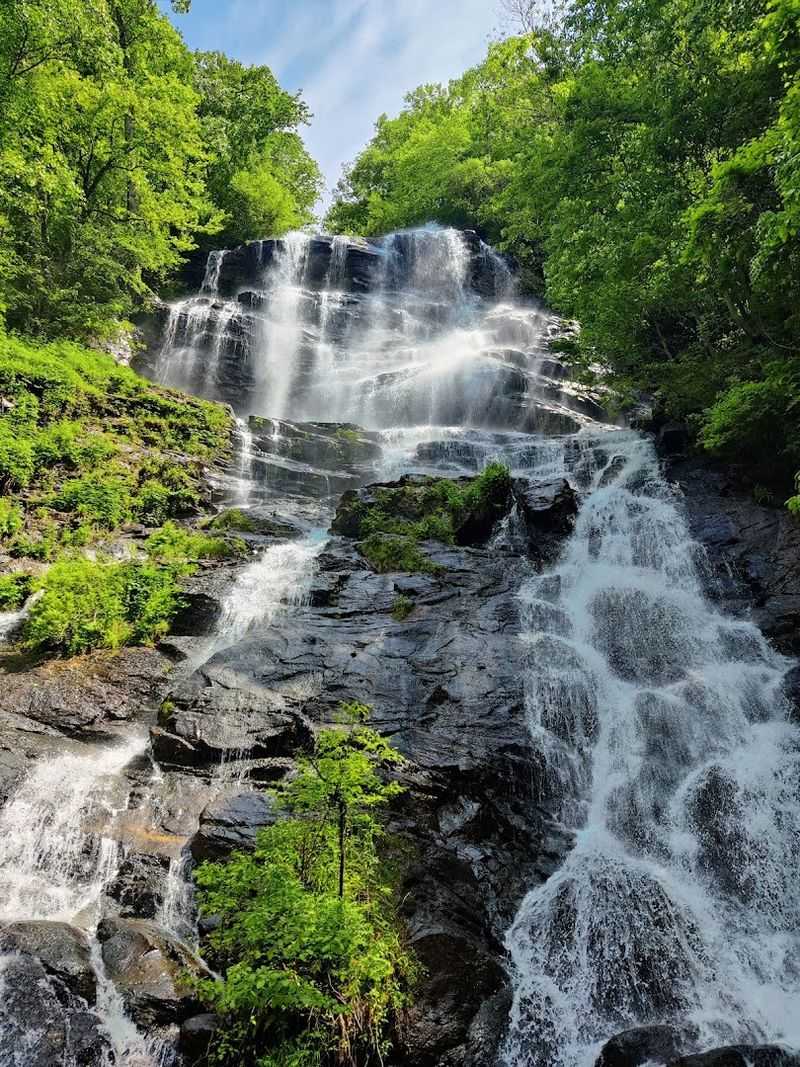
At 729 feet, Amicalola Falls is the tallest cascading waterfall east of the Mississippi River, and earning that view feels genuinely rewarding. Amicalola Falls State Park is located at 418 Amicalola Falls State Park Road in Dawsonville, Georgia, and the base-to-top trail covers about 0.6 miles with a steep staircase climbing right alongside the falls. The word “Amicalola” comes from the Cherokee language meaning “tumbling water,” which is an absolutely perfect description.
This trail also serves as the approach trail to the southern terminus of the Appalachian Trail, giving it a special energy that longer-distance hikers carry with them from the very first step. Weekends draw larger crowds, especially during spring and fall, so a midweek visit tends to feel quieter and more personal. The park offers lodging and camping if an overnight stay sounds appealing.
Comfortable athletic shoes work fine for the staircase route, though trail runners or light boots add extra confidence on the steeper sections.
4. Cloudland Canyon Waterfalls Trail
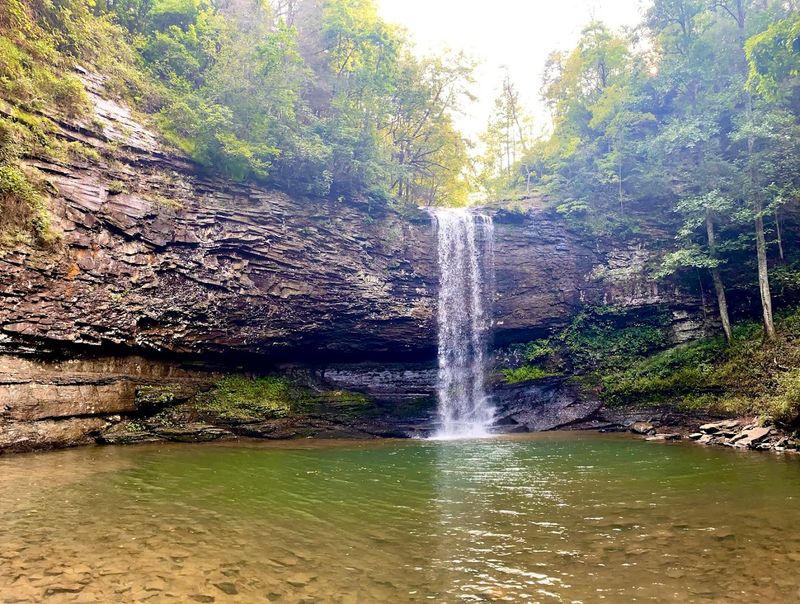
Cloudland Canyon State Park holds a quiet surprise for hikers willing to descend its steep canyon walls to find two hidden waterfalls tucked deep inside. The park is located at 122 Cloudland Canyon Park Road in Rising Fawn, Georgia, and the waterfall trail runs roughly 2 miles round trip with nearly 600 feet of elevation change via metal staircases bolted into the canyon walls. The descent feels dramatic and a little cinematic, especially when the mist from the falls drifts upward.
Cherokee Falls and Hemlock Falls are the rewards at the bottom, and both are worth every step of the climb back up. The canyon itself is carved from sandstone and shale, giving the walls a layered, textured look that feels unlike most other Georgia landscapes. Morning light filters beautifully into the canyon, making early arrivals especially atmospheric.
Bring trekking poles if descending stairs puts strain on knees, and pack enough water for the full round trip.
5. DeSoto Falls Trail
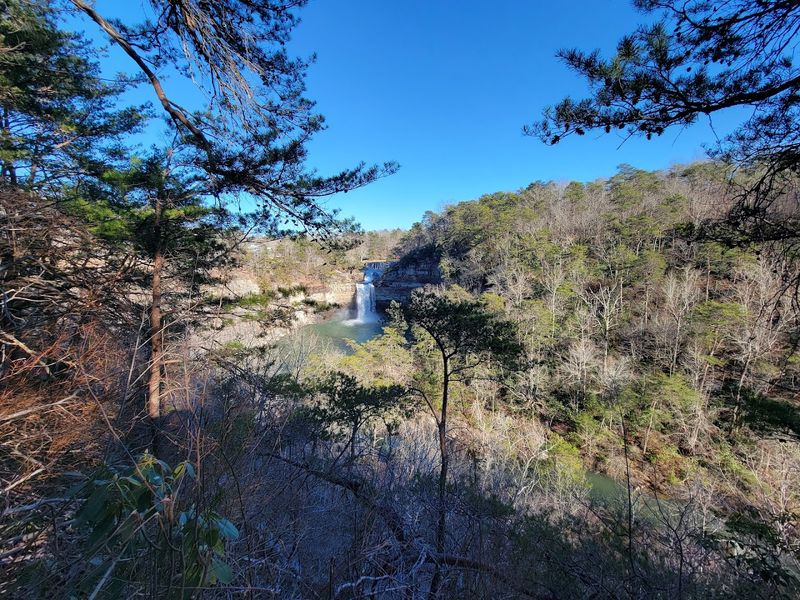
Named after the Spanish explorer Hernando de Soto, who reportedly passed through this region in the 1500s, the DeSoto Falls Trail carries a faint sense of history alongside its natural beauty. The trailhead is found within the Chattahoochee National Forest near Blairsville, Georgia, and the main loop to both upper and lower falls covers about 2.2 miles with gentle, rolling terrain. The lower falls drop around 35 feet while the upper falls tumble an impressive 90 feet, making each stop feel like its own reward.
The forest canopy along this trail is thick and lush, creating a cool, shaded corridor even on warm summer days. Families with moderately active children tend to handle this trail without much difficulty, though the final push to the upper falls adds a noticeable incline. A small campground sits near the trailhead for those wanting to extend the trip into a weekend adventure.
Trail shoes or light hiking boots are the practical choice here.
6. Stone Mountain Trail
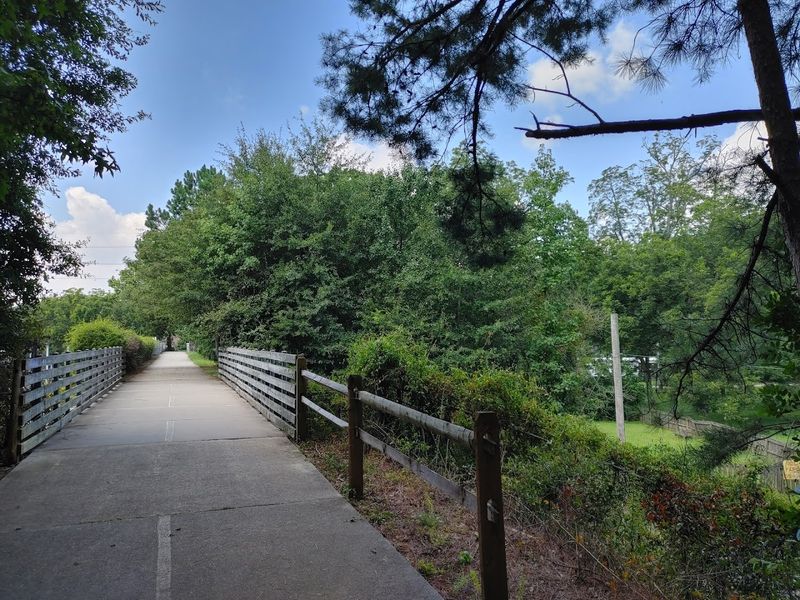
Few hikes in Georgia come with quite the same visual punch as the walk up the face of Stone Mountain, a massive exposed granite dome rising 1,686 feet above sea level. Stone Mountain Park is located at 1000 Robert E. Lee Boulevard in Stone Mountain, Georgia, and the main Walk-Up Trail covers 1.3 miles one way with a steady, sometimes steep climb over open rock.
The summit rewards hikers with sweeping 360-degree views of the Atlanta skyline, surrounding forests, and on clear days, the Blue Ridge Mountains far to the north.
The trail is one of the most popular in Georgia, drawing visitors of all ages and fitness levels throughout the year. Yellow painted lines mark the route up the bare granite face, which can become slippery when wet, so checking the weather before heading out is genuinely important. Morning visits on weekdays tend to feel much less crowded than weekend afternoons.
The park charges an admission fee, and parking is plentiful near the trailhead.
7. Raven Cliff Falls Trail
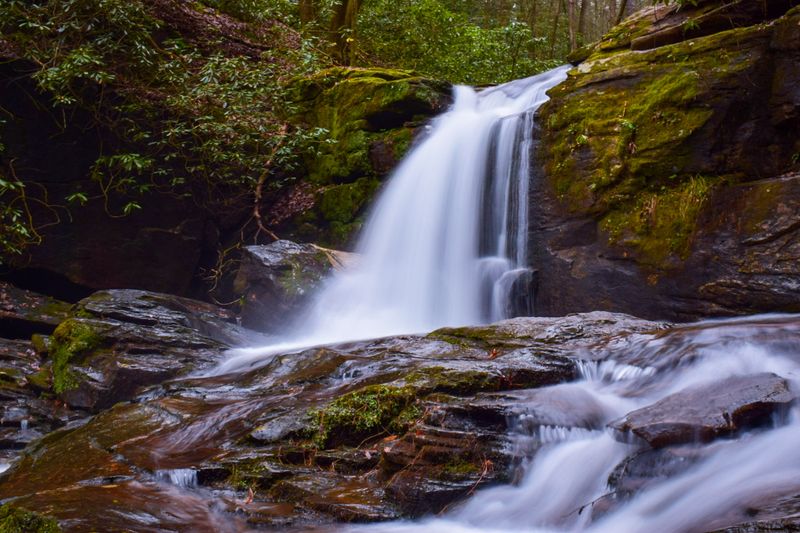
Raven Cliff Falls is one of the most visually unique waterfalls in the entire state, dropping more than 100 feet through a narrow cleft in the rock rather than spilling openly over a ledge. The trailhead sits within the Raven Cliffs Wilderness in the Chattahoochee National Forest, located near Robertstown, Georgia, and the round-trip hike covers about 4.4 miles with moderate elevation gain along a creek. The sound of the water rushing through the gorge builds steadily as hikers approach, creating natural anticipation.
The trail crosses several footbridges and follows Dodd Creek through a beautiful mixed hardwood forest that turns spectacular shades of orange and red in October. Moderate fitness is helpful here since the trail involves some rocky footing and a few steeper climbs. Trekking poles are a handy addition, especially for the return trip when tired legs meet uneven ground.
Parking at the trailhead is free, and the area tends to stay quieter than more famous Georgia waterfall destinations.
8. Springer Mountain Trail
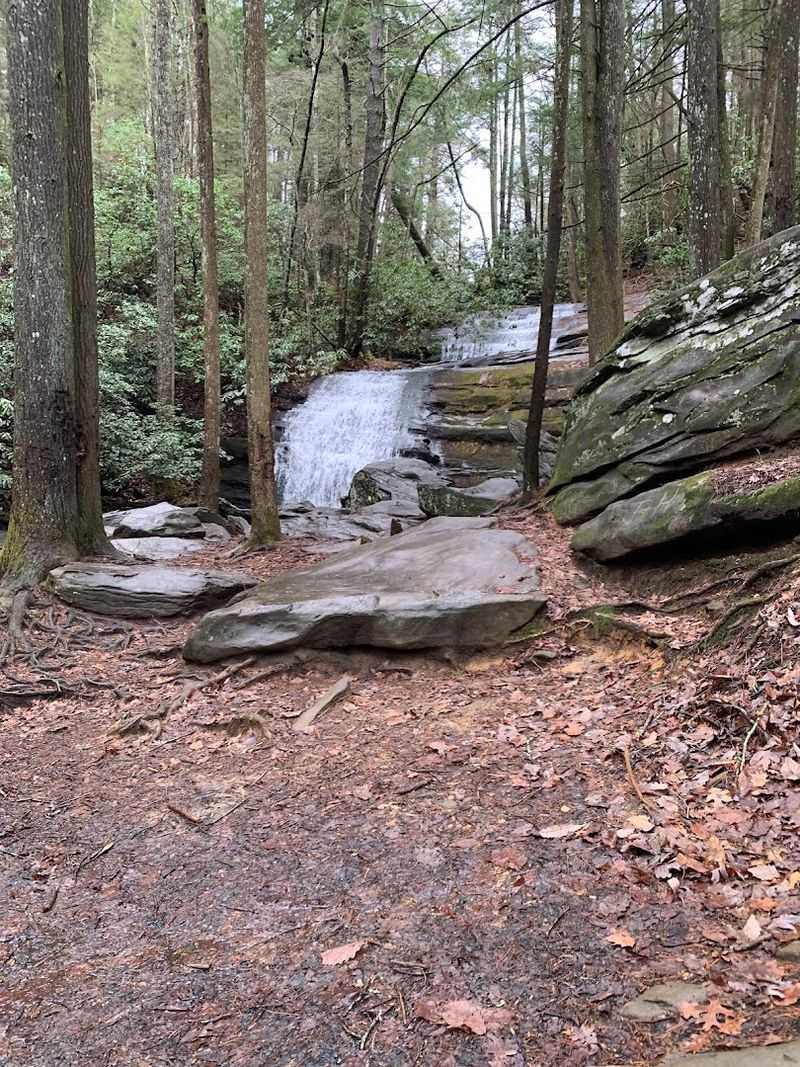
Every year, thousands of hopeful thru-hikers touch the bronze plaque on Springer Mountain and take their first official steps northward on the Appalachian Trail, dreaming of reaching Maine. The summit sits within the Chattahoochee National Forest near Ellijay, Georgia, and reaching it via the Benton MacKaye Trail from the Three Forks Trailhead creates a satisfying 7.5-mile round trip with around 1,600 feet of elevation gain. The forested ridgeline walk feels purposeful from the very first mile.
Even without thru-hiking ambitions, standing at the southern terminus is quietly moving. The summit itself is wooded rather than open, but small clearings offer partial views and a real sense of elevation. Spring brings wildflowers along the approach trail, and fall turns the ridgeline into a blaze of color.
Carry plenty of water since sources along this route can be limited. A valid Georgia Wilderness permit is required for overnight camping in the area surrounding Springer Mountain.
9. Cohutta Wilderness – Jacks River Trail
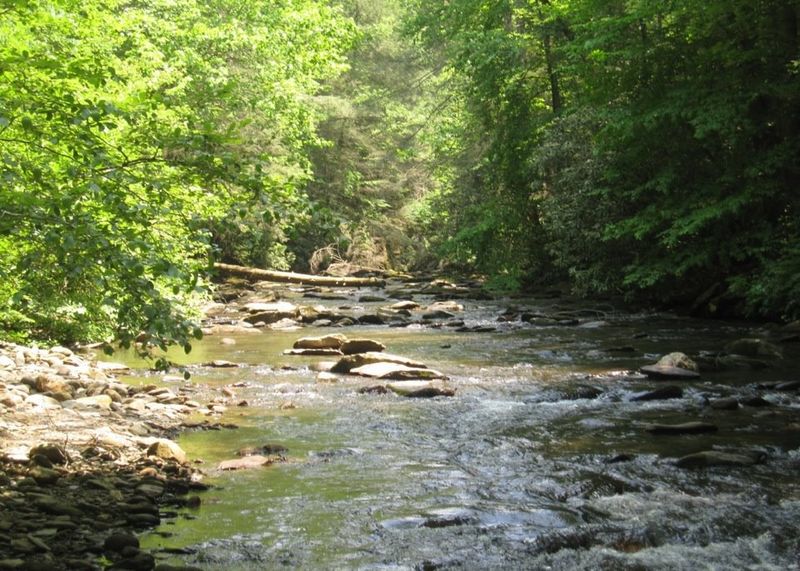
With more than 30 river crossings and nearly 16 miles of remote backcountry terrain, the Jacks River Trail in the Cohutta Wilderness is the kind of hike that demands respect and preparation. The trailhead is accessible from the Cohutta Wilderness area near Chatsworth, Georgia, and the full out-and-back route stretches approximately 14.5 to 16 miles depending on the chosen access point. This is not a casual afternoon walk but rather a full-day or overnight commitment for experienced hikers.
The Jacks River itself is the star of the show, with cascading rapids, swimming holes, and a famous waterfall called Jacks River Falls waiting roughly halfway through the route. Water crossings are unavoidable and can be thigh-deep during wet seasons, so waterproof boots or river shoes are genuinely necessary rather than optional. Black bears are active in the Cohutta Wilderness, making bear canisters and proper food storage essential.
Solitude is almost guaranteed on weekdays, which adds to the wild, exploratory character of this trail.
10. Blood Mountain Trail
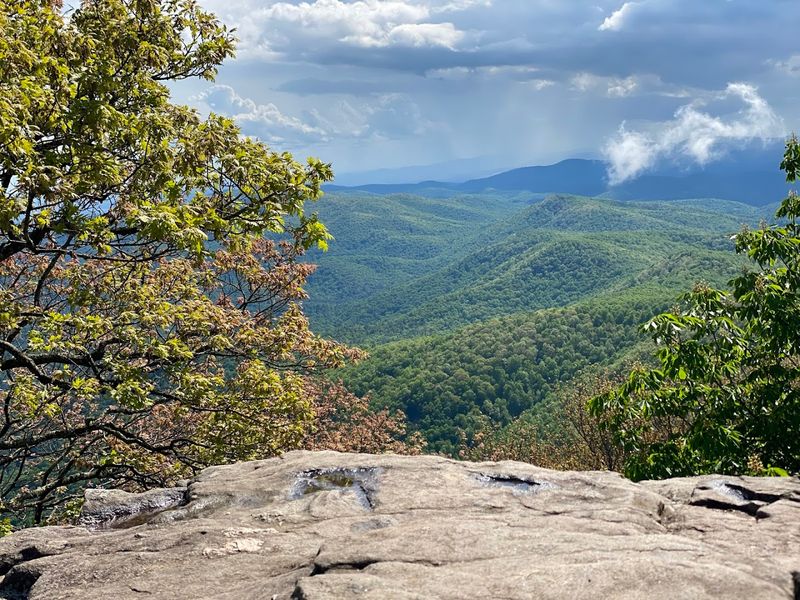
Blood Mountain is the crown jewel of Georgia hiking, sitting at 4,458 feet as the highest point on the Georgia section of the Appalachian Trail. The Byron Reece Trailhead is located at 3567 Neels Gap Road in Blairsville, Georgia, and the most popular loop using the Appalachian Trail and the Byron Reece Trail covers about 4.3 miles with roughly 1,700 feet of elevation gain. The rocky summit opens up to wide, unobstructed views that feel like a genuine payoff for the effort.
A stone shelter built by the Civilian Conservation Corps in the 1930s still stands near the summit, adding a rustic historical charm to the experience. The upper section of the trail involves scrambling over large boulders, which adds excitement but also requires careful footing. Spring wildflowers and fall foliage both make this trail especially photogenic during peak seasons.
Parking at the Byron Reece Trailhead fills quickly on weekends, so arriving before 8 a.m. is a smart move.
11. Rich Mountain Loop
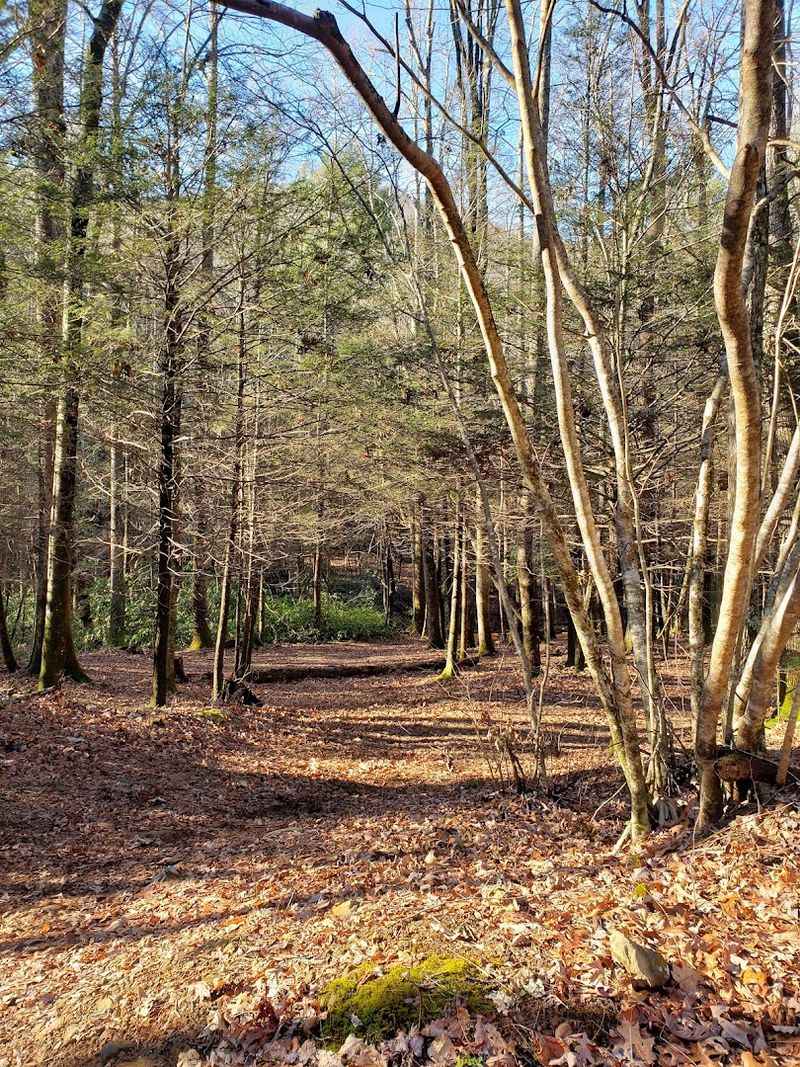
The Rich Mountain Loop is one of those trails that rewards hikers who prefer a long, immersive forest walk over a straight shot to a single viewpoint. Located within the Rich Mountain Wilderness near Ellijay, Georgia, this loop stretches approximately 11 miles with around 2,000 feet of cumulative elevation gain, making it a solid half-day or full-day outing. The trail winds through diverse forest types, crossing ridgelines and dropping into quiet hollows that feel genuinely off the beaten path.
Wildlife sightings are relatively common here, with white-tailed deer, wild turkeys, and various bird species frequently spotted along the route. The trail is not heavily trafficked compared to more famous Georgia loops, which gives it a refreshingly uncrowded character even on mild weekends. Navigation requires some attention since the loop involves multiple trail junctions, so downloading an offline map beforehand is a practical habit.
Sturdy hiking boots and trekking poles are both well worth bringing for the longer mileage and variable terrain.
12. Appalachian Trail – Georgia Section Thru-Hike
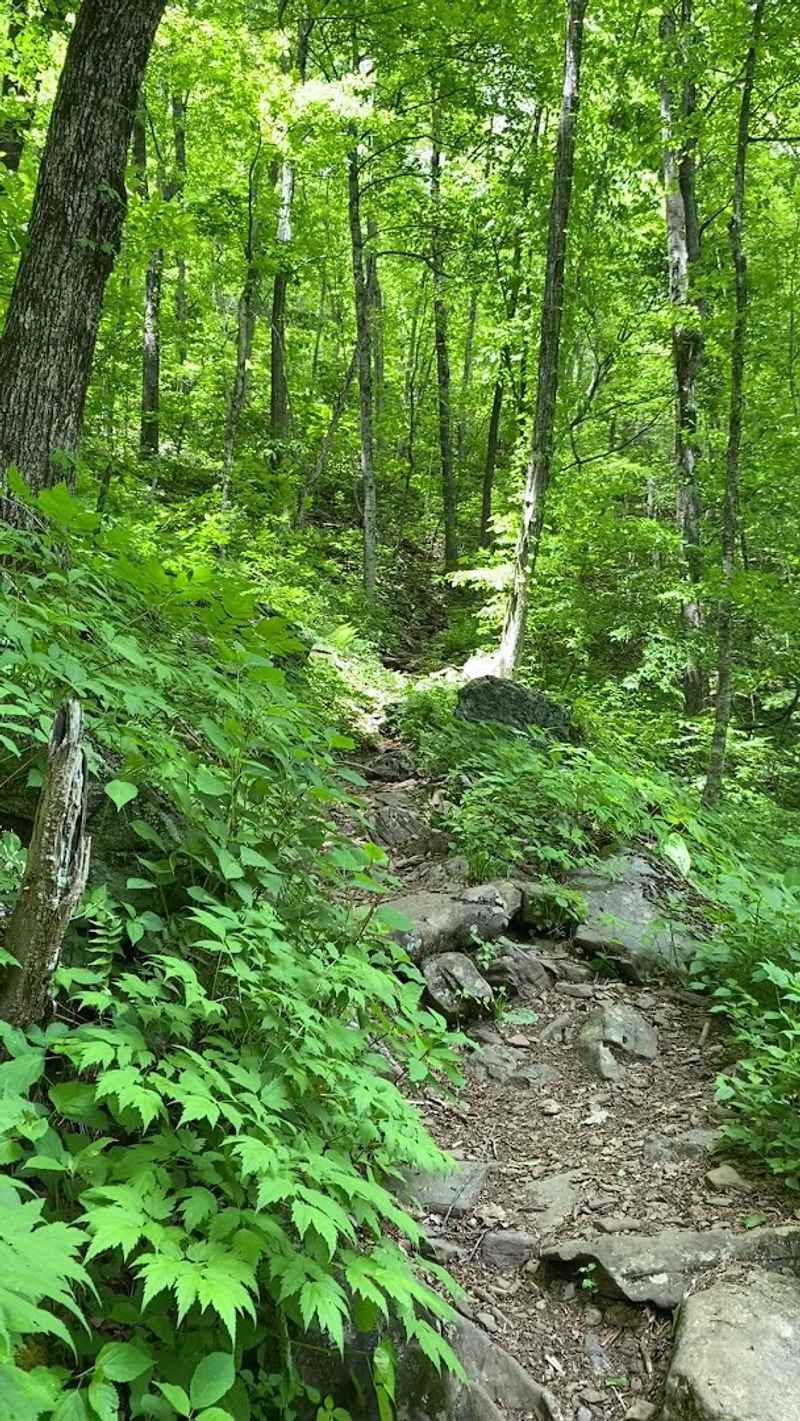
Covering approximately 78 miles from Springer Mountain to the Georgia-North Carolina border at Bly Gap, the Georgia section of the Appalachian Trail is a genuine test of endurance, planning, and determination. Most thru-hikers begin at Springer Mountain in the Chattahoochee National Forest near Ellijay, Georgia, and tackle this stretch over five to nine days depending on pace and fitness level. The terrain is relentlessly hilly, with significant elevation changes across nearly every mile of the route.
This section passes through several iconic landmarks including Blood Mountain, Neels Gap, and the famous Mountain Crossings outfitter, where many hikers make gear adjustments before heading further north. Resupply options are limited, so careful food planning before departing is essential. Water sources are generally reliable but should always be filtered.
The Georgia section is considered one of the most demanding stretches of the entire 2,190-mile trail, making its completion a milestone that serious hikers carry with genuine pride for the rest of their lives.