13 California Car And Transportation Museums That Turn Vintage Rides Into A Road Trip Worth Taking
Vintage cars have a way of making people care about details they normally ignore.
Chrome starts looking important. Old dashboards become fascinating.
Even someone who claims they are “not really a car person” can end up pointing at a hood ornament like it personally changed the afternoon.
That is the fun of transportation museums.
They turn engines, trains, buses, planes, and classic rides into stories you can actually stand beside.
A good California road trip gets even better when the stops come with polished metal and a little “wait, people really drove that?” energy.
You do not need to know every model year to enjoy these places. Curiosity is enough.
So is a soft spot for weird design choices and vehicles that look like they have seen better decades.
Bring your camera. Someone in your group is absolutely going to pick a favorite.
1. Petersen Automotive Museum, Los Angeles
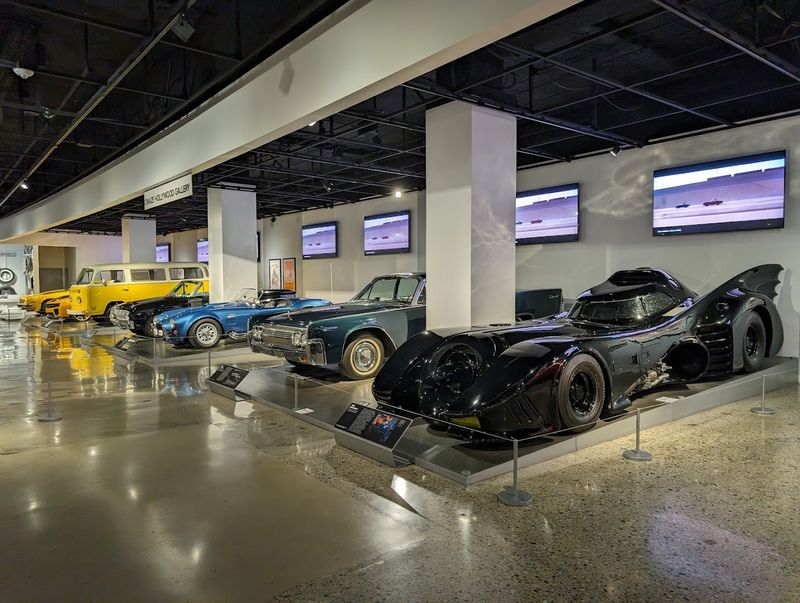
Few places on the West Coast hit quite like the Petersen Automotive Museum, where even a casual visitor walks out with strong opinions about hood ornaments and horsepower.
Located at 6060 Wilshire Blvd, Los Angeles, CA 90036, the building itself is impossible to miss with its bold red-and-silver exterior that looks like a car in mid-motion.
Inside, the exhibits rotate often enough that repeat visits genuinely feel fresh every single time.
The Vault alone is worth the trip, housing over 300 rare and iconic vehicles from around the world in a space that feels more like a secret collector’s dream than a public museum.
Movie cars, race cars, supercars, and classics all share the floor in a way that keeps the energy moving.
The lighting is dramatic without being over the top, and the layout encourages wandering rather than rushing.
Weekdays tend to be less crowded than weekends, which could make the experience feel more relaxed and personal.
Super worth it for anyone who wants to see automotive history presented with serious style and zero stuffiness.
2. California Automobile Museum, Sacramento
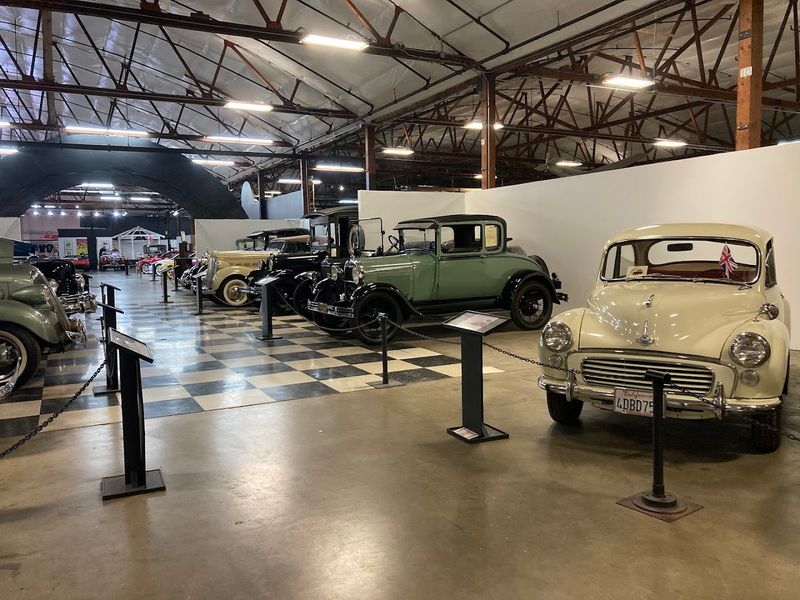
Sacramento gets a lot of credit for being the state capital, but the California Automobile Museum deserves its own shoutout for keeping over 130 years of California car history alive and accessible.
Situated at 2200 Front St, Sacramento, CA 95818, the museum covers a wide range of vehicles from early horseless carriages to muscle cars and everything in between.
Rotating exhibits keep the collection feeling current even as the subject matter leans beautifully old-school.
Classics like early Cadillacs, Model Ts, and a Stanley steam car are part of what makes this place feel like a genuine time machine rather than just a parking lot with nice lighting.
The layout is easy to navigate, and the floor space is generous enough that crowding rarely feels like an issue even on busier days. Kids and adults tend to find something interesting here without much effort.
For anyone road-tripping through NorCal, this spot fits naturally into a Sacramento day without requiring a major detour.
The vibe is approachable and educational without ever feeling like a school field trip in the boring sense.
3. San Diego Automotive Museum, San Diego
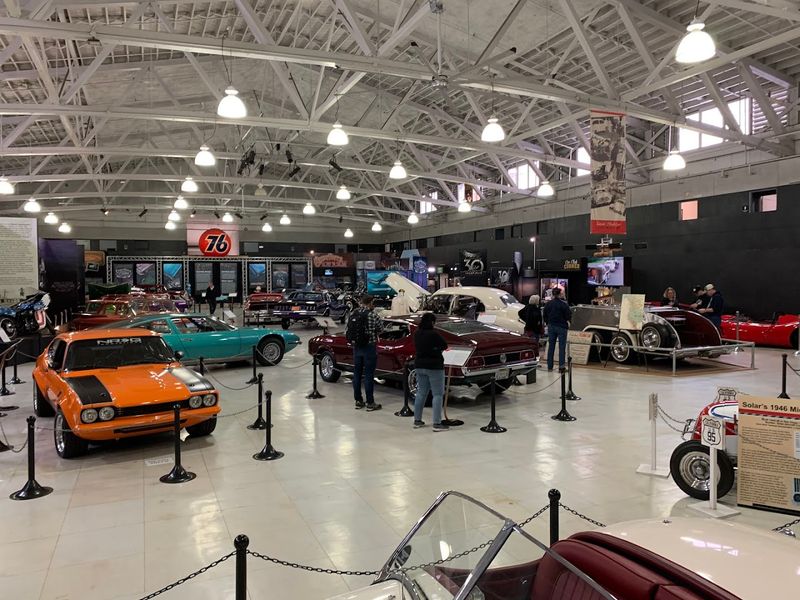
Balboa Park already packs a serious punch as a destination, and the San Diego Automotive Museum adds a layer of chrome and horsepower that makes the whole visit even more satisfying.
The museum is located at 2080 Pan American Plaza, San Diego, CA 92101, right in the heart of Balboa Park where the parking situation and walkability tend to work in visitors’ favor.
More than 75 vehicles and motorcycles fill the exhibit space across both permanent and rotating collections.
The mix of American and European vehicles gives the collection a nice range, so someone who loves classic muscle cars and someone who prefers vintage European roadsters can both walk away happy.
Motorcycles share the floor with automobiles in a way that feels natural rather than tacked on, and the layout flows well from one era to the next.
The building itself is part of the historic Balboa Park complex, which adds a cool architectural backdrop to the whole experience.
Pairing this visit with other Balboa Park stops makes for a full and satisfying day without much extra planning.
The museum tends to draw a relaxed weekend crowd, and the pace inside matches that energy perfectly.
4. Blackhawk Museum, Danville
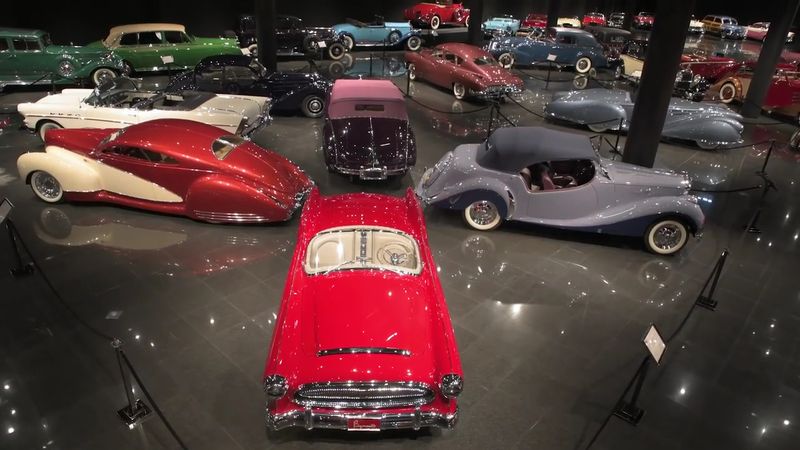
Rare cars getting the gallery treatment is exactly the kind of energy the Blackhawk Museum brings to the East Bay, and it does so with a level of polish that feels genuinely impressive.
The museum is located at 3700 Blackhawk Plaza Cir, Danville, CA 94506, tucked into the Blackhawk Plaza shopping area in a way that makes it easy to find and surprisingly easy to spend a full afternoon in.
The Don Williams Automobile Gallery is the centerpiece, featuring close to 50 classic, vintage, and rare automobiles presented with fine-art-level care.
Concept cars and prototypes sit alongside verified classics in a curation style that rewards slow, careful looking rather than quick walkthroughs.
The lighting is warm and deliberate, giving each vehicle a presence that feels almost theatrical without being overdone.
Beyond the cars, exhibits on Western frontier settlement and Plains Indians add unexpected depth to the overall visit.
The combination of automotive history and cultural history under one roof makes this museum stand apart from the usual car-only experience.
For Bay Area locals looking for something a little different on a weekend, this spot delivers without requiring a long drive.
5. California State Railroad Museum, Sacramento
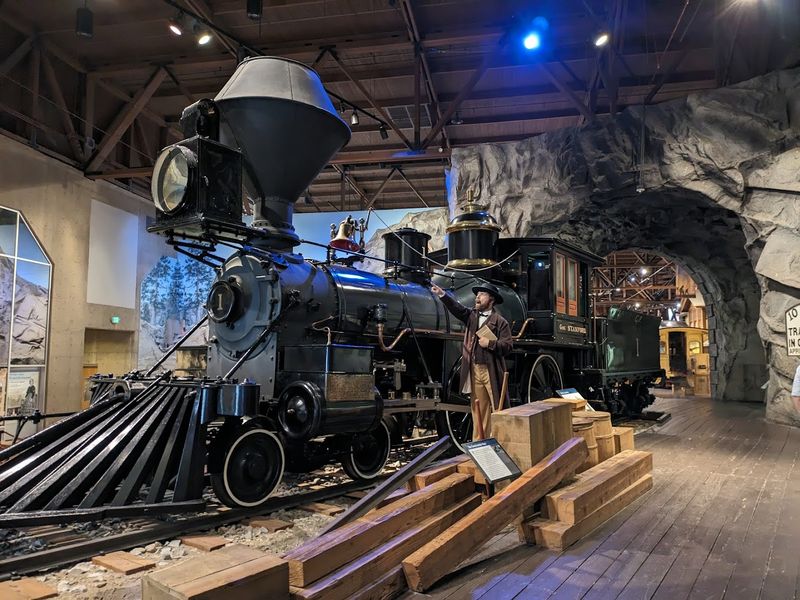
California State Railroad Museum feels like stepping directly into the moment California became connected to the rest of the country, and that feeling does not wear off quickly.
Located at 125 I St, Sacramento, CA 95814, in the heart of Old Sacramento, the museum anchors one of the most historically significant neighborhoods in the entire state.
Restored locomotives and railcars, some dating back to 1862, fill the enormous main hall in a way that makes the scale of early American railroading genuinely tangible.
The exhibits go beyond just looking at equipment, offering context about the human stories and economic forces that made the transcontinental railroad possible.
Excursion train rides are available seasonally, which adds a hands-on dimension that a lot of museums simply cannot offer.
The building itself is well-maintained and accessible, with clear signage and a logical flow through the collection.
Old Sacramento as a whole makes for a great pairing, with shops and food options nearby to round out the day.
Weekend crowds can build up, so arriving earlier in the morning tends to make the experience feel more comfortable and less rushed.
6. The Nethercutt Collection, Sylmar
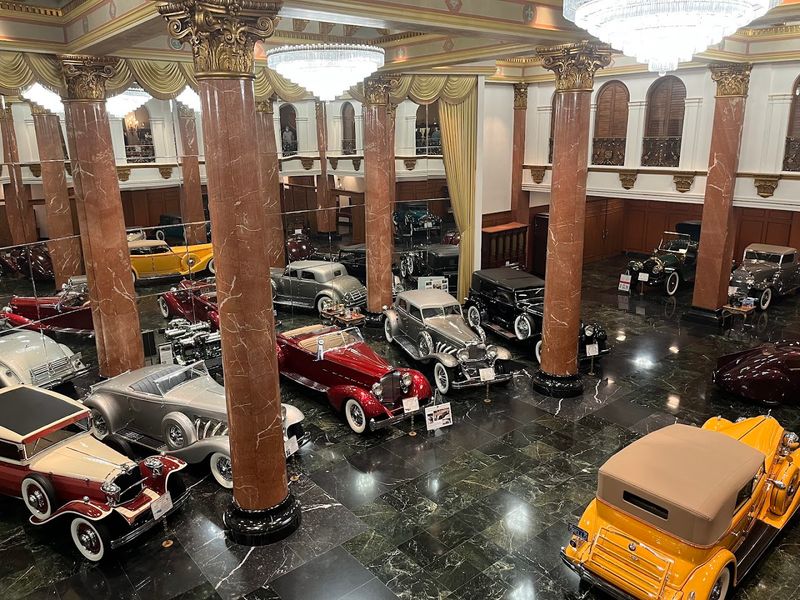
There is something almost unreal about walking into a room where every single car looks like it just rolled off the showroom floor in 1932.
The Nethercutt Collection, located at 15151 Bledsoe St, Sylmar, CA 91342, holds more than 250 American and European automobiles spanning nearly a full century of automotive craftsmanship, from 1898 all the way to 1997.
Each vehicle is kept in drivable, showroom condition, which is honestly a flex of the highest order.
The collection is split between the public museum side and the guided-tour side, where rarer automobiles and mechanical musical instruments get their own special spotlight.
The guided portion tends to fill up, so checking availability ahead of time could save some frustration. The atmosphere leans elegant rather than flashy, with clean lines and careful presentation throughout.
Visitors who appreciate old-school luxury and craftsmanship will find this spot genuinely moving in a way that is hard to put into words.
It is the kind of place where someone might find themselves staring at a steering wheel for ten full minutes and feeling completely okay about it.
7. Southern California Railway Museum, Perris
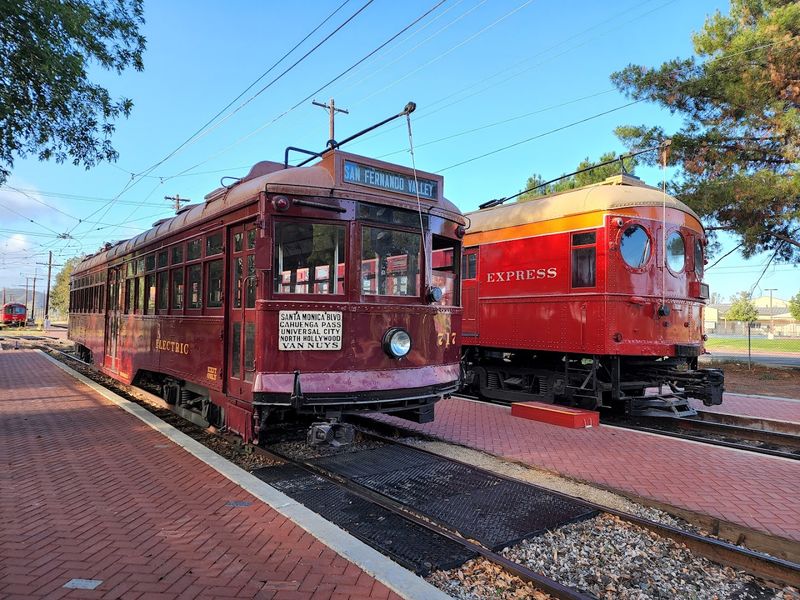
For anyone who has ever looked at a vintage streetcar and thought it deserved better than sitting behind a velvet rope, the Southern California Railway Museum in Perris is basically the answer.
The museum is located at 2201 South A St, Perris, CA 92570, and it holds what is considered the West’s largest collection of railway locomotives, streetcars, and electric cars, with artifacts dating back to the 1870s.
The grounds are large and spread out, which gives the whole visit an open-air feel that works really well on a clear SoCal day.
Actual rides on streetcars and trains are part of the experience here, which immediately separates this spot from a standard walk-and-look museum.
Passenger cars, freight cars, interurban electric cars, and historic railway buildings all have space to breathe across the expansive property.
The collection spans decades of transit history in a way that connects Southern California’s past to the way people move around the region today.
Planning around ride schedules is a good idea since availability can vary by day and season.
The relaxed pace of the grounds makes it a comfortable visit for families and solo explorers alike.
8. Railtown 1897 State Historic Park, Jamestown
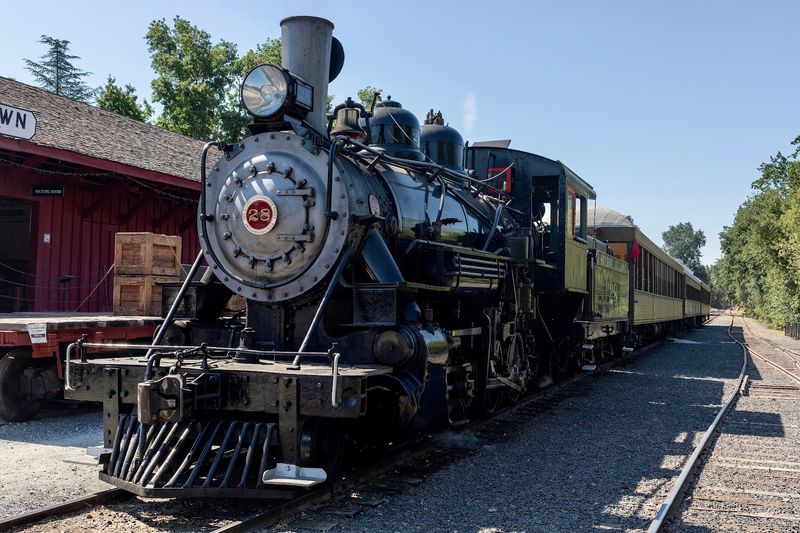
Some museums ask visitors to look at history through glass, but Railtown 1897 State Historic Park in Jamestown actually lets people walk through a working railroad time capsule.
The park is located at 10501 Reservoir Rd, Jamestown, CA 95327, in the Gold Country foothills where the Sierra Nevada starts to show itself in the landscape.
An authentic roundhouse, an operating turntable, a machine shop, and a working steam locomotive all come together in a setting that feels remarkably unscripted.
Excursion train rides run seasonally, pulling visitors through the scenic countryside on equipment that has appeared in dozens of Hollywood films over the decades.
The mechanical details of the roundhouse are genuinely fascinating, especially for anyone curious about how steam-era railroads actually functioned on a daily basis.
The human scale of the place is part of its appeal since nothing feels roped off or untouchable in the way larger museums sometimes do.
Jamestown itself has a Gold Rush-era charm that makes the surrounding area worth exploring before or after the park visit.
Getting there requires a bit of a drive from most Bay Area or Central Valley starting points, but the payoff is solid.
9. Western Railway Museum, Suisun City
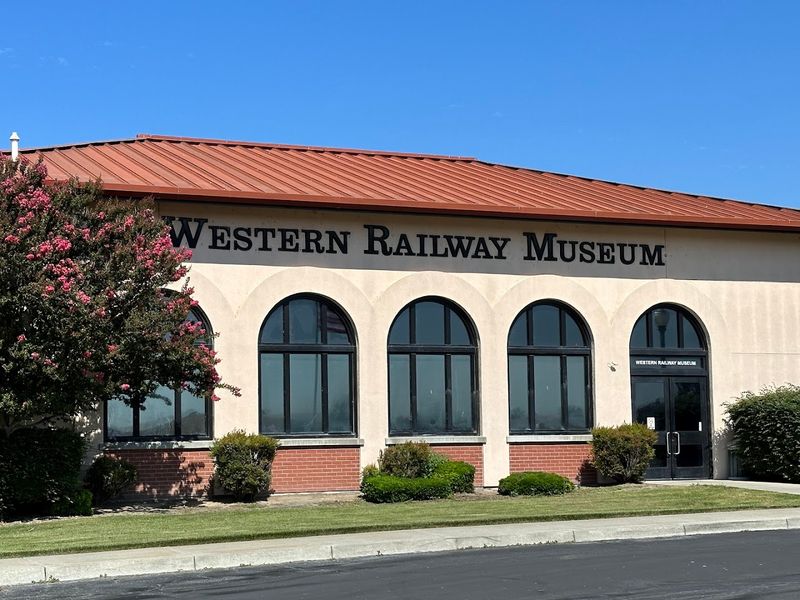
Sitting between Sacramento and the Bay Area, the Western Railway Museum in Suisun City is the kind of stop that rewards people who take the time to get off the freeway and slow down for a few hours.
The museum is located at 5848 CA-12, Suisun City, CA 94585, along a stretch of Highway 12 that feels genuinely off the beaten path in the best possible way.
Historic streetcar and interurban train rides are a central part of the experience, giving visitors a rolling perspective on both the collection and the surrounding landscape.
The grounds are substantial, with a large outdoor display area that lets visitors get up close to equipment in a way that feels casual and exploratory rather than formal.
Interurban electric cars from the Bay Area’s historic transit networks are well-represented here, which gives the collection a strong regional identity.
The museum operates primarily on weekends, so checking the schedule before making the drive is genuinely important.
Families with kids who have any interest in trains tend to have a great time here since the ride element keeps the energy high throughout the visit.
The open-air setting and relaxed atmosphere make it a low-pressure afternoon option that does not require a packed itinerary.
10. Western America Railroad Museum, Barstow
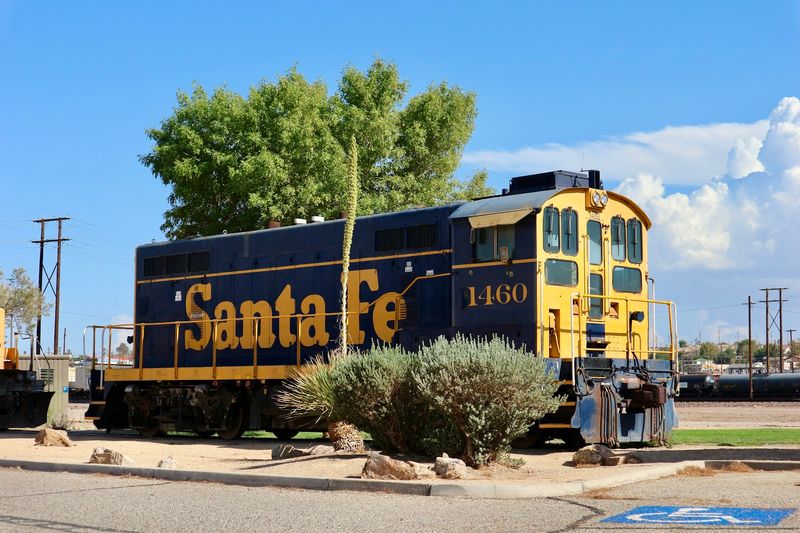
Route 66 travelers passing through the Mojave Desert already have a reason to stop in Barstow, and the Western America Railroad Museum adds a genuinely compelling second reason to pull over.
The museum is located at 685 N 1st Ave, Barstow, CA 92311, inside the historic Harvey House building known as Casa Del Desierto, which is a landmark worth seeing on its own merits.
Railroad memorabilia, photographs, archives, locomotives, rail cars, and cabooses open for tours fill both the interior exhibits and the outdoor display area.
The Harvey House connection gives the museum a layered historical identity that touches on both railroad culture and the broader story of westward travel in America.
The outdoor equipment area is accessible and easy to walk through, with cabooses that visitors can actually step inside for a more tactile sense of scale.
The desert setting adds a particular kind of quiet intensity to the experience that feels different from urban museum visits.
Barstow sits conveniently along I-15 and Historic Route 66, making this museum a natural fit for a road trip stop rather than a dedicated destination visit.
The collection is honest and well-organized without trying to be more than it is.
11. San Francisco Cable Car Museum, San Francisco
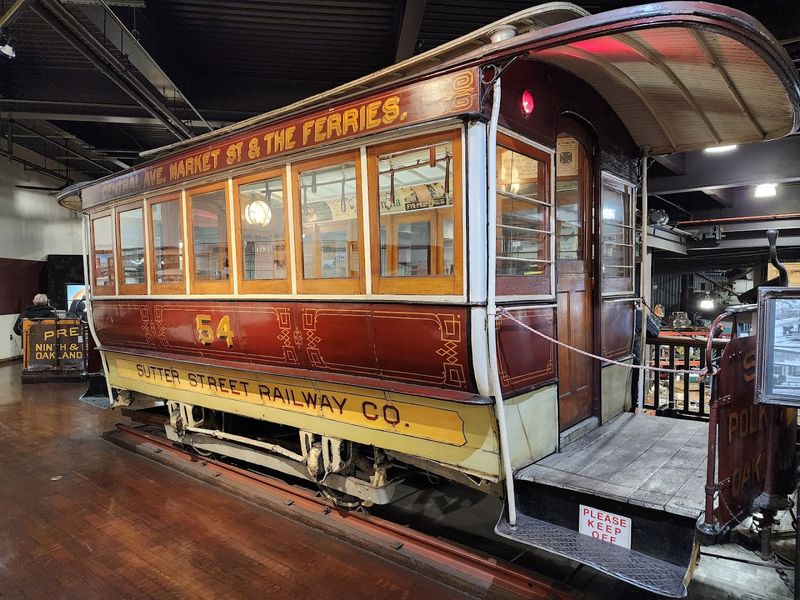
Cable cars are one of the most recognizable things about San Francisco, and the museum dedicated to their history happens to be located inside the actual working powerhouse that keeps them running today.
The museum is at 1201 Mason St, San Francisco, CA 94108, at the corner of Mason and Washington Streets in the Nob Hill neighborhood, which is already a great part of the city to walk around.
The massive cable-winding machinery is visible and operational during visits, which gives the whole experience a living, breathing quality that static exhibits simply cannot replicate.
Historic cable cars, mechanical displays, vintage photographs, and detailed explanations of the engineering behind the system all come together in a space that manages to feel both educational and genuinely exciting.
Admission is free, which makes it one of the most accessible transportation history experiences in the entire state.
The building itself has a warm, industrial character with exposed brick and heavy machinery that creates a strong sense of place.
Getting there on foot from Union Square or by riding an actual cable car adds a nice layer of meta-experience to the visit.
Weekend lines for the nearby cable car stops can get long, so building in extra time is a smart move.
12. March Field Air Museum, Riverside
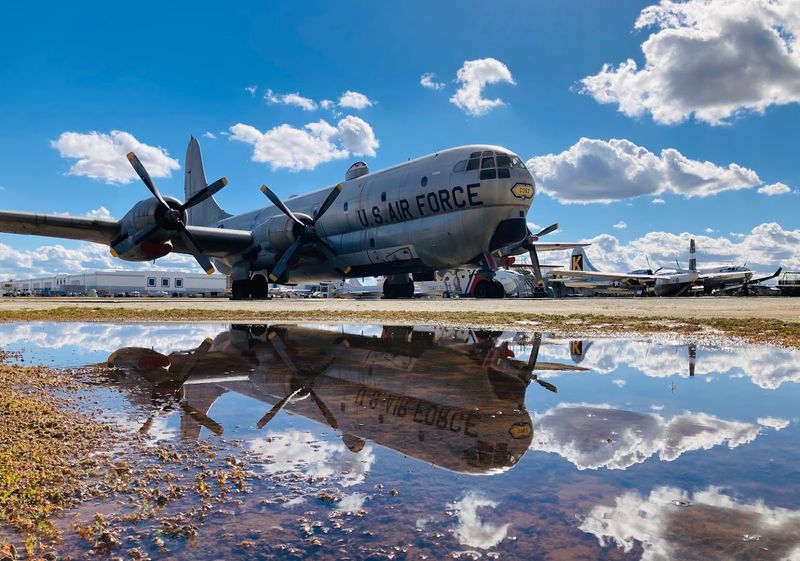
Aviation is transportation, and March Field Air Museum in Riverside makes that case with 118 historic aircraft spanning nearly a full century of flight history.
The museum is located at 22550 Van Buren Blvd, Riverside, CA 92518, adjacent to March Air Reserve Base in the Inland Empire, and the scale of the outdoor display area alone is enough to make a first-time visitor stop and stare.
Military aircraft from World War II, the Korean War, the Vietnam era, and beyond are all represented in a collection that rewards slow, deliberate walking.
The indoor galleries add historical context to the hardware outside, with exhibits on the base’s own history and the broader story of American military aviation.
The sheer number of aircraft on display means that even a long visit may not cover everything in full detail, which is honestly a good problem to have.
Signage throughout is clear and informative without being overwhelming.
The Inland Empire location makes this a solid stop for road trippers heading between Los Angeles and Palm Springs or continuing east toward the desert.
Weekday visits tend to feel more spacious than weekend crowds, though the outdoor space is large enough that it rarely feels cramped regardless.
13. Hiller Aviation Museum, San Carlos
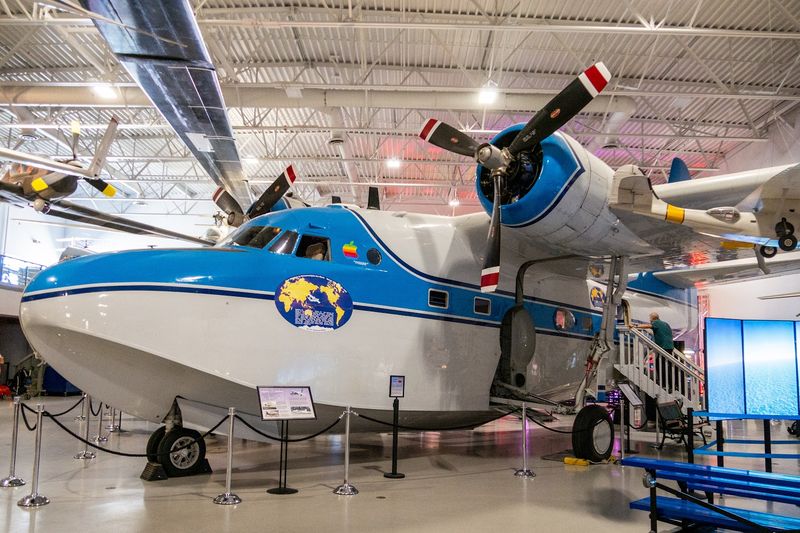
Aviation history in the Bay Area has a proper home at the Hiller Aviation Museum, where over 40 vintage and futuristic aircraft cover more than a century of flight in a space that manages to feel both accessible and genuinely awe-inspiring.
The museum is located at 601 Skyway Rd, San Carlos, CA 94070, right next to the San Carlos Airport, which means the sound and sight of small planes landing nearby adds a live dimension to the visit that is hard to manufacture.
The collection spans early biplanes, helicopters, experimental aircraft, and forward-looking designs in a way that keeps the narrative moving forward.
Families with kids tend to connect well with the interactive elements and the variety of aircraft types on display, and the layout is open enough that younger visitors can move around comfortably.
The museum also leans into the Bay Area’s own aviation heritage, which gives the exhibits a local flavor alongside the broader national story.
Natural light fills much of the interior, making the aircraft look particularly sharp against the clean museum backdrop.
Parking at the museum is generally straightforward, and the San Carlos location puts it within easy reach of the Peninsula and South Bay.
Checking ahead for special events or flight demonstrations could make the visit even more memorable.