13 California Corners Of The State That Seem Borrowed From Somewhere Else Entirely
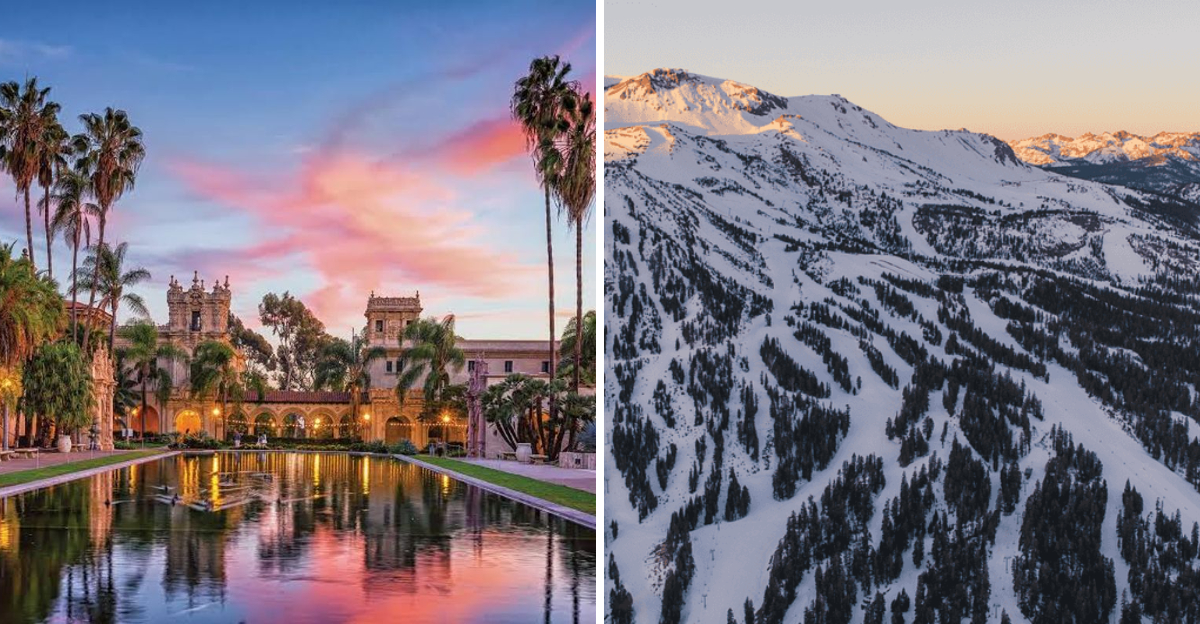
Some places make the map feel confused.
One turn looks coastal European. Another feels desert-world strange.
A mountain village starts borrowing alpine drama. Then a quiet beach appears with serious island energy.
California can feel like it raided a dozen travel brochures and hid the evidence in plain sight. That is the fun of this list.
The state has corners where the mood shifts so sharply that the setting feels almost misplaced.
You are still close to home, but the scenery starts telling a different story.
Whitewashed buildings, snowy peaks, redwood shadows, and old-world streets can all make the same state feel wildly bigger.
Places like these make travelers pause and think, “Wait, where am I again?”
1. Solvang As A Little Piece Of Denmark
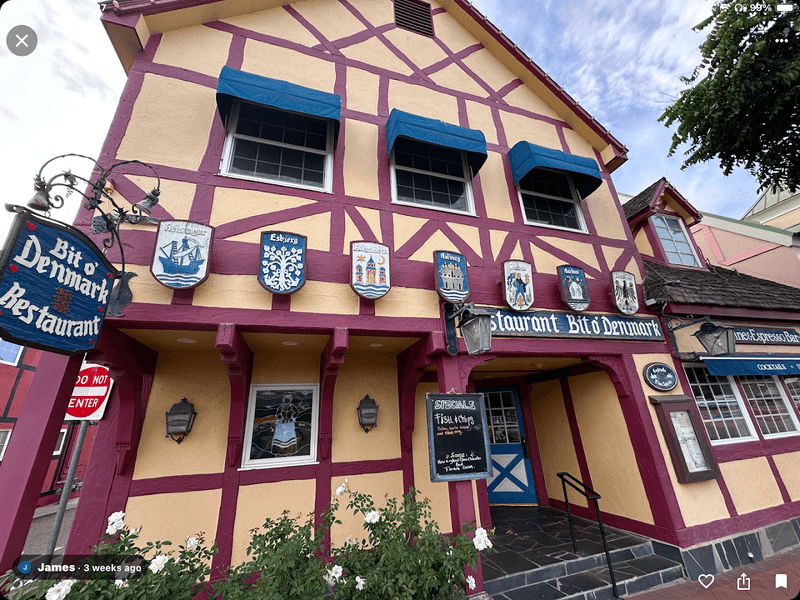
Strolling through Solvang feels less like walking through California and more like stepping off a plane in Copenhagen.
Founded in 1911 by Danish immigrants who wanted to preserve their culture, this small town in Santa Barbara County has held onto its roots with remarkable dedication.
Half-timbered buildings, wooden windmills, and cobblestone-style sidewalks line the main streets in a way that feels genuinely lived-in rather than staged for tourists.
The Hans Christian Andersen Museum sits quietly above a bookshop and offers a small but thoughtful look at the beloved Danish author’s life and legacy.
Bakeries throughout town sell traditional Danish pastries including aebleskiver, which are round pancake puffs typically served with jam and powdered sugar.
The smell of warm dough drifting out of open doorways tends to slow foot traffic considerably.
Visiting on a weekday tends to mean fewer crowds and a more relaxed pace through the shops and courtyards.
The town is walkable and compact, making it easy to cover most of the highlights in a half day.
2. Avalon On Catalina Island As Borrowed From The Amalfi Coast
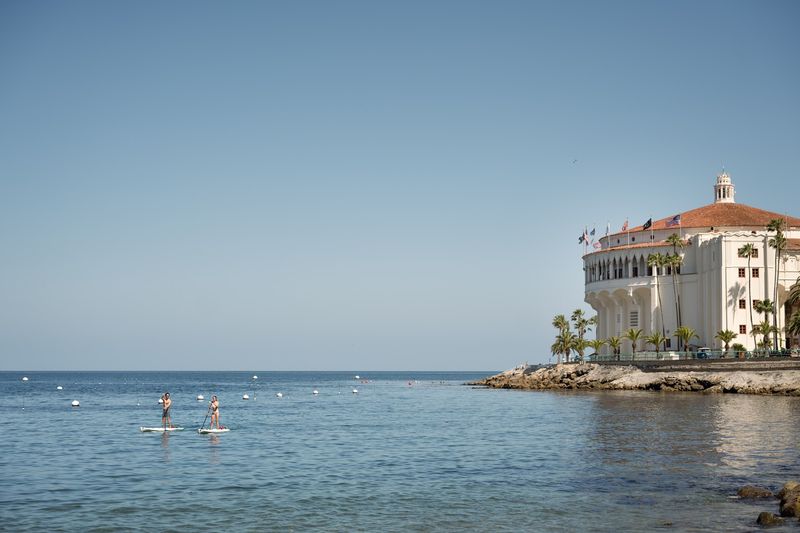
Arriving by ferry into Avalon harbor produces a moment of genuine disorientation, and that is entirely the point.
The hillside homes painted in warm Mediterranean tones, the glassy turquoise water, and the absence of cars all combine to create something that feels unmistakably borrowed from Italy’s Amalfi Coast.
Catalina Island sits about 22 miles off the coast of Los Angeles, yet it operates on a completely different emotional frequency than the mainland.
The town of Avalon is largely car-free, which means the streets are quiet, walkable, and refreshingly unhurried by California standards.
Golf carts serve as the primary mode of personal transportation, adding a quirky charm that reinforces how separate this place feels from the rest of the state.
Colorful bougainvillea drapes over whitewashed walls throughout the hillside neighborhoods.
Ferries run regularly from Long Beach, San Pedro, and Dana Point, making a day trip entirely feasible.
Planning ahead for accommodations during summer weekends is strongly recommended since availability can be limited.
3. Venice Canals In Los Angeles As A Slice Of Italy
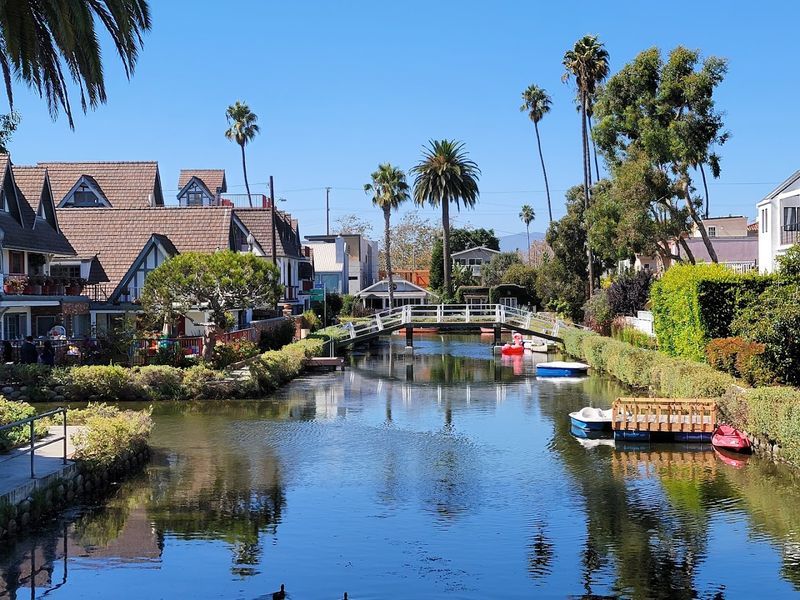
Just a short walk from the famous Venice Beach boardwalk sits one of Los Angeles’s most quietly surprising neighborhoods.
The Venice Canals were built in 1905 by developer Abbot Kinney, who genuinely wanted to recreate the feel of Venice, Italy, in Southern California.
Today about a mile of navigable waterways winds through a residential neighborhood where ducks paddle past flower-draped cottages and wooden footbridges connect one side of the canal to the other.
The atmosphere here is markedly different from the loud, performative energy of the nearby boardwalk.
Mornings along the canals tend to be especially calm, with soft light reflecting off the still water and neighbors walking dogs across the small arched bridges.
Some visitors find it more reminiscent of Amsterdam or the Netherlands than Venice, Italy, given the residential scale and the flat, tree-lined layout.
Parking in the surrounding neighborhood can be challenging, so arriving early or using public transit from elsewhere in Los Angeles is a practical approach.
The canal walkways are narrow and peaceful, best explored slowly on foot rather than treated as a quick photo stop.
4. Capitola Village As California’s Colorful Italian Seaside
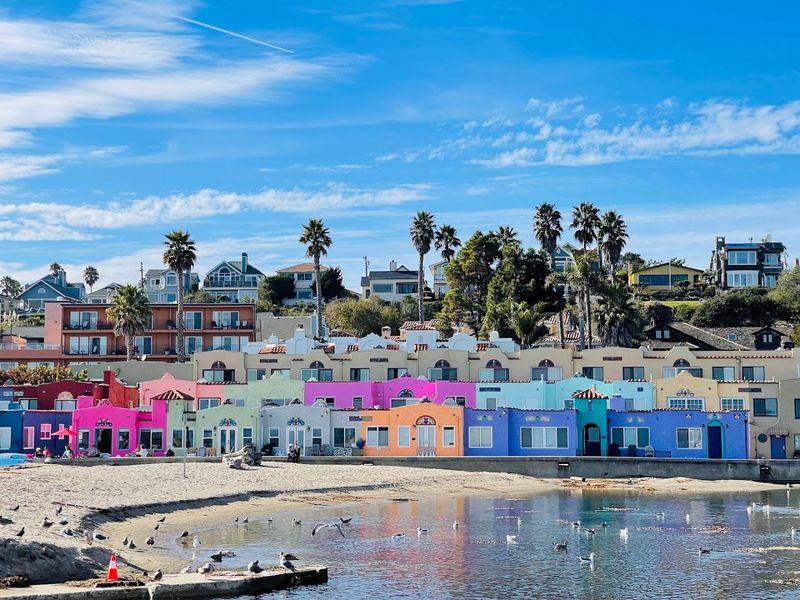
Capitola Village has a particular quality that makes people reach for their cameras before they even fully process where they are.
The rows of brightly painted beachfront cottages known as the Capitola Venetian Hotel sit right along the water’s edge, their candy-colored facades reflected in the wet sand at low tide.
The effect is so visually striking that the village regularly appears in travel photography comparing it to Cinque Terre or other colorful Italian coastal towns.
Located just south of Santa Cruz on Monterey Bay, Capitola is a small incorporated beach city with a genuinely walkable village center.
The esplanade runs along the beach and connects shops, cafes, and restaurants within easy strolling distance of each other.
The Soquel Creek empties into the bay right through the middle of the village, adding an extra layer of scenic texture to the layout.
Summer weekends draw significant crowds, so visiting on a weekday morning in spring or fall tends to offer a calmer and more photogenic experience.
The beach itself is sandy and relatively sheltered compared to more exposed Northern California beaches.
Parking fills up quickly near the waterfront, and using the public lots a few blocks inland is generally more reliable.
5. Carmel-by-the-Sea As An English Storybook Village
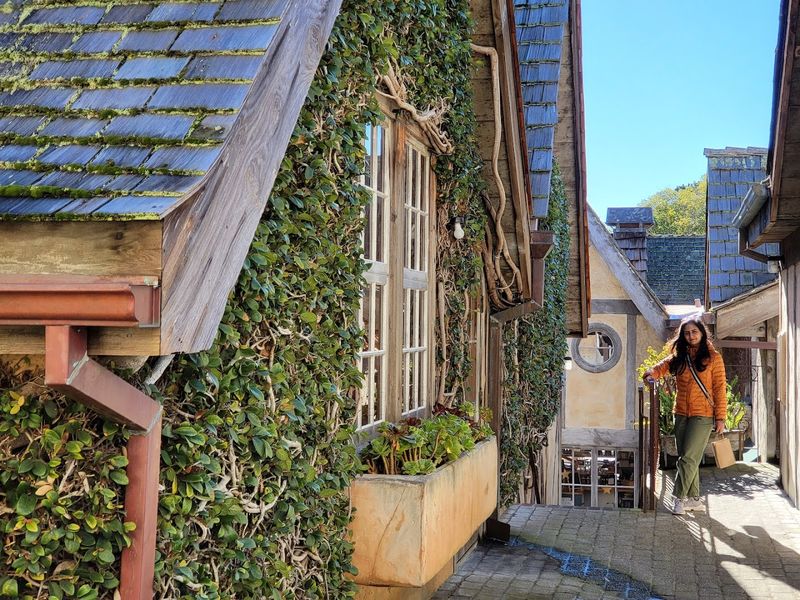
Few places in California produce the sensation of having walked into an illustrated children’s book quite like Carmel-by-the-Sea.
The residential streets here are lined with storybook cottages built in a deliberately whimsical Tudor and English country style, complete with rounded wooden doors and gardens overflowing with roses and lavender.
The town has no street addresses on homes, no traffic lights, and no chain restaurants, all of which contribute to its distinctly unhurried personality.
Carmel is often compared to villages in the Cotswolds or to Stratford-upon-Avon in England, and the resemblance is more than superficial.
The architecture was shaped in the early 20th century by artists and writers who wanted to build something that felt rooted in craft and beauty rather than utility.
Walking through the residential blocks feels like a genuinely different experience from the commercial downtown area.
The white sand beach at the foot of Ocean Avenue is striking and freely accessible, though the water is cold year-round.
Gallery-hopping along the main streets can fill an afternoon without any particular agenda.
6. Mendocino As New England On The Northern Coast
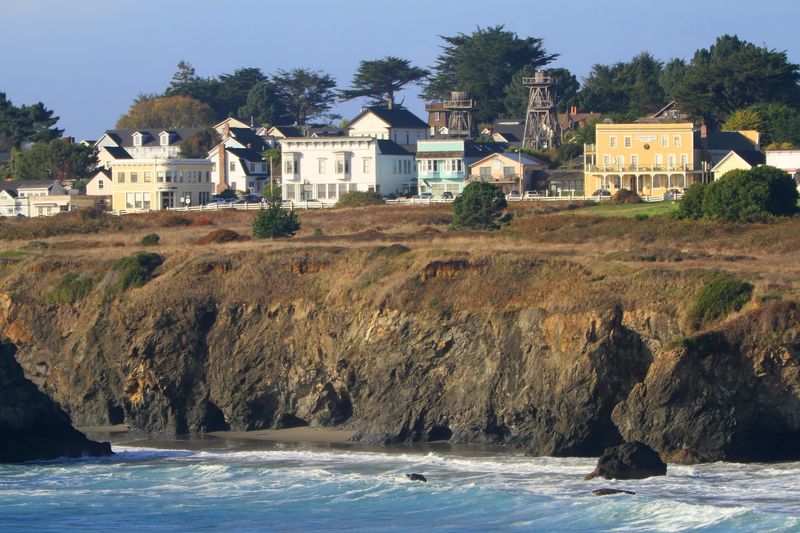
Perched on a dramatic headland above the Pacific, Mendocino has an atmosphere that consistently surprises people who expect something that looks more generically Californian.
The town is built almost entirely in a New England saltbox and Victorian style, with white clapboard buildings, picket fences, and a prominent water tower that has appeared in countless films.
The resemblance is not accidental, as the town was originally settled by New England loggers in the 1850s who built in the architectural style they knew.
The surrounding headlands are preserved as a state park, meaning the land immediately surrounding the town remains open and undeveloped.
Walking the headland trails puts the village into a striking visual context, with the white buildings rising above wild coastal grasses and the ocean crashing against the rocks below.
The combination of architecture and landscape creates something that feels genuinely transportive.
Mendocino sits about three hours north of San Francisco along Highway 1, and the coastal drive itself is part of the experience.
The town has a small but well-developed arts scene with galleries and studios that tend to stay open year-round. Fog is a frequent companion, especially in summer, and it only adds to the New England mood.
7. Mammoth Lakes As The Swiss Alps Of California
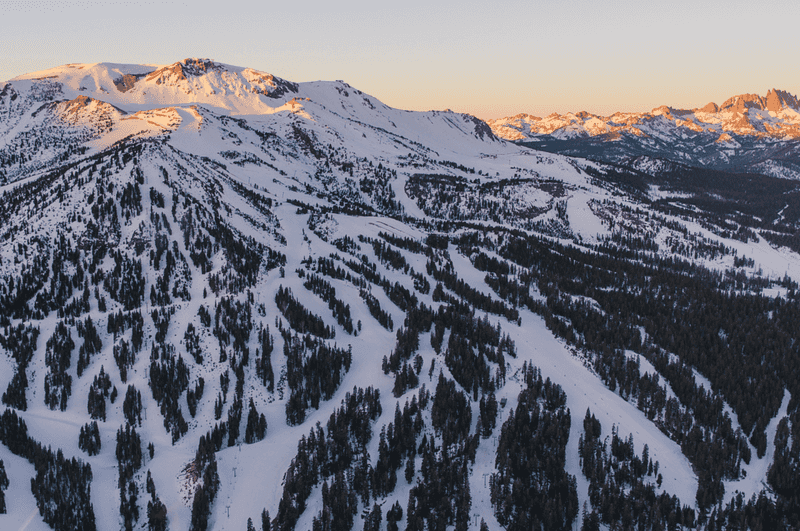
At an elevation of around 7,880 feet, the town of Mammoth Lakes sits inside a landscape that genuinely challenges the assumption that California is all sunshine and palm trees.
The jagged Sierra Nevada peaks that ring the area, combined with dense pine forests and long winters with heavy snowfall, produce scenery that draws frequent comparisons to Switzerland or the Austrian Alps.
The resemblance is especially strong in late spring when snow still caps the peaks but wildflowers are already blooming in the meadows below.
Mammoth Mountain Ski Area operates as one of the largest ski resorts in the United States, with a season that sometimes extends into July due to the area’s exceptional snowpack.
During summer, the same terrain transforms into a mountain biking and hiking destination with trails ranging from easy lakeside walks to strenuous summit approaches.
The Devils Postpile National Monument, accessible from Mammoth Lakes, adds another layer of geological drama to the area.
The town itself has a functional resort character with lodging, restaurants, and gear shops concentrated along a main commercial corridor.
Traffic and parking can become congested during peak ski weekends, and booking accommodations well in advance is strongly advised for holiday periods.
8. Mesquite Flat Sand Dunes As The Sahara Of Death Valley
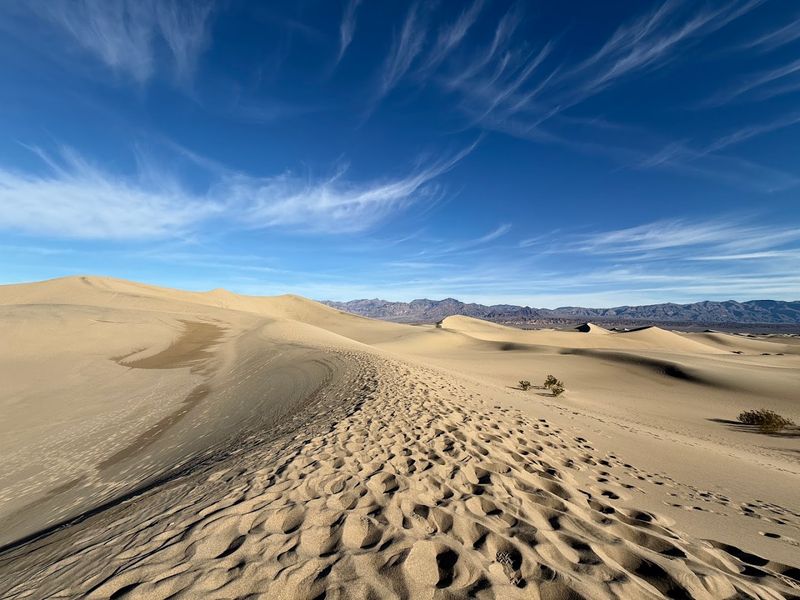
Soft, rippled, and stretching toward a horizon framed by barren mountains, the Mesquite Flat Sand Dunes are the most visually accessible dune field in Death Valley National Park.
Located near Stovepipe Wells, the dunes rise to about 100 feet at their tallest point and cover a surprisingly large area that rewards wandering without a fixed path.
The light in the early morning and late afternoon carves sharp shadows across the sand ridges, producing the kind of images that make people question whether they are still in the United States.
The Sahara comparison is instinctive and understandable, though the dunes here are modest in scale compared to North Africa’s famous sand seas.
What they lack in size they compensate for in accessibility and atmosphere, particularly at dawn when the dune field is cool, quiet, and often completely empty of other visitors.
Footprints from the previous day are usually erased overnight by wind, which means each morning presents a fresh, unmarked surface.
No trail is required to explore the dunes, and visitors are free to walk in any direction from the parking area.
Summer temperatures in Death Valley regularly exceed 120 degrees Fahrenheit, making fall through spring the only reasonable window for comfortable visits.
9. Balboa Park In San Diego As Spain In The Heart Of The City
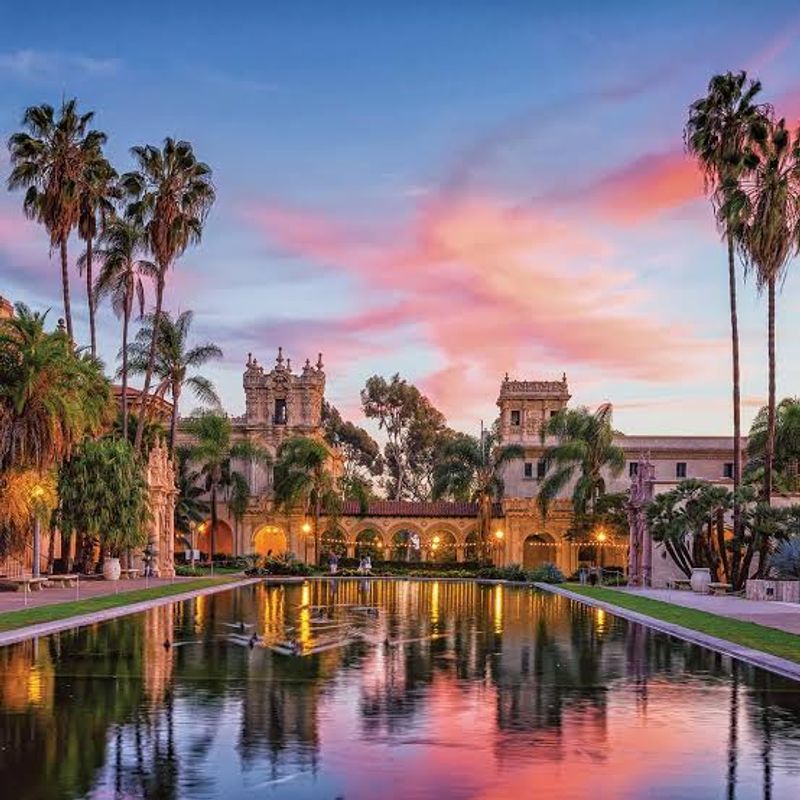
Walking through the central plaza of Balboa Park, it is easy to forget that a major American city surrounds the whole thing.
The park’s architectural character was shaped primarily by two world’s fairs held in 1915 and 1935, both of which used Spanish Colonial Revival and Spanish Renaissance styles to create a built environment.
Ornate towers, tiled fountains, arched colonnades, and terracotta-roofed pavilions line the main pedestrian promenade known as El Prado.
Balboa Park covers about 1,200 acres in the heart of San Diego and contains more than a dozen museums, multiple performing arts venues, and the San Diego Zoo.
The park is freely accessible and open year-round, though individual museums and attractions charge their own admission fees.
The combination of architecture, gardens, and cultural institutions gives the park an unusual density of things to do within a walkable area.
The Spanish Village Art Center within the park houses working studios where artists create and sell their work, adding a living creative dimension to the historic setting.
Weekends bring street performers, food vendors, and a generally festive atmosphere to the main promenades.
Parking is available in several large lots throughout the park, though spaces near the most popular entrances fill quickly on busy weekends.
10. Santa Barbara As California’s Spanish Riviera
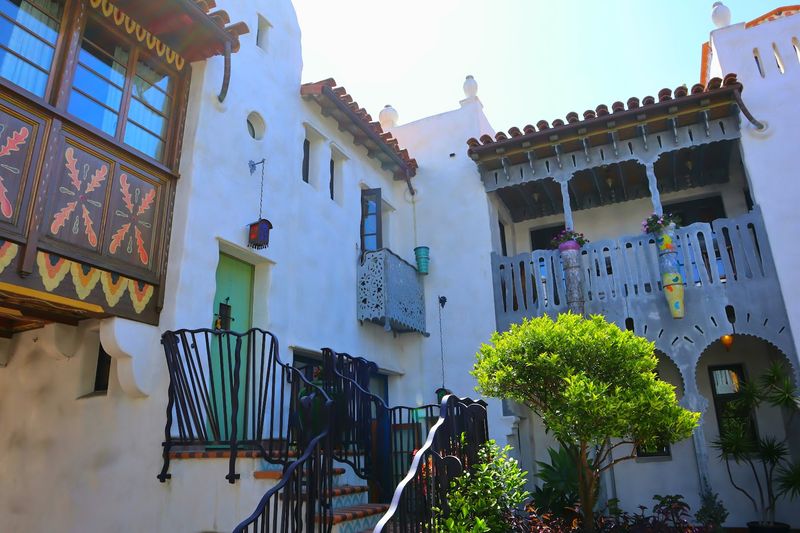
Red tile roofs, white stucco walls, and terracotta-colored archways give Santa Barbara a visual consistency that distinguishes it from nearly every other California city.
The Spanish Colonial Revival style that dominates the downtown area was not originally organic to the city but was deliberately adopted after a major earthquake in 1925 destroyed much of the downtown core.
City leaders used the rebuilding process to establish strict architectural guidelines that have been maintained for a century, producing a cohesion that genuinely evokes coastal Spain.
The Santa Barbara County Courthouse is the most spectacular single example of this aesthetic and is frequently cited as one of the most beautiful public buildings in California.
The courthouse features hand-painted ceilings, Moorish archways, a sunken garden, and a clock tower that offers panoramic views of the city and the Santa Ynez Mountains.
Visitors can tour the building freely during regular hours.
State Street runs through the heart of downtown and connects the courthouse district to the waterfront through a corridor of Spanish-style shops and restaurants.
The annual Old Spanish Days Fiesta celebration in August adds a cultural dimension to the architectural identity of the city.
Santa Barbara’s Mediterranean climate means the red tile and white stucco look particularly vivid under the area’s characteristic bright sunshine.
11. Big Sur As California’s Wild Mediterranean Coastline
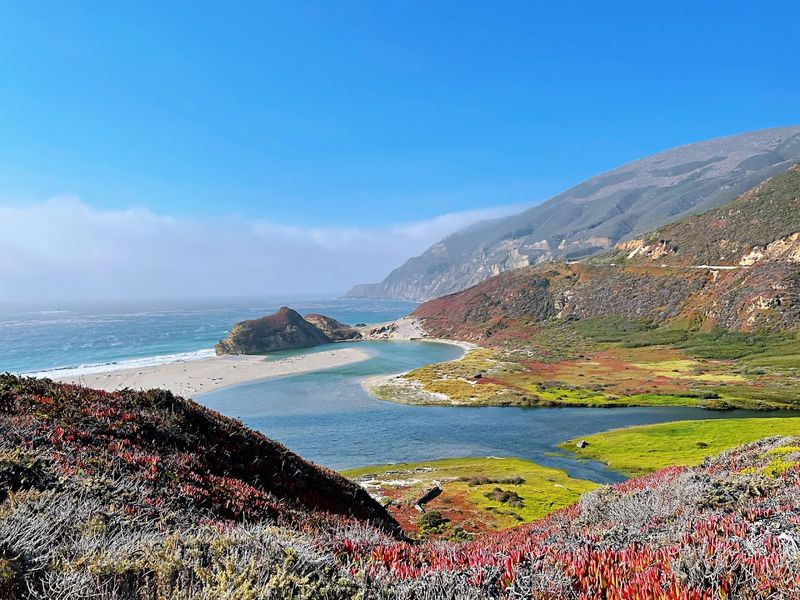
The stretch of California coastline known as Big Sur runs for roughly 90 miles between Carmel and San Simeon, and it produces a visual impact that is difficult to reconcile with any prior expectation.
The green mountains drop almost vertically into the Pacific, the water shifts between deep blue and startling turquoise depending on the light, and the scale of the whole thing feels more Mediterranean than American.
Comparisons to the Amalfi Coast or the coastal cliffs of Portugal come up frequently among visitors experiencing it for the first time.
Highway 1 serves as the primary access route and is itself one of the most celebrated driving roads in the world, threading between cliff faces and ocean overlooks with very little flat ground between them.
McWay Falls, a waterfall that drops directly onto a beach cove, is one of the most photographed spots in the entire state and is accessible from a short trail in Julia Pfeiffer Burns State Park.
The road is subject to periodic closures due to landslides, so checking current conditions before traveling is essential.
Cell service along most of Big Sur is minimal to nonexistent. Coastal fog is common year-round but tends to be thickest in summer mornings, often burning off by midday.
12. Shasta Cascade As Pacific Northwest Energy In Northern California
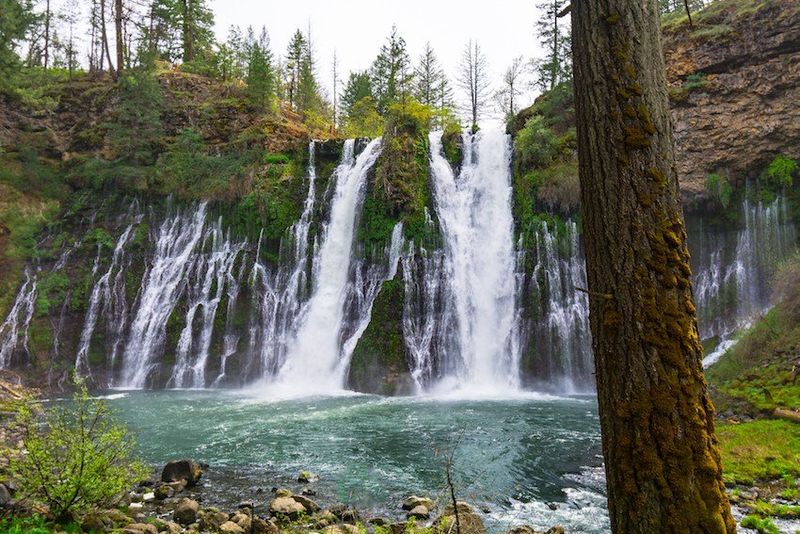
Northern California’s Shasta Cascade region operates on a completely different ecological and atmospheric register than the rest of the state.
Dense conifer forests, wild rivers, and a general sense of cool green abundance give the area a character that feels unmistakably Pacific Northwest, more akin to Oregon or Washington than to the California most people picture.
Mount Shasta, a massive stratovolcano rising to 14,179 feet, serves as the visual anchor of the entire region and is visible from extraordinary distances on clear days.
The region encompasses several distinct destinations including Shasta Lake, the McCloud River, Burney Falls, and the Lassen Volcanic National Park area to the south.
Burney Falls, located within McArthur-Burney Falls Memorial State Park, drops 129 feet into a pool fed by underground springs and is often compared to waterfalls in Croatia’s Plitvice Lakes National Park.
The falls maintain a consistent flow year-round due to the spring-fed source, which makes them reliable regardless of seasonal rainfall.
The town of Mount Shasta serves as a practical hub for exploring the region and has lodging, restaurants, and outdoor gear shops along its compact main street.
Winters in the Shasta Cascade area bring heavy snowfall at higher elevations, and some roads and trailheads may be inaccessible from late fall through early spring.
13. Lassen Volcanic National Park As Iceland In Northern California
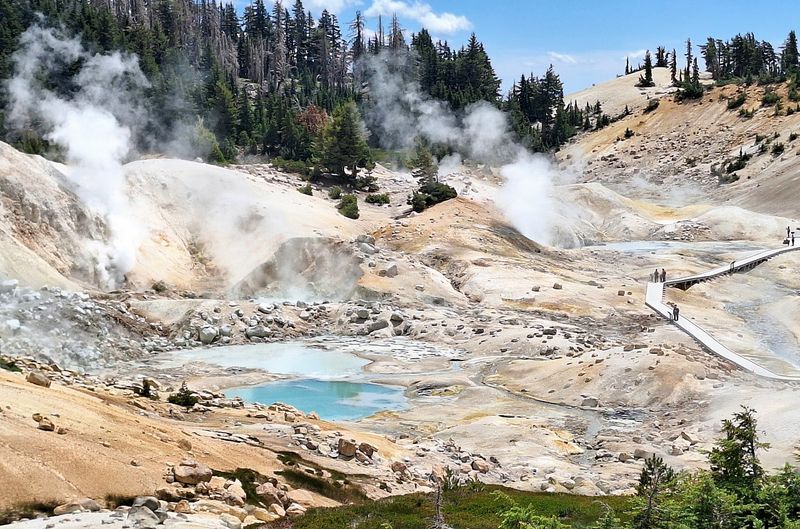
Hydrothermal vents hissing steam, boiling mud pots bubbling in slow rhythmic bursts, sulfur-stained ground in shades of yellow and orange, all of this exists within Lassen Volcanic National Park in Northern California.
The park’s hydrothermal features are among the most active and accessible in the United States outside of Yellowstone.
The visual and sensory experience of walking through the Bumpass Hell thermal area draws inevitable comparisons to Iceland’s geothermal zones.
Lassen Peak itself is a plug dome volcano that last erupted between 1914 and 1917, making it one of the most recently active volcanoes in the contiguous United States.
The park encompasses four types of volcanoes, plug dome, shield, cinder cone, and composite, making it a uniquely comprehensive destination for understanding volcanic landscapes in a single visit.
Cinder Cone, located in the park’s northeastern section, rises sharply from a flat plain and is surrounded by a field of black volcanic rock that looks freshly deposited.
The park is located in Shasta County and Plumas County and is typically accessed via Highway 89.
The main park road is closed by snow from roughly November through late May depending on the year, making summer and early fall the primary visiting season.
The Kohm Yah-mah-nee Visitor Center near the southwest entrance remains open year-round and provides maps, exhibits, and ranger programs.