14 California Small Towns With Quirky Shops And A Lot Of Personality
A small-town shopping street can reveal itself fast. One odd storefront catches your eye.
Then another. Soon the whole afternoon has a personality problem in the best way.
California has those little towns where browsing feels more like snooping through someone’s colorful imagination.
Boutiques get weird. Bookstores feel personal. Antique corners look like treasure maps with price tags.
Handmade signs promise something you probably were not planning to buy. Then you buy it anyway.
Quirky shops make a town feel alive in a way chain stores never can. Every doorway has a different mood and every window gives you a new excuse to stop.
1. Ojai
Nestled in a narrow valley about 35 miles east of Santa Barbara, Ojai carries a calm and creative energy that feels almost effortless.
The main drag, Ojai Avenue, is lined with galleries, bookshops, and small boutiques that sell everything from handmade ceramics to locally blended essential oils.
The famous pink moment, when the Topa Topa Mountains glow at sunset, has drawn artists to this town for over a century.
Shopping here tends to be unhurried and personal, with shop owners who are genuinely knowledgeable about what they sell.
Bart’s Books is one of the most beloved outdoor bookstores in the country and has been operating since 1964. Shelves spill out onto open-air patios, and the selection spans fiction, poetry, history, and local interest titles.
Beyond books, Ojai has a strong maker culture, meaning many items on shelves were created by people who live within a few miles of the store.
2. Solvang
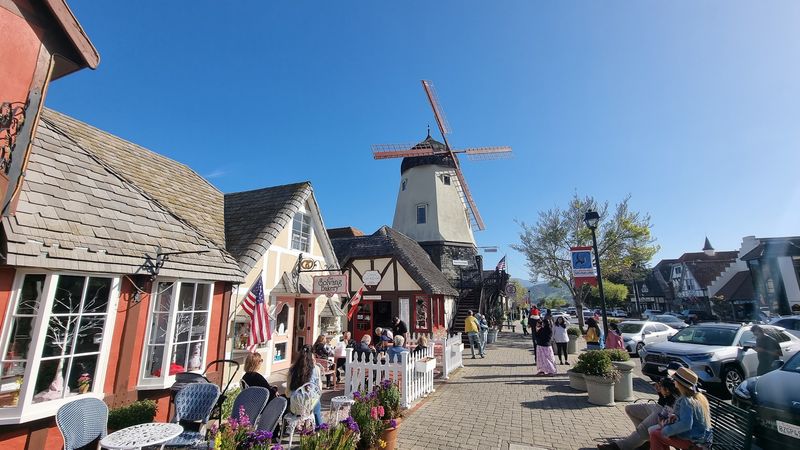
Few places in California feel quite as unexpected as Solvang, a Danish-style village in the Santa Ynez Valley that was founded in 1911 by Danish immigrants.
The architecture here is genuinely distinctive, with half-timbered buildings, working windmills, and flower boxes on nearly every windowsill. Walking through town feels a bit like flipping through a storybook, and the shops lean fully into that charm.
Specialty stores sell imported Scandinavian goods including hand-painted wooden items, Danish porcelain, and traditional clogs.
Bakeries are a major draw as well, with aebleskiver, a round Danish pancake, being the most iconic treat sold along the main streets.
The shops here are clustered closely together, making it easy to browse multiple stores in a short walk.
Solvang Village is located along Mission Drive and Copenhagen Drive, and parking is available in several lots near the town center.
The Hans Christian Andersen Museum, located above The Book Loft at 1680 Mission Dr, offers a small but charming exhibit about the famous Danish author.
3. Nevada City
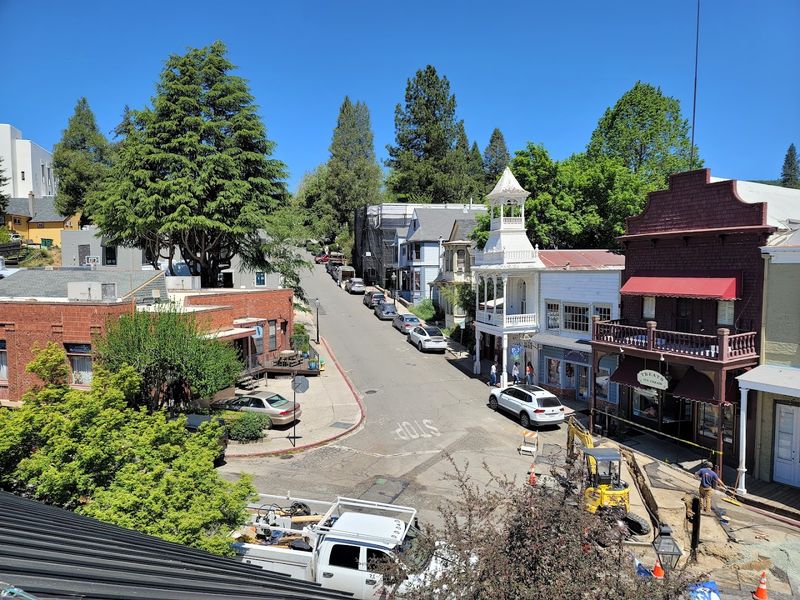
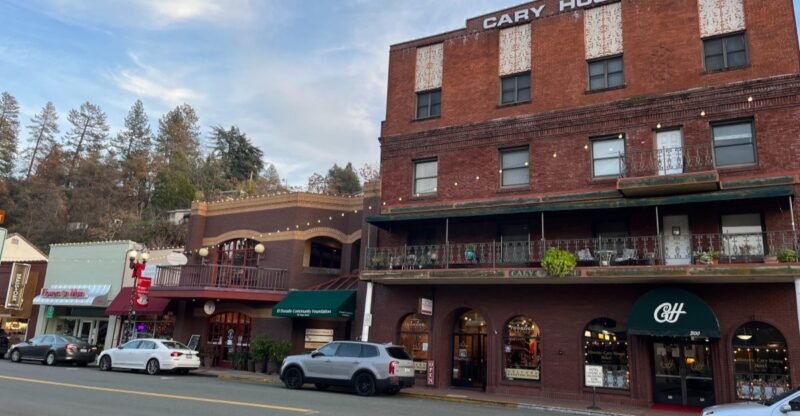
Perched in the Sierra Nevada foothills at about 2,500 feet elevation, Nevada City is the kind of Gold Rush-era town that managed to hold onto its character while other mining towns faded away.
The Victorian architecture is remarkably well preserved, and the downtown core is packed with independent shops, art studios, and performance spaces.
Broad Street, the main commercial street, has a lively but unhurried atmosphere that rewards slow exploration.
Antique stores and vintage clothing shops are a particular strength here, with inventory that changes regularly and prices that tend to be more reasonable than in coastal towns.
The town also has a strong arts scene, with galleries featuring local painters, sculptors, and printmakers who live and work in the surrounding foothills.
Many shops are operated by the artists themselves, so conversations tend to be genuine and informative.
Nevada City is also known for its independent bookstores and a culture of reading and intellectual curiosity that feels woven into the fabric of the community.
The town hosts seasonal events and festivals that bring extra energy to the streets throughout the year.
4. Cambria
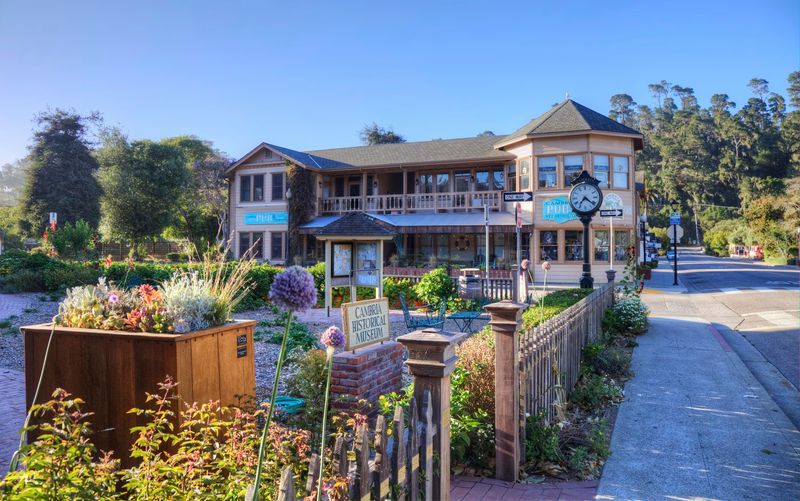
Sitting along the Central Coast between Big Sur and San Luis Obispo, Cambria is a small town that manages to feel both rugged and refined at the same time.
The town is divided into two distinct areas, the East Village and the West Village, each with its own personality and selection of shops.
Driftwood sculptures, handmade jewelry, and locally sourced art are common finds throughout both areas.
Moonstone Beach Drive runs along the coast and gives the town its most dramatic backdrop, with the Pacific Ocean visible from many of the shops and galleries that line the adjacent streets.
The West Village tends to have a more artisan and gallery-focused feel, while the East Village leans toward antiques, books, and specialty food items.
Browsers are generally welcomed without pressure, and many shop owners are happy to share the story behind a piece.
Cambria is also home to Nit Wit Ridge, a folk art site built over decades by one resident using collected materials, which gives a sense of the town’s appreciation for creativity in unconventional forms.
5. Mendocino
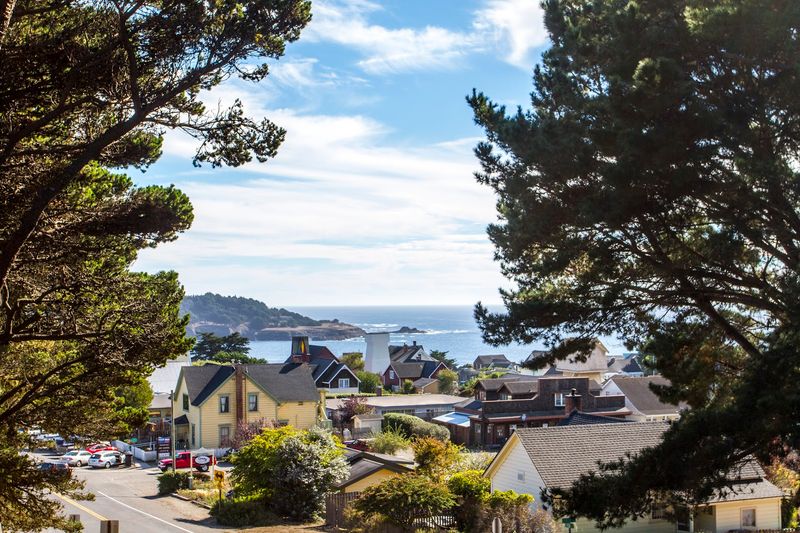
Perched on a dramatic headland above the Pacific, Mendocino has been a haven for artists and independent thinkers since the 1950s and 1960s when a creative community began to settle there.
The town looks almost like a New England fishing village that somehow ended up on the California coast, with white-painted Victorian buildings and a windswept, moody atmosphere.
That visual distinctiveness has made it a beloved filming location over the decades.
The shops here reflect the artistic community, with galleries selling original paintings and sculpture, studios offering handmade textiles, and small stores stocking locally made soaps, candles, and botanical products.
Gallery Bookshop is a well-regarded independent bookstore that has served the community for decades and carries a thoughtful selection of literary fiction, regional titles, and children’s books.
The Mendocino Headlands State Park wraps around the town and offers free access to coastal trails that provide stunning views of sea stacks and coves.
Shopping and walking complement each other naturally here, since the town is small enough to cover on foot in an afternoon.
6. Carmel-by-the-Sea
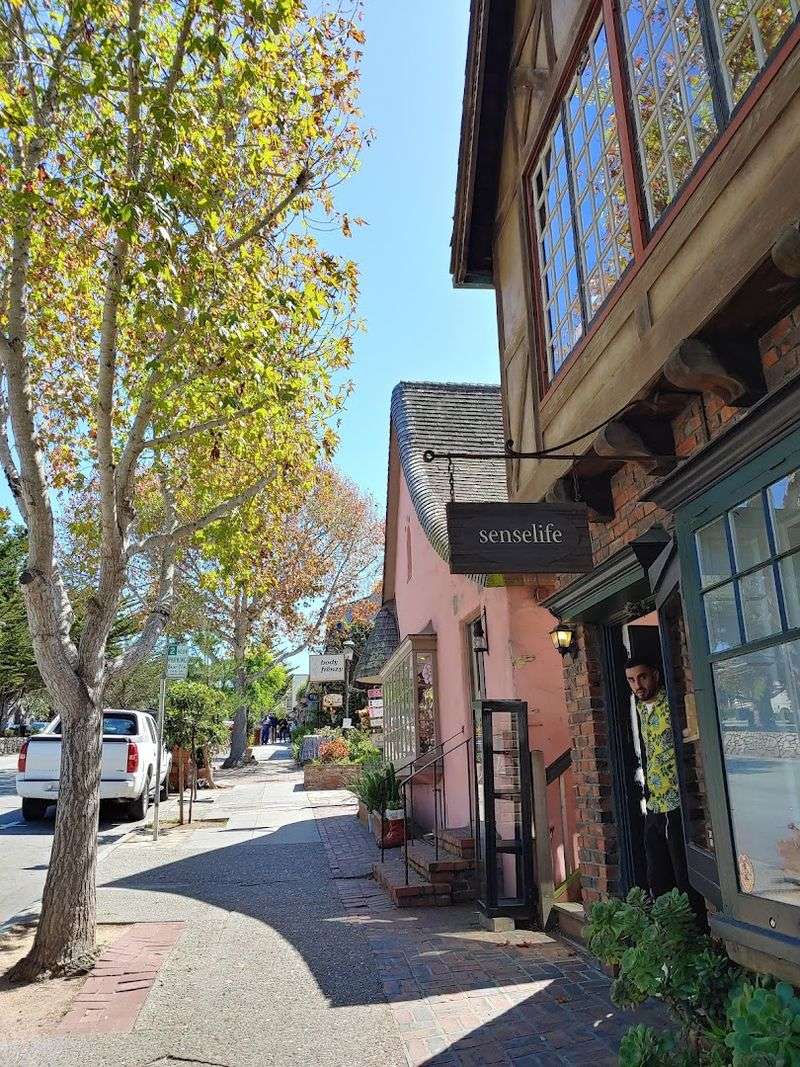
Carmel-by-the-Sea has a reputation for being precious, and while that is partly deserved, it undersells how genuinely interesting the town is for curious shoppers and art lovers.
The village has no street addresses by design, which gives it an almost dreamlike quality where navigation relies on landmarks and descriptions rather than numbers.
Galleries are everywhere, ranging from fine art to photography to sculpture, and the quality tends to be high.
Ocean Avenue, the main street leading to the beach, is lined with boutiques selling clothing, home goods, jewelry, and specialty foods.
Side streets reveal quieter discoveries, including studios where working artists can sometimes be seen through open windows or doors.
The architecture leans toward fairy-tale cottage style, with rounded doors, stone walls, and mossy rooftops that make even a stroll between shops feel like an experience.
Carmel is also home to the Carmel Art Association which is one of the oldest artist cooperatives in California and regularly showcases work by local painters and sculptors.
7. Ferndale
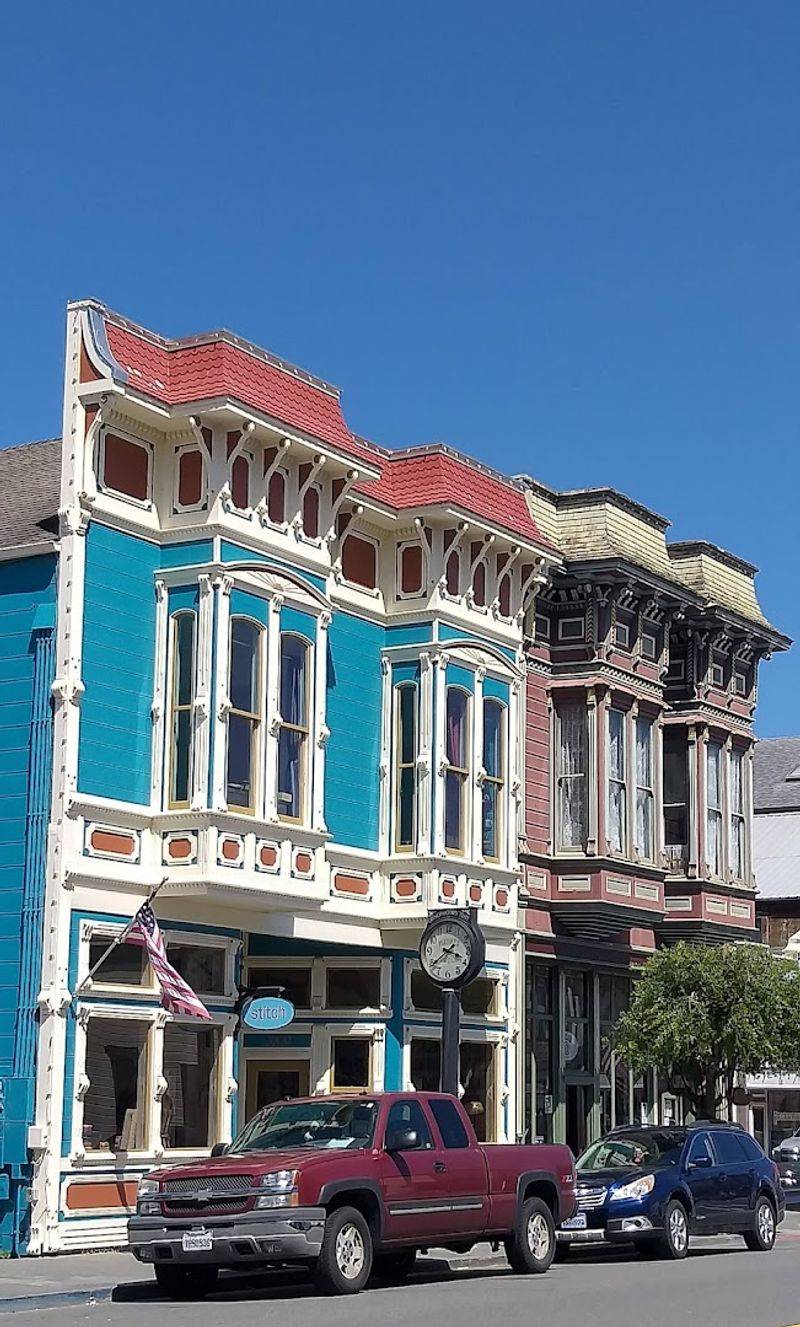
Ferndale sits in the Eel River valley in Humboldt County, and its Main Street looks so perfectly preserved that it has been designated a California Historical Landmark.
The Victorian storefronts here are not reproductions but actual original structures that have been carefully maintained over generations.
Walking down the main block feels like stepping into a different era, especially on a quiet weekday morning when the light is soft and the street is nearly empty.
The shops in Ferndale tend toward the eclectic and handmade, with galleries, gift shops, and studios mixed in among the practical businesses that serve the local farming community.
The Golden Gait Mercantile is a beloved general store that sells old-fashioned candy, novelties, and gifts in a setting that feels authentically vintage rather than artificially themed.
Ferndale is also home to the Kinetic Grand Championship, an annual event where human-powered sculptures race through the town and surrounding terrain, which says a lot about the community’s sense of humor and creativity.
8. Julian
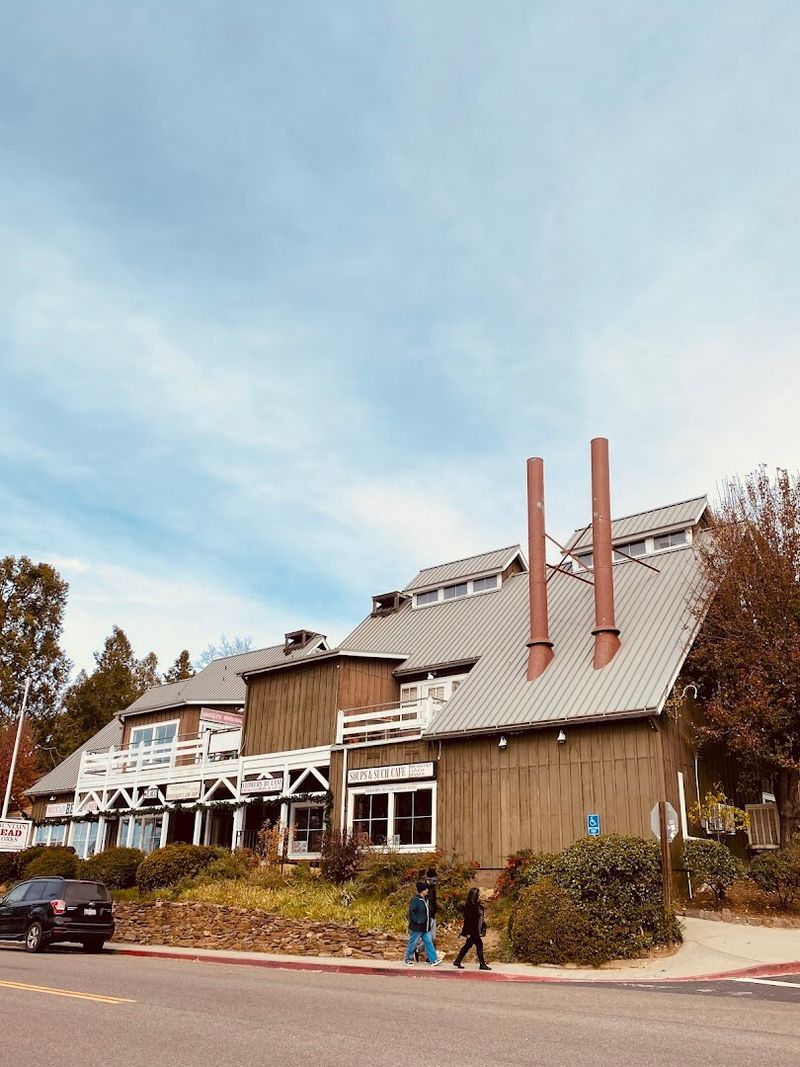
Up in the Cuyamaca Mountains about an hour east of San Diego, Julian is a small Gold Rush town that reinvented itself around apple orchards and became one of Southern California’s most popular day trips.
The elevation sits around 4,200 feet, which means the air is noticeably cooler and crisper than at the coast, and the oak and pine trees give the landscape a completely different feel from the beaches below.
The shops along Main Street lean rustic and nostalgic, with gifts made from local apples, handmade quilts, vintage jewelry, and old-fashioned candy stores that are hard to walk past without stopping.
Several stores specialize in local honey, jams, and dried herbs sourced from the surrounding mountain farms.
The merchandise tends to feel genuinely regional rather than generic, which makes browsing feel more worthwhile.
Julian is also historically significant as one of the few California Gold Rush towns with a substantial African American community history, and the Julian Pioneer Museum covers that history along with broader local stories.
9. Idyllwild
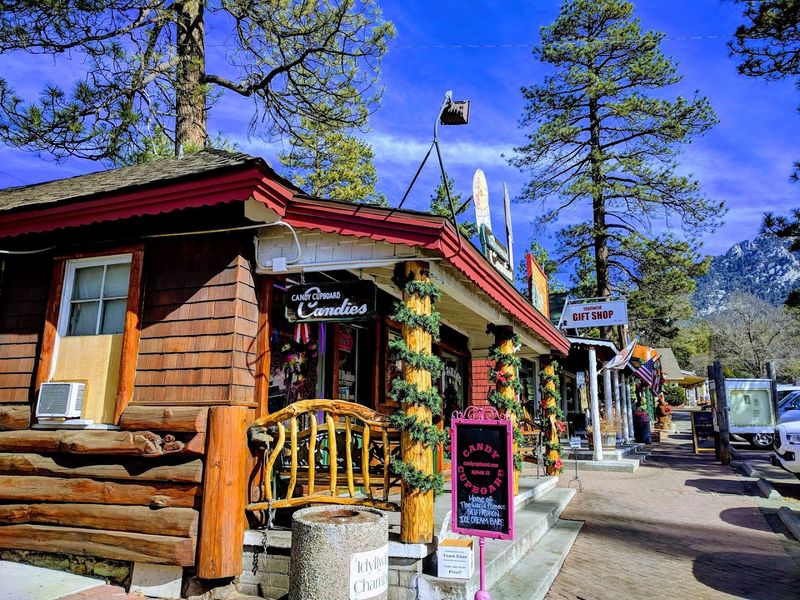
Tucked into the San Jacinto Mountains at around 5,400 feet elevation, Idyllwild has the feel of a mountain retreat that also happens to have a surprisingly rich arts community.
The town was incorporated without a mayor for many years, and for a while the community playfully elected a cat named Mayor Max to the honorary position, which tells you something about the local sense of humor.
That same playfulness shows up in the shops, galleries, and studios scattered through the pine-shaded streets.
Art galleries here range from photography and watercolor to ceramic sculpture and wood carving, with many pieces reflecting the surrounding mountain landscape.
Specialty shops sell handmade leather goods, locally crafted candles, and nature-themed gifts that feel connected to the environment rather than imported from a warehouse.
The Idyllwild Arts Academy and Summer Program has long contributed to the creative energy of the town, drawing talented artists and musicians from across the country.
Village Center Drive and North Circle Drive are the main areas for shopping, and both are easy to walk between in an afternoon.
10. Los Alamos
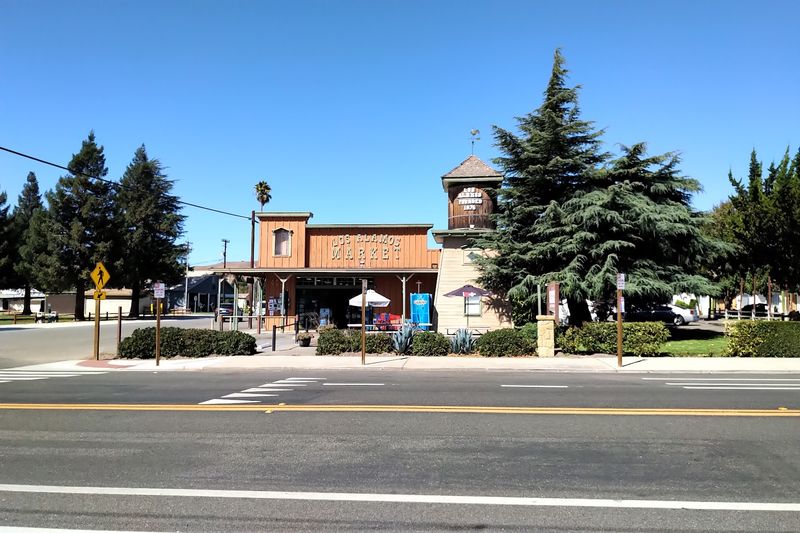
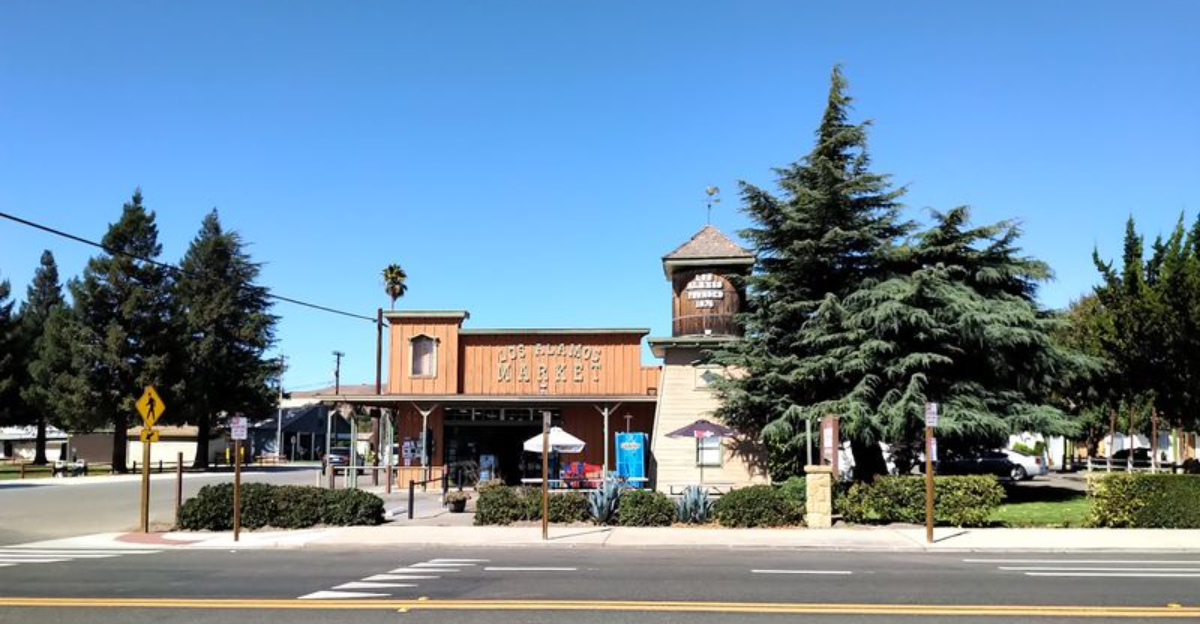
Bell Street in Los Alamos is only about two blocks long but it punches well above its weight in terms of character and discovery potential.
Located in the Santa Ynez Valley wine country of Santa Barbara County, this small town was once a stagecoach stop and still has the weathered bones of that era visible in its storefronts and building facades.
Antique stores are the backbone of Bell Street, with several shops carrying serious collections of mid-century furniture, vintage signage, industrial salvage, and one-of-a-kind decorative objects.
The inventory changes frequently because dealers rotate their stock, which means repeat visits often turn up something new.
Beyond antiques, there are also small galleries and a handful of specialty food and gift shops that reflect the agricultural richness of the surrounding valley.
Los Alamos is about 50 miles north of Santa Barbara and is easy to include as a stop on a longer Central Coast road trip.
Parking along Bell Street is free and usually plentiful except during special events.
11. San Juan Bautista
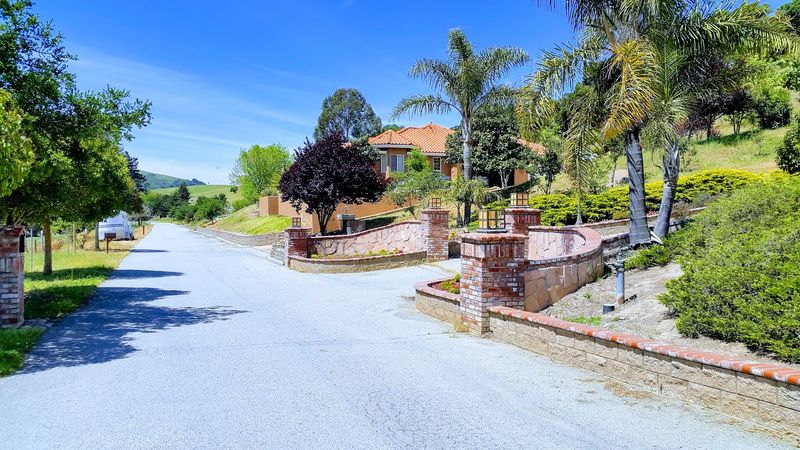
One of those California towns that manages to feel genuinely historic without being over-restored or turned into a theme park version of itself.
The town sits near the San Andreas Fault and is home to Mission San Juan Bautista, the largest of the original California missions, which has been in continuous operation since 1797.
Third Street is the main commercial area, with a handful of antique shops, gift stores, and small galleries that reflect both the Spanish colonial heritage and the broader agricultural character of the region.
The San Juan Bautista State Historic Park, located at 19 Franklin St, preserves several original 19th-century buildings including a hotel, a stable, and a plaza that together paint a vivid picture of early California life.
The town is small enough to walk completely in under an hour, but the layers of history reward a slower pace.
Shops here tend to carry items related to local history, Mexican folk art, and regional crafts alongside more general antiques and gifts.
12. Murphys
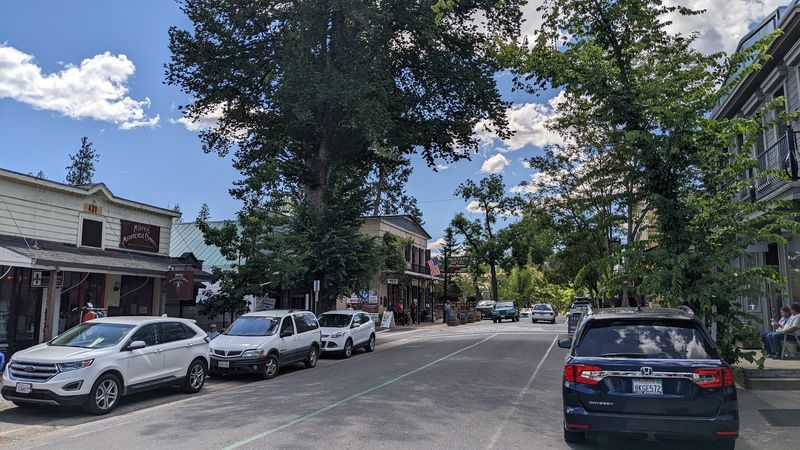
Main Street in Murphys is only a few blocks long but it is remarkably dense with interesting stops, from boutique clothing stores and handmade jewelry shops to galleries and specialty food purveyors.
Located in the Sierra Nevada foothills of Calaveras County at about 2,170 feet elevation, the town has a mild climate that makes outdoor browsing comfortable for much of the year.
The tree-lined street and historic stone and brick buildings give Murphys a Gold Rush character that feels lived-in rather than staged.
The town has a strong community identity, with many shop owners being long-term residents who have deep ties to the area.
Specialty stores here carry items like locally harvested honey, handmade candles, artisan soaps, and regionally themed gifts that reflect the Gold Country setting.
The Murphys Hotel has been operating since 1856 and is one of the most historically significant buildings on the street, having hosted notable figures during the Gold Rush era.
Murphys is also a gateway to Calaveras Big Trees State Park, which protects some of the largest living trees on Earth.
13. Sebastopol
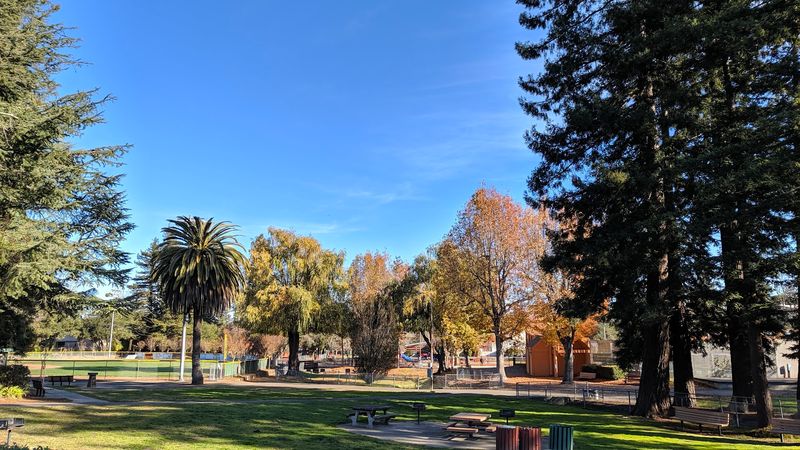
Sebastopol has a reputation as one of the more free-spirited towns in Sonoma County, and that reputation shows up clearly in the character of its shops and public spaces.
The town center has a relaxed, slightly offbeat energy with murals painted on building walls and shops that seem to follow their own logic rather than any retail formula.
Gravenstein apple orchards surround the town and have been a part of the local identity for over a century.
The Barlow, a curated outdoor market district brings together local makers, food producers, and artisan shops in a converted cannery complex that feels both industrial and welcoming.
Shops there include everything from handmade clothing and ceramics to locally roasted coffee and specialty provisions.
The layout encourages wandering, and the open-air design makes the space feel connected to the surrounding landscape.
Beyond The Barlow, the wider Sebastopol area has antique stores, used bookshops, and independent galleries scattered along Gravenstein Highway and the surrounding streets.
14. Pescadero
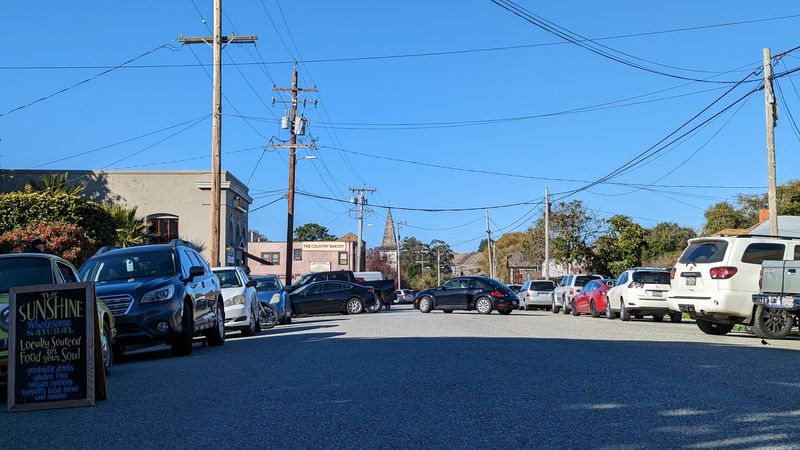
Located along the San Mateo County coast about 50 miles south of San Francisco, the town sits in a quiet valley where artichoke and Brussels sprout fields stretch toward the ocean.
The pace here is genuinely slow, and the handful of shops and businesses along Stage Road have a refreshingly unpolished quality.
Arcangeli Grocery Co. is a beloved local institution known for its fresh-baked artichoke garlic bread and a small but well-chosen selection of local provisions and pantry staples.
The shop has been a fixture in Pescadero for generations and draws visitors who make the trip specifically for the bread, often still warm from the oven.
A few doors down, small gift shops and studios offer handmade goods and locally themed items that reflect the agricultural and coastal character of the area.
Pescadero State Beach and the nearby Pigeon Point Lighthouse are natural draws that complement a stop in town, making it easy to build a half-day or full-day excursion around the area.