California’s Massive Wildlife Crossing Is Almost Complete And It Could Change How Animals Cross One Of America’s Busiest Freeways
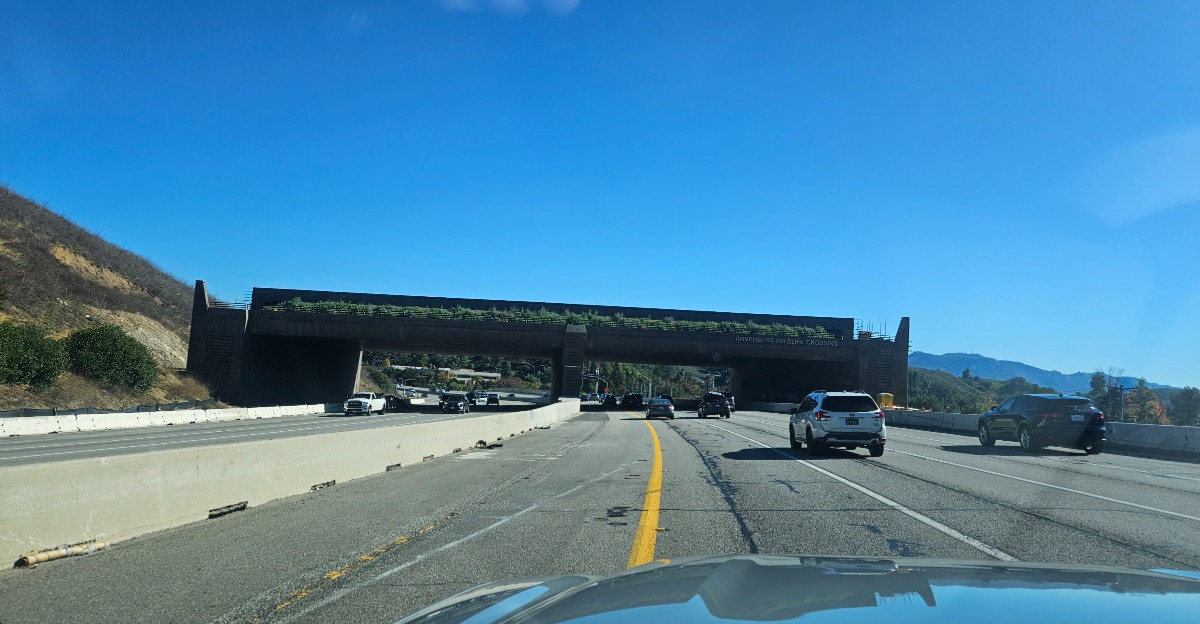
A coyote reportedly strolled across an unfinished bridge over a ten-lane freeway this fall. Nobody had officially opened it yet. The coyote clearly did not care about ribbon cuttings.
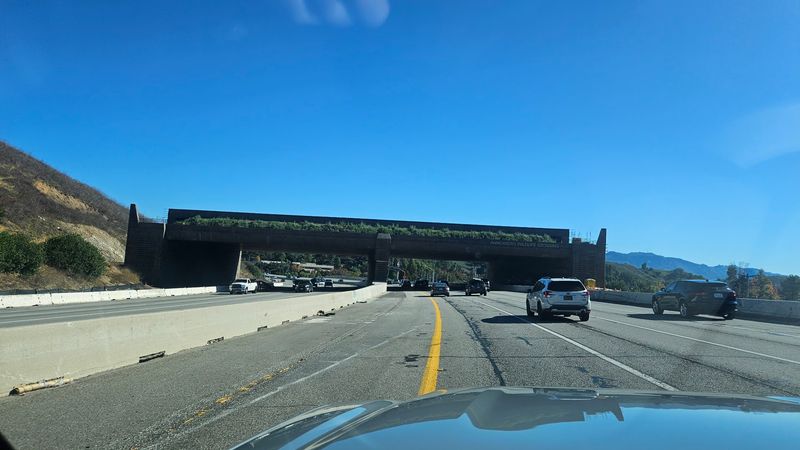
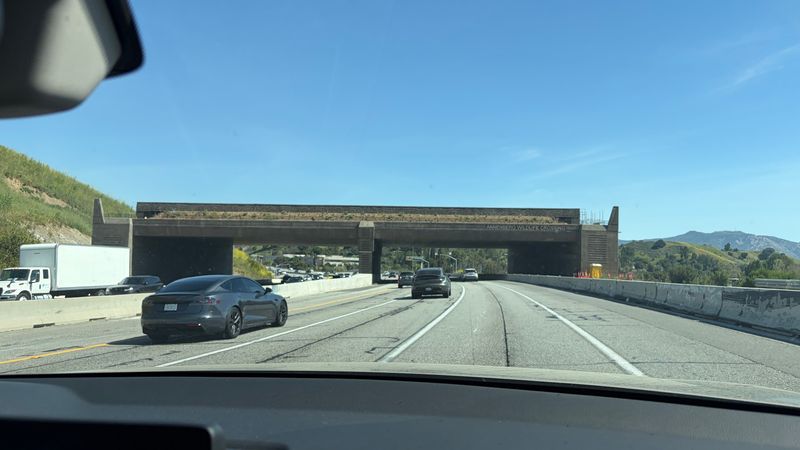
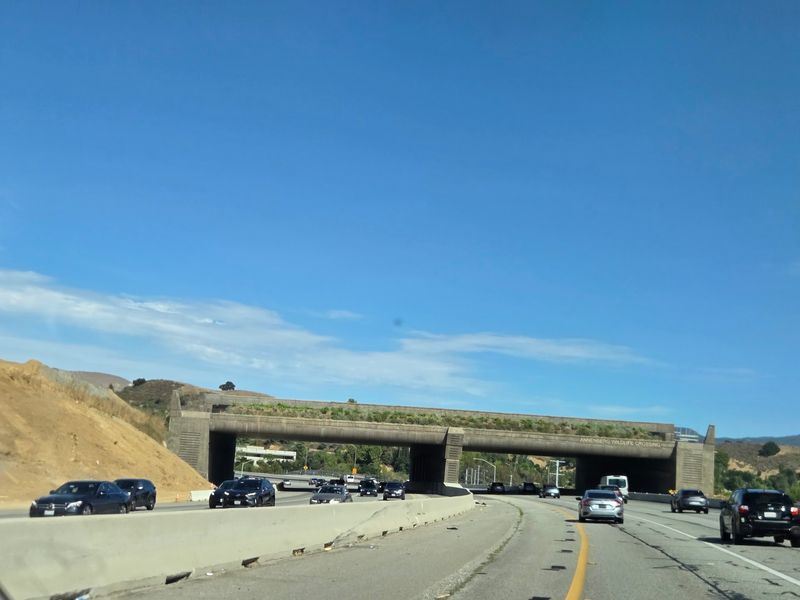
That bridge is no ordinary overpass. It carries soil, native plants, and a future hillside instead of cars. More than 300,000 vehicles roar underneath it every day.
I love that California decided to build a road for animals over a road built for us. It’s bold, a little wild, and honestly overdue.
The official opening is set for early December 2026. Workers are still finishing plants, soil, and fencing.
So what happens when a bobcat, a deer, or a lonely mountain lion finally gets a safe way across?
A Coyote Couldn’t Wait For The Grand Opening
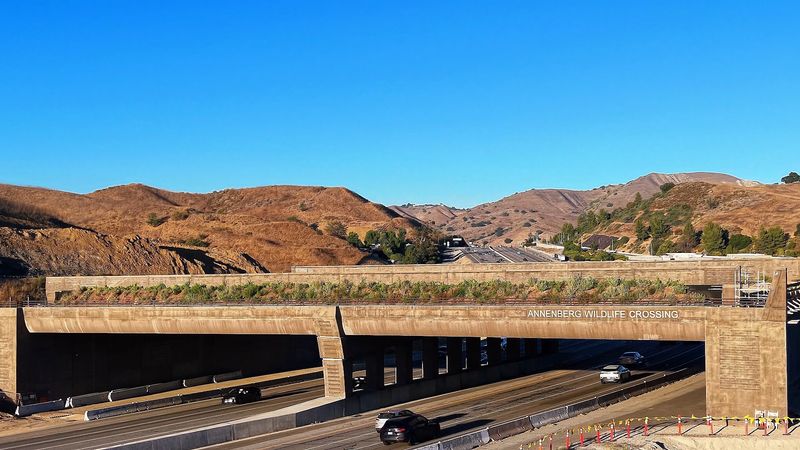
Some guests just show up early. In late October 2026, a coyote was photographed using the Wallis Annenberg Wildlife Crossing before it was even finished.
That trip is believed to be the first full crossing by an animal. Think about that for a second. The bridge wasn’t done, the plants were still settling, and a coyote already figured it out.
The crossing is scheduled to officially open to wildlife on December 2, 2026. Crews have been wrapping up the final stage, which covers the span over Agoura Road.
Habitat restoration and utility work are part of that last push too.
Animals exploring the site early actually changed how the project runs. Live construction webcams were shut off to protect the wildlife already poking around. That’s a pretty good problem to have.
Soon, a much bigger camera system will take over. Plans include 50 cameras and four thermal video cameras watching the crossing. A photo stream from those cameras will be shared with the public.
So you might get a front-row seat from your couch. A bobcat sighting at breakfast sounds like a solid way to start the day, honestly.
The Size Of This Thing Is Kind Of Ridiculous
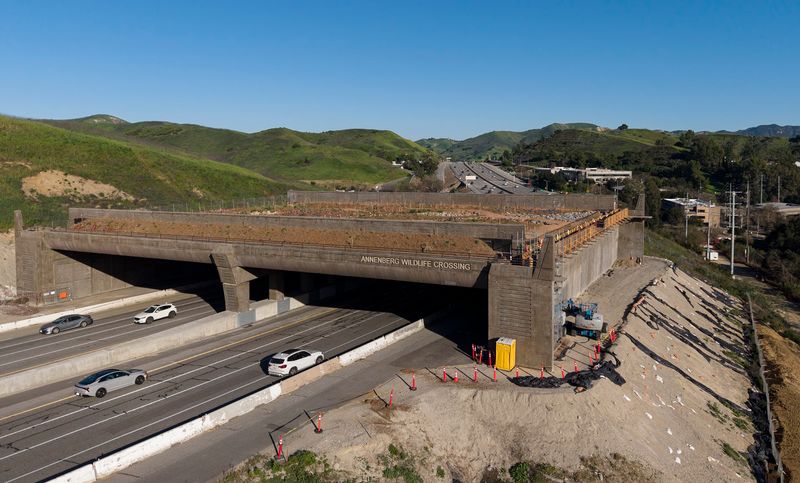
Big is an understatement here. The Wallis Annenberg Wildlife Crossing is recognized as the largest wildlife crossing of its kind in the world.
The part over the freeway stretches roughly 210 to 250 feet long. It’s about 174 feet wide, which is wider than plenty of highways.
Counting the span over Agoura Road too, the full structure has been described as reaching 1,250 feet across the roadways.
Holding it all up are 82 individual precast concrete bridge girders. Those massive beams went in piece by piece above live traffic.
The freeway section wrapped up in June 2025, which was a huge milestone. Why so wide? Animals are picky about tight spaces.
A narrow bridge can feel like a trap to a nervous deer or a cautious mountain lion. A broad, open path feels more like regular ground.
Here’s a fun way to picture it. If this bridge carried cars, it could handle several lanes of traffic. Instead, it will carry lizards, foxes, and maybe a black bear someday.
That’s a lot of engineering muscle for travelers who don’t even carry wallets.
Mountain Lions Have Been Isolated By Freeways And Development
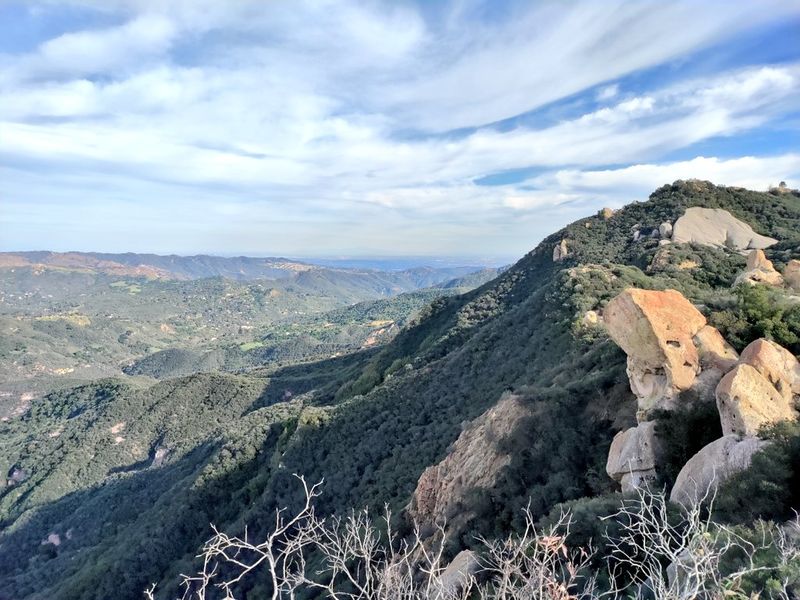
Mountain lions in the Santa Monica Mountains have a serious family problem. Freeways and development boxed them in, so they’ve had very few options for finding new mates.
In 2020, biologists spotted the first evidence of inbreeding in this isolated population. That’s a scary sign. Without fresh genes, the group faces a real risk of vanishing for good.
The 101 Freeway is the big wall in this story. Since 2002, at least a dozen mountain lions and one black bear have been hit and lost on this stretch.
More than 300,000 vehicles pass through every single day.
The location was picked carefully. It connects the Santa Monica Mountains to the south with the Simi Hills and Santa Susana Mountains to the north.
Once open, a young lion could head north and meet new neighbors.
I can’t imagine trying to find a date when your only route crosses ten lanes of traffic. That’s basically what these cats have faced for decades.
The crossing won’t fix everything overnight. Still, it gives California’s local lions something they haven’t had in a long time: real options.
A Famous Cat Named P-22 Helped Make It Happen
Every great project needs a mascot. This one got a mountain lion with a Hollywood address.
P-22 became famous for crossing major freeways to reach Griffith Park in the middle of Los Angeles. His journey showed how dangerous city roads are for big cats.
People across the country followed his story. His fame gave the crossing a face. Suddenly, a wildlife bridge wasn’t just a technical idea.
It was about animals like him, trying to survive between highways and homes.
The idea itself is older than P-22’s celebrity. A 1990 study by the Santa Monica Mountains Conservancy flagged Liberty Canyon as a vital choke point for wildlife.
Then the project sat waiting for years because funding fell short.
Things finally moved in May 2021. The Annenberg Foundation offered a $25 million challenge grant, which helped pull in more money. That’s why the bridge carries Wallis Annenberg’s name today.
Construction kicked off on Earth Day, April 22, 2022. Fitting date, right? Record rain and flooding in 2022 and 2023 slowed things down, but the work kept rolling.
The Plants On Top Have Hometown Roots
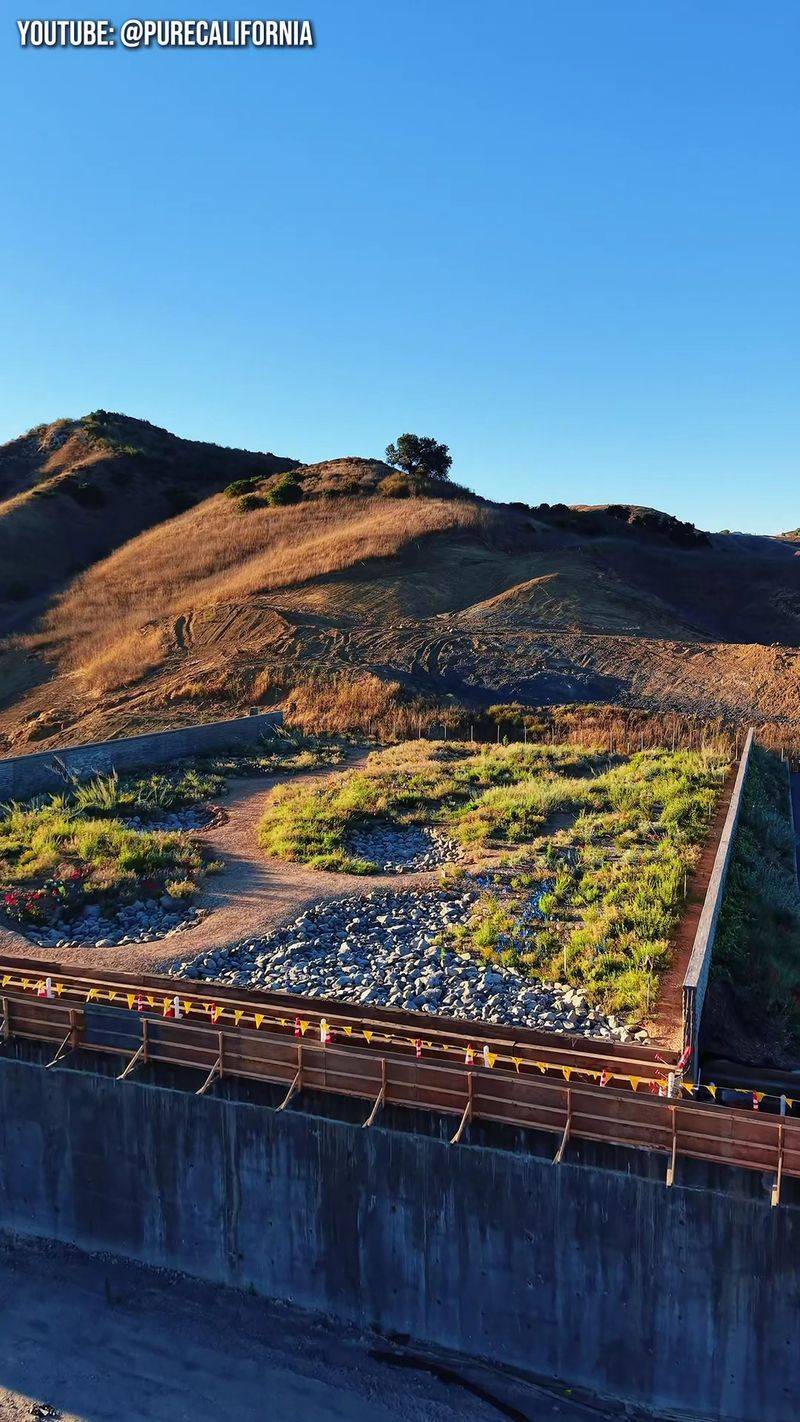
Dirt matters more than you’d think. The top of the Wallis Annenberg Wildlife Crossing holds nearly one acre of native plants and soil.
Planners didn’t just buy random shrubs from a garden center. The native plants are grown from seeds collected within five miles of the site. That keeps the local plant genetics intact.
Even the soil gets special care. Designers worked in local soil biology, meaning the tiny living things underground match the nearby hills.
Animals should feel like they’re walking on familiar ground, not a fake stage set.
The goal is for the bridge to blend right into the surrounding hillsides. From an animal’s view, it should look like the slope just keeps going. No signs, no pavement, no weird surprises.
Beyond the bridge, about 12 to 13 acres of surrounding habitat are being restored too. That bigger area helps guide wildlife toward the crossing naturally.
I like how much thought went into the small stuff here. A coyote doesn’t care about concrete girders.
It cares whether the place smells and feels like home.
Quiet, Dark, And Built For Nervous Travelers
Ever tried to sleep next to a freeway? Animals don’t love it either.
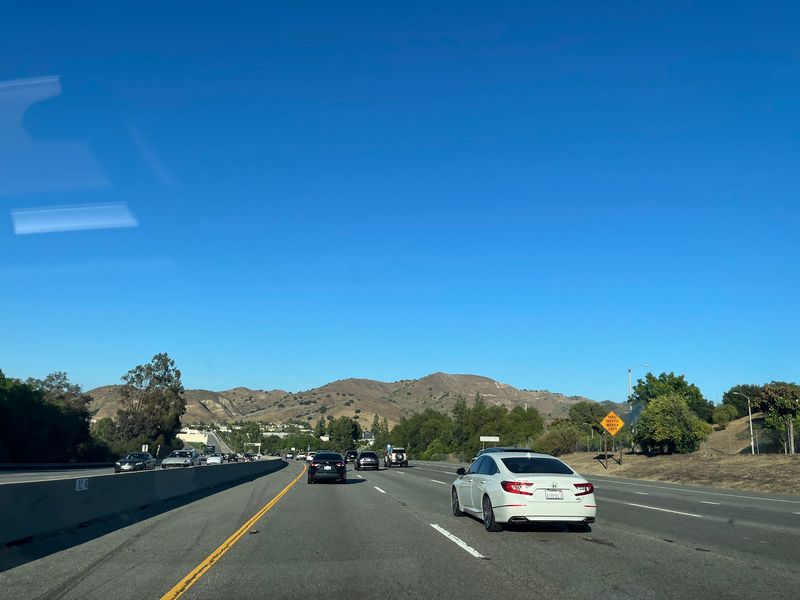
Traffic noise and bright headlights can scare wildlife away from a crossing. So the design includes vegetated barriers that help cut down sound and light.
The goal is a dark, quiet path for animals moving through.
That matters a lot because many of these creatures travel at night. Bobcats, foxes, and mountain lions often move after sunset.
A wall of glowing headlights would send them running the other way.
Fencing plays a big role too. Exclusionary fencing along the freeway steers animals toward the bridge instead of the road. Think of it as polite guidance with no shouting involved.
Without that fence, a deer might still wander onto the 101. With it, the safest route becomes the easiest route. Smart design is often about making good choices feel natural.
Is it perfect silence up there? Probably not, since the freeway runs right below. Still, every bit of shielding gives a jumpy animal one more reason to keep walking forward.
Way More Than Just Mountain Lions Will Use It
Mountain lions get the headlines. But plenty of smaller critters are waiting in line too.
The crossing is expected to help bobcats, coyotes, gray foxes, and mule deer. Skunks, rodents, and American badgers are on the list. So are American black bears and birds of prey.
Even fence lizards made the cut. Small animals often face the hardest time crossing roads. A lizard on a freeway is not a fair matchup.
All these species need room to roam, find food, and meet mates. When roads split habitats, populations get cut into small, weaker groups.
Reconnecting them helps the whole local ecosystem stay healthier.
Fewer wildlife-vehicle collisions help drivers too. Nobody wants a deer surprise at highway speed. Safer animals often mean safer people on the road.
Here’s my favorite part. The project is expected to serve as a global model for urban wildlife conservation.
Cities around the world are watching what happens here in California. If a badger can cross the 101 safely, other busy regions might decide to build their own.
The Price Tag And The Partners Behind It
Building a forest over a freeway isn’t cheap. The total cost grew from an early estimate around $92 to $93 million to roughly $114 million.
Inflation, tariffs, and moving utilities underground all pushed that number up. Utility relocation, in particular, turned out to be a big and costly job.
The funding is a public-private mix. Private donors contributed approximately $37 million toward the project’s $114 million construction cost, accounting for about 32 percent of the total.
Public funding, primarily from the State of California, accounts for approximately $77 million, or 68 percent of the project’s construction cost.
A long list of partners worked together on this. Caltrans, the National Park Service, and the Santa Monica Mountains Conservancy are involved.
So are the Mountains Recreation and Conservation Authority and the Resource Conservation District of the Santa Monica Mountains.
Living Habitats LLC and the National Wildlife Federation are also key players. That’s a lot of groups agreeing on one bridge, which is impressive by itself.
The site also sits on the ancestral homelands of the Chumash people. Project partners engaged the local Native American community throughout planning and design.
An Elder even served as an official member of the design team.
You Can Visit, Just Don’t Expect To Stroll Across
Sorry, hikers. The Wallis Annenberg Wildlife Crossing is a working wildlife structure, not a park or walkway for people.
That makes sense when you think about it. Human footprints and voices could scare off the very animals it was built for.
This bridge has a strict guest list. You can still learn about it up close. Free docent-led tours run about 50 minutes.
They cover the engineering, the ecology, and the long history behind the project.
Reservations are required, and spots tend to fill fast. Planning ahead is your best move if you want in.
The crossing sits on U.S. Highway 101, west of Liberty Canyon Road, Agoura Hills, California 91301.
That’s about 35 miles northwest of downtown Los Angeles. Many drivers pass right under it on the Ventura Freeway.
Next time you’re on the 101, glance up as you go by. Safely, of course.
Somewhere above those lanes, a bobcat might be making the same trip you are. And unlike you, it won’t be stuck in traffic.