California’s Remote Island That Feels Like Another World
The boat ride sets the tone. The coastline fades. The air shifts. What waits ahead feels quieter, wilder, and far removed from anything familiar. Some places ease you into the experience. This one changes it all at once.
The first step onto land feels different. The wind carries across open cliffs. The sound of seabirds fills the space without pause.
Every direction offers something raw and untouched. You keep moving, but the pace slows on its own. It happens naturally.
There is a sense of isolation here that feels rare. Not empty. Not quiet in the usual way. Alive, but on its own terms. That balance is hard to find, even across California, and it tends to stay with you long after the trip ends.
Anacapa Island brings that feeling together in a way that feels honest from start to finish. Read on to see what makes it worth experiencing.
Anacapa Is Actually Three Separate Islets
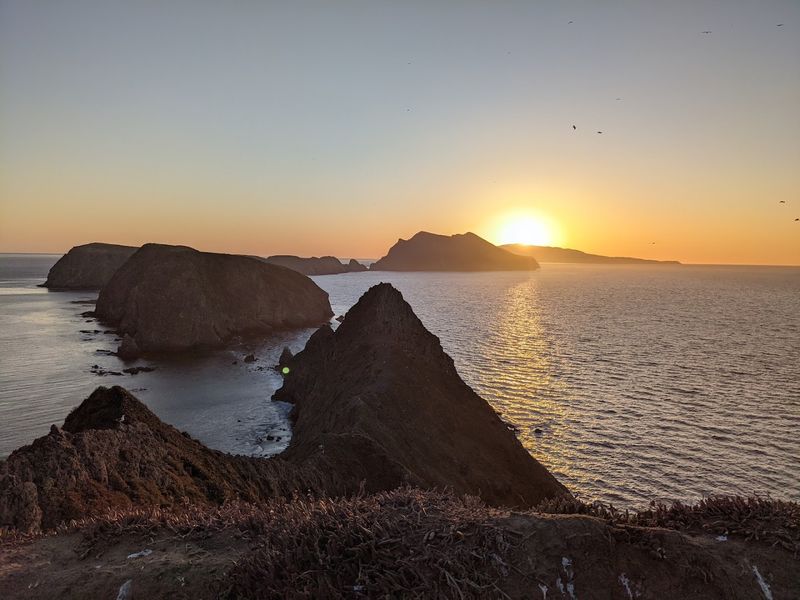
Most visitors are surprised to learn that Anacapa is not one solid landmass but three separate islets lined up in a row.
East, Middle, and West Anacapa stretch nearly five miles end to end, though the total land area adds up to only about 1.1 square miles combined.
East Anacapa is the most accessible and the one where most visitors land. It holds the campground, the visitor center, and the iconic lighthouse.
Middle and West Anacapa are generally off-limits to casual visitors, partly to protect sensitive nesting habitat.
The gaps between the islets are filled with open ocean, which means moving between them requires a boat.
Each section has its own distinct character, from the rocky landing cove on the east end to the protected wildlife areas further west.
Understanding the island’s divided layout helps visitors plan their time more effectively and set realistic expectations about what they can actually explore.
The Name Comes From A Chumash Word Meaning Deception
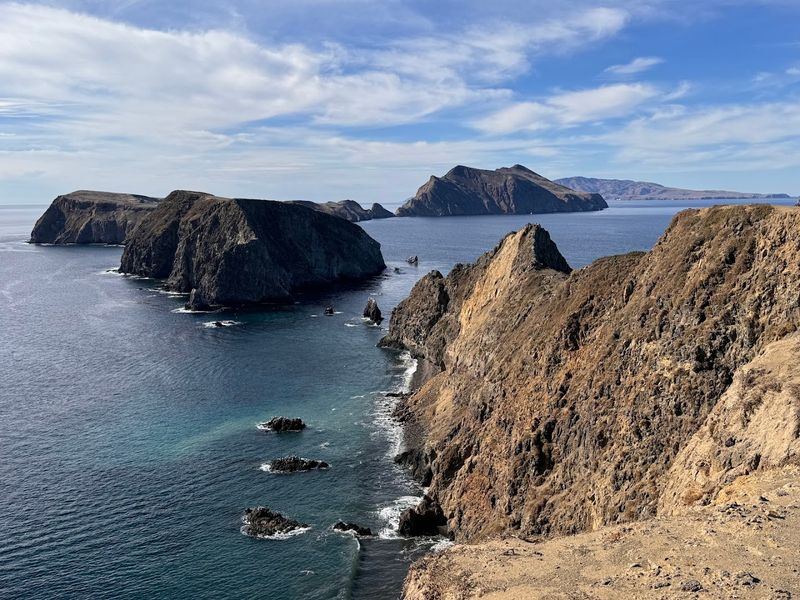
Long before European explorers arrived, the Chumash people lived along the Southern California coast and visited these offshore islands regularly.
The name they used for this particular island translated roughly to “deception” or “mirage,” and the reason behind that name is still easy to understand today.
From a distance, the island’s shape seems to shift depending on the weather and the angle of the light.
On foggy mornings, it can appear to float just above the waterline, while on clear days it looks entirely different.
The marine layer that frequently settles over the Santa Barbara Channel makes the island seem to appear and disappear without warning.
That visual trickery made Anacapa a notable landmark for Chumash seafarers who knew these waters well.
The island held both practical and cultural significance for them, serving as a waypoint during canoe crossings.
Recognizing the Chumash connection to this place adds a layer of meaning to any visit and reminds travelers that the island has been part of human experience for thousands of years.
Arch Rock Is The Symbol Of The Entire National Park
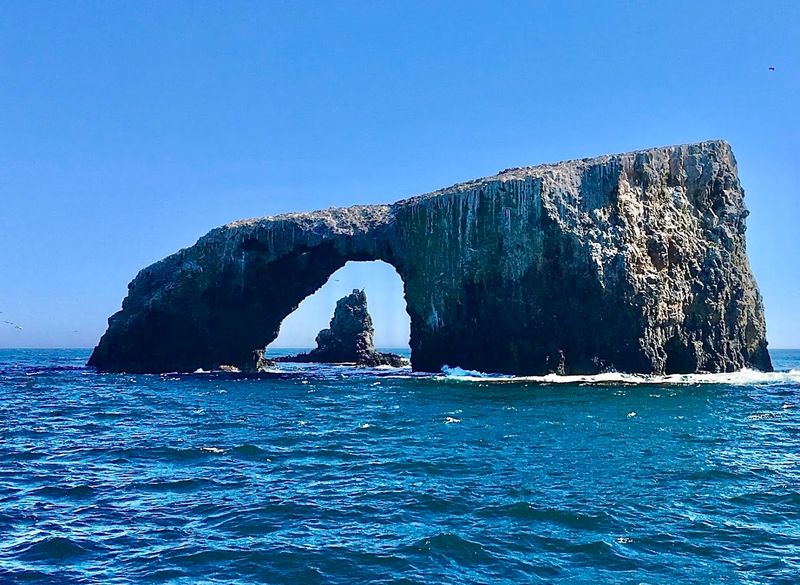
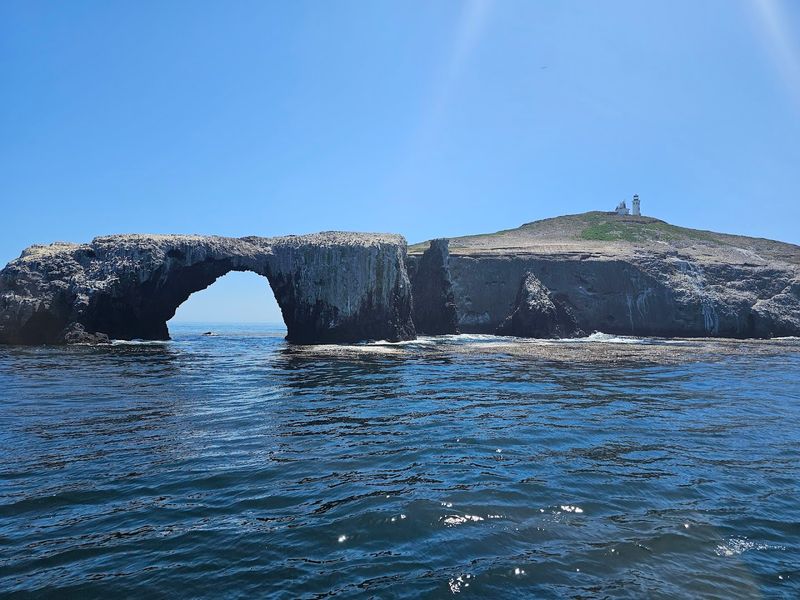
Standing 40 feet high at the eastern tip of the island, Arch Rock is one of the most photographed natural features in all of Channel Islands National Park.
The natural bridge formed over thousands of years as wave erosion carved through the softer rock at the island’s edge, leaving a dramatic arch that frames the open ocean behind it.
Boats passing through the channel often slow down near Arch Rock so passengers can take photos.
The structure has become so associated with the park that it appears on official signage and visitor materials throughout the region.
Seeing it from the water gives a very different perspective than viewing it from the island’s trail system.
Up close, the arch looks almost impossibly delicate given the constant pounding of Pacific swells below it.
The surrounding cliffs are layered with different shades of brown and tan, showing the compressed volcanic and sedimentary rock that makes up the island’s foundation.
For many visitors, catching a first glimpse of Arch Rock from the approaching ferry sets the tone for the entire trip.
The Lighthouse Was The Last One Built On The West Coast
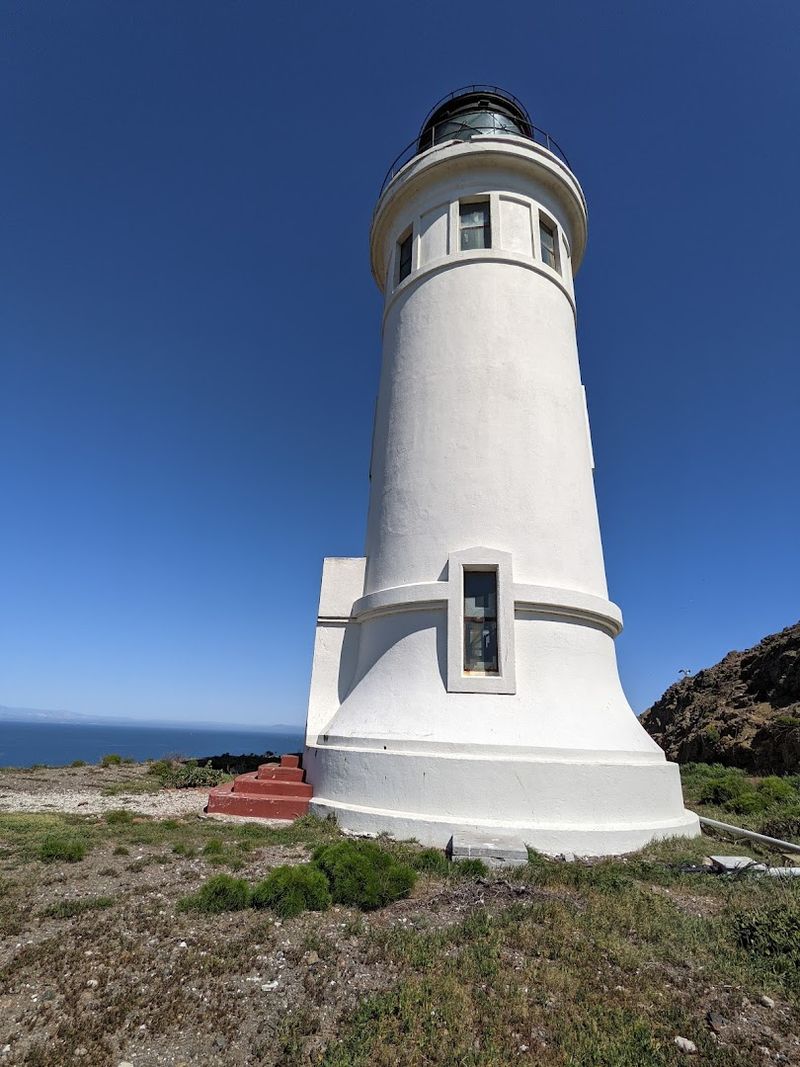
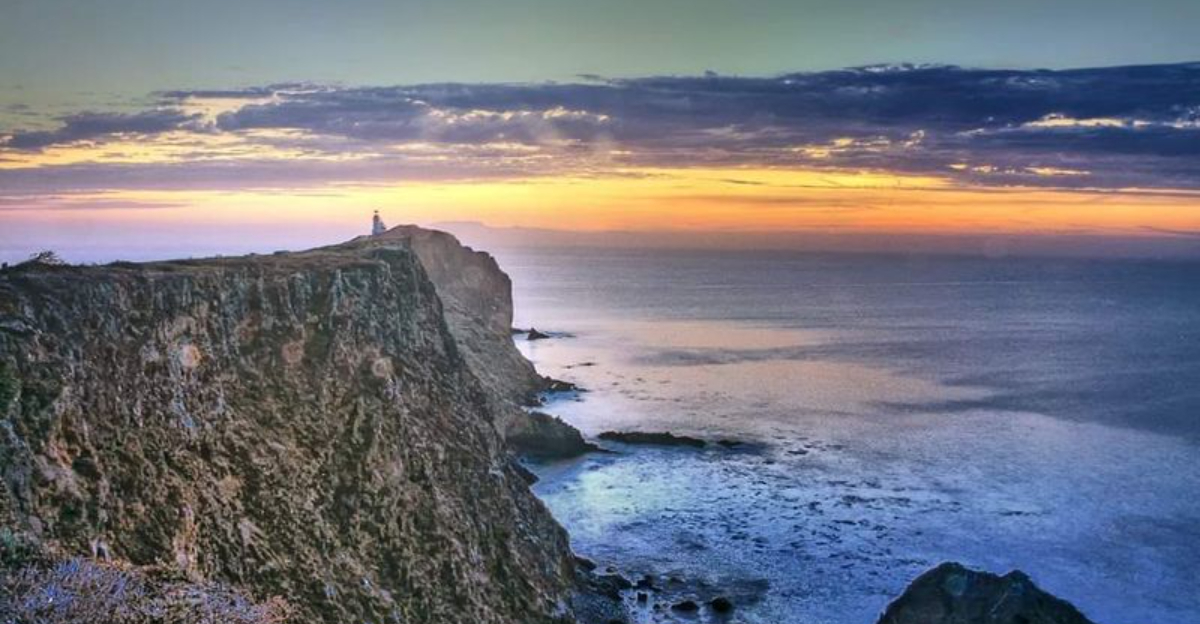
Completed in 1932, the Anacapa Island Lighthouse holds a notable place in West Coast maritime history as the last permanent lighthouse constructed along that stretch of coastline.
Before it was built, the waters around the island were considered especially dangerous due to the rocky shoreline and the unpredictable fog that rolls through the Santa Barbara Channel.
The lighthouse sits on the elevated plateau of East Anacapa and is visible from the main trail that loops around the island.
A small fog signal building sits nearby, and together the structures give the island a distinctly historic atmosphere that feels surprisingly intact for a place with so few permanent residents.
The lighthouse is still operational today, maintained as part of the national park.
Visitors on the trail can get reasonably close to the structure, and the surrounding area offers some of the clearest views across the channel toward the mainland.
On calm days, the Ventura coastline is clearly visible from this vantage point, making it easier to grasp just how close and yet how different the island feels from the world across the water.
Western Gulls Take Over The Island Every Summer
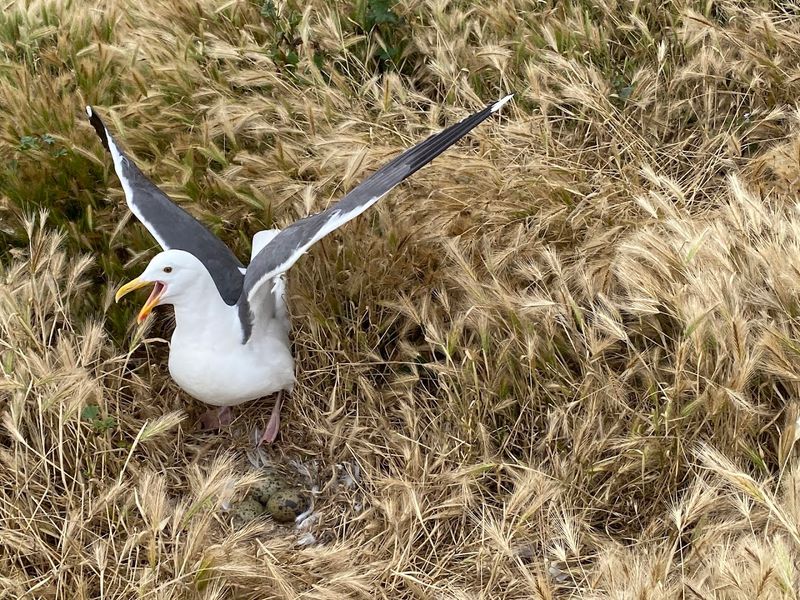
Arriving at Anacapa in summer means sharing the island with thousands of western gulls in the middle of their nesting season.
The birds cover nearly every flat surface on East Anacapa from roughly late spring through early summer, filling the air with constant noise and activity.
Chicks can be spotted tucked beside rocks and trail edges throughout the season. The gulls are protective of their nests and will occasionally swoop low toward visitors who get too close.
Wearing a hat is a genuinely practical precaution, and moving calmly along the trail tends to reduce confrontations.
The guano accumulation during peak nesting season is significant, and the smell and mess are worth factoring into trip planning.
Outside of nesting season, the island feels noticeably quieter and easier to walk around.
Visiting in spring before peak nesting or in fall after the chicks have fledged tends to offer a more comfortable experience for those who prefer calmer conditions.
The gull colony is one of the largest of its kind in the region, making it a genuinely remarkable wildlife spectacle even if it catches some visitors off guard.
West Anacapa Hosts The Largest Brown Pelican Breeding Colony In The US
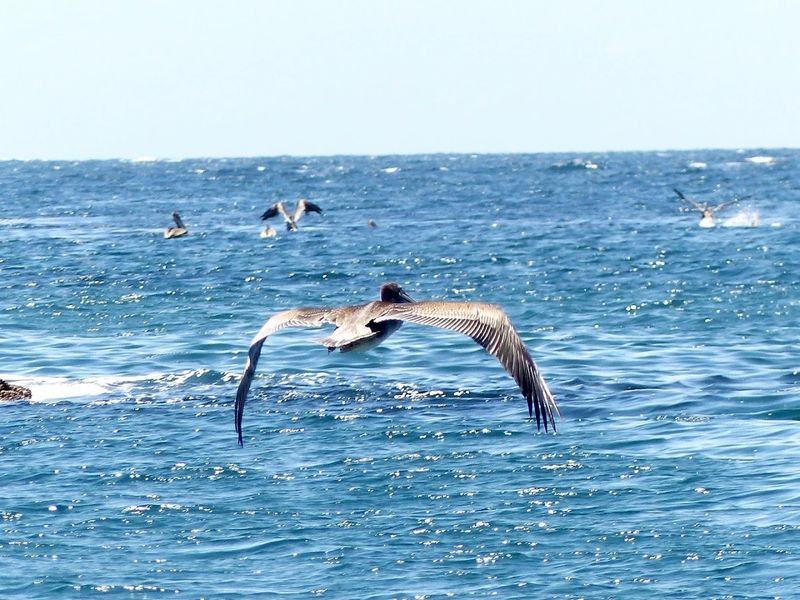
West Anacapa carries a conservation distinction that very few places in the country can claim.
The islet supports the largest breeding colony of California brown pelicans in the United States, making it one of the most significant seabird nesting sites on the entire Pacific Coast.
Because of this protected status, West Anacapa is closed to general visitors during nesting season.
The restriction exists to minimize disturbance to the colony, which went through a serious population decline in the mid-twentieth century due to the effects of the pesticide DDT on eggshell thickness.
Recovery efforts have been ongoing since the 1970s, and the colony’s current size reflects decades of conservation work.
Visitors approaching by boat can sometimes spot pelicans flying in formation low over the water near the western islet.
Watching dozens of them glide in synchronized lines just above the surface is one of those quiet moments that tends to make a lasting impression.
The pelican colony is a strong reminder of why places like Anacapa remain off-limits to development and why the national park designation matters for species that need undisturbed coastline to survive.
The Island Supports 265 Plant Species Including Two Found Nowhere Else
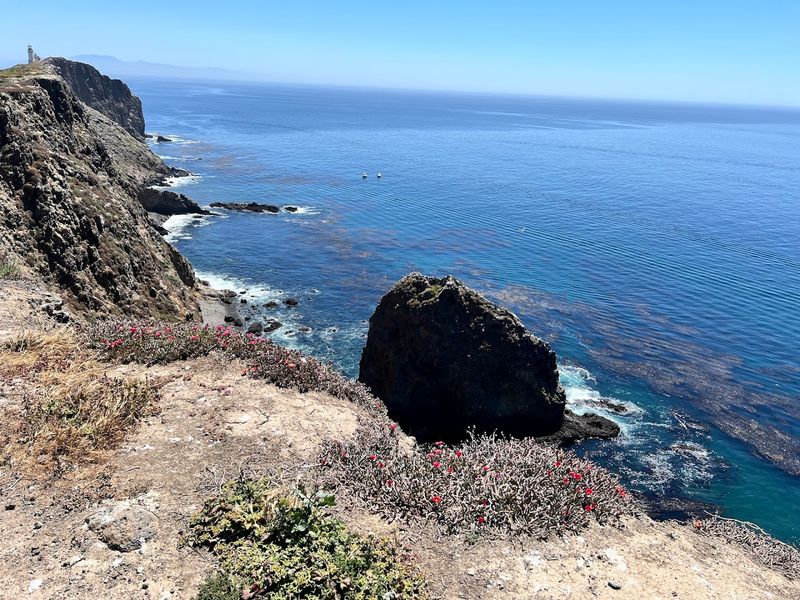
For a landmass covering just over a square mile, Anacapa supports a surprisingly rich plant community.
The island hosts 265 plant species in total, including 20 that are unique to the Channel Islands and two that exist nowhere else on Earth.
That level of botanical rarity makes the island a genuinely significant place from a scientific standpoint.
Spring is the most colorful time to visit, when the giant coreopsis plant bursts into yellow bloom across the clifftops and hillsides.
The coreopsis, which can grow to tree-like proportions during wet years, is one of the most visually striking plants on any of the Channel Islands.
Seeing it in full bloom against the backdrop of the ocean is one of the more unexpected sights the island offers.
Most of the vegetation is low-growing and drought-adapted, reflecting the island’s dry climate and exposure to constant wind.
Visitors are asked to stay on designated trails to protect the fragile plant communities alongside the paths.
The combination of endemic species and dramatic scenery makes even a short walk across the island feel like a botany lesson delivered in one of the most scenic classrooms imaginable.
The Anacapa Deer Mouse Lives Here And Nowhere Else
Among the island’s wildlife, the Anacapa deer mouse holds a particularly unique status.
Endemic to Anacapa Island, this small rodent is found nowhere else in the world and has adapted over thousands of years to the specific conditions of island life.
Its existence is one reason the island’s ecosystem is treated with such care by park managers. The mouse’s story became closely tied to a major conservation effort in the early 2000s.
Non-native black rats had been introduced to the island accidentally over decades, likely through shipwrecks and supply boats.
Those rats preyed on seabird eggs and competed with native species, causing measurable damage to the ecosystem over time.
A successful eradication program completed in 2003 removed the non-native rats from the island entirely.
The recovery that followed was significant, with seabird nesting success improving noticeably in the years afterward.
The Anacapa deer mouse, which had been moved off the island temporarily during the eradication effort, was reintroduced and has since re-established itself.
The whole story is a compelling example of how targeted conservation work can genuinely reverse ecological damage on an isolated landmass.
Invasive Rat Removal In 2003 Changed The Island’s Ecosystem
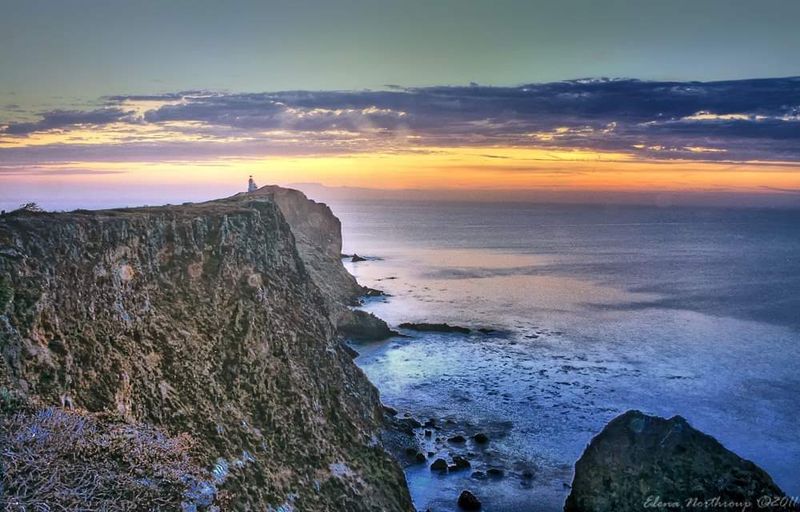
Few conservation stories from the Channel Islands are as instructive as the 2003 rat eradication effort on Anacapa.
Non-native black rats had colonized the island over many decades, feeding on the eggs and chicks of nesting seabirds including the Xantus’s murrelet, a species already considered vulnerable.
The damage was slow and cumulative but very real. The removal program involved distributing rodenticide across the island in a carefully coordinated operation.
It was controversial at the time, drawing both support from ecologists and concern from some community members.
The Anacapa deer mouse was temporarily relocated to Santa Cruz Island during the process to prevent it from being affected. Once the non-native rats were gone, the results were measurable.
Murrelet nesting success improved substantially in the years that followed, and the overall health of the island’s ground-nesting bird populations began to recover.
The project has since been studied and referenced by conservation teams working on similar island restoration efforts around the world.
Anacapa essentially became a case study in what is possible when an isolated ecosystem is given a chance to recover from introduced species pressure.
Kelp Forests Make The Waters Around Anacapa World-Class
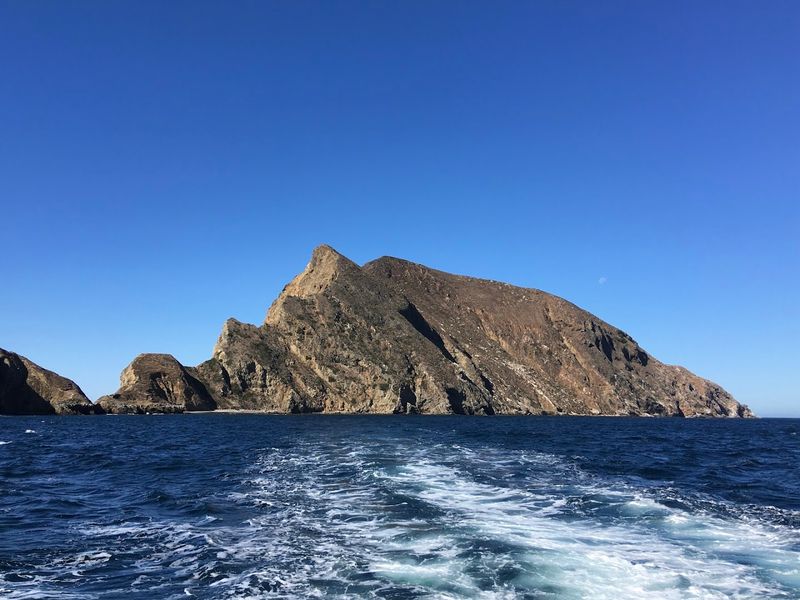
Below the surface around Anacapa, the ocean transforms into something genuinely spectacular.
Giant kelp forests grow in the cool, nutrient-rich waters surrounding the island, creating a layered underwater habitat that supports an enormous variety of marine life.
The visibility can be excellent on calm days, making the area popular with both snorkelers and scuba divers.
Landing Cove on the east end of the island is the primary spot for water entry, and snorkeling in the kelp just offshore gives visitors a close look at garibaldi fish, sea stars, and various rockfish species moving through the forest canopy.
The kelp itself grows in towering columns that filter the light in ways that feel almost otherworldly from below the surface.
Divers with more experience often explore the deeper reef structures along the island’s base, where sea caves and rock formations add complexity to the underwater terrain.
Water temperatures tend to be cooler than mainland beaches, so a wetsuit is strongly recommended regardless of the time of year.
The Channel Islands National Marine Sanctuary designation helps protect these kelp ecosystems, which are considered among the most productive marine environments on the entire California coast.
Camping On Anacapa Means Sleeping Under Stars With No Distractions
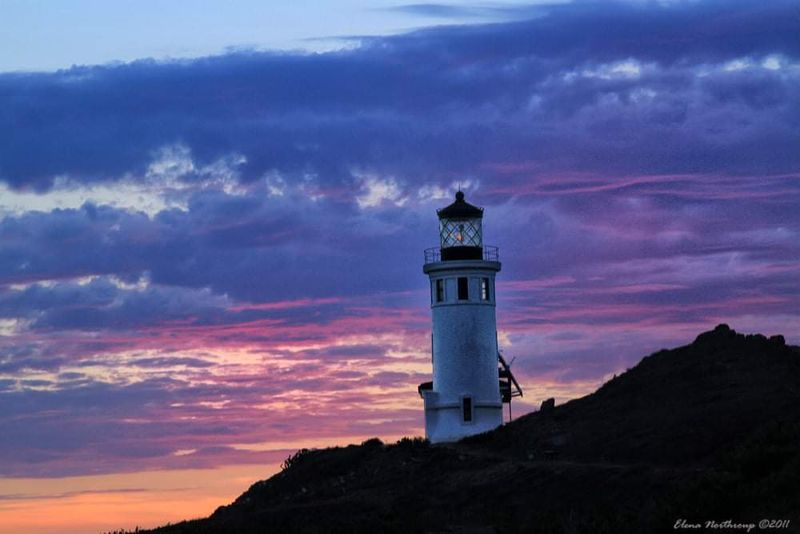
Spending a night on Anacapa is a genuinely different experience from any campground connected to the mainland road system.
The seven primitive campsites on East Anacapa each accommodate four to six people and are located on the plateau above the landing cove.
There are no stores, no running water, and no cell service to speak of. Everything needed for the stay must be carried up from the boat landing, which involves climbing a significant number of stairs cut into the cliffside.
Water, food, and all gear come with visitors and leave with them. The vault toilets on the island are maintained by the park service and are generally kept clean, though the overall experience is firmly on the rustic end of the camping spectrum.
At night, the absence of light pollution makes the sky above Anacapa remarkably clear.
The sound of the ocean surrounds the campsite from all sides, and the bird activity that fills the daytime gives way to a different set of sounds after dark.
Reservations are required and can be made through Recreation.gov.
Camping here tends to appeal to visitors who genuinely want to feel the full weight of the island’s remoteness rather than just passing through on a day trip.
Getting There Requires A Boat Ride From Ventura Harbor
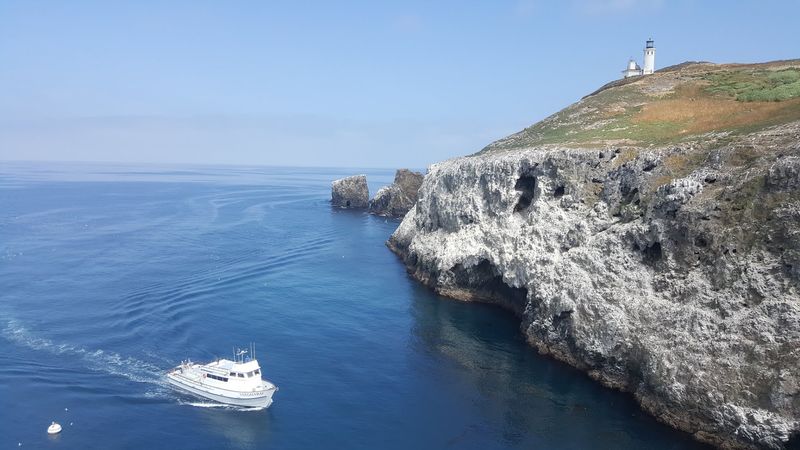
Reaching Anacapa requires a boat crossing of roughly 14 miles from Ventura Harbor, which takes approximately one hour each way depending on sea conditions.
Island Packers Cruises operates the primary ferry service to Anacapa and the other Channel Islands, running scheduled trips throughout the year with seasonal variation in frequency.
The boat ride itself is part of the experience. Dolphins are commonly spotted alongside the vessel during the crossing, and sea lions, harbor seals, and various seabird species are frequently visible from the deck.
On clear days, the Santa Barbara Channel offers open-water views that feel far removed from the Southern California coastline left behind at the harbor.
Conditions on the water can vary considerably by season, and some trips are affected by wind or swell.
Checking conditions in advance and arriving prepared for a potentially choppy crossing is practical advice for anyone prone to motion sickness.
Island Packers departs from Ventura Harbor Village, located at 1691 Spinnaker Drive in Ventura.
Day trips and overnight camping trips are both available, and booking in advance is strongly recommended during spring and summer when demand for spots on the ferry tends to be highest.