Centuries Of Stories Still Linger Inside This Pennsylvania Tavern
Some buildings have witnessed more history than your entire family tree, and they are not shy about it.
This Pennsylvania tavern is one of them. It has stood at a mountain crossroads since before the country had its act together, watching travelers, soldiers, and rebellions pass through its doors.
The floors creak with the confidence of something that has earned every groan. I sat down for a meal and got happily distracted by the sheer weight of the place.
Stone walls thick enough to keep secrets. Low ceilings that have hovered over centuries of conversation.
You half expect a figure from 1762 to round the corner and ask what year it is. Some say a few never left, which only adds to the charm.
The history here is not behind glass. It surrounds you while you eat.
I came for lunch and stayed for the stories
A Living Piece Of Pennsylvania History
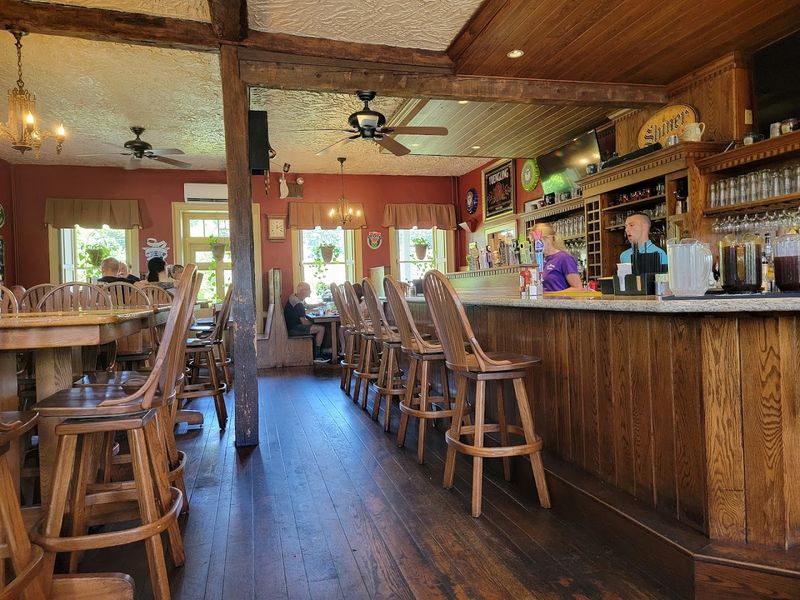
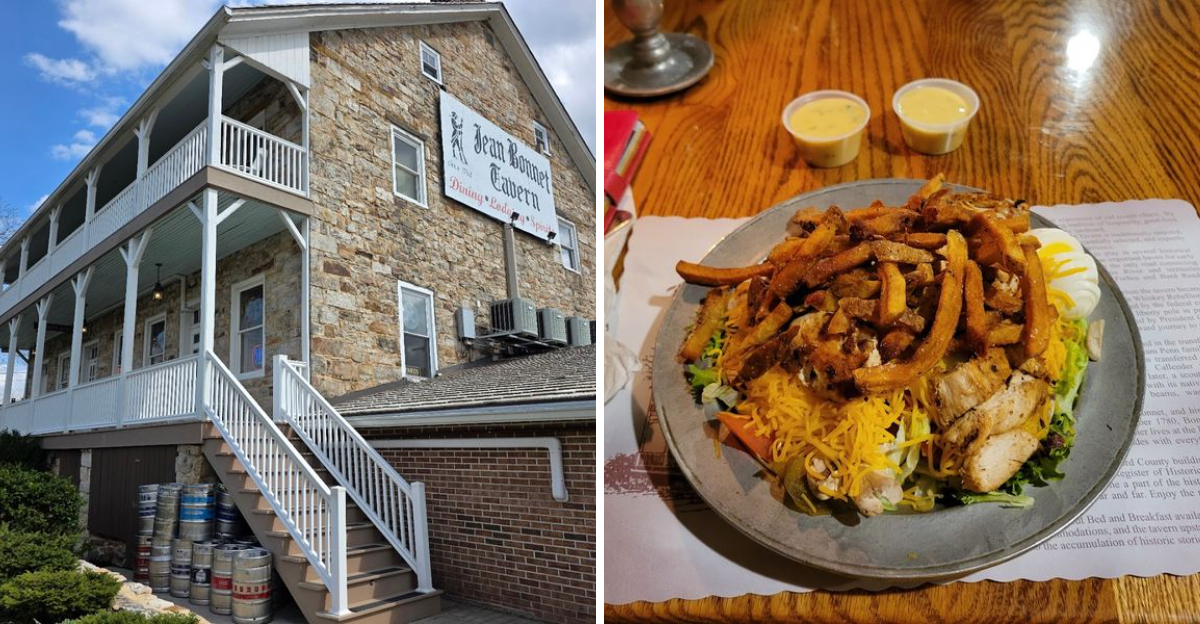
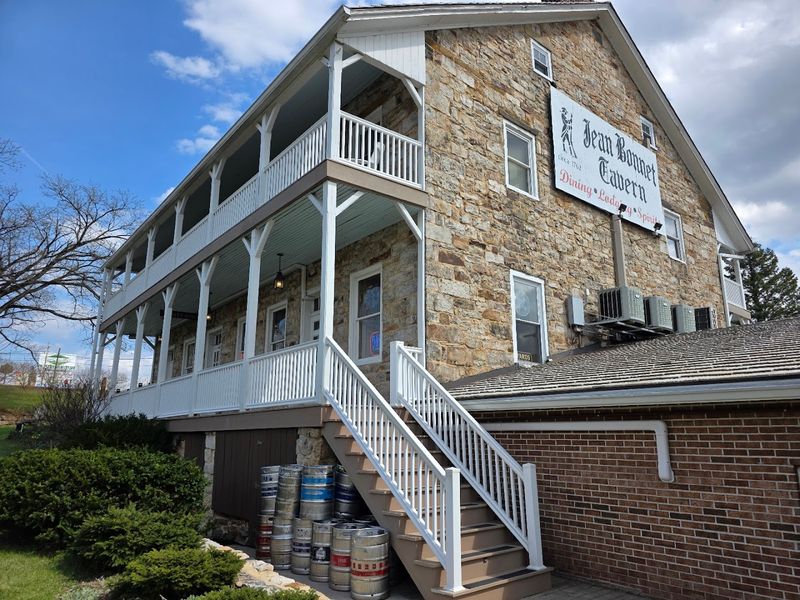
Jean Bonnet Tavern has been standing since 1762, and it looks like it knows exactly how old it is.
The stone walls are thick, the ceilings are low, and the whole place carries the kind of quiet confidence that only comes from surviving centuries.
Walking up to the entrance, you can already feel the history pressing in from every direction.
The tavern sits along the historic Lincoln Highway, one of America’s first transcontinental roads. Travelers have been stopping here for food and rest since before the United States was even a country.
That fact alone is worth pausing over for a moment.
Jean Bonnet Tavern has served soldiers, settlers, and road-trippers alike. It is not a museum pretending to be a restaurant.
It is a real, working tavern at 6048 Lincoln Hwy, Bedford, Pennsylvania, that happens to have more stories per square foot than almost anywhere else in the state.
The moment you step inside, the atmosphere does all the talking.
The Stone Architecture That Has Outlasted Everything
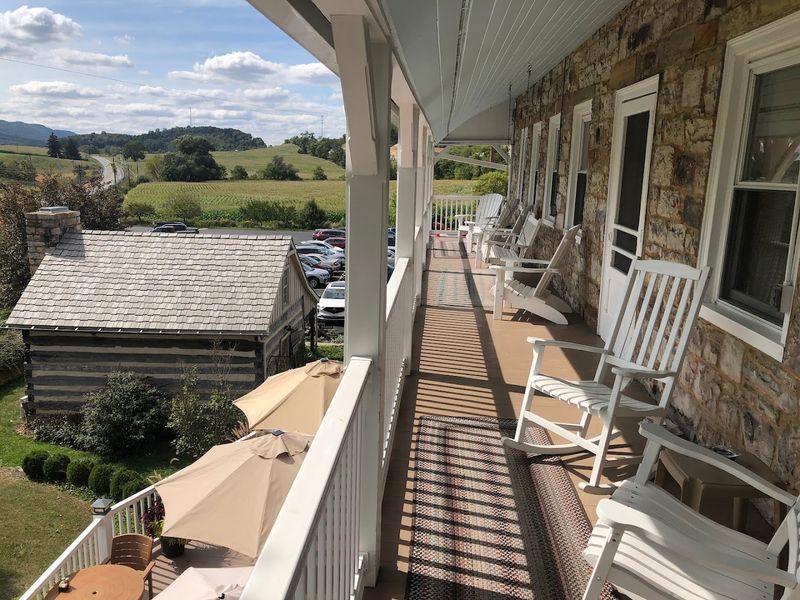
Nobody builds like this anymore, and that is not nostalgia talking. The limestone construction of Jean Bonnet Tavern is genuinely impressive from a structural standpoint.
Those walls are roughly two feet thick in places, built to hold out cold Pennsylvania winters and, apparently, the passage of time itself.
The building was constructed in the mid-1700s using local stone, which gives it a distinctly regional character.
It blends into the Bedford County landscape in a way that modern buildings simply cannot replicate. You get the sense that this structure grew out of the hillside rather than being placed on top of it.
From the outside, the roofline dips and angles in ways that tell you this building has been added to and repaired over generations. Inside, the original stonework is still visible in several rooms.
Running your hand along those walls, you can feel every year. Historians and architecture fans make specific trips just to study the construction techniques used here.
It is a hands-on history lesson that no textbook can fully capture.
Fireplaces That Have Been Burning For Generations
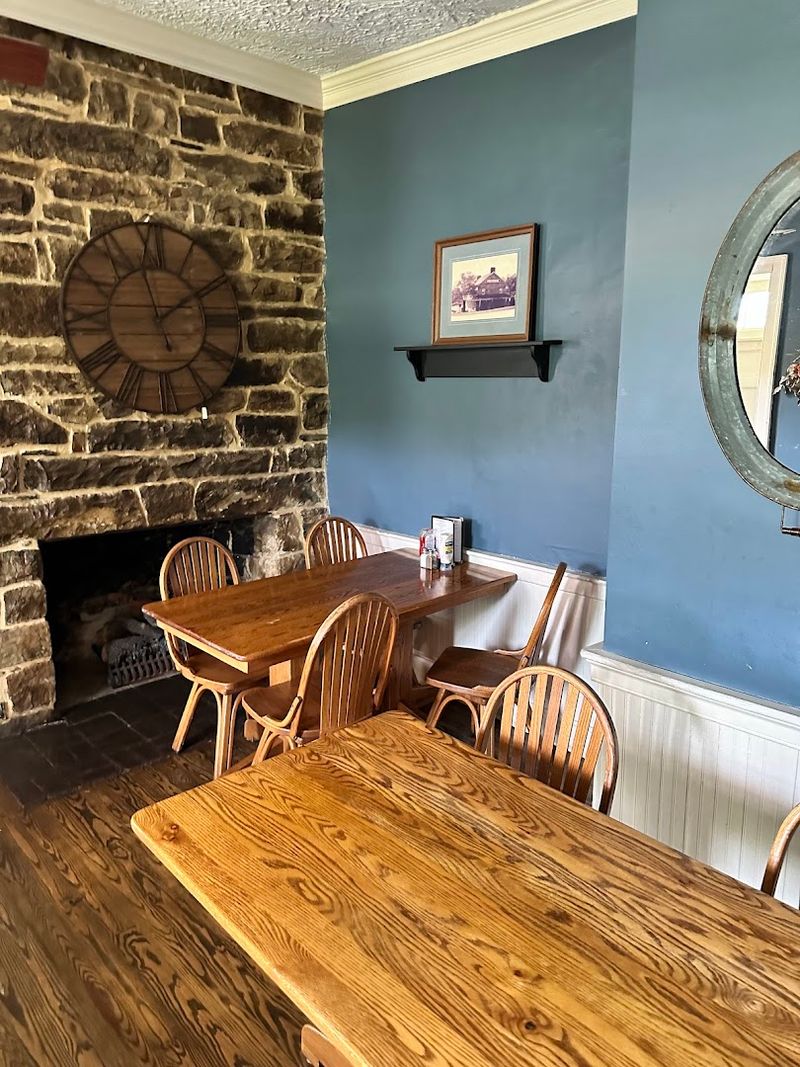
There is a fireplace at Jean Bonnet Tavern that has probably seen more conversations than most people have in a lifetime. The hearths here are wide, deep, and genuinely old.
When the fire is going on a cool evening, the warmth spreads across the room in a way that modern heating systems just cannot replicate.
Colonial-era taverns were built around their fireplaces. They were the kitchen, the gathering point, and the only source of heat during brutal Pennsylvania winters.
Jean Bonnet Tavern still uses its fireplaces today, which makes sitting near one feel less like a design choice and more like a continuation of something very old.
The crackling sound, the smell of woodsmoke, and the flickering light all work together to pull you out of the present moment. I ordered my food and completely forgot to check my phone for about an hour.
That almost never happens. If you visit during the cooler months, try to grab a seat near one of the hearths.
It makes the whole experience click into place in a way that is hard to explain but easy to feel.
Food That Respects The Setting
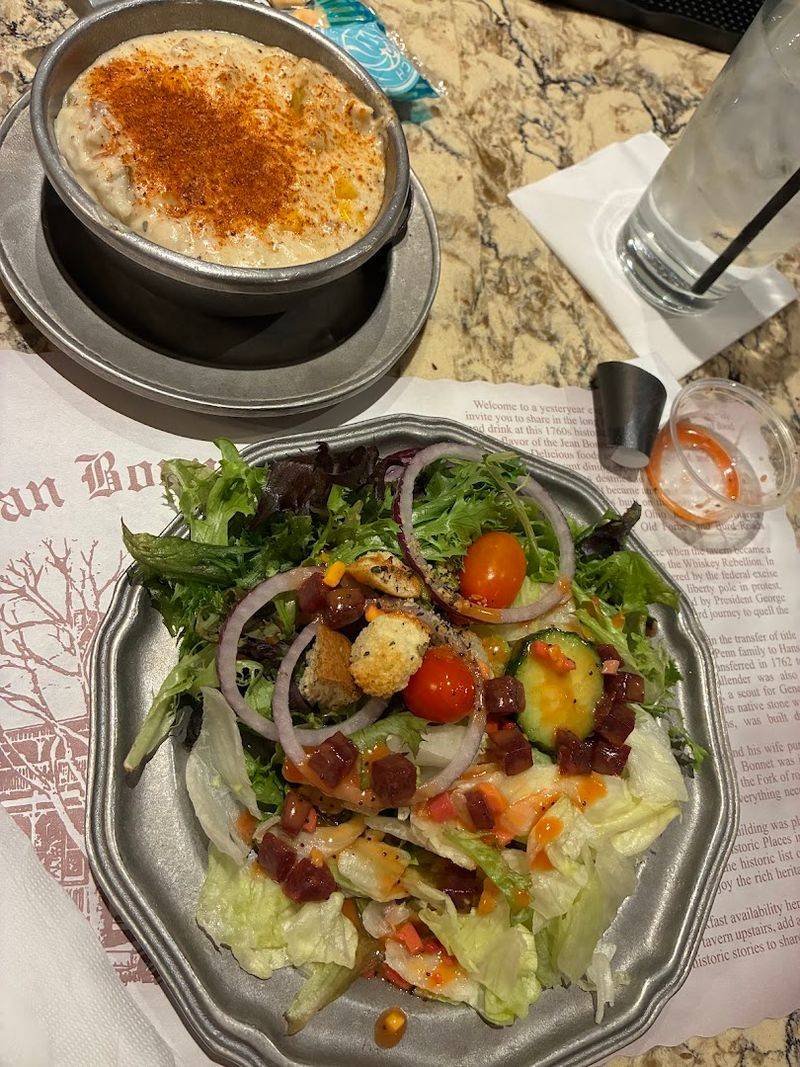
Some historic venues treat the food as an afterthought, banking entirely on atmosphere. Jean Bonnet Tavern does not make that mistake.
The menu leans into hearty American comfort food, the kind of meal that makes sense after a long drive through the Pennsylvania mountains. It is satisfying without being complicated.
The portions are generous and the flavors are straightforward in the best possible way. There is nothing pretentious about the menu, which is exactly right for a place like this.
You are not here for a tasting menu. You are here to eat well and feel good about it afterward.
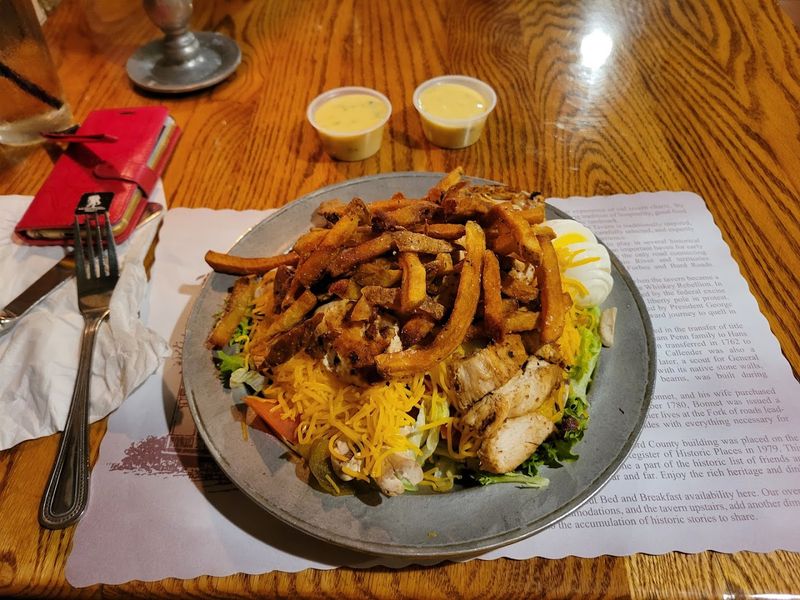
On my visit, I ordered something simple and it arrived exactly as I hoped it would, hot, well-seasoned, and sized like the kitchen actually wanted you to leave full.
The staff moved with the kind of easy confidence that comes from knowing the space well. Meals here feel appropriate to the setting, which is a harder thing to pull off than it sounds.
A good meal in a historic room is a complete experience, and Jean Bonnet Tavern understands that relationship clearly.
Rooms With Stories You Can Sleep In
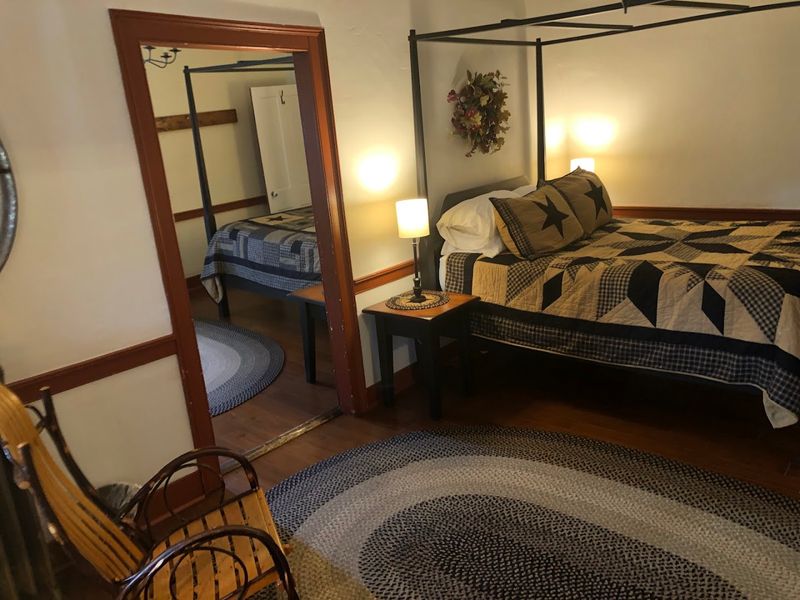
Jean Bonnet Tavern is not just a restaurant. It is also an inn, which means you can actually spend the night inside a building that has been hosting travelers since 1762.
That is a remarkable thing to be able to say about a place you booked on a Tuesday afternoon.
The guest rooms carry the same historic character as the rest of the building. Expect wooden floors, period-appropriate details, and an atmosphere that is genuinely different from a standard roadside hotel.
The walls here have absorbed two and a half centuries of stories, and somehow that comes through even when you are just trying to fall asleep.
Staying overnight gives you access to the building at hours when the day visitors are gone, and that quieter version of Jean Bonnet Tavern is something special.
The building settles and creaks in ways that feel more comforting than unsettling. Guests often report that they slept better than expected.
Waking up in a place this old, with morning light coming through those thick-set windows, is genuinely one of the more memorable ways to start a day on a Pennsylvania road trip.
The Lincoln Highway Connection That Shaped Everything
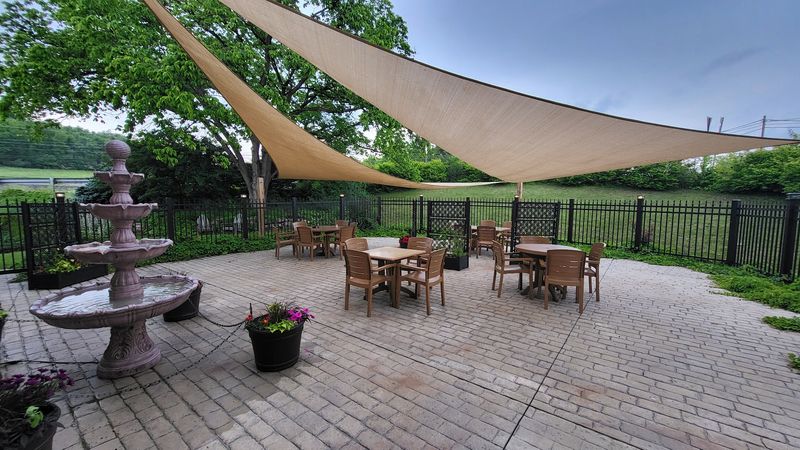
The Lincoln Highway is one of the great American road stories, and Jean Bonnet Tavern sits directly on it.
Designated in 1913 as the first coast-to-coast highway in the United States, the Lincoln Highway passed through Bedford County and put places like this tavern back on the map for a new generation of travelers.
Before the interstate system rerouted most traffic, the Lincoln Highway was the main artery connecting the East Coast to the Midwest. Travelers, families, and adventurers all passed this stretch of road.
Jean Bonnet Tavern was already ancient by the time the first automobile rolled past its front door.
That layering of history is part of what makes this location so interesting. The tavern predates the highway by about 150 years, yet both became part of the same American story of movement and discovery.
Bedford County has done a good job of preserving the Lincoln Highway heritage, and stopping at Jean Bonnet Tavern is one of the most tangible ways to connect with that history.
It is a road trip destination that actually earns the label.
Bedford County As The Perfect Backdrop
Bedford County does not always make the top of Pennsylvania travel lists, and that works in its favor.
The landscape here is genuinely beautiful in that quiet, unforced way that rural Pennsylvania does better than almost anywhere. Rolling hills, wooded ridges, and open farmland stretch out in every direction from the tavern.
The surrounding area rewards slow travel. There are covered bridges, state parks, and small towns within easy driving distance of Jean Bonnet Tavern.
Raystown Lake is nearby and draws visitors throughout the warmer months. The whole region has a relaxed pace that pairs well with a stop at a place this historic.
Coming in from the east on Lincoln Highway, the approach to Bedford County feels like the landscape is gradually stepping back in time.
The commercial sprawl thins out, the hills get bigger, and by the time you reach the tavern, you are genuinely in a different kind of Pennsylvania.
It is the kind of setting that makes a historic building feel completely natural rather than out of place. Bedford County earns its own visit, and Jean Bonnet Tavern is the ideal starting point for exploring it properly.
Why This Place Stays With You Long After You Leave
Some restaurants are fine and forgettable. Jean Bonnet Tavern is neither.
There is something about the combination of genuine age, honest food, and an atmosphere that has not been manufactured for effect that makes the place stick in your memory in an unusually specific way.
I found myself describing it to friends with more detail than I usually bother with. The way the light looked.
The sound of the room. The feeling of sitting somewhere that people have been sitting for 260 years.
Those details do not fade the way a standard restaurant experience does.
Part of what makes Jean Bonnet Tavern worth recommending is that it does not try too hard. It does not need to.
The building is the story, the food is solid, and the location along the Lincoln Highway gives the whole stop a sense of purpose.
If you are passing through Bedford County on Route 30, pulling over here is one of the better decisions you can make.
It takes about two hours to do it properly, and those two hours will probably come up in conversation for years afterward. That is a good return on a lunch stop.