Chimney Rock Has Guided Travelers Across Nebraska For More Than 180 Years And Still Towers Over The Valley
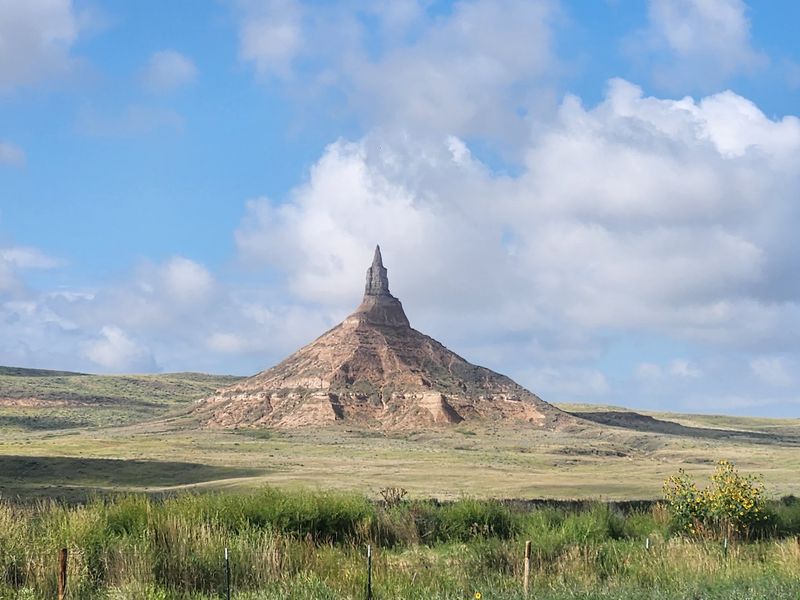
More pioneer diaries mention one skinny stone spire than any other landmark on the Oregon Trail. Wagon families often spotted it days before they reached it, sometimes from a full 30 to 40 miles out.
I love that detail. Folks walking beside slow oxen got a slow countdown on the horizon, and the spire kept growing taller for three or four days straight.
That spire still stands in western Nebraska, rising nearly 300 feet above the river valley. It even made the 2006 Nebraska state quarter.
Today, wide gravel trails and two long footbridges lead you toward its base.
I can’t imagine seeing it for the first time after weeks of flat prairie and dusty wheel ruts. So how does it look when you finally arrive on your own schedule, with snacks?
A Stone Spire In The Panhandle That Never Moved Its Address
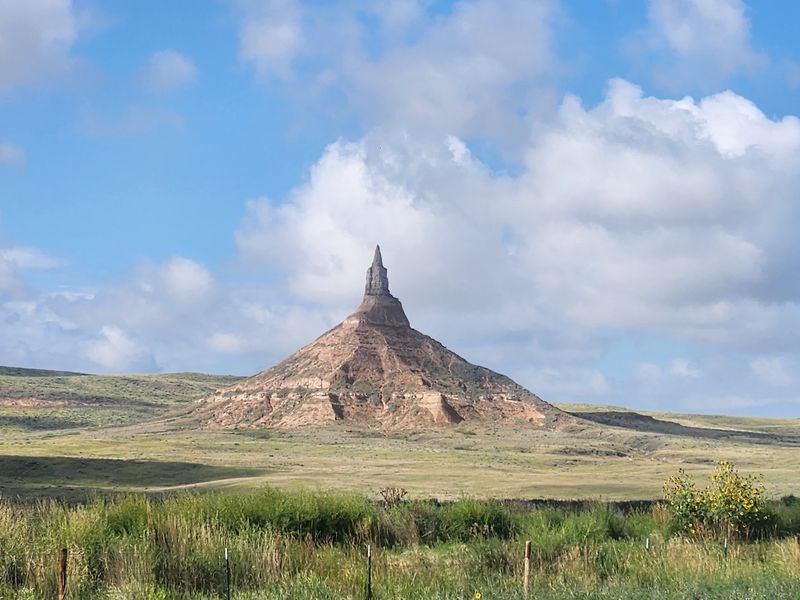
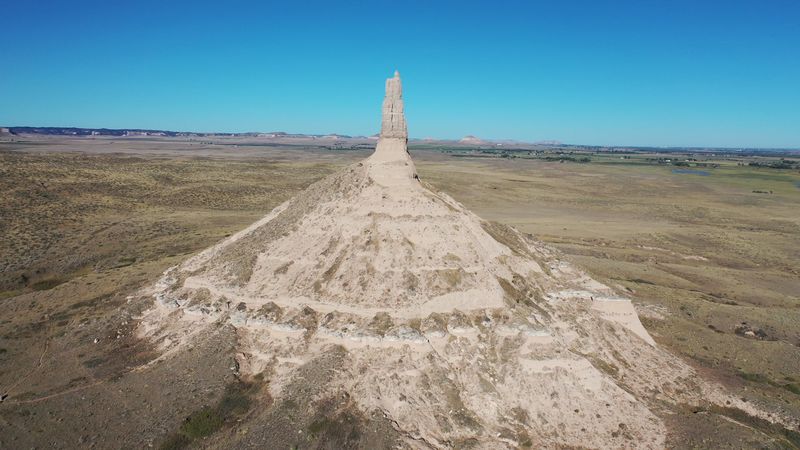
Out in Morrill County, just south of Bayard, a cone of clay and sandstone wears a narrow spire like a pointed hat. Its official title is Chimney Rock National Historic Site, and it earns every word of that name.
History Nebraska manages and operates the site today. It is also an affiliated area of the National Park Service, which explains the polished feel of the grounds.
The spire rises nearly 300 feet above the North Platte River valley. Its peak sits more than 4,200 feet above sea level, which is a lot of altitude for a state people call flat.
You can spot it long before you reach it. That simple fact made it famous, and it still works on modern drivers rolling along the highway.
The State of Nebraska owns the 83 acres around the formation itself. A visitor center, a growing trail system, and wide open pasture surround it now.
Chimney Rock National Historic Site sits about 20 miles east of Scotts Bluff National Monument. That makes it an easy anchor for a Panhandle day trip with real history at every stop.
The Most Talked-About Landmark In Pioneer Diaries
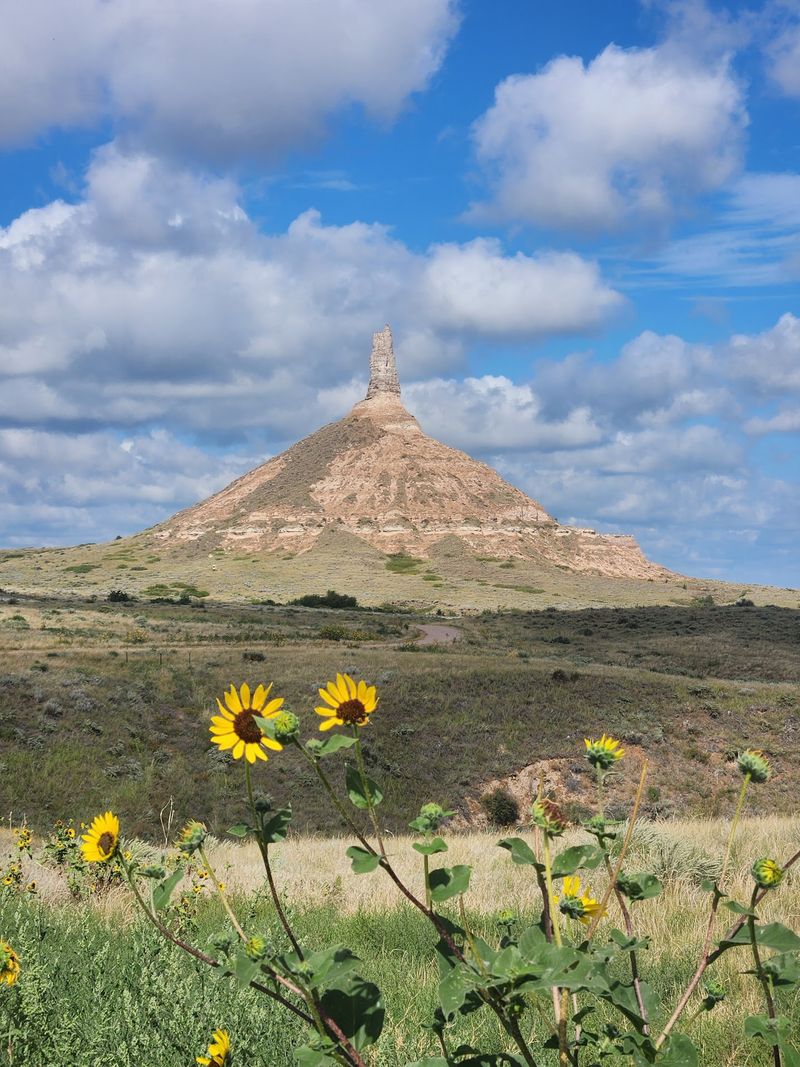
Pioneers wrote about plenty of things, from muddy crossings to stubborn mules. Yet more emigrant diaries mention Chimney Rock than any other landmark on the Oregon Trail.
Between the 1840s and 1860s, families heading west on the Oregon, California, and Mormon Pioneer Trails passed right by it. For many, it was the first big sign that the long prairie stretch was nearly behind them.
Spotting it meant the easier miles were wrapping up. Rougher country and mountain passes waited farther west, so the spire worked like a friendly heads-up.
Travelers could see it for three to four days before arriving. Picture trying to reach a landmark that refuses to get closer for most of a week.
That slow approach is part of why it lived in so many journals. People had time to stare, sketch, and describe it again and again.
Historians lean on those pages today. Thanks to all that scribbling, Chimney Rock became one of the best-documented stops of westward travel across Nebraska.
It has guided travelers for well over 180 years. Not bad for a landmark that never once handed out directions.
Who Named It First, And Why It Stuck
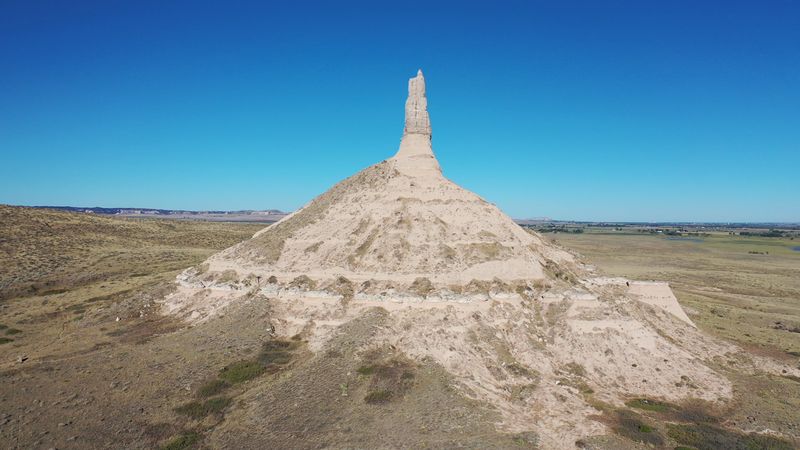
Robert Stuart and his group of traders made the first recorded sighting by white explorers back in 1813. They were heading east, years before the big wagon era began.
The name Chimney Rock first showed up in writing in 1827. Once you see the shape, you understand why nobody bothered arguing for something fancier.
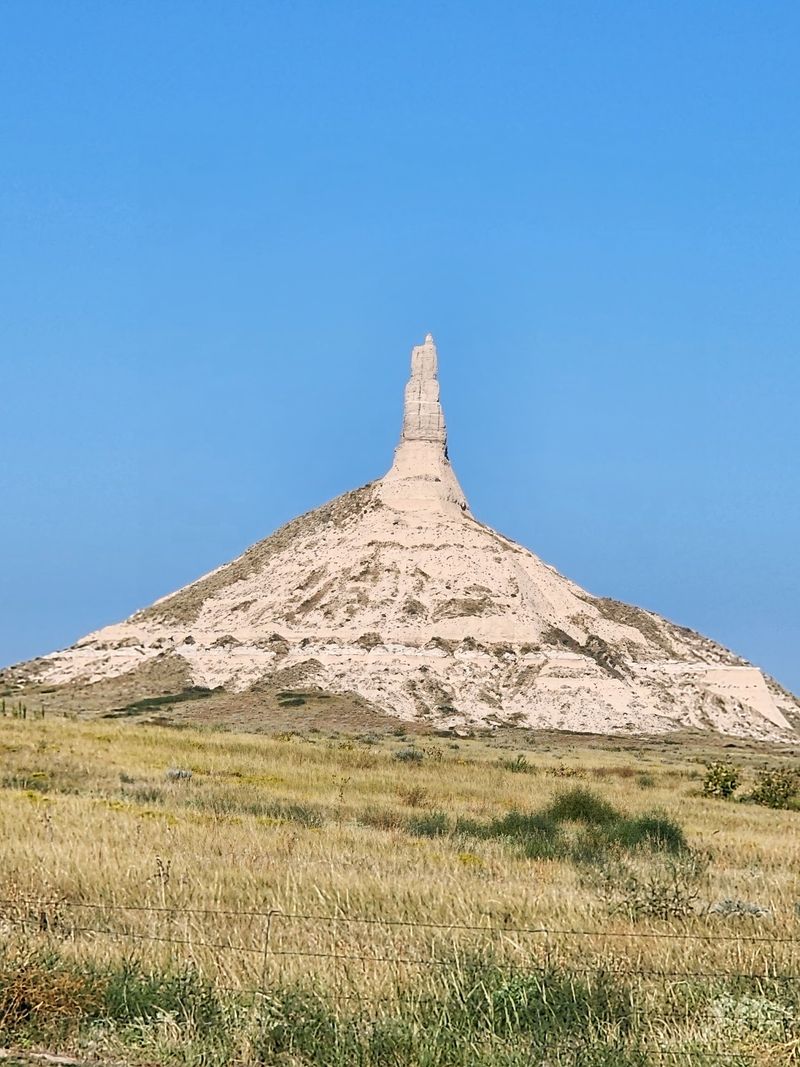
A wide cone rises from the valley floor. Then a thin column shoots straight up from the top, like a chimney on a cabin roof.
Some see a witch’s hat instead. Either way, the silhouette is easy to remember, and that mattered for people steering by sight.
Names on the trail needed to be practical. Travelers swapped notes, wrote letters home, and told the next wagon what to watch for.
A clear, descriptive name made the landmark easy to share. It turned a pile of clay and sandstone into a household word across the country.
The name has held steady for nearly two centuries now. Somewhere, a pioneer with a sharp eye deserves a little credit for keeping it simple.
Wind, Rain, And Lightning Keep Reshaping The Skyline
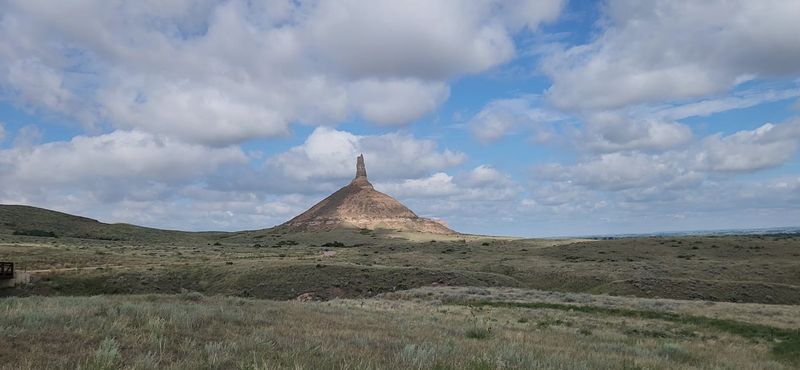
Nature has been slowly trimming Chimney Rock for a very long time. Wind, water, and lightning strikes have all chipped away at its height since the 1800s.
Exact figures vary depending on who measured. Some sources list it near 300 feet above the valley, while others put it closer to 325 feet.
That wiggle room makes sense for a landmark that keeps changing. Soft layers of clay and sandstone simply don’t hold still forever.
Exhibits at the visitor center show how the spire’s outline has shifted over time. Comparing old images to the modern view is a fun little puzzle.
Don’t panic about it vanishing next week, though. Its current contours are expected to last for many more centuries.
Still, the erosion adds a gentle nudge to visit. The rock you see today is a slightly different rock than the one pioneers described.
Watching clouds drift across its face can also change the colors and shadows on the stone. Same landmark, new look, depending on the sky.
Think of it as a living sculpture. The artist is the Nebraska weather, and it never takes a day off.
New Trails That Finally Let You Walk Toward The Rock
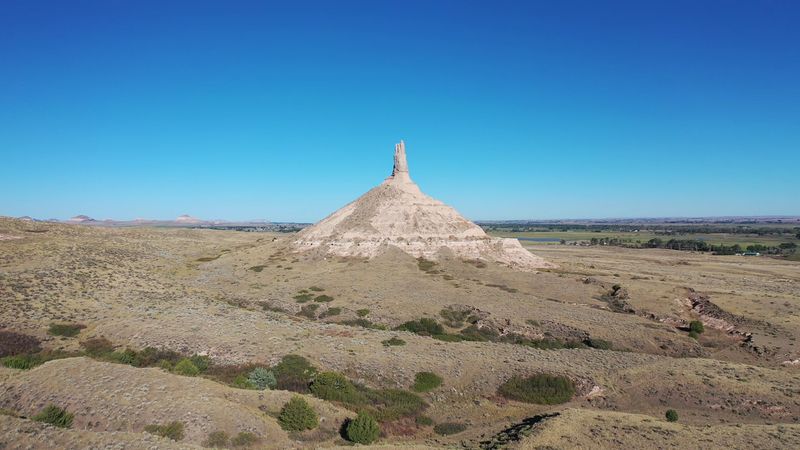
For years, many visitors simply admired Chimney Rock from a distance. That changed in late summer 2023, when the Walk to the Rock trail system opened.
These trails cover more than two miles between the spire and the Abbott Visitor Center. They bring you within about 300 yards of the base.
The paths are 10 feet wide and surfaced with gravel. That’s roomy enough for families to walk side by side without bumping elbows.
A few gentle inclines roll through the pasture. Nothing feels like a mountain climb, so casual walkers can enjoy the stroll without much fuss.
Short on time? A newer parking lot at the south edge of the property offers a shorter hike to the landmark.
Hiking the trails is free, which makes this a budget-friendly afternoon. You can wander, snap photos, and head out without touching your wallet.
The trail is open during daylight hours. Plan your walk around the sun, especially in shoulder seasons when evenings arrive early.
Every step brings that famous spire a bit closer. Pioneers waited days for this view, and you get it in a pleasant walk.
Two Footbridges Built For The Perfect Photo
Bridges in the middle of a Nebraska pasture sound a little unexpected. The Walk to the Rock trails include two of them, each stretching about 130 feet over small ravines.
They keep the route smooth where the land dips. They also happen to frame the spire beautifully for anyone holding a camera.
Lining up the rock behind a long bridge makes for a classic shot. It shows scale, adds depth, and proves you actually made the walk.
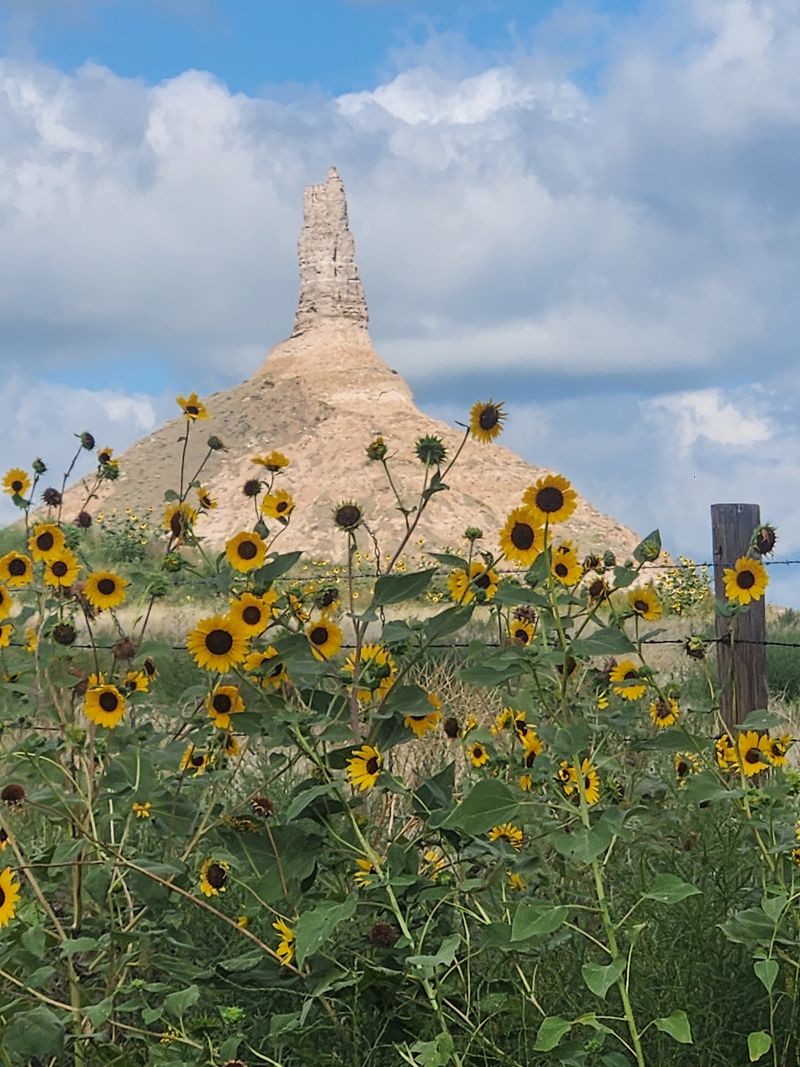
Wildflowers often brighten the pasture in warmer months. Summer sunflowers can add a cheerful foreground when they’re blooming nearby.
Now for the practical bit. Signs along the trails warn about rattlesnakes, so stay on the path and wear sturdy shoes.
Bugs can be fierce during warm weather too. Pack insect repellent, because mosquitoes don’t care how historic the scenery is.
A hat and water bottle help on sunny days. Shade is scarce out here, and the prairie sun takes its job seriously.
Once you’re prepared, the bridges become a favorite pause point. Stand still, look west, and enjoy the same skyline pioneers once studied.
A Remodeled Museum Full Of Pioneer Voices
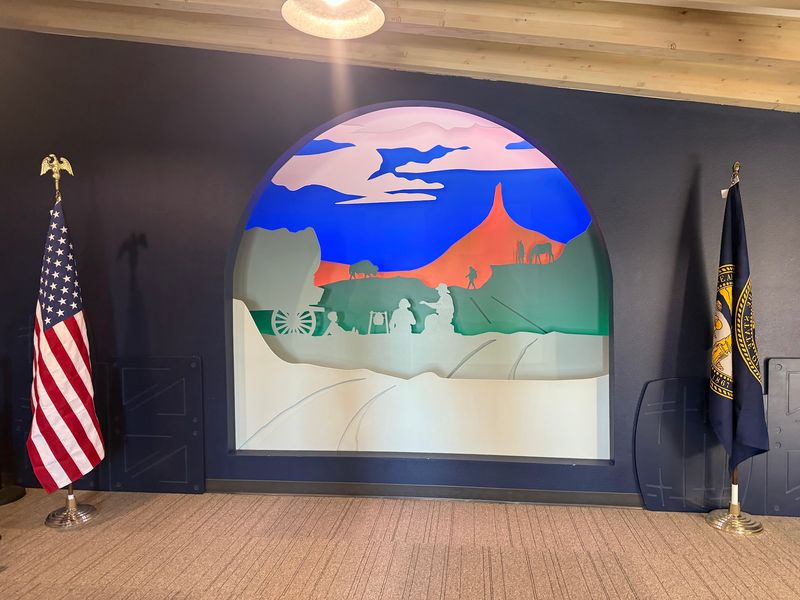
The Ethel and Christopher J. Abbott Visitor Center got a major makeover.
Its museum reopened in August 2020 after extensive remodeling and renovation.
Inside, exhibits and interactive displays explain what westward travel actually felt like. A video presentation helps set the scene before you head outdoors.
One standout is a soundscape built from quotes in emigrant journals. Hearing pioneer words read aloud makes those old diaries feel surprisingly close.
There are also 3D photo viewers showing historical images. Kids and grown-ups alike tend to linger over that kind of old-meets-new gadget.
Exhibits trace how Chimney Rock has changed over the years. They also cover the bigger Oregon Trail story in a compact, easy-to-follow space.
The renovation added an expanded education room and a new theater space. A storm shelter was included too, which is smart planning on the open plains.
The museum requires a small admission fee. The gift shop and information desk are free to visit.
It’s a manageable museum, not an all-day marathon. That’s good news for families who want history without tired legs before the trail.
Stuffed Rattlesnakes, Wagon Packing, And A Sense Of Humor
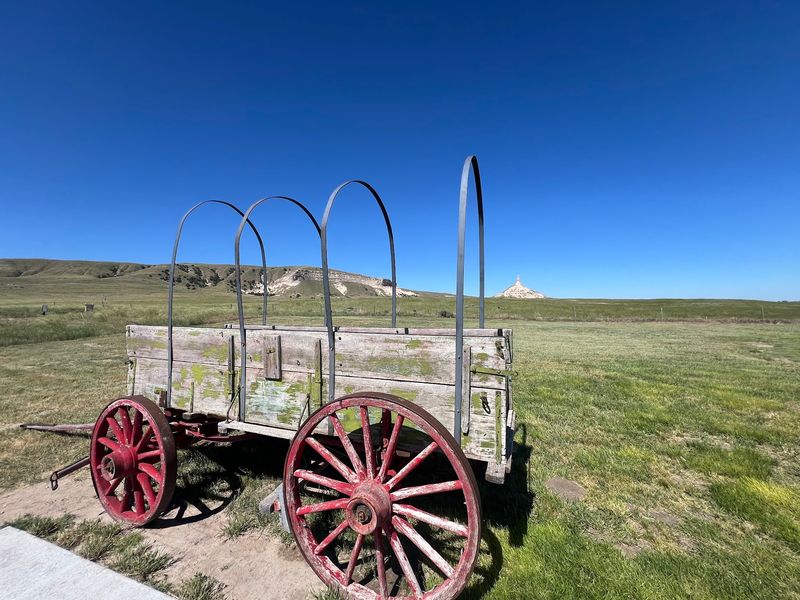
Historic sites can feel a bit stiff sometimes. This visitor center sneaks in some playful touches, including stuffed rattlesnakes and some unusual restroom stall options.
That lighthearted streak keeps younger visitors interested. It also reminds grown-ups that pioneer life had plenty of odd moments.
An interactive wagon loading station lets you test your packing skills. Decide what fits, what stays behind, and how heavy your choices get.
It’s harder than it looks. Suddenly that extra cast iron pot feels like a big decision with real consequences.
Activities like this make the trail story stick. Kids remember what they touched and tried far longer than what they read on a sign.
The gift shop got an upgrade during the renovation too. It’s a handy stop for souvenirs, books, and a little something to remember the Panhandle.
Families with small children can mix the museum and trails at their own pace. Short exhibits plus easy paths make for a smooth outing.
Laughing over a stuffed snake before walking past real snake warnings? That’s the kind of setup only Chimney Rock can pull off.
Protected Ground That Keeps The Old View Intact
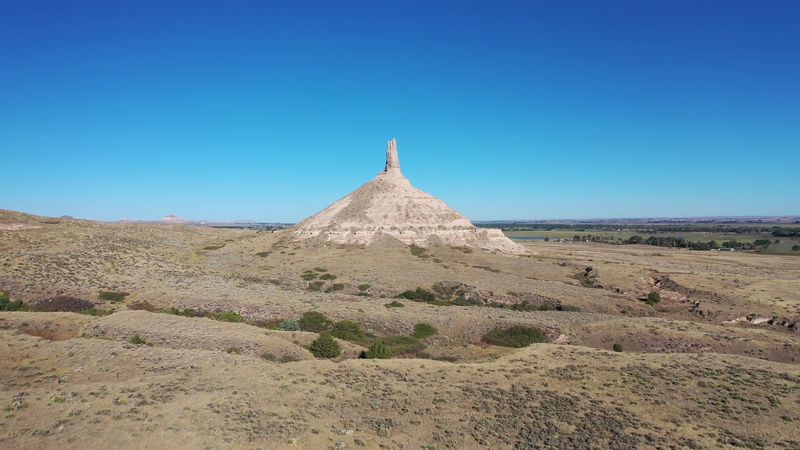
Back on August 9, 1956, Chimney Rock was designated a National Historic Site. A decade later, on October 15, 1966, it joined the National Register of Historic Places.
Those honors protected the landmark itself. Keeping the surrounding landscape open took another big step much later.
In 2018, the Nebraska State Historical Society Foundation acquired 360 acres of pastureland. That land sits between the spire and the visitor center.
Adding that acreage expanded the protected area around the historic site. It also cleared the way for the trail system that opened in 2023.
Open pasture matters more than you might expect. It helps the view look closer to what wagon travelers saw, without clutter crowding the horizon.
Then came another proud moment. Chimney Rock appeared on the 2006 Nebraska State Quarter, honoring the state’s role in westward migration.
So the landmark lives in pockets and coin jars, too. Somewhere in a Nebraska couch cushion, the spire is probably hiding right now.
All these efforts share one goal. Keep the rock, and the scenery around it, available for the next generation of curious travelers.
Quiet Evenings, A Pioneer Cemetery, And Who Will Love It Most
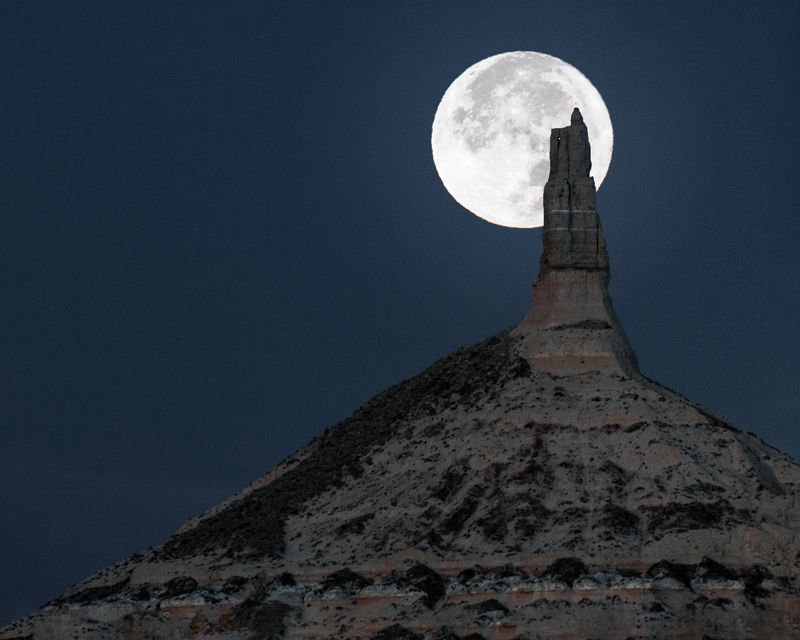
Silence is one of the best features here. The open valley, wide sky, and distant spire create a calm setting that suits slow walkers and deep thinkers.
About half a mile from Chimney Rock, a small pioneer cemetery rests near the dirt road. It’s a short, quiet stop that adds real weight to the trail story.
Visitors who love history will find plenty to absorb. The cemetery and landmark together show both the hopes and the hard miles of westward travel.
Photographers have a lot to work with. Shifting clouds, golden light, and the pointed silhouette make for striking pictures.
Families with young kids can handle the gentle trails comfortably. The packed gravel paths are wide and easy, with only modest inclines along the way.
Retirees looking for a relaxed outing will appreciate the pace. There’s no rush, no crowds to fight, and nowhere you have to be.
Nebraskans who studied the trail in school may feel a little thrill. Seeing the real rock after reading about it for years is a different experience entirely.
Bring patience and comfortable shoes. The prairie rewards anyone willing to stand still for a minute.
Getting There Without Any Oxen Required
Good news for modern travelers: no oxen, no wagon, and no three-day countdown. The landmark sits in Morrill County in western Nebraska, near the town of Bayard.
Plug in Chimney Rock National Historic Site, Chimney Rock Trail, Bayard, NE 69334. The visitor center sits roughly 1.5 miles south of Highway 92 along Chimney Rock Road.
Outdoor viewing areas and hiking trails are free. The indoor museum charges a small admission fee, and the gift shop is free to browse.
Museum days and hours can change by season. Check with History Nebraska before driving out, especially if the museum is your main goal.
The trails stay open during daylight hours. That gives you flexibility even if you arrive after the museum closes for the day.
Two parking options help. Start at the visitor center for the full walk, or use the lot at the south edge for a shorter hike.
Both lots can handle a few larger vehicles. RV travelers rolling through the Panhandle can usually find a spot.
Pack water, sunscreen, and bug spray before leaving town. Services are limited out here, and the prairie keeps things simple.
A Panhandle Day Trip Worth Building Around This Spire
One famous landmark is good. Two within about 20 miles of each other is even better for a Panhandle road trip.
Scotts Bluff National Monument sits roughly 20 miles west of Chimney Rock. Pairing them gives you a full day of trail history without much driving between stops.
Start at Chimney Rock National Historic Site in the morning. Explore the museum, walk the trails, and pause at the bridges for photos.
Then head west and keep the pioneer storyline going. You’ll basically be following the same route wagon families traveled, just with air conditioning.
So is it worth the drive? For anyone who loves history, wide skies, and a landmark with real staying power, I believe the answer is an easy yes.
The rock asks very little of you. Free trails, a compact museum, and a view that has guided travelers since the 1840s.
I like how something so simple still stops people in their tracks. More than 180 years later, that spire remains the star of the valley.
Go see it while the weather is kind. Nebraska’s most famous chimney is still standing tall and waiting.