Climb These 7 Florida Lighthouses And You Finally See How The Coastline Fits Together
There’s a moment about halfway up a lighthouse staircase in Florida when your legs start complaining and you wonder why you signed up for this. Then you push open the hatch at the top, the wind hits you, and suddenly the whole state makes sense: barrier islands stacked like puzzle pieces, inlets cutting inland, the ocean stretching past where your eyes give out.
These towers were built to warn ships away from sandbars and reefs, but today they double as the best free geography lesson anyone ever handed you. Here are seven of them, from the Atlantic beaches down to the Keys and back up to the Panhandle.
1. Ponce de Leon Inlet Lighthouse & Museum
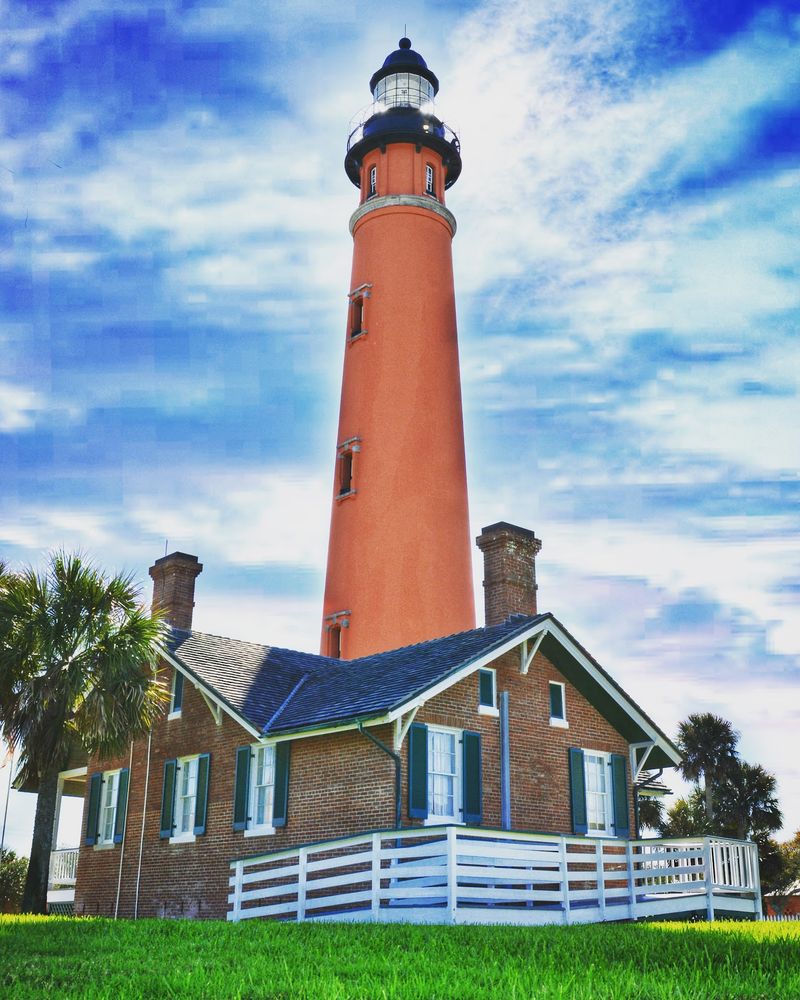
Florida’s tallest lighthouse doesn’t ease you into anything. The brick-and-granite tower at Ponce Inlet rises 175 feet, and the climb to the lantern room runs 203 steps up a spiral that narrows as you go.
What waits at the top is a full 360-degree sweep: the Atlantic on one side, the inlet cutting inland, river water and dense coastal woods on the other. It ranks among the tallest active lighthouses in the country, which explains why the horizon looks so absurdly far away from up there.
Completed in the 1880s, the station kept all of its original buildings, so the grounds feel less like a monument and more like a small village. Keeper cottages house exhibits, artifacts, and one of the finest Fresnel lens collections anywhere.
There’s a theater, a gift shop, and restrooms, though no restaurant on site. Parking is free in the lot and along the street.
Doors stay open daily from 10 AM to 9 PM, and weekend afternoons draw the biggest crowds. Arrive on a weekday morning and you may have most of the staircase to yourself.
Active military discounts are available.
2. St. Augustine Lighthouse & Maritime Museum
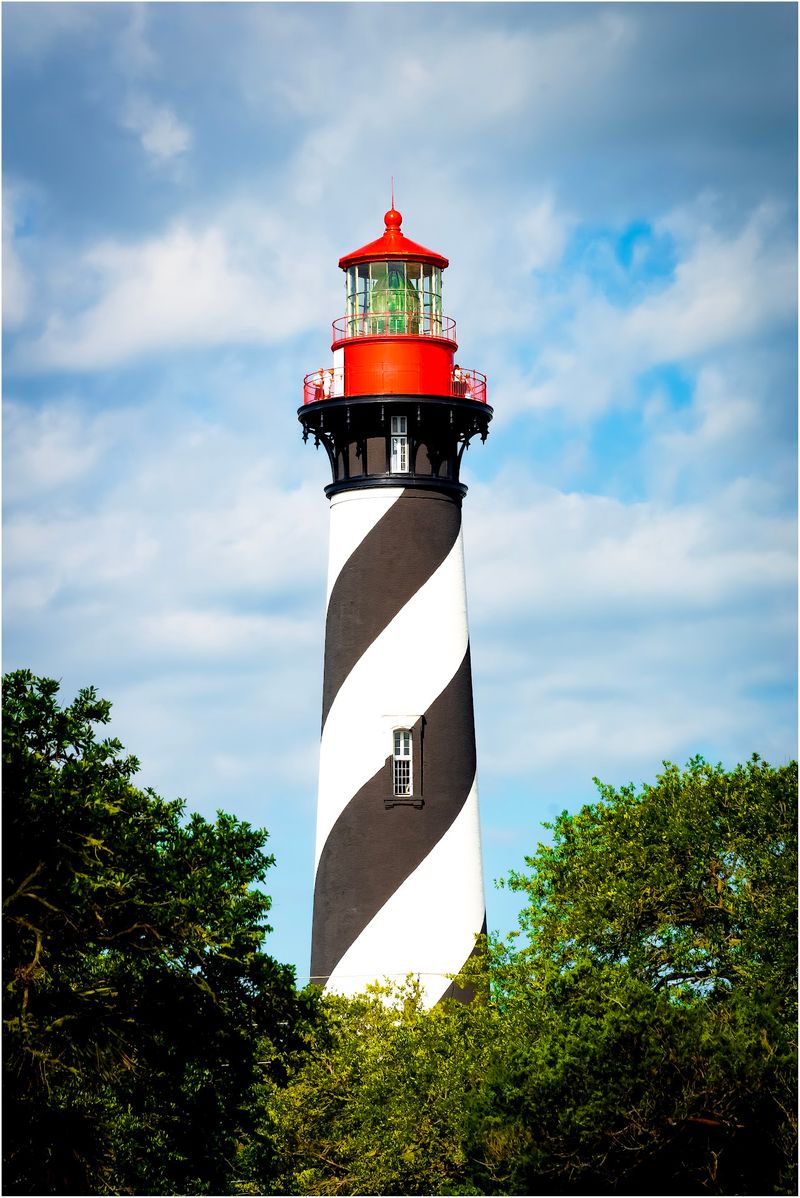
Black and white candy stripes wrapping a red lantern room make this one instantly recognizable from anywhere on Anastasia Island. The current tower dates to the 1870s, built after an older light nearby was lost to erosion, and it stands 165 feet above the sea.
Two hundred nineteen steps separate the ground floor from the gallery deck. It’s a workout, and anyone uneasy with heights should know the staircase is an open spiral with landings along the way.
Take those landings. Nobody is timing you.
From the top, the payoff is the layout of the whole area at once: the old city across the water, Matanzas Bay, Salt Run, and the open Atlantic beyond the dunes.
Down at the base sits an accredited museum and Smithsonian Affiliate with exhibits covering shipwrecks and the tower’s role guarding the coast during World War II. Kids get a shipyard playground, and there’s a cafe, gift shop, and changing tables.
Hours run 9 AM to 6 PM daily. Evenings midweek are the calmest stretch.
Parking on site is free.
3. Jupiter Inlet Lighthouse & Museum
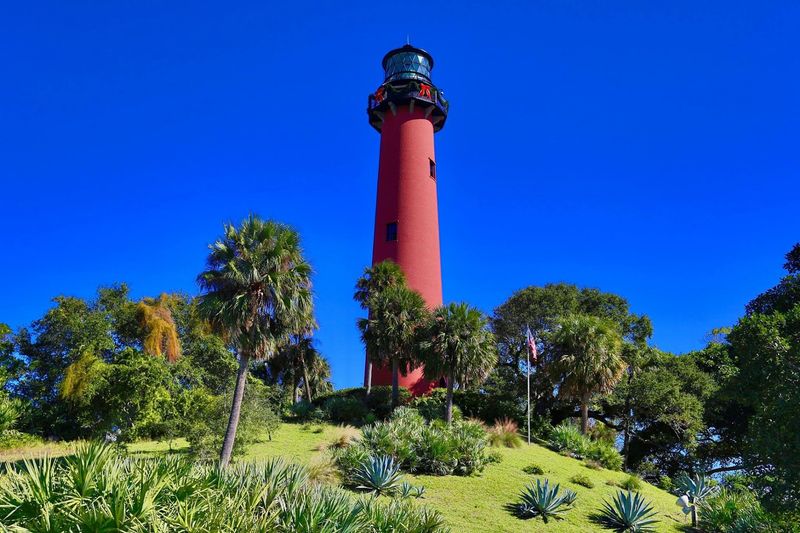
Red brick, 108 feet of it, planted on top of a 48-foot dune that nature built long before anyone thought to put a light there. The combination puts the beam 156 feet above sea level, and the climb itself is only 105 steps, which makes this the friendliest tower on the list for anyone whose knees have opinions.
First lit in 1860, it’s the oldest standing structure in Palm Beach County. The dune underneath is an ancient Native American archaeological site, and the whole property sits inside a federally designated Outstanding Natural Area.
Up in the lantern room, a historic First-Order Fresnel lens still does its job. Only a handful of those remain in the United States.
The view from the gallery explains the local geography better than any map: the Atlantic, the Intracoastal Waterway, the Loxahatchee River, and the inlet all converging in one frame.
Guided tours are the standard way in, with a small museum at the base covering area history. Open Tuesday through Sunday, 10 AM to 4 PM, closed Mondays.
Parking is free.
4. Cape Florida Lighthouse
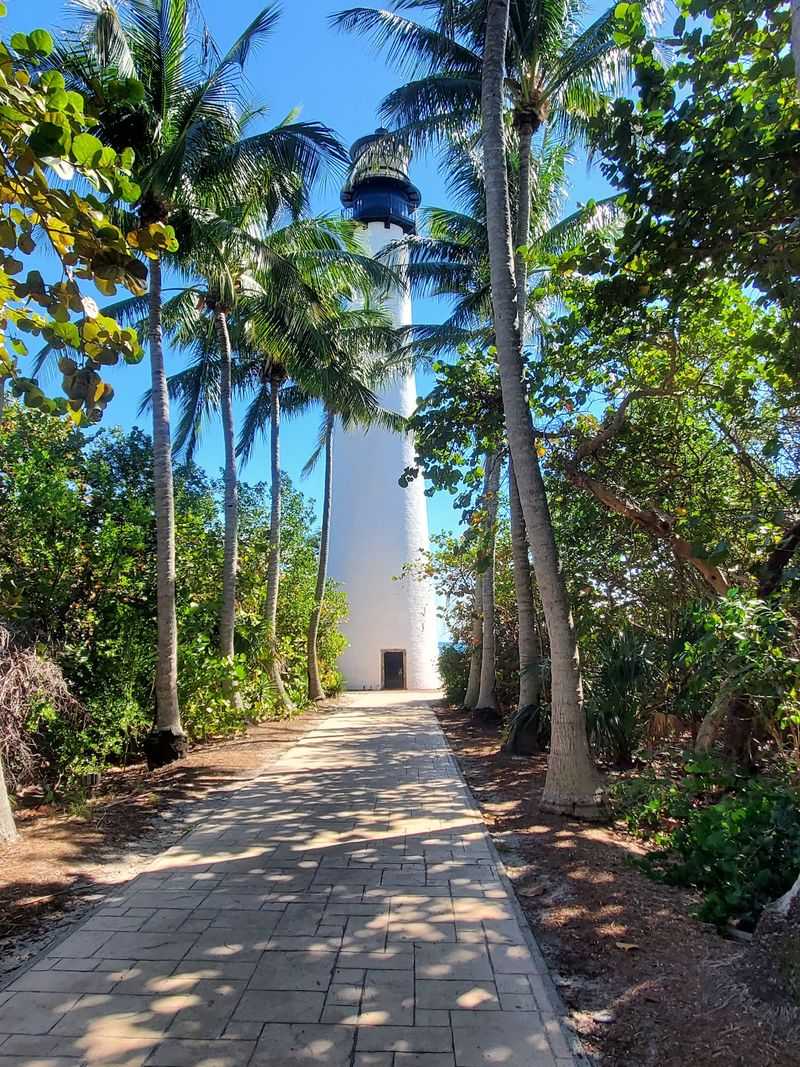
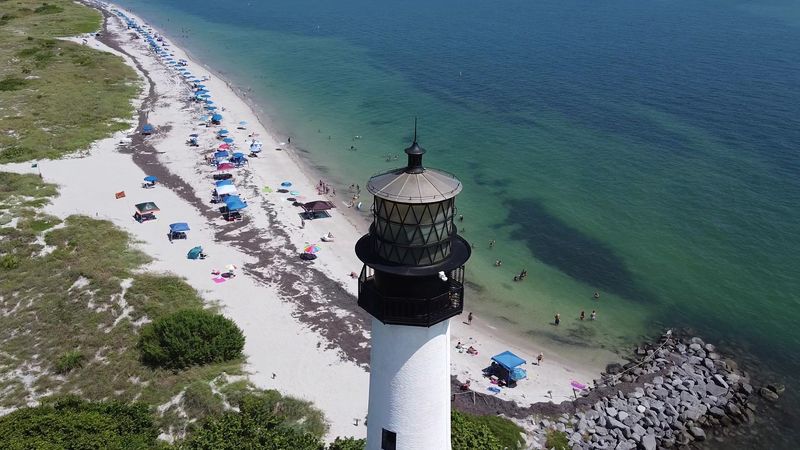
Picture a white tower standing at the southern tip of Key Biscayne with sea grape and palm crowding the path in, the Miami skyline hovering in the haze beyond. Built in 1825, it counts among the oldest standing buildings in the Miami area.
Guided tours climb 109 steps to the watch room, led by volunteers who set the scene before anyone starts up. Access runs on a tight window: mornings from 10 AM to noon, and the tower is closed Tuesdays and Wednesdays.
Check before you drive out, because the schedule matters more here than at any other stop.
The reward is a rare double view. Turn one way for open Atlantic and reef-colored shallows, turn the other for the green sprawl of Bill Baggs Cape Florida State Park and the city rising behind it.
Because the lighthouse sits inside a state park, the surrounding day is easy to fill. Beach, bike paths, a restaurant, and restrooms are all within walking distance of the base.
Parking includes both free and paid options depending on where you land.
5. Key West Lighthouse
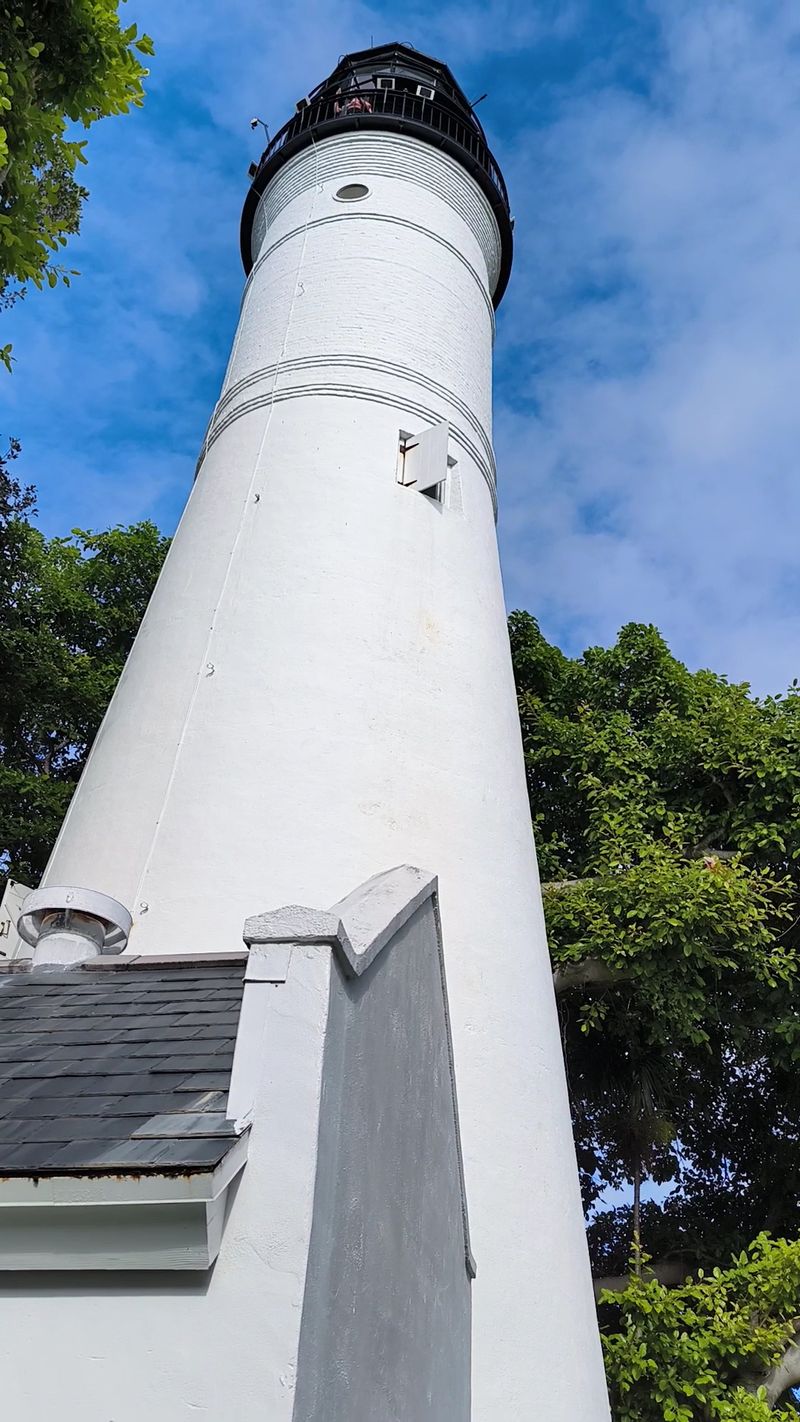
Eighty-eight steps. That’s all that stands between the sidewalk on Whitehead Street and one of the strangest, most satisfying views in the Keys.
The current light opened in 1848 after an earlier tower was lost, and it was tended early on by a woman keeper, unusual for the 1800s. The structure was raised to put the beam 100 feet above sea level in the 1890s, and it stayed lit straight through the Civil War, the only Florida light that did.
It was decommissioned in 1969 and now operates as a museum with the keeper’s quarters restored alongside it.
Climb up and Key West flattens out below you into a grid of tin roofs, palms, and pastel houses, with turquoise water on nearly every side. Placards on the observation deck point out landmarks scattered across the island, including the Hemingway House directly across the street.
Inside the quarters, exhibits cover maritime navigation and island history. There’s a gift shop and restrooms on site.
Open daily, 10 AM to 4:30 PM. Mornings are noticeably quieter, and street parking here is paid only.
6. Gasparilla Island Lighthouse
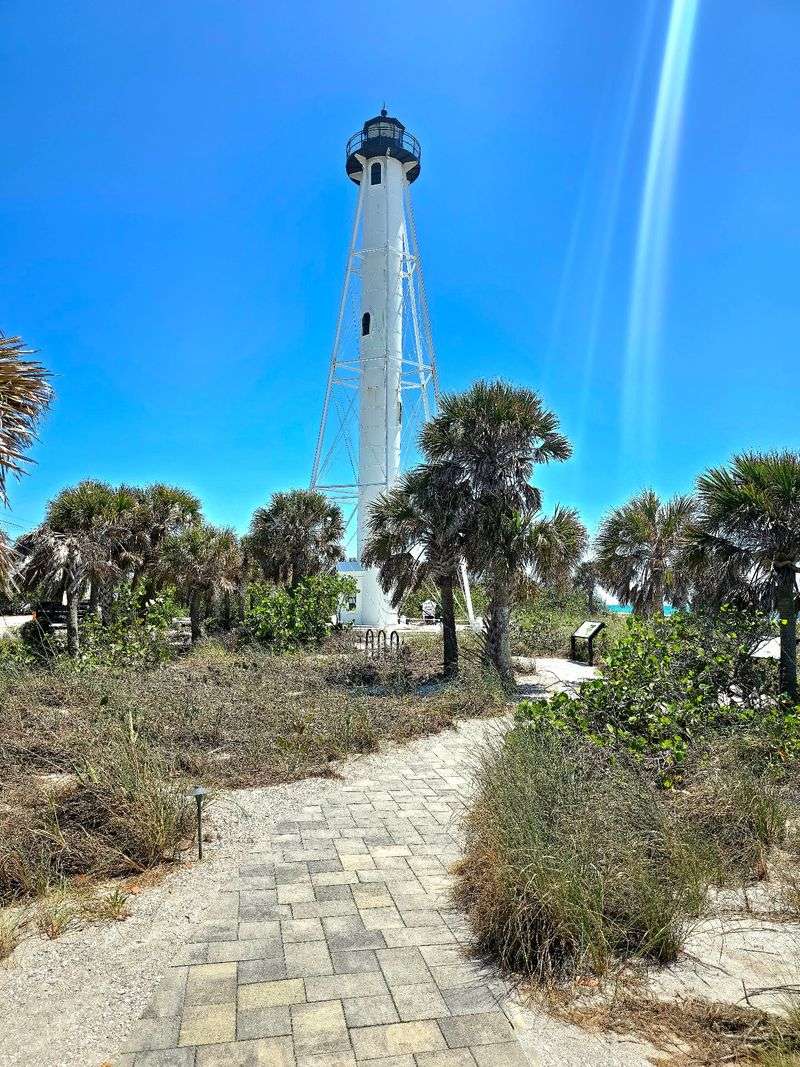
Gulf coast towers are scarce, and fewer still let anyone inside. Boca Grande’s 1927 lighthouse is one of the rare ones that opens its stairs to the public, which alone sets it apart from everything on the Atlantic side.
It’s a modest height compared to the giants up north, and that’s part of the charm. Volunteers who run the climb know the island’s history cold and share it before you head up.
At the top, the perspective shifts from ocean-scale to island-scale. Beach, dunes, and the shape of Gasparilla Island itself lay out below, with the Gulf running west and Charlotte Harbor waters working inland.
Climbing tours generally run from October through April, and time in the lantern room is limited to roughly fifteen minutes to keep the line moving. Children must be at least 48 inches tall to go up.
Down below, a museum covers island artifacts and local history in a quiet, unhurried setting.
Parking fills quickly. When the lot is full, the ball field down the street offers overflow space a short walk away.
Do not park illegally on the surrounding roads.
7. Pensacola Lighthouse & Maritime Museum
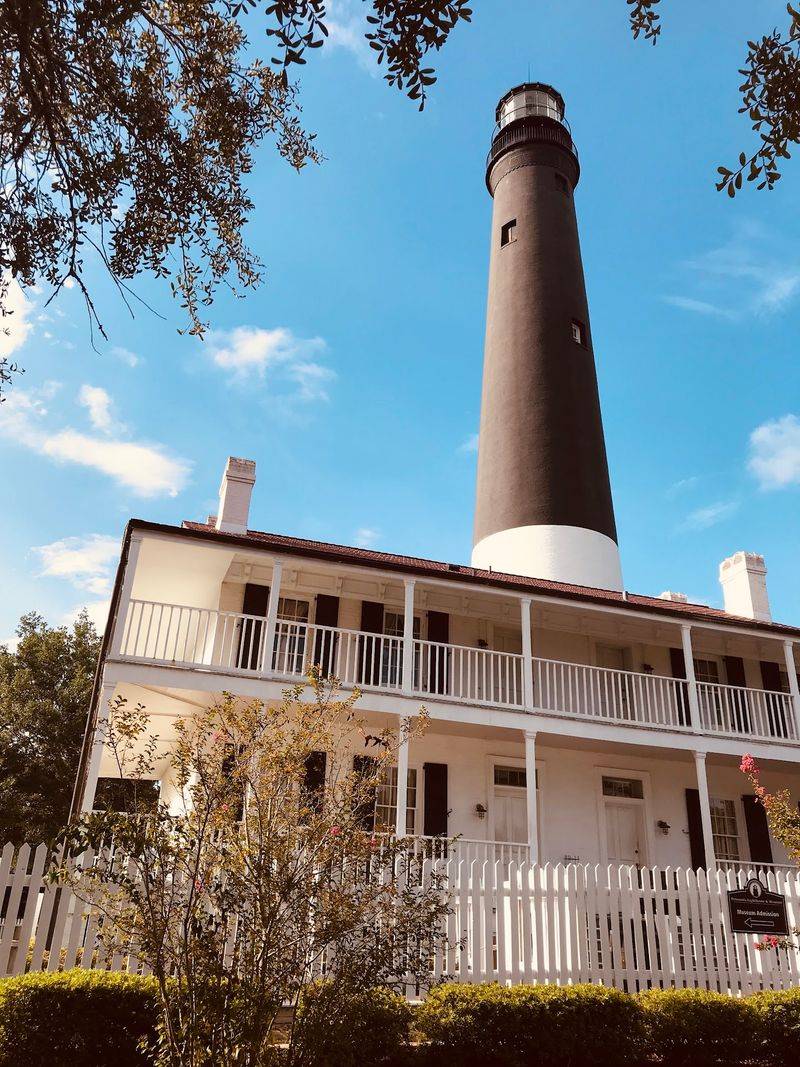
Up in the Panhandle, the coastline reads completely differently, and the tower at Pensacola is where that becomes obvious. Standing on Naval Air Station Pensacola, the 1859 light was first switched on New Year’s Day and now sits on the National Register of Historic Places.
The staircase runs 177 steps to a gallery 191 feet above sea level. From there the Gulf opens west, Pensacola Pass cuts through below, and the city skyline sits off to the north with the historic Navy Yard spread out nearby.
Three forts are visible from the same railing: Barrancas, McRee, and Pickens. When the Blue Angels practice overhead, the deck becomes an unusually good place to stand.
The Keepers’ Quarters below, built in 1869, holds a maritime museum with artifacts and exhibits covering the station and the Coast Guard, which still owns the light. Compact, but densely packed with material.
Hours run 9 AM to 4 PM daily. Saturday afternoons are the busiest window; weekday mornings are close to empty.
There’s a gift shop, restrooms, and parking on site. Because it sits on an active base, check access requirements before you go.