9 Colorado Basilicas, Cathedrals, And Shrines Made For A Meaningful 2026 Road Trip
I would not normally build a road trip around churches and shrines, but this list makes a strong case for it.
Across Colorado, these sacred sites bring together architecture, local history, art, reflection, and settings that can make even a short visit feel meaningful.
Some may catch your attention through craftsmanship, while others may stay with you for the atmosphere.
Who would have thought a quiet stop could add so much to a travel day?
I like that this route offers something slower and more thoughtful than a typical attraction list. It feels less about checking boxes and more about noticing what makes each place matter.
1. Cathedral Basilica Of The Immaculate Conception, Denver
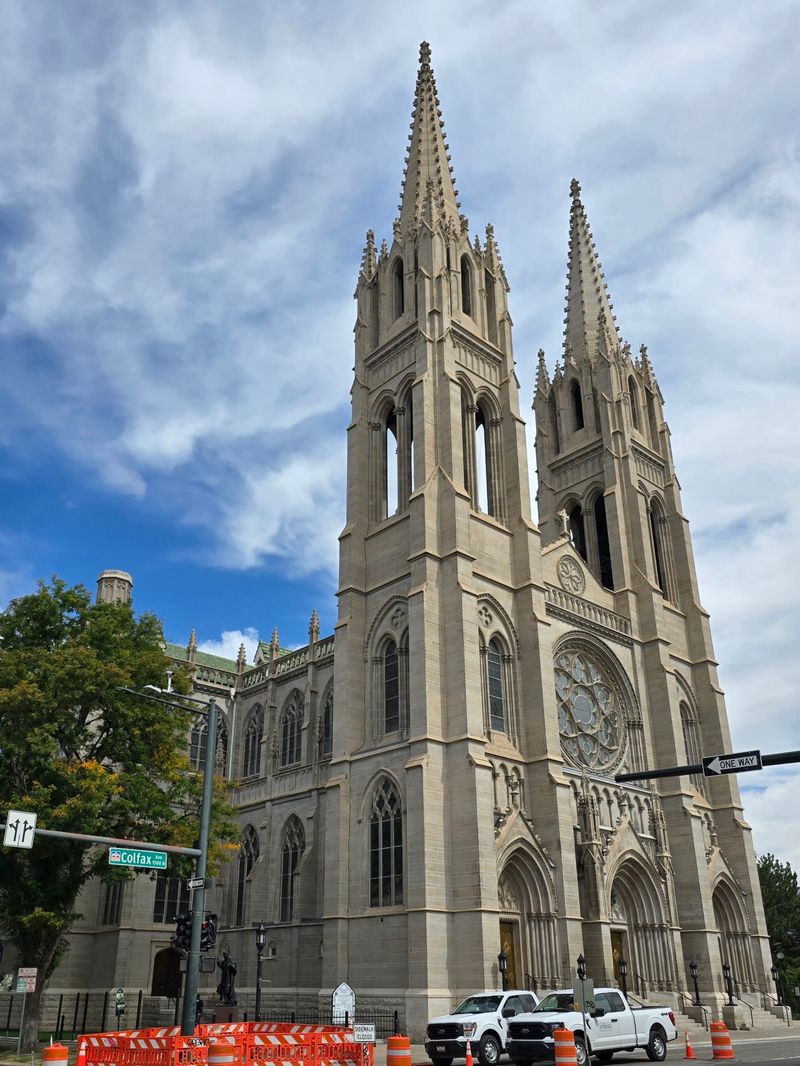
The cathedral’s twin Gothic spires rise 210 feet above East Colfax and are among its defining architectural features.
Construction began in 1902, and the structure was essentially complete by the time of its dedication in 1912. Its French Gothic towers climb 210 feet into the sky.
The foundation is Gunnison granite, the exterior is Indiana limestone, and Carrara marble was used for altars, statues, and other interior features. The design follows Amiens Cathedral in France, built back in the 13th century.
Inside, Italian Carrara marble statuary lines the aisles and side chapels. Stained glass from the Royal Bavarian Institute in Germany colors the light.
The cathedral’s pipe organ was originally installed by the W.W. Kimball Company, while the remodeled cathedral currently seats about 800 people.
Pope John Paul II named it a minor basilica in 1979. The cathedral was granted minor basilica status in 1979.
Visitors should plan around the cathedral’s current Mass and devotional schedule when exploring the interior.
Paid parking is available nearby, with free Sunday parking offered in the designated lot through the cathedral’s current parking system. The Colorado State Capitol sits just one block away for an easy add-on stroll.
You will find the basilica at 1530 Logan St, Denver. Start your road trip here, because everything after feels beautifully different.
2. St. Mary’s Cathedral, Colorado Springs
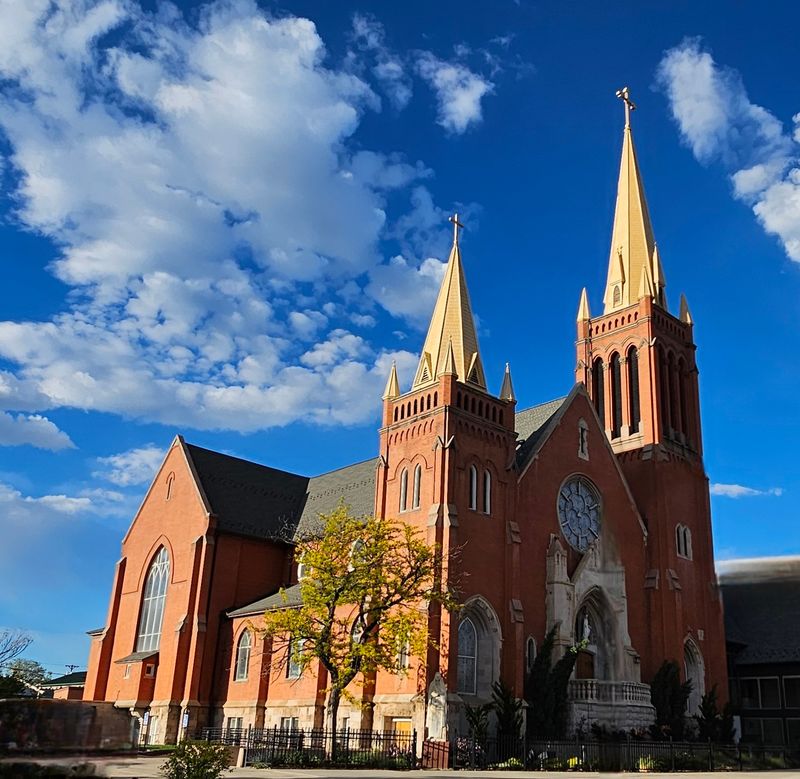
St. Mary’s Cathedral is a Gothic Revival church in downtown Colorado Springs.
St. Mary’s Cathedral in Colorado Springs serves as the mother church for its diocese. Construction of the underground church began in 1889 and it was dedicated in 1891, while the upper church was dedicated in 1898.
Bell towers arrived in 1902, with their pointed spires finished five years later. The timeline reads like a slow, careful labor of love.
Step through the doors and Gothic arched ceilings stretch overhead. Gothic arched ceilings and six side-aisle windows were added between 1902 and 1906.
A new pipe organ joined the sanctuary in 1916. More stained glass filled the clerestory and apse during work in 1923 and 1924.
A rose window was added over the choir loft in 1930, although the current window is a later addition. St. Mary’s became the cathedral when Colorado Springs became the see of the new diocese in January 1984.
A columbarium holding 864 niches opened along the east exterior wall in December 2005. Restoration of the apse and a new main altar were dedicated on March 25, 2022.
The cathedral is currently open for prayer during specified periods around its daily Mass schedule. Downtown cafes sit within a short walk for afterward.
The address is 22 W Kiowa St, Colorado Springs. Give yourself a full hour, because rushing here would be a shame.
3. Cathedral Of The Sacred Heart, Pueblo
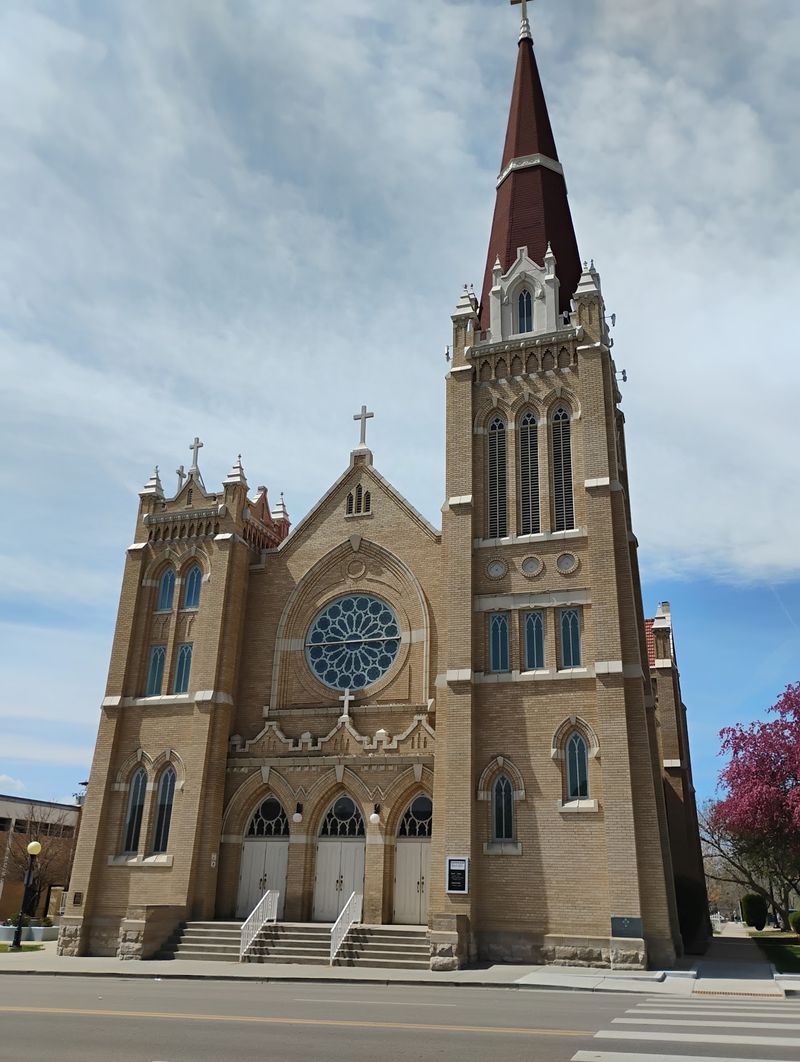
Pueblo’s Cathedral of the Sacred Heart is a historic Gothic Revival church completed in 1913.
The Cathedral of the Sacred Heart went up between 1912 and 1913. Gothic Revival lines show in its spire, pointed arch windows, and soaring vaults.
Architects Willison and Fallis drew the plans. Dedication day landed on April 10, 1913. Roots here run deeper still. Pueblo’s first parish began in 1873 under the name St. Ignatius.
The building became a cathedral in 1941 when the Diocese of Pueblo formed. The church became the cathedral of the Diocese of Pueblo in the early 1940s and continues serving as an active cathedral today.
Relics identified as those of Saint Blaise and Saint Lucy were permanently installed at the cathedral in 2017.
Stained glass came from Emil Frei’s St. Louis studio, and the colors still glow beautifully. Lightning struck the steeple in 2008, yet the tower stands firm.
The cathedral currently schedules Holy Hour on Fridays at 10:45 a.m. Check current street-parking conditions before arriving at the cathedral. Pair the stop with Pueblo’s Riverwalk for a relaxed afternoon.
Look for it at 414 W 11th St, Pueblo. Southern Colorado rewards travelers who take the extra exit.
4. Mother Cabrini Shrine, Golden
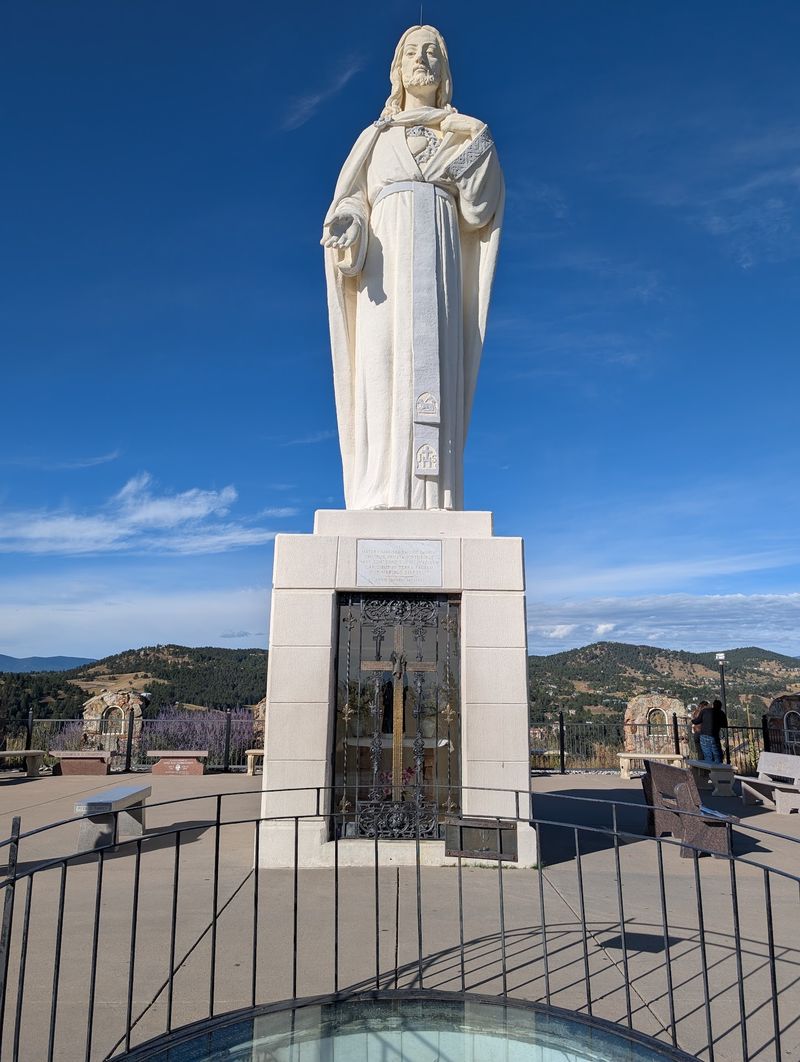
Just imagine for a second climbing 373 steps with the whole Front Range spread out behind you. The foothills air makes every landing count.
Mother Cabrini Shrine in Golden honors Saint Frances Xavier Cabrini, the first canonized citizen of the United States. She acquired the property beginning in 1909 for use as a summer camp for girls from the Queen of Heaven Orphanage.
Her plan was a summer camp for orphaned girls from the Queen of Heaven Orphanage. After her canonization in 1946, the hillside became a pilgrimage site.
A 22-foot statue of the Sacred Heart of Jesus was installed at the summit in 1954. The Stairway of Prayer leading up symbolizes the Stations of the Cross.
White stones at the top form a heart shape. They mark where Mother Cabrini dedicated the hill in 1912.
Plans for the Stone House were drawn in 1912 with a builder, and construction was completed in 1914 for use as a summer dormitory. Today it works as a retreat and conference center.
A replica of the Lourdes Grotto sits on the grounds. Nearby, a spring associated with the shrine dates to 1912, when Mother Cabrini directed the sisters where to dig for water.
Wear real shoes and carry water, since the altitude sneaks up fast. A chapel, museum, and Rosary Garden round out the grounds.
Find everything at 20189 Cabrini Blvd, Golden. The shrine grounds are currently open daily from 7 a.m. to 4:30 p.m., weather permitting.
5. Shrine Of St. Anne, Arvada
Call me silly, but a wrist bone brought back from France makes for a memorable travel story. Arvada keeps that relic on display.
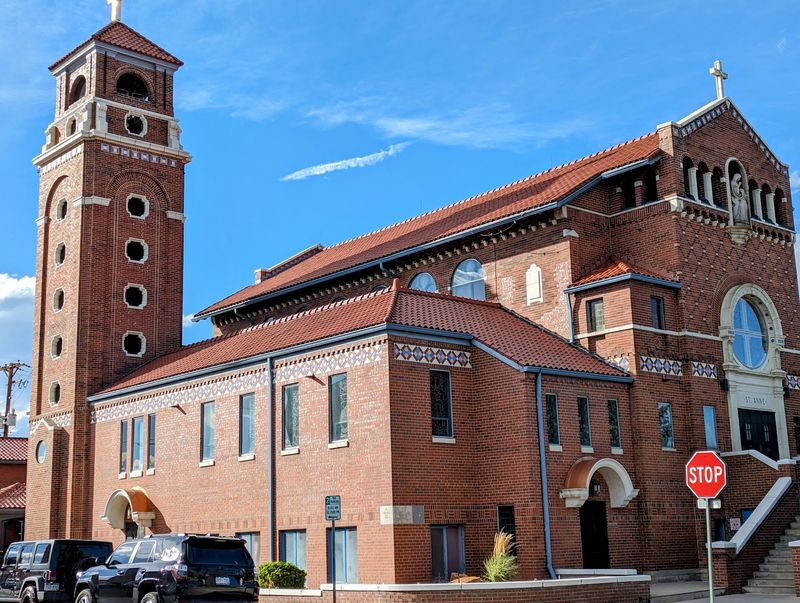
The present Shrine of St. Anne church dates to the early 1920s and remains an active parish in Arvada. The church houses a first-class relic associated with St. Anne.
The church continues to house the St. Anne relic as part of its devotional tradition. Small details like that make a stop memorable. The church is notable for its historic architecture and long presence in Arvada.
A shallow apse is framed by round arches with statue niches on either side. A white reredos and crucifix draw the eye above the altar.
Vaulted ceilings rise over rows of round-arched stained glass. The nave holds soft, steady light through most of the day.
The parish completed a substantial renovation of its worship space around its centennial period.
The church stands at 7555 Grant Pl, Arvada. Olde Town Arvada sits a few blocks away, perfect for coffee afterward.
6. Shrine Of The Stations Of The Cross, San Luis
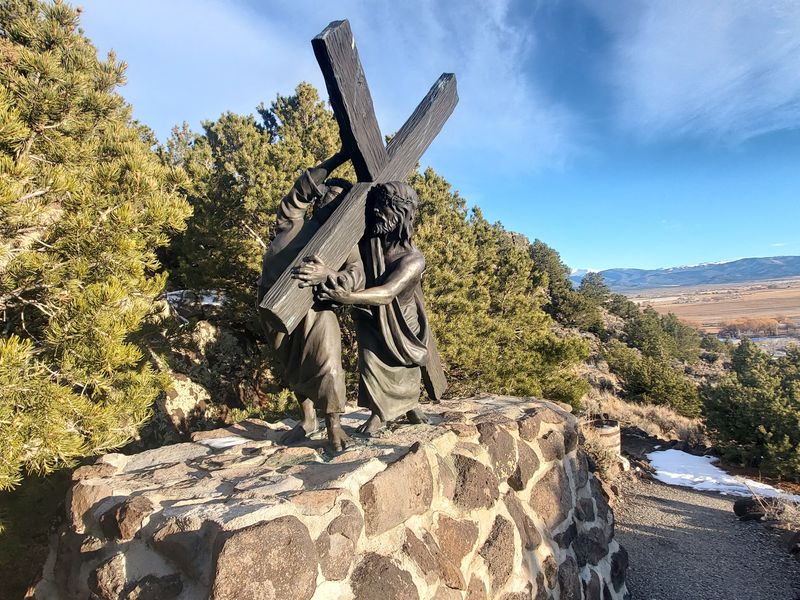
Colorado’s oldest town deserves far more attention. A mesa trail above it changes how you see the valley.
The Shrine of the Stations of the Cross rises over San Luis in Spanish-Moorish adobe style. Parishioners of Sangre de Cristo Parish built it themselves.
A roughly three-quarter-mile trail climbs the mesa past the bronze stations toward the chapel.
Fifteen bronze sculptures depict the Passion and Resurrection, with the Resurrection forming the final station. The bronze stations were created as part of the shrine project by a San Luis sculptor.
At the top waits La Capilla de Todos Los Santos, the Chapel of All Saints. At the top stands La Capilla de Todos Los Santos, an adobe chapel overlooking the San Luis Valley.
The chapel provides a simple devotional space at the end of the Stations of the Cross route.
A Memorial to the Spanish Martyrs nearby honors past priests with bronze busts. The whole hill reflects the Hispanic heritage of the San Luis Valley.
Go early or late, since midday sun on the mesa is fierce. Look for the trailhead at CO-159 and CO-142, San Luis.
The short climb combines bronze religious art, local heritage, and broad views across the San Luis Valley.
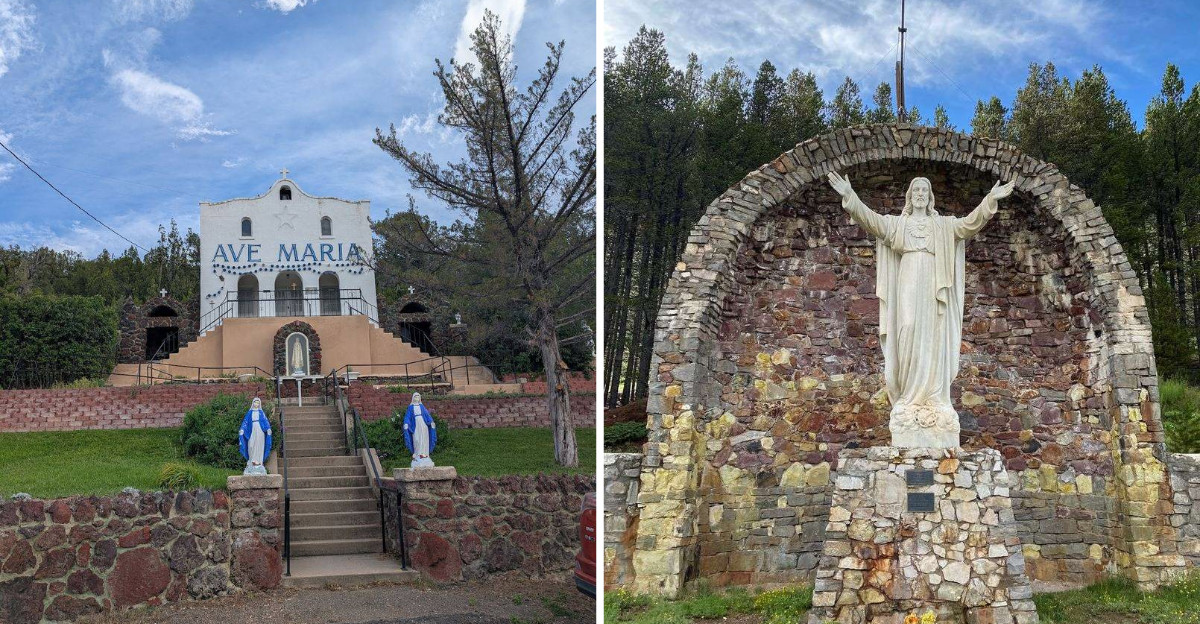
7. Ave Maria Shrine, Trinidad
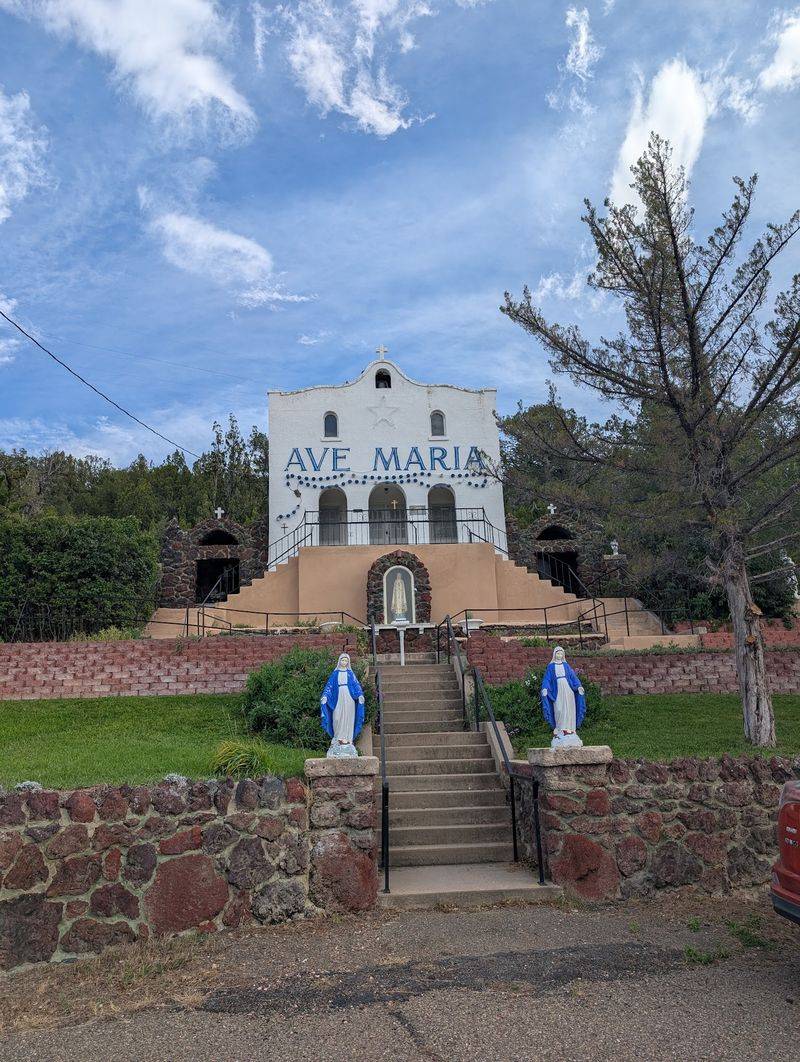
A large hillside shrine and chapel make this one of Trinidad’s distinctive Catholic heritage sites.
The Ave Maria Shrine grew from the devotion of Holy Trinity Parish. The Ave Maria Shrine is maintained as a Catholic devotional site connected with Trinidad’s local religious heritage.
Plans for the chapel began in 1934. A local Catholic group known as the Circolo Mariano pushed the project through.
Generations of families have maintained the site since. Their names appear inside and outside the chapel.
The parish preserves a 1908 origin story as a legend and explicitly states that it has been impossible to verify.
The chapel is modest in size but rich in detail. Statues of the Virgin Mary line the steps climbing toward the entrance.
The large rosary is one of the hillside shrine’s unusual visual elements. Photographers tend to spend longer here than planned.
Interior access should be arranged with the Trinidad parish in advance, preferably at least two days before visiting.
Trinidad’s brick-paved historic district pairs well with the stop. The shrine stands at 412 Benedicta Ave in Trinidad. The compact hillside shrine adds a different kind of stop to a southern Colorado road trip.
8. Christ Of The Mines Shrine, Silverton
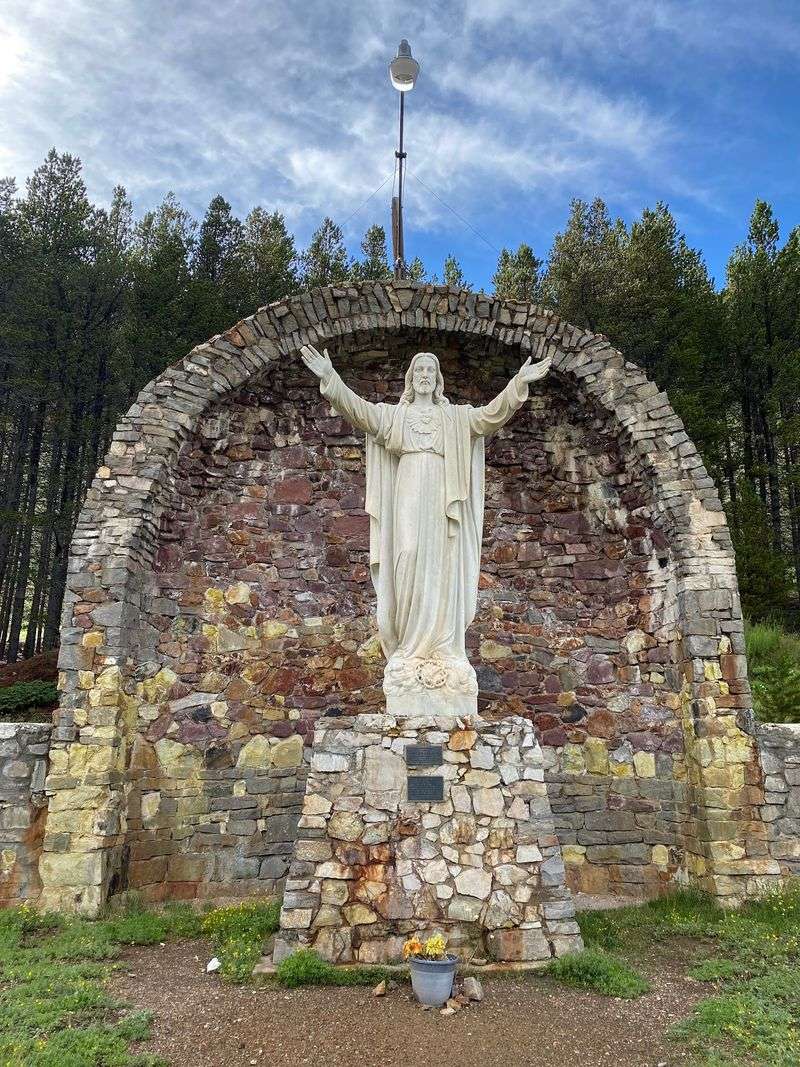
Hold on a moment, because a 12-ton marble figure watching over a mining town is not something you see every day. The San Juans deliver drama.
Christ of the Mines Shrine sits on Anvil Mountain above Silverton. The statue stands 16 feet tall and weighs twelve tons.
The Catholic Men’s Club of St. Patrick’s Catholic Church envisioned it in 1958. The shrine was conceived in 1958 during a period of severe economic difficulty for Silverton, when local mining activity had declined sharply.
Their hope was to lift both spirits and livelihoods. Community fundraising made the idea real.
Carvers used Italian Carrara marble, the same stone Michelangelo chose for his David. An alcove of local rock cradles the figure.
Work finished in 1959. Jesus appears with outstretched arms, the Most Sacred Heart on his breast, and a crown of thorns at his feet.
An original plaque asks God’s blessing on the mining industry of the San Juans. A second plaque added in 1982 recalls miners spared during a 1978 mine flood, which happened on a Sunday when the mine sat closed.
A short trail climbs from an unmarked parking area off 15th Street. The grade is steep but brief.
Road access is generally easiest in the warmer months, while snow and winter conditions can make reaching the shrine more difficult. Views of Silverton’s grid below are worth every step.
9. Camp St. Malo Shrine & St. Catherine Of Siena Chapel, Allenspark
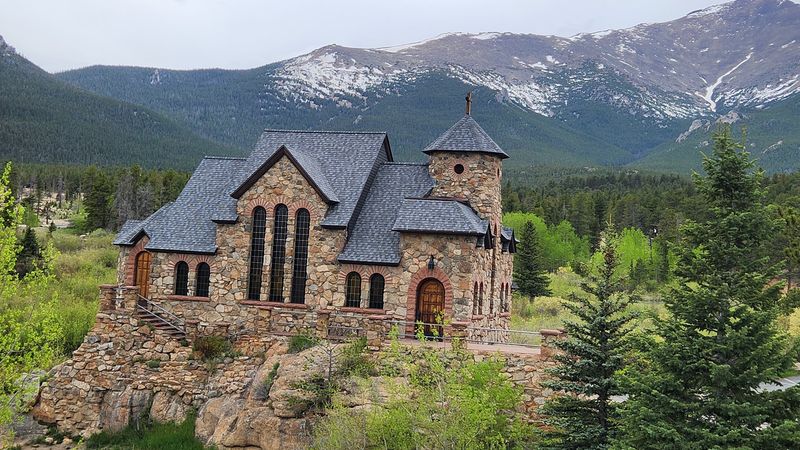
The Chapel on the Rock is widely recognized for its granite-rock setting beneath Mount Meeker.
Camp St. Malo Shrine and St. Catherine of Siena Chapel sits near Allenspark, widely known as the Chapel on the Rock. It functions as both a working chapel and a landmark.
The grounds belong to the Saint Malo Retreat, Conference, and Spiritual Center. Mount Meeker rises directly behind it.
The chapel story traces to 1916, when a group of campers found the rock after seeing a meteor or shooting star and connected it with the biblical image of building a church upon rock.
The Malo family purchased and gifted the property to the Archdiocese in 1934, funded construction of the chapel in 1935, and the chapel was dedicated in 1936.
Boulder County designated it a historic site in 1999.
A 2011 fire devastated the conference center, and flooding and mudslides damaged the property in 2013 while the chapel remained standing. The property later closed during restoration, and the chapel reopened in 2017.
Pope John Paul II prayed here during a 1993 trip to Colorado. He blessed the chapel during that stop.
A stained-glass window depicting St. Catherine from the Franz Mayer studio in Munich was installed in 1937.
Girls began attending camp programs in 1973, and the camp later became co-ed. Today the property operates as Camp St. Malo, with Mass currently offered on Saturdays and Sundays.
Drive to 10758 CO-7 in Allenspark; the property is currently open Tuesday through Sunday from 8 a.m. to 4 p.m.