This Small Colorado Mountain Town Was Just Voted The Best In The State
Somewhere in Colorado this year, a town of a few thousand people quietly beat Sedona, Moab, and Jackson. Nobody saw it coming, least of all the town.
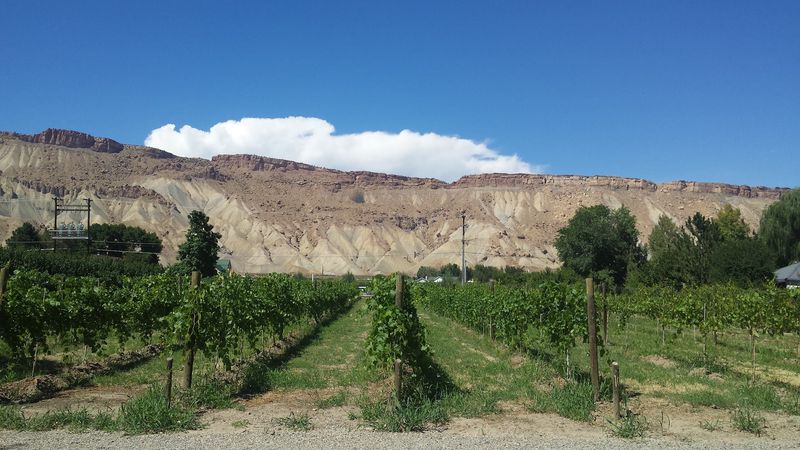
You will not find ski lifts here. What you will find are orchards running right up to the base of red cliffs.
The whole place smells like fruit for half the year. That is not a marketing line, it is just what happens.
Peaches are the headline act. Locals will tell you exactly which week to come, and they will be correct.
The growing season runs a hundred and eighty two days, which explains a lot. Fruit here gets time to become itself.
Mornings start at the farmers market and end somewhere on a bike or a raft.
Nobody rushes. The river does not, and neither does anyone standing next to it.
Come hungry, and then plan on leaving with the trunk full.
Peach Season Turns The Whole Valley Sweet
Palisade grows peaches that Coloradans talk about like family recipes. The fruit ripens mostly from July through September, and the town leans into it.
Roadside stands appear along the orchard roads with hand-painted signs. Growers sell by the box, the bag, and sometimes the single warm peach.
I bought one from a stand near the edge of town. The juice went down my wrist before I made it back to the car.
What makes them special is the setting. Hot days, cool nights, and irrigation water from the Colorado River create fruit with real sugar and real perfume.
Locals will tell you to eat the first one immediately. Do not refrigerate it, do not wait, just stand there and enjoy it.
Beyond peaches, the same orchards grow cherries, apricots, pears, and plums. The season stretches longer than most visitors expect.
Bring cash for the smaller stands. Some take cards, but the tiny family operations often prefer bills.
Go early in the day if you want the best selection. Popular varieties sell out by afternoon during peak weeks.
The Palisade Peach Festival each August draws crowds from across the state. Book lodging early if you want to attend.
A Main Street You Can Cross In A Minute
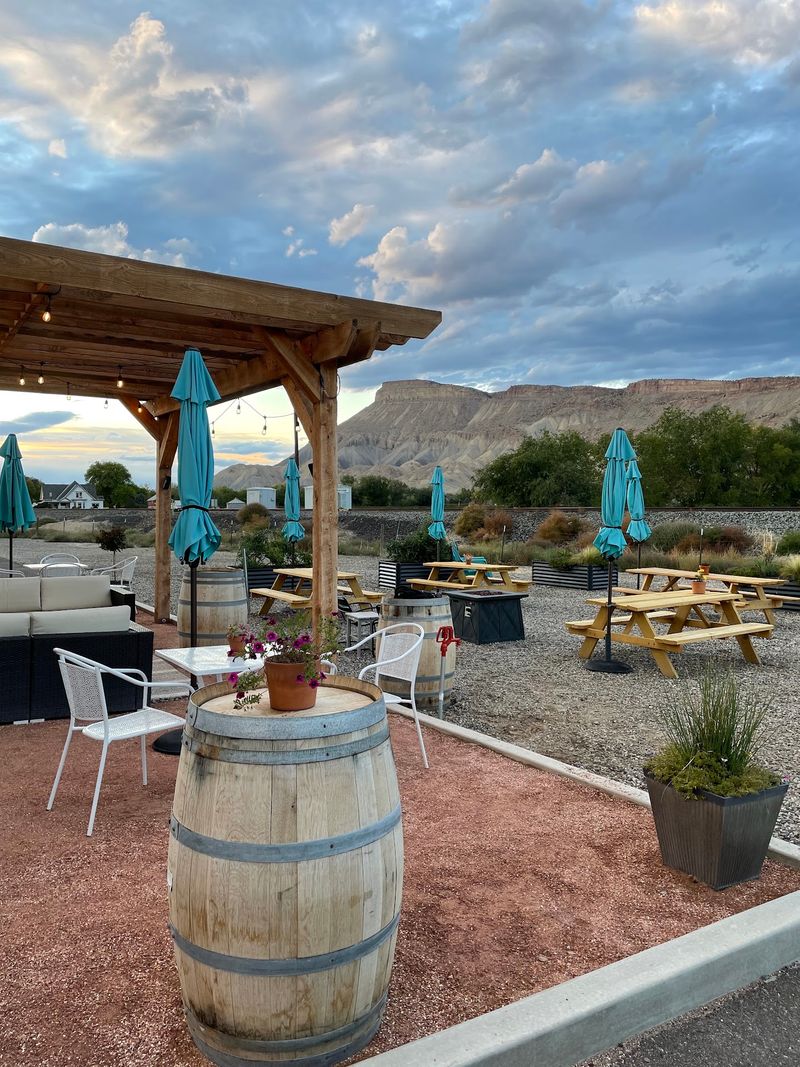
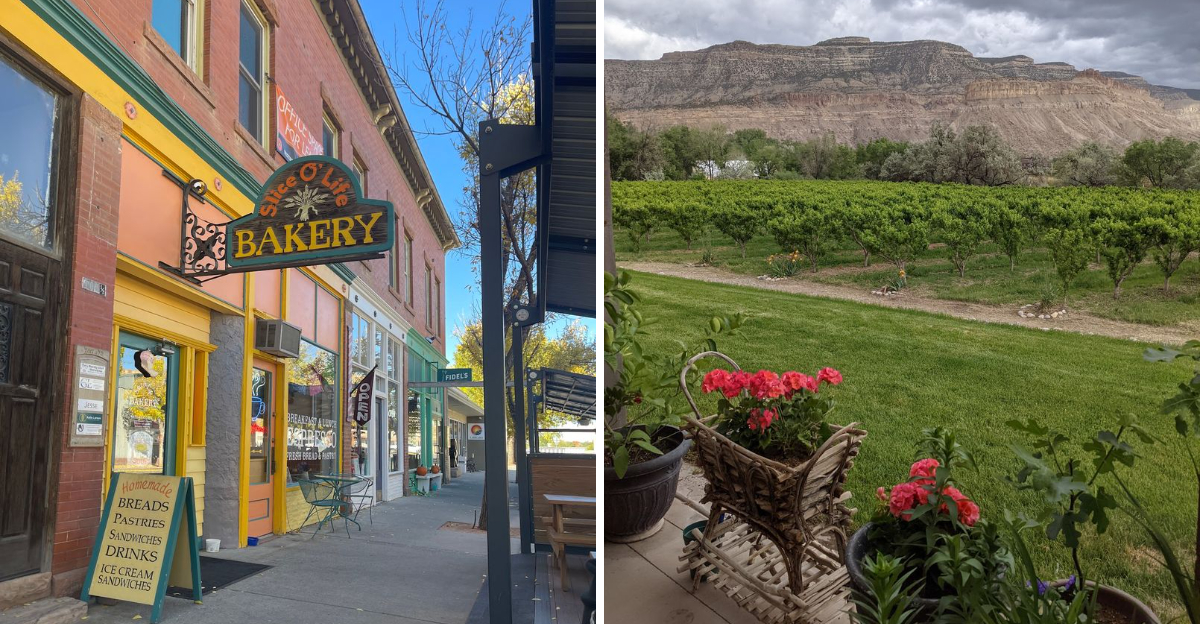
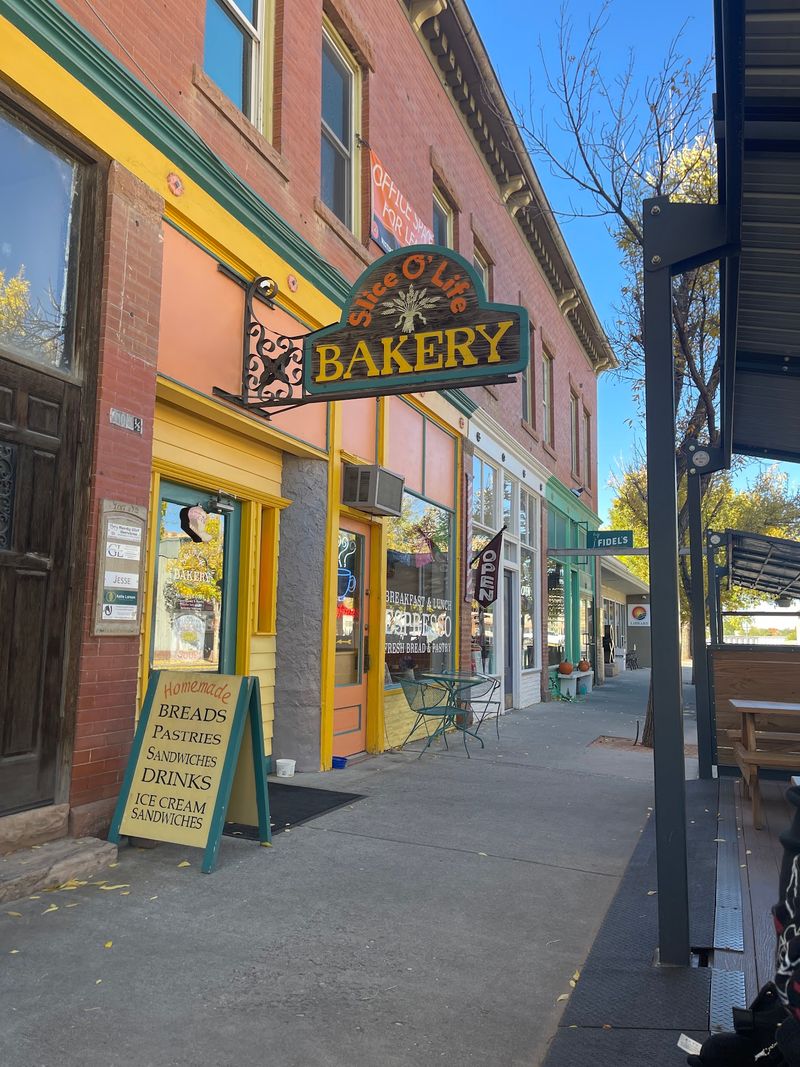
Downtown Palisade fits in your pocket. A few blocks of brick storefronts, planters full of flowers, and almost no traffic lights.
You can park once and walk everywhere. That alone sets it apart from busier Colorado mountain towns.
Shops here skew local. There are gift stores, a bakery, coffee spots, and places selling jam made from fruit grown a mile away.
I stopped in a small shop to ask for directions. The owner drew me a map on a receipt and recommended a lunch spot.
That kind of exchange happens often. Palisade has fewer than three thousand residents, and people notice new faces.
Benches sit under shade trees, which matters in July. Summer afternoons get genuinely hot in the valley.
The pace is slow on purpose. Nobody rushes you out of a chair or a conversation.
Public restrooms and a small park make it easy with kids. There is space to let them run while you finish coffee.
Evening light hits the brick buildings beautifully. Photographers should plan for the hour before sunset.
If you visit on a weekend, expect a small crowd but never a crush. That balance is exactly why people vote for this town.
Riding The Fruit And Wine Byway On Two Wheels
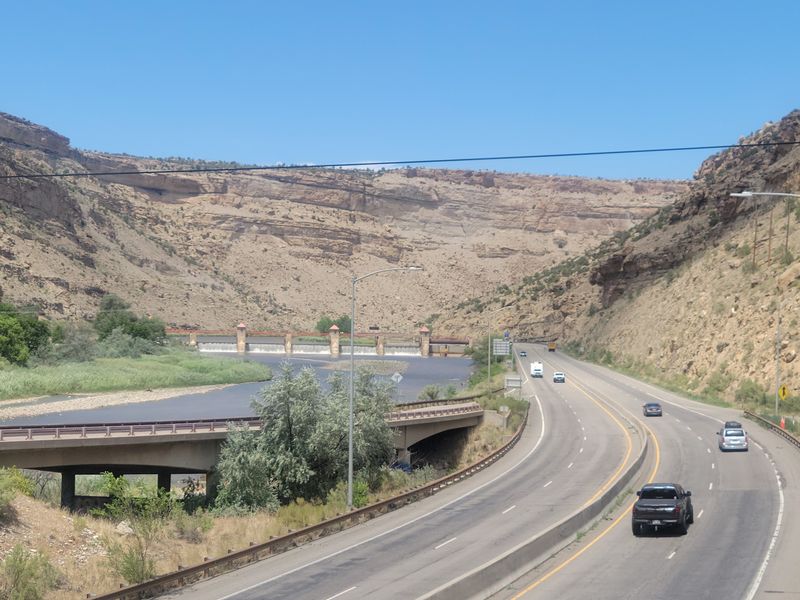
Colorado usually means climbing. Palisade offers something rare: flat, quiet roads with mountain views on every side.
The Fruit and Wine Byway loops past orchards, farms, and fields. Cars are few and the pavement is mostly gentle.
Rental shops in town offer cruisers and e-bikes. Helmets and maps usually come with the rental.
A friend of mine rode the loop and called it the easiest scenic ride of her life. She stopped four times for fruit.
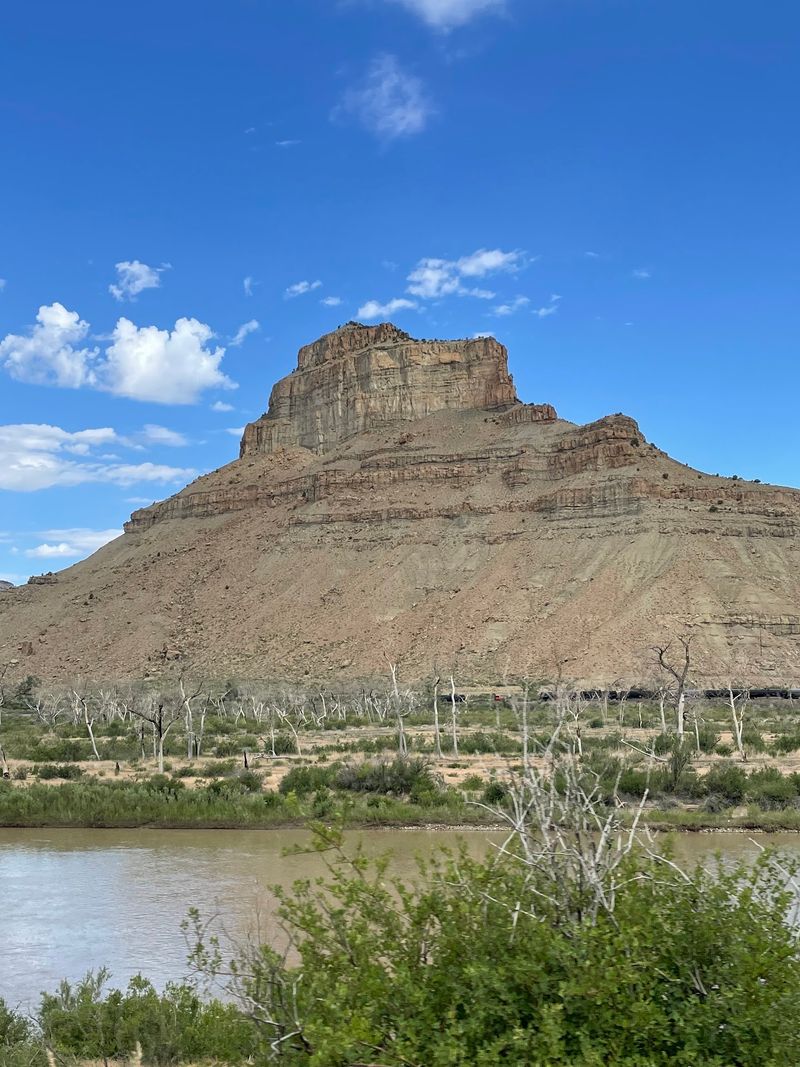
Mount Garfield rises to the north like a giant stone wall. It follows you the entire ride, which never gets old.
Morning is the smart choice in summer. By noon the valley heat becomes serious business.
Bring more water than you think you need. Shade is limited between farm properties.
Fall might be even better. The leaves turn gold, temperatures drop, and harvest activity fills the fields.
The route is signed, but downloading a map helps. Cell service is fine in most spots but not all.
Riders of all skill levels can handle it. That accessibility is a big part of Palisade’s appeal.
Plan three to four hours if you stop often. You will want to stop often.
Mount Garfield Stares Down At Everything
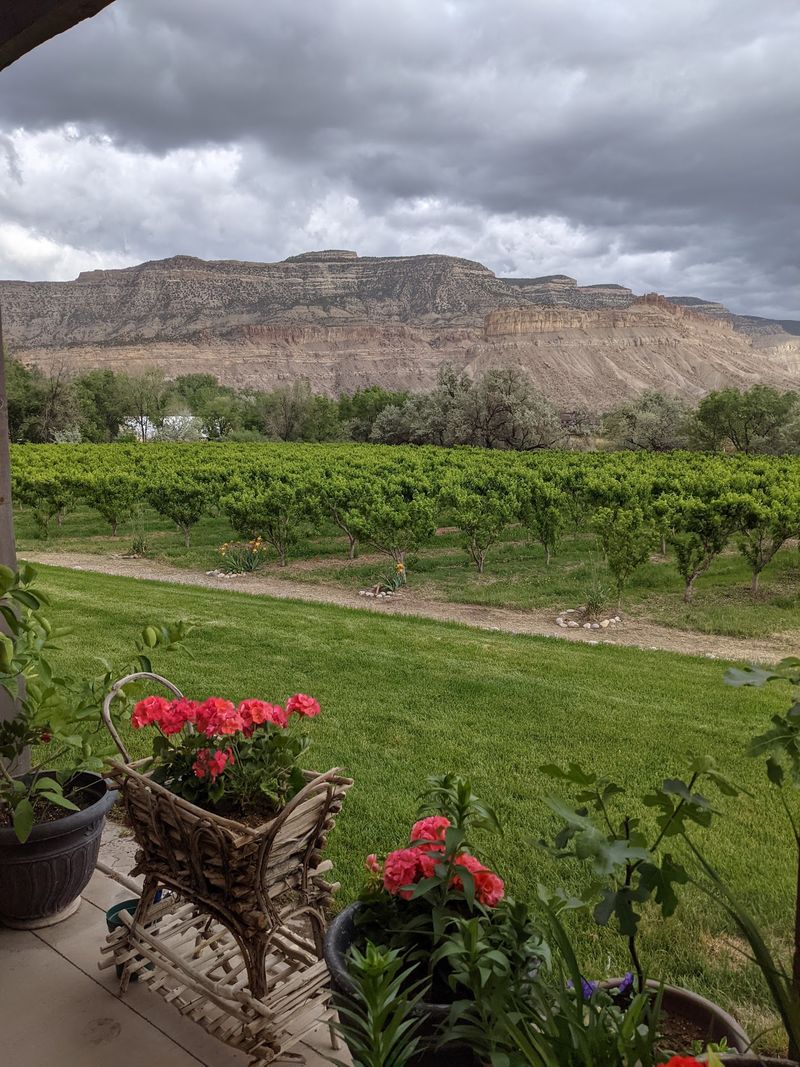
Some towns have a mountain. Palisade has a monument.
Mount Garfield rises above the valley in bands of gray and red rock. It dominates every photo whether you plan it or not.
The hike to the top is short but demanding. Roughly two miles up with a steep, steady grade.
Hikers gain over two thousand feet in that distance. There is very little flat ground to catch your breath.
Start before sunrise in warm months. The trail faces the sun and offers almost no shade.
The reward at the top is enormous. You see the whole Grand Valley, the river, and the orchards laid out in green rows.
Sturdy shoes matter here. Loose rock and clay make the descent trickier than the climb.
Not a hiker? The view from town is spectacular on its own.
Sunset turns the cliff face orange and pink. Pull over anywhere along the byway and watch.
The Book Cliffs stretch east from Garfield for miles. Geologists study these formations regularly.
Locals use the mountain as a landmark and a weather gauge. Clouds on Garfield usually mean a change is coming to the valley.
Farm Stands, Lavender Fields, And Honest Food
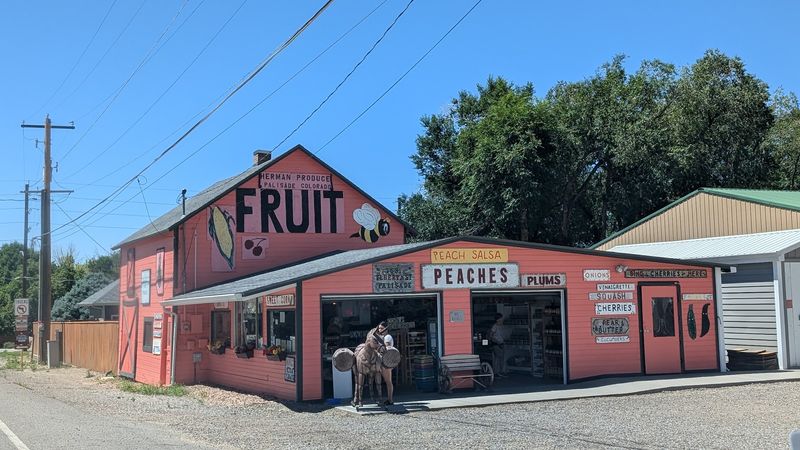
Food in Palisade travels a very short distance. Sometimes fifty feet from field to table.
Farm stands sell tomatoes, corn, melons, and greens alongside the famous fruit. Prices tend to be fair and portions generous.
Lavender farms operate here too. Rows of purple stretch out against the dry hills, and the smell carries on the breeze.
Several farms offer u-pick options during peak season. Kids love filling their own buckets.
Restaurants downtown use local produce in obvious ways. Peach salsa, fruit pies, and seasonal salads show up on menus.
I had a slice of peach pie at a small cafe. The crust was uneven and the filling was perfect.
Homemade jam makes an excellent souvenir. It packs well and survives the drive home better than fresh fruit.
Farmers markets run during the warm months. Check local listings since days can shift year to year.
Talk to the growers if they have a minute. They know which variety is best that exact week.
Peach ice cream shows up in summer and disappears fast. Get it while it lasts.
Simple food, done well, with nothing hiding behind fancy words. That is the whole approach here.
The Colorado River Runs Right Through Town
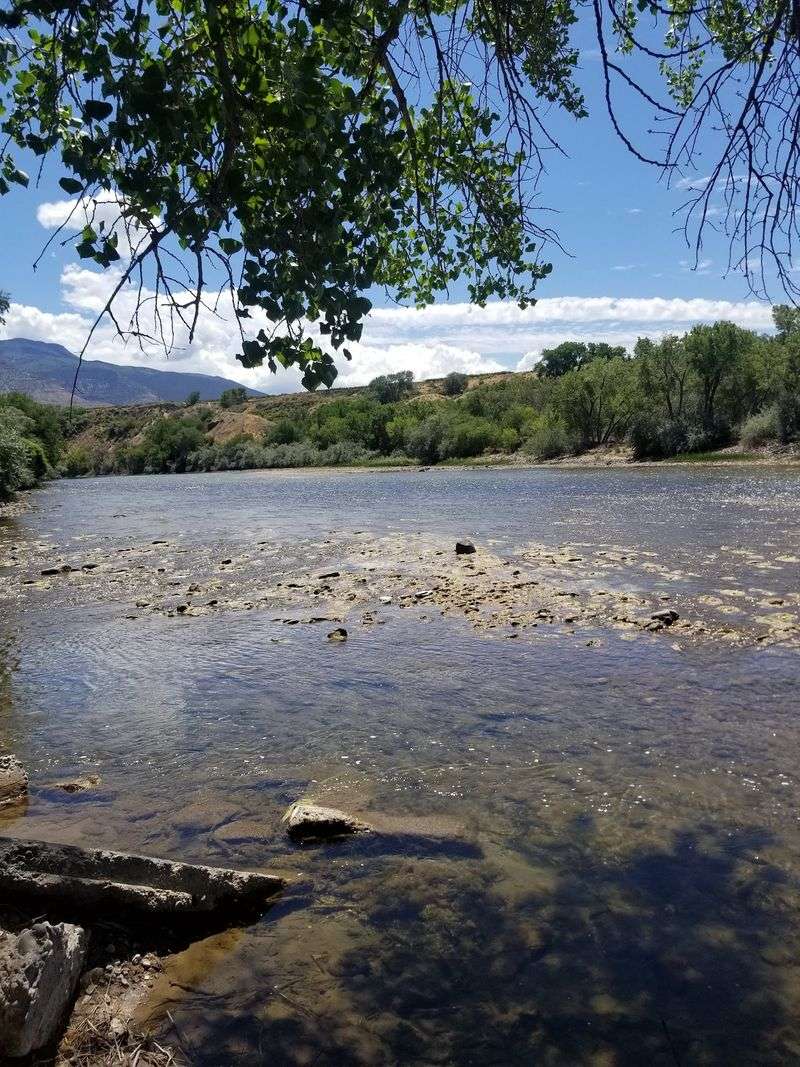
Water built this place. Without the Colorado River, those orchards would be desert scrub.
The river flows along the edge of town and shapes everything about it. Irrigation canals fan out across the valley.
Riverfront trails offer easy, flat walking. Cottonwoods provide shade and birds fill the branches.
Rafting and float trips launch from nearby access points. Sections here are calm enough for families.
Fishing is popular along certain stretches. Check current state regulations before casting a line.
The Palisade Plunge mountain bike trail also starts nearby. It drops thousands of feet down from Grand Mesa.
That trail is famous among serious riders. It is long, technical, and not for beginners.
Riverside picnic spots make a good midday break. Bring a blanket and whatever you bought at the farm stand.
Sunset over the water reflects the cliffs. It is a quiet, easy way to end a day.
Wildlife shows up regularly. Herons, hawks, and deer are common sights near the banks.
The connection between river, soil, and fruit is the whole story of Palisade. Once you see it, the town makes complete sense.
Grand Mesa Sits Just Up The Road
Drive thirty minutes uphill and the temperature drops twenty degrees. That is the Grand Mesa effect.
Grand Mesa is one of the largest flat-topped mountains in the world. It rises to over ten thousand feet.
Hundreds of small lakes dot the top. Fishing, hiking, and camping are all popular up there.
Pine forests replace orchards quickly as you climb. The change happens faster than you expect.
Summer visitors use the mesa as an escape from valley heat. Bring a jacket even in July.
Fall brings aspen groves turning gold across the slopes. The scenic byway gets busy on those weekends.
Winter opens up snowshoeing and cross-country skiing. Roads can close, so check conditions first.
Wildlife viewing is strong here. Elk, deer, and moose have all been spotted on the mesa.
Having both worlds within one short drive is unusual. Peaches in the morning, alpine lakes in the afternoon.
Pack layers and water for any mesa trip. Weather changes quickly at that elevation.
The contrast is what visitors remember most. Few places in Colorado offer that kind of range so close together.
Small Town Warmth That Feels Genuine
The best thing in Palisade is not on any map. It is the people.
Shop owners remember faces. Farmers explain their growing methods without being asked.
I asked one grower a simple question about pruning. Fifteen minutes later I understood why the fruit tastes the way it does.
Community events fill the calendar through the warm months. Festivals, markets, and small parades bring everyone out.
Lodging leans toward inns, bed and breakfasts, and small rentals. Big chain hotels have not taken over.
Prices generally run lower than the famous ski towns. That alone surprises a lot of first-time visitors.
Grand Junction is about fifteen minutes away for larger stores and an airport. Convenience without the crowds.
Autumn is my favorite season here. Harvest energy, cool mornings, and gold leaves along the byway.
People who come for one afternoon often extend to two days. The town has that effect.
Nothing here feels staged for tourists. It is a working farm town that happens to be beautiful.
That honesty is why it keeps winning votes. Palisade does not perform for you, and somehow that makes it unforgettable.