Colorado Has A National Monument With Six Ancient Villages Still Standing And Almost Nobody Talks About It
Colorado has ruins older than almost anything you learned about in school. Most people drive right past without a clue.
That is genuinely their loss.
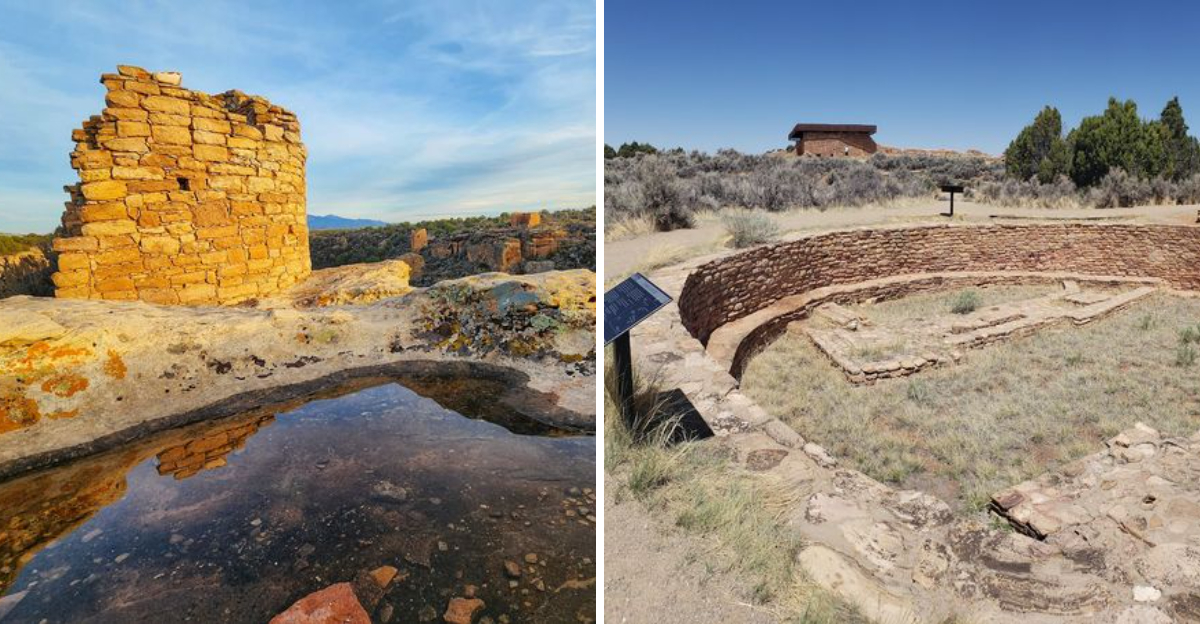
Picture stone towers still standing after seven hundred years. Picture six ancient villages built by skilled hands long before Europeans arrived.
The masonry is so precise it looks impossible.
These were real communities, with homes, ceremonies, and clever water systems. Thousands of people lived here, then vanished for reasons we still cannot fully explain.
The mystery hangs in the air as you explore.
The best part is the quiet. This place sees a tiny fraction of the crowds that swarm the famous parks.
You can wander the trails almost alone.
Bring water, good shoes, and a sense of wonder. History this old rarely feels this close.
The Big Picture
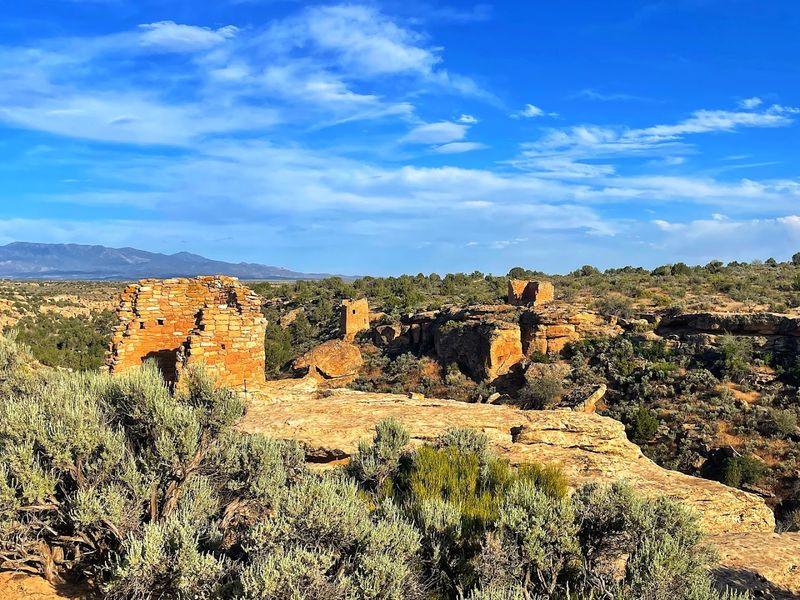
Hovenweep National Monument sits right on the Colorado-Utah border, and it does not look like much from the road. Then you walk to the canyon rim and your jaw quietly drops.
Six separate village sites spread across nearly 785 acres of high desert terrain, each one built by ancestral Puebloan people between roughly 1200 and 1300 CE.
The name Hovenweep comes from a Ute and Shoshone word meaning deserted valley. There is something poetic about that, because the place is far from empty.
It is loaded with history, architecture, and a kind of silence that feels intentional.
What makes Hovenweep stand out from other ancestral sites is the sheer variety of tower shapes. Round, square, D-shaped, and oval structures dot the canyon edges in ways that still puzzle researchers.
The monument receives fewer than 50,000 visitors a year, compared to Mesa Verde’s 600,000. So if you show up on a Tuesday in May, you might have an entire ancient village almost entirely to yourself.
Square Tower Group
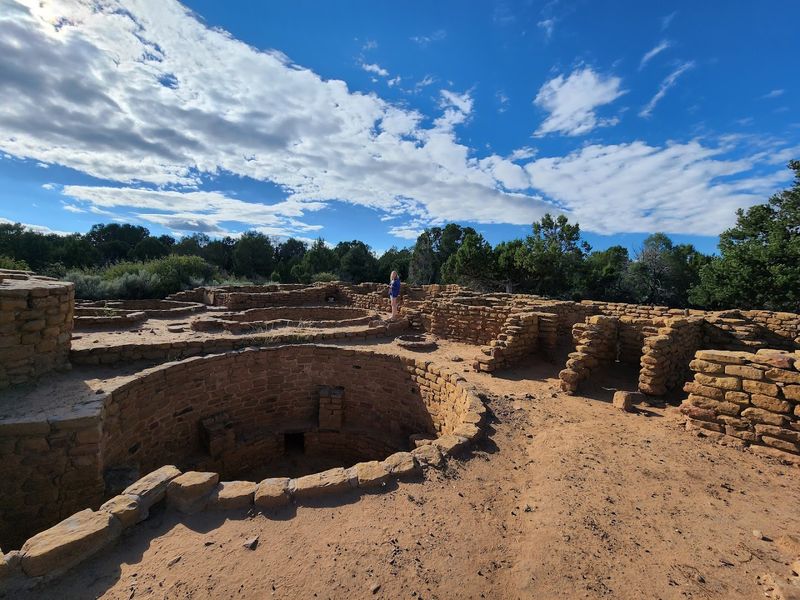
Square Tower Group is the main event at Hovenweep, and the two-mile loop trail that circles it is one of the most underrated short hikes in the entire Southwest.
The trail winds along both rims of Little Ruin Canyon, dropping into the canyon floor and back up again while passing dozens of standing structures.
The towers here were built directly on top of boulders, using the rock as a foundation. Some structures perch so dramatically over the canyon edge that it looks like a dare.
Hovenweep Castle, despite its name, is not actually a castle. It is a multi-room complex with two towers attached, and it is genuinely impressive up close.
Researchers believe many of these towers may have served as celestial observatories. Doorways and windows in certain structures align with the sun during solstices and equinoxes.
That detail alone changes how you look at every wall and opening as you walk the trail. Bring water, wear real shoes, and give yourself at least two hours.
The light in the late afternoon turns the sandstone walls a deep amber that no photo fully captures.
Cajon Village
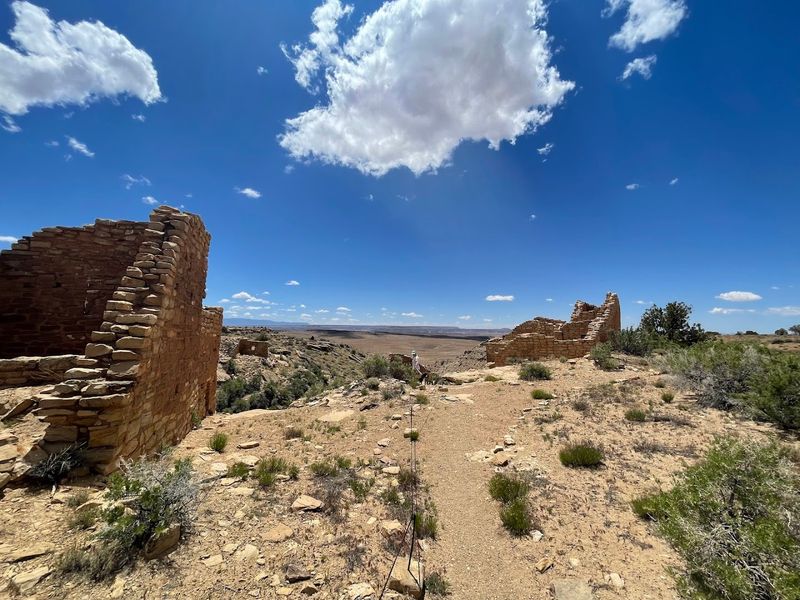
Cajon Village is the only one of the six sites located entirely in Utah, and getting there requires a bit more driving on unpaved roads.
That extra effort keeps the crowds away, which means you get a genuinely solitary experience at a site that is just as remarkable as the main group.
The village sits on an open mesa rather than a canyon rim, giving it a completely different visual feel from Square Tower.
The structures here include a large pueblo, a tower, and several kiva depressions, which are circular underground ceremonial chambers now visible only as shallow indentations in the earth.
One thing that surprises visitors at Cajon is how much of the original masonry still stands. The dry desert air has been remarkably kind to these walls over 700 years.
You can stand next to stonework that was carefully laid by hand centuries ago and still see the individual stones fitting together with real precision.
No mortar. Just skill.
The site also has a small spring nearby, which explains why people chose to build here in the first place. Water in the desert changes everything.
Holly Group
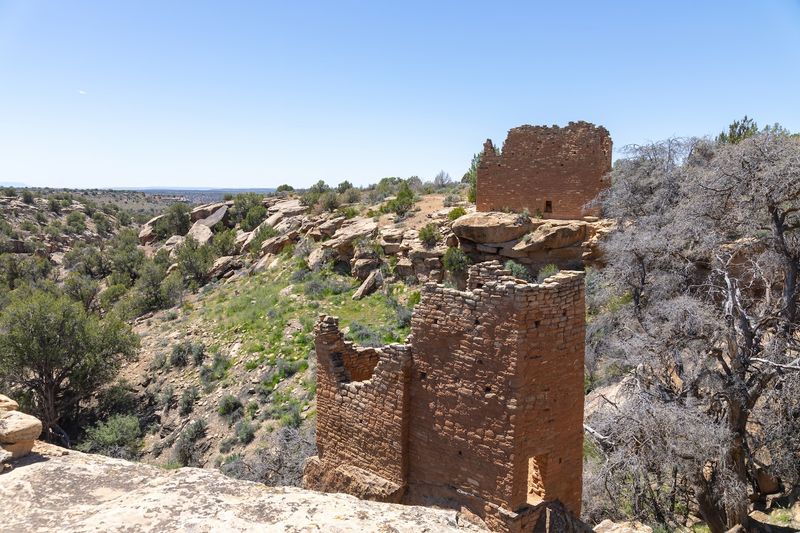
Holly Group requires a short hike from a trailhead on a dirt road, and that small barrier means most casual visitors skip it entirely. That is their loss.
Holly is one of the most fascinating sites in the entire monument, partly because of what researchers found on a nearby rock face.
A series of spiral petroglyphs at Holly appear to function as a solar calendar. On the summer solstice, a dagger of light passes directly through the center of one of the spirals.
The ancestral Puebloans who built this site were tracking the sky with serious precision, and they marked it in stone. That is not a coincidence.
That is engineering.
The ruins themselves include a great house, a tower, and several smaller structures arranged around a natural boulder.
The setting feels more intimate than Square Tower Group, with canyon walls close on both sides and juniper trees growing right up to the masonry.
I visited on a cool morning in October and had the entire site to myself for nearly an hour. The quiet was the kind that makes you slow down and actually look at things.
Holly earns every extra mile of dirt road it takes to reach it.
Hackberry Group
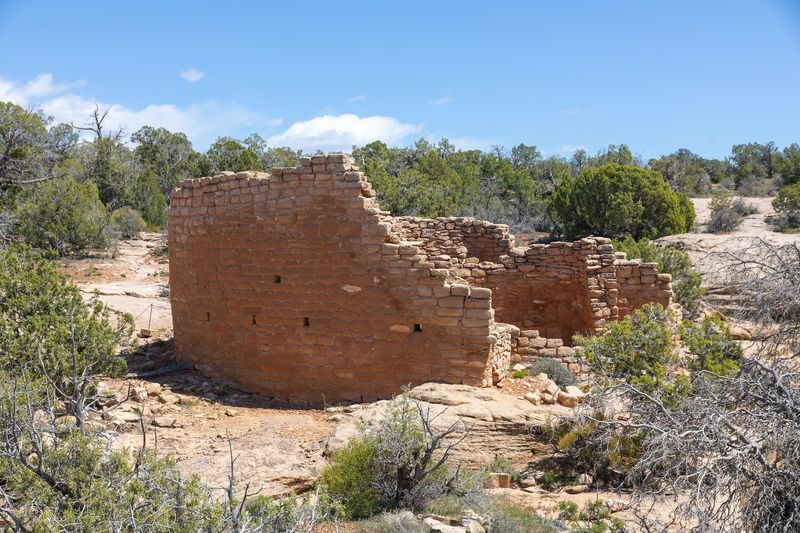
Hackberry Group sits just north of Holly along the same drainage, and the two sites are sometimes visited together on a longer half-day hike.
Hackberry has a more rugged feel than the main group, with structures built right at the edge of a narrow canyon that drops sharply below the ruins.
The towers here lean slightly in ways that make you wonder how they are still standing. Erosion has taken portions of the canyon wall over the centuries, and some structures have clearly lost sections to collapse.
What remains is still striking, especially a round tower that sits on a large boulder directly above the canyon floor.
Hackberry is also a good spot for birding. Ravens nest in the canyon walls near the ruins, and you can often hear them calling before you see them.
Pinyon jays move through the junipers in noisy flocks during fall migration.
The combination of ancient architecture and active wildlife makes the site feel alive in a way that purely preserved monuments sometimes do not.
Pack a lunch, sit on a flat rock above the canyon, and let the place settle over you. Hackberry rewards patience more than almost any other site here.
Cutthroat Castle Group
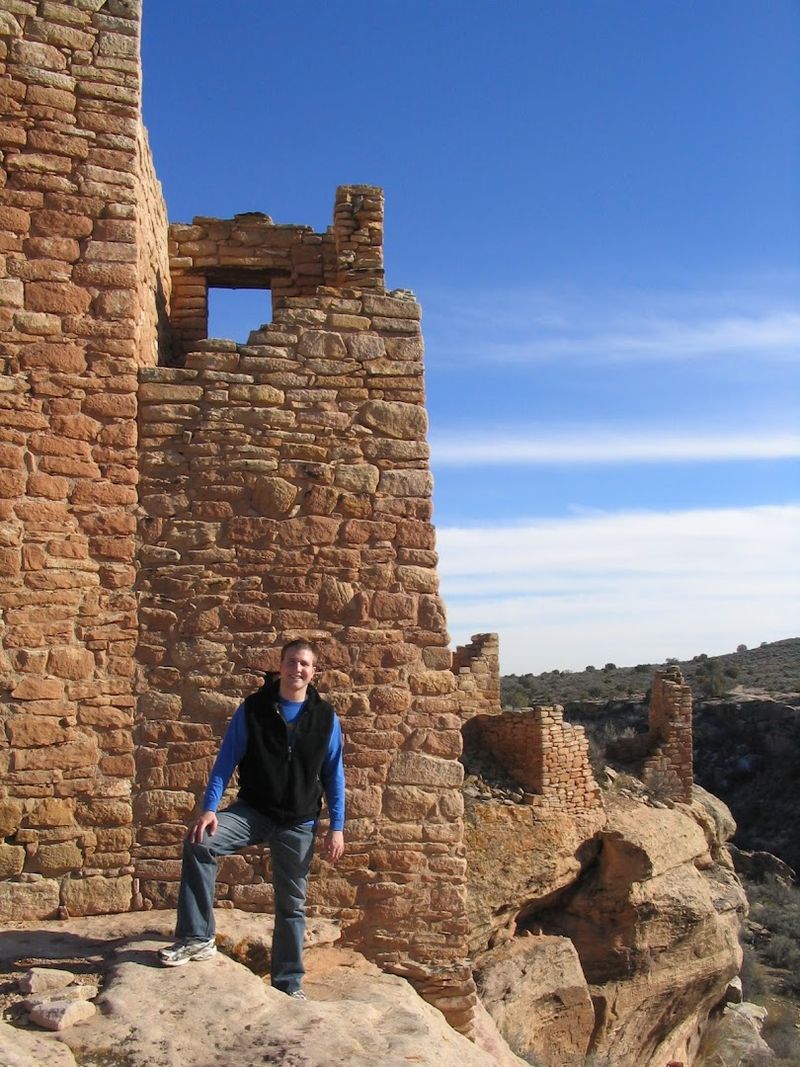
Cutthroat Castle Group has the most dramatic name at Hovenweep, and it also has the most dramatic access situation.
Reaching it requires driving several miles on unpaved roads that are not always suitable for low-clearance vehicles. Call the visitor center before you go and ask about current road conditions.
Seriously, just call.
The site sits at the head of a canyon in Colorado, and the ruins include a large round tower, a rectangular tower, and the remains of a multi-room pueblo.
The masonry is some of the finest at Hovenweep, with carefully shaped stones fitted together in courses that have survived centuries of freeze-thaw cycles in the high desert.
What makes Cutthroat feel different from the other sites is the sense of genuine remoteness. There are no other visitors, no background hum of a parking lot, no interpretive signs every twenty feet.
It is just you, the ruins, and a landscape that looks almost exactly as it did when people lived here 700 years ago. That kind of unfiltered connection to the past is increasingly rare.
Cutthroat Castle is not the easiest site to reach, but that is precisely the point. Some things are worth the extra effort.
Horseshoe And Hackberry
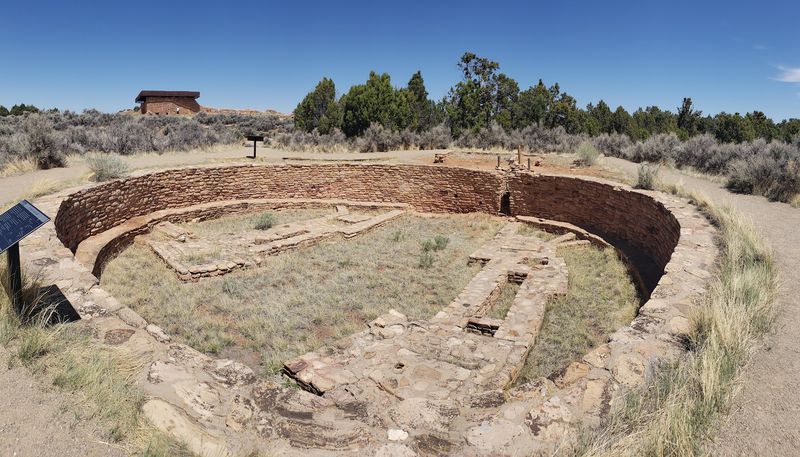
Horseshoe Group gets its name from a large curved wall that follows the shape of the canyon rim it sits on.
The wall itself is one of the more visually unusual features at Hovenweep, sweeping around a natural amphitheater of rock in a way that feels almost deliberate in its elegance.
Architecturally, it is unlike anything else at the monument.
Horseshoe is typically visited alongside Hackberry because the two sites are close together and connected by a trail.
Combined, they make for a solid three to four mile round trip with plenty of ruins to explore and good views down into the canyon drainage below. The trail is well-marked but not paved, so expect some scrambling over rocks.
Spring and fall are the best seasons for this hike. Summer temperatures in the high desert can push well past 95 degrees by midday, and there is almost no shade on the trail.
The monument sits at around 5,200 feet elevation, which means the sun feels stronger than you expect. Early morning starts are your best friend here.
The light is better for photography anyway, and the ruins look completely different in morning light than they do at noon. Horseshoe at sunrise is genuinely something to see.
Planning Your Visit
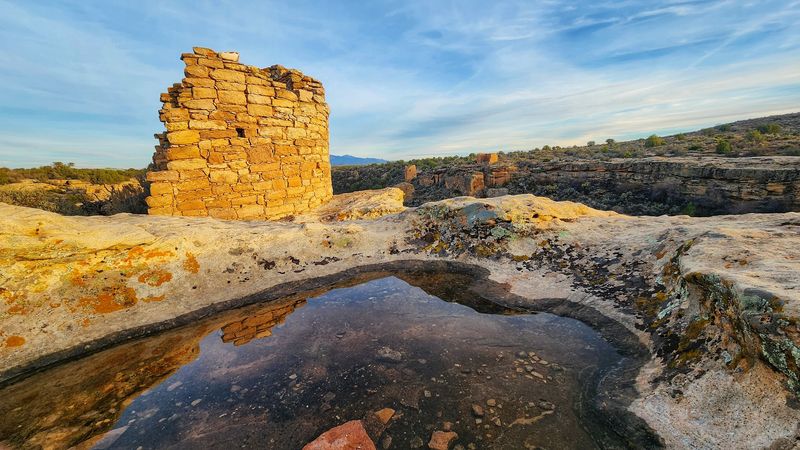
Hovenweep has a small campground right at the monument with 31 sites, and staying overnight is genuinely one of the better decisions you can make here.
The light pollution is almost nonexistent this far from any city, and the night sky is the kind that makes you stop mid-sentence and just look up.
The visitor center is open daily except for major holidays, and the rangers there are exceptionally knowledgeable.
Ask them which road conditions are passable on your specific day, especially if you want to reach the outlying sites. Cell service is essentially nonexistent at the monument, so download offline maps before you leave the highway.
The nearest town with gas and groceries is Cortez, Colorado, about an hour away. Do not arrive assuming you can grab something nearby.
Fill your tank, pack more water than you think you need, and bring snacks. The monument entrance fee is covered by the America the Beautiful pass if you have one.
If not, the fee is modest and goes directly toward site preservation. Hovenweep is the kind of place that makes you wonder why you waited so long to visit.
Go before everyone else figures it out.