11 Connecticut Day Trips Within Easy Reach Of Hartford That Are Actually Worth Taking
Hartford sits close enough to plenty of worthwhile escapes that a free day can turn into something much better with very little warning.
A morning plan can stay simple and still end somewhere that feels pleasantly removed from the usual routine.
How much better does a day off feel when the drive does not eat half of it? That is exactly what makes these nearby trips useful.
A short distance from Hartford, Connecticut has places that give you a real change of scenery without demanding a full weekend.
The payoff may be a quiet town, a scenic walk, or a local stop that makes the drive feel smart rather than obligatory.
Nothing needs to become an endurance test.
A few hours away from home can be enough to reset the mood and still leave time for dinner back in the city.
Sometimes the smartest escape is the one that does not require packing anything at all.
1. Hill-Stead Museum, Farmington
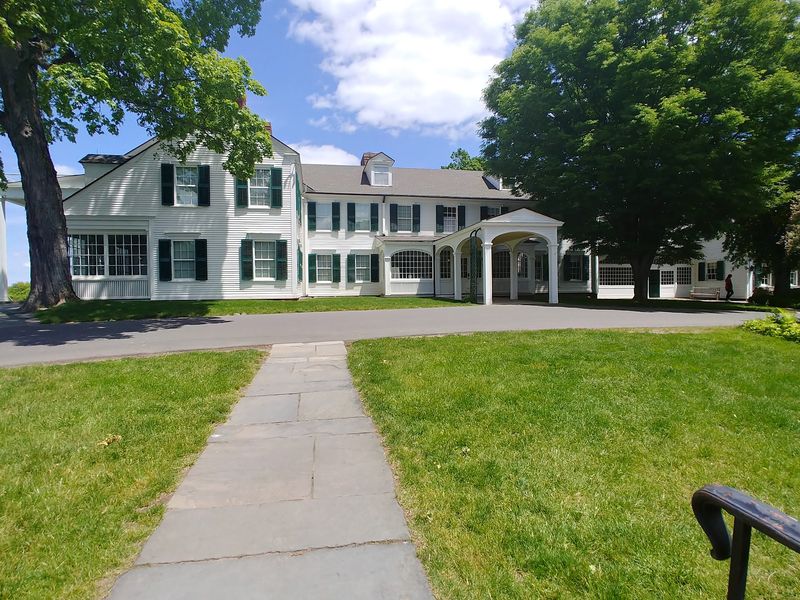
The paintings are only half the surprise. Here, masterpieces still hang in the rooms where one family actually lived.
Monet and Degas are represented, while works by Mary Cassatt and Whistler deepen a collection that feels unusually personal.
Hill-Stead was designed around 1901 by Theodate Pope Riddle in collaboration with McKim, Mead & White. One of America’s earliest licensed female architects, Riddle created the house for her parents, and much of its original furniture remains in place.
The historic house became a National Historic Landmark in 1991, with the designation expanded to the full 152-acre property in 2021.
Guided tours are the only way to see the permanent collection inside, and the final tour begins at 3 p.m. Outdoors, the estate offers walking trails through its broad landscape, while leashed pets are welcome on the grounds.
The museum is at 35 Mountain Rd, Farmington, CT 06032. Grounds currently open daily from 8 a.m. to 5 p.m.
The Sunken Garden adds another reason to linger, with its beds arranged around a summer house. Its restoration drew from a circa-1920 planting plan by landscape architect Beatrix Farrand.
2. New Britain Museum Of American Art, New Britain
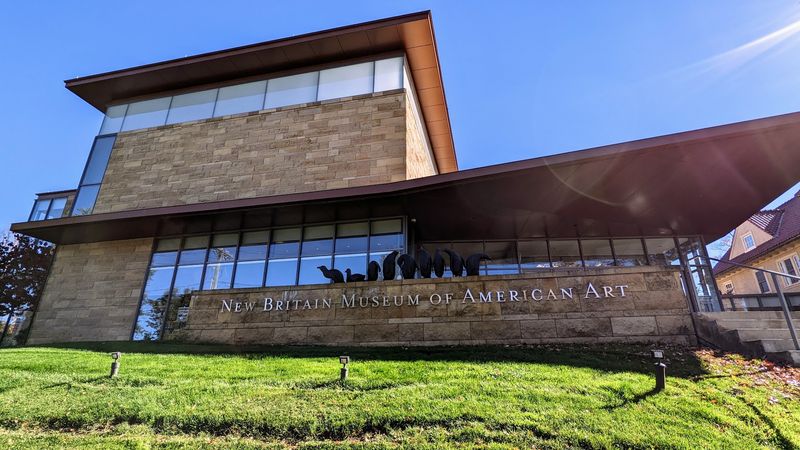
Here’s a claim few museums can make: this was the first in the country devoted entirely to American art, with roots going back to the New Britain Institute of 1853 and a founding date of 1903.
Four centuries of work fill the galleries, from colonial portraits by John Singleton Copley and Gilbert Stuart to Hudson River School landscapes by Thomas Cole and Frederic Church.
American Impressionists appear too, and Thomas Hart Benton’s five-panel mural The Arts of Life in America is a genuine showstopper.
One collection you won’t find elsewhere is the Sanford B.D. Low Illustration Collection, the nation’s first public gathering of American illustration, with pieces by Norman Rockwell and Maxfield Parrish.
The building itself is worth attention. A glass-walled addition opened in 2006, followed by another expansion in 2015, giving the museum more gallery space overlooking Walnut Hill Park.
Find it at 56 Lexington St. Parking is free, ramps and elevators serve the galleries, and a cafe and store round out a visit that’s open Tuesday through Sunday with later hours on Friday.
3. Dinosaur State Park, Rocky Hill
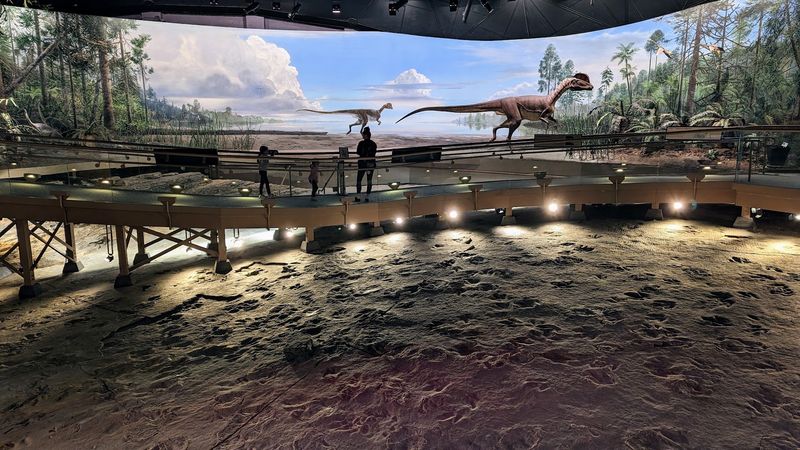
The ground beneath this park holds a surprise nearly 200 million years old. In 1966, heavy-equipment operator Ed McCarthy uncovered fossilized dinosaur tracks while crews prepared the site for a state highway laboratory.
The discovery eventually revealed nearly 1,800 footprints, creating one of the country’s largest dinosaur track sites. Today, a geodesic dome protects more than 750 Early Jurassic tracks in place, with Eubrontes impressions dominating the trackway.
Dinosaur State Park welcomes visitors at 400 West St, Rocky Hill, CT 06067.
Inside, the fossil trackway shares space with interactive exhibits that explore dinosaurs and geology. Displays help explain the prehistoric landscape without taking attention away from the footprints.
Outside, nature trails weave through the park, while an arboretum contains more than 250 plant species connected to groups that reach deep into prehistoric time. Visitors can explore the StoryWalk and footprint-casting area.
Parking is free for everyone. The Exhibit Center costs $6 for visitors 13 and older, $2 for ages 6 through 12, and nothing for younger children.
It generally opens Tuesday through Sunday, while the grounds provide a way to explore the park beyond the museum.
4. Wickham Park, Manchester
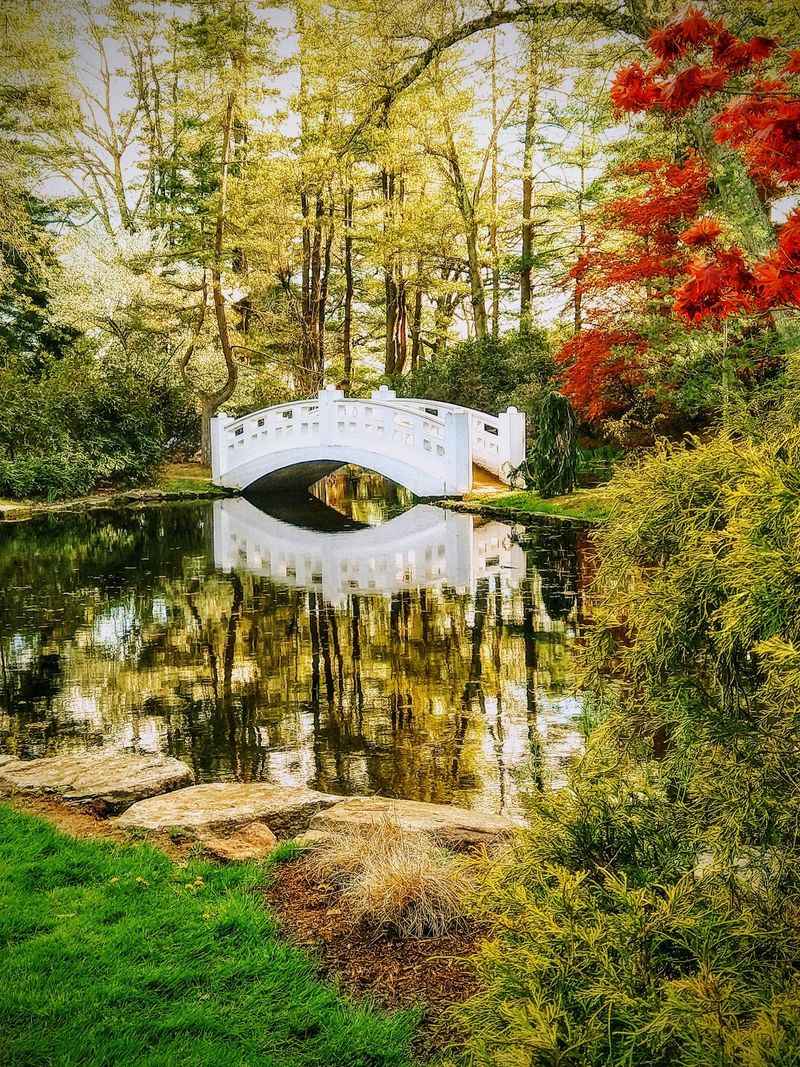
An industrialist named Clarence Wickham left instructions in his will that his estate become a park for the public, and that promise still holds. The result covers roughly 250 acres across Manchester and East Hartford, run by a nonprofit foundation.
Gardens are the reason most people come.
There’s an Oriental Garden with a torii archway and moon bridge, an English Garden with a maze and knot garden, an Italian Shrine, a Lotus Garden, a Rhododendron Garden, a Scottish Garden, and a Sensory Garden billed as the largest of its type in New England.
From the higher ground, the Hartford skyline lines up neatly on the horizon, which makes the walk between gardens feel like a small event in itself.
Families get plenty beyond the flowers: playgrounds, picnic areas with grills, tennis and volleyball courts, ball fields, a disc golf course, an aviary with peacocks, a bird sanctuary, and a Nature Center explaining local wildlife and park history.
The season runs April through October, daily from 9:30 a.m. until dusk, at 1329 Middle Turnpike W. Vehicles pay a modest entry fee, higher on weekends, while anyone walking in enters free.
5. Talcott Mountain State Park, Simsbury
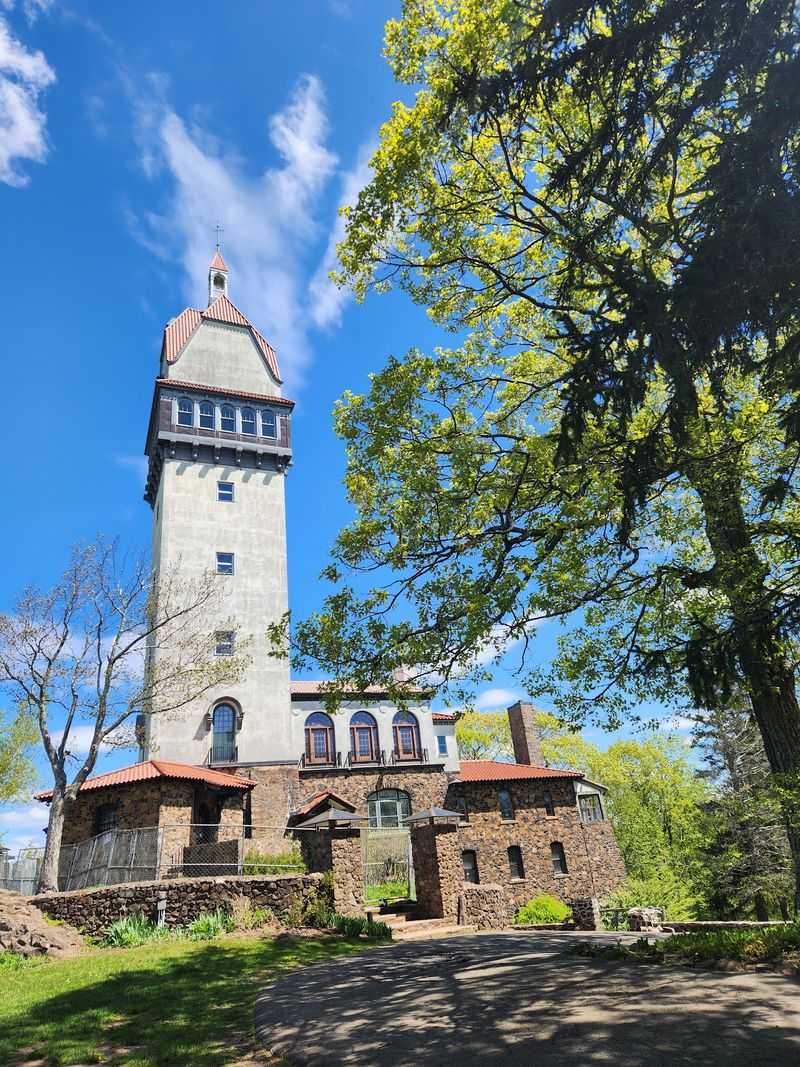
You cannot drive to the top here, and that’s part of the appeal. Reaching Heublein Tower means earning it on foot.
The yellow-blazed Tower Trail climbs about 1.25 miles to Heublein Tower, a moderate uphill walk that rewards the effort with increasingly impressive views.Views open up along the way rather than all at once.
The tower itself rises 165 feet from a summit near 1,000 feet, built starting in 1914 by businessman Gilbert Heublein as a summer retreat and modeled loosely on Bavarian castles. The state bought it in 1965, and it now sits on the National Register of Historic Places.
From the observation deck the panorama runs a full 360 degrees over Hartford, the Farmington River Valley, and, on unusually clear days, distant peaks in the Berkshires and beyond.
Park entrance is off Summit Ridge Dr in Simsbury, with 574 acres spread across three towns and several miles of trails including a stretch of the blue-blazed Metacomet Trail.
Grounds open year-round from 8:00 a.m. to sunset; the tower museum runs seasonally, generally late May through October.
6. Wadsworth Falls State Park, Middletown
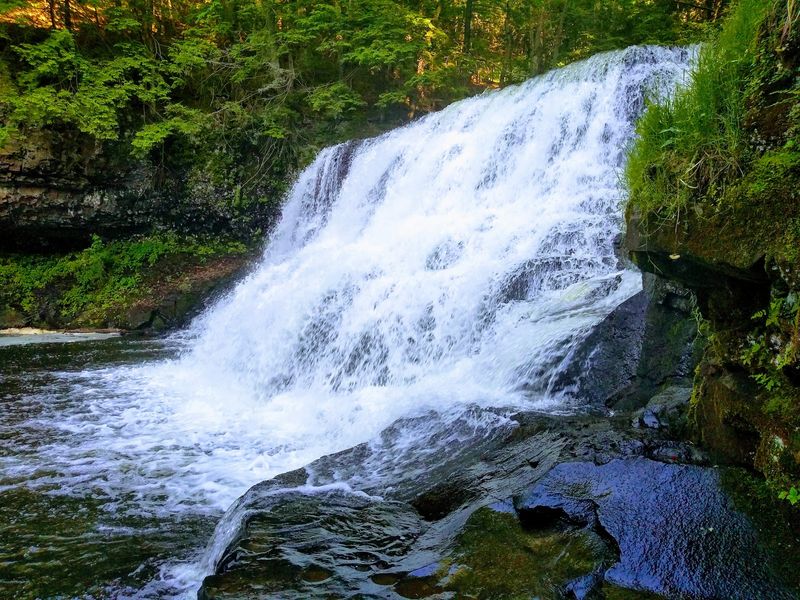
Two waterfalls, one confusing set of names. Big Falls drops about 25 feet but spreads wide across a rocky ledge, while Little Falls is actually taller at roughly 40 feet and narrower.
Big Falls draws the crowds, and for good reason: it’s counted among New England’s highest-volume undammed waterfalls. A railed observation area gives a safe view, and swimming and picnicking are not allowed at the falls themselves.
Getting there is flexible. A 1.5-mile hike leads from the main entrance at 721 Wadsworth St in Middletown, or you can park off Cherry Hill Road for a walk of about a fifth of a mile.
Colonel Clarence C. Wadsworth spent decades protecting this land before the park was established in 1942, and today roughly 4.5 miles of trails follow broad carriage roads through the property.
A stand of giant mountain laurel and exposed Jurassic-era rock add interest along the way. There’s also a swimming pond with a sandy beach, picnic tables with grills, and trout fishing in the Coginchaug River.
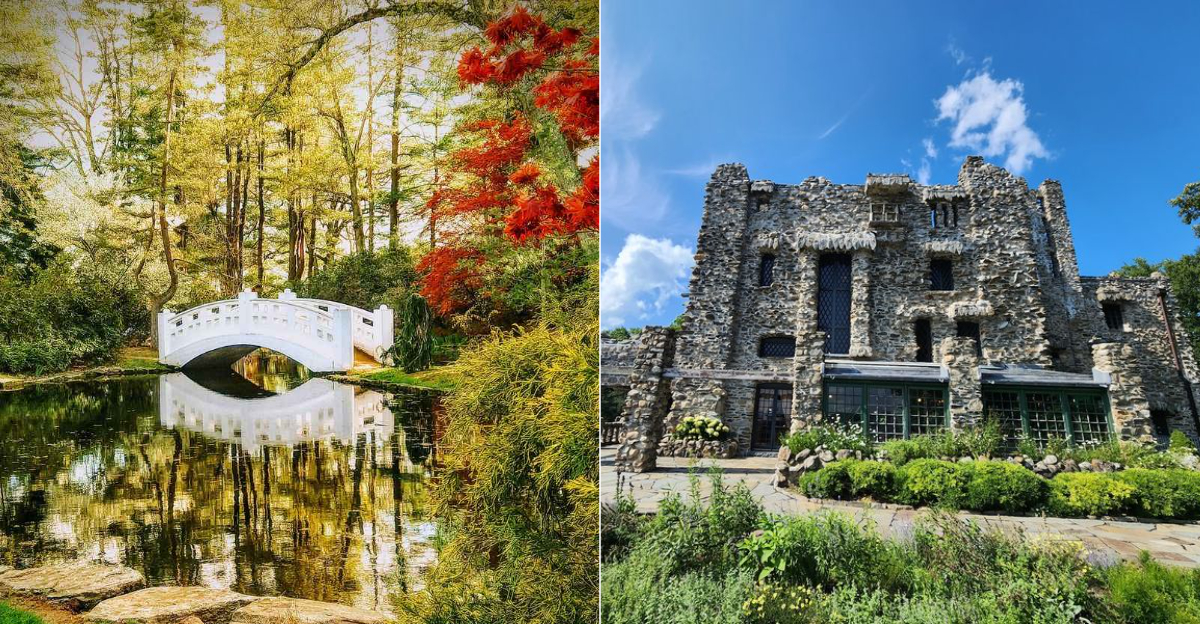
7. Gillette Castle State Park, East Haddam
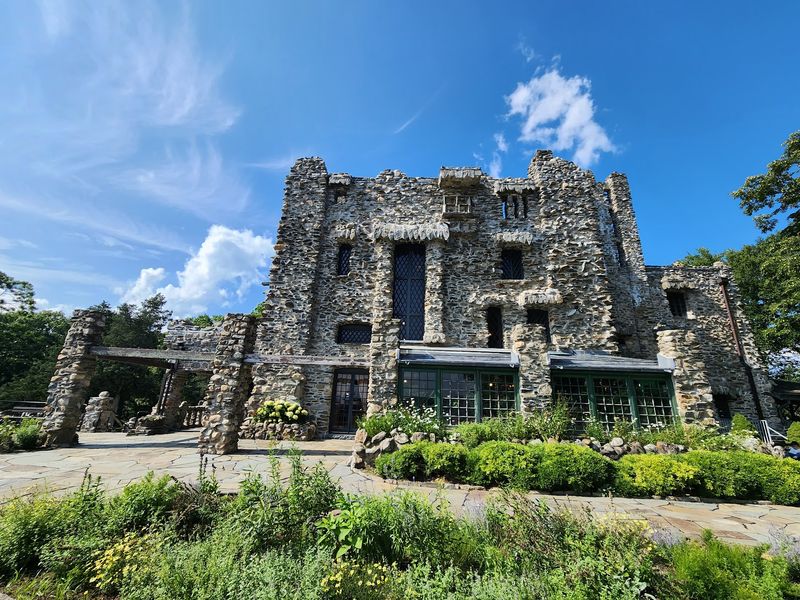
The actor who made Sherlock Holmes famous on stage built himself a stone fortress 200 feet above the Connecticut River, and he left nothing to chance.
William Hooker Gillette designed all 24 rooms of the 14,000-square-foot house and supervised construction from 1914 to 1919.
Inside are 47 doors, each with its own hand-carved wooden latch, along with hand-hewn white oak woodwork, tables that roll on tracks, mirrors angled for spying on guests, and hidden passages.
Originally called Seventh Sister Castle, the 184-acre estate passed to the state in 1943 and was thoroughly restored between 1998 and 2002.
Trails wind through the woods and along the river, some following the bed of Gillette’s old narrow-gauge railroad, tunnels and all. His restored miniature locomotive sits in the Visitor Center near the parking area, alongside restrooms and a gift shop.
Grounds at 67 River Rd in East Haddam open daily year-round from 8:00 a.m. to sunset with free parking. Castle admission is small, recently $6 for ages 13 and up, and buying ahead is wise.
Watch for the seasonal Chester-Hadlyme Ferry crossing below.
8. Essex Steam Train & Riverboat, Essex
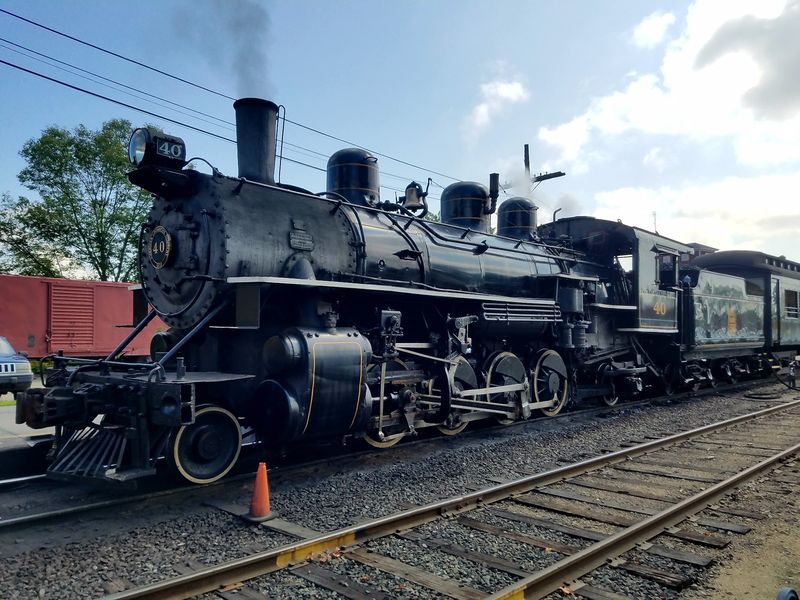
One outing, two classic rides. The Essex Steam Train & Riverboat combines a vintage rail journey with a cruise on the river, giving the afternoon an easy sense of adventure.
Trips begin at the historic 1892 Essex Station before a steam locomotive pulls vintage coaches through Deep River and Chester on a narrated 12-mile round trip.
At Deep River Landing, passengers transfer to the Becky Thatcher for a river cruise with views of Gillette Castle and the surrounding shoreline.
The experience starts at 1 Railroad Ave, Essex, CT 06426.
The full train-and-riverboat excursion lasts about two and a half hours, leaving plenty of time to enjoy both parts without feeling rushed. Seasonal experiences keep the schedule changing, while the Essex Clipper adds dining journeys aboard restored 1920s Pullman cars.
Nature becomes part of the show as marshes and quiet river habitat unfold beyond the windows and decks. Advance reservations are a smart idea, especially during popular seasonal dates and especially busy weekends.
Historic equipment can involve steps and tighter spaces, so guests with mobility needs should review current accessibility information before arriving for their visit.
9. White Memorial Conservation Center, Litchfield
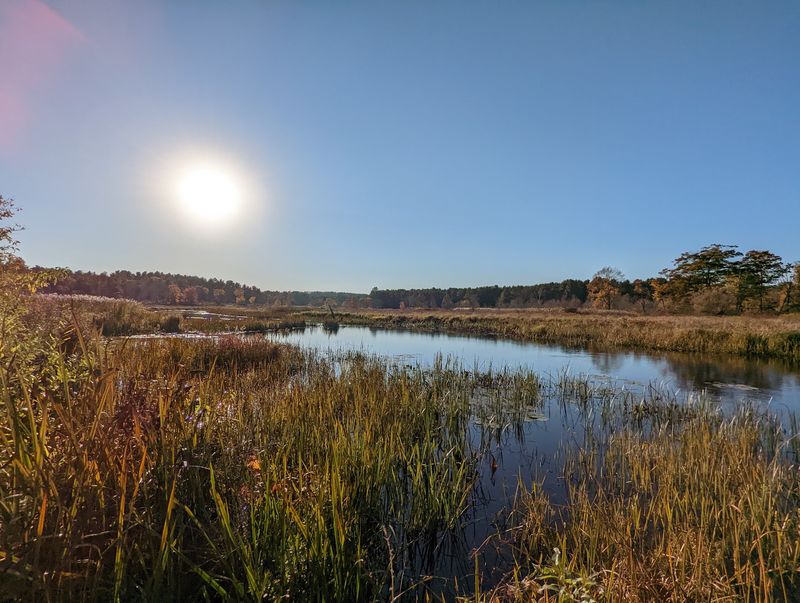
Siblings Alain and May White set aside land in 1913 that has grown into state’s largest wildlife refuge, about 4,000 acres across Litchfield and Morris.
Roughly 60 percent of the shoreline of Bantam Lake, the state’s biggest natural lake, falls inside the property, along with forests, fields, and wetlands. Between 35 and 40 miles of trails stay open all year for hiking, biking, horseback riding, snowshoeing, and cross-country skiing.
The Little Pond Boardwalk Trail, about 1.2 miles, floats you right over marsh and pond edges. The Trail of the Senses includes Braille signage, and the Ice House Ruins Trail adds a bit of history to the walk.
Whitehall, the former family home at 80 Whitehall Rd, now holds the Nature Museum with hand-painted murals, dioramas, live reptiles, a working honeybee hive, a fluorescent rock cave, and a window onto busy bird feeders. Barred owls and red-tailed hawks that cannot return to the wild live outside.
Trails and grounds cost nothing and never close. Museum admission has run about $6 for adults and $3 for children 6 to 12, with the building open Tuesday through Sunday.
10. Yale Peabody Museum, New Haven
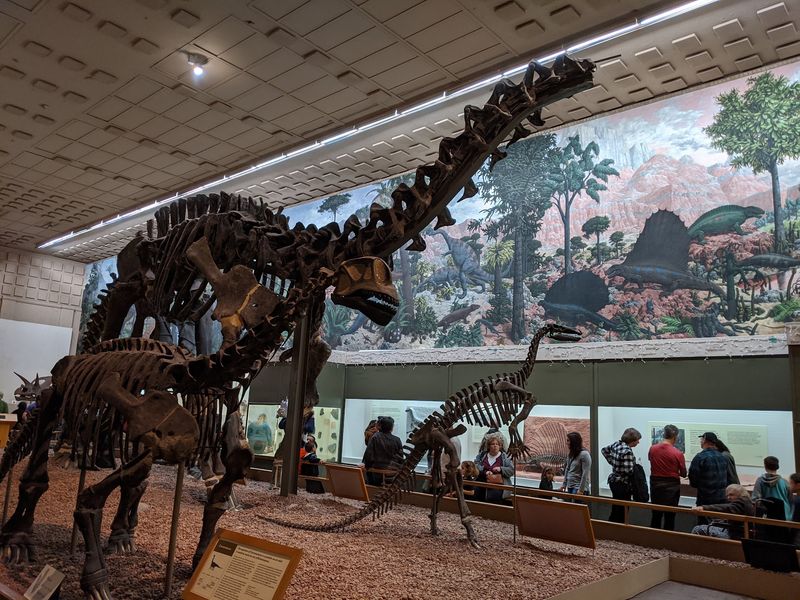
Free admission, forever. That’s the promise the Peabody made when it reopened on March 26, 2024, after a four-year, $160 million renovation that grew gallery space by more than half and tripled its classrooms.
Founded in 1866 by George Peabody, the museum ranks among the oldest and largest university natural history collections anywhere, holding over 14 million objects covering more than four billion years of history.
The Burke Hall of Dinosaurs is the anchor. A juvenile Brontosaurus, repositioned to match current science, stands with Stegosaurus and Triceratops beneath Rudolph Zallinger’s restored 110-foot mural The Age of Reptiles.
Other halls cover minerals and space, mammalian evolution, human origins, Egyptian artifacts, state birds, and Native peoples of the region.
On the third floor, the Living Lab puts plenty of touchable specimens within reach, and the Central Gallery doubles as rotating exhibit space and a place to sit down.
Doors at 170 Whitney Ave open Tuesday through Saturday from 10:00 a.m. to 5:00 p.m. and Sunday afternoons. Elevators, loaner wheelchairs, sensory bags, and sighted guides are available, with Yale lots and metered street parking nearby.
11. Lake Compounce Amusement & Water Park, Bristol
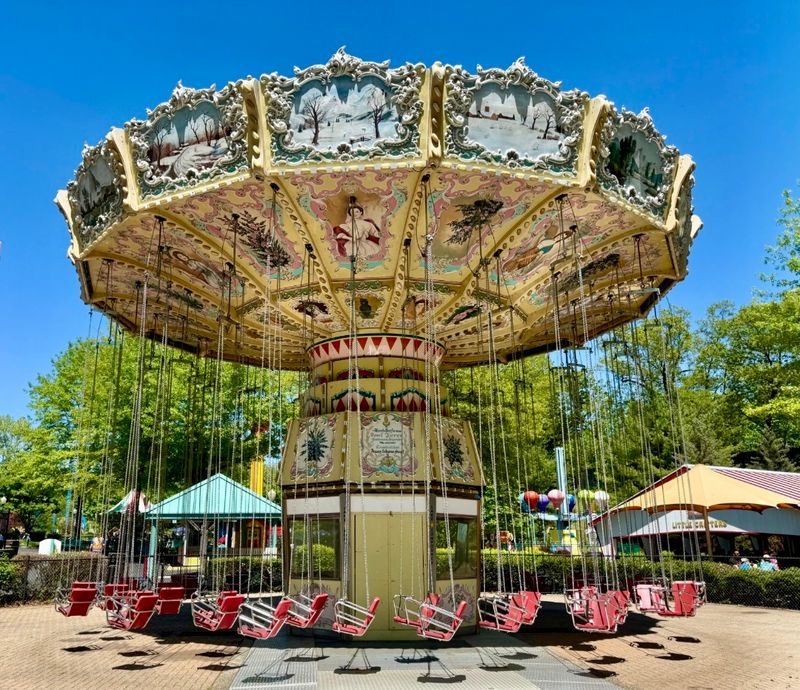
Some amusement parks chase the newest thrills. This one has entertained families since 1846 and still mixes historic rides with modern favorites.
Lake Compounce calls itself America’s first amusement park, and its 1927 Wildcat wooden coaster remains in the lineup. Boulder Dash brings different excitement, racing across the wooded mountainside and remaining one of the park’s signature attractions.
The entrance is at 185 Enterprise Dr, Bristol, CT 06010.
Today, more than 50 amusement and water attractions fill the property. Crocodile Cove, billed as the state’s largest water park, adds slides and splash-filled breaks to a day of coasters, while Kiddie Land gives younger visitors rides sized for them.
Food stops make it easy to pause between attractions, and guests wanting a comfortable base can look into cabana options. The park operates without cash, accepting cards and mobile payments, though cash-to-card kiosks are available.
Families should also know the chaperone policy. Guests 17 and younger must enter with someone at least 21, and that adult must remain with the group during the visit.
Checking the operating calendar before leaving home matters because hours vary by date.