Connecticut Has The World’s Only Tort Law Museum And Its Exhibits Are Stranger Than You Might Expect
A museum devoted entirely to tort law sounds like the setup for a joke. Somehow, the real thing turns out to be far more curious than the name suggests.
Court cases can involve objects and situations that seem almost too strange for an exhibit.
Connecticut is home to a one-of-a-kind museum that turns famous legal disputes into something surprisingly fascinating to explore.
You do not need a law degree to follow along. The stories behind lawsuits reveal how ordinary products or unexpected accidents can end up changing rules that affect everyday life.
Then come the exhibits themselves.
Real-world cases suddenly feel much less abstract when you can see what sparked the dispute in the first place. Some may leave you amused, while others raise questions you probably never expected to consider during a museum visit.
How many museums can make personal-injury law feel like the beginning of a genuinely entertaining afternoon?
1. America’s Legal History Gets An Unexpected Museum
Lawsuits in a museum? Absolutely.
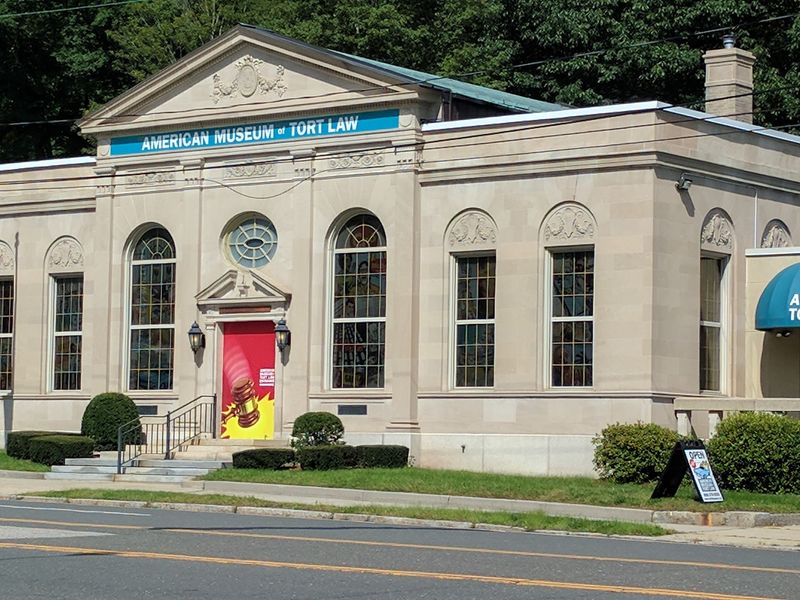
And somehow, they are much more interesting than that sounds. Instead of filling galleries with paintings or ancient objects, the American Museum of Tort Law explores famous legal cases and the rights people may use without ever thinking about where they came from.
The museum opened in September 2015 with an unusual mission: making tort law understandable to everyday visitors. This area of civil law deals with harm caused by individuals, businesses, products, or organizations and the legal remedies available to those affected.
Exhibits take subjects that can sound intimidating on paper and turn them into approachable stories. Product safety, medical negligence, environmental harm, and significant court cases are explained through real-world examples, showing how legal decisions can influence ordinary life.
The idea came from consumer advocate Ralph Nader, who was born in Winsted and spent years working toward the museum’s creation. His goal was to pull civil justice out of dense legal books and courtrooms and present it in a way regular visitors could understand.
That makes this one of the more unexpected museums in Connecticut. You do not need a law degree to enjoy it, either.
Curiosity is enough, and you may leave looking at familiar products, warnings, and everyday protections a little differently.
Visitors can explore major cases that changed consumer protections and see how jury trials have helped shape American life. The museum also tackles misconceptions surrounding lawsuits, giving guests a clearer look at what tort law actually does.
What makes the experience fun is how unexpectedly relatable everything becomes. You may arrive thinking law sounds dry.
By the end, familiar products and famous disputes suddenly have fascinating stories attached to them.
2. Downtown Winsted Makes It An Easy Curiosity Stop
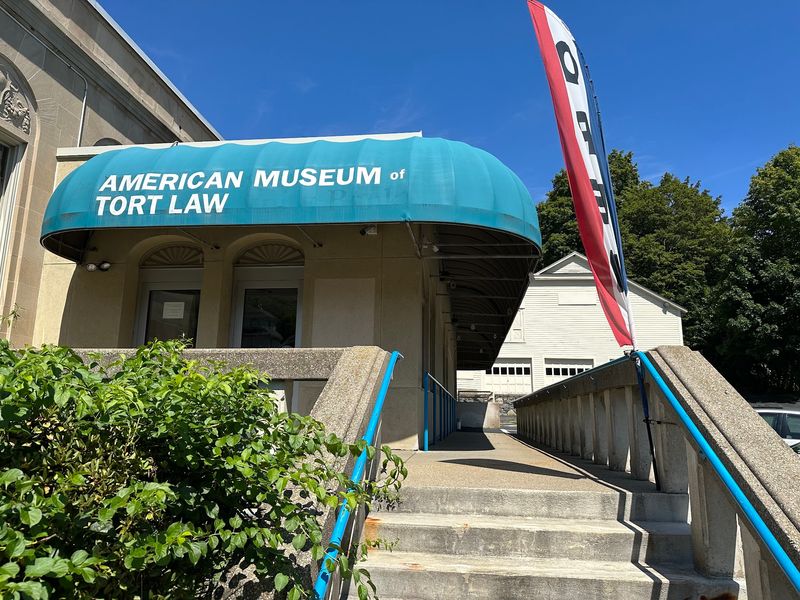
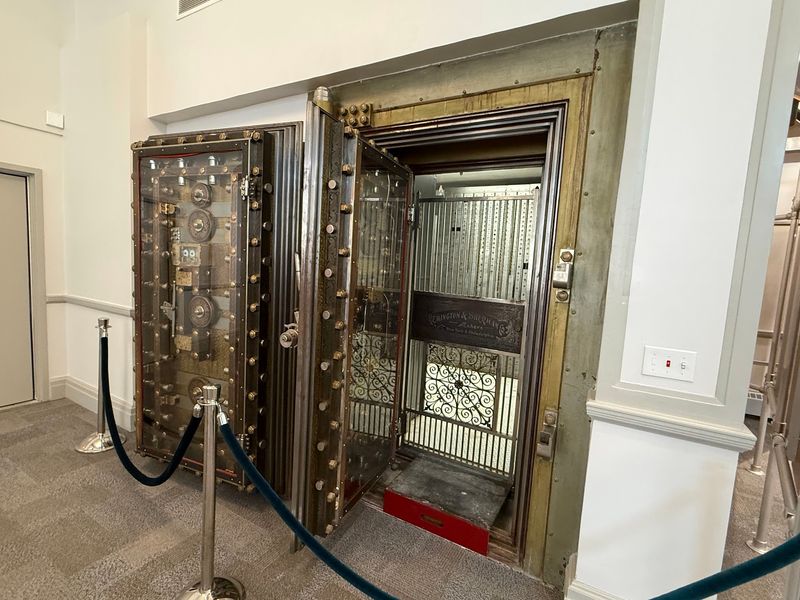
Even the building has a story. Before legal history filled its rooms, this handsome Main Street landmark served as the Winsted Savings Bank.
Built in 1925, it still carries the character of an old bank, giving the museum a setting that feels surprisingly grand for such an unusual subject.
Its Winsted home also makes sense for another reason. Museum founder Ralph Nader was born in town, so this one-of-a-kind attraction has a genuine connection to the community rather than simply appearing here by chance.
Planning ahead is worthwhile because operating days and hours can change seasonally. The museum has typically welcomed visitors during the warmer months and into late fall, but checking the current schedule before making a special trip is the safest approach.
Admission has traditionally been affordable, with discounted rates available for certain visitors. Groups can also arrange visits, making the museum an unusual option for schools, clubs, and travelers looking for something beyond a typical historic attraction.
Accessibility has been incorporated into the building as well. Its central address is 654 Main Street in Winsted, placing visitors right in town.
If you have more time afterward, another distinctive local attraction is the American Mural Project. Between the historic bank setting and unexpected exhibits, this is one museum stop that is difficult to confuse with anywhere else.
3. Famous Court Cases Become Surprisingly Engaging Exhibits
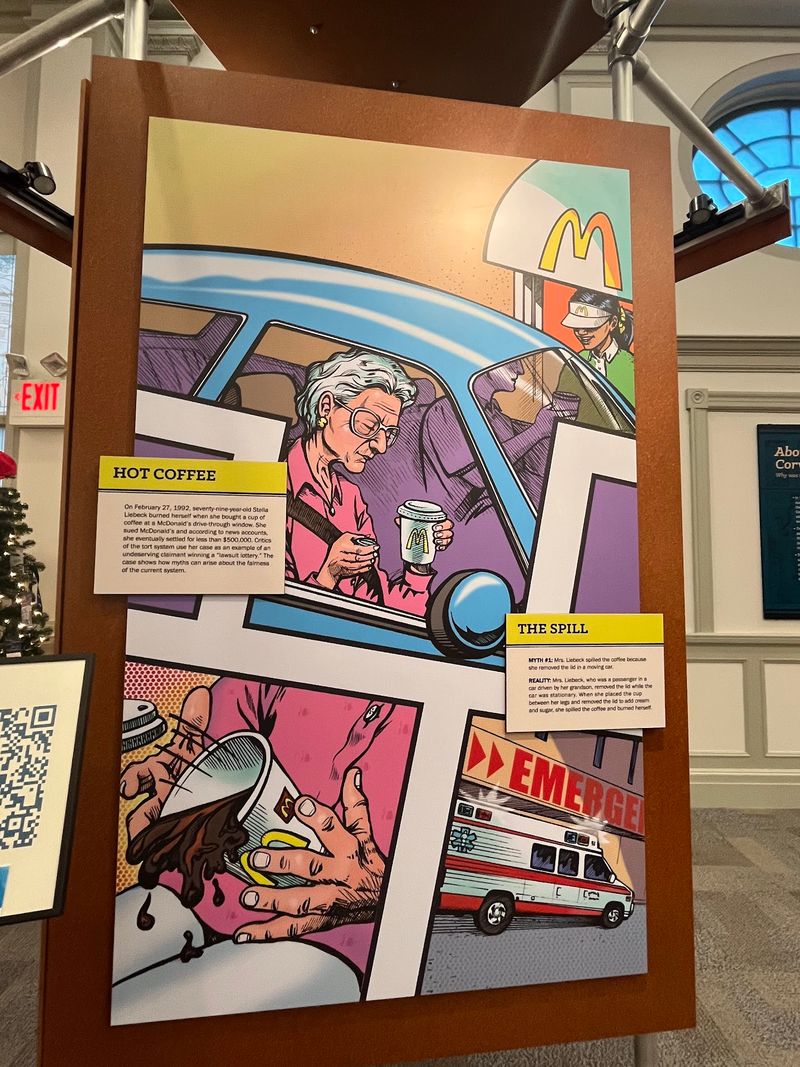
Court cases on a wall? It sounds like homework. Yet guests keep saying the same thing afterward: this was way more interesting than they thought it would be.
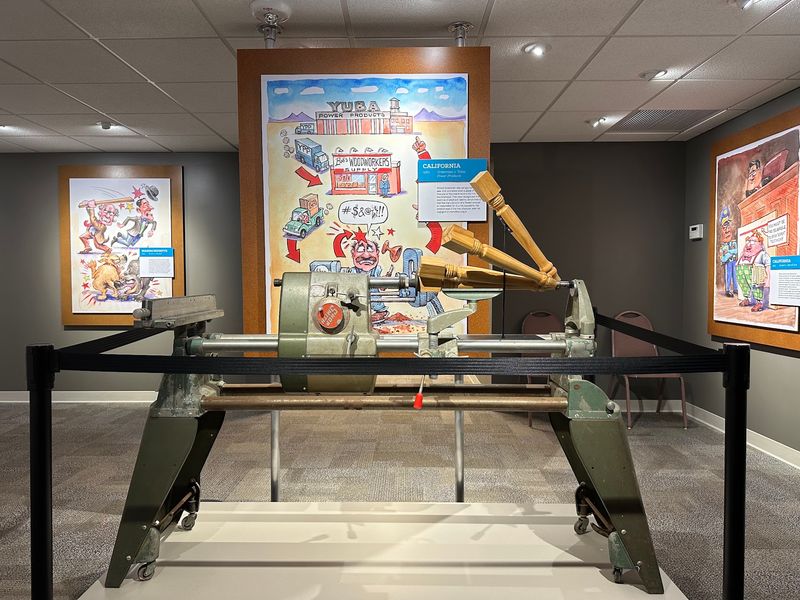
The secret is in the design. Each case is told through a lively blend of cartoon drawings, real objects, and short, punchy text.
A Pulitzer Prize-winning cartoonist helped create the signs, so the art has real wit and bite. You get the facts without wading through pages of legal language.
The lineup covers big names and old roots alike. You can read about the Ford Pinto, tobacco lawsuits, asbestos cases, and the famous hot coffee case against McDonald’s.
Older foundation cases, like Brown v. Kendall, show how the rules around fault first took shape.
Many summaries end with questions for thought. These little prompts ask you to consider what the ruling meant and whether you agree with it.
They turn a quiet stroll into a conversation, which makes the museum a great fit for families with kids around middle school age and up.
Tip: read those questions out loud with your group. You might be surprised how quickly a friendly debate breaks out about fairness, blame, and what companies owe their customers.
4. Everyday Products Help Explain Landmark Lawsuits
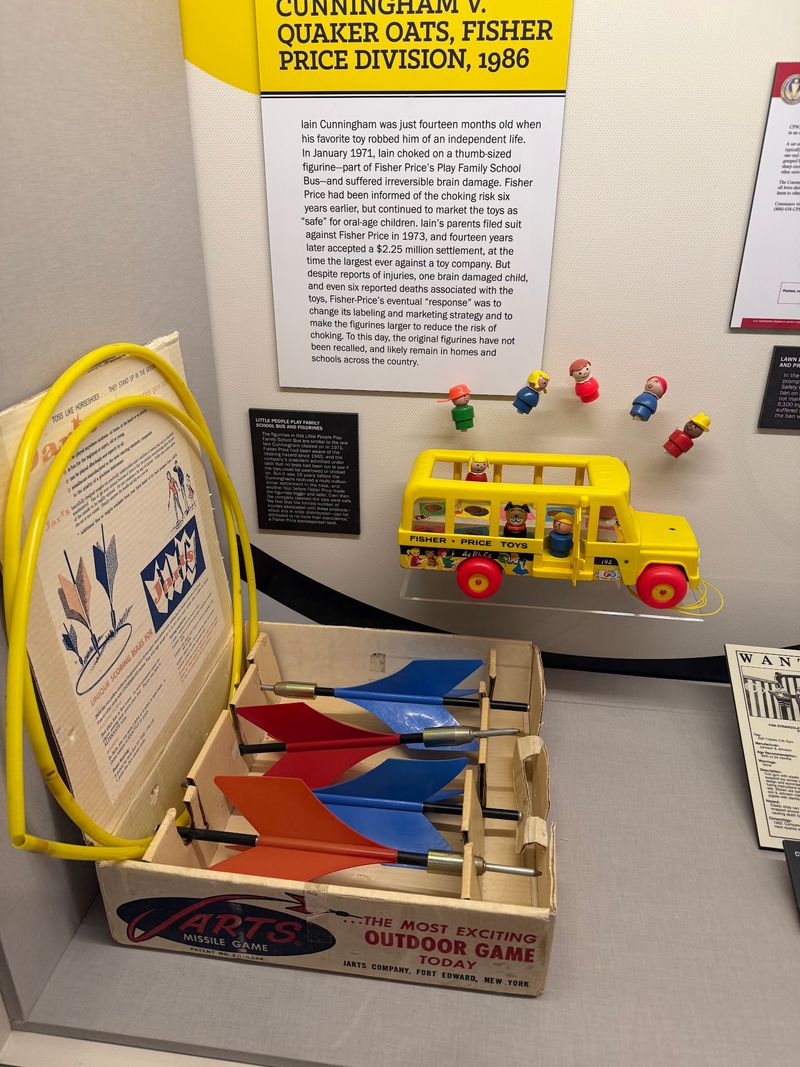
A cup of coffee. A toy action figure. A family car. Nothing seems less dramatic, and yet each of these ordinary things has played a starring role in a lawsuit that changed American life.
Take the hot coffee case, Liebeck v. McDonald’s.
Many people remember it as a silly joke, but the exhibit tells a different story. The plaintiff suffered severe third-degree burns, and the company already knew about many similar injuries.
A playful parody street sign reading 700 burned so far drives the point home. Visitors often admit they learned a lot they never knew about this case.
Then comes the toy display, which is equal parts fascinating and a little alarming. You will see action figures once coated in lead paint, stuffed animals with choking hazards, and information about lawn darts.
Parents especially tend to linger here, reading every label.
Cars get attention too. The Ford Pinto section explains its gas tank problem and the lawsuit Grimshaw v.
Ford Motor Company that followed.
The takeaway feels personal. After this room, you may never look at a toy aisle or a drive-through cup the same way again, and that is kind of the point.
5. The Chevrolet Corvair Has Its Own Story Here
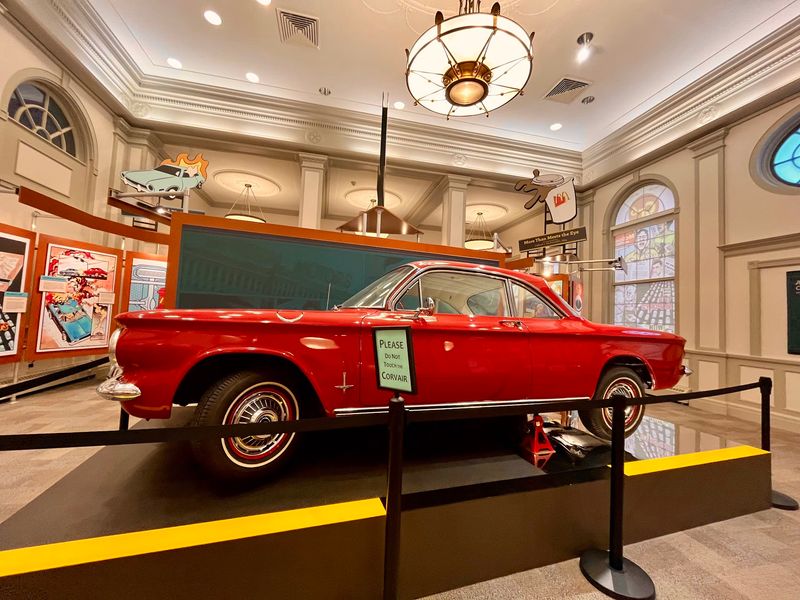
Shiny, cherry red, and parked right inside the museum, the 1963 Chevrolet Corvair is the showpiece nearly everyone photographs. It is a genuinely beautiful car, and it carries a big piece of history on its four wheels.
Back in 1965, the book Unsafe at Any Speed, written by the museum’s founder, put the Corvair in the national spotlight. It raised concerns about the car’s rear suspension and rollovers, plus a steering column that could be risky in a crash.
People across the country started asking tough questions about how cars were built.
The results were huge. The book helped lead to the 1966 National Traffic and Motor Vehicle Safety Act.
That law paved the way for required safety features like seat belts, better brakes, and improved tires. Every time you buckle up, you are feeling a ripple from that era.
Fun fact: the Corvair still sparks lively talk among car fans today. Some enthusiasts point to a 1972 government report and argue the car was no riskier than similar models of its time.
That debate makes the display even more thought-provoking.
Stand beside it for a minute. You are looking at a symbol of how one car helped reshape road safety.
6. Interactive Displays Make Complicated Law Easier To Follow
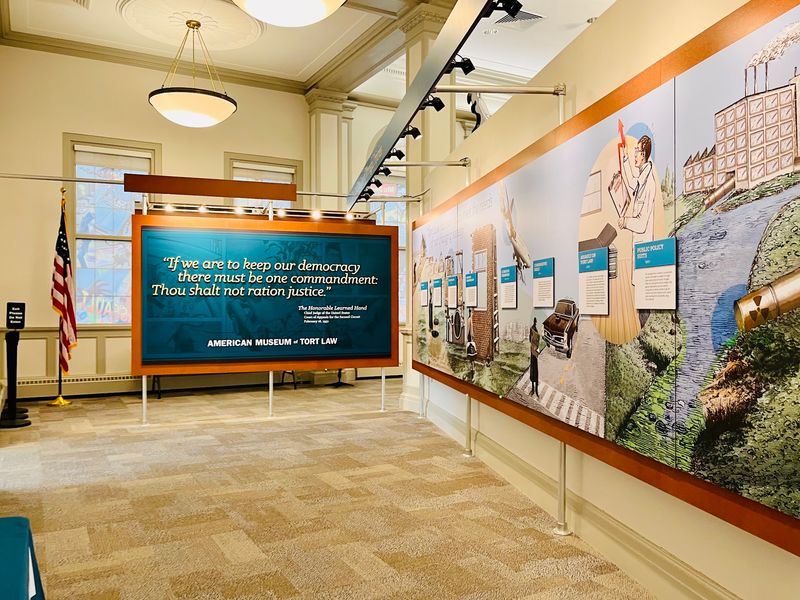
Ever wished you could swipe through history like it was a phone screen? Here you basically can.
Large interactive boards, which some guests compare to giant tablets, let you tap your way through the growth of tort law in the United States.
These screens are a hit with visitors who learn best by doing. Instead of reading one long panel, you choose what to explore and how deep to go.
Kids tend to grab the controls first, and adults are not far behind.
Prefer to listen? Audio narration is available through QR codes.
Just scan with your phone, pop in earbuds if you have them, and move at whatever speed feels right. It is an easy way to catch details you might skip while reading.
All of this has a purpose. Ideas like fault and causation can feel slippery, but hands-on tools make them click.
You start to see how a court decides who is responsible and why.
The displays also highlight jury service and your role as a citizen. Many people leave with fresh respect for that jury summons in the mailbox.
A little tip: save some time for these screens, because they are easy to get pleasantly lost in.
7. Consumer Safety Runs Through Much Of The Collection
Think about your morning. The seat belt in the car, the label on your food, the toy your little cousin plays with.
Behind many of those protections sits a story you can trace inside this museum.
Safety is the thread that ties the collection together. The exhibits show how tort law pushes for safer products, workplaces, food, health, and surroundings.
It is not just about winning money in court. It is about making sure the next person does not get hurt the same way.
The examples come from many corners of life. Defective cars like the Corvair and the Pinto, risky children’s toys, and the health harm caused by tobacco and asbestos all appear.
Each case shows a problem, a fight, and often a lasting change, such as seat belts and better toy designs.
A deeper message runs underneath. People want to trust the companies and institutions they depend on.
When that trust breaks, the civil justice system gives ordinary folks a way to speak up and be heard.
Walking through, you may notice your own habits shifting. Reading labels, checking recalls, and asking questions start to feel less like chores and more like smart, everyday self-care.
8. Few Museums Turn Lawsuits Into A Day Trip
One visitor brought along a doubtful teenager, and by the end, the teen called it one of his favorite museums ever. Stories like that pop up often, and they capture the charm of this place.
Start with the short film, which runs roughly 11 to 14 minutes. It gives a clear overview of how trial by jury and tort law developed, so everything afterward makes more sense.
Think of it as your map before the adventure.
The museum is compact, and many guests suggest setting aside about an hour. That makes it easy to pair with lunch in town or a scenic drive through the Litchfield Hills.
Before heading out, peek into the gift shop, where souvenirs lean clever and quirky.
Visitors regularly describe the experience as fun and informative, even with zero legal background. Students, curious travelers, and lawyers all find something worth their time.
Friendly, helpful staff come up again and again in visitor comments too.
Because it is the only museum of its kind anywhere, a stop here gives you a story few friends can match. Art, artifacts, and hands-on screens replace dusty law books.
You leave knowing what a tort is, why it matters, and how it quietly protects you every single day.