Connecticut’s Most Unusual Beach Town Might Also Be Its Most Charming
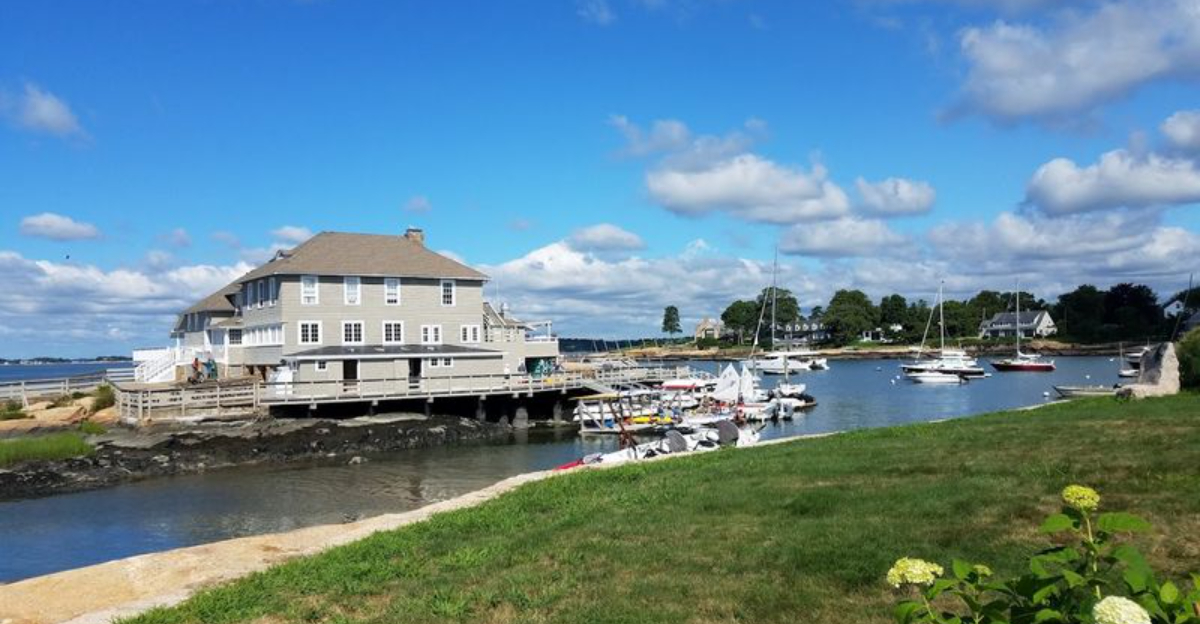
Most beach towns announce themselves with boardwalks and bright signs. This one takes a quieter route.
A broad green anchors the center, surrounded by historic homes and locally loved shops. Then the landscape shifts.
Roads lead toward salt marshes and shoreline views that feel surprisingly peaceful. That contrast gives the town its unusual charm.
Few places in Connecticut blend colonial character with an easy coastal mood quite this naturally. The past feels present here, but never staged.
Old buildings still serve everyday life, and the waterfront adds a breezy rhythm that keeps everything from feeling too polished.
There is also a sense of discovery in how the pieces fit together. You can move from a classic New England streetscape to the edge of Long Island Sound without losing the town’s personality.
It feels familiar and unexpected at the same time. That balance is exactly what makes this shoreline stop linger in your mind long after the scenery changes.
1. The Green At The Town’s Heart
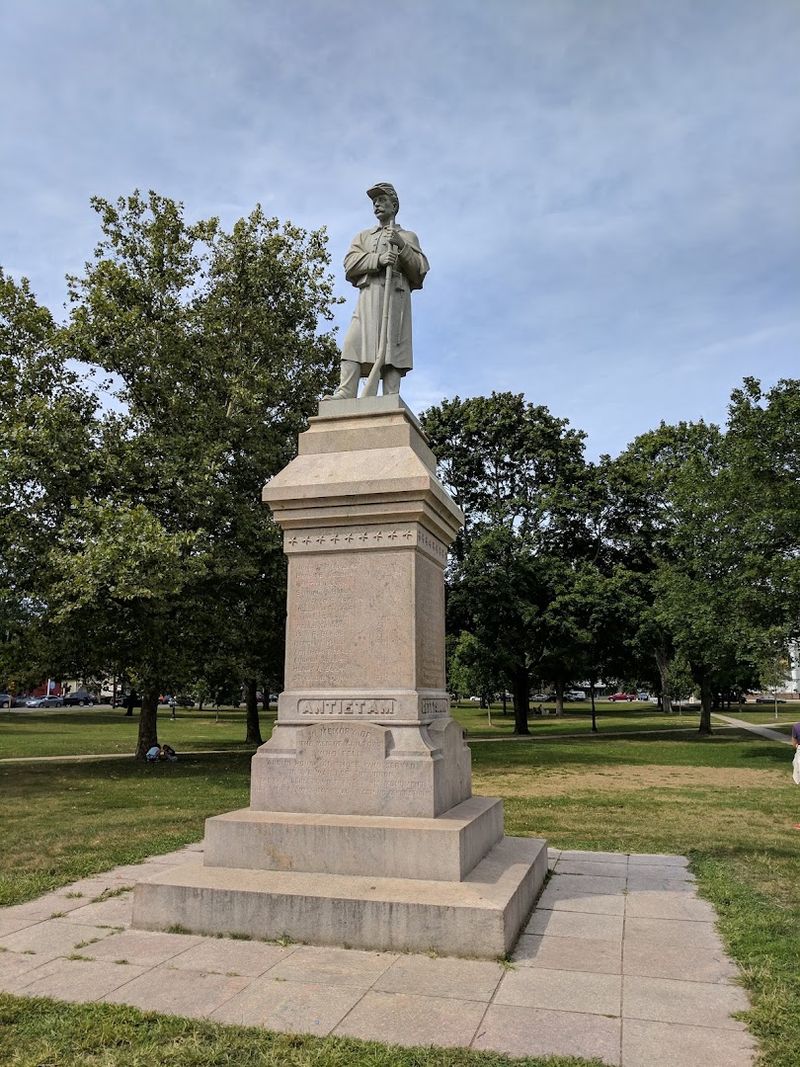
Daily life gives Guilford Green much of its appeal. Residents cross the broad lawn on errands, visitors pause beneath mature trees, and community events bring activity without overwhelming the peaceful setting.
Covering nearly 12 acres, the green offers ample room for picnics, casual walks, quiet reading, and time outdoors in the center of town.
Stone paths break the grass into inviting sections and guide visitors toward the Soldiers’ Monument, dedicated in 1877 to honor Guilford residents who served during the Civil War.
Additional memorials around the grounds recognize veterans and local firefighters, adding meaningful history to the landscape.
Seasonal celebrations, artisan markets, concerts, and civic gatherings regularly animate the space. Between events, it remains an easy starting point for exploring nearby cafés, independent shops, churches, and historic architecture.
Street parking around the perimeter keeps access convenient, though busier occasions may require a little patience.
The green is framed by Park Street, Broad Street, Whitfield Street, and Boston Street, placing it within Guilford’s historic center. Early mornings are especially pleasant, when softer light stretches across the lawn and the surrounding streets remain relatively quiet.
That balance of openness, history, and everyday community use makes the green feel welcoming in every season.
2. Stone Walls From The 1600s
Driving through Guilford on almost any back road, stone walls appear so consistently that they start to feel like part of the landscape rather than a human-made feature. That consistency is actually the point.
Farmers in the 1700s cleared forests for pastureland and stacked the rocks they unearthed along field edges to mark boundaries and keep livestock contained. The walls stayed long after the farms changed or disappeared entirely.
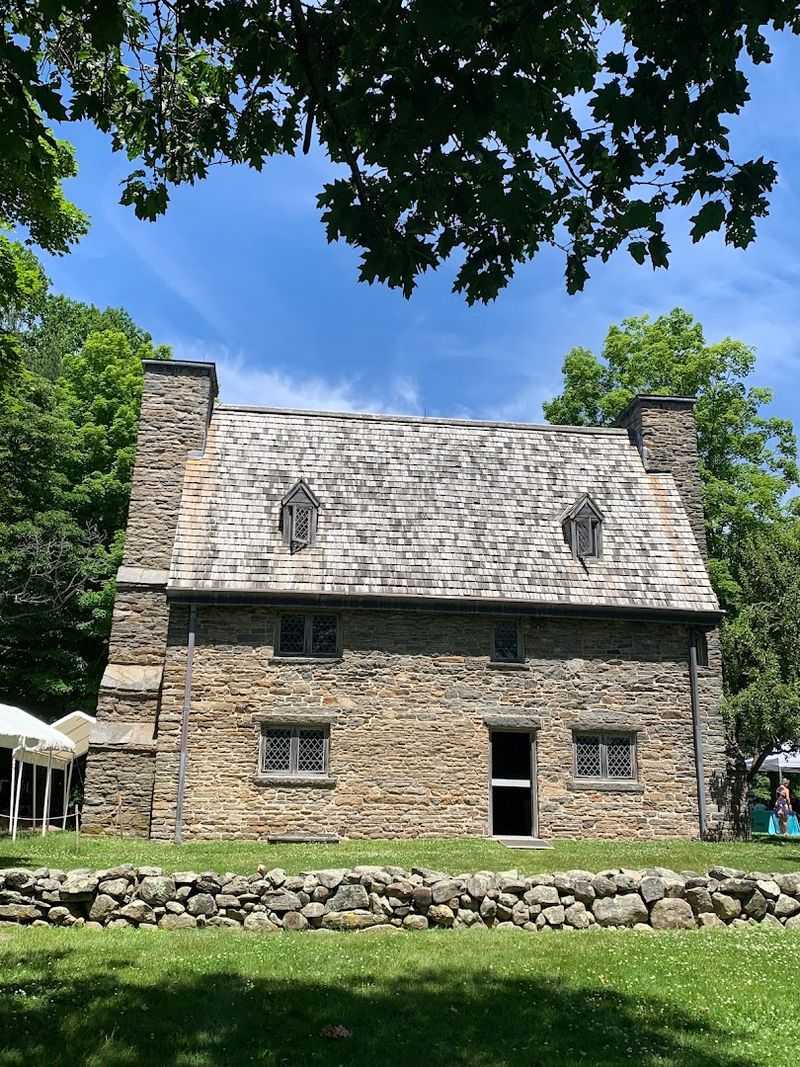
A classic double-stack wall built between 1937 and 1939 runs along the perimeter of the Henry Whitfield Museum property and gives a clear sense of how these structures were assembled with care and intention.
The Henry Whitfield House itself, constructed in 1639 using thick local granite, represents the oldest surviving stone house in all of New England.
Its walls were built not just for warmth but for defense, reflecting the uncertainties of early colonial settlement.
Preservation of these walls is treated as a serious local priority, since they define the rural texture that makes Guilford feel different from other shoreline towns. Walking or cycling along roads where the walls run close to the pavement gives a tangible sense of how old this place really is.
No sign or exhibit can quite replicate that feeling.
3. The Henry Whitfield House
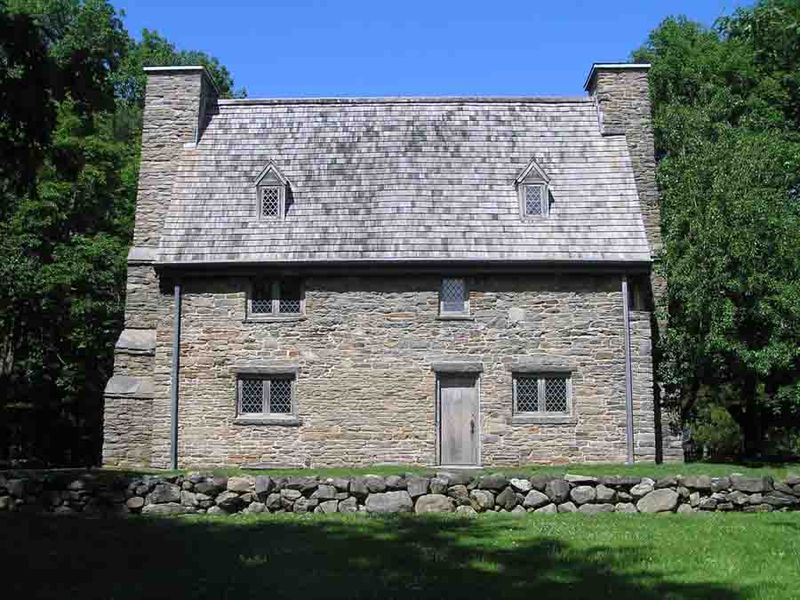
Built in 1639, the Henry Whitfield House carries the distinction of being the oldest house in Connecticut and the oldest stone house in New England, which alone makes it worth a visit.
The structure sits at 248 Old Whitfield Street, Guilford, CT 06437, set on eight acres of grounds that include stone walls, mature trees, a bronze statue, and a segment of the New England Trail.
A War of 1812 ship’s cannon stands on the property as well, adding an unexpected military detail to the pastoral setting.
The museum operates seasonally from May through October, Wednesday to Sunday between 10:00 AM and 4:00 PM. November through April, the house itself closes, though the gift shop in the Visitor Center tends to stay open on most weekdays during those hours.
Calling ahead is recommended since hours may shift depending on the rehabilitation project currently underway, which focuses on repointing stone walls and updating electrical systems.
Despite the ongoing work, the museum aims to stay open and frames the construction as a behind-the-scenes preservation experience. Visitors can explore the Great Hall, an introductory exhibit, and second-floor rooms.
Outdoor activities including an interpretive StoryWalk and an I Spy Bingo game are available on the grounds. Parking is free.
4. Grass Island’s Red Shack
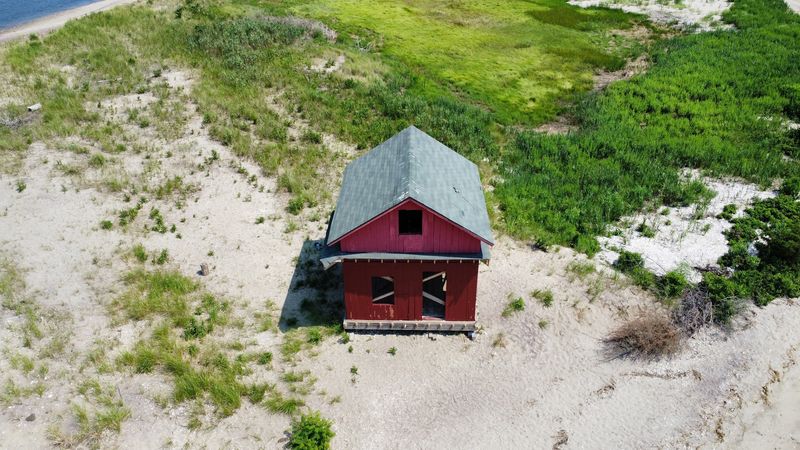
Bright red against pale marsh grass and open water, Guilford’s Grass Island Shack creates one of the shoreline’s most memorable views.
Artists, boaters, and photographers have long been drawn to its shape and color, although claims ranking it among the East Coast’s most photographed buildings are difficult to verify.
The landmark’s history is more complicated than a single construction date suggests. An earlier summer cottage on the island burned in the 1930s, and the present structure was built around 1940 before being moved to its shoreline position about a decade later.
Guilford acquired the property in the 1960s, and preservation efforts have continued through restoration campaigns.
Storms and erosion placed the shack at risk in 2024, prompting crews to move it onto higher ground and prepare a stronger foundation. The building remains an empty shell, valued mainly for its history and distinctive coastal setting.
Visitors can view it from the town marina and boat launch near the end of Neck Road in Guilford, where public parking is available. Reaching Grass Island itself may require water access or a longer approach from the Madison side.
Morning and late-afternoon light bring out the richest contrast between the red siding, marsh, and sky.
5. Jacob’s Beach Near Downtown
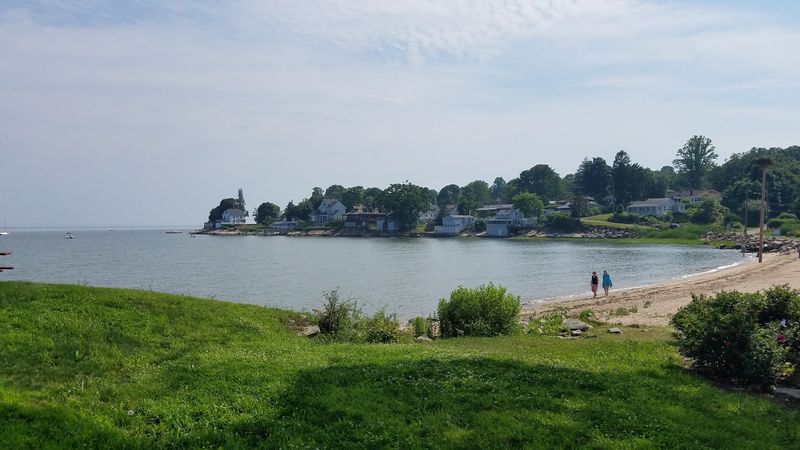
Proximity to a downtown and a sandy beach in the same small town is not something most Connecticut communities can offer, but Guilford pulls it off with Jacob’s Beach.
Managed by the town and situated at Seaside Avenue, Guilford, CT 06437, the 25-acre park includes a 430-foot swimming area that faces Long Island Sound.
The views across the water are wide and unobstructed, giving the beach a spacious feel even when visitors are present.
Facilities here cover a solid range of uses. A boardwalk, bathhouse, and outdoor showers handle the basics, while two picnic shelters, a playground, half-basketball courts, and a volleyball court make the space functional for longer visits.
Kayak racks are available for rent, and the calm waters near the shore tend to suit beginners and casual paddlers well. Portions of the park are designed to be wheelchair accessible.
Non-resident parking carries a daily fee of $50 during the season, and seasonal passes are also offered for those planning multiple visits. Lifeguards and first aid personnel are on site throughout the swimming season.
The atmosphere leans quiet rather than festive, which suits visitors looking for relaxed shoreline time over a busy beach scene. Weekday mornings are typically the least crowded.
6. Salt Marshes And Tidal Roads
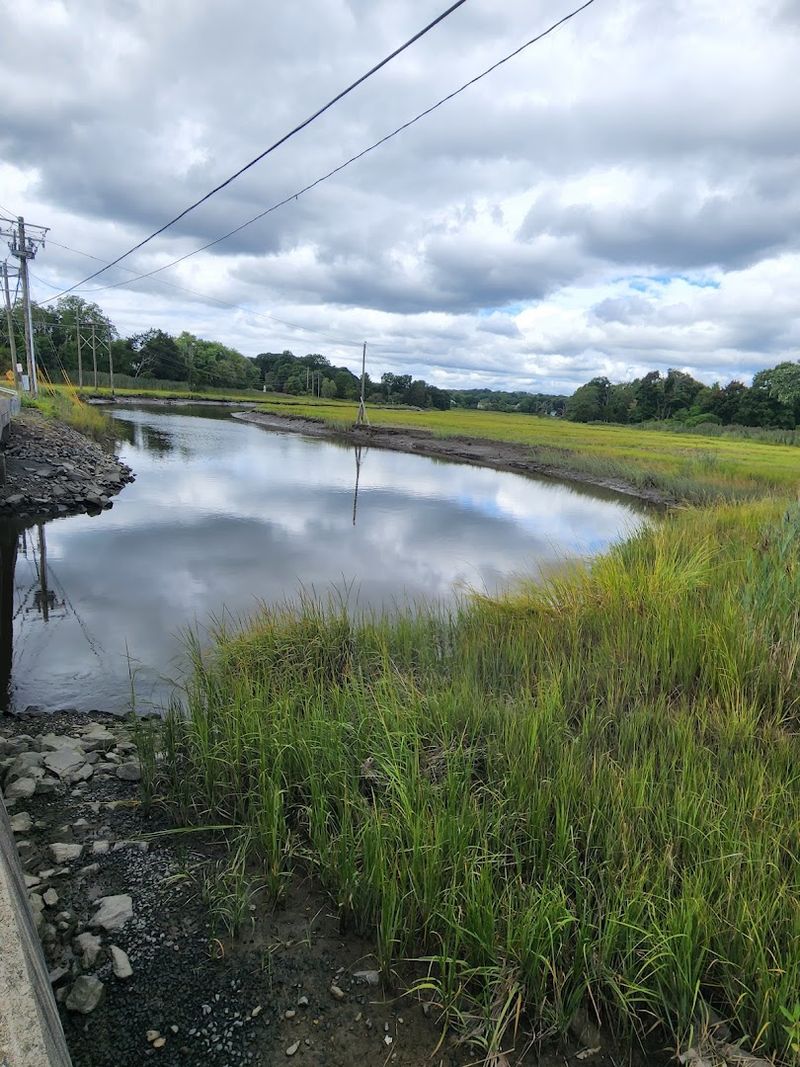
Salt marshes reveal a quieter side of Guilford’s shoreline, where tidal rivers, winding creeks, and broad wetlands create valuable habitat between land and Long Island Sound.
Leete’s Marsh, Great Harbor, Grass Island, and the Chaffinch Island area form part of this wider coastal network, supporting salt-tolerant plants, fish, terrapins, and migratory birds.
One of the easiest ways to experience the landscape is at Guilford Salt Meadows Sanctuary. Its Anne Conover Nature Education Trail follows a gentle one-mile loop with open views across roughly 200 acres of protected tidal wetlands.
The route is suitable for an unhurried walk, wildlife watching, and seasonal observation as water levels reshape the scenery throughout the day.
Several coastal roads, including Old Quarry Road, Tuttles Point Road, and Chaffinch Island Road, also pass beside marshland and offer brief views from the car.
Flooding has long affected these low-lying routes, leading the town to elevate sections to improve access during storms and unusually high tides.
Low tide exposes mudflats, channels, and feeding areas that can make wildlife easier to spot. Visitors should remain on established paths and avoid fragile vegetation, since healthy marshes protect wildlife, filter water, absorb wave energy, and strengthen Guilford’s coastline against future flooding.
7. Shops Around The Green

Independent shops give downtown Guilford a character that feels personal rather than packaged. Around the green, browsing unfolds at an easy pace, with books, clothing, gifts, handcrafted pieces, and specialty foods sharing the surrounding blocks.
Each storefront carries its own recognizable point of view.
Flutterby brings color and personality to the mix through clothing, jewelry, home accents, candles, body care, and gifts, including many handmade items.
Breakwater Books has served local readers since 1972, offering titles for adults and children alongside journals, cards, and other discoveries.
Cafés and casual restaurants add places to pause, especially when outdoor tables return during pleasant weather.
Creative energy continues at Guilford Art Center, where classes, workshops, exhibitions, and a year-round shop showcase contemporary American art and craft. The center sits beyond the immediate green, but it makes an easy addition to a downtown outing and welcomes visitors in every season.
Flutterby can be found at 55 Whitfield Street, while Breakwater Books welcomes readers at 81 Whitfield Street. Together with neighboring businesses, they help create a town center shaped by regular community life rather than tourism alone.
The pleasure comes from moving slowly, following an interesting window display, and leaving room for an unexpected find.
8. History Beside The Shore
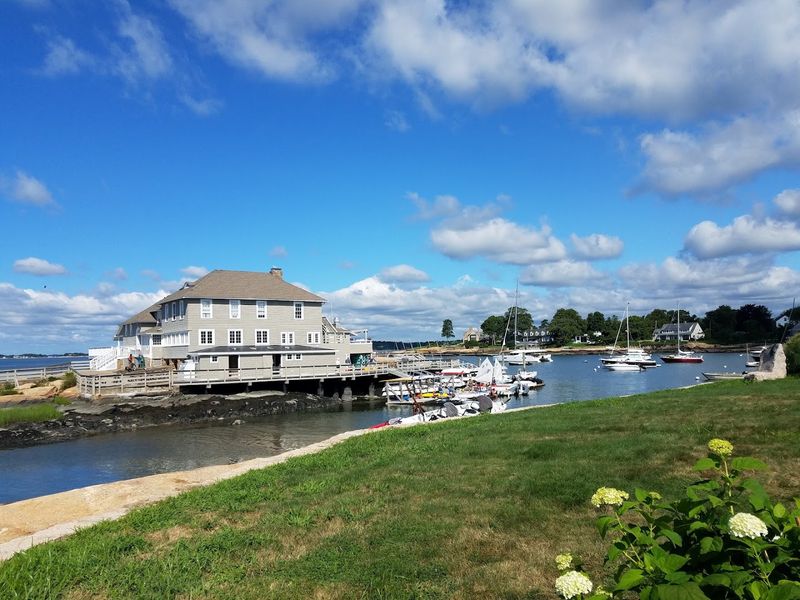
History in Guilford does not stay confined to a single museum or landmark. The Historic Town Center District alone contains more than 250 commercial and residential buildings representing nearly four centuries of architectural styles.
The Hyland House, built in 1713, is an Early Colonial saltbox structure listed on the National Register of Historic Places that offers a close look at how families lived during the 17th and 18th centuries.
The Thomas Griswold House, dating to approximately 1774, serves as another house museum with period architecture and artifacts.
Dudley Farm Museum, established in 1844 and operating as a living history site, brings 19th-century farm life into focus through working gardens, farm animals, and walking trails.
It also houses the Quinnipiac Dawnland Museum, which addresses the area’s Indigenous heritage with a perspective that extends the historical narrative well beyond European settlement.
Leetes Island Road, also known as the Route 146 Historic District, passes more than 50 historic sites ranging from 18th-century Colonial buildings to Victorian-era properties.
Offshore, Faulkner’s Island Lighthouse has guided vessels along Long Island Sound since 1802 from a position 3.5 miles from shore.
Traveling along the coast here means moving through layers of time that stack quietly on top of one another without demanding much effort from the visitor.