10 Day Trips In Hawaii That Are Worth The Early Start
Nobody flies to Hawaii planning to set an alarm. Then you set one anyway, because the good stuff happens before breakfast.
Sunrise at ten thousand feet requires leaving in the dark. People do it happily and then complain about the cold, which they were warned about.
Volcano country rewards early arrivals with empty trails. By midmorning everyone else has caught up.
Canyon lookouts stay clear before the clouds decide otherwise. Weather here changes its mind constantly.
Snorkeling bays fill fast and turn away latecomers. Reservations are not optional anymore.
Several of these need booking weeks ahead, which is deeply unromantic and completely necessary.
The list spans four islands, so read it with a map handy.
Pack layers even though you are in the tropics. Especially if you are going up a mountain.
The alarm will feel unreasonable at the time. You will not remember minding it.
1. Haleakalā Visitor Center
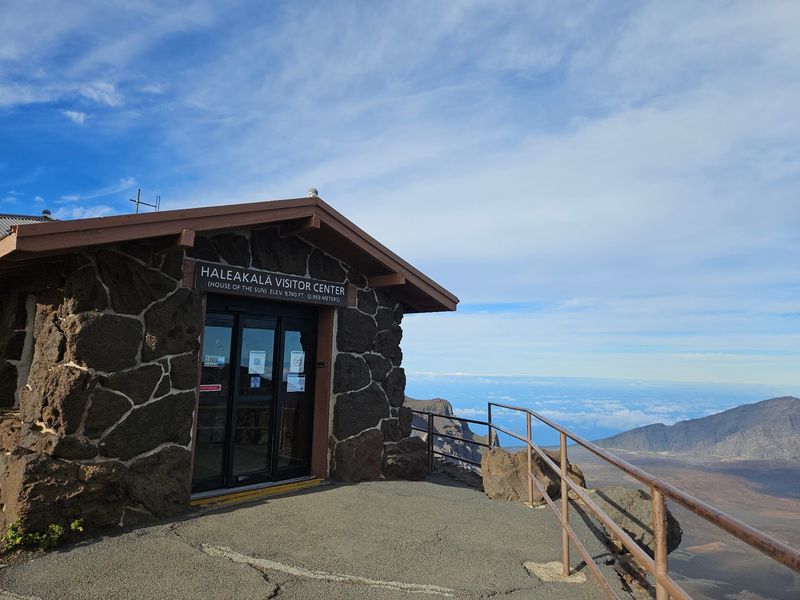
Sixty degrees colder than the beach you left an hour ago. That is the first thing people notice at the summit, usually while regretting their shorts.
The visitor center sits along Haleakala Hwy in Kula, high above the clouds. Sunrise viewing requires a reservation, so book yours before you pack the car.
The drive climbs from sea level to roughly 10,000 feet in about two hours. Ears pop, cell service vanishes, and the road turns into a series of long switchbacks.
Bring a real jacket. I made the rookie mistake of relying on a hotel towel, and the wind found every gap.
Once the light arrives, the crater floor turns rust red and gold. Silversword plants grow here and almost nowhere else on Earth.
Rangers give short talks near the center, and the exhibits explain the volcano’s shape better than any brochure. Give yourself time to actually read them.
Sunset works too, with smaller crowds and no reservation needed for that window. The colors are just as generous.
Drive down slowly and use low gear. Brakes overheat on that grade, and the shoulder drop-offs are not forgiving.
Pack water, snacks, and patience. Thin air makes everyone a little slower, including you.
2. ʻĪao Valley State Monument
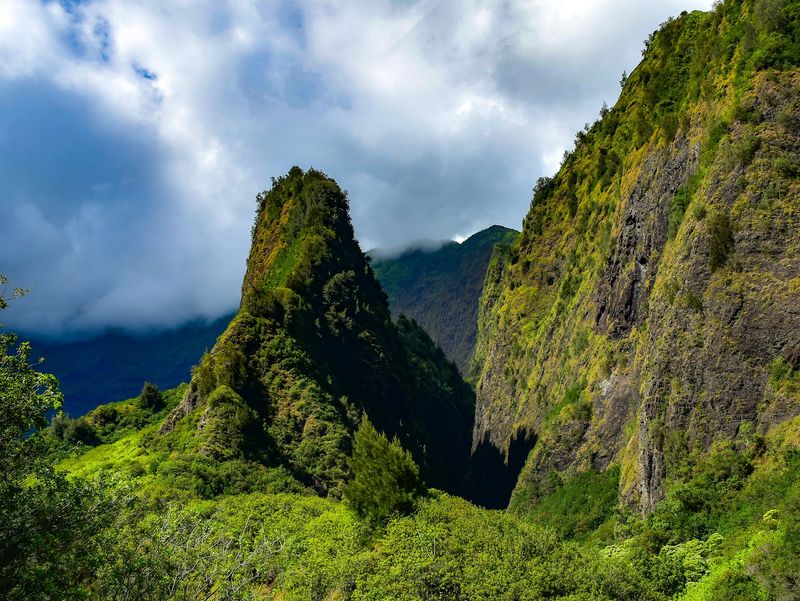
Rain clouds here do not ask permission. They roll in, soak the ferns, and leave the whole valley smelling like wet earth and flowers.
ʻĪao Valley State Monument sits at the end of ʻĪao Valley Road outside Wailuku. Non-Hawaiʻi residents need advance reservations for entry and parking.
Morning is the smart choice because clouds often swallow the peak by afternoon.
The star attraction is ʻĪao Needle, a green spire that shoots up more than 1,200 feet. From the paved overlook it looks unreal, like a movie set someone forgot to remove.
Trails are short but steep in places, with steps that get slick. Shoes with grip beat flip-flops every single time.
This valley holds deep meaning in Hawaiian history, and signs along the path explain that story respectfully. Read them before you start snapping pictures.
A small garden area near the parking lot honors the many cultures that shaped Maui. It is quiet and often overlooked.
Parking costs a fee for non-residents, and the lot fills fast on tour bus days. Arriving by eight solves that problem.
Bring mosquito spray. The stream is beautiful, and the bugs think you are too.
An hour is plenty here, which makes it a perfect first stop.
3. Hawaiʻi Volcanoes National Park
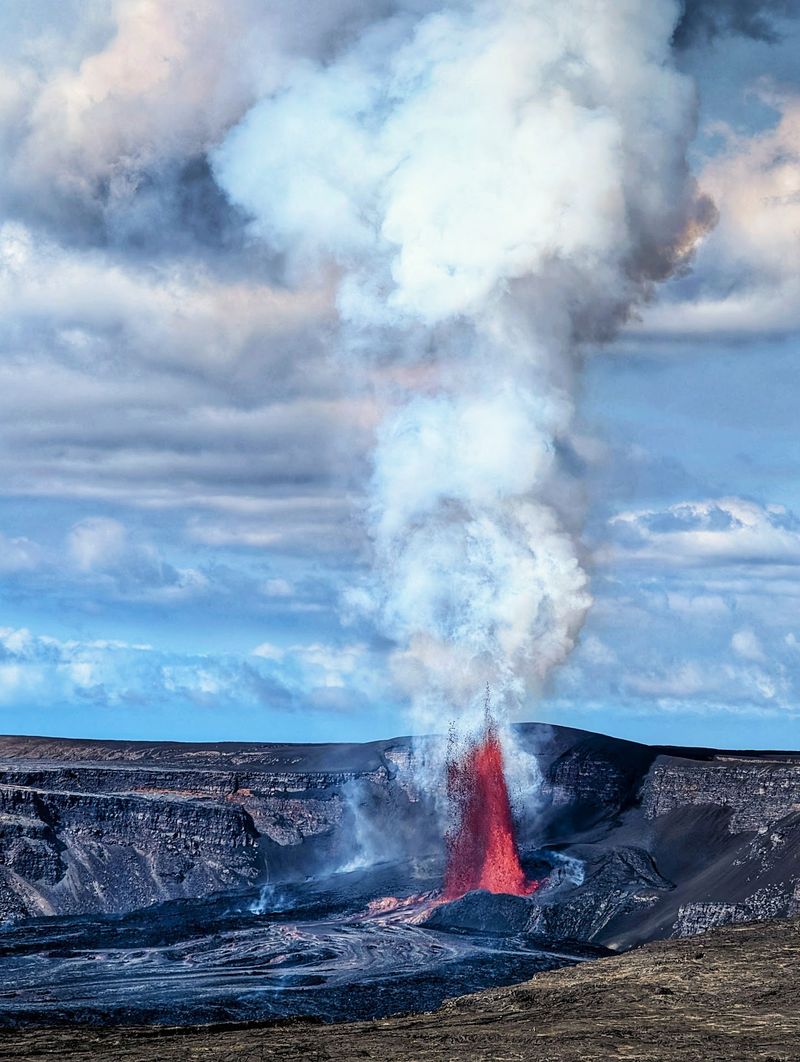
Steam rising out of cracked ground beside a parking lot never stops being strange. That is a normal Tuesday at Kilauea.
Crater Rim Dr in Volcano is the main artery, and the park stays open around the clock. Sunrise visits mean empty overlooks and cool air that makes hiking easy.
Kilauea is one of the most active volcanoes on the planet, and conditions change often. Check the park website the night before for closures and any eruption updates.
The Kilauea Iki Trail drops through rainforest onto a hardened lava lake floor. Walking across it feels like crossing another planet’s front yard.
Chain of Craters Road runs nearly 19 miles down to the coast. Budget two hours round trip, plus stops for lava fields and sea arches.
Volcanic gas can bother sensitive lungs, so heed posted warnings. Stay on marked paths because thin crust hides deep cracks.
Layers help enormously. Volcano village sits at 4,000 feet, and mornings feel like autumn somewhere else entirely.
Nene, the native Hawaiian goose, wanders near roadsides. Slow down and never feed them.
Pack a real lunch. Food options inside the park are limited and lines grow long by noon.
4. ʻAkaka Falls State Park
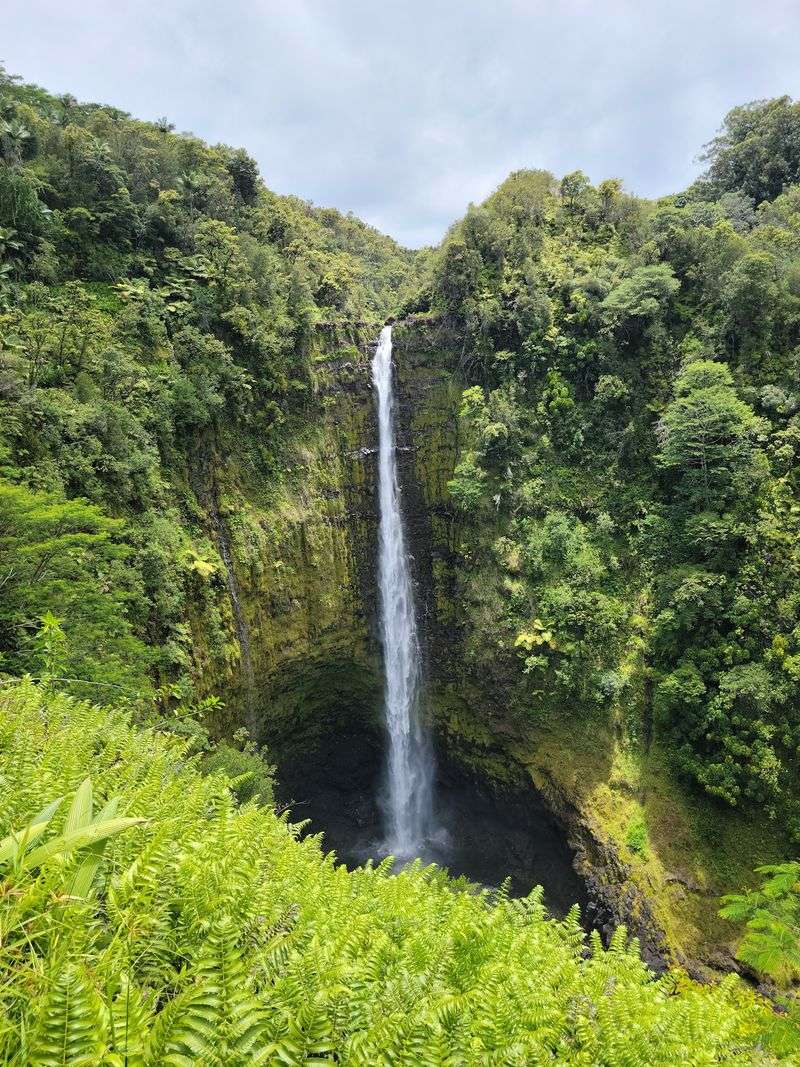
A 442-foot waterfall in exchange for a half-mile walk feels like a bargain. Honestly, it feels like cheating.
The park sits at 875 Akaka Falls Rd in Honomu, north of Hilo along the Hamakua Coast. The loop trail is paved, though stairs make it a decent leg workout.
Two waterfalls appear on the route. Kahuna Falls shows up first through the trees, then ʻAkaka drops into a mossy gorge like a ribbon someone unrolled.
Wild orchids, bamboo groves, and enormous philodendron leaves line the path. Everything drips, and the air smells green.
Go early because tour vans arrive midmorning and the viewing platform gets shoulder to shoulder. At seven you might have it alone.
Rain is likely on this coast, sometimes several times a day. A cheap poncho beats an umbrella on narrow steps.
Parking and entry fees apply for visitors, and the lot is small. Overflow parking means a walk uphill on a road with cars.
Combine the stop with Honomu town nearby. The little bakery and shops make a good reward after the stairs.
Plan around 45 minutes total. Then keep driving north, because that coastline only gets prettier.
5. Waimea Canyon State Park
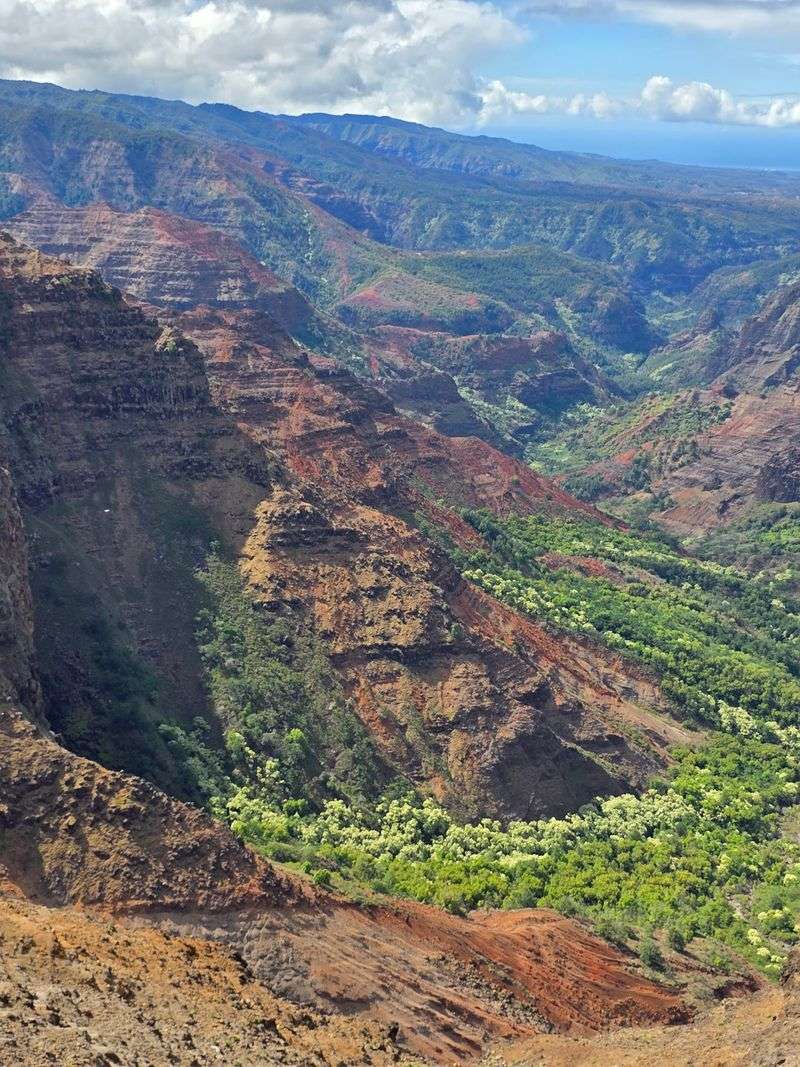
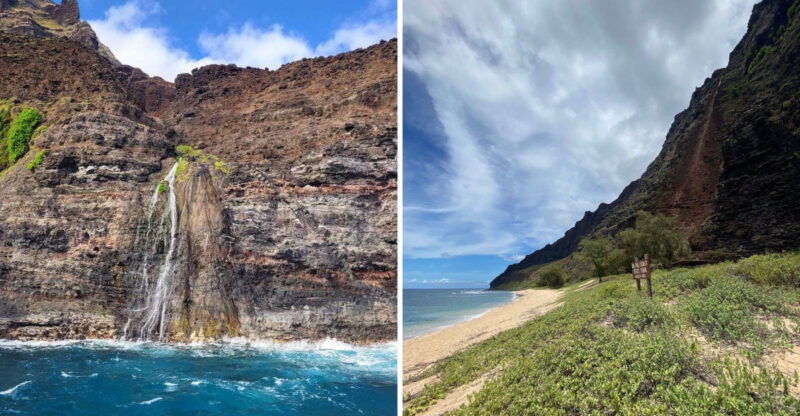
Locals call it the Grand Canyon of the Pacific, and for once the nickname earns its keep. Fourteen miles long, 3,600 feet deep, and striped in red and green.
Waimea Canyon Dr climbs from the town of Waimea on Kauai’s west side. The road is paved but narrow, with switchbacks that reward slow driving.
Clouds are the enemy of canyon photos. They usually build by ten, so an early arrival is the difference between a view and a wall of gray.
The main lookout requires only a few steps from the lot. Waipoʻo Falls appears in the distance, thin and silver against the cliffs.
Keep going up toward Kalalau Lookout and Puʻu o Kila. On a clear morning you can see straight down a valley to the ocean.
Gas up before you start. There are no stations along the canyon road, and the round trip eats fuel.
Wild chickens patrol every overlook with total confidence. They will inspect your snacks without shame.
Temperatures at the top run noticeably cooler than the coast. A light layer keeps the wind honest.
Hiking trails branch off for longer adventures. Even without them, the drive alone justifies the alarm.
6. Wailua River State Park
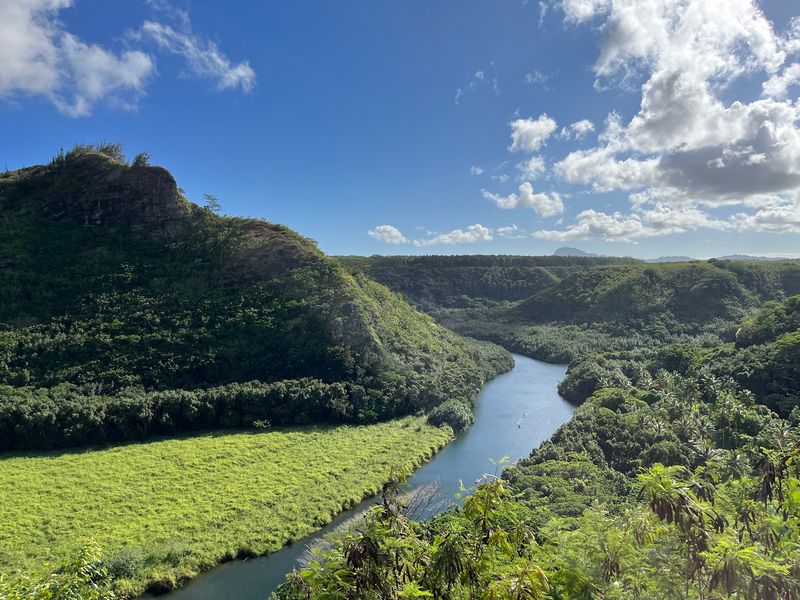
Kauai has one river you can actually boat up, and this is it. The Wailua is navigable, which makes it unusually fun.
Access points sit along Kuamoʻo Rd in Kapaʻa, with lookouts and launch areas spread across the park. Kayak outfitters start tours early for good reason.
Morning water is glassy and the air still cool. By afternoon, wind picks up and paddling turns into actual exercise.
ʻOpaekaʻa Falls has a roadside lookout with almost no effort required. Across the road, the river bend view is arguably better.
Fern Grotto sits upriver, a lava cave draped in hanging ferns. Riverboats and guided kayak trips reach it, and the acoustics inside are remarkable.
Bring a dry bag. I learned that lesson with a phone, a splash, and a very long silence.
Sunscreen matters more on water because light bounces up at you. Reef-safe formulas are the right call here.
The valley holds important Hawaiian heiau sites, marked with signs worth pausing for. History runs thick along these banks.
Half a day covers it comfortably. Add a stop in Kapaʻa town afterward for the best possible shave ice timing.
7. Pearl Harbor National Memorial
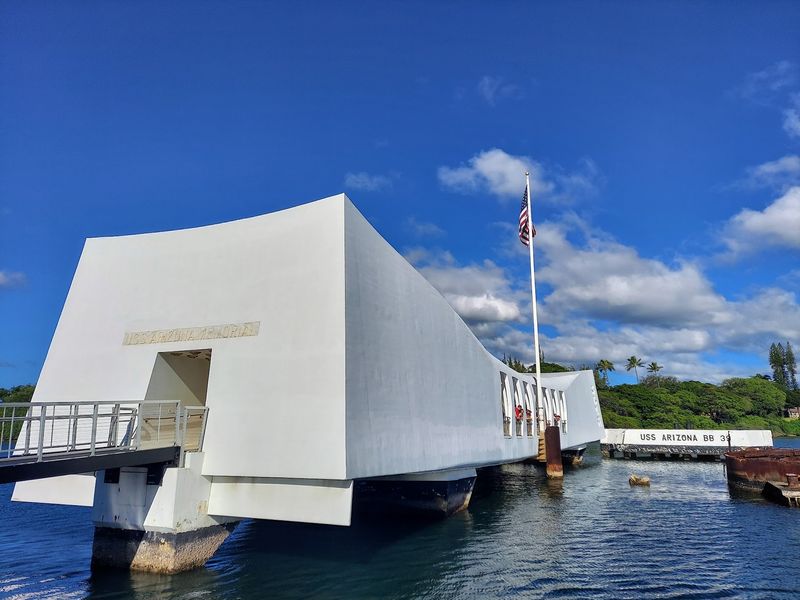
Reservations for the USS Arizona Memorial program vanish quickly, sometimes within minutes of release. Setting a phone reminder is the whole strategy.
The entrance is at 1 Arizona Memorial Pl in Honolulu, and gates open at seven. Arriving right then means shorter security lines and a calmer visit.
Bags are not allowed inside, though lockers are available for a small fee. Traveling light saves real time.
The visitor center museums are free and genuinely excellent. Photographs, letters, and maps explain December 7, 1941 with care.
A short boat ride carries visitors out to the memorial itself. The mood turns quiet without anyone asking for it.
Plan at least three hours. Add more if you tour the Battleship Missouri, the Pacific Aviation Museum, or the submarine Bowfin nearby.
Shade is limited around the grounds, so a hat earns its place in your bag. Water fountains are available.
Traffic into Honolulu builds early on weekdays. Leaving Waikiki by six thirty avoids the worst of it.
Kids often connect with the aviation hangars most. The bullet holes still visible in the windows make history feel immediate.
Dress respectfully and comfortably, keeping in mind that Pearl Harbor is a memorial and final resting place.
8. Diamond Head State Monument
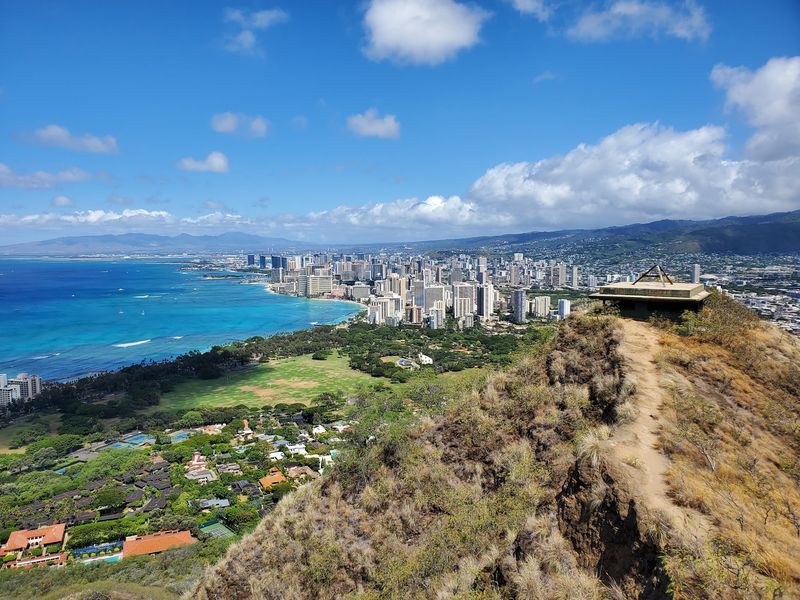
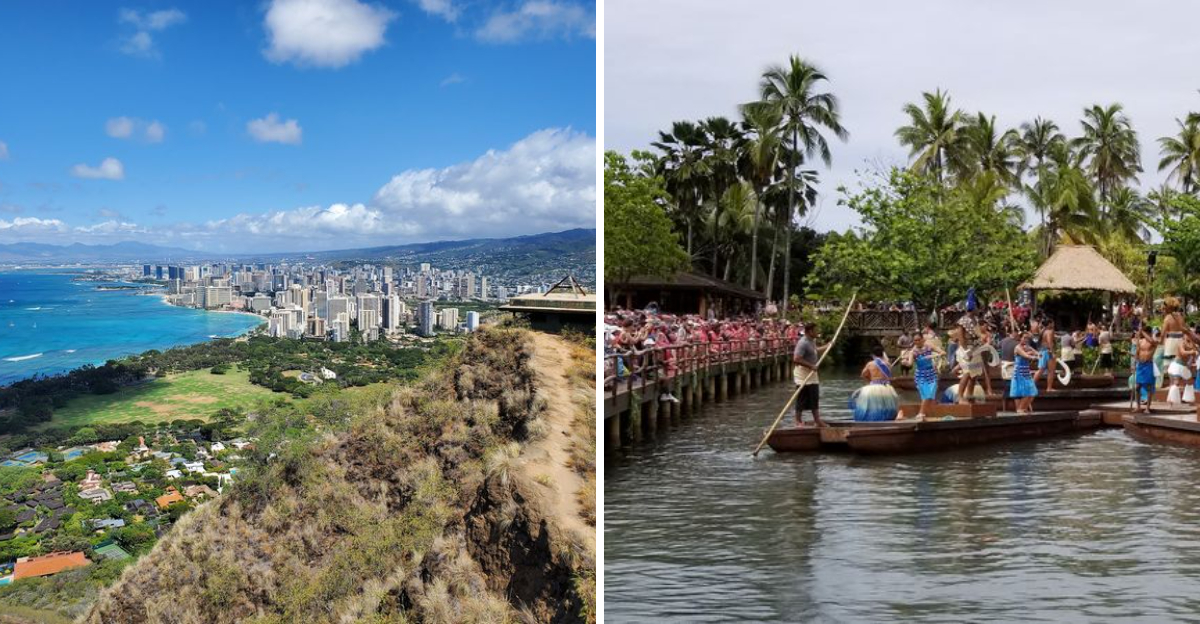
The trail is only 0.8 miles each way. Those numbers hide 175 stairs and a tunnel that feels longer than it is.
Diamond Head sits at 4200 Diamond Head Rd in Honolulu, right behind Waikiki. Entry now requires an advance reservation for out-of-state visitors, including parking.
Gates open at six, and that first slot is the golden one. Shade lasts longer, and the crater has not turned into an oven yet.
The summit view stretches from Koko Head to the Waianae range. Waikiki hotels look like toys from up there.
Old military bunkers and a lookout station crown the top. Built starting in 1908, they were meant to watch for approaching ships.
Footing is uneven on the upper switchbacks. Sneakers, not sandals, unless you enjoy stubbed toes.
Carry water because there is none past the trailhead. One bottle per person is the minimum.
Allow ninety minutes round trip at a relaxed pace with photo stops. Fit hikers finish faster.
The Hawaiian name is Leahi, meaning brow of the tuna. Once you see the ridge profile, the name makes perfect sense.
Breakfast in Kaimuki afterward is a fine tradition.
9. Hanauma Bay Nature Preserve
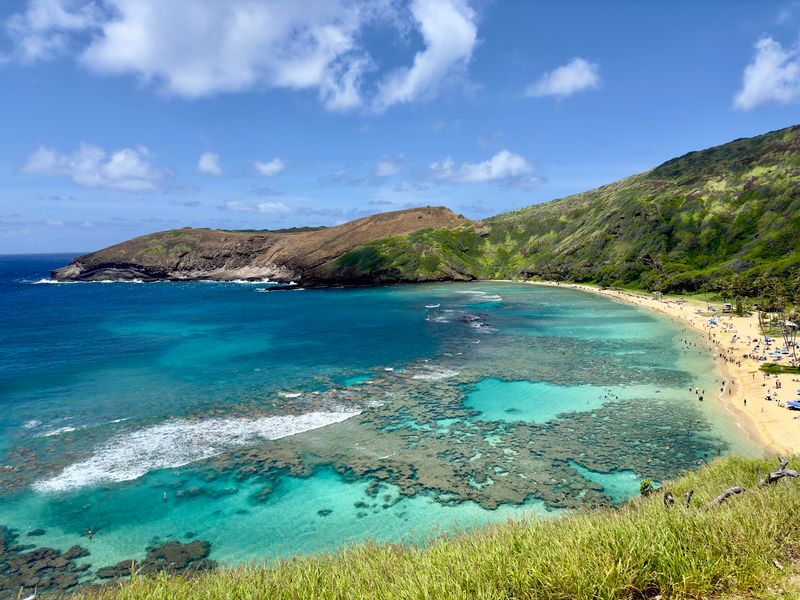
A flooded volcanic crater turned into a curved reef bay. Nature did the design work, and it shows.
You will find it at 100 Hanauma Bay Rd in Honolulu, about a 25 minute drive east of Waikiki. Reservations open online two days ahead and disappear fast.
The preserve closes Mondays and Tuesdays to let the reef rest. Entry days start early, and the parking lot has a hard cap.
Everyone watches a short conservation video before heading down. It explains why standing on coral is a genuine problem.
The walk to the sand is steep, and a tram runs for a small fee. Your knees may vote for the tram on the way up.
Water inside the reef is calm and shallow, ideal for beginner snorkelers. Parrotfish, tangs, and honu turtles show up regularly.
Choose reef-conscious sun protection and follow the preserve’s current conservation guidelines.
Rent gear on site or bring your own mask. A well-fitting mask changes everything.
Keep your distance from turtles, since they are protected by law. Watching quietly is the better experience anyway.
Morning light makes the fish colors pop.
10. Polynesian Cultural Center
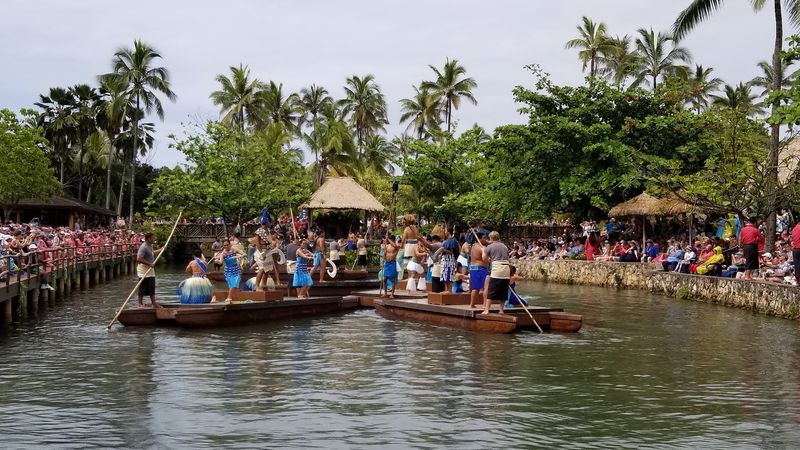
Six island villages, one lagoon, and a canoe pageant that pulls everyone to the water’s edge. Planning matters here more than most stops.
The center sits at 55-370 Kamehameha Hwy in Laie, on Oahu’s North Shore. The drive from Waikiki takes over an hour, longer if you hit traffic.
Villages represent Samoa, Tonga, Fiji, Aotearoa, Tahiti, and Hawaii. Each offers hands-on activities like coconut husking, spear throwing, and drumming lessons.
Arrive at opening to catch the village demonstrations before crowds thicken. The Samoan fire-making show draws laughs every single time.
It closes Sundays, which surprises plenty of visitors. Check the schedule before committing your day.
Tickets come in tiers, some including a luau dinner and the evening show. The show, Ha: Breath of Life, features a large cast and impressive staging.
Comfortable shoes are essential because the grounds are large. There is a lot of walking between villages.
Bring a light rain jacket since North Shore showers appear without warning. They pass quickly.
Student performers from nearby BYU-Hawaii work here, and many share their own island heritage. Asking questions leads to the best conversations.
Stop at a North Shore shrimp truck on the drive up.