Dealers Fill Acres Of A Nebraska Fairground At This Swap Meet Held Twice A Year
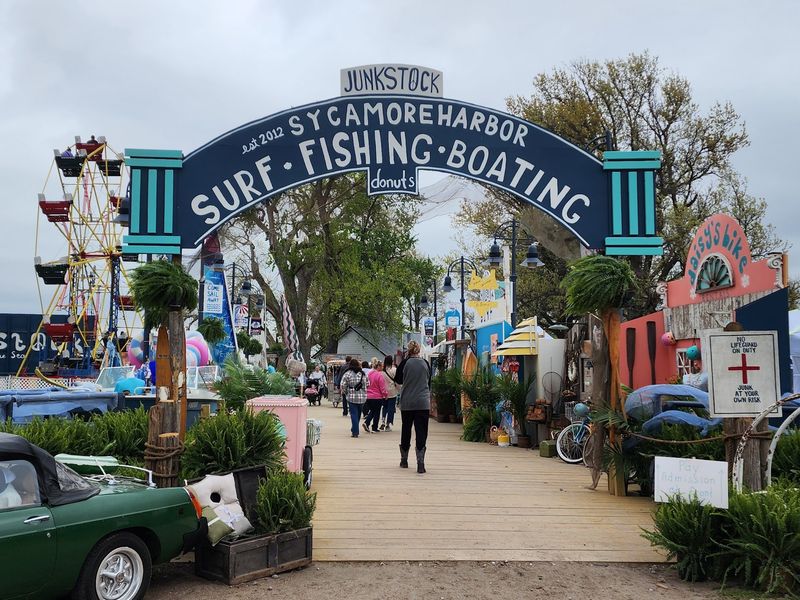
I went looking for a cheap dresser in eastern Nebraska and came home with a bag of vintage shirts, a bar of soap that smells like a pine windbreak, and a cider donut I ate before leaving the parking field. The place looked like nothing much from the road, just barns and a grass lot and a line of cars crawling in.
Inside the gates, vendor rows ran farther than I could see, with music playing somewhere behind the tents. It happens only twice a year, which is exactly why people plan around it.
Acres of Booths on the Platte Bottomland
White tents, weathered barn boards, and a grass lot filling steadily with cars make up the first view. Junkstock spreads across acres in Waterloo, a small town in Douglas County where River Road follows the Platte bottomland west of Omaha.
Vendor rows run long enough that most people lose track of where they started.
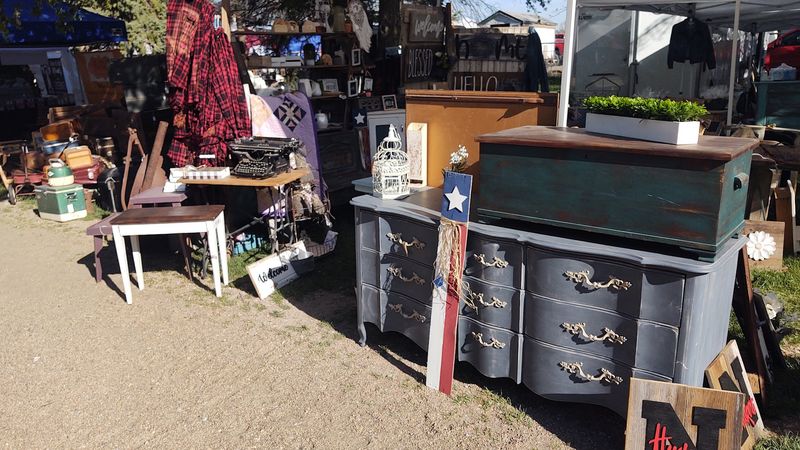
Flea market is the easy shorthand, and it does not quite cover the ground. Booths hold vintage clothing, salvaged hardware, handmade jewelry, candles, jams, jerky, and furniture rebuilt from old lumber.
Some sellers deal in true castoffs. Others bring in things they built over the winter in a garage workshop, which gives the whole layout a split personality.
The show runs twice a year, spring and fall, and that schedule shapes everything about it. Miss a weekend and the next chance sits months away, so the lanes pack in shoulder to shoulder by late morning.
Music carries over the canopies while people shop. Food trucks claim their own stretch of grass.
The sheer size of the operation catches first-timers off guard.
From a Small Gathering to a Twice-Yearly Draw
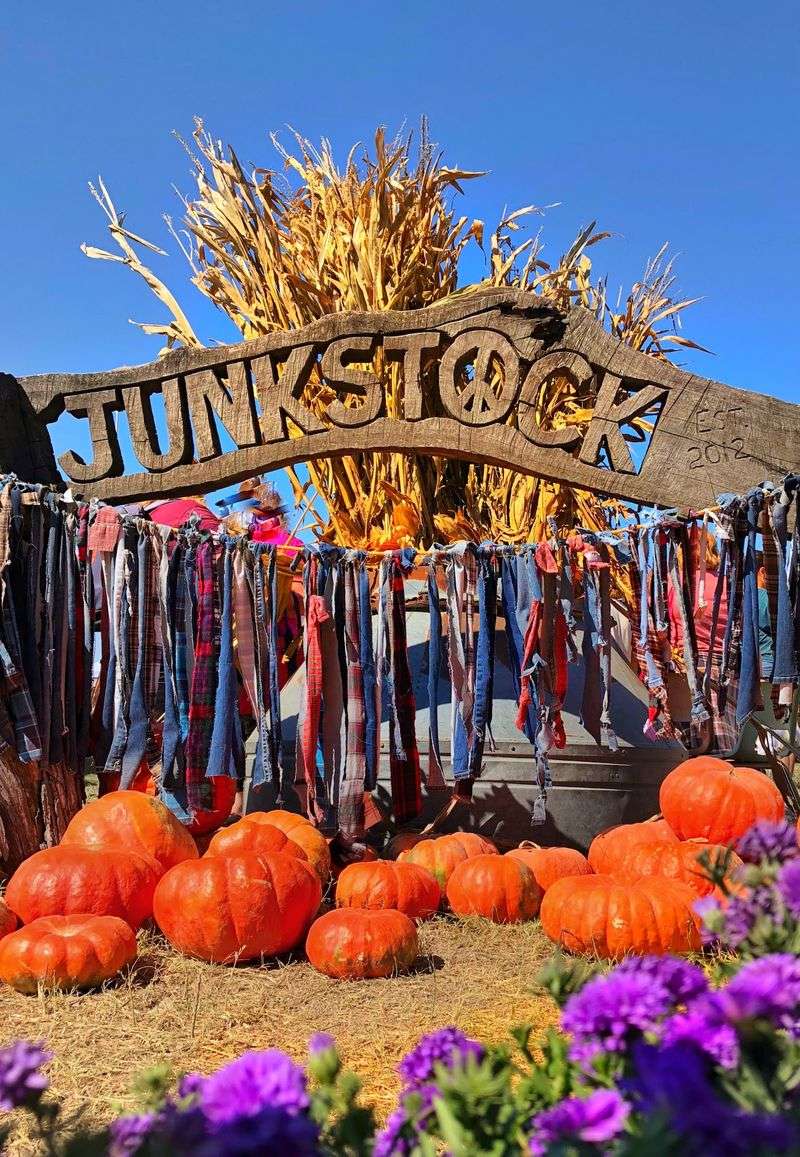
Growth came gradually rather than all at once. What began as a small gathering of vintage sellers expanded into a market that now draws exhibitors from well outside Nebraska.
The footprint kept widening until it filled the fields and outbuildings it uses today.
Each edition covers more than a single day, and the fall show in particular stretches across multiple weekends. That extra room in the calendar helps, because one afternoon rarely covers the full layout.
Season separates the two shows more than you might expect. Autumn brings pumpkin stacks, mums by the pallet, and cider in the air.
Spring leans toward garden salvage, porch furniture, and lighter vintage clothing.
Ticketing has grown along with the crowds. Early-entry options exist for anyone who wants first pass at the booths before general admission opens the gates wider.
The core idea has held steady through all of it. Independent sellers, mostly one-person or family operations, haul in what they found, restored, or built themselves.
That single thread ties together a market that otherwise sprawls in a dozen directions at once.
Barns and Sheds on a Former Nebraska Horse Farm
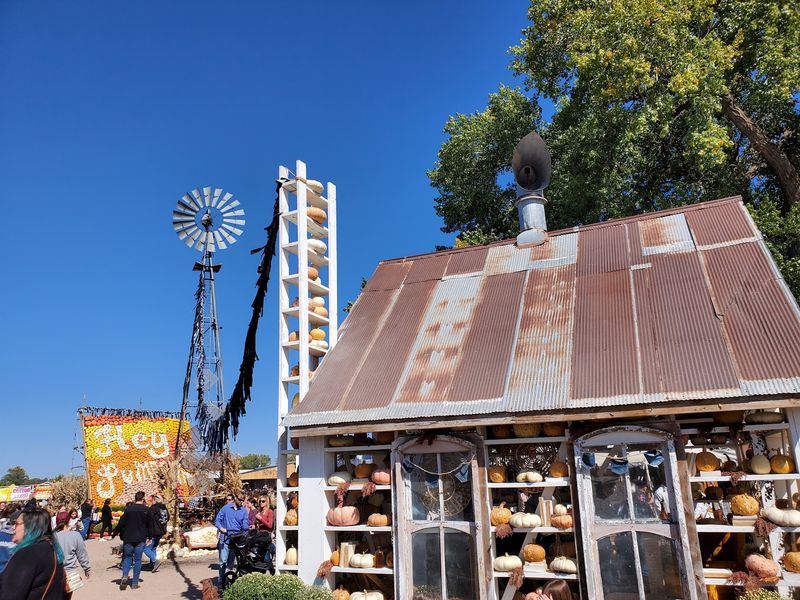
Old stable doors, scuffed concrete, and hayloft windows set the tone before a single price tag comes into view. The grounds are a sprawling former horse farm on the edge of Waterloo, and the original buildings still carry a good share of the market.
Vendors set up inside the barns and sheds as well as out in the open fields.
Shade runs short once you step away from those buildings. Canopies cover most booths, but the lanes between them sit fully exposed.
By October the barns get dressed up. String lights run along the rafters, hay bales stack into seating, and pumpkins pile near the doorways.
Underfoot, the ground decides what kind of day you will have. A dry stretch leaves a fine coat of dust on shoes and pant cuffs, while a wet week turns the low spots soft and slow.
Either way, the shoes you keep for garden work are the right choice. Farm settings this large and this intact are getting scarce so close to Omaha’s expanding western edge.
A Vendor Mix Running Vintage to Brand New
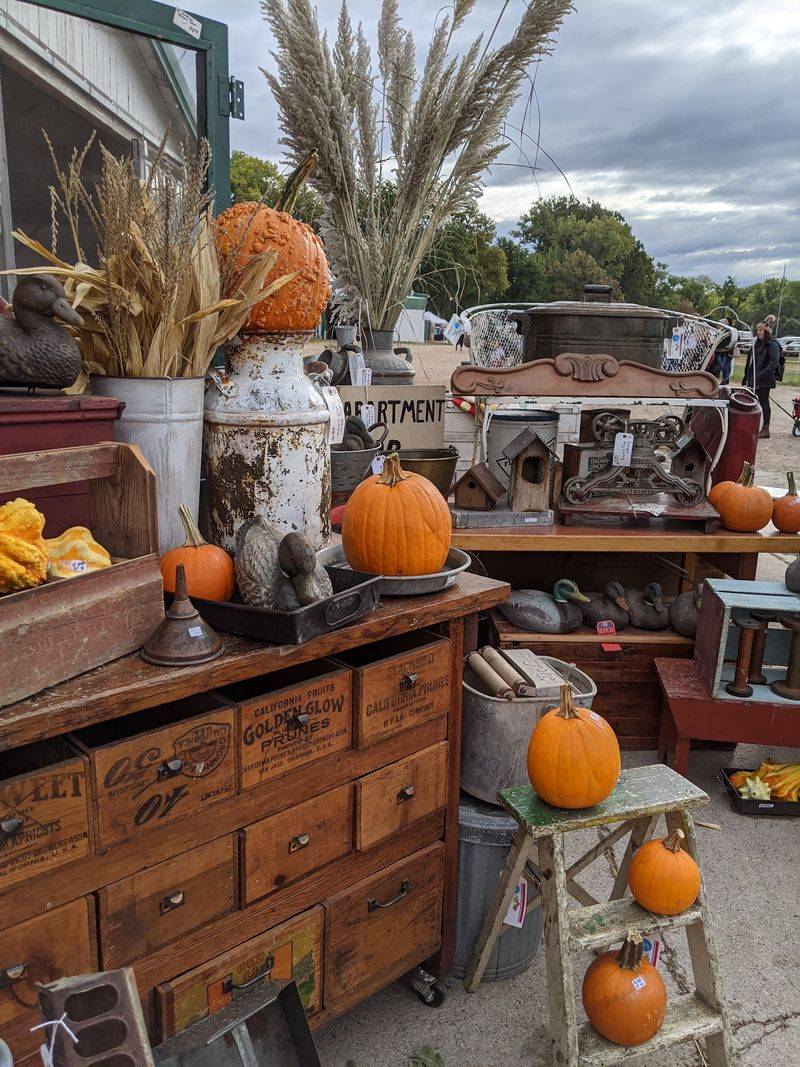
No two loaded wagons rolling back toward the parking field look the same. Vintage denim, hand-poured candles, silver rings, lip balm, lotion, leather goods, jerky, jam, and refinished dressers all move through the same lanes.
Certain booths lean hard into salvage. Rusted barrel rings, enamel signs, chipped crocks, and old window frames go home with people who already have a project in mind.
Others sit much closer to a craft show. Screen-printed shirts, painted wood signs, macrame, soap, and small-batch food fill a large share of the tents, and those sellers tend to be the ones talking you through how a piece was made.
Furniture claims the roomier edges of the grounds, where benches, doors, and dressers lean against open trailers. Hauling something heavy back across uneven grass takes forethought, so a folding wagon quickly pays for itself.
Pricing swings wide from one row to the next. A stack of vintage tees might go for a few dollars each while a restored cabinet nearby costs what a new one would.
Bargaining happens, though it is not the norm.
Where Antique Hunters and Craft Shoppers Part Ways
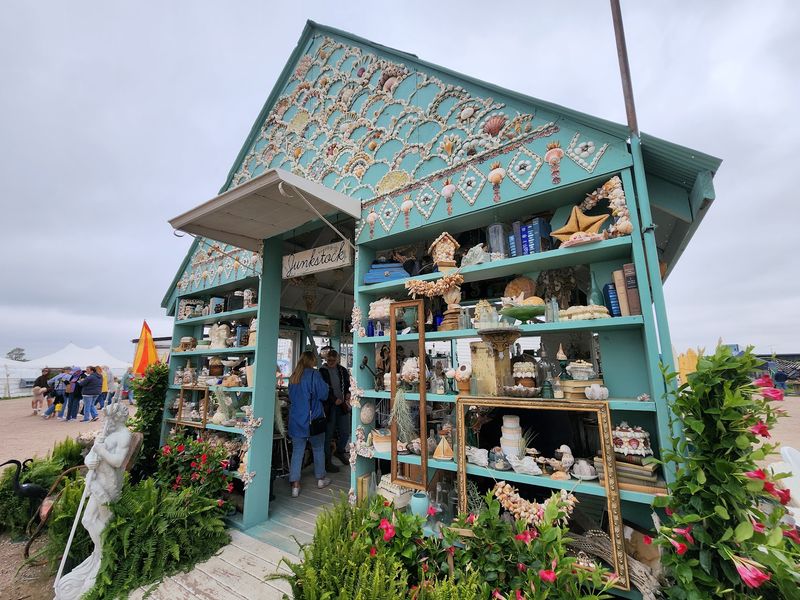
Here is the honest split, and it surfaces every single season. The name promises junk, while the inventory leans heavily toward handmade and small-batch goods.
Anyone arriving with a mental list of old wrenches, tin toys, tractor parts, or advertising tins will find slim pickings.
That shift tracked with the market’s growth. Makers took up more booth space over time, and straight antique dealers took up less.
Shoppers after a vintage dress, a set of brass candlesticks, or a dresser someone stripped and repainted come out fine. A collector chasing one specific piece of old farm iron would do better at a county auction or a true parts swap meet.
Knowing that ahead of time changes the whole day. Walk in expecting a maker market with a strong vintage streak and the place delivers exactly that, booth after booth.
Walk in picturing acres of dusty antiques and the admission charge lands harder than it should. Same grounds, same vendors, entirely different afternoon depending on what you came for.
A New Theme Built Out Every Season
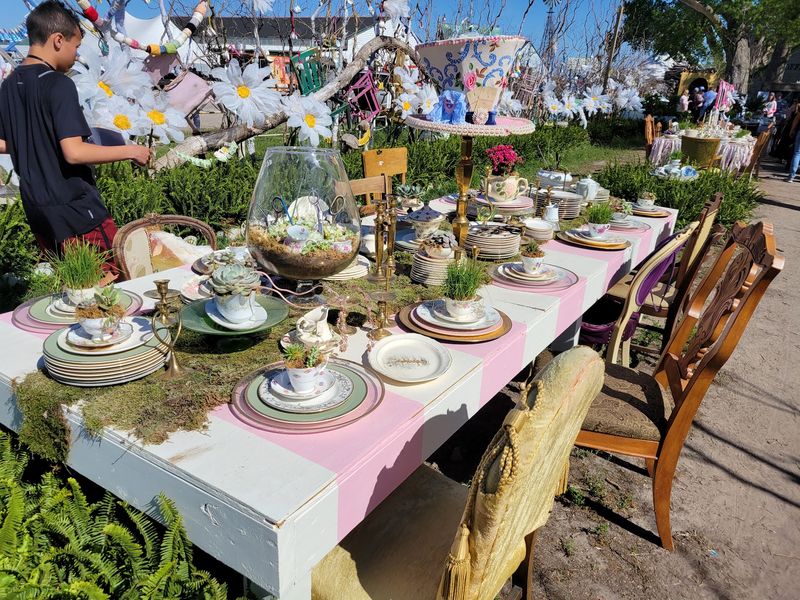
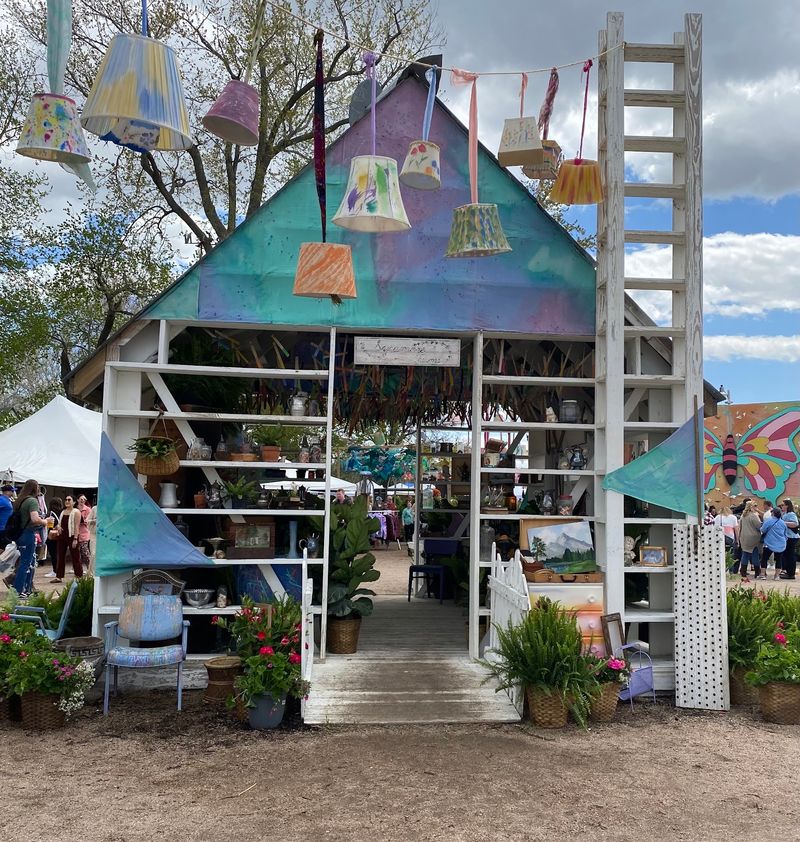
Every edition gets a theme, and the build-out goes well past a banner at the gate. Painted signage, staged vignettes, and decorated corners appear throughout the grounds, with the design getting more ambitious from one show to the next.
Vendors join in rather than ignore it. Booth fronts get styled to match, so a walk down a row feels more like passing through a set than browsing a sales lot.
Art installations fill the space between tents. Large salvaged-metal pieces and arranged found objects double as landmarks, which helps enormously once every white canopy starts looking identical.
Those installations pull their weight in a second way, too. They give people who came along reluctantly something to look at while the shoppers in the group work a booth.
Themes also shape the merchandise, at least at the margins. Sellers stock toward the mood of the show, so a fall theme brings out darker textiles, harvest decor, and heavier furniture.
The decor changes enough between spring and fall that returning to both in one year does not feel repetitive.
Photo Backdrops Set Up on Purpose
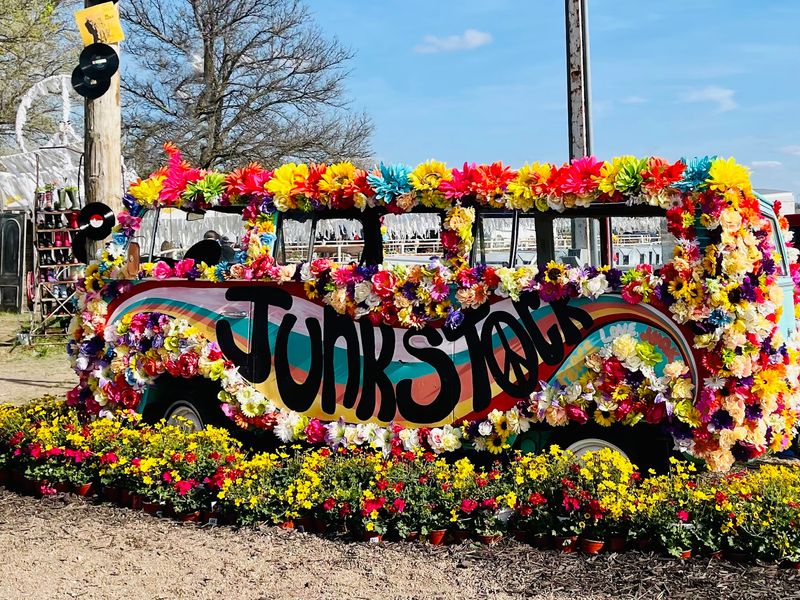
Cameras come out constantly, and the grounds are arranged with that in mind. Staged backdrops sit at intervals along the vendor rows: a vintage truck bed filled with flowers, a doorway framed in dried stems, a wall of mismatched shutters.
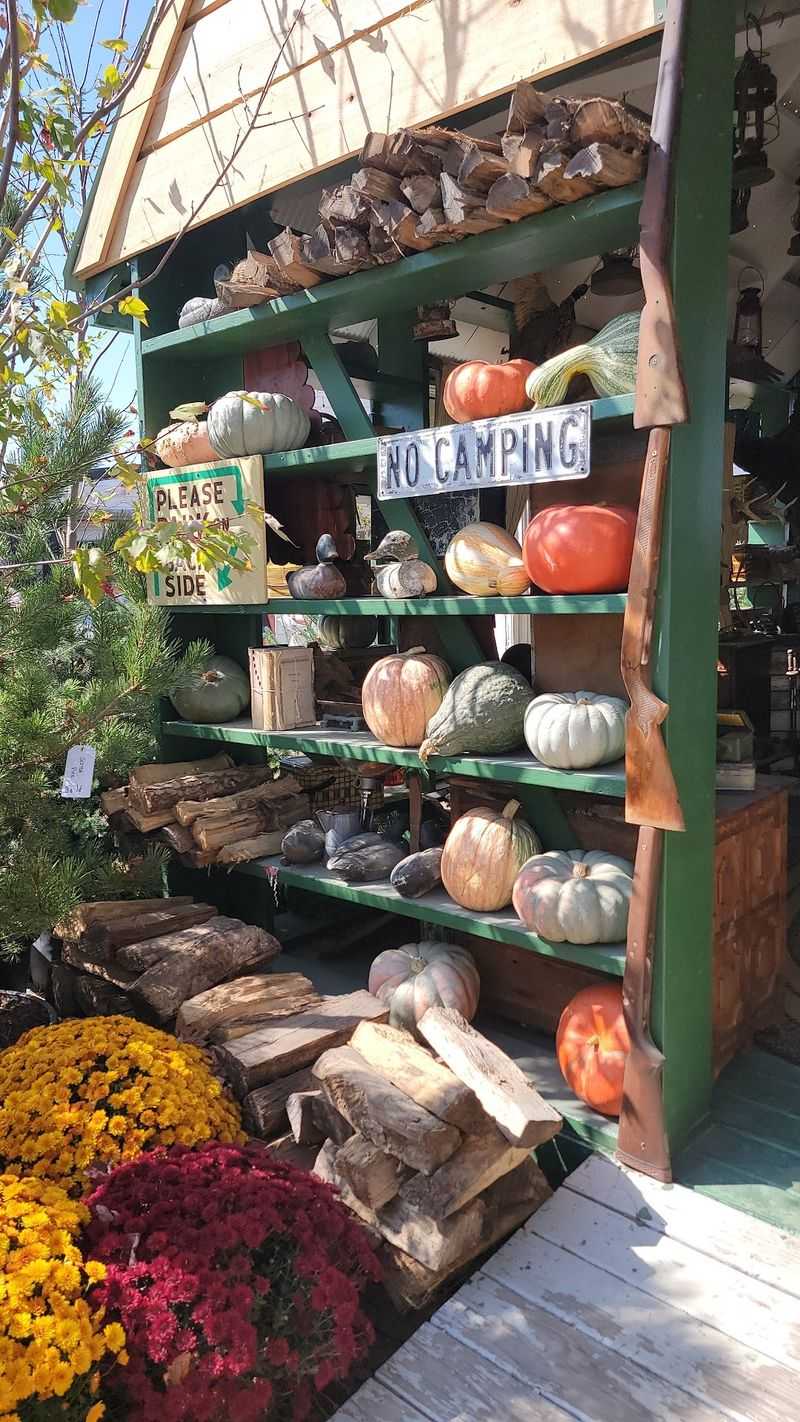
Fall gives the photo spots their strongest showing. Pumpkin walls, mum displays, and hay bale arrangements stack up near the barns, and the string lights strung overhead do real work as the afternoon light drops.
Nobody has to wait for a professional session. The setups are open to anyone walking past, which is why small lines form at the popular ones on a busy Saturday.
Families with small kids get a lot out of this. A grass field of shopping tents holds a child’s attention for about twenty minutes, while a truck full of flowers buys another ten.
Bring a phone with room on it and a charged battery. Between the installations, the styled booths, and the barns themselves, most people leave with far more pictures than purchases.
Apple Cider Donuts and a Long Row of Food Trucks
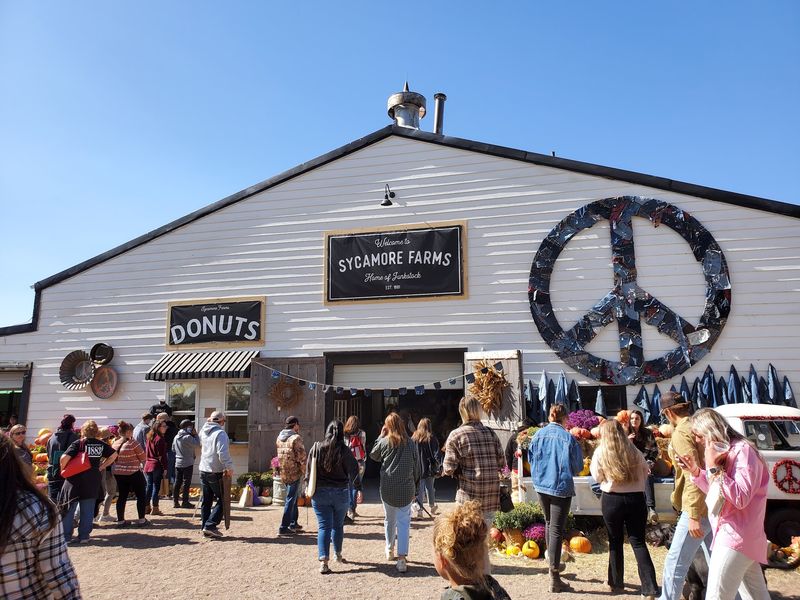
Warm apple cider donuts are the item people drive out for even when they buy nothing else. They come out of the fryer in batches, get tumbled in cinnamon sugar, and disappear before most folks make it back to the vendor rows.
The truck lineup runs long and varied. Soft pretzels with cheese, chocolate-dipped strawberries served in a cup, fresh-squeezed lemonade, kettle corn scenting half the grounds, and enough entree options that a group of five can all eat something different.
Festival pricing applies, so a lunch for the family adds up quickly. Eating before you arrive and saving room for one shared treat is the thriftier play.
Seating clusters near the trucks in the form of picnic tables and hay bales, and it fills fast around midday. Grabbing food a little early or a little late usually means finding a spot.
Hand-washing stations with running water and soap stand near both the food area and the portable restrooms, which is more than most outdoor markets of this size manage.
Live Music Drifting Over the Tents
Guitars and a drum kit set up near the barns, and the sound carries across the whole shopping area. Bands play through the day as part of general admission, so nobody buys a separate ticket to hear them.
Cover acts fill most of the slots. A Fleetwood Mac and Stevie Nicks tribute band called Landslide has performed, and the sets tend to run toward recognizable material rather than deep cuts.
Plenty of people shop first and stay for the music afterward, settling onto hay bales with something from a food truck. The stage area becomes the natural meeting point for groups that split up among the booths.
Afternoon is when the atmosphere shifts. Vendors start chatting more, the crowd thins a little, and the combination of music and lowering sun makes the grounds feel less like a market and more like a small festival.
Performance schedules change from show to show, so checking which acts play which day helps if music is the main draw rather than the shopping.
Cash, Cards, and the Grass Parking Field
A handful of booths take cash only, so the smart move is arriving with some in your pocket. ATMs cluster near the entrance for anyone who forgot, and most vendors do run cards.
Parking happens in an open grass field, and it is free. Low-clearance cars manage it without trouble in dry weather.
The rows are not numbered or lettered, which becomes a problem on the walk back out. Noting a nearby landmark, a tree line, or the row’s position relative to the gate saves a long wander across a field of look-alike SUVs.
Signage across the grounds is light in general. Finding one particular booth again after you circled away from it can take a few laps, so a photo of its sign helps.
Admission is charged per person, and the fee has climbed as the event has grown, so check the current rate before you load the car. Early-entry passes cost more and buy quieter aisles.
Dust settles on everything by afternoon. Dress accordingly.
Crowds, Leashed Dogs, and Timing Your Walk-In
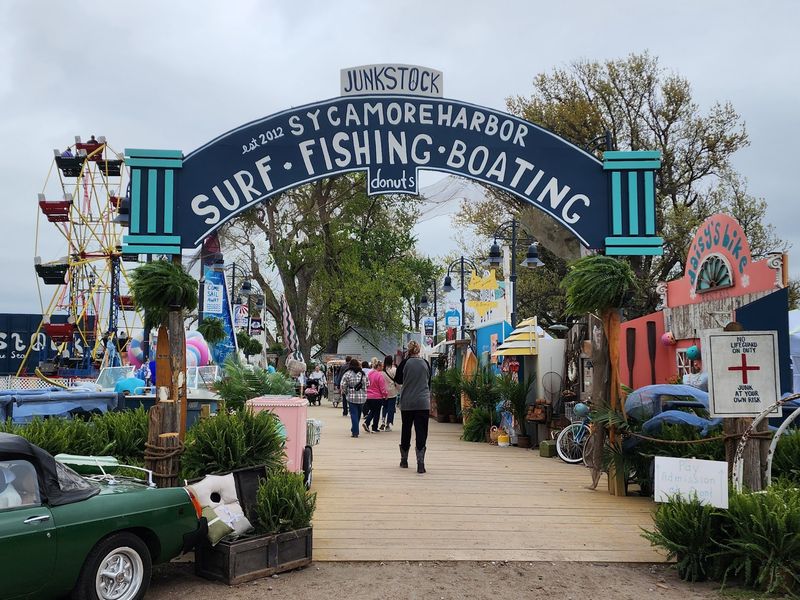
Midday Saturday is peak crush, with the main lanes moving at a slow shuffle. Anyone uneasy in dense crowds should plan around that window rather than push through it.
Leashed dogs are welcome, and plenty of them come. Shade and water bowls are limited once you leave the barns, so a hot spring weekend is not the day to bring a heavy-coated pup.
Strollers and wagons roll fine across most of the grounds, though the grass gets rutted and the soft spots take some muscle. Kids do better here than at an ordinary antique mall thanks to the installations, the music, and the donuts.
The quietest stretches come on a later weekend of the fall run, on a Friday after lunch, when the aisles open up and parking sits close to the gate.
Sun protection matters more than people expect on open prairie ground. A hat, sunscreen, and a refillable water bottle turn a three-hour visit from an endurance test into an easy afternoon.
Making the Drive Out on River Road
Junkstock sets up at 1150 River Rd Dr in Waterloo, Nebraska, a straightforward drive west of Omaha along the Platte and easy enough from Lincoln to make a half-day trip. Elkhorn, Valley, and Gretna all sit close by, so the surrounding area gives you options for a stop on the way home.
Dates land in spring and fall, and the exact weekends shift year to year. Confirming the schedule, the gate times, and the admission rate before loading up the car prevents a wasted drive.
Go in with the right expectations and the day works well. It is a large maker-and-vintage market on a beautiful old farm, with strong food, free-with-admission music, and installations that give non-shoppers something to do.
Collectors hunting rare antiques will want a farm auction instead. Everyone else gets acres to wander, hundreds of small Nebraska businesses to support, and a cider donut on the walk back to the car.
Two chances a year is not many. That is half the reason people keep marking it down.